Chloé Zhao’s The Rider and A Necessary Grace

download-2*SPOILER WARNING FOR THE RIDER

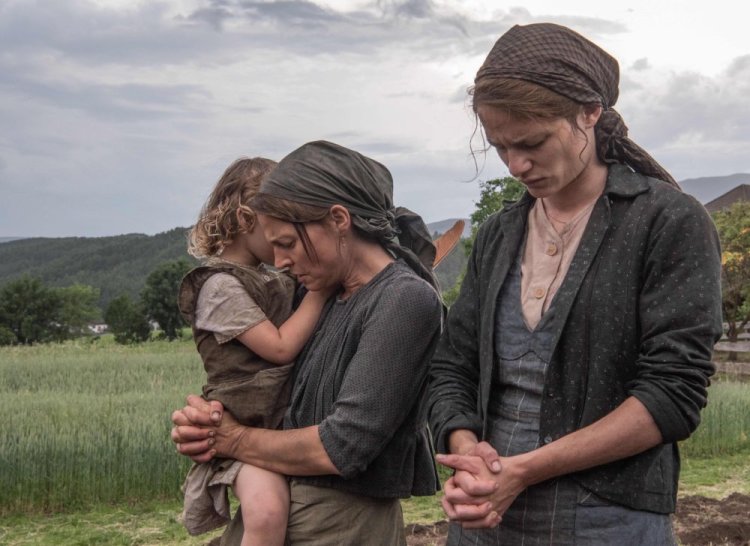
An unconventional film that uses the raw performances of its non-actors to underscore a potent spiritual core. The Rider is not afraid to dig into the human experience without the glamour and the polish. And what surfaces from this rawness are some deeply rooted questions about what makes life worth living.

The Universal Power of Relationships
There are a few ways in which The Rider could compare to another recently released and well received indie film with untested performances and an unconventional narrative style- Eighth Grade. I bring up that film because in the places where I felt that film fell ever so slightly short, The Rider soars, and perhaps the most important aspect is the way it welcomes the audience in on the cowboys experience. If I am not a middle grade, female adolescent, I might be even less of a cowboy. And so the films setting couldn’t be further away from my own experience as a born and raised city dweller. And yet the film is consistent in narrowing in on what lies behind the cowboy and Western motif, the stuff that narrates on a universal level.

Which is really all about the power of relationships, be it with a horse, an estranged father, or a disabled/intellectually disabled sister/brother.

And this is where the film reveals a strong spiritual core, perhaps standing as one of the most Pastoral films I have seen in a long while, certainly in 2018.

downloadStuck in the Cycles of our Life
While coping with his own disability through the use of different vices, isolation and emotional outbursts, a disability that was the result of an accident in riding that sidelines him for the foreseeable future, the film juxtaposes Brady’s personal struggle against the different relationships that exist in his life- horse, sister, brother, father.  It then uses these relationships to explore that line between giving up and finding the strength to get up and live another day, understanding that he must do this knowing that he has lost the very thing that once defined him and gave him an identity. And as the film moves forward in this struggle it begins to formulate into a question of purpose, a question that reaches into the very nature of our relationship with God in subtle but powerful ways.

There is a captivating scene early on where, caught in a moment of numbing the pain, Brady and a group of friends pray for God’s protection. And as they pray you can see in Brady’s eyes a growing conflict between the certainty of this moment, sitting under the stars with the grand landscape surrounding them, and the uncertainty of what might come when the sun rises again.

And the sunrise becomes indicative of a process or a cycle that finds both joy and despair in constant battle with one another. And it is the same cycle that Brady sees echoed in his father’s own trajectory towards being lost in the grip of the vices that hold him prisoner. And, as he exclaims at one point in the story, he just doesn’t want that to happen for him.

The Prayers of our Brokenness and our Healing
This reality, this constant battle between joy and despair, reaches into the very nature of our relationship with God in subtle but powerful ways. For Brady it becomes a question of purpose, of one day riding again, but with each new day that question becomes increasingly exposed as a call to see the joy in the midst of the despair, in the idea that he might never ride again. The prayer then begins to turn from an expectation that he will find a way back on that horse to beginning to embrace what God has placed right in front of him in a time of brokenness- relationships.

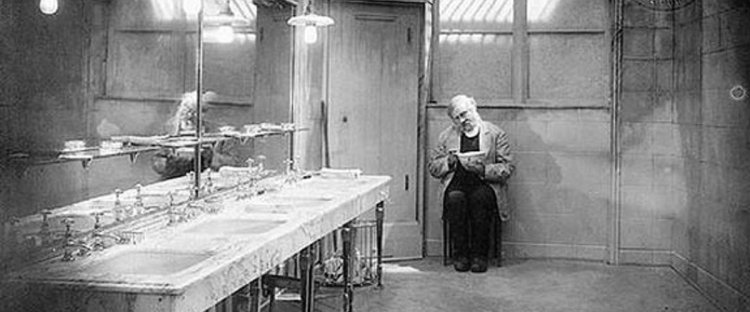
If you have seen the film you will know that one of the most powerful scenes arrives in a moment where he must choose to put his horse down because of a torn leg. With Brady unable to ride him, the horse becomes so desperate to run he breaks through a barbed wire fence and ends up with a deep, irreparable cut that means he will never run again. Brady can’t bring himself to do this alone though and has to bring his father over to help. And yet even as this is happening you can see the same conflict present in his eyes between the certainty of this moment (that he is doing the right thing for his horse) and the uncertainty of what might come when the sun rises again. And in one of the most gut wrenching scenes of 2018 we see him attempting to explain what has happened to his intellectually disabled sister. He tells her he had to put his horse down today. Her response is a simple and definite “no”. No, that is not how this works, thus in her eyes it is not true. And what her response pulls to the surface is the culmination of this conflict between certainty and uncertainty, the imposing question that continues to haunt Brady of what it means to live when your ability to run, or in his case to ride, or in the case of his sister to be able to function normally in society, is taken away. In the case of the animal they are put down. In the case of their own weakness they are expected to go on living. But why does it work this way? Why should it work this way?

download-1A Necessary Grace
The only real certainty that we find here is that it is in relationship we are reminded of our brokenness, and it is in relationship we are reminded that all of us are broken in some way. And it is this understanding that offers us grace. The grace we need to move forward towards a purpose that stands taller than our ability and circumstance. The grace we need to extend to others, which Brady is eventually able to offer to his father as well.

And in showing us this truth, the film is brave enough to suggest that our true identity, the purpose that God has given each of us in the midst of our own struggle between joy and despair, does not come from our accomplishments or our abilities, but rather from our willingness to receive and extend grace in relationship to those God has placed in our midst. This is why we live. And it is when we do this that we are able to begin to see ourselves the way God sees us as well, both in our brokenness and in our ability to love beyond it.

In The Rider it is this simple embrace of both the joy and the despair that governs the cycles of our lives, the cycles that we find in the sunsets and the sunrises, and it is grace that breaks through these cycles and that makes itself aware in the moments which gives us a reason and the strength we need to face another day.

From Winnipeg To Nashville Part 7: Music City on a Budget

37334329_422775201541348_4281937357361381376_nThe sun was getting ready to set, and as we approach the base of the John Seigenthaler Pedestrian Bridge we notice an individual, a woman likely in her mid twenties/early thirties, who is visibly agitated and yelling something seemingly towards someone on the top of the bridge. As we got closer we were able to make out that the string of profanity accompanying this woman’s agitation had something to do with the “black nigger bitches” walking the pedestrian bridge above her.

We don’t know what led to this war of words. What we did know was that this woman, clearly agitated and obviously a little drunk, was now occupying the space by the elevator doors we needed to take to get to the top of the bridge.

Lingering in the shadows for a bit while hoping this lady would eventually give up and go away, we eventually were able to follow behind another middle aged couple for whom this seemed to be “just another day in Nashville”. They saw us following up behind them and quickly ushered us into the elevator doors where we were able to make our way to the top.

Both of us were sweating a little. Of course that might have had something to do with the 30 degree weather in Tennessee. Or the 40 degree weather inside that elevator.

Exiting the elevator we emerged onto the pedestrian bridge to see the group of 5 young, African American adults who had been the source of the ladies ire. And suddenly all 5 of them were turned staring straight at the two of us.

No, wait. They were staring straight past us. At the elevator doors.

Turning around we saw the lady from the ground level had boarded the elevator and was now making her way up.

“Oh shit, oh shit, oh shit” one of the younger ones exclaims.

We share the sentiment.

Caught in the middle, we quickly retreated to the side of the bridge where, at the very least, we would no longer be stuck in the middle. The group of 5 retreated downwards towards the base of the bridge and the agitated woman followed after them. We took the opportunity and quickly started heading for the top of the bridge…

Putting ourselves definitely in the middle of someone shooting a music video.

Or a music something.

There was a conductor, who also happened to be the one working the camera. And in front of him is a man and a woman, one with a keyboard and the other with a guitar, both who look like the came straight out of 1980’s Maranatha Church music video.

The conductor, giving everything he as to breathe life into this music video is getting more and more animated while the musicians keep keep more and more straight faced. Aware that we were most definitely not in Kansas anymore, we nudged our way as best we could past the camera. As I did this I looked for some sort of open box that might indicate these guys are playing up a routine to gain tourist dollars, but there seemed to be nothing of the sort. Just this strange scene playing out in front of us as though we had entered an episode of the twilight zone.

Finally getting past this rather odd state of affairs, I turn my head and suddenly there it is. Music City unfolding right before us bringing a little bit of sanity back into the picture.37336487_421851318300403_858043013002166272_n

Welcome to Nashville!

Nashville in July is hot. I know it’s obvious, but I felt it needed to be said.

A peculiarity about Nashville is that to see this city on a budget, which is a necessity if only because this city of music and museums can easily get expensive and out of control if you let it- nearly everything you will end up doing on a budget puts you outside in the heat.

Which is only to say I’m not sure we would visit again in July. Give me the fall or the winter and a good show though and the stuff that clearly makes this city tick would turn into a great experience. As any good tourist usually does, our exploration of this city started with a jaunt down Broadway where the endless Honky Tonk bars are all vying for the attention of the packed streets. And as the sun sets and the lights come up it only gets livelier.

After a drive through South-Eastern Tennessee, which took us through the historic Chattanooga (a fun stop) and Lynchburg (the home of Jack Daniel), we spent the next three days in the Nashville area. Rather than simply reflect on some of what stood out for me in this area, I thought I would do something different for this one and focus more on the vacation than the introspective journey.

Given our approach to the city, I figured I would go through our time in Nashville from the angle of doing Nashville on a budget. It is an expensive city, but it doesn’t have to be. And although ours is just a singular experience, here is at least one perspective on how to see Nashville and maybe save a bit of money while you are doing it:

Tip #1: Take advantage of the free parking
When I was researching Nashville one of the things that kept coming up was that it was hard to find parking and the parking that you can find is either expensive or not available during the day.

One of the most popular pieces of advice I found was to look into parking in one of the lots at the Tennessee Titans Stadium and using the Pedestrian Bridge that sits right beside the stadium to take you right into the heart of downtown (a block away from Broadway). There are (I believe) 2 lots that are free to park in on days where there are no games or other major Stadium events happening. The problem with this, and what this advice did not clearly divulge, is that these spots can be reserved ahead of time. And so unless you are booking way ahead it is tough to actually find an available spot there.

On a fluke though I came across a secondary piece of advice that instructed me not to go into the lots but to instead to enter the Stadium grounds, drive through the lots and turn towards Titans Way, Victory Avenue, or First Street South. All of these streets are either entirely unreserved or have portions that are unreserved and free, unlimited parking on days (both during the days and in the evenings) that are not Stadium event days. And if you don’t find anything on Titans Way (your closest proximity to gain access to the Pedestrian Bridge elevator), just drive up 1st Street and you will find a spot closer to the actual foot of the bridge where you can simply walk up and over to the downtown attractions.

It is also worth noting that parking is free in downtown Nashville after six, but you might have a hard time finding a spot that is closer to the attractions than the stadium lot.

Tip #2: Take the free bus
If you are parking by the Stadium lot (or in the lot) and using the bridge as your entry point into downtown, directly the bridge you will see a bus stop called Music City Star Riverfront Station. There are two buses (the Green and the Blue Line) that you can catch from this station that are free and that make several different stops along the major sights and attractions. The routes overlap at a few points, but there is a map at this station letting you know which one you might want to take.

The only place in the downtown district these buses don’t go is to Music Row. It does however take you within reasonable walking distance.

Tip #3: Plan a morning at the free museum and Bicentennial Park
This might not be the greatest idea when it is 35 degrees in the middle of the day, but if you do get out early before the midday sun this is a decent option for getting familiar with the history of Tennessee and taking in some of downtown Nashville’s public spaces. The free bus takes you straight to Bicentennial Mall and there is a lot to see in that area, including the downtown farmers market, the free Tennessee History Museum, and the more affordable (and I heard many argue more interesting) Musicians Hall of Fame and Museum located between fourth and fifth avenues right beside the Tennessee State Capital (also something to see).

Tip #3 Plan a sunset Walk in Centennial Park
If you are content with simply seeing Music Row and not doing the Studio B tour (which is really the tip of what becomes a long line of really expensive museum exhibits), take some pictures, grab a treat from the famous Goo Goo Candy store downtown,37375533_422772388208296_5114478027085971456_nsome of the famous Hattie B’s “hot Nashville Chicken” (two locations, one that has parking a little further from downtown, and one that is hard to find parking closer to downtown) if you are so inclined,Nashville-Hot-Chicken-Hattie-B-west-nashville-exterior and head up to Centennial Park for a picnic and a viewing of the rather breathtaking, made to scale recreation of the Parthenon. If you never make it to Greece this might be the next best thing. And it gets more glorious in the sunset after the lights come on.

The park is free and you can walk all around it for free. But one bonus during the day is that for a small fee you can actually go inside and visit the gallery that is houses, which includes the largest statue ever made. 37426288_422746251544243_8771032918827991040_n

Tip #4: The Museums are expensive but the music itself is affordable
Take a walk down Broadway and you will realize you can take in show after show for free. And this is because most of the places where bands are playing are opened up to the street. You can waste an entire evening lingering here and enjoying the venues and not spend a dime. 37326239_422775461541322_3310314625706229760_n

Should you want to actually go in and find a seat in one of these places though, most of them do not have a cover charge, which means you only need to buy food.

Also of note is the famous Bluebird Cafe. Really hard to get in, but if you want to spend a portion of your day waiting in line (being there around 2 or 3 hours early would give you a good chance of snagging one of the unreserved spots which are first come, first serve. We were there just over 2 hours early and no one was in line yet), this is a mostly free venue where you can catch great music (with a minimum $10 per person drinks/meal along with the odd fundraiser that sometimes costs $10 or $15 per person).

Also for later nights is a place called Cafe Coco. I bring them up because they are known for good music, open late and they are a cafe, which means you can choose from a more dessert oriented menu.
http://cafecoco.com/

And it’s Nashville. It’s all about the music all the time. Research what’s going on downtown on any given evening/weekend and there is a good chance you will encounter more opportunities for free music. And if you track down where the locals like to peruse, chances are you will find an affordable evening with the best of Nashville’s music along the way as well.

Tip #5: See the Gaylord Opryland Resort for free
If you don’t really care for the high end shopping centre while you are out seeing the legendary Grand Ol’ Opry37398781_423572281461640_9206666890406002688_n (extra tip: there is a book for sale in the Opry gift shop for $25 that essentially photo ops the entire backstage tour. If you want to take the tour but you don’t want to pay the price, linger a little bit and page through this book, or purchase it. It will make you feel like you’ve taken the tour and seen the Opry: https://www.opry.com/backstagebook), then wander over to the Gaylord Opryland Resort. Park at the far end of the mall and Opry parking lot and you will see a walkway that takes you through the wall and into the resort grounds. Follow this walkway and you will eventually arrive at the side entrance of what is a very, VERY big resort. Once you are inside, don’t be afraid of feeling like you are inside a hotel where you are not supposed to be. Keep going forward and you will enter the central plaza. This is the area, or multiple areas, that is housed by that glass dome visible from the freeway. There are maps at every entrance into this central plaza area, and you can follow the trail from there through the waterfalls, the garden, the town, etc., and it will even take you to the grand front entrance. 37363761_423574181461450_6773182336533004288_n

It might sound odd, but it is definitely something to see. And you can wander, stay, sit, shop, peruse as if you were actually paying the money to stay in the hotel.
https://www.marriott.com/hotels/travel/bnago-gaylord-opryland-resort-and-convention-center/?scid=bb1a189a-fec3-4d19-a255-54ba596febe2

Tip #6: Take in dinner and a movie (and maybe some pretty fantastic ice cream) in the Hillsboro Village District. 
Along with The Gulch downtown (https://explorethegulch.com/) and The Arcade downtown (http://thenashvillearcade.com/) where you should track down the boiled peanuts, a Southern delicacy, Hillsboro Village is another great place beyond the downtown borders to wander and window/culture shop.
http://www.visitmusiccity.com/visitors/neighborhoods/hillsborovillage

If you are from Winnipeg, think Corydon Avenue atmosphere. And there are places to park!

The Belcourt Theatre is a great little indie theatre where you can see more independent movies and hang (and chat if you aren’t too introverted) with some of the locals. A cheap night out in Nashville. And in the area are some popular restaurants, including Fido and the Pancake Pantry (Nashville is known for their pancakes along with their hot chicken).

And highly recommended would be a stop at Jeni’s Splendid Ice-Creams, just down the block from the Belcourt Theatre.

Their cake ice cream is even gluten free, and so, so good.
https://jenis.com/ 

The great thing about heading to this area out of downtown as well is that it gives you an opportunity to drive through the Belmont neighbourhood, which is also where the Belmont Mansion is. Again, if you are already spent on museums and can’t spend any more, driving through the neighbourhood and by the mansion is a great Sunday drive that gives you a sense of its history.

Tip #7: Use the Greenways
If you are mobile enough to make use of the Greenways, look up Nashville’s greenway system, connecting the Opryland to downtown. It’s a cheap and affordable way to get around we well and gives you some great views of the city.
http://bikethegreenway.net/

That’s all I have for our budget trip to Nashville. I’m sure there is plenty else one could add, but for a first time to Nashville and as someone who wanted to see the big sights but not pay the big prices, these tips were a great way to feel like we got up close and personal with this beautiful, quirky, lively and very hot city without breaking the budget.

37332731_422775151541353_2876906920361328640_n


From Winnipeg To Nashville Part 6: A Theology of Jack Daniel Made of Titanic Proportions

37192257_420084955143706_9104256479019401216_nThere are a lot of museums in Tennessee. And a lot of them are not cheap. In Nashville alone, two persons could easily drop more than a few hundred dollars within a couple block radius on museums.

We had to pick and choose which ones we were going to see and which ones we were going to pass up fairly early on. I tend to ask two questions when deciding which Museums are worth the money and which are not.
1. How much do I already know about a particular person or place of interest
2. Does the museum showcase a particular artifact or object of interest that I feel I need to see in person

From those two questions I am then able to measure that against the dollar value and the travel time/investment.

And of course when there are two of you travelling together it is also helpful to be able to match these questions with a shared interest in a particular place.

Long before leaving we knew there were two museums that we both really wanted to see during our time in Tennessee- the Titanic Museum in Pigeon Forge and the Jack Daniels Distillery Tour in Lynchburg, and thankfully we got a chance to visit them both.

I figured I was going to enjoy them. What I didn’t expect was to be so captured and moved by their collective stories, both of which brought to light issues of class, slavery and heroism in their own way.

The Titanic Museum
37133918_420085248477010_6974433904044277760_nThe telling fact about this museum’s attention to detail is the scaled down replica of the Titanic that houses the exhibit itself, including the worlds largest lego Titanic.

And to say it is scaled down is definitely not to say this thing is small. It would be near impossible to miss the massive ship looming over the Pigeon Forge Parkway.

We didn’t realize it at first, but when you enter the museum you are walking into a recreation of the ships grand staircase. You are quickly turned towards the back of the ship, but there will be two more visits to this staircase along the way. And it is a neat experience to walk through, especially after the exhibit has brought the ship to life and given it context.

Along with this grand entrance you are also given a boarding pass for a single individual. This is the character you play along the way, and the museum is set up in such a way as to keep the fate of your given name a mystery until you happen upon its reveal. It plays to neat affect as you are intentionally viewing the exhibit through the lens of that particular story, attentive and aware of how he or she fits into the bigger picture. Were they a part of first class or third class? Were they part of a wealthy family or struggling immigrants. What brought them onto the ship? Where were they coming from? Where were they headed?

All of these questions are opened up before you as you wander the different sections of the ship itself. You learn about how each level housed different classes, and of how many more third class residents there were than first class. I think this is something that really stuck with me, is just what this ship represented to so many struggling individuals anticipating the promise of a new life. It makes the harrowing reality of the sinking ship that much more painful to experience, and a part of what this museum does is allow you to really gain an appreciation for the experience itself, whether it has you standing at the bottom of a stairwell watching the water rushing towards you, walking up that Grand Staircase or attempting to walk and stand on the ships deck at the different points of angle during the ships gradual and inevitable sinking.

And then you come to the bow of the ship where you are able to touch a man-made iceberg and immerse your hands into the water to feel how cold it would have been when the ship sank. Standing under the stars and looking out at the expanse of the ocean ahead of you, the stories of all the individuals on the ship really come into perspective at this point in the exhibit.

And this is really a big part of what made this museum so effective, is the way it tells the story. Using elements of all the senses, it really becomes an emotional experience. The stories of the children on board were probably the toughest to read, but you also get to read and hear about largely untold stories of individuals like whom sacrificed themselves for others, whom were transformed by the experience, whom represent immense loss in terms of spiritual voices, family members, mentors and innovators.

Speaking of the tragedy of the Titanic against the even more immense tragedy that would soon follow, journalist Tony Parson writes,

And yet we remember the victims of Titanic in a unique way. We remember Titanic for more than the senseless loss of life.

Like the casualties of 9/11, their tragedy seems to mark a turning point in our history.

When the icy, black waters closed over the Titanic, and when the last of the screams of the freezing and drowning had finally stopped, the world would look a very different place.

The old world feels like it died with the Titanic – the good and the bad.

The unforgiving class system of Titanic is part of its myth, and gives it immense symbolic power – we may have lost the age of chivalry with Titanic, but we also lost the age of deference, and serfs who were content with their lot, who would cheerfully tug their forelocks while they died and their superiors lived…

Every generation discovers Titanic anew, retells her story, tries to find meaning, and sees some reflection of its own time.

Jack Daniels Distillery 
37354463_421850188300516_411072470951395328_nPerhaps the most offsetting thing you learn about Jack Daniels (Which, as they will point out is the name of the distillery, not the drink. If you want to describe the drink it is “Jack Daniel”) is the fact that Lynchburg, the small town that houses the Distillery, is a dry town.

In fact, Jack Daniels is literally the only place in town you can go to get a drink, either on a tasting tour or from the gift shop. And the only reason that is the case is because of a loophole in the system. Technically, and for legal purposes, they are selling bottles, not alcohol. What’s inside the bottle is beside the point.

Unless you live in Lynchburg and want Jack Daniel. Then what’s inside the bottle is all the point.

That and some mutually beneficial economic legislation.

The other most striking thing about this nearly 90 minute long tour of the Distillery in action is the degree with which they have turned Jack into something of a humanitarian. He’s not. In fact he seems like he was quite the troubled individual. A bit of an assuming “ladies man” as they put it subtly and delicately. And yet Jack Daniel has grown into an institution that proudly continues to aspire towards the family name all these years later. As the tour will inform you, most of the workers in the Distillery are connected to the blood line that started the institution. It is in a very big way an undying family business that functions using the same underground spring (that refuses to dry up) an the same recipe that Jack used all those years before.

Now, this might sound weird, but my wife Jen turned me on to the idea of considering a theology of Jack Daniels. She casually noted how the story of Jack Daniels, and really the larger history of Whiskey that permeates the area (and the whole Kentucky Bourbon/Jack debate is a hotly contested issue to be sure), plays into our understanding of faith as Christians. And she was right. The more I thought about it the more this made a lot of sense.

So here are 3 ways in which Jack Daniel is theology:

1. It’s about spiritual formation
A word on how they make Jack Daniel.

They will tell you over and over again on the tour that Jack Daniel is not a bourbon – it’s a Tennessee Whiskey. To makeJack Daniel they drip it through, very slowly, ten feet of packed, sugar maple charcoal (mellowing process) and then put into charred oak barrels for what they describe as the maturing process. This maturing process is defined by elevation. Barrels on the lower level get a certain label for a certain taste. Barrels on the higher level get another label for another particular taste.37743349_427647307720804_8256060451637428224_n

It is this slow drip process that sets Jack Daniel apart from Bourbon.

Just don’t tell them that this is a technicality under regulations. As far as regulations are concerned, Bourbon is Bourbon no matter how you make it.

There is something to be said for this process though. Kentucky Bourbon, and Moonshine to an even greater degree are much quicker and much easier to make. In reality Bourbon arrives via international travel and trade, but in 1964 the Kentucky Bourbon enthusiasts declared it to be a distinctly American drink. Only, as they say, everyone knows that by American they mean Kentucky.

Jack takes time. It take patience. Just like our spiritual life. To be transformed from Kentucky Bourbon into Jack Daniel we must be formed by the spirit using that slow drip process. Drip, by drip, the spirit shaping us and molding us through our experience of the sacred in the every day process of living.

2. It’s all about grace
A noted thing about the Jack Daniel distilling process is its attention to mastering the craft. And the master craft really comes down to controlling the taste. In the case of Jack Daniel it is about ensuring that no matter which bottle is sold and where we buy it the product tastes the same. So that when we are buying a single barrel or double mellow, we know precisely what to expect.37661415_427631824389019_6195279059333677056_n

The analogy is not perfectly applied to our spiritual lives, but I think what is striking is just how much this attention to detail shapes their love of the of the product. If it is not right it goes through the process again. And every part of the process has a role and has a use or is reused. The barrels, the sour mash, the charcoal. There is no wasted part of the process. Apply that to our spiritual lives and I think we are given a picture of how the spirit shapes us. There is no wasted product. You do not discard imperfections. You simply go about the process again. And as we go through this process, the stuff of life, we trust that we are being made and shaped more and more into the sons and daughters of God we are already known to be.

3. Whiskey brings us together

There is a healthy debate that exists across state lines between what is whiskey, what is not, and how that Kentucky and Jack differs. And these debates spill out of what has become a recognizable part of the culture.

37261544_421263471692521_1101857659172159488_nGet close to the Mountains and talk about Moonshine, and the conversation pushes even further yet. Moonshine is the stuff of raw experience, unaged and unfiltered. The sort of drink you risked drinking and that shaped the plight of the drinker. And yet it is still Whiskey, even in its rawest form.

37408987_422777841541084_4171655494986891264_nAnd the truth of all Whiskey, whether Bourbon or Jack or Moonshine, it all shares the same source, the same origin. And when it comes to the sour mash, it is akin to sour dough, with a single, seemingly eternal source giving life to endless creations.

And as spiritual beings we all share the source of our strength. We are all equally seen and loved and adored by our Heavenly Father. We are all equally welcome to participate in the sacred.

And this is hugely important to recognize when it came to the Jack Daniels tour. I didn’t realize it at the time, but one of the most compelling notes of the tour is the subtle mention of a slave that accompanied Jack in coming up with his creation. It’s significant because until recently this slave was never mentioned on the tour, that is until a woman stood up and made a difference. You can read her article here. But suffice to say that it is a powerful reminder of how we are being shaped and renewed and transformed over time, whether that be as persons, including the raw, unfiltered life of Jack himself, or as a nation. And in God’s light we are being shaped and transformed according to His spirit, His love and His unifying acceptance.


From Winnipeg To Nashville Part 5: The Mountains and the Mystery

37225227_420743761744492_323687268210442240_n

I lift my eyes to the mountains. 
From where does my help come?
My help comes from the Lord, who made heaven and earth.

He will not let your foot be moved; he who keeps you will not slumber.
Behold, he who keeps Israel will neither slumber nor sleep.

The Lord is your keeper; the Lord is your shade on your right hand.
Psalm 121:1-5

The summer series at our Church is fittingly centred on the the idea of a pilgrimage. We are reading together through Psalms 120-134, and the invitation is not simply to read them but to go on a “journey” with them. To even utilize some ancient practices in scripture reading. The invitation is to follow together through what is known as the Song of Ascents, to allow them to evoke a sense of forward movement and growth. To capture the idea that as we read we are actively moving upwards in order to gain a bigger and better picture of God and God’s relationship to us and the world.

Thinking back on our pilgrimage to Nashville, this image of the final ascent into the Appalachian front sticks in my mind as particularly meaningful. The ride from Louisville to Knoxville, partly known as the Bourbon Trail, but also leading to the entranceway to the Smokey Mountains, is beautiful. But it is not until you enter the greater Knoxville area that, to borrow a popular phrase, “the hills come alive” in their full splendour.

In a most recent sermon my Pastor spent a bit of time reflecting on the idea that in the ancient world Mountains held slightly different meaning than they do for us today. Today we tend to see them as a place of retreat, a place of solitude and contemplation. They are a backdrop of nature that allow us to think on the bigger picture of life and questions and doubts and wonder.

37200300_420743831744485_7966826710995828736_nIn the ancient world mountains were seen as mysterious and apprehensive places. They were obstacles to be conquered as one either fled from or journeyed toward a particular place. They were were wars were fought and they tended to be places that evoked a strong sense of fear and wonder and apprehension. They were the home of the gods as they say (which is also why they were also given the names of different gods).

Author Walter Woodburn Hyde in a work he did titled The Ancient Appreciation of Mountain Scenery suggests the possibility of discovering something of a pattern in the ancient world when it came to their relationship with the mountains. A pattern that I felt could appropriately speak to our modern experience.

There is a sense in which history sees our growing relationship to mountains in the light of how we see and understand ourselves. In a spiritual sense this can also be understood as the way we see and understand ourselves in relationship to God. There is something about the grandeur of the mountains that awakens us to something bigger than us, something mysterious and incomprehensible. And I think what often accompanies us on our “retreats” to these places is a return to this sense of mystery in the modern age as we retreat from the pressure of daily life and the onslaught of information that barrages us every day.

But I also think that what we can learn from the ancient world is that these retreats can also be considered an ascent. A pilgrimage. A means of growing and moving forward as the change in environment helps us to understand ourselves in relationship to God and the world more clearly. And I think in an explicitly Christian sense, this ascent is connected directly to the idea of growing in our understanding of God with us. We ascent into the mountains in order to challenge the feeling of God being far away and to remind ourselves that God is near.

Hyde argues in his article that that the ancient world provides glimpses of this natural progression from places of fear to places of admiration and contemplation as we look at the historical record. Much like a mountain climber does with intention today, on the other side of this ascent into the mountains for the ancients, even if unintentional, tended to be the emergence of a recognizable introspective process that saw the mountains as not something simply to conquer, but a picture of grace and wonder to embrace. A place that can tell us something about ourselves and about God rather than simply withholding us from the mystery of that relationship.

Interestingly enough, particularly when it comes to the Southern Appalachian front, both the early settling of the area and the civil war follow this same idea or pattern of ascent. Where once the mountains were something to get over and to conquer in order to expand further West, the Mountains eventually became a place to settle and to grow, and in some redeemable sense a place to live in communion with the indigenous people that called it home. Today theses town are reflective of a chosen lifestyle and culture and a place to remind one of the horrible acts that were enacted on the indigenous people.

And where the civil war turned those same mountains into a battleground and a place of uncertainty and danger, eventually the Mountains became a safe haven for broken soldiers and a divided nation. A place to heal.

Pigeon Forge and Gatlinburg: A Conversation of Contrasts
Immediately to the East of Knoxville are the twin cities of Gatlinburg and Pigeon Forge. Two cities that hold very different representations of the areas history.

37327205_421262825025919_5832213877391097856_nGatlinburg is the Mountain town that sits right outside the gates to the National Park. In earlier years it represented both a settlement for the early settlers and became an important battlefront during the civil war where the union troops that eventually settled in the area (and that remain represented today) encountered the challenge of a heavy Confederate force.

And what’s really interesting about the politics of Gatlinburg is that it is a pro-union (today that reads liberal) town that didn’t see eye to eye with its confederate supporting founder (Gatlinburg of course). In fact he was ran out of town.

downloadPigeon Forge by contrast holds the remnants of the areas industrial roots, being built around this old iron forge that eventually was shut down and turned into an old mill that is still functioning today. The-Old-Mill-near-our-condos-in-Pigeon-Forge-TN-for-rent1

This also explains the areas obsession with pancakes.images-1

And so Gatlinburg is largely recognized as the cultural heart of the area, while Pigeon Forge represents the industry. And it could be noted that the minute you drive into Pigeon Forge this becomes immediately obvious. The industry of yesteryear has grown into a hugely over the top tourist destination full of museums, grandiose buildings and multi-level go cart tracks.

Think Clifton Hill on steroids.download-1

And yet there is a sense that for all of this tourist attraction, the area remains indebted to its roots. We stayed at a small, independently owned hotel on the edge of town called the Tennessee Mountain Lodge. Just far enough from all the lights and noise to gain a sense of the mountain culture, but close enough to be a part of the attractions as well.

And immediately next door to our motel was what they call the Old Mill District. It is here that Pigeon Forge owes its roots, the once Iron Forge turned milling house. It is a well preserved symbol of what once built the town as the settlement expanded from Gatlinburg to Knoxville, and as I mentioned still a functioning part of what drives their industry today.

And just beyond the Old Mill, just beyond the sightline of Dollywood (which provides nightly fireworks Disney style by the way) is what they call The Island, an entertainment mecca that mixes an old style shopping district full of unique and independently owned store fronts set against the backdrop of restaurants and a giant ferris wheel. A fun place to linger into the late hours of the night (they stay open until 11:00).37290164_420081341810734_1515434551323656192_n

Gatlinburg still has some of the flashiness of Pigeon Forge built into its village streets, but it mostly revolves around getting you up close and personal with the mountain experience. What largely sets Gatlinburg apart is in fact its village like atmosphere.

Wandering its main streets is a little like stepping back in time into a still thriving mountain culture. Aspiring musicians lingering and playing (and they will refuse your money if you try to give it). Lively streets packed full of people. Authentic Moonshine spots vying for your attention. And decorated torch light style old Victorian village sections with all sorts of local shops, candies, chocolates, and coffee.

Or take for another example the Arts and Crafts Community.  Formed in 1937 the Arts & Crafts Community is a union of artists and craftsmen that they describe as “a living, breathing tribute to the history of Tennessee.” The sign describes this group as carvers, weavers, watercolor artists, casters, soap makers, potters, silversmiths and many others, and the way you participate in this arts and crafts community is by driving the trail that takes you through a bottom section of the mountains. It’s a beautiful idea in a beautiful spot.


Understanding Our Roots

So while talk about protecting our roots comes alive in Pigeon Forge’s history, a town that has changed drastically from what it was but which has continued to struggle to maintain its image as an authentically grown family town built on industrious pursuits, Gatlinburg actively lives it out by celebrating its heritage in a more unrestrained, lively, rebellious atmosphere akin to its Moonshine roots.

And isn’t that what forms our pilgrimages. Knowing where we came from, the obstacles of our past, facing the figurative mountains that have shaped us in unique ways and becoming transformed on the other side? This is what our ascent does, is bring greater clarity to these things much in the same way that the identity of these towns remains a vital part of who they are. And we strive after this sort of clarity, often in the modern day by “retreating” to the mountains so that we can also be molded into something new. So that we can grow, spiritually speaking, as God’s children.

I spent time praying for the students who were embarking on their own pilgrimage as we made the final ascent up into the Smokey Mountains. And as we reached the spot of highest elevation I imagined them having the opportunity to gain a better picture of who they are. To consider their roots and the ways in which their pilgrimage might be able to grow and transform them as well.

I admit, I am not a huge fan of Mountains. Call it my Prairie bred roots, but my own sense of retreat often comes in places where I can see far down the horizon. Endless Prairies. The quant rolling hills of Pennsylvania or Eastern Canada. The Ocean side. These often are where I get drawn into the mystery, the bigness of this world. And yet as we engaged with the Smokey Mountains I was taken by the elevation. The idea that we could journey from one side to the other and have taken a pilgrimage of some significance. And it inspired me to consider that whether we are travelling to Nashville or spending time in the Psalms, God is with us, forming us through our experiences into more cultured and loving persons regardless of the past that we carry with us. And often precisely because of the ways these mountains give these pieces of our past more clarity and purpose.


From Winnipeg To Nashville Part 4: Louisville and a City of Contradictions

When travelling, one of the ways I measure an experience of seeing a new place is through asking, how disappointed am I to have to leave and how eager am I to visit the place again.

Spoiler- I was disappointed to leave and I want to go back Louisville.acrylic-fridge-magnet-usa-kentucky-louisville-downtown

Driving the 165 to Louisville
Approaching the Indiana/Kentucky State line from the North, the 165 runs straight through the heart of Indiana. There are National Parks to the east and the west, while smaller towns and cities such as the self declared “mid-century modern architecture “mecca” of Columbus, Indiana102126792_w, dot the interstate itself.
(Pictures of Columbus, Indiana, including the Common and the Mill Race Park, a form industrial area converted into green space)

mill-race-park-aerial
(Photo by Leonard Perry)

Or take Lafayette, the quiet, unassuming home of Axle Rose and Purdue University, the school of choice for a number of famous people including Neil Armstrong, and perhaps most importantly the birth place of the “chicken nugget”. 800px-Lafayette,Indiana_Downtown
(Photo by John Schanlaub- Downtown Lafayette, Indiana)

It is here that those familiar with indigenous history and relations can pass through the battleground for the Battle of Tippecanoe at Prophetstown State Park, a major turning point in the ongoing efforts of the Indigenous Peoples to create a functioning Confederacy that could withstand the ongoing push of the American conquest and settlement, a battle that essentially paved the way for the war of 1812.

Lafayette also represents a familiar characteristic of many of the towns and cities that mark this route, which is preserved or redeveloped historical river fronts and old, Victorian era architecture that follow these towns all the way into Louisville. go_brownstreetoverlookNow mere remnants of a failed dream, Lafayette used to be an epicentre for the longest canal ever built in North America, the Wabash and Erie Canal that closed after operating only for about a decade. It becomes a bit of a treasure hunt to track down traces of the old canal these days, but one of those places is a restored 10 mile historic section of canal trail that connects to Delphi along the Wabashi river, a short drive from Lafayatte. You can even take a wonderfully quaint canal ride on a restored canal boat or walk the trails to gain a glimpse of the canal’s grand past.wabasheriecanalheader

You can see the canal tour here:
https://www.homeofpurdue.com/attractions/wabashanderiecanal.html

Also worth noting is the restored canal in Indianapolis.CANAL(Picture from Indianapolis monthly of the Indeanapolis Canal)

Which brings us to Louisville, where an unintentional detour (also called missing our exit) took us straight through the heart of downtown, an experience that became one of my favourite moments of the drive.

Welcome to Louisville
Our initial destination in Tennessee was Knoxville, the point at which we would be dropping off our group of students at a conference and splitting time between the Smokies on the East and Nashville on the West before picking them up and making the journey home. Arriving in Louisville, our planned stop for the night en-route to Knoxville, the interstate junction offers you two options- the 165 heading straight to Nashville or the 164/175 route veering East/West. We needed to take the East exit towards the infamous horse mecca of Lexington situated on the Western side of the Daniel Boone National Forest, and then eventually continue South on 175 to Knoxville.

Crossing the Ohio river ahead of this junction gives you a great view of the downtown skyline and Louisville Waterfront Park. ed193ce6-c5d2-4daa-8405-c2769f081249.hw1But it was our missing our 164 East exit, which would have veered us directly away from downtown Louisville, that offered us a spectacular up close and personal view of the park, the skyline and the Big Four Bridge (a joint effort to connect the Indiana/Kentucky state line which is divided by the river) right before looping us back through the heart of downtown in order to get us heading back East.

I have a huge appreciation for skylines, and one of my favourite things is the experience of driving into view of a city skyline for the very first time. And there is little question Louisville is a beautiful city. There even happened to be a festival going on in Waterfront Park at the time, and as we started our descent off the elevated freeway and towards downtown we were offered a perfect view of Jimmy Eat World playing on stage with the Ohio River and waterfront situated right behind them.

                                          (Image Source: Practical Wanderlust)

Getting off the interstate took us right past a series of quaint and stylish downtown streets known for their pedestrian friendly atmosphere, old Victorian architecture, the Lousiville Slugger Museum and of course the downtown bars and distillery’s (one third of all Kentucky Bourbon comes from Louisville).

Worth noting and one of my big regrets is that in getting back on the 164 from this point we drove right past Cave Hill Cemetery, the gravesite of Muhammed Ali, on one side and the historic Frankfort Avenue on the other, two places I would have loved to get out and spend some time in.

We stayed just outside of Louisville that night, but that brief time in Louisville was more than enough to capture my attention and leave me wanting to go back. It reminded me of our time in Omaha City, a place we expected nothing from but fell in love with at first sight because of the pedestrian friendly downtown and downtown life, the canal and the incredible river front, along with the interesting history seemingly existing in the middle of nowhere.

Louisville: A City of Welcome Contradiction
As we started our ascent the next day into the Appalachian Mountains, the story of Louisville would turn out to be a great foreshadow for what was to come in the Knoxville, Pigeon Forge and Gatlinburg area, otherwise known as the entry point to the Smokey Mountains. Not unlike those towns, which I hope to talk more about in my next blog, Louisville is a place of seeming contradiction and misrepresentation, which is largely a product of its close confluence with the Mountains themselves.

One of the things I learned on this trip is that it is the are stretching from Gatlinburg through to Virginia and North Carolina on one side and through to Louisville on the other that was most impacted by the civil war because of the way the Southern Appalachia of the way the Union and Confederate loyalties congregated in these areas. This led not only to heated battles over these different ideologies, but it also led to intermixing in the mountain towns as well, resulting in an odd conglomeration of ideologies, a reality that surfaces most visibly in the different historical narratives you tend to encounter as a tourist. And this oddness reaches well into the Louisville culture, a culture that often gets associated with Southern stereotypes and sensibilities, but in actuality represents a rather eclectic and unrestrained cultural voice that in a sense deconstructs those sensibilities.

This characteristic reaches both forwards and backwards into many aspects of the Southern Appalachia.

Take Daniel Boone for example.download His story has developed into a legend that appears to serve both sides of a competing political view, on one hand as an icon and symbol of conquest and Western expansion who is depicted brutally scalping and murdering the “savages” threatening their progress and their lives, while on the other hand representing someone who shunned images of early American civilization and development by removing himself from these areas and establishing positive relationships with the indigenous people in a life lived isolated from the ignorance of the cities themselves.

In the reality it becomes apparent that the real  Boone was somewhere in the middle, and perhaps an even more heroic figure than the legends on either side give credit for. Louisville remains an homage to Boone’s role in positioning America’s Western expansion through important and necessary civil discourse and civic development, while at the same time fostering and supporting healthy relationships with the indigenous groups that shared the land with them. He was in a sense attempting to reflect the hopeful aspirations of both worlds.

And as with the Knoxville/Gatlinburg area that lies ahead, modern Louisville’s tendency to be in constant ideological flux affords it a neat and intriguing, if confusing atmosphere that is at once progressive and refreshingly moderate at the same time. Often misunderstood based on its Southern roots, the city is in actuality a largely undefined, cultural expression that carries through its attempts to speak through the divided lines of North and South.

As journalist Jeffrey Lee Pucket puts it in an article for the Courier Journal discussing Louisville’s complicated character,

“Despite siding with the North in the Civil War, Kentucky didn’t abolish slavery until after the war was over, K’Meyer wrote. It then chose to be Southern in order to grow the Louisville and Nashville Railroad, instituting a Jim Crow system which was just slavery-lite even as Louisville gradually built a community that embraced religious diversity and immigration.”

Also suggesting,

“In its heart, Louisville is a Southern city primarily because it desperately wants to be seen as Southern, meaning friendly, slow-paced, elegant.

But Louisville also clearly wants to have its cornbread and dip it in Vermont syrup, too, because it has long identified with big-city aspirations associated with Northern culture, such as civil rights, cutting-edge arts and sarcasm.

We’re Southern when it suits the narrative and greatly enjoy adopting a persona dressed up in string ties and hats that double as flower arrangements. But when it comes to the South’s more deplorable legacies – racism, segregation, poverty – we’re quick to look northward.”

And this long standing relationship with pre-civil war history, civil war history and the modern age continues to shape the life of the area today, permeating the stories of its many cultural markers from horse racing to Whiskey and Moonshine heritage. All of which makes it not just a beautiful landscape, but also a beautiful tapestry of the sort of unhinged and multi-cultured expression that can help reshape our imaginings and stereotypes of the South while perhaps playing a role in healing a divided land. And after engaging with this city over the last number of years of armchair travel, seeing it in person I can’t help but begin to understand what enchanted spiritual giant Thomas Merton back in 1958 towards this same end.IMG_0185-1024x682
.

“In Louisville, at the corner of Fourth and Walnut, in the center of the shopping district, I was suddenly overwhelmed with the realization that I loved all those people, that they were mine and I theirs, that we could not be alien to one another even though we were total strangers. It was like waking from a dream of separateness, of spurious self-isolation in a special world, the world of renunciation and supposed holiness… This sense of liberation from an illusory difference was such a relief and such a joy to me that I almost laughed out loud… I have the immense joy of being man, a member of a race in which God Himself became incarnate. As if the sorrows and stupidities of the human condition could overwhelm me, now I realize what we all are. And if only everybody could realize this! But it cannot be explained. There is no way of telling people that they are all walking around shining like the sun.

Then it was as if I suddenly saw the secret beauty of their hearts, the depths of their hearts, where neither sin nor desire nor self-knowledge can reach, the core of their reality, the person that each one is in God’s eyes. If only they could all see themselves as they really are.  If only we could see each other that way all the time.”
– Thomas Merton (Conjectures of An Innocent Bystander)

*unless otherwise noted, photos courtesy of visitor pages

From Winnipeg To Nashville Part 3: Candy, Confection and the Art of the American Story

A little known fact about Chicago, home of the tootsie roll and Wrigley’s Gum (of course) is that it happens to be the official candy capital of the world, which I only became aware of after recently reading through the book Candy: A History.

And as you leave Chicago heading South on the I65, the first indication you have that you have crossed a State line is not the welcome absence of the toll roads, but rather the large interstate signs that practically beg you to take the upcoming exit to visit the Albanese Candy Factoryimages, noting it as the home of the “world’s best” gummi bear (of which I can now attest).

Bookended by the Albanese Candy Factory on one end of the Indiana State line (the only company to offer 12 flavours of gummi bears by the way) is Schimpffs Confectionery located just before Louisville also on 165. This is the oldest family owned candy shop in the U.S and also where they make those legendary Red Hots.

Also worth mentioning, monitoring the Indiana middle state, is Abbott’s Candy Factory set in the racing capital of Indianapolis, a confectionary whom played an important (emphasis on “important”) role in perfecting the caramel, for which I am eternally grateful

A Small Bit of Candy History
Following the 1893 world fair in Chicago, which would go on to revolutionize the industrialization of the candy industry by subsequently opening the door to market the first wrapped candy (tootsie roll) and candy bar (Hershey) along with the world’s first “combination candy bar” (the Goo Goo Cluster from the Standard Candy Company in Nashville), the nostalgic picture of candy and the candy store that we know today started to take shape.

Truth be told though, there is a lot of interesting material to be gleaned from all this candy obsession aside from simply being kitchy and touristy and perhaps a bit indulgent. For example, one of the things I learned from reading Candy: A History is that these candied institutions that are pining for your tourist attention all along the interstate were once and still are at the forefront of America’s larger story. Dig a little deeper beyond the wrappers and what you will find are stories of immigrant families striving to make a new home for themselves on American soil, such as the story of a Bavarian family whom turned their old, romanticized version of a penny candy store into an area institution called Schimpffs Confectionary. And like so much in American culture, dig a little deeper yet and you will also find America’s long standing, socio-political struggles and successes well represented and very visible.

Roadtripping and the American Ethos
Which is one of the things I find so fascinating about road tripping through America. The American ethos is so well preserved and celebrated from town to town and city to city that its hard not to appreciate the intention with which they tell these collective stories in incredibly personal ways. Ask someone in America a question about their national history and they are almost always willing to share, warts and all. This is in large part (I think) because they remain personally connected to their (collective) story in a real way. Something we as Canadians, I think, can learn from. And I am often amazed at how great American’s are at telling stories. Intermixing lively legends with history and lasting questions, there is a joyous spirit that often permeates the fashion in which they bring these places to life in knowledgeable and entertaining ways, often touching on honest and revealing depictions of the nation and people they desire to be.

And although this might feel foreign to my own particular slice of Canadiana (where being from the “slurpee capital” of the world is a fact one is likely only to find buried on wikipedia somewhere under “useless pieces of information”) I feel like at least part of the reason Americans tend to be so vocal about these fun little cultural factoids and trademarks is because these places, in some form or another, do represent an innate and inner desire to understand and know where they came from and where they are headed. And the chance to mark these stories and tell these stories is a chance to truly express how they feel beyond the politics and the unfortunate caricatures. The fact of the matter is that the people who started these places and sill work at these places and that value the identity of the towns and cities that house these places are real people with real values with often long standing generational ties that shape real hopes and real fears that I can’t pretend to know and understand without actually talking to them and being willing to step into their shoes, if only for a moment. And road tripping through America is, if nothing else, a chance to actually talk to them, to walk for a moment in their shoes. And the truth is, in a silly and almost preposterous way, sometimes it takes something as seemingly trite and silly as gummi worms to remind me of the humanity we share across borders and nationalities, the same humanity that shapes each of us no matter where we come from.

Also worth saying is that this is what makes these stories of immigrant families and diversity, freedom and democracy, opportunity and creativity all the more important at times when these same values and this same shared sense of humanity could be perceived as being threatened and challenged.

The Backroads and The Kitchy
As a visitor to the United States there is something to be said for having endless opportunity to take that long detour through the country backroads just to witness Jack Daniels still making whisky, or winding through a long forgotten section of an old Kentucky suburb just to stand beside a sign commemorating Col. Sander’s very first “cafe”. 37209748_420085611810307_1014993646417608704_n

Or pulling off the interstate to walk through the doors of the very first Cracker Barrel Country Store and Restaurant. These are the things that are afforded equal participation right beside the bigger name cultural attractions like Churchhill Downs or the Indianapolis Speedway, and I personally find this to be a neat aspect of Americana to revel in and enjoy.

That and it simply makes road tripping a whole lot more fun.

So in a curious way, like the quintessential American road trip, candy brings us together much like a horse race. These iconic pieces of Americana that began as a a subtle craft and labour of love beckon us to veer off the freeways and take a break from the bustling pace to revel for a moment in simpler times. The walls of candy concoctions that line the Albanese Candy Factory for example intentionally elicit feelings of those old penny candy stores, even if it also happens to boast a large chocolate fountain as its “can’t miss it” centre piece. Open factory windows where we can watch the candy being made bring us back to a time when candies were made in a shop just down the road and where the delicious concoctions used to sit in the open air for excited eyes to peruse and behold, young and old.

And when we were done perusing, we simply got back on the freeway refreshed and newly determined to keep our eyes peeled for the next opportunity to explore. And lucky for us, the 165 had plenty.


From Winnipeg To Nashville Part 2- Recalculating, Recalculating, Recalculating…

Jen and I often refer to Minneapolis as our adopted American home. We’ve been down the main roads and the backroads, shopped until we dropped at the outlets and the mall (which for me doesn’t take much) and experienced wonderful sunsets sneaking behind the downtown skyscrapers as we drove the river road. We’ve attended concerts, toured gangster hide outs and the Old Mill District, hung with the Peanuts gang and wandered the expansive natural wonderland that is Minni’s waterfalls,  lakes, Mississippi and Apple Rivers and Stillwater origins.

We’ve shared a lot of great moments on the way down and in that particular city, but by far one of my favourite memories has to be a once infamous and spontaneous stop at the downtown Sculpture Gardens where we decided to masquerade as potential home buyers by hunting down open houses in the row of old, stately homes that dot the hill behind the park. For our purposes we happened to be “relocating for work” and “considering something centrally located to downtown” with “a spacious backyard and at least 3 bedrooms in a quaint and quiet neighbourhood.”

We found some good potential, but we were pretty sure they weren’t going to take our idea of a low-ball bid.

Getting Lost and Getting Found in a 13 Mile Radius
One of the things we anticipated about this most recent trip was the opportunity to be stand-in-tour guides for our group of students as we navigated this neck of the woods, or at least as far as Chicago. But it turned out the only thing they were truly interested in was the Mall of America. I won’t lie. The wind was taken out of my wannabe-tour guide sails for a bit. When you’ve done the mall (I’m sure) 1,000 times (okay, a slight exaggeration) the last place you really want to be is back at the mall… 3 times… over the course of a single trip.

But I was quickly reminded by forces greater than me that I wasn’t there for myself. We were there for the students, and as Jen rightly pointed out when I was their age and embarking on my very first trip to Minneapolis guess where I wanted to go? The mall.

All of this was good though, because as it turned out my personal pride in knowing the area backwards and forwards was about to take a serious hit. Apparently Minneapolis has taken a more recent page from Winnipeg’s book and decided to close off every known street leading straight to the mall.

And, no I don’t believe it is an exaggeration to say “every known street”.

We arrived in Minneapolis 2 hours ahead of schedule (Dave pats himself on that back for ignoring those back seat calls for that last washroom break), and just as we texted the parents to let them know we were arriving at the mall safely? Complete gridlock.

Being no less than a ten minute drive from the mall in regular traffic flow, we would end up spending the next 2 hours being led in a continual circle by a GPS that refused to recognize the road closure.

The only solution when this happens to be the one time you forget to bring a physical copy of a road map with you? Try and get far enough out of the way for the GPS to recalculate and choose a different road.

And yes, that’s much harder than it sounds when you are, literally “trying” to get yourself lost.

And then came the monsoon. That didn’t help matters either.

The running joke in the midst of all this mayhem and frustration was that no matter how hard we tried to get ourselves off track the GPS remained determined to keep us exactly 13 miles away from the mall. We eventually had ourselves a little celebration when it finally rolled over to that 12 mile mark.

At the very least, on a positive note, I did finally get to exercise my tour guide alter ego. The GPS at one point rerouted us straight through downtown, and so the kids got an up close and personal look at the big city, and my commentary:

Dave- “And did you know this building…”
Jen- “Dave, they’re not listening.”
Dave sheds a tear.

Going in Circles and Finding Our Way
As I mentioned in my previous blog, one of the big takeaways for the students that attended the conference in Tennessee was the charge to consider what it means to carry the experience of the conference into everyday life on the other side of the Appalachian Mountains. It can be difficult to return to daily routine after such an elevated and hyped up experience, and it can take a certain determination to keep from feeling like one is simply going in circles with exercising and growing their faith at work, in school and with family and friends.

And yet these are the places that faith has the most opportunity to become real and honest and relevant and measured.

Along the way down to the Nashville area and back we stayed at a few different places, including a Church and, on our first stop in Minneapolis, a house of a particular couple who provided me personally with a good picture of this same faith challenge.

They are a Canadian couple currently living in the United States while actively ministering abroad. And one of the things they mentioned when asked about why they chose to move to Minneapolis was that, alongside some personal reasons, they felt that they needed a place to take root. A home base to serve from and serve out of, even if they weren’t there very often. When pressed about what taking root meant to them they proceeded to give examples of their ongoing struggle to cross certain relational barriers in a place that they didn’t share much history with. A place that also happened to be where those relationships tended to be most important. And the fact that they weren’t at “home” very often made it doubly hard to even begin building this history, particularly at the Church they were now attending.

But for them, having that home, that compass to centre them and lead them back in the midst of their constant travels, was still hugely important. It just meant that in the little time they did have at home they needed to be far more intentional about pushing themselves out of their comfort zones and having those necessary conversations, inviting people over and joining small groups.

In truth, and as a part of their personal confession, their collective GPS seemed to know its way around the middle east, their main point of ministry, far better than at home where it could be easy to simply set course and keep hitting the same obstacles over and over again rather than looking for creative ways to recalculate towards a more fruitful investment and trajectory. And as they acknowledged this, they continued to share inspiring stories of how they were challenging themselves to look for new opportunities and pushing themselves to gain every new mile with a sense of purpose, efforts that they felt were translating into progress and new relationships, however small they might be in the moment.

And this, in my eyes, included their hospitality towards us.

Recalculating And Getting Back on Track
As we eventually left Minneapolis and headed towards terrain that was quickly becoming far less familiar to us, setting us even more dependent on a GPS that for some bizarre reason still picks up Sasha’s thick Ukrainian accent long before our own made in Canada dialect  (AAGGHHHH, It’s CHICAGO… QUICK, TELL IT TO AVOID THE TOLLS, AVOID THE TOLLS, AVOID THE TOLLS), I couldn’t help but feel like the metaphor we were bringing with us across the Minnesota State line was turning more and more relevant. Relevant as I processed some of my own life. Relevant as I prayed for and considered the experience of these students in the week ahead, one of them being my own son.

On that note, I know for both Jen and I we are constantly wrestling with how to offer Sasha a clear picture of the Christian faith and the Christian walk, something that can hopefully make sense to him as he wrestles with his own questions and finds his own way in this crazy world. Something that can help him build a solid foundation for him to carry on his personal journey. And being a first time parent of an only child, I confess the weight of this responsibility feels terrifying even on our best days. And yet we knew that for whatever this once in a lifetime trip was going to be for him, continuing to be there to help him navigate his questions and his struggles on the other side of the Appalachian Mountains in any way that we could, especially as he enters Grade 11 and holds his first job this summer, continues to be our most important role as parents. Helping him to know that, just like gathering together with five thousand plus students South of the border who all share a similar connection and desire to understand the Christian faith in some capacity, we as a family are likewise on this faith journey together, through the ups and down, failures and successes.

And isn’t that what this journey of faith is really all about? One step at a time. For all of us. Together. Up the mountain, in the mountains and coming back down that mountain. Yes, it’s true. The makings of a good road trip also happened to awaken in me the makings of a good, faithful and fruitful Christian walk.


From Winnipeg To Nashville Part 1: A Picture of Failed Dreams and Growing Expectations

37404775_421851001633768_3032872627581485056_n copy
I still remember the moment I decided to be a drummer.

As a young boy I had experimented with the piano and found it too rigid and rules based for my personality. And while I loved the guitar, everyone and their dog seemed to be a guitar player, and in an exercise of self awareness (or shameless self-concern) I have never been very good at standing out in a crowd. The drums seemed the perfect compliment to my introverted tendencies. It gave me opportunity to play (drummers still seem far and few between), and it gave me a voice that I felt I could actually hear above the noise of my own inadequacy.

Even though I was largely untrained and technically ignorant, the first time I played in public- for Grade 10 chapel, I was also awakened to this idea that I finally had a voice that others could hear and understand as well, and music to a large degree became my means of building meaningful relationships during those later adolescent and young adult years. .

And A Dream Is Formed…
Thus formed the seeds of a (late) childhood dream, a dream that solidified itself the day I walked through the doors of a Delirious concert (and yes, I know that dates me) and happened upon this small, unassuming outfit that went by the name of Switchfoot performing as the opening act. It was at that moment I knew, this is what I wanted to be doing. This is what I needed to be doing. And given all roads at the time seemed to go through Nashville, the once epicentre of the Christian industry and the very image at the time of “making it” and living the dream, I became equally determined to see that city one day.

And I nearly did.

After experimenting with a number of different groups over the years and failing at finding anything that would stick, I remember one day waking up and telling myself, this is it. I have one more go at it to try and make this happen. The older I was getting the harder it seemed to be to keep pressing the reset button.

So I wrote a plan out on a piece of paper, joined forces with a good friend whom had stuck with me through the years, and looking to make something happen went to work putting the plan into action. We brought in a front person, wrote a number of songs, cut a demo and started playing shows. And people responded, eventually even catching the eye of of a booking agent.

But it was at that point I realized something had changed for me. The glimpses I was getting of what this life would eventually be, for as exciting as it was in the moment (there is nothing like that first time playing on a big stage in font of thousands of people) wasn’t adding up to my expectations. Further and more importantly, here I was finally on the cusp of living my dream and the only thing I could think about was a group of students from my Church that my music was taking me away from. I was missing graduations, important moments, and at the time an entire year of investment at crucial times in some of their lives.

So I stepped away from the band. The same band I had put so much work in to foster and create. I stepped away from my dream. And, as it just so happens, I stepped away right before the band relocated to guess where?

Nashville.

The band would go on to sign to a label, go on tours and sell (and make) a number of albums. Me? I went back to school to become a Youth Pastor.

Where one dream fails a new one takes shape. And for as hard as it was to come to terms with leaving music behind, I was (eventually) equally excited for this new direction in my life.

Fast forward a number of years…

After graduating and serving for a number of years at a few different Churches, I found myself stepping out of Youth Ministry after an extremely brief but incredibly tough experience that nearly destroyed me (and I say that in seriousness). And to this day, which was around five years ago today, seeing my former band or other equally successful musician friends still living that dream reminds me of those failed dreams. And while I did eventually find another Church to call home I haven’t been able to bring myself to pursue music or Youth Pastor since that day.

Which is a long road to take to get to this point, but when the need and opportunity presented itself recently to drive a small group of students down to the Nashville area for a North American, Covenant Denomination wide youth conference, something interesting sparked in my spirit. I noticed the symbolic intersection of those two failed dreams coming together. Here I was, a stand in leader driving a group of students to Nashville, the place I had always dreamed of “making it” to as a musician.


Making Sense of Our Dreams
Dreams are funny things. They develop out of our expectations. They arise from our relationship with others. They are shaped by things that inspire us. They feed off the thrill of the unknown, the idea of discovering and accomplishing something new.

And from what I have learned in my years on this earth, they almost always tend to relate to two main things- the question of who we are and the question of how “we” can impact the lives of others.

For these students heading down to Nashville this trip was something they had been anticipating for a long time. Some of them had never been over the border before. For others they had never explored that part of the Country before. For most, if not all, a conference of five thousand plus students all worshipping in the same place carried an air of mysticism and excitement that they could only imagine.

For myself, living on the other side of two failed dreams, what this trip revealed for me was that my experiences had turned me into something of a cynic. Having the privilege of watching these students anticipate the conference and explore these new places, I was brought back to my own childhood spirit of expectation, expectations that were once full of the same hope, anticipation, wonder and appreciation of the unknown that I was seeing in them, all the stuff that cynicism tends to steal away as we get older.

I was also reminded that these expectations do come with a necessary degree of healthy fear and risk. God knows that for as much as he tried to hide it, our own son (who accompanied us on this trip) approached this conference with a sense of fear and trembling. It also ended up being a struggle for him after being sidelined for a good portion of the experience by a bad case of “swimmers ear”. It was a reminder that there is anxiousness and uncertainty is a natural part of what accompanies all of us as we step out into the thrill of the unknown, and also the risk that sometimes our experiences don’t necessarily match our expectation. And yet the reason we step out and embrace these sort of experiences and dreams with hope and expectation is because it is something we believe will and can be transformative and life changing.

37200300_420743831744485_7966826710995828736_nWhich is simply to say, dreams are made of both the highs and the lows. Dreams are made of both excitement and fear. And what I realized is that rather than make me cynical, this truth should give me reason to be grateful. Because if there is one constant in the high’s and low’s it is this- stepping out into our dreams helps build a foundation. It gives us a place to start from and a means of moving forward. It teaches us something important about the present moment while offering us something to invest in for whatever our future dreams might become. It shapes our voice and give us a way to speak above (and through) the noise of the everyday. It allows us to embrace and not miss the joy and deal with the disappointment.

And above all, the idea of this confluence of both the highs and the lows gives us a way to make sense of and learn from the stuff of the everyday, the battleground of life where we face the highs and the lows on an even more consistent basis.

It is fitting then that a big take away for the kids I talked to on the other side of the conference was the idea of carrying this question with them- what will we do when we head home, back to the everyday? For as much as this experience, this dream, was thrilling for most of these kids, the hardest part was knowing how to carry the lessons of that experience on the other side of the Appalachian mountains. How to carry the lessons of this conference experience into the everyday in a practical way.

Thinking back on my own dreams (and I had a long, looooooong drive for which to ponder through this all multiple times over), I wondered if those dreams were essentially about two things for me. The desire to find my voice and the need to create and play music that might speak to others who felt they didn’t have a voice. And this is the foundation that music and ministry gave me over the years. I can remember playing shows where the front person for our band would have a lineup going out the door waiting to get an autograph. My line would be about 3 people long. And yet I remember feeling in those moments, this is exactly where I want to be, having the opportunity to speak to those who feel they don’t belong or don’t want to be in the larger line. As my dream shifted towards ministry it became about a passion to give voice to those who felt disenfranchised either by the world or by the Church itself. To reach the kids on the fringes who didn’t belong in the “popular” crowd. A large part of went wrong (from outside perception) in my last job was my inability to connect with the popular kids. And yet I remember thinking in the dying moments of my time at that Church, I am exactly where I would want to be, hanging out and talking with the kids on the fringes.

And here’s the biggest thing. The decision that stepping out and living those dreams “in the moment” could make a difference in my life and the life of others only became clear years later. In the moment I expected that it could and it would. On the other side of the mountains I found myself questioning whether it did anything at all. In both cases for me I felt more lost and more useless on the other side than I ever had before. It is only after all these years later that I can say with even a small degree of manufactured confidence, I was exactly where I needed to be and that there was a reward for stepping out and taking that risk.

As I pondered these things, the hope and prayer that I had for these students on what turned out to be a fairly quiet ride home was that the dream of attending this conference, the anticipation of experiencing and seeing something new would give them a foundation, a fresh place to start from and live out their faith in the everyday. That they would not simply feel stuck on the long, endless expanse of the prairies, but know that hope and optimism and expectation for what God can teach them about themselves and their ability to invest into the lives of others is theirs for the taking right where God has them. The present moment, the week of highs that a conference tends to bring, would form a memory of “God with them” that could give them the words they need in the lows they will likely face in the years ahead, and hopefully that can give them the strength to continue to resist the cynicism and embrace the hopefulness long into their maturity.

37332731_422775151541353_2876906920361328640_n

A (Half) Year At the Movies: a working list of films I see in 2018

Given that we’ve reached the halfway point, I figured I would check in on what I’ve been watching,

Here is a link to my official working list and tally:
https://letterboxd.com/davetcourt/list/a-working-ranked-list-of-the-films-i-see/

In total this is a list of 37 films that I have seen that have an official release date listed as 2018.

My Top 10:
download
10. Game Night

download-1
9. Black Panther

download-4
8. Peter Rabbit


download-2
7. A Quiet Place


download-5
6. Isle of Dogs

download-6
5. First Reformed


download-7
4. Ready Player One

download-8
3. Tully


download-9
2. Paddington 2


download-11
1. Infinity War

Some Points of interest from my top 10 list:

  • I was genuinely shocked to see Tully eventually overtake Ready Player One. Ready Player One had been my most anticipated film of 2018 for a long time and I haven’t been shy about sharing how much I loved seeing it on the big screen. But the emotional force of Tully, which played on an extremely personal level, spoke louder than my fandom.
  • The two films that have shuffled the least are my number 1 and my number 2 (Infinity War and Paddington 2 respectively). I fully expect them to stay where they are, but there is a whole half a year waiting to challenge them.
  • The single film that has shuffled the most? Peter Rabbit. It has teetered at a few points with getting bumped out of my top 10, but it just keeps persisting and fighting its way back up.
  • The most intriguing match up for me to watch? A Quiet Place and Isle of Dogs. Both are films that highlight the Director. Isle of Dogs cemented itself as my favourite Wes Anderson film, while A Quiet Place showed such a strength behind the camera it was impossible to ignore. I resonated with the narrative of A Quiet Place on a deeper level than I did with Isle of Dogs, but I anticipate Isle of Dogs having more layers to peel back and explore on subsequent viewings.
  • The film I anticipate moving up over time? First Reformed. I saw it. I can’t stop thinking about it. And the more I think about it the more it keeps breaking me over, and over and over again. I also won’t be surprised if Hereditary ends up cracking the top 10. I need more time to digest it. Definitely the scariest movie I’ve seen in 2018.

Some points of interest from my full working list of 37 films:

Most Underrated Film(s) of 2018
download
Paul, The Apostle of Christ
An above average faith based film, and even though that doesn’t necessarily sound like high praise, I really did appreciate what this film did both narratively and with some of the cinematography. It deserves to be seen for sure.

download-2
Hotel
Artemis
I had heard middling reviews of this one and I almost passed it up. I’m glad I didn’t. What drew me in to want to see it was the premise. What caught me off guard was the social commentary, a film about having the strength to not only enter into the worlds brokenness but to participate in the worlds brokenness, and the complimenting performances of Brown and Foster.

Biggest Surprise(s) of 2018
download-1
Upgrade
A film I knew nothing about, had been quietly earning some fans where it was screening (in larger cities south of the border), but that I had to wait what felt like eons to even have a chance to see (and even then I almost missed it sneaking onto a single screen locally). Now that I’ve seen it, totally worth it. Nothing flashy, but it has a unique story, engages some compelling themes, and plays like The Matrix on a modest budget.

Peter Rabbit
I believe there is a surprising narrative strength to this children’s film even if you know nothing of the source material, but it is in relationship to the source material this film reaches another level, especially as a children’s story. I had zero expectations going into this one. I left experiencing every emotion on the spectrum. And yes that means I cried.

Most Intriguing Match Up

Tomb Raider and Wrinkle In Time (Sitting at 20 and 21 respectively) have been the two films that have probably shuffled around the most over the last 6 months. Although I could (and can) admit that it had its flaws, A Wrinkle In Time was such an important book for my childhood that I was willing to forgive a lot to embrace the film. In a couple movie discussion groups I participate in I found myself a lone voice attempting to champion the film. Tomb Raider earned the same rating from me but was much easier to find champions for in those same groups.

Given that these two films sat side by side on my working list, I spent a lot of time wrestling with which one should come out on top. I fully expected A Wrinkle In Time to personally (and honestly) work its way up over time, while I thought Tomb Raider might trend the other way. At this point in time it is the other way around, but I haven’t given up on the possibility that A Wrinkle In Time might muscle its way back in the running on subsequent viewings.

Top 3 Best Performances (lead or supporting) of 2018 So Far (in no particular order):
download-5

1. Claire Foy in Unsane
2. Ethan Hawke in First Reformed
3. Charlize Theron in Tully

Most Fun I’ve Had in the Theatre in 2018 So Far:
download-6

1. Game Night
2. Ready Player One
3. Rampage

Most Emotional Experience of 2018 So Far:
Tully 

Scariest Film of 2018 So Far:
download-7
Hereditary 

Funniest Film of 2018 So Far:
Game Night

Overall Thoughts at the half way point:
While 2017 was solid all around, 2018 feels like one of the stronger years for film that I can remember in a while. But aside from the fact that there have been some really stand out films so far, there are two things I have noticed to be particularly true this year:

1. The number of films that have seen extremely limited release
It’s been hugely frustrating to see films sparking tons of dialogue and gaining a ton of buzz but being unable to see them without driving at minimum six and a half hours to the closest, big American city. And what makes this even more frustrating is that these are films that could have likely been very successful given even a single screen beside the more recognizable blockbusters (Isle of Dogs, Upgrade, Won’t You Be My Neighbour, First Reformed, just to name a few). As has been documented (https://www.hollywoodreporter.com/news/box-office-revenue-hits-a-record-33-billion-2q-2018-1124371) theatres are still breaking records in terms of box office revenue, but the trend towards giving smaller films less time and less access feels like a lost opportunity.

2. Might there finally be an uptick in the spoiler adverse crowd?
I am not sure I have ever seen as much dialogue surrounding trailers and spoilers. A big part of this was no doubt the long awaited arrival of Infinity War and the dance between efforts to talk about the film without giving anything away. There also seems to be some carry over from the advertising debacle that was last years Mother, with people arguing over films like A Quiet Place and Hereditary and the idea of seeing the film that was advertised without giving away the twists and turns (with people feeling like they got more than they needed in advertisements for A Quiet Place and maybe not enough for Hereditary).

But what all this conversation seems to have sparked is a bit of welcome push back to the growing embrace and expectation of having our movies spoiled for us. It was only as far back as 2015/2016 that we saw a gluttony of articles being published declaring that spoilers abound because we want our movies spoiled (see: http://ew.com/article/2015/07/27/trailer-spoilers-southpaw/). It appears that the tide might finally be changing, and one of the methodologies I have seen some implementing is embracing the teaser trailer while shunning and avoiding the others. And thankfully teaser trailers are now being made more and more accessible and sparse.

Best Films I Caught Up With From 2017
1. Hostiles 
2. The Endless
3. Unfriended

Anticipated Films that have already seen limited release but that I have yet to see in 2018
1. Hearts Beat Loud
2. Won’t You Be My Neighbour
3. The Rider

Looking Ahead: Most Anticipated Films From the Second Half of 2018:
Blockbusters
1. Mission Impossible Fallout
2. Bumblebee
3. Aquaman
Honourable Mention: Spiderman Into the Spiderverse

Dramas:
1. First Man
2. BlacKKKlansman
3. Welcome to Marwen
Honourable Mention: Bohemian Rhapsody

Sequels
1. Ralph Breaks the Internet
2. Creed 2
3. Equalizer 2
Honourable Mention: Fantastic Beasts 2

Remakes or Reboots
1. Christopher Robin
2. Mowgli
3. The Nutcracker and The Four Realms
Honourable Mention: Robin Hood

Outliers
1. Mandy
2. Sorry to Bother You
3. The Sisters-Brothers
4. Splinters In Time
5. Widows
6. The House With the Clock In It’s Walls
7. The Captain
8. Down a Dark Hall
9. Kin
10. A Star is Born

Princesses, the “Florida Projects”, and North Enders: A Growing Perspective

Princesses
One of the tell tale signs of summer in our neck of the woods is the emergence of a particular young girl who loves to dress like a fairytale princess and make the street her playground every Saturday morning, dancing as if no one is watching.

And I mean full on princess garb with colourful flowing dress, tiara and wand.disney-baby-purple-rapunzel-disney-princess-dress-up-costume-147273-f408893743fdda0a6bdcca6d1b8d67d457c7f0fb

I typically meet this girl while I am out walking one of our dogs. And every time she sees me coming she immediately runs over to greet me. I always want to ask where she got her dress and why she enjoys wearing it. There is something about her childlike abandon that fascinates me. I want to but I never have. From time to time though I have allowed myself to imagine…
From Princesses To North End Neighbourhoods
When my wife and I decided a few years back to adopt internationally we also happened to be in the process of trying to move. Which meant at the time of our move we were faced with a necessary question.

Where did we want to raise our eventual son or daughter?

At the time the only sure thing was the Country our son or daughter would be coming from and the language they would most likely speak. And so we decided to make an immersion program one of our top priorities. As life sometimes goes, our search for an immersion program found us moving back to the same neighbourhood that we had moved from 10 years prior. This was the neighbourhood of our young married life, the beginning moments  of our building a life together. And so there was something special about beginning a family here as well. And in many ways it really did feel like “coming home”.

Fast-forward a few years.

Our adoption was as a success, our son has just completed middle school and is now leaving the immersion program behind for a new high school. At which point we find ourselves faced with another important question.

Where will our son attend high school?

The easiest answer would be to enrol him at the high school located across from the middle school. The harder path was to lobby for a school outside of our catchment area (neighbourhood), which meant the difficult process of applying, advocating for and eventually “maybe” getting accepted.

We chose the harder path.

Which brings up yet another question.

Why did we choose the harder path?

To be fair there were some practical reasons for our decision. But the one that sticks out for me is the one that I feel I did my best to ignore- no longer wanting him to attend school in our neighbourhood.

So what changed? What made me resistant to the idea of our son building further roots in the neighbourhood we had chosen to raise him in? To explore this question I think offering some brief context for our neighbourhood might be helpful:
From North Enders To The Suburbs
We live on a figurative but very real jurisdictional line. We could literally move across the other side of our street and find ourselves in a different jurisdiction. And what’s important to note about this fact is that this jurisdictional line is what essentially separates the “north end” from the sprawling “northern” suburbs. To say you are a north ender in the city in which we live is to qualify that you somehow live on the “wrong side of the tracks”, to borrow from a long running joke that we sometimes use ourselves. To live in the north end carries certain connotations and assumptions, ones that ironically would get erased had we chosen to simply live on the other side of the street.

And here’s the thing about this fact. We thought nothing of this when we first moved into the neighbourhood 10 years prior. This was our neighbourhood, our home. We took pride in our North End home. But when you suddenly have a kid your senses become that much more heightened. This is true not only of the sometimes obvious and sometimes subtle apprehension of others towards sending their kids to hang out with our son “in our neighbourhood”. Just the other day we witnessed a parent awkwardly caution their kid about not going outside of our home while he was here. And this is not the first time this has happened.

This is true not only of the familiar pause and questioning we get when we declare ourselves to live in the “north end”, as if it is hard to wrap ones head around why we choose to live where we do. We have gotten that one a lot to be sure.

But it is also true in the way I allowed those perceptions to influence my own thinking over the last 3 years of us being a family. Somewhere along the way I started to adopt the same attitude and “act” the same way myself.

And what’s sad to me is the message this has sent to my son. Watching him slowly begin to recognize that where we live is not like the other neighbourhood his friends and other families live in on the right side of the tracks, followed by effectively removing him from any opportunity to make friends in the place we have chosen to live ourselves. And what is perhaps most ironic, or most painful, about recognizing this way of thinking is the image we have of our sons orphanage. That for as run down and dirty as it was, it carried a sense of pride and home for our son. The same sense of pride and the same sense of home that he once had for the North End in our first few years as a family. Where our house was big. Where our neighbourhood was safe and exciting. Where everyone in this new Country was the same.

As I watch our son commuting every day out of our neighbourhood and slowly but surely losing all of the neighbourhood ties he had managed to build in his first two years of middle school, I feel sad that the message he has heard from me and from others is that our neighbourhood is not good enough for him, and that by living here he is not the same as others. That there is something inherently wrong with being “north enders”.

download-1

From The Suburbs To The Florida Projects
On the surface the film The Florida Project tells the story of an existing community living just outside the grounds of the massive Disney World complex. But as we meet the families that make up this community, the story itself begins to form into a compelling and unexpected social commentary, a stark conversation about that invisible line that separates the affluent from the less than affluent in any given city or neighbourhood. Just in this case the Disney image exists and persists in a hyper-realized function of this reality, a fictionalized but very real demonstration of an “out of sight out of mind” attitude.

The film is most expressive in the smaller details, such as the use of space, allowing the camera to capture “kids in motion” by narrowing in on tight corners, rooms and slightly obscured views, allowing every turn, every new corner to carry with it an element of surprise and exploration.download-4 It captures the power of the unexpected, and it is the ability to wonder what lies behind the next bend or the next corner that awakens us to the joy of being a kid that the film wishes to express and celebrate.

At the same time it is the unexpected, the just obstructed view, that awakens us to the darker side of this social divide that the invisible line projects onto its characters, using the camera to hide the sight lines of the grand Disney complex just out of view of the reality of life in this forgotten and neglected community.

download-2
Or details like the use of setting, allowing the faded exterior of a former castle like hotel to contrast against the castle that we don’t see, shedding further light on the lives that call this crumbling neighbourhood construct home.Those brief moments in the film of tourists accidentally showing up at a hotel they believed was something else, a hotel they perceived was on the right side of the tracks, function as an incredibly powerful witness to the social divide. Or the way the film gives us a picture of the kids contextualizing their own fairy tale experiences into their own situation and setting, turning even the most derelict portions of this community into something celebratory (imagining the destruction of an abandoned home set fire against those recognizable Disney fireworks).


The end result is this idea that there is a world for these kids to explore, but one that comes with a very real sense of boundaries, and that beyond these boundaries exists a world in which they do not belong and in which these kids are seen as intrusive, unsafe and unwelcome.download-5

The sense of two worlds existing so close together but remaining so far apart.

From the Florida Projects Back to North End Princesses
As I encountered this young princess dancing through our North End streets like no one was watching, I was reminded of The Florida Project. I considered the idea that our own invisible line was literally measured by the side of the street that we chose to live on. And I was hit with the realization that the answer to my question was two fold. Nothing has really changed from the days our son spent walking those 6 blocks to his school right down the street from where we lived. And yet something had changed- my own perception of those 6 blocks.

And then my mind began to create a picture of our neighbourhood streets, imagining a massive castle existing across the street from us that I somehow cannot see but yet I know it is there. And as I imagined this castle I felt shame and regret over thinking that merely living on the “wrong side of the tracks” would make me immune to measuring our neighbourhood against the image of that castle. Shame and regret that when push came to shove my actions did not speak louder than my words.

… And then I imagined this little girl. Who was she? What caused her to put on that dress and dance through the streets with such expressive joy? I imagined this little girl spinning and twirling in the shadow of Moonee, played with child like abandon by the wonderful Brooklyn Prince in The Florida Project.download-3 And I imagined her meeting a Bobby, played with an unrelenting compassion by the talented Willem Dafoe, someone who could tell her that no matter what the world told her that she had a place to belong. And I imagined her putting on her dress and running through the gates of Disney World to celebrate with the children on the other side of that divided line regardless of her slightly run down house, ethnicity or neighbourhood stereotype. And I turned from my imagination to offer up a prayer. A prayer that this little girl might never lose that sense of joy. That she would aspire to be a Moonee. A prayer that the next time my own actions needed to speak louder than my words that I would chose to do more than simply ignore it. That I would aspire to be a Bobby.