Family, Fate and Frozen Thrills- Thoughts on The Fast and the Furious 8


maxresdefaultA relative latecomer to the whole fast and the furious franchise- I saw the first one and abandoned it after the third- some early aversion, or at least apathy towards these adrenaline-fueled on-screen adventures, had convinced me that these films were far more mindless than fun.

But then my son convinced me to take him to see Furious 7.

I had inhibitions to be sure, as I questioned the value of what I perceived to be a shameless display of materialism and sexual exploitation. But a touching tribute to its recently fallen star finally helped me to understand what this franchise seems to mean to a whole lot of people. Here’s the thing. From my perspective, these films can definitely be categorized as mindless fun, But along the way they have also managed to become something of a cultural reference point for a large segment of society. In a world that often feels overly complicated, these films have helped set the standard for how to do “escapism” right. It uses the thrill of the race, and all of the materialism and sex appeal it embodies, as a means of celebrating the stuff that is most important in this world- friendship and the unbreakable nature of familial bonds. When Dom reminds us “it’s all about family”, this ends up meaning something in the midst of all of the explosions and insane stunts. And really, this is exactly what this franchise has become over the years- a genuine part of the family experience (at our 10:15 showing that my wife, my son and I  atteneded, we watched as a family of 6 took their seats in front of us, with the youngest of this crew being no more than 4 years old- I would even wager 3, and the oldest no more than 7). When my son turned to us after the film and exclaimed, “I don’t know why, but I really like these films. They make me happy”, it humbled me. I saw an opportunity to use this film to strengthen our own family bond and was even able to pull out some valuable conversation from what I once considered an unlikely place to find much of value.


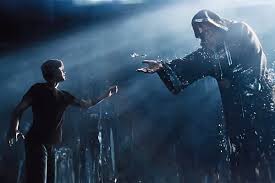
imagesWhich leads me to the question- as the latest installment in the long-running series, does Furious 8 have any gas left in the tank as it forges forward in the absence of Paul Walker? The answer to this question is a definitive “yes”, at least on the level of pure spectactle. It manages to find a way to kick this franchise up another notch, which is no small feat given that it has already sent cars parachuting off cliffs and jumping through buildings. As one critic suggested, if Fast 8 is anything, it is absolutely bonkers.


But the film also has a few things it needed to overcome, including a new director, the aforementioned loss of Paul Walker, and the new characters it is now looking to establish.


Director F. Gary Gray takes over from James Wan, who helped infuse Furious 7 with a necessary and timely emotional resonance (along with some insane and technical stunt pieces), and Justin Lin, who was at the helm of the now legendary Fast Five and Furious 6, which many recognize as the best in the franchise. Since Fast 5, the series has made a progressive move away from the confines of the humble street race and towards the more Bond-like espionage stories of recent years. And this is the direction Gray continues to drive the series, elevating this aging group of ragtag street racers to the role of saving the world from the possibility of World War 3 (or something like that). And given that The Fate of the Furious is the first in what has been advertised as a new trilogy within the series, suffice to say we are probably going to see more of this clan attempting to use their cars (and their skills behind the wheel… it’s about the driver, not the car after all) to save the world.

And I am perfectly fine with this choice of direction, because does it really matter how these characters managed to find themselves with the responsibility of carrying out a government sanctioned mission to absolve a nuclear threat in Siberia when it means we get to watch a car chasing a submarine over a frozen sea of ice (or is the submarine chasing them, it is never quite certain)? These are the kinds of questions that have never really mattered when it comes to Fast and the Furious.


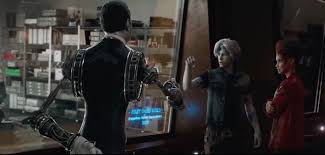
Gray also has the unenviable task of navigating a new cast and changing character dynamics. Walker had become such an integral part of this franchise’s character, and the bond between Dom and Brian so strong, that figuring out where and how to move the franchise in his absence was bound to be at the top of Gray’s to-do list. The Fate of the Furious thus becomes something of an experiment, as Gray plays around with the current cast while infusing the “Furious-verse” with some new faces (including Charlize Theron, who plays the villain of the story with a rather darkly comic intensity, and the return of Statham, who has now, for some unknown reason, been enlisted to join the ranks of the good guys despite his past actions). There are plenty of dynamics that work amongst this bunch, most notably between Statham and Johnson where the chemistry simply flies off the screen with a giddy enthusiasm and superhuman presence. images-1These are two guys that really understand which movie they are in.

We also see some scene-stealing moments from Gibson and Ludacris, who play off of their teammate’s dominating display of over-the-top bravado to give us scenes like flying over the frozen Tundra on a car door.


With all of this potential chemistry though, the most interesting question that seems to haunt Gray is what to do with Diesel himself. MV5BMjM5MDc5ODQ3MV5BMl5BanBnXkFtZTgwMDk3NDczMTI@._CR383,112,1407,1054_UX614_UY460._SY230_SX307_AL_Dominac is, after all, still driving the heart of the story. This time it revolves around the question of whether Dom has turned bad or not. And as we begin to discover the answers to this question, it becomes increasingly difficult not to wonder whether Diesel will (or should) end up riding off into the sunset at some point in the near future. We get this sense already in some of the later films in the franchise, but here it seems like the horizon is that much closer. Even the title hints at some sense of finality, and Dom’s character would be the most likely choice to bring to a close.

This even begs the question of whether the series itself will follow Diesel in this same direction. The rumor of Fast and the Furious spin-offs certainly tips its hat to the possibility. But no matter how one imagines this potential future, Dom feels like he will play a pivotal role in one way or another in determining how it all moves forward.

Gray provides us with a strong sense of symbolism in the wonderful opening sequence back in Cuba, a scene that returns us to the spirit of the original, and sets Dom in a nostalgic light. Dom seems aged, a bit slower, and according to his own admissions, ready to even settle down. That is until he ends up being pulled back into the fray once again.

Given what they do with Dom’s character from this point, it is hard to consider where else they could possibly take him in subsequent films. And frankly, no one would blame Diesel if he ends up using these next films to transition out of the Furious-verse for good. His is a job well done, and a rest well deserved. But here is where things get interesting for Gray, who remains entirely aware of what his absence would mean for the Furious-verse as a whole.


Dom was always the one to keep things grounded. He played it serious, and in doing so he balanced the tonal effects of the film against the more over the top physical displays. He embodied the now familiar moral undertones that made the theme of “family” so prominent in all of these films. If, as this film suggests they might, Hobbs and Shaw end up embodying this Dom/Brian relationship moving forward, Gray (if he completes the next two of this trilogy), will likely find himself having to navigate these tonal shifts in different ways (for better or for worse).


But, for the time being, The Fate of the Furious proves that it is content to live in the moment, to throw caution to the wind as it continues to one-up itself over and over again (I mean come on, The Rock hangs off a car door and stops a torpedo). Whatever comes of the future, for now, this is, as they say, about the cars and those who drive the cars.


244130a439a6ad27fc80bdb079c19fb1

As the most physical film of the bunch to date, Fate definitely earns its place and then some as it offers us one jaw-dropping scenario after another. But more than that, behind all of this “bonkers”, that familiar cultural imprint remains- the theme of brotherhood, of fatherhood, and family. The theme of living in the present while remembering the past, and living life in full throttle no matter what the future holds. And while Cipher (Theron) insists that Dom is lying to himself if he believes any of this actually matters- in her worldview it doesn’t, Dom continues to remind us that life does matter. The prayer of blessing that marks the closing sequence becomes an honest reflection of this very sentiment, of looking to find joy in what we have been given, and of remaining aware of just how easily these things can also be taken away. And this picture of death and life, which is painted in such an odd way through the sheer number of moments in which this crew manages to escape death throughout is film, ends up connecting the loss of Brian to the idea of new life in a rather hopeful way.

And it is here where we learn to live life a quarter mile at a time, something this franchise continues to do with wonderful precision.


An End and a New Beginning- Resurrection in the Gospel of Mark

As I come to the end of Mark’s Gospel narrative, I find myself struck with the idea that this is not actually an ending at all, but rather a picture of a new beginning.

To Jerusalem and Back
The repeated call to look and see Jesus on the Way, the Way of the Gospel (the Way of God), is what eventually set my sights on Jerusalem as I continued to read through Mark over these past months. The repeated call to follow Him on this way turned my sights even further towards the cross and the promise of the Resurrection.


And all along the way, on the road to Jerusalem, Mark (in the power of the Spirit, mind you) continued to teach me something about what it means to live into the Kingdom language that saturates his narrative. He taught me that following Christ is about learning to live into the idea of the forgiven and forgiving life.


This is what it means for me to embrace the person and work of Jesus in my own life, the One who positioned Himself in the most unlikely of places with the most unlikely of people in order to demonstrate this forgiven and forgiving life on my behalf. The one who ultimately found Himself hanging on a cross, not with his disciples sitting on his right and left, but between two criminals, in order to give me new life in a world that is so full of suffering and death.


When John the Baptist first arrived on scene and called his audience to turn their eyes in a new direction (to repent), I was left with this feeling that somewhere around the corner, somewhere on the next page, I was bound to find something unexpected. The twists and turns that Mark’s Gospel takes did not disappoint. This Gospel turned out to be a grand and exciting narrative, and even though I have read through it before in the past, what was most unexpected, most surprising about it this time, is just how much of it I had managed to miss.


And for me, granting the general consensus of scholarship which excludes the final portion of the text (16:9-20) as not original and a later addition, the accepted (original) ending of Mark stands as a perfect example of these unexpected places in Mark. It is, in-fact, as I have already said, an ending that managed to bring me all the way back to the beginning- a new beginning if you will. It is an ending that perfectly weaves the conviction of Mark’s opening (the Gospel of Jesus Christ, the Son of God) with the uncertainty of his closing (and they said nothing to anyone, for they were afraid). It is the kind of narrative puzzle that sets our eyes on Jerusalem, only for us to arrive and find that the answer to this narrative puzzle “is not is here” (vs. 6), but somewhere else. And in the Gospel of Mark, where the Gospel really ends (and begins again) is back in Galilee.

 
Going Before you to Galilee
Scholars continue to puzzle over the meaning of Christ’s return to Galilee in the end of Mark. However, even though there is no way to be certain, I find that Mark seems to use the setting of Galilee to return us to the place in which he began this journey. Here in these early moments, we find Jesus passing alongside the Sea of Galilee, calling his disciples saying,


“Follow me, and I will make you become ‘fishers of men’.”
– 1:17


In the remainder of Mark’s Gospel, we watch as Jesus goes before them and prepares the way for them to follow Him and become fishers of men (“disciples”). Ultimately He goes before them all  the Way to the Cross, demonstrating what it means for us to become the least so that others can be first, and to become servant to all for the sake of all.

And now, in the final words of the Gospel of Mark, we find Jesus returning to Galilee once again, just as He promised Peter He would in 14:29 (thus his instructions to tell Peter this news by name). He does this in order to show us that the work He accomplished on the Cross, of embodying and conquering the power of death and the principalities that continue to hold our world captive to its sin-full nature, is in-fact not yet completed. The journey continues, and it continues in us. In the light of His Resurrection, we are now given the power to live beyond this curse by becoming a servant to all for the sake of all and calling the world back towards the healing and restoring power of Jesus and His new Way of living.


The Scattering and the Gathering
What is interesting is that Jesus’ promise to Peter in 14:29, the promise that He would go before him to Galilee following His Resurrection, seems intimately connected with the image of the scattering in this same verse. That the sheep will be scattered and will fall away is something that conjures up a continued theme of exile and slavery in the Israelite/Jewish story. “BUT” I will rise, and I will go before you to Galilee in order to call my people home once again, once and for all, just as I promised, just as you expected.


Thus, this move back to Galilee is a picture of what God is up to, has been up to, in moving His people out of exile and towards freedom from the sin that continued to hold them captive. The Cross and the Resurrection is God’s answer to the Jewish expectation of a new and restored Kingdom, and in Galilee we find a small picture of this restorative Kingdom, this return from exile, in the gathering of His early followers. Only for Mark, it is in Jesus that this Jewish expectation, this new and restorative Kingdom, also becomes the answer for the world at large.

This truly is an ending that sparks the promise of a new beginning, the beginning of the restoration of the whole created order.

What’s more is that this notion of “scattering” and “gathering” comes out of the Old Testament story of Zechariah, and what is significant about this picture in Zechariah is that it becomes an act of purification. This is what the Resurrection means, for us and for the world. The Sabbath might be past, but the Kingdom is still being built in us and through us (16:1), and it is from the familiar shores of Galilee that Jesus now calls each of us, regardless of our context, regardless of social status, to go out into the world to share this same message of hope with the world.


And here is the greater truth- as we go, it is in-fact the Resurrected Jesus that is still “going before us” in order to bring His work to completion on that great and glorious day. This is where we gain our strength and conviction. This is what brings us together as a single and renewed family of God’s sons and daughters. As the kingdom is being built in us, it is Jesus we are still being called to follow. As we continue to see the Kingdom, it is Jesus we are called to set our sights on and to “see” more clearly. And the more we see of Jesus, the less power we give to the things of this world that are working to divide and scatter us in their fight for our love and attention.


“Seek” and “see”- with Fear and Wonder

“He has risen; he is not here. He is going before you to Galilee. There you will see him.”
– 16:6


It is this truth, the idea that they will “see Jesus” again in Galilee, that leads the women in this passage to experience contrasting emotions- fear and amazement; trembling and wonder (vs. 8). For attentive readers of Mark, you can recognize these contrasting emotions as the same expression that marks all who meet Jesus in this Gospel.


There is something rather wonderful about this relationship between fear and wonder, something that seems to hit at the heart of Mark’s Gospel message; which is that we (as readers) would come to know Jesus, and that knowing Jesus would capture our hearts in a similar fashion. It is the fear that keeps us humble. It is the fear that moves us to always be watching, asking, waiting and pursuing a greater way of living. Fear leaves us unsettled, and calls us to embrace the messiness and the unexpectedness of this unsettledness as it pushes us towards a life of faith in what Jesus has done and is doing in our midst. This is where we find the freedom to truly wrestle with Jesus and the way in which He calls us to “go”, because, after all, the Way is not the easy road to take. It is not something that we should (or can) take likely. It intends to leave us uncomfortable, displaced from our old way of living, challenged to pursue something greater. It is a way that demands our whole self, our whole life, a way built on the life of sacrifice and service that took Jesus to the Cross. And yet, what Mark shows us is that when we are willing to wrestle with Jesus in this way, to encounter His call with trembling hands, we will also find the opportunity to be amazed, amazed by this Jesus who Mark sets out for us in the beginning of his Gospel- Jesus Christ, the Son of God, the one who died on the Cross and rose from the grave in order to share with us new life.


As the centurion remarked in his own moment of fear and amazement as he sees Jesus seemingly for the first time, “truly this man was the Son of God”.


Who Was and Is and Is to Come
It is really interesting to note the final words of Mark’s Gospel:

“And they said nothing to anyone, for they were afraid. “
– Mark 16:8

Once again, I am brought back to the beginning of my journey in Mark where it says,

“And he would not allow (even) the demons to speak, because they knew him 1:34).”


I wonder if the modern Church could learn something about what it means to encounter Jesus and be rendered speechless. Certainly this goes against some of the more louder and more bombastic tendencies of modern day evangelism tactics. But in the way that Mark chooses to end his Gospel narrative, I am reminded that knowing Jesus is about far more than mere words or expressions.


It is about a changed life.


And for as much as I see Jesus on the mountaintop in the Gospel narrative, it is the residence that he takes in the every day lives of unexpected people that truly shows Jesus for who He- one who loved and served and sought the hearts of His children without inhibition. In the same way, it is by taking residence in my life, in the up and down movements of my own faith filled and faith less-filled moments, that I find I am coming to know Jesus more and more as well.


It is in our moments of fear and trembling that we find the opportunity to be amazed, and is in these moments of amazement that we are able to allow God to open our eyes to what Jesus is doing. Knowing Jesus changes us from the inside-out, and it is because He is risen that we can claim the power we need to live as changed lives.Even when the Gospel doesn’t make sense, and even when an empty grave is hard to reconcile and to understand, the truth that Mark sets out to declare is that Jesus is still going before us to show us the way.


And so the story continues. Thankfully Mark’s Gospel doesn’t actually end in fear and amazement or the speechless. It actually ends in Galilee. The Resurrection of Jesus is simply the start of the call towards a new life in the already/not yet Kingdom narrative. Jesus took us to the Cross to show us the Way, to prepare a road for us to follow as we continue on the Way. And now, as we return to Galilee once again, Jesus invites us to travel this same road out into the rest of world, continuing to live out the Gospel of the forgiven and forgiving life as we go.

Finding the Light of the Resurrection in the Shadow of the Cross- Reflections in the Gospel of Mark

“When I drink it new in the kingdom of God.”
– Mark 14:25


The Gospel story is, at its heart a Resurrection story. But as Mark reminds his readers, this Resurrection story, the promise of new life, is being told through the betrayal and the cross. Resurrection life is found in the life of the suffering servant who embodied the incredible love of a God, a love that would go to the ends of the earth in order to declare our identity as a beloved and cherished child of God.


The Betrayal
In these latter chapters of Mark we find the plot thickens and the pace quickens, and in the opening of chapter 14 Jesus’ predictions of the suffering, death and resurrection are now beginning to come to fruition. Mark uses the contrasting picture of a growing crowd of followers and the growing hostility of his opposers (as Jesus stands before Pilate, Pilate assumes the crowd will save Him, but the opposition instead chases the crowd away) to accentuate the gravity of what is about to happen. But as we encounter the plot to kill Jesus, Mark also offers us a rather stark picture of personal betrayal,  shaped by two of Jesus’ closest followers- Judas and Peter. Mark uses theses two stories to reveal an important truth- that all of this happening according to the “the fulfillment of scripture”:

“As it is written”, Judas will betray him (14:21).

“As it is written”, Peter will betray him (14:26-31)

And as we enter the garden and we find Jesus finally being arrested, his words ring true and clear- “let the scriptures be fulfilled.” 

Unfortunately, following these words we find out that “they all left him and fled”. This is the picture Mark leaves us with on this first “Good Friday”. It is dark. It is lonely. It is no wonder “they began to be sorrowful” (14:19). The road that Jesus is on, the Way in which we are being called to follow, feels incredibly difficult and lonely, and in-fact, it is a road that no one seems willing to follow now that the Cross is being made visible. In Mark 14:27, Jesus describes it as a scattering, a picture of chaos and disunity.


And yet in these same words we also find something incredibly hopeful. When Jesus offers Peter’s eventual betrayal as an image of this “scattering”, He is reaching back into the story of Zechariah (Zech. 13:7). He connects the cross to the story of Israel and the exile. But the powerful truth about this story is that, in this same passage God is also up to something good. We find He is in the business of purifying and restoring His people. He is working to bring them back and to unify them once again according to a greater vision for them and for the world. And now we find that this unifying picture, this gathering of His people, is the work of Jesus and the Cross.


As Jesus says to Peter in chapter 14, even in the midst of the scattering he can hold on to the hope that Jesus will be raised up, and that He will go before Him to Galilee. He offers Peter a picture of the covenantal promise of God to gather and bring freedom to all the nations of the world.


This is the hope that we find in the cross as the “fulfillment of scripture”, and there is perhaps no greater picture of this hope than the Passover itself, which now becomes the chosen setting of Jesus’ predicted death and resurrection.


The Passover

“Discussions of Jesus’ last Passover have tended to focus narrowly on the words he reportedly said at the Last Supper. These are important… But it is the larger context that makes all the difference. “
– Wright, page 171 (The Day the Revolution Began)


What matters… is that Jesus chose Passover to do what had to be done and indeed to suffer what had to be suffered. This alone already tells us that he had in mind a highly dramatic and story-laden climax to his public career; this, it seems, was how he believed Israel’s God would become king.”
– Wright, page 180 (The Day the Revolution Began)


If the whole temple scene of Mark 11:12-18 brings us back to Moses’ confrontation with Pharaoh (as Wright goes on to suggest), the Passover itself pushes us straight into the heart of the slavery and exile itself. And the point here is two fold. The exile persists as a picture of a people longing to be freed but never being truly freed, both from their oppressors and from their own idolatry. By setting the cross in the event of the Passover, Jesus declares that there is hope, there is freedom still to be found.

As Wright wonderfully points out, what follows the exodus, what is at the heart of the exodus, is the building of the tabernacle. This is the defining moment of this story. A place where God will dwell within the world and amongst His people. It is a precursor of the temple that is soon to be built, and after all this talk of and time spent in the temple in Mark chapter 11-13, Jesus now uses the Passover itself to explain the significance of what is about to happen- on the cross Jesus is erecting a new tabernacle, a new temple, one that will signify the presence of God dwelling in their midst once again. It is a story of a God who is calling His people back from the scattering once and for all. In a story where exile has led to exile, and the promise of their exodus feels frustratingly incomplete and broken all these years later, Jesus now points to the Cross and His resurrection as the means by which God will usher in the promised new Kingdom that they have been waiting for.


As Jesus stands in the shadow of the cross, it is the promise of resurrection that becomes the light that creates the shadow. This is the Way He must travel and the Way we are called to follow, but we must not lose sight of the fact that this is the Way into the coming Kingdom, into the light. The Kingdom of God in Mark is a Kingdom that is being built on the person and ministry of Jesus, with stones that cannot be overthrown. It is being built on the example of a servant who is giving up his life in order to bring the new Kingdom, the restored creation to all nations and all people who can now see and hear the truth about who truly are as a part of this restored creation- beloved and cherished children of God.


The New Kingdom

“Are you the King of the Jews”
-Mark 15:2

Who are you? Who am I? Who is this?

These are the questions that have been following Jesus throughout His ministry. These are the questions that now follow Jesus to the cross. These become the questions of the court and trial themselves, and as readers these are the questions that Mark continues to see as the most important for us to ask. Who is Jesus, and what did He come to do? And it is here that the truth, the plot twist that Mark lets his readers in on during his earlier chapters, now catches up with his characters. In this case, namely a centurion who finds himself taken aback by the reality of what is unfolding right in front of him:

“Truly this man was the Son of God!” (Mark 15:39)

Not simply the son of David, but the son of David’s Lord.

And it is in this place, in the shadow of the cross, and in the light of the coming resurrection, that Israel finds its new King- a King for the world, a ruler for the coming Kingdom of God that is being built in the here and the now. And in the centre of this kingdom a new temple is being built, a temple in which the curtain has been torn and the presence of God is being made visible. This new temple is to be the hope for the world, the true expression of God with us and for us.

A Hope Found In Unlikely Places
The cross itself remains the most shocking part of this story. As the story is placed firmly in its Jewish context, it is this idea of a suffering Lord and a single resurrection happening in the middle of history (as Wright puts it) that shook up the Messianic expectation that informed it. And as we enter into this Easter weekend, it is this same idea that looks to shake up our own expectations.

And here is the great realization that comes with seeing Jesus hanging on the cross- the Gospel is a hope for the world and the fulfillment of a promise made to the exiled community of God’s people, but it is also intimately concerned with our own story, with us- Jew or Gentile. And to help us to see this more clearly, Mark offers us some intimate portraits of individuals who emerge at this point in his narrative from the most unlikely of places:

 Joseph:

Joseph of Artimathea, a respected member of the Council, who was also himself looking for the kingdom of God…” 15:43

This is such an interesting story. Joseph seems to come out of nowhere to play a significant role in the Passion narrative. Mark wants us, as readers, to be aware that it was this man named Joseph, whom Matthew describes as a rich man and whom both authors describe as respected member of the Jewish council, who was the first one to approach Jesus in the aftermath of His death, choosing to go out of his way to get Jesus off the cross and to give Him a proper burial.

What is fascinating about this story is this little bit of information that Mark provides us about Joseph’s motivation- He was a respected member of Council “who was also himself looking for the kingdom of God”.


There are a few standing theories about who this Joseph was, but the one that captures my attention the most is connected to Matthew’s description of him being a “rich man”. I wonder whether this was the same “rich young man” that we meet in Mark 10:17-31, the one who came to Jesus and went away disheartened. I also remain curious whether this is the same “young man” who we see following Jesus in Mark 14:51-52 before slipping off into the shadows. The inclusion of the detail of the linen cloth, which resurfaces in the story of Joseph, is at the very least curious.


But here is why I like this theory, even if there is no way to know if it is actually true. That this rich young man continued to look, to pursue, to seek Jesus and the coming Kingdom is a rather amazing thought to consider. That Jesus used this rich young man to make a point about how difficult it is, how impossible it would be, to enter the Kingdom of God on our own efforts, on our terms, and then to find Mark using this same man to show just how far God’s love will actually reach, is compelling to me, especially as I ponder what the Cross means in my own life. As Jesus said in response to the rich man’s sorrow, “but with God, nothing is impossible”. In the midst of the sorrow that surround the cross, and even when things feel absolutely hopeless in my own life, and when I feel caught in my own seemingly endless struggle with idolatry, it is on the Cross that we discover a hope that knows no boundaries.


The Anointing of Jesus- the leper and the woman
Likewise, sandwiched between the plot to kill and the plan to betray Jesus is another hopeful story- the story of Jesus being anointed in Bethany by a woman who is seeking Jesus out (14:3-9).


This story is notoriously hard to navigate, as it finds itself caught between competing versions within the subsequent Gospels (Matthew, Mark, Luke and John). In three of the Gospels at least (Matthew and Mark remain closely hued), the story is nuanced in slightly different but important ways, with each author using it to serve the purpose of their unique narrative.


Now, of course, I don’t have answers as to how these differing accounts piece together. Maybe they are representative of two existing stories, or maybe they are all retelling the same story. But the fact that the story persists in the way that it does, and the fact that each author has found something unique to pull from it as they each consider Jesus and the truth of the Cross, actually makes this story (for me) all the more powerful and significant and integral. After all, as both Mark and Matthew record, “truly I say to you, wherever the gospel is proclaimed in the whole world, what she has done will be told in memory of her.”


So, in the context of his Gospel, how does Mark remember this story? Where do I find hope as a reader in a story that is seemingly blanketed by such a sense of hopelessness?


I find hope in three aspects of this story in Mark. First, I find hope in the house of Simon the leper. Here Mark shares in the spirit of Luke’s account, reminding us of how the Gospel works to reshape our understanding of who belongs and who doesn’t belong in the Kingdom of God. In the moments leading up to His death, the woman in this story seeks Jesus out and finds Him in the house of a social outcast, a leper. Her story reminds us that, at the cross, belonging in the family of God knows no boundaries. For Mark, the Cross is the ultimate expression of Jesus Himself and the ministry God has been building all along, which is a hope for the world and a Kingdom for all nations. And here, in this story, Jesus extends this invitation to belong in this Kingdom, to embrace our identity as a beloved Child of God, into the most unlikely of places.


Secondly, in the story of Jesus’ anointing, in the seemingly unexpected context of Simon “the leper’s” house, I also find hope in the idea that the anointing itself completes the picture of the triumphal entry into Jerusalem. That Jesus’ arrival in Jerusalem and His being declared King finds its royal anointing in such a humble context is a testament to the nature of the Cross itself. We cannot miss this in the flurry of kingship and kingdom language that covers his Passion narrative.  This is where we are able to understand the way in which the Cross is working to reach into our own unlikely places.


And finally, I find hope in Jesus’ response to this anointing and the woman’s apparent courage (to enter the house of an outcast, a stranger, in order to find Jesus on the Way). He says, the Gospel “will be proclaimed in the whole world”.


While the memory of what she has done here seems to have lived on in the reality of its inclusion in four different Gospel narratives, it is this truth that stands even taller. The Gospel will persist into all the world. The promise of God will be completed in the light of the resurrection narrative. There is hope in the darkness, hope in the exile, hope in even the smallest most forgotten places of our broken world. These are the places that the Cross seeks to align itself with as it proclaims, along with the centurion, that Jesus truly is the Son of God, the King of the Jews, and the saviour of the world.


And how amazing it is that Jesus invites us as a community of God’s children, accepted and loved without condition, to drink this same cup, the new cup of his suffering and sacrifice that now shapes us, restores us, heals us and feeds us. It is by sharing in this cup, by remembering the way in which Jesus and the Cross is making us new every day, that we find unity in the midst of the scattering.

So, may God call me, and each of us, back to the Cross this Easter season as He continues to build His Kingdom for the sake of the world, a Kingdom that is weaving each of our stories into a single picture of the love of God for all the world.

A Fig Tree, A Temple, and A Colt- Finding Jesus at the Gates of Jerusalem

And just as Bartimaeus picks himself up and begins to “follow him (Jesus) on the way”, we finally arrive in Jerusalem- the Gospel Way, the Way of God, appears to be reaching its climatic moment.

And it, this Gospel Way, arrives on a colt, borrowed from some unlikely locals and comes echoed in the streets by the words of an impoverished people.

“Hosanna!” they shout. “Blessed is he who comes in the name of the Lord. Blessed is the coming kingdom of our father David!”
– Mark 11:9-10

Having recently finished N.T. Wright’s insightful “The Day the Revolution Began”, I find myself paying much more heed to the context of these words as the hopeful expression of an expectant Jewish culture. It is, after all, from out of this hopeful expression that we find the hope of Jesus being expressed to the world. And it is out of this hopeful expression that we can also make sense of just how unsettling and confusing it would have been for them to hear “the Son of Man will delivered over to the chief priests and the scribes, and they will condemn him to death and deliver him over the Gentiles.”

The Power of The Temple Text
The first place we find Jesus going when he arrives in Jerusalem is to the temple (11:11), and the first thing we find Jesus doing in Jerusalem is “overturning” life in the temple.

One does not need to look far to recognize the importance of the temple in the ministry of Jesus, and throughout Mark’s Gospel we find Jesus moving in and out of the temple in both physical and symbolic reference.

In Jewish culture the temple was incredibly important. N.T. Wright describes it like this:

“When Solomon built the Temple and dedicated it with great pomp, splendor, and the sacrifice of thousands of animals, the divine Glory did indeed come to dwell in it. The magnificent scene is described in 1 Kings 8, which comments that the priests were unable to stand before the glorious divine Presence (vs. 11). This description resonates with what happened when the tabernacle was constructed and dedicated in the wilderness (Exod. 40). The creator of the world had decided to take up residence in this building in fulfillment of the promises made to this royal house. Here was the spot where heaven touched earth, where a “little world” came into being as a sign of the ultimate intention that the divine Glory would fill the whole earth (Ps. 72:19).”
-Wright, The Day the Revolution Began, pages 111-112

Wright goes on to say in this same section that, “the building remained the focus of prayer, sacrifice, and pilgrimage for the great festivals up to the time when the Babylonians destroyed it in 587 B.C.”, and even after it was rebuilt (and ultimately destroyed once again), Wright reflects that even still, “centuries later” the “rabbis looked back on this (second temple period) and “produced a list, with a sense of gloomy resignation, of all the ways in which the Second Temple was deficient in comparison with the First Tempel”, namely in the absence of the presence of God Himself.

“To these questions the New Testament writers offer an answer that is so explosive, so unexpected, so revolutionary, that it has remained entirely off the radar for most modern readers, including modern Christian readers… the moment when that Glory is fully unveiled is the moment when Jesus is crucified.” (Wright, page 113)

It is in the light (and the shadows) of the temple and temple life that we find the history of the Israelites being shaped, not only in the telling and retelling of their central temple texts- including the great creation narratives, the exile and Passover, and God’s promise being made visual in the picture of the promised land- but also by producing a fervent longing in the face of the shadows- namely the persistent story of exile that Wright considers continuing today. And so, as Jesus arrives in Jerusalem, we find Him heading straight to the place of this divine presence, the dwelling place of the most high that once (and still) reflected the means of God dwelling in their midst… and he overturns it. By doing this Jesus realigns our sights away from the state of this gloomy resignation that Wright has pointed out, and towards the reality and accomplishment of His death and Resurrection. The revolution, to borrow from Wright, is about to begin.

And here is where we arrive at the heart of this revolutionary message. As Jesus overturns the temple, he also goes on to speak to the temples (un)foreseen future. “There will not be left here one stone upon another that will not be thrown down.” The state of exile, that frustrating state of sin in the world, persists. But hope, the resurrection hope that formed out of the prophets and their Messianic expectation, will come from an unexpected place, from the foot of a cross. “The stone that the builders rejected has become the cornerstone!” (12:10) Jesus declares He is the embodiment of the temple text, written on the hearts of the people and bringing life to an ancient promise that is intended to be shared with the world.

The Power of the Kingdom
“Blessed is the coming Kingdom of our Father David”

In chapter 12 Jesus famously aligns the kingdom of David towards the Kingdom of David’s Lord. Where David’s kingdom remained mournfully incomplete, Jesus, this Jewish “Son of Man” being declared to be the divine Son of God, has arrived in the flesh to attend to their present condition; to do what was necessary to bring to fruition the Abrahamic covenant promise of a new Kingdom made for “all nations”, and the expected restoration of the whole created world. Only, as He enters through the gates of Jerusalem, this King would come to demonstrate the necessary Way of suffering and the Cross as the Way of bringing this to fruition. At the foot of the Cross Jesus demonstrates what it means to bring God’s immense love to all people- to become a servant of all, to become the least so that the least become first. To share in the exile so as to free the people from exile.

A Fig Tree and It’s Fruit
As Jesus and the disciples are making their way from Bethany to Jerusalem, they pass by a fig tree. Seeing that the tree was bearing no fruit (before they were in season, these trees would spring leaves along with the early buds, thus the first fruits would stand as the “sign” of the full fruit that was still come), Jesus curses the tree, declaring that it will never bear fruit again.

Passing by it again the next morning, the disciples (Peter) note that the tree leaves were now fully withered away. This leads Jesus to connect the tree to an important lesson about what it means to have faith in the Way of Jesus, the Way of the Cross. On the surface, the passage carries the obvious weight of judgment. Jesus causes the tree to wither and become useless. It has been judged for its lack of fruit. But underneath the surface of this judgment, I think the imagery of the tree bears much hope, and as readers, I believe we can see this hope more clearly by considering this passage in light of the “temple” themes that surround it.

The tree lacks the first fruits that would indicate it will eventually be fruitful. So Jesus curses it. In Chapter 13, Jesus walks through the temple, sees the separation of Jew and Gentile, and declares it equally “cursed to destruction”. If we see these two images as connected, the withering of the tree emerges as a symbol of the way in which Jesus is establishing Himself as the new (raised) temple. What Jesus is doing in overturning the temple is aligning Himself with the exile of the people and raising to life the work of God’s Kingdom in an unexpected and much more powerful way than they had experienced before. He is the new temple being raised again to new (and expected) life, and this temple, this person of Jesus, will be the heart of a new Kingdom being established for all nations and all peoples, a king coming by way of a donkey, by way of the Cross and the Resurrection of the new temple itself.


What is striking is the way Jesus uses this image to speak of faith in terms of an already/not yet dichotomy. As they look and consider the fig tree, they are called to consider what it means to have faith in the here and the now. “Have faith in God”, it says. Or, have faith in what God is doing and is promising to do. The fig tree could only ever be the first fruit of what is to come. Jesus is the full fruit. Jesus will tear down the old temple and raise it up anew. This is what it is to believe that “all things are possible”, to believe that Jesus is who He says He is, and for us as modern day readers to believe that He will one day turn the first fruits, along with the whole of the created order, into a promised restoration.

Jesus goes on in 13:28 to revisit the picture of the fig tree, noting that the leaves on the fig tree signify spring, which means that summer is near. The Cross looms in the shadows, but the day of Resurrection is near. But look and see, even now Jesus stands in front of them in full view. Jesus is here, and He will come again. So let us live into His Way with fervor and with passion and conviction. Let us believe not just that this promise will come, but believe that we have already received this new life in the person of Christ Jesus in the here and now. This is what it means to have faith. And, as chapter 11 reminds us, the way we live this kind of faith out is by praying. And the way we pray is by forgiving. And so we have faith by learning to live into the forgiven and the forgiving life.

A Prayer for all Nations
If ever there was any doubt about what Jesus was doing on the Cross, he lays it out clearly in 11:17.

“My house shall be called a house of prayer for all nations.”

Just as Jesus used the fig tree to point us to the temple, Jesus points to the injustice that the current temple structure was inflicting on the people in its outer courts- the Jewish/Gentile divide. Samaritans, who were recognized as the result of Jewish people mixing with non-Jewish people during the exile- half-breeds, along with other gentile believers and seekers who did not share Jewish origins, were isolated to the outer court surrounding the temple. As an added feature of this time period, it was nearing the Passover Feast, a major Jewish celebration that would have drawn quite a crowd of gentile pilgrims from all over. The city at this time knew that these pilgrims would need an appropriate animal that met the requirements for sacrifice, and so conveniently set up vendors to sell these and other necessities in the outer court along with offering currency that they could use to pay the necessary “temple tax”. So, along with the fact that this outer court was a public area used sometimes as a shortcut or pathway to get into the city from the Mount of Olives (a main road), it would have been filled with people who were not otherwise allowed inside the temple itself.

So when Jesus declares His house to be a house for all nations, what He is overturning is the injustice that the current temple structure was enacting on the gentile world. Matthew replaces “all nations” with an even more specific term- the blind, the lame and the outcasts. And what is interesting about this passage is that Jesus is quoting, as He so often does, from the Jewish scriptures. In other words, as the “now” dwelling place of the most-High, Jesus is simply speaking to what God has been up to all along- raising up a people for the sake of the world as He has been doing through the fathers, kings, and the prophets. Jesus is realigning their vision away from themselves and towards the greater good of all. This is what He has come to bring to completion. This is why prayer and forgiveness are so intimately linked. We pray so that God can broaden our vision of how far His love reaches in our world. As has already been asked elsewhere in Mark’s Gospel, who can be saved? With man this notion of salvation is impossible. With God all things are possible. And so we are called to hope for the impossible to be made possible.

In the life of the whole created order, in the covenant made with Abraham and Noah, in Moses and all of the Kings and prophets that proceed from him in the story of Israel and Judah, we find this same message ringing loud and clear. “My house will be a house for all nations.” In the book of Jeremiah, we find a picture of an exiled community standing at the brink of a new age, a moment in which God’s covenant promise is beginning to unveil Jesus as the hope for the world. In Ezekiel, a prophet who was speaking to the nation of Israel at the same time as Jeremiah, it uses another image of a tree in 17:22 to reflect this unveiling:

“I myself will take a branch from the lofty top of a cedar and set it out, plant it on a high and lofty mountain… and in doing that all trees of the field shall know that I am the lord. I bring low the high tree, and make high the low tree, dry up the green one and make the dry tree flourish… I the Lord have spoken, and I will do it.”

The focus here is on “I will, I will”. And here is the thing. In the picture that Jesus offers us in the fig tree in the Gospel of Mark, the call is to have faith in what Jesus is doing and will do, the same kind of faith Jeremiah called the exiled people of Judah to have in 24:1-10, where we find the prophet using the same metaphor of a fig to speak to what God will do in raising up a new covenant with the house of Israel and Judah (31:31). This is to be a new covenant in which the house, the dwelling place of God, the new temple-Jesus- now takes resident in the heart (31:34) rather than a building. The call in Mark is then to participate in what Jesus is doing by praying and forgiving and living, just as the call in Jeremiah was to take root in this exiled land and to grow a family, get jobs and live life as a people set apart to be a witness to the world and a life that is being restored to its original purpose.

The very mention of a fig tree in scripture would have indicated in Jewish understanding that the nation of Israel, or the temple, was in view. Likewise, whenever the nation of Israel or the order of the temple was in view, usually we find a leader, a prophet, a King being sent to the city gate to echo this new covenant promise. This is where we find Jeremiah in chapter 7, standing at the gate of the Lord’s house, echoing another piece of this passage in Mark as he calls the people to consider,

“Has this house, which is called by my name, become a den of robbers in your eyes?” (Jeremiah 7:11)

This same house in which they stand chanting “This is God’s temple, this is God’s temple, this is God’s temple” (7:4) is also being used to execute injustice in the way of stealing, suppressing the foreigner and the traveller (the outer courts), oppressing the fatherless and the widow, and shedding innocent blood (murder) on its steps (7:5-9). This sounds more like “this is my temple, this is my temple, this is my temple”, not a temple for all nations, for all peoples.

And so now Jesus stands on these same steps, saying “I am the temple, I am the temple, I am the temple”, a temple for all nations, echoing these same words in Jeremiah as if to say, “look and see”, the time has come for me to “plant and not uproot”, to “give them a heart to know that I am the Lord and they shall be my people and I will be their God.” They (God’s people) “will return” with a whole heart, with a restored heart (24:4-7).

And it is this truth that should cause us to join in singing “Hosanna in the highest” along with those who lined the streets of Jerusalem in hopeful expectation of what was to come. And now, as Good Friday and Resurrection Sunday approaches, let us keep our eyes open for the unexpected.

Healing, Faith, and Giving Sight to the Blind- Learning to see the Road to Jerusalem Anew

“Rabbi, I want to see.”
– Mark 10:51

Over these last few months, I have really come to appreciate the way in which The Gospel of Mark has been bringing the story of Jesus to life in a new and fresh way. He has been opening my eyes to the universal call of Jesus, the call to follow Him on the Way into the forgiven and forgiving life, and there have certainly been more than a few moments where this has given me pause and pushed me to consider where I am on this journey.

The story of blind Bartimaeus, the passage I have been reflecting on over the course of this past week in preparation of the Triumphal Entry, is no exception. As Mark continues to lead us on the road towards Jerusalem, he offers us a final picture to help us consider what lies ahead- a contrasting picture of sight and blindness, of material poverty set against the riches of faith, And it is through these two pictures that Mark ultimately uses this story to set our sights on the universal call to follow Jesus to the foot of the cross.


Two parts of a single story
Whenever I hear the story of Bartimaeus, there are two things that typically come to mind- the healing and the faith that led to the healing. However, this week has managed to uncover another aspect to this story that I had, up to this point, failed to consider, and that is “the call”.  As Catholic theologian Maarten J J Menken argues, it is actually the call that turns out to the be most significant part of this passage:

“This literary form (the call narrative) appears three times in Mark’s Gospel: first in the story of the calling of Simon and his brother Andrew (1:16-18), immediately afterwards in the story of the calling of James and his brother John (1:19-20), and then in the story of the calling of Levi (2:14).”
– M. J. Menken

Menken establishes in this article that the story of Bartimaeus is formed around the phrases, “get up, he is calling you” and “(he) followed him on the way”, both of which reflect familiar characteristics of the call narrative. Also noted is the fact that the beggar “throws off his cloak” and leaves everything behind to follow Jesus, another dominant characteristic of the call narrative.

So why is this important to note? It is in the call to “follow” Jesus (on the Gospel Way) that the healing of Bartimaeus is actually given a greater (and arguably proper) context, and it is from within this context that the themes of faith and healing emerge as a symbol of:

a) the Way in which Jesus is heading (towards Jerusalem, towards the cross), and
b) the life (of faith) that we are now called to embrace as we follow Jesus and participate in the ministry of the cross.

The Healing Symbol- Understanding The Way in Which Jesus is Heading
I think one of the reasons the healing in this story remains so predominant for me is that it would seem that Mark has strategically positioned it alongside a second “healing of a blind man” story. In both cases, the (physical) healing appears to sit at the forefront.

In terms of its literary function, I believe this is most likely intentional. Mark is essentially bookmarking the three foretelling passages that define chapters 8-10 with these two healing stories (the other being the story of the man at Bethsaida in 8:22-26), and by setting these stories both in front and behind these three foretelling passages Mark is able to do two things. First, he opens our eyes (as readers) to the importance of considering the importance of where Jesus is heading (See, we are going up to the Jerusalem… to suffering, death and resurrection 10:33). For his original audience, Mark is slowly supplanting their expectations (of a Royal ascent to the throne) with the unexpectedness of the cross as the way in which this ascent will take place.

Secondly, Mark uses these healing narratives to help paint a picture of our response to this new reality, this unexpected paradigm, by positioning the disciple’s initial resistance against the faith of these two men who regain their sight. By doing this Mark uses the physical healing to uncover a larger spiritual truth- when we take up the call to follow Jesus, we are also embracing the nature of the cross.

The Healing Symbol- Following Jesus into a life of Faith
The final verse of Bartimaeus’ story points us to the subject of faith as the driving force behind Bartimaeus’ healing and response. It says it is his faith that made him well, but this also leaves us as readers potentially asking, what is this faith really all about?

As N.T. Wright suggests in his book The Day The Revolution Began, the Jesus of history must first be understood from within the Jewish context that He emerges from, a part of a Messianic expectation, a King who would overthrow the pagan oppressors. It is from within this expectation that we gain context for the hopeful idea of a Royal Ascent, the reestablishing of David’s throne. In the story of Bartimaeus, we find Mark including reference to the title “son of David” (vs. 47), a title that conjures up thoughts of this Jewish expectation, a part of this waiting and looking for a new Kingdom to be established by God’s hand and through an anointed ruler. This would be a kingdom that could then look forward to the resurrection of all God’s people and the re-establishment of God’s created order in the end of days.  It is important to recognize as well that this expectation is being born out of prevailing oppression and repression- these were a broken people looking for healing, a divided kingdom looking for unity, the presence of God being once again established in their midst through the rebuilding of a city and a temple.

But here we arrive at the conundrum that the Gospel signified for this broken people. The cross upends these expectations. As N.T. Wright fleshes out, they had a paradigm through which to understand the notion of a King. They would even have had context for the idea of sacrifice (the sacrificial system). However, the idea that the King himself would suffer and die and raise again, in a single resurrection “in the middle of history” rather than a collective resurrection at the end of time as Wright puts it, would have arrived without paradigm, without prior context.

And so, as Jesus says look, the Son of Man will be delivered over and condemned to death and after three days he will rise, His words would have arrived well out of view of their sight lines, well out of line of the direction in which they were looking. Yet this is the direction that Jesus is now asking them to follow, and it is a direction that, most certainly, would have felt uncertain and unclear and confused.

The cross is an idea that requires faith, faith in what Jesus is doing, faith even in the truth of our own blindness. Recognizing that God’s ways are not our own is where faith begins, and it is this kind of faith that empowers Bartimaeus to not only seek out Jesus (it would seem with fear and trembling… have mercy on me is his request), but to throw off his cloak and embrace Jesus’ outpouring of mercy in the midst and his own oppressive circumstance.

Here is the truth- this kind of faith is a risky business. It demands sacrifice, and it even demands response far before the full healing occurs. As Christians today, we are likewise called to believe in what God is doing in our midst before we see the fulfillment of His promise for a New Jerusalem completed.

But for as risky as it is, faith is also where we find healing in the here and now. This is where the healing image finds its power, and this is where we can begin to see that the healing of the blind man is about much more than simply physical healing. This is a healing that imagines a new kingdom being established at the foot of the cross, in the muddle and the mess of a broken world. This is a healing that imagines the universal reach of God’s love in the midst of this brokenness and resistance. It is a healing that gains us a vision of God’s restoration purposes, even as we remain under bondage to the effects of sin- which is the death and decay of God’s great created order, the blinding of God’s intended vision. It is a healing that now finds life in death, hope in hopelessness.

 
Even further, and this is the great image of the Bartimaeus’ reponse, is that this is a healing that strips us bear and clothes us anew with the call to participate now in the forgiven and forgiving life that the cross strives to imagine on our behalf. And the more we participate in this, the greater our vision can grow for what God is doing now and in the age to come.

 
The Healing Symbol- The Forgiven and Forgiving Life
When I consider Bartimaeus as a call narrative, two things happen. First, I am able to recognize in the life of the outcast beggar (defined by the rebuke of the many) the truth that the Gospel of Jesus has a universal reach. This man would have been the last in line to receive the kingdom of God, and Jesus offers him the freedom to “take heart and get up” and join them on the Way. The great truth here is that at the cross I not only align myself with Jesus, I also align myself with the beggar. And far from leaving me an outcast, struggling on the sidelines as a spectator, this is where I find and am able to share in the invitation to “take heart and get up” along with Bartimaeus. This is where Jesus heals my own blindness and leads me towards a new way of seeing, a truth that, if I look back to Mark chapter 1, leads me all the way to the very definition of repentance- a turning to “see” in a new direction, an opportunity to live into a different kind of life than the one I am leaving behind- the forgiven and forgiving life.

It is interesting to me that when Bartimaeus recovers his sight, Jesus tells him go “your” way. And it says that Bartimaeus then follows him on “the” way. I find this significant, because when we encounter and follow Jesus, we are effectively embracing the Way of Jesus as our own. The cross now becomes our shared reality, and the company that we travel with becomes our shared community, our family.


Menken goes on to argue in his article that the crowd serves a purpose in this narrative. Words originally spoken by Jesus are now set in the mouths of the crowd, something that is juxtaposed against other narratives where the one saying “Take heart. Get up” is the healer himself. This becomes a powerful picture in Mark of the way in which we come to share in the Way of Jesus, to become participants in the life that Jesus models on the cross for us, a life that is built on the idea of the forgiven and forgiving life as the only means by which we can build a shared faith, faith in what Jesus has done and is doing in our midst through the reality of the cross.

Faith, Forgiveness and the Prayer of the Rabbi

“Have faith in God,” Jesus answered. “Truly I tell you, if anyone says to this mountain, ‘Go, throw yourself into the sea,’ and does not doubt in their heart but believes that what they say will happen, it will be done for them. Therefore I tell you, whatever you ask for in prayer, believe that you have received it, and it will be yours. And when you stand praying, if you hold anything against anyone, forgive them, so that your Father in heaven may forgive you your sins.”
– Mark 11:22-26

If faith is the kind of confidence that Bartimaeus exhibits in his response to Jesus, the kind that can command mountains to move at will, what is clear from this passage in Mark 11 is that it is actually Bartimaeus cry (prayer) that remains the most significant part of this picture of faith.

“Jesus, Son of David, have mercy on me.”

As I said earlier, faith is a risky business, and here in chapter 11, these further words of Jesus go on to explain why faith is so risky.

It is on the cross that Jesus sheds light on the most difficult part of living as a family, in community with God and others- the forgiven and the forgiving life. It would seem that moving mountains might be the most difficult part of this passage, but where Jesus ultimately lands is on forgiveness. And not simply in terms of moral restitution- as N.T. Wright would point out, that would be thinking in far too narrow of terms- but forgiveness as a way of a life, forgiveness as a way of embracing a Gospel that has universal reach. Faith by nature sets us in the midst of a shared community. It reminds us that this life of faith is not only internal, it is external, not simply personal but social. In other words, faith is a family affair, and we all know family can be incredibly messy.

As I said earlier, when Bartimaeus declares Jesus to be the “son of David”, he is speaking in terms of community, a community that reaches all the way back through the history of God’s chosen people. It is a community that God raised up to be His witness for the sake of the world, and it is out of this tradition that Jesus arrives to call all of us to become a witness for the sake of the world. When Bartimaeus speaks as an outcast, he is speaking to the hope that Jesus will be able to provide him the means to enter back into this community. And this is the true concern of all the healing stories in Mark, not the physical restoration, but rather the need to belong, the ability to re-enter the family of God.

Interestingly, this phrase by Bartimaeus is the only place where this title for Jesus appears in the Gospel of Mark, something that Jesus goes on to address in 12:35-37:
“While Jesus was teaching in the temple courts, he asked, “Why do the teachers of the law say that the Messiah is the son of David? David himself, speaking by the Holy Spirit, declared:

 “The Lord said to my Lord: ‘Sit at my right hand until I put your enemies under your feet.’ David himself calls him ‘Lord.’ How then can he be his son?”

 The large crowd listened to him with delight.”

Here Jesus uses this designation- Son of David, to set our sights even higher, towards the Son of God. The true delight of this statement is that this becomes the means by which Bartimaeus is able to not just see, but belong once again. This is the authority by which Jesus builds His kingdom through the lives of the last and the least, the means by which He enacts God’s intention of  this expected Royal Ascent. Jesus is indeed taking the throne, but when our eyes are opened, we are able to see that the New Jerusalem is being built on a hill, on a cross, and through the notion of the family of God, the raising up of a community for the sake of the world.

In the healing of our sight we are given the means for understanding the cross that awaits Jesus in Jerusalem. In the healing of our sight we are given the means for understanding what it means to take up this cross ourselves and to live into the coming Kingdom of God that the Resurrection of Jesus now upholds. And it is in the healing of our sight that we are able to consider that the suffering, the death and the resurrection all point us in a single direction- a shared community with God and others, a community that can only function through the forgiven and forgiving life that Jesus is modelling for us on the Way to Jerusalem.

This is why the final prayer of the blind man is so powerful.

“Rabbi, let me recover my sight.”

It is a prayer that all of us, I think, would do well to adapt into our daily life and routine. How often do I resist the cross along with the disciples? Every day if I am being honest.

So Lord, let me recover my sight this Easter season for what the Cross means for my own life. Let me recover my sight for what this Resurrection faith means for the world. And let me recover my sight for how I can participate in this risky business of faith, and become a greater witness of the forgiven and forgiving life.

Sources Referenced:

https://www.hts.org.za/index.php/HTS/article/viewFile/442/341

The Day The Revolution Began by N.T. Wright

The Rich Man and His Conundrum: Reflections on Christ’s Saving Work in Mark 10

“You lack one thing: go, sell all that you have and give to the poor, and you will have treasure in Heaven; and come, follow me.”
– Mark 10:21

I have a confession- I struggle with the idea of being counted as a part of God’s family, and verses like this often expose this struggle with this idea that I am not good enough, that I haven’t done enough to actually make a difference in this world, and, as a result, I often find myself tending towards the disciple’s response in verse 26, who proclaim with an apparent sense of exasperation over Jesus’ words to go, sell, and give more, “who then can be saved?”

This feeling that I have has much to do with past failure to live up to my own expectations of myself. I know this. I also know this feeling of failure over finding my place in this world, a place in which I can actually make a difference, that actually needs what I have to offer, has more to do with my own needs than the needs of others. I get it.  But knowing this has never seemed to change the feeling itself, the feeling that I desperately want to go, to sell, and to give more, but no matter how much I do this, not matter how much I try to serve, it never seems to be significant enough. This is especially true on the days when I end up measuring myself against or competing for a spot with others around me, which happens quite a bit. It doesn’t help matters that I belong to a family that is entrenched, in some form or another, in significant social service, missions and community care. The truth is, there is always something to remind me that I consistently measure downwards when it comes to the going, selling, giving portions of this passage, and that there is always someone around me that is doing it so much better.

And so, I don’t do well with passages like this one. They typically draw me in, spark that longing to serve and to give more, but then they usually just leave me feeling discouraged and helpless. And when I partner this with the idea of my relationship with God, it also tends to leave me worried and exasperated about the state of my own faith. So, given that this is the passage I have been focusing on over the last 7 days, it should go without saying that this past week has proven to be a rather long one.

And yet if I am to embrace the words of the Gospel of Mark, the words of Jesus, I also can’t choose to simply avoid them, and thankfully, in my willingness to dwell on this passage this week, I have also gained a new found sense of freedom this week. As I find myself sharing in the exasperation of the disciple’s initial response, I have also come to share in the comfort of the words of Jesus that follow, words that I have managed to miss in all these years of reading this passage from the perspective of my personal struggle. And so, my hope for this week’s reflection is that it can help illuminate some of my misunderstandings of this passage over the years, while also communicating this new found sense of comfort and freedom.


Uncovering The Motivating Question
What must I do to be saved? To inherit eternal life (vs. 17)? This is the question that drives the rich man in this passage to seek out Jesus, and it is to this question that we find Jesus directing his familiar response:

 “Go, sell all that you have and give to the poor, and you will have treasure in Heaven; and come, follow me.”
– Mark 9:21

It is this same question that plagues the disciples later on the passage, and so it is important to keep this “salvation” concern close at hand as I navigate the nature of Jesus’ response to this question.


The Puzzling Nature of Jesus’ Response
“Why do you call me good? No one is good except God alone.”
– Mark 9:18

If verse 21 feels familiar and hard to miss, it is Jesus’ opening words in verse 18 that feel foreign and easy to miss, at least for me. They seem odd, almost like a brief, stray line that was added along the way, an interruption to be navigated as I forge my way to the more recognizable and relevant passage that I have heard preached many times over in my lifetime. When it comes to the words of vs. 21 (above), I find it is easy for me to relate to the rich man’s concern, mostly because I struggle with it myself. The challenge of Jesus in telling us to go, to sell, to give, and to follow, feel practical and simple, even if I don’t like it and even if I fail at it. At least I know where I stand. The words of verse 18, however, feel much more ambiguous, much more complicated, and these are the words that managed to stop me in my tracks this week as I tried to give more thought as to why Jesus included them.

“No one is good except God alone.”

No one is good but God, and yet the rich man wants to know that he is good enough. This presents the rich man, and us as readers, with a bit of conundrum. That Jesus seems okay with letting us sit in this conundrum is made clear by the fact that he persists in enabling this further in the ensuing verses:

In verse 19, Jesus goes on to ask the man if he knows the commandments. As a good Jewish believer, he has kept all of these commandments from his “youth” (vs. 20). But, as a good Jewish man, Jesus goes on to reveal that he is still not quite good enough. Which is what sets up the words of verse 21, which again reads,

“You lack one thing: go, sell all that you have and give to the poor, and you will have treasure in heaven; and come, follow me.”
– Mark 9:21

The passage tells us that after hearing this, the rich man went away “disheartened” (vs. 22)

This is how I feel on my best days, because, in actuality, I tend to isolate this passage to these words instead of reading further. I come to Jesus, I try to do more, but that more is never enough. And so I find myself sitting with this similar feeling of “sorrow” and defeat. It drives me, like the disciples, to question whether I am actually a part of God’s kingdom, which in turn drives me to want to know what more I need to do to in order to know that I am a part of this Kingdom.

It’s enough to drive a man to drink, but since I don’t drink I normally just wallow in my anxiety… or write blogs like this one. It can be therapeutic.

Thankfully, though, there is more to this passage. It does go on, and in the remainder of the passage, Jesus now turns his attention back to the disciples in an effort to explain what they had just witnessed in the rich man’s struggle, to help explain the ambiguity of setting together the call to be better and the declaration that no one is good.

Turning a Conundrum into an even more Impossible Conundrum
But at first glance, Jesus doesn’t make things much better. At least not on the surface. In turning to the disciples, Jesus proceeds to explain his response to the rich man and the rich man’s response to Jesus. First, He notes how difficult it is for those who have wealth to enter the kingdom of God. He follows this up with an analogy, an analogy that would have made perfect sense to his first-century audience- it is easier to enter the kingdom of God than for a camel to go through the eye of a needle (gee, thanks Jesus).

It says that the disciples were amazed when he says these first words, and “exceedingly amazed” (I read flummoxed) when he follows up which such an intense analogy as a camel and a needle, and this is what causes them to respond (in exasperation), “Then who can be saved!!!!!!!” (exclamation points added by me).

It seems rather easy at this point, if you are like me, to continue feeling even more discouraged, disheartened, sorrowful. Jesus has definitely not lightened the load of the struggle. But here is where that little line at the beginning of this passage begins to creep back in, the one that I have consistently glossed over in the past but is now suddenly becoming more and more important.

 “No one is good except God alone”

If Jesus left the rich man with a conundrum, here he leaves the disciples with an even greater, more impossible conundrum. And this might be the most important thing to recognize, as readers, when making sense of this passage: It would be impossible, of course, to fit a camel through the eye of a needle. Less obvious though would be the message that it is equally impossible for the rich man to do enough to earn his way into eternal life. And this, I believe, is the point. Jesus leaves us with a conundrum so that He can disable our need for control. When we no longer feel in control of how or when or where we are able to “do enough”, perhaps then we can turn our ears and eyes to what Jesus is trying to say here.

The rich man knows the law. He has even kept the law. But it is the call of Jesus to relinquish his grip on his “possessions” that causes him to leave feeling disheartened, that causes him to feel he can never measure up in the eyes of Jesus. But what he misses by allowing this feeling to get in the way of the call of Jesus in his life, is the truth that this obscure, inconspicuous line- “no one is good…” are actually the words that were intended to free him from this sense of condemnation, to lead him towards hope rather than hopelessness.

Reimaging the Possible amidst the Impossible
The disciples are amazed (and exceedingly amazed) at what Jesus says because they feel, and perhaps share in the rich man’s despair. They point backward to their own willingness to leave everything behind (in the second chapter of Mark) in order to follow Jesus. But if this was not enough, if no one is good even when they leave family, home and possessions for the sake of following Jesus, then what more could they have left to give? What more could they possibly do to enter the Kingdom of God?

It is here that Jesus’ words cut through the tension of the impossible conundrum that they find themselves in. Who then can be saved?

“With man it is impossible, but not with God.”

And it is here, I think, that we arrive at the larger concern of this passage, the “freeing” concern of this passage. When the disciples point out that they had left everything to follow Jesus, Jesus affirms this as a positive action of faith (whoever leaves… will receive). But then he leaves them with a pretty big “but”- BUT, “many who are first will be last, and the last first (vs. 31).” In other words, certainly, strive to live into the Kingdom, seek after the right kind of treasure- this is what it looks like to be a follower of Christ after all- but as you do this, guard yourself against any thoughts and assumptions that suggest you have earned the right to front-of-the-line access to the Kingdom of God. The minute you begin to think this way is the minute you will find yourself feeling condemned, which is exactly where we find the rich man in all of this, carrying the hopelessness, disheartenment, and despair that causes him to turn away from Jesus rather than towards Him.

When we consider it in this light, we can begin to see that this passage is not simply about what the rich man does or does not do. It is not that the rich man is not good enough or hasn’t done enough to enter the kingdom. If this were true, Jesus’ own words in this passage would leave all of us condemned and without hope. In truth, even without Jesus’ word, the rich man has already condemned himself. He cannot do enough to gain eternal life because he expects he must do everything in order to gain it.

The rich man misunderstands the way of Jesus, the way of the Gospel, believing that the treasure he is seeking (in his question about eternal life) is something that he must earn by doing. But, as the passage right before this one reminds us, our place in the Kingdom is actually something we receive, not earn, and it is something we are called to receive with a childlike faith.


Receiving the Kingdom With a Childlike Faith
It is interesting that Jesus calls the disciples “children” in the middle of this passage, as in the preceding one we find Jesus declaring that the kingdom of God belongs to the children, saying “whoever does not receive the kingdom of God like a child shall not enter it (vs. 15).”


If we go back even further to 9:37, we find this passage: “Whoever receives one such child in my name receives me. If anyone would be first they must be last.” I argued in my reflection on this passage (see my previous blog) that the picture Jesus is giving us here is a picture of what it means to live into the Kingdom of God (Jesus, Heaven, The Gospel). The image of a child suggests that they have not earned their right to the kingdom, and thus we receive them without question of merit or earthly accomplishment. The sin that this passage  (in the larger context of 9:37) alludes to then, as I argued, is a sin of exclusion. Whoever hides from someone the truth that they are a child of God is the one that stands condemned, for (again) the first will be last and the last will be first. Who comes in first and who comes in last is not ours to judge.


On the flip side, Mark now completes the analogy of this childlike faith by turning the question inwards in the story of the rich man. Not only are we called to receive others as “children” of God, but this same truth must then direct us to receive the promise of God’s redeeming work in our own life “like a child”. It is not a mistake that Mark includes the line, “(and) Jesus looked at him and loved him” (vs. 21). This is God’s heart, His primary concern, is the love of His children. This is easy to miss, to forget when we find ourselves caught up in trying to earn this love rather than living into it.


Every act of faithfulness and trust in God is a good “work”. There is an element of this passage that certainly does call the rich man to a greater way of living, and there is also a moment in this passage in which the rich man chooses to live in a different direction.  Finding freedom here does not mean doing away with these parts. Seeking the greater treasure, the treasure that comes with living the kind of sacrificial life that Jesus embodied on the Cross, is what Jesus calls us towards after all, and it is to this kind of life that the Gospel calls us to strive for, to desire. BUT, what I learned this week is that the way we understand and approach this truth matters a lot. Behind this call Jesus is reminding us, don’t ever get caught up in thinking that you can earn your way into the kingdom. This way of thinking is idolatry, and it only leads us to condemnation, both of ourselves (for not measuring up to the impossible) and the condemnation of others, of withholding the truth from others that they are loved by God, children of God intended for so much more than simply earthly treasures.


Now in This Time and In the Age to Come
There is a curious moment in this passage when Jesus talks about having treasure in Heaven (vs. 21). When he goes on to speak to the disciples, he tells them that “no one who has left home or brothers or sisters or mother or father or children or fields for me and the gospel 30 will fail to receive a hundred times as much in this present age… (vs. 30)”. Jesus then goes on to suggest that these same treasure have an eternal context in the “age to come”.


The treasures that Jesus calls us to seek after have both an earthly and eternal character. What is more, Jesus suggests that what the disciples have given up (family, work, home) they will find a hundred fold “now in this time”.


Here is what I think this means. When we understand the truth of this childlike faith, it can grow our perspective of what Jesus has come to do. In this picture of a child, Jesus expands our vision of just how far His kingdom is intended to reach. What they will receive a hundred fold is a greater picture of God’s family, a greater vocational purpose, and a newly found picture of our true home in the Kingdom of God.


But as we wait for the promise to be fulfilled, Jesus also provides us with a caveat. What they will receive in this time will come with struggle (persecution). But this struggle will always point us towards a greater hope- the promise that we find in the age to come, the promise of eternal fellowship with the Father both here and in the eternal, the restoration of our world, and the right to be called his children and to belong in the larger family of God. What the rich man failed to see was that he was looking in the wrong direction, towards the way of the world instead of the way of Jesus. Rather than walk away condemned, he simply needed to walk towards Jesus. Freedom was waiting for him here, all he needed to do was receive it like a child.


The Temptation, the Transfiguration, and the Power of Prayer to Transform: Reflections on Mark 9:14-29

“And he said to them, “This kind cannot be driven out by anything but prayer.”
– Mark 9:29

As I continue to anticipate the “Triumphal Entry” in Mark 11, I find myself reflecting on the call to prepare, to keep my eyes open for what Jesus says is coming on this road to Jerusalem (Mark 10:33)- the predicted suffering, death and resurrection of Jesus.

“See, we are going up to Jerusalem…”

As He prepares to approach the Cross (and as we do likewise in this season of Lent), Jesus calls the disciples to consider the place of prayer in helping them to make sense of the Way that is to come.
So why Prayer?
When we find Jesus facing the reality of his own death in the garden (14:32-42), his first position is towards prayer. In this same spirit, his call to the disciples is to also pray. The closer we get to the Cross, the more necessary prayer seems to become.

The indication in Mark 9 is that prayer exposes our limitations. Prayer picks up where we have nothing left to give. As Jesus says, there are certain things that can only be “driven out” by prayer, and when we come to the end of ourselves, prayer accomplishes what we cannot.

So the first question I had in reading this passage was, what does Jesus mean when he says “this kind”? What are the limitations He is referring to?

The immediate answer seems to be the spiritual forces that are clearly present in the passage. Here we find a boy who has been possessed by demons since “childhood” (or birth), demons that prove to be more powerful than the disciple’s ability to counter them in Jesus’ absence.

We could also recognise these “kinds” in a more general sense, as a metaphor for our ability to face the impossible struggles in this life, and the power of Jesus to help us face the impossible.

However, as I considered this passage in the light of the larger Gospel message, another possibility jumped out for me:

A Precursor to Jesus’ Death and Resurrection?
In this passage, the boy suffers (for years), they believe the boy is dead, but then it says he “arose”. What is of interest is the passage that immediately follows this story. Here the healing of the little boy is set in the light of Jesus’ second prediction of His own suffering, death, and resurrection.

I could be wrong, but it is possible that Mark was looking to represent this passage, which interestingly is the longest rendering of this story in all of the Gospels (and as a Pastor at my Church pointed out, possibly the longest narrative in the Gospel of Mark itself), as a foreshadowing of Jesus’ own experience on the cross. If this is true, what should come to light in the story of the healing of the boy is the suffering and the restored life, not the possession. But there even more still to this passage that causes me to think this is the right interpretation:


Keep Watch and Pray so that you do not fall into temptation
Actually, before Jesus calls them to pray, the first thing he asks them to do is to watch. This reminds me of the call to look and “see” the path that lies ahead, the road to Jerusalem. It is in their failure to keep watch that he then calls them to watch “and” pray “so that (they) may not enter into temptation”.

First, this call to watch (or to see) is a prominent theme in Mark. On the road to the Cross, Jesus continues to encourage the disciples to see the Way in which He is headed. In the story of the Gospel, Mark continues to emphasize the call to see Jesus for who He is. And the disciples continue to resist it. Here in the garden they are once again called to watch, to look and see (and anticipate) what is coming- the suffering,

Here in the garden they (the disciples) are once again called to watch, to look and see (and anticipate) what is coming- the suffering, death, and resurrection of Jesus that He has been foretelling. And here is the thing. Jesus does not call them to keep watch so as to conquer or stand in the way of the coming enemy. This would be against the message that the Cross is the way, through the suffering and death that it entails, that Jesus has chosen to travel. Rather, the disciples are called to watch so as to become aware of what Jesus is doing on the road to the Cross, and what He is doing Mark has made rather clear for his readers. He is bringing God’s Kingdom, His kingdom to the world, for the sake of the world. He is opening up the doors of the Gospel, God’s promised restoration, the restoration they have been waiting for so that God’s saving power can be embraced by the world without limitations


This is what the disciples are called to keep watch for. They are called to see the Way of Jesus as He declares His Lordship, His Kingship, on His terms, not ours.

When I recognize this, I can now begin to understand the temptation in the garden to be speaking to:

  1. our tendency to either miss what Jesus is doing (being found asleep with our eyes closed) or;
  2. our tendency to resist what He is doing (to see what Jesus is doing and insist that His way through suffering and death on the Cross is not the way they expected the Messiah to establish this new Kingdom).


It is against these two tendencies that Jesus calls us back to the power of prayer that this story about the healing of a little boy brings to light. Jesus is able to embrace the suffering and death that is coming His way because of the power that prayer entails, and He extends this same power to us.


The Temptation, the Transfiguration, and the Power to Transform
As I wrote in my previous reflection on the marriage of salt and fire in Mark 9:42-50, the temptation is the tendency to allow our own unbelief (in the power of God to save on His terms, not ours) to hide the message of the Cross from those who need to hear it. When it speaks of causing these little ones to stumble, it is ultimately a message of inclusion versus exclusion. It is about the sin of hiding from someone the Gospel truth that they are a child of God.

“I believe, help my unbelief”
– Mark 8:23

Matthew reads this same story (of the healing of the little boy) as a problem of “little faith”, faith in what Jesus is actually doing on the Cross. In Mark 9, we find Jesus coming down the mountain after the account of the Transfiguration to rejoin the disciples. This is when we encounter the demon possessed little boy. By connecting these stories together, Mark is presenting us with a contrast. The unbelief of the disciples that leaves them unable to the heal this little boy in Jesus’ absence leads to a lack of power, while the power that the Transfiguration affords to Jesus on the mountain (in declaring Him the Son of God) declares Him to be all the power that we need. It is at this moment that the truth that we as readers have been made privy to in the opening line of Marks Gospel seems to become unleashed on the world- Jesus is the son of God, God Himself taken on flesh. He is the hope for the world, the power of God to transform the world. But what this also does is open up the tension for what this means for us in our own limitations, and it is in the story of a little boy’s healing that we are confronted with the reality of this tension.

And here is the thing. When we insist on our own way, we miss Jesus. When we raise our eyes up to the Mountain, when we lift our sights upwards and outwards, this is where we learn to see Jesus.

And here we arrive at the true power of prayer. Prayer is the means by which we re-center our perspective on the source. It is the way in which we move our eyes from our own need to control our circumstance, our own desperate need to control outcomes, to the one who then moves our sights from the mountain to the Cross, to the will of the Father rather than our own. “This kind”, our struggle to accept the will of the Father, to resist the road that we find in the Way of Jesus, can only be driven out by prayer.


All through the Gospel of Mark, the disciples resist Jesus’ predictions to where He is heading. And all through the Gospel Jesus continues to point them back in this direction. He points our sights upwards and outwards, to the throne on the mountaintop to the work at the foot of the Cross. This Way seemed impossible to the disciples. This is not how the Messianic promise was to come to fruition. Death is not an answer to suffering, nor was the Resurrection of their King, a single individual, the way to the restoration of their people. And yet, here we find the story of a father approaching Jesus saying, “if you can… have compassion on us and help us. (Mark 9:22)” To which Jesus answers, “All things are possible for one who believes.” This is what prayer does. As the father cries, “I believe, help my unbelief”, this becomes his prayer. And it is in this prayer that Jesus affords this belief, the kind of belief that comes not from ourselves, but from the Spirit of God, power. Power enough to find God’s compassionate care, His desire for restoration and healing in the face of this little boy’s suffering and death.


Power enough to raise Jesus from the Cross in order to bring His Kingdom to the world.


The Zenith of the Unsalted Seas- Looking Back On Our Journey to Duluth

Memory can be a funny thing. At 40 it gets even funnier.

Like when you find yourself planning a trip with the hope of forging new ground, exploring a new part of the world and establishing a new tradition for your family, only to realize when you get there that you have, in fact, been in this place before. The place in question? Duluth, Minnesota.

Duluth-Minnesota-Lake-Property

To be fair, I was much younger when I last visited Duluth. This was long before I managed to stumble over the other side of the hill. Not only that, but my experience of Duluth had, up to this point, been confined to a view from the floor of our van. This is where I would sleep through some insanely early starts to our yearly treks to visit extended family in Toronto. Little wonder I still don’t consider it a true road trip unless we leave before 5 a.m.

At this point, you might be saying, ‘Wait a minute now. Did you just say Duluth? Does Duluth really qualify as seeing the world?’ Well, it is technically a place. And the interesting thing about forgetting is you get to experience the place anew. So there is that.

Okay, so it might not be the far reaches of the world (for us anyways), nor would it be considered near the top of most lists of places to see before we die. I get it. But could it be a decent alternative to the Twin Cities? This was the hope anyways when I sat down to plan the trip.

You see, my wife (Jen) and I have long made a tradition out of heading to Grand Forks/Fargo on a semi-annual basis. And if we were feeling really adventurous, we would continue all the way to the aforementioned bustling Metropolis of Minneapolis/St. Paul. And yes, I admit, it’s not much of a unique tradition when you happen to be born and raised in Manitoba. And it most definitely is a tradition that transplanted Ontarioans… Ontarians… Ontarioians?… at least Manitobans has an easy ring to it… enjoy mocking at nauseum. But it is a tradition none the less. And it’s our tradition… that we just happen to share with every other hapless Manitoban helping to create a traffic jam at the Emerson border.

Here’s the thing. When you make this trek as many times as we have, you become very familiar with the way of the old (very straight and well paved) I29/I94 that connects us to the border. I once knew someone who made it all the way to Sioux City before realizing they neglected to make the necessary interchange on the South side of Fargo. Fools I said. And then I remembered that time I was so captivated (read zoned out) by the prairie landscape that I had inadvertently exited the Interstate and entered an old Country road. Which of course led me to nowhere-in-particular.

Yep, the interstate is so straight that I failed to notice I had made the exchange until I was far too up-close and personal with a few unexpected cows.

Also, it happened to be in the dead of night, so I guess I can’t really blame the landscape or lack thereof. But it does go to show that sometimes being too familiar with your surroundings isn’t always the best thing. Every once in a while it’s nice to shake things up and experience something new.

Needless to say, taking that exit onto the #2 Highway at Grand Forks a few weeks ago felt somewhat like taking that old Country road. This was not the way of the well-trodden road I was familiar with. The minute we left the I29 I could feel our surroundings beginning to change, and it was not long before the prairies themselves began to fade into the background.Howard-SD-Mt-Rose-Highway-1024x768

You could smell the dust of the open prairies beginning to dissipate, and the scent of the lake water that once helped earned Duluth the moniker “zenith of the unsalted seas” begins to drift over the horizon. The speed limit slows, the pace grows a little less hectic, and you gain a picture of the smaller cities and towns that the interstate tends to hide in its wake:

Places like the commuter railroad town of Crookston, MN, home to the oldest continuously operating movie theater in the United States (Grand Theatre) and, in what should be familiar to Winnipeggers, the New Flyer bus manufacturing plant. I also noted a made-for-me coffee shop-bookstore fusion called the Novel Cup in passing. NovelCup640

We did stop there on the way back, but it turned out to be anything but novel. The grumpy old lady that ran the place seemed more interested in eyeing us up than serving us a quality cup of joe with a side of a good book.

Or there was the quaint town of Erskine, an old Scottish settlement equipped with a Russian Bakery (of course). MinApr14 002-1There was also something we passed in the town called “Oof-da Tacos” that apparently sells Elephant Ears, but they are only open in the summer. I was, however, able to sneak a look at the world’s largest Pike, so that made up for it.

How about the old woods-town of Bemidji? The birthplace of Paul Bunyan and Babe, which, believe it or not, “are recognized as the second most photographed icon in the nation” according to the town’s website. I made sure to get in a shot of the classic pose (see attached picture).16933692_10154833912235664_1807367990_n

When I was younger (and immature), standing beneath his legs was something that made me laugh. At 40 I guess it just makes me immature. Probably why my wife (Jen) chose to stay in the car. For the record, they both chose to stay in the car during a stop at Judy Garland’s Birthplace (Grand Rapids), but I think they were hoping I would come back with a heart and a brain. I digress.
And by the way, I’ve heard that the homemade chocolates at Chocolate Plus in downtown Bemidji are well worth it. You could even buy some, set it on the top of your head and go back for another pose underneath Paul Bunyan. But I’m sure you are more mature than that.16899968_10154833913460664_1071250336_n

I do have to say, there is something therapeutic about the gentle hills that mark this part of the mid-west, and even though this wasn’t the other side of the world, this small change in scenery seemed a welcome breath of fresh air. It was enough to cause Jen to lean over and comment, “this is really pretty.” Understanding that she wasn’t referring to me, I was inclined to agree.

Zenith City of the Unsalted Seas
So why is Duluth called the “zenith city of the unsalted seas”?

Definition of “zenith”:
The zenith is an imaginary point directly “above” a particular location, on the imaginary celestial sphere. “Above” means in the vertical direction opposite to the apparent gravitational force at that location. The opposite direction, i.e. the direction in which gravity pulls, is toward the nadir.

Maybe a simpler definition that doesn’t require gravity or words like “nadir”:
“A highest point or state”.

Actually, this was one is my favorites:
“The highest point reached in the heavens”

A city for the Gods. The image of heaven itself. At first glance, it sounds like Duluth might have had something of a superiority complex back in the day, however, perhaps some further context might help put this into a bit more perspective:

best-places-to-run-in-Duluth-Lakewalk-Winter

The Fourth Coast
As the world’s largest inland waterway, Duluth’s shoreline was once considered to be the nation’s fourth coast. And this is really the most important factor in considering the Duluth in its hey-day (and even now in its modern incarnation)- the gradual development and growth of its port.

Being the only port with access to both oceans (Atlantic and Pacific), it was Dr. Thomas Preston Foster who first adopted the moniker “zenith” in an effort to capture the spirit of Duluth’s growing influence on trade as it pushed to prove itself a significant player in the Nation’s economic landscape. The simple truth was, Duluth had what everyone else wanted- an abundance of natural resources.

Duluth: A Place of Booms and Busts and Booms
Any history of Duluth- which was officially named after Frenchman Daniel Greysolon, Sieur du Lhut, who arrived to make peace with the Ojibway and Sioux in hopes of securing trading and trapping rights- reveals a story of many ups and downs, booms and busts. Some of this mirrored the similar struggles of the Nation’s past (such as the Great Depression), while others were a reflection of Duluth’s unique position as a trading hub. Just as Winnipeg once strived to become the Chicago of the north, Duluth also competed against Chicago to become the fastest growing city in the Nation. The waterway, the port, and the railroad all made it seem like the opportunity was endless for this port side community. SONY DSCThe modest population of today might hide this past, but one can still see signs of its potential underneath the exterior, such as the mansions and castles that showcase the fact that Duluth was once home to more millionaires per capita than any other city in the nation, and one article says possibly even the world.

As with the rest of the nation, the decline of the railroad and changing economic trends took its toll, and eventually, the city was forced to give up its spot in the race for civic dominance. However, in the face of such hardship- and at a few points things seemed incredibly bleak for Duluth’s future- it also learned how to persevere. The way it survived, and, one might argue, learned to thrive, was by shifting its attention towards investing in its greatest strength- its continued relationship with the natural world that surrounds it. It was by investing in these resources that it was able to grow into a healthy, vibrant small-scale city. In this same spirit, a few years ago the city began an initiative to generate 18 million dollars over 15 years to invest back in its outdoor infrastructure. As of 2017 it now boasts “one of the largest urban mountain biking systems in the world” (the Duluth Traverse).

Manson_Front_Christmas-2000x1006

So while the Castle Glensheen Museum, built between 1905 and 1908 for Chester A. Congdon, might serve as an example of the cities potential past, a city that once sat on the cusp of greatness and which desired to become LSR-5784-La beacon of opportunity for the rest of the nation to heed and to follow, the real allure of Duluth today, this “zenith city of the unsalted seas”, is now its modesty and its sense of escape. The famous Split Rock lighthouse that dots the North Shore Drive now shines a light on a different kind of rat race, a different way of life; and it appears to be paying dividends as it is attracting more and more young people to call it home. Just 3 years ago it earned the nod as the #1 spot to live on Outdoors annual Best Places to Live in the U.S. list.

“I do believe Duluth is making a comeback… We want to be part of this economic upturn.”
– Duluth Mayor

The city has done a few other things over the years to reinvent itself for the modern age. First, and this is not unlike Winnipeg, slower growth combined with intentional efforts to protect the historical heritage of its downtown buildings has allowed the old character (1872-1929 era) to be retained and restored into downtown storefronts/living. Second is the efforts by the city to reclaim the lakefront and port by integrating into an integral part of the city life and fabric. The third is by encouraging young entrepreneurs to move in and set up shop downtown with (regulated and deregulated) incentives. You can see the effects of this in the presence of a growing number of independent storefronts. As one article puts, they expected a resurgence and now the data is showing it.

Duluth: Culture, Spirit… and Foodimg_2015-10_aerial-bridge-winter-sunset--duluth_X
The first thing you will notice on the drive into Duluth is the iconic lift bridge (the Aerial Lift Bridge) that spans the Duluth/Superior Harbour. The second thing you notice is the massive boat (William A. Irvin, an old ore boat) that hugs the shoreline of what is now called Canal Park.17467730_10154926806380664_379398726_n If the port defines the city’s past and character, Canal Park affords it culture and a future. This is where you find the nightlife, a social hub of activity. The opportunity to stroll up and down these streets to visit shops, restaurants, and coffeehouses (the local roaster Duluth Coffee Company is recommended), is now a favorite city past time. It is here where culture and nature meet, which is an essential part of the Duluth experience.duluth_coffee12

Now, while it might be a modest city these days, but it is worth nothing that Duluth does also have some claims to fame. It is the home of Bob Dylan. It boasts the United States’ only all-freshwater aquarium (the Great Lakes Aquarium). It is the birthplace of the American mall. pie-a-la-mode

Most notably perhaps, it is the inventor of pie a la mode.

For our purposes, on both of the occasions, we found ourselves strolling the streets of Downtown Duluth and Canal Park, our main interest was food. And while pie a la mode would have certainly been welcome, we needed something more substantial.

On both of these occasions, we were also looking to try out a place called Pizza Luce, a restaurant that I had seen in Minneapolis but had yet to visit. When I saw it in Duluth I suggested we finally take the plunge.

outside2__default

The first time was a fail, as they were entertaining some local music that night and happened to be full to capacity. This turned out alright though as not only did we manage to make it on our second try the next night, but it also ended up pointing us in the direction of another local recommendation called The Duluth Grill.

Duluth-Grill-053

An inconspicuous location and a simple exterior felt insignificant, but on the inside, we were greeted by an environment that feels nostalgic and colorful. And not only was this local institution featured on the Food Network, but it had some fantastic food to back it up.

The attention is on fresh and local, and it gives honest attention to those with allergies and preferences (I have celiac and was able to enjoy a fantastic mac and cheese dish which was otherworldly). A popular cookbook called the “Duluth Cookbook” is actually a product of this restaurant and it’s owner, and it is well worth the price. It showcases the city history and food trends quite well. I am kicking myself for leaving it behind, but budget trips dictate priorities I suppose.

But back to Luce… Oh that Luce. Creative pizza concoctions, nice environment, and tons of flavor give it two thumbs up.

Beyond Downtown Duluth16830566_10154828738695664_163216858_n
We stayed at a hotel just outside the city limits (Duluth Spirit Mountain Inn), steps away from Spirit Mountain Ski Hill, as we had planned to do some snowboarding while we were there. Given that we were there on a Sunday, I was also intrigued by their option of Sunday Fat Bike rentals (where they open the hill for these bikes to flip and slide and tumble their way down the hill), but the weather made this activity inaccessible, unfortunately.

The hotel, while fairly modest, was the perfect location between the heart of downtown and the hill, and serves as a nice entry point onto Duluth’s North Point Scenic Drive. And to be honest, it is likely there are few places you could stay in Duluth that wouldn’t be able to open your eyes to what the greater area of Duluth had to offer. Its relationship with the outdoors is just that prominent, and one of the most respected excursions is the North Shore Drive, a scenic byway that opens up from the skyline drive and the Duluth lake walk in the heart of Canal Park and takes you through the communities that dot the waterway.scenic-drive-in-minnesota-north-shore-scenic-drive-ga-3

Also worth mentioning, to the other side of Duluth you find the Apostle Islands, a series of summer islands that turns into ice caves in the winter, along with the many bike trails available to enthusiasts.


There is plenty that we missed on our brief visit. We (of course) barely broke the surface of things to do in the few days we were there, such as the vintage train that celebrates the arrival of the rail back in the cities heyday (the North Shore and the Mississippi railroad).There is the famous Grannies in Canal Park, and the famed shipwrecks that color the lakes lore (it was known as one of the most violent seas on which to set sail, and excursions to sea wrecks are available). And I really want to get back there around Halloween when they turn the boat on the harbor into a massive haunted house that is for mature audiences only.

But we got enough of a taste to begin to fall in love with the place’s majestic sense of beauty and culture and nature.

Duluth: Looking Back and Looking Forward
As I mentioned, I don’t remember much about the place from when I was younger, but the places en-route that I do recall (the town of Christmas, Michigan- surprise, surprise; the Mackinac Bridge) have helped play a role in bringing back to life this picture of my childhood. These memories allowed visiting Duluth to become a sort of looking back on my past, a meaningful exercise of self-reflection on days long gone. However, what I haven’t mentioned yet is that this trip also had another similar motivation for our son Sasha.

17238922_10154890804020664_1044137050_nHe came into our lives two years ago via international adoption, and a part of what inspired this trip was the opportunity to reconnect with an old friend who had shared a room with him during his time at the orphanage. That he now lived so close to us was an exciting revelation, and so this special young man that we now have the privilege of calling our son was also given an opportunity on this trip to reconnect with a piece of his past.

I have only ever been able to imagine what this journey has been like for him, being transplanted to a foreign Country and being asked to say yes to this new family that he had just met; and so it was here on the #2 highway, in the confines of a modest portside city in the mid-west, that we hoped to find a chance to celebrate this journey with him- not only in how far he has come, but also in helping him to remember and cherish the childhood experiences (good and bad) that helped to bring him to where he is today.

So there we were, forging new experiences together, remembering days gone by together, and strengthening our family together. As it is with any journey, veering off that old familiar interstate is when we choose to invite and welcome the unexpected. It is learning to anticipate this discovery, the expectation of what lies ahead, that brings with it the opportunity to breathe a little bit of joy into our lives. And however little or however much this joy happens to be, we know it is always needed and welcome, even on our best days.

Duluth might not be the other side of the world, but it did end up being a little piece of special.

winter-ships

“It’s where the St. Louis River, after plunging through pine-lined cliffs of Jay Cooke State Park, fans out to create a huge natural harbour, sheltered from Lake Superior by a narrow, sandy peninsula of land that stretches nine miles from Duluth, Minnesota into Superior, Wisconsin. The harbour rim weaves in and out of 49 miles of shoreline, containing 19 square miles of fresh water.”

Look Deep into nature, and then you understand everything better.
– Albert Einstein

Resources

https://www.downtownduluth.com/about/history.php

http://www.duluthport.com/port-history.php

http://www.visitduluth.com/attractions/history-culture/

http://zenithcity.com/zenith-city-history-archives/duluths-development/3126-2/4/

http://www.lakesuperior.com/lifestyle/food/creating-the-duluth-grill-cookbook/

A Long Overdue Reflection on Bill Paxton: Remembering A Man Who Approached His Craft With Joy and Humility

This is long overdue by now, but the recent and unexpected passing of Bill Paxton has found me reflecting on the on-screen legacy he left behind. The film industry as a whole certainly benefited greatly from his continued presence over the years, and his loss was felt immediately.

What strikes me about Paxton is that, even with such a long list of films and small screen projects attached to his name, he was an actor that seemed to still be finding his voice. In all respects, it felt like he was just getting started, with a long career still in front of him, and this was remains a testament to his commitment to giving everything he had to his art. His performances were incredibly diverse, ranging from the humorous to the dark, from the loveable to the jerk, and he often seemed to thrive in the position of supporting (or complementary) role, even shunning the spotlight for an opportunity to hone his skill for the benefit of the larger cast and vision.

Perhaps most fitting though, is the joy that he seemed to carry into each of his roles. It didn’t matter what it was or how significant the role was, he always seemed to be having a blast with making the most of his opportunity, and it really felt like he took nothing for granted. This is true for some of his most significant turns on the big screen (Apollo 13), but maybe even more so when it came to his small screen. Nowhere does his sheer joy for character acting jump off the screen than it did as agent John Garrett in Agents of Shield, and we were just beginning to get a taste for his take on the compelling Training Day premise.
Now, I will admit that this proved to be quite the task, but after much consideration, I managed to narrow this down to my top 5 favorite Bill Paxton performances, each a testament to an actor taken from us far too soon:

 hudson_aliens

  1. Aliens
    Nothing quite captures Paxton’s diversity or character as an actor as his role in what I consider to be the best film in this franchise. It helped to define what he was able to bring to the supporting role, and he makes the most of every moment on-screen by moving from quirky to comedic to serious, from over the top bad-ass to humility. The fact that he is able to fuse this into the picture of a selfless hero, in the end, is a testament to his skill, his attention to character and his ability to compliment a film’s larger vision. He never steals the show, but I also can’t get enough of him.

ALL YOU NEED IS KILL

  1. Edge of Tomorrow
    This might actually be my favorite of Paxton’s films. Word on the street has it that this role was apparently written with Paxton in mind. Good thing he said yes to it because it captures all of his best points. Interestingly, the film taps into his penchant for characters a bit more rough around the edges that emerge in the years to follow, but more importantly, Paxton (once again) manages to measure up against Cruise without demanding the spotlight.

Nightcrawler paxton gyllenhaal

  1. Nightcrawler
    If Edge of Tomorrow was my favorite film of Paxton’s, this one might be one of his most admirable. It’s a decidedly dark film (and a very good dark film) that tackles some rather cynical and timely themes. But while Nightcrawler just might be the performance of Gyllenhaal’s career, what helps make him who he is in the film certainly has much to do with Paxton’s presence and chemistry as both his friend and foe. It might seem simply a supporting performance on paper, but Paxton’s ability to embody this complex relationship remains largely understated as the presence which helps to frame the questions that plague Gyllenhaal’s own social commentary.

Mean

  1. Mean Dreams
    As one of his final films, this also might be Paxton’s most powerfully rendered performance. In Mean Dreams, he exudes passion, and in the leading role, he uses this passion for bringing life to a man harboring an incredible amount of hostility. He almost makes you forget how likable he actually is as an actor.

twister

  1. Twister
    I know, it was really tough not to put the iconic Apollo 13 in this number one spot. But I just could not avoid Twister no matter how hard I tried. I can still remember the thrill of seeing it on the big screen. And sure, in looking back on it today, it might seem like just your everyday, average summer blockbuster, but for me, when I think of Paxton I think of the guy who helped bring the profession of storm chasing to the world. It is no secret that he inspired a tribute from those whom he actually helped inspire to enter this profession (and hobby) in real life. And I think this is a testament to just how relatable and accessible Paxton was, no matter what kind of character he happened to be playing.

Even in a big-budget blockbuster, I got the sense that Paxton refused to see anything as a dialed in or throw away performance. He was simply out there doing what he loved to do, and getting great joy from doing so. And for that he remains an inspiration, even in his passing.

A Cup, A Child and A Cross- A Marriage of Salt and Fire

“For everyone will be salted with fire.” 
– Mark 9:49

Biblical scholar Albert Barnes once suggested, “perhaps no passage in the New Testament has given more perplexity to commentators than this, and it may be impossible now to fix its precise meaning.”

If there is one thing I have found in my own journey through The Gospel of Mark thus far, it is that Mark’s Gospel is very good at challenging my expectations of Jesus’ ministry. If there is a second certainty, it is that the upending of my expectations leaves me feeling uncomfortable more often than not. And when I encounter words like ”fire”, especially when set in light of other words (like “hell” and “unquenchable”) that precede it, I definitely find myself feeling uncomfortable.
This sounds like a negative thing on the surface, but I am actually finding this feeling of discomfort to be the place where the Gospel power comes most alive. So, rather than close off my mind and my heart to what the Gospel of Mark wants to say to me here, my prayer this week has been for the Spirit of Jesus’ baptism to do its work- to teach me and show me what I need to hear.

Approaching the Fire with Humility
It is worth noting that this passage falls within a narrative section which binds the transforming event of the Transfiguration to the revolutionary picture of the coming Triumphal Entry. We are on the road to Jerusalem, and it is on this road that Jesus continues to foretell the way of the Cross. And so, above all else, the placement of this passage in Mark in chapter 9 appears to be intended to prepare us for approaching the Cross in a spirit of humility.

It is difficult to know whether Mark is translating this passage from its original Hebrew, or if he is recording a central teaching of Jesus that he has encountered in his familiar Greek. In truth, this has been a part of the difficulty of navigating this passage. But one does not need to look far to find a pre-existing tradition in which to understand Mark’s use of “fire”, and a good way to recognize this tradition is by taking a closer look at The Gospel of Matthew’s declaration that Jesus’ baptism came not only in Spirit, but also in fire:

“But when he (John) saw many of the Pharisees and Sadducees coming to his baptism, he said to them, ‘You brood of vipers! Who warned you to flee from the wrath to come? Bear fruit in keeping with repentance. And do not presume to say to yourselves, We have Abraham as our father, for I tell you, God is able from these stones to raise up children for Abraham. Even now the axe is laid to the root of the trees. Every tree therefore that does not bear good fruit is cut down and thrown into the fire. I baptize you with water for repentance, but he who is coming after me is mightier than I, whose sandals I am not worthy to carry. He (Jesus) will baptize you with the Holy Spirit and fire. His winnowing for is in his hand, and he will clear his threshing floor and gather his wheat into the barn, but the chaff he will burn with unquenchable fire.”-
– Matthew 3:7-12

The use of “fire” in Matthew confronts us with two sides of a single picture. By calling up the picture of the “unquenchable fire”, Matthew sets the idea of “wrath” (judgment) against the call to “bear fruit in keeping with repentance” (forming/purifying). In context, Matthew is warning the Pharisees and Sadducees (in view) about getting too comfortable with their idea of what it means to gain reward in the Kingdom of God. Matthew’s narrative, as it becomes increasingly clear, is equally interested in up-ending our expectation of the Gospel of Jesus, and Matthew’s call to those in view is not to simply “assume Abraham as our father”, but to live in repentance (turn in the direction of Jesus) and to actually live like a child of God. A strong statement like this was sure to grab their attention.

From Wrath to Temptation
Returning to the Gospel of Mark, he doesn’t use the word wrath here, but he does talk in a similar (dualistic) way about how “temptation” requires a response, and that our response can shape an outcome in one way or another as it also reorients our perspective in one direction or another. This idea of contrasting outcomes, or the dualistic force that shapes his amalgamation of both “salt” (hopeful) and “fire” (judgment) into a single passage, might feel incredibly uncomfortable and confusing for us as readers (as I imagine it would have been for Mark’s original audience), but I think in order to make sense of this obscure marriage of salt and fire, it is important for us to keep the two sides of the picture firmly in our sights. What has become increasingly clear to me in my own study over this past week, is that we cannot understand the one side of the picture without the other.


Recognizing the Bigger Picture
So, with this in mind, here is what I would like to suggest. When Matthew asks the Pharisees and Sadducees “who warned you about the coming wrath”, He is speaking from the position of their Jewish expectation. He is guiding them back to the words of their own prophetic tradition and the sacred scripture that would have informed their understanding of the wrath He is talking about, and it is through understanding the story of the Israelites own history that the word wrath (and fire) gain a bit more clarity for us as readers.

When Jeremiah 17:27 declares that God “will kindle a fire in its gates, and it shall devour the palaces of Jerusalem and shall not be quenched”, he is speaking of two things- the very real struggle of the exile itself, and the judgment of a people who failed to listen to what God was saying. All throughout the Israelite history, we find this same story being played out in the midst of a people being who are being formed out of the fire of their persisting struggle with faith and circumstance. In his new book, “The Day the Revolution Began”, N.T. Wright refers to the Jewish scripture as a story without an ending, exposing this persisting pattern of ups and downs that seemed to shape the trajectory of God’s chosen people out of exile, slavery and, yes, judgment, and then back again. The exile, the struggle of faith, slavery; all present an opportunity for the people of God to be renewed in their faith, to turn and face in a different direction, to look towards the work that God is doing in them and the world around them. As readers we know that God uses the exile to breathe hope into a story full of desperation and failure, but we also know (as readers) that we are never far from another exile, another failure, another setback- this is where the story without an ending feels incomplete, a story that exists in a world where sin seems to reign over the persisting plans to reform and redeem the people.

For Wright, the Israelite history reflects the incomplete expression of the hopefulness that we find in the midst of the struggling people. But he also finds within this “story without an ending” the gradual unveiling of a Messianic expectation that sees the work of God moving from the Israelite nation out to the world at large. It is in this place where we find God’s saving work being formed out of fire of the Cross, a central image in Mark’s Gospel, and important piece of the puzzle for understanding his use of the salt/fire metaphor.


Seeing Mark in light of the Israelite Story
More than a few Biblical scholars find a reference from this passage in Mark to Leviticus 2:13. There is an early witness (contemporary to Mark) of a scribal note attributing this passage to Leviticus, and thematically this seems the most pertinent connection available to us for working through a difficult interpretation:

“You shall season all your grain offerings with salt. You shall not let the salt of the covenant with your God be missing from your grain offering; with all your offerings you shall offer salt.”-
– Leviticus 2:13

What binds this passage to Mark is the ensuing reference to the process of burning the offerings. In this context, the passage represents allusions to the image of sacrifice that underscore both the Jewish and Gospel narratives. This idea of sacrifice, of allowing the purifying nature of the fire to shape us in a positive direction, is the means by which we are called in scripture to direct our worship outwards to where it belongs, onto God rather than towards the things of this world.

The Sacrifice and the Fire
The section of Mark in which the salt/fire verse is found is titled (in my Bible) Temptations to Sin. We encounter this word “temptation” again in the garden as Jesus approaches the reality of His coming death, his sacrifice. Jesus encourages his disciples in this moment by saying,

“Watch and pray that you may not enter into temptation.”
Mark 14:38

Jesus goes on in this same passage to say that they must do this because “the spirit is willing but the flesh is weak”. It is the spirit of Jesus’ baptism that has the power to set our sights in the right direction. In contrast, it is the allure of earthly (fleshly) desires, the things that have no power, that resist the power of the Spirit to set our sights in the right direction. This a picture of the power and forces that are constantly competing for our attention, and it is something that brings to light the two sides of the picture that Mark is speaking of when he outlines the nature of temptation- the ability to resist it or to accept in one way or another.

Drinking The Cup 
The words of Jesus’ own prayer that precede this encouragement pushes this thought even further:

“Abba, Father, all things are possible for you. Remove this cup from me.”
Mark 14:36

Following Jesus’ final foretelling of his death and Resurrection, He declares our call and our right (as followers of Jesus) to share not only in his baptism, as the Gospel of Mark sets out in his beginning chapters, but also in the “cup that I drink”. Here we find this cup being set against his suffering and his death- his sacrifice for the sake of the world. It is as Jesus faces the reality of his own cup that he goes on to offer us a precedent for which to do the same:

“Yet not what I will, but what you will.”

When faced with temptation, this is what it means to ensure we “have salt in our self”, the kind of saltiness that can attest to the power to the Spirit rather than the idols that compete for our attention (9:50). This image, this metaphor that Jesus provides of cutting off our hand, our foot, our eye- is about submitting the reality of this coming wrath, the looming sense of this unquenchable fire as a picture of God’s great (and just) judgment, to the forming work that God desires to do within us. It is about allowing the reality of Sodom to awaken our senses to the work that God is also doing in the world around us. As a people of salt and light, scripture calls us to recognize and participate in this work as followers of Jesus who are being formed by the spirit through the fire. This is what it means to share in the cup with Jesus, to allow the road to the Cross, the fires of our own exile, struggles and judgment, to exchange our worship of idols for the Worship of the Creator God; and we do so for the sake of bringing God’s light, God’s voice to the world.


Wrestling with Our Own Messianic Expectation
As we look back on the story of Israel and the Jewish people, this story without an ending finds a definitive conclusion in Jesus. It finds ultimate hope in the person of Christ as the answer to the Messianic expectation.

This means that this forming work, the purifying nature of the fire in our own lives, is now purposed towards a greater end than simply judgment. We are no longer left with the ambiguity of Israelite’s past, and it is to this end that we can afford Mark’s marriage of “fire” and “salt” a final piece of clarity.

From One Cup To Another
In Mark 9:41, we encounter another image of the cup, and I can’t help but consider it an intentional connecting point to the “cup” we are called to share in by taking up our Cross.

Talking to the disciples, Jesus says that whoever “gives you a cup of water to drink because you belong to Christ will by no means lose his reward”. The reward in this passage appears to be directly connected to the disciples “discussion” in the previous passage, of seeking greatness for being a follower of Christ; and later the reward of being first, or sitting at the right hand of the Kingdom Jesus is building that we find them arguing over in the passage that follows.

Speaking of this reward in the ensuing chapter, Mark 10:30 says,

“there is no one who has left (everything) for my sake the for the gospel who will not receive a hundredfold now in this time… (with persecutions) and in the age to come eternal life.”

So what is the reward we will receive? When we receive the (figurative) child that Jesus holds up for all of us to see, we receive Jesus. And when we receive Jesus we receive access to the Father (Mark 9:37). And so, it is the Worship of God that is our reward, the fellowship with our Creator.

And what must we do to receive this reward? The answer is found in the giving of the cup. Just as we share in the cup that Jesus drank, we are called to share in the lives of others by giving of ourselves. For Mark this is giving up our right to be first, of being the greatest. Here this theology is given a practical outflow in the action of giving water to the thirsty, an action that anticipates God’s ultimate restoring of the created world.

In a similar fashion, Mark 9:50 closes this section with the call to be at peace with one another. Elsewhere, in Matthew 25:31-46 the fire is directly connected to failing to clothe the naked, feed the hungry, and give drink to the thirsty, while in Ezekiel we find the fire that consumed Sodom to be a direct result of failing to attend the needs of those who sat hungry outside of its gates.
Like a Child
So to ask this question again, what must we do to receive this reward? As we approach the revolutionary picture of the Triumphal Entry, a definite moment in which Jesus circumvents our own Messianic expectation and lowers himself to the place of a servant, we are told that we must also learn to become the least of us so that we can also receive the least of us into our midst. We must become a servant of all because Christ came to be a servant to all. To demonstrate this Jesus draws their attention to the image of a child.

What I find most significant about this picture is what it means for those of us who are Christians, who are Christ followers. We are called to receive such a child, not because they have earned a place in the kingdom of God (this is the true power of the image), but simply because they are said to belong to Christ. The nature of a childlike faith is not about what the child has done, but rather about the prevailing nature of God’s unconditional grace and love that He is breathing into the world through Christ. Just as we were given water to drink for the simple reason that we are said to “belong to Christ” (vs 9:41), we are called to extend this same grace to others. In this light, the “Temptations” passage becomes the definitive response to the disciple’s own question of exclusion that precedes it in 9:38.
When considering such fire filled language, we cannot miss this point. This passage is about the the problem of exclusion and the push for inclusion. It is about the way in which the Cross on which Jesus died became the means through which God is accomplishing (and accomplished) His work of restoring our world, of setting things right. For as much as the fire has to do with judgment, the primary concern of this fiery image is to “salt” us into effective imitators of Christ and partakers in God’s great restorative work. For as much as God’s wrath remains a necessary part of this picture,  it is the sin of exclusion, the idolatry of earthly measure, and the withholding of God’s grace in the form of neglecting social concern and reform, that is the temptation. In Mark’s Gospel, it is by withholding this grace that we cause sin to enter the lives “of these little ones who believe”, the sin that brings with it a message that they do not belong in the company of God’s people, that they are products of the world (idolatry) rather than a necessary part of God’s restoring and forming work.

A Living Sacrifice

“I appeal to you therefore, brothers, by the mercies of God, to present your bodies as a living sacrifice, holy and acceptable to God, which is your spiritual worship.”
– Romans 12:1


It is this notion of sacrifice, of understanding the purpose of the salt and the fire metaphor in the light of Jesus’ work on the Cross, that motivates Paul to write these words. Sacrifice gains life when it directs our worship, in heart and action, towards God and his vision for the world. It gains life when it understands the nature of servanthood, of submitting our own will to God’s greater purpose.

It is no mistake that Paul’s vision of overcoming evil at the end of Romans 12 recognizes this living sacrifice as being accomplished through living “peaceably with all” and “feeding our enemy and giving drink to the thirsty”. As Paul declares, at the Cross we are called to leave it (discussion of God’s judgment of others) “to the wrath of God”, not for our sake, but for the sake of others and the world. In this two-sided picture, the purpose of the fire is to direct ourselves to examine our own hearts first, and then to shift our worship outwards to what God is doing. By directing our worship towards God, God is made visible to the world. By directing our worship to the idols of this world, we hide God’s hopeful message. Without this hopeful message, people will exchange belief in God’s vision, both of themselves and of the world, for false images of who they are and what this world is- God’s loved and cherished creation.

It is by following in the way of the Cross, on the Way of Jesus, that we become witnesses to the work of Christ, both in judgment (of our own hearts) and in grace (in God’s definitive statement that this world is worth saving and that we play a part in this saving work from the place of our own brokenness and failure in the power of the promised Spirit). Just as the Pharisees were cautioned about getting too comfortable in their faith, we should not assume “Abraham as our father” either. Rather we should choose to live in humility as God’s children, to strive to avoid the temptation of telling someone they are not worthy to be called a child of God, and in-fact to become willing to sacrifice our own rights (entitlement) to the kingdom so that others might come to know that they indeed are a child of God. On the Cross, in the fire of the pain and suffering it embodied, we find this was the greatest work of all.