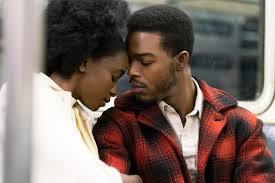
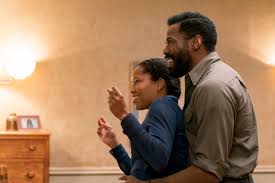
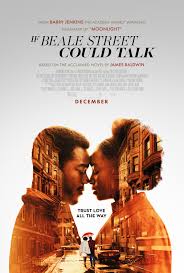
If Beale Street Could Talk and The Power of a Human Moment

download“It’s a miracle to realize that somebody loves you.” 
― James Baldwin, If Beale Street Could Talk

Poetry.
Poetry in motion.

This is how I would describe If Beale Street Could Talk

One could argue that the cries for acceptance, healing and freedom run deeper in Jenkin’s previous, Oscar winning Moonlight, but the dance of these same longings colors the surface of If Beale Street Could Talk in a way that leaves more room for him to revel in and play with the details.

And the details are gorgeously realized. The light. The use of colors to heighten and contrast different emotions.

It’s the colors in fact that form the movement of the narrative, sometimes illuminating a moment captured in time by creating an ethereal and angelic glow, while in others calling us back towards a moment now seemingly lost in time as the color fades into or settles into the background. This is the movement that opens the film, a glorious burst of color that settles in on the image of that glass wall which separates Tish and Alonzo, a working symbol of all the things that can separate us from capturing the beauty of a moment.

downloadThe Beauty of A Human Moment
I know it’s not appropriate to measure one film against another, but the whole time I was watching this my mind kept going back to my experience of Roma, another Oscar hopeful that holds similar themes. Both are exceptional works of cinematography. Both films are also anchored thematically by a concern for illuminating culture and giving us a picture of the oppressed. They both hinge on a scene of conception (or in the case of If Beale Street Could Talk, a series of scenes that set the stage for the conception), and both hinge on a birthing scene. Most importantly, both films are equally interested in the question, do you want this child? A question that is framed against the backdrop of a world filled with oppression, racism, culture, personal hurt and poverty. This is the world they are bringing this child into and the knowledge that continues to haunt them.

Two different culture, two different worlds but two similarly interested films in working with the nature of this divide.

And yet, where Director Alfonso Cuarón keeps the divided world of his film sharply in focus with his use of slow, panning shots and detailed setting, Jenkins illuminates a world that is also beautiful. A world in which human connection can burst through the dimmed colors of that distant reality at any moment. The tenderness of the conception, the beauty of the birth scene, the slow dance of the central characters romance and imagination, the subtle importance of the acceptance they find in family. These things underlined for me what was missing in Roma- that human connection.

The backdrop, the music, the way the camera is able to hide and conceal and reveal all in a single scene. The way it layers the romance in shots of perspective. The way it follows the baby out of the water in a symbolic burst of light. Where I felt the cinematography overwhelmed the humanity in Roma, here it accents the beauty of these moments, giving us room as viewers to not only immerse ourselves in the world of culture and division, but to revel in that sense of longing that is so pervasive throughout this story in way that helps us see and experience a journey, a movement.

imagesThe film is not absent of the despair and struggle and everyday monotony that is so prominent in Roma. There is division and there is the pain of an isolated and oppressed culture. There is the corrupted image of a street that holds in its stone promenades the story of a divided Country. This is the one side of that glass wall. But it doesn’t want to leave us there. It allows the characters to bridge the coldness and the distance in order to give us that sense of closeness, intimacy, warmth and love that its centrals characters, and we if we are honest, so desperately long for.

It shows the two sides of this world, one their given reality and the second their hopeful reality. And sometimes hard work, the hopeful work is required to capture the notes of the second.

It’s a bit of a lengthy quote that I did my best to condense, but I really like how author DeRay McKesson puts it in his book “On The Other Side of Freedom: The Case For Hope”, a book he wrote about and for the given reality of African Americans in this Country:

“Faith is the belief that certain outcomes will happen and hope the belief that certain outcomes can happen…. Faith is rooted in certainty, hope is rooted in possibility- they both require their own different kinds of work. That faith is rooted in certainty does not mean that it never wavers… (but) the work at hand is hope-work… the absence of hope, not its presence, is a burden for people of color… I think faith is actually the burden that people have misnamed as theburden of hope… when my faith waivers, my hope carries me through.

Freedom is not only the absence of oppression, but is also the presence of justice and joy. We are fighting to bring about a world that we have not seen before. We have never seen a world of equity, justice and joy. We are trying to create something altogether new. And it is impossible to create something new in the absence of hope.

We have a hope rooted in a belief that as sure as hands have made the buildings that dominate the skylines of our cities, hands have made the institutions, practices, and customs that perpetuate racism and injustice that permeate those same cities. What is made by human hands requires maintainance. Buildings can be torn down and built over. Parking lots can become parks and vice versa. Institutions can evolve, change, or be dismantled.

Hope is the belief that our tomorrows can be better than our todays. Hope is not magic. Hope is work. Let’s get to work.
– Deray Mckesson

downloadThe Hopeful Work
“From my chair, I looked out my window, over these dreadful streets. 
The baby asked,
‘Is there not one righteous among them?” 
― James Baldwin, If Beale Street Could Talk

The characters in this story, all bound by their current reality in one form or another, are at this hopeful work. Bound to their reality but also desperate to hold on to the belief that tomorrow can be, and will be better.

Like the gaze of those eyes that once held them so firmly together in the ability to know and be known in a difficult world, now drifting through the course of this film against the confines of that glass wall. The way it culminates in these eyes meeting once again.

Like the differing experiences of faith in God that culminates in the hope of that final scene- hands held, hearts open, eyes now shifting towards the illuminating sense of that fresh glimpse of a new burst of color that now occupies their space with them.

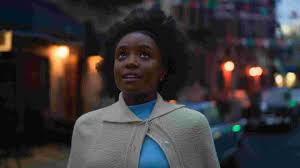
Or the way it takes the hopelessness of this journey, the moments now lost in time, and finds them again anew in unexpected ways and unexpected places. The subtlety of dancing through the streets to the slow and winding rhythms of the films glorious soundtrack. The slow curve of the absolutely wonderful Kiki Lane’s smile forming out of the sadness.

mv5bmdu1zgq4n2qtn2uzns00mmjmltllzwmtnjeyytm2njy3odq1xkeyxkfqcgdeqw1yb3nzzxi@._v1_ux477_cr0,0,477,268_al_A Street That Paves The Way Forward
This is a truly beautiful film framed by closeness, intimacy, warmth and love. But most of all framed by its ability to capture those human moments, both lost and in time. The image of that conception and the birth taken together is what bridges both sides of this mirror. It is the picture through which the human moment is allowed to burst through the faded colors of their past. And it is a reminder of the power of the human moment to create something beautiful in its midst. A street that paves the way forward towards hope.

“I hope that nobody has ever had to look at anybody they love through glass.” 
― James Baldwin, If Beale Street Could Talk

Our Lucy Girl: Remembering our Spirited Pup

40162386_10156381094315664_3917650875698380800_nIt’s 3:00 A.M. on New Years Day. A cup of coffee finds me still awake and finishing off some of my blog posts and resolutions and thoughts of the year that has just past.

In the dim light of the lamp that now sits in the corner of the room where our tree once graced us with its dancing threads of colored glow, I can see a picture of my girl Lucy staring back at me with that still familiar sparkle all her own. And seeing her, I feel it’s finally time to post this tribute so that maybe, just maybe the year ahead will be able to thrive in her memory.

In That Moment
I can still remember the moment we returned home, having been gone longer than we expected to be in our effort to make a day trip out to a local festival. We opened the door to find a sick dog racing for the back door, barely able to walk. As I helped her out to the back yard she eventually collapsed on the ground. Racing over to pick her up I found myself standing there in my socks and with my jacket half off, a sense of desperation taking over. I was trying to hold her up as best as I could as she did her best to go to the bathroom. Knowing that she had been slowing down over the last couple months, and that the strength in her hind legs was fading, I had been spending extra time encouraging her with words of routine praise in the hope that I could keep her motivated enough to make it outside rather than going to the bathroom in the house. In the dark of that night as I stood there helplessly holding her up, all that I could muster were some faint expressions of that praise. And what I remember is that, despite not being to stand on her own, and despite her need for aid in what had been an independent exercise as recently as that morning, she looked up at me and simply wagged her tail.

That was my Lucy.

That night would find her clearly in pain. The next morning would find her oddly silent, a silence that would persist all the way from the car to the vet to the eventual process of having to put her down. I had been in this place before. Jen and Sasha had not. It was the first and only time I have witnessed genuine and unrestrained sadness in my son. A sadness I know all too well for myself.

Meeting Our Pups For The First Time
13 years prior to this we found ourselves at a house down the road greeting these two puppies whom couldn’t have been more opposite to each other despite being from the same litter. Charlie was cowered in the corner while Lucy was desperately trying to claw her way out of the box that held them both prisoner. We had fallen for them both in a matter of seconds, and for as much as they would eventually grow into a healthy sibling rivalry, those early days which found them snuggled up tightly against one another would still manage to surface from time to time as a demonstration of their inseparable nature. 40355726_10156378768740664_8312071227518746624_n

Our Mirror Images
Over the years it became very clear what these two dogs meant to both Jen and I. They were mirror images of us. Charlie was me. Anxiety ridden but loyal and dependable, a dog who played by the rules because he was too afraid not to. With Lucy, the rules went out the window very quickly. She was emotionally all over the place, shifting from boundless energy to quiet seclusion at the drop of a dime. And her decision making was not always the best. However, when she loved she loved. When she was demanding she was demanding (and boy did she have some demands). When she was upset she was upset. She did everything all in and at full speed or not at all.

Yep, she was Jen.

It’s no wonder I had such a ready and easy connection to her. Charlie and I had and do have a relationship, but it has always been from a slight distance. Jen understood that distance, and in return they have grown the closer bond. He needs to be in the same room as Jen at all times. Not right beside her, but just close enough to know he wasn’t alone. Like lying at the foot of the bed rather than at the head. He accepts the odd pet and attention, but by and large he is content to just be. To just know that she is there is enough for him.

Yep, that’s me.

Lucy on the other hand had no problem invading your personal space until you got the hint that she wanted your affection and attention. Her token spot on the bed was either right by our heads or squished tight in a cuddle. In the times that she needed it, the more physical closeness there was the happier she was. And then when she didn’t want it… well, you were most likely to find her in whatever room you were not in at the moment.

Yep, that’s Jen.

Lucy was constantly upsetting the status quo, frustrating us at many points with her constant shifts in mood and her need to be catered to. But always, always, always the life of the party. She would love and accept anybody anywhere who was willing to give her attention without any inhibition.

She also happened to have a stomach made of steel. Or something otherworldly anyways. We have so many stories of the stuff she managed to eat and emergency trips to the Vet’s office, only to have the Vet throw up his or her hands in exasperation because they can’t get her to do what they want her to do. I remember one time she ate so much cocoa powder that she was flying off the walls. We took her to the vet and they tried to induce vomiting. And tried some more. And tried again.

Lucy just outright refused.

Vet sent us home saying they had never seen a dog take so much to induce vomiting before. Lucy just looked up with a look that said, “sorry, not going to do it.” And so we were sent home, she recovered and went on to find the next thing she could ingest. Like the crab apples off the apple tree that never sat well with her but for which she would sit underneath and take flying leaps straight up in the air just to get. Or our efforts to grow Broccoli only to find the new roots completely consumed. Or the woodships. Or the underwear… well, maybe I’ll stop there

A Girl With Spirit and Untamed Desire
Of all the things I miss about her I think I miss her great, untamed affection for the outdoors. She loved her walks. and we would often find her just staring longingly out the window. There was little more joyous site than seeing her bound through the fields of the off leash park or jumping in the water and swimming so far out that we would wonder if we were going to ever get her back in again. She always came back, but not before she went out and did what she needed to do, which by all accounts was living her life to the fullest. Which is what I like to imagine that she did. Just like her mother who dreams of one day hitting the road on her motorcycle.

All The Second Guessing 
There is so much about that day that still haunts me. I question so many things and second guess decisions and replay it in my head at least a couple times a day. I feel utterly guilty and devastated and spend a good deal of time blaming myself for what happened.

These are things I will never know. Things that I have to live with. Which is a big reason for why even considering submitting this into this physical space was so hard. There’s a permancy to writing these words. A finality. As if to say, yes, this happened. She is gone and it hurts like nothing else.

A piece of us, gone. A comfort and companion to Sasha as he made his transition to Canada 4 years ago. Gone. The girl who ate his very first ice cream cone. Gone. The girl who comforted me through some very dark times. Gone. The one who provided us with so many memories and funny stories. Gone. The one whom occupied so much or our time and space, but at the same time gave us a sense of purpose, a place to focus our care and attention outside of ourselves. Gone.

But I have to believe, I have to have hope that she is being restored. Remade. Renewed. I have to have hope that she is freeing me from the burden of all of those decisions and choices that we had to make in the moment. Because that is truly what I hoped for her in that moment, on that day. Freedom. As best as I could imagine it, as best as I could offer it in my doubts and failures and shortcomings. Freedom just like she offered us when she came into our lives as a young puppy. A spirited puppy whom helped shake us out of a tough time in our first year of marriage. A spirited puppy we have never known a year of marriage without, nor a Christmas. She will be missed. Missed dearly. But also remembered. And above all, cherished.

We miss you Lucy girl. Desperately. You went and left your paw prints all over our hearts and made permanent imprints. And for that we that we are forever grateful.

2019- My Most Anticipated Films List

It’s that time again. As I spend time looking backwards, I’m also looking forward.

Here is what is topping my personal most anticipated list for 2019:


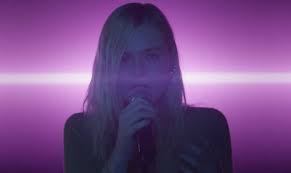
download14. Teen Spirit
A follow up to A Star is Born or its own thing.
More likely its own thing.
And dang if it doesn’t look like an even better thing. Not that I’m hating on A Star is Born. As a musically driven film I enjoyed it. I just didn’t fall in love with it. As a musically driven film I feel like I might fall in love with this film.

13. The Mustang
Produced by Robert Redford.
A film about the bond between horse and human.
Deeply affecting moments in the trailer about healing and forgiveness and redemption. download

Yah, I’m all over this one.

12. Chaos Walking
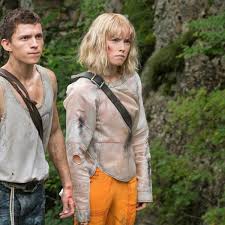
I read the book. I loved the book and its deeply felt and deeply imagined apocalyptic setting and adventure story. I’ve been anticipating this film for a long while now. Bring it on 2019. download

11. US
All the conversation that is already bubbling over for Jordan Peele’s follow up to the fantastic Get Out is impossible to avoid. And I’m all for both the conversation and this film, not simply on the grounds of Get Out, but because everything about the film looks incredibly compelling in terms of those psychological-horror elements. download

220px-Captive_State10. Captive State
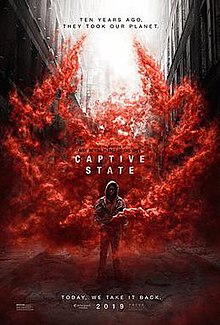
The teaser got me hooked, and as desperate as I am to avoid any other trailers (I’m already hooked), I keep wanting to get another glimpse of this film. It looks ridiculously entertaining.

MV5BMjAwMzAxOTM5OF5BMl5BanBnXkFtZTgwNzAxODI0NjM@._V1_9. You Are My Friend
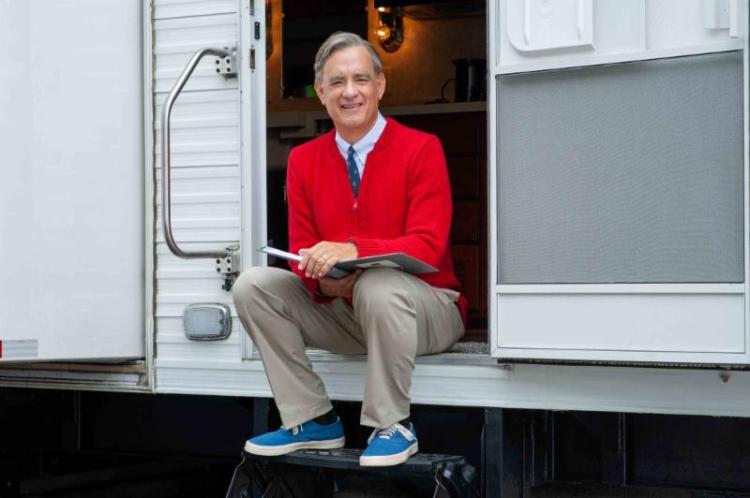
Yes, some of us remain skeptical of the idea that we needed a biopic in 2019 when we got such a wonderful and exceptional documentary in 2018. And yes, it’s hard to see past Tom Hanks in that sweater vest. But I don’t care. Hanks is a legendary actor for a reason, and I think our world can use all of the Fred Rogers it can get. My anticipation for this film remains high on my list.

download8. 1917
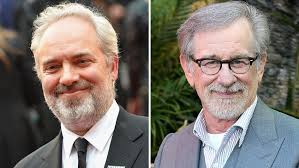
Directed by Sam Mendes and backed by Spielberg and company, this World War 1 film looks like it might occupy that necessary space for compelling war films in 2019.


7. Star Wars 9/Avengers
It’s hard to separate these two massive blockbuster events in my eyes. One bringing to an end an exceptional Star Wars trilogy with all the intrigue of its shift in director in tow. Say what you will but I am completely and absolutely compelled to see where this last one takes us.

And the End Game is here. The end of an era. That finality of the story we have fallen in love with. The launching pad for a new era. Given what they did with Infinity War, I absolutely anticipate this film will break all of my cinematic expectations.

And of course this wouldn’t be complete without throwing the whole pile of Marvel and Superhero driven films into the mix as an honorable mention. With Captain Marvel and a new Spiderman and finally seeing those XMen centered films getting a release, it should be an amazing year ahead.

download6. Knives Out
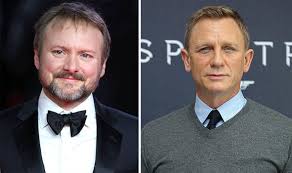
Moving from Star Wars to Knives out and back to Star Wars, this break in Rian Johnson’s commitment to that intergalatic saga fits nicely on that list of films I am most intrigued by in 2019. What puts this on my most anticipated list is what Johnson did with his Star Wars story. For as much as that film was an experimental narrative, sometimes for better and at times something other, it contained some of the most compelling and creative and beautiful sequences and scenes of the year for me. So I am really curious to see what he does here.

download5. Pokemon Detective
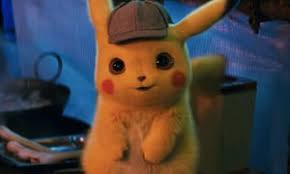
I didn’t care. The trailer made me care. What else can I say but I’m really anticipating seeing this film and I’m excited to share that anticipation with my son.

4. John Wick 3
Rumors that this will be the most bombastic John Wick film yet has convinced me to be there opening day. To be honest I didn’t need much convincing though. I am really looking forward to seeing how they conclude the series.

download3. Toy Story 4
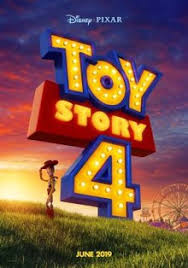
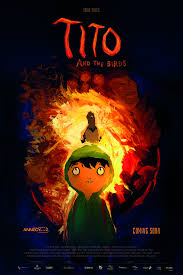
Given my love for these films it was impossible not to have this edge out some other intriguing animated films to be released in 2019. I am hugely excited to see Tito and the Birds and I am hopeful for Missing Link following a very effective trailer. But given its track record, Toy Story 4 is going to hit me in all the feels all over again, and I am so ready for it to hav its way with me and all of my emotions. download

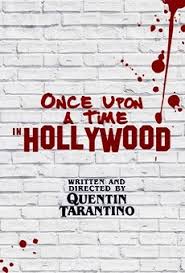
images2. Once Upon A Time in Hollywood
If there is a film that occupies a category all its own this year it would be this one or The Irishman. I  have very little expectation that The Irishman will ever make it to the big screen, which is where I really desire to see it, so Quentin’s newest edges it out in terms of anticipation. Everything about this is calling my name.

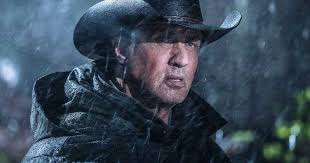
1. Rambo 5
Yep. He’s back. And given my love for the last Rambo film and all that I’m hearing about this new one, it’s not only time to introduce my son, but it’s due time to jump back into his story.download

downloadHonorable Mentions:
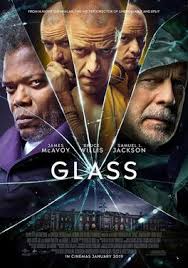
Glass– The only reason this doesn’t make my most anticipated list is because it is coming so early in the year. So there’s not much waiting. But I am really, really REALLY looking forward to seeing where M. Night takes this.
Arctic Looks like a perfect seasonal film to help get me through the long winter.
Escape Room– this years Game Night perhaps (not in terms of comedy, but in terms of building an entire film around a single concept)? It could be gimmicky, but it also looks fun. Label me intrigued.
The Kid Who Would Be King– I’m a sucker for these types of younger adventure stories. I’m still sad about the box office failure of Mortal Engines. Hoping this one fares better.


Rosebud: A Continuing Resolution Process

(amended from last year: a working description of what ROSEBUD is)
A few years ago I began a New Years Resolution Plan called Rosebud. I heard about it on one of the podcasts that I follow. The process essentially looks like this:

Step 1: List Three Roses-
This is the stuff that I would consider the greatest strengths, successes or accomplishments of the past year, the stuff that has managed to blossom into a Rose.

Step 2: List One Thorn
This would reflect my greatest personal struggle of the past year.

Step 3: List Three Buds
This is a list of what I would like to “bud” into Roses in the coming year.

Step 4: Come up with a word for the year
This should be a single word that can help reflect the direction I want to head in the coming year, a single word that can give my year a theme or a recognizable focus and narrative.

*A note on the thorn category: Previously I had them listed as 3. The actual ROSEBUD plan only asks you to consider one thorn so as to keep the process focused on the strengths, the positives and the hopeful buds. I have made that change here for the coming year.

The great part of the Rosebud system is that it allows you to document these things by year so that you can follow your growth, keep yourself accountable, and target the yearly summation of your  hopes and expectations in ways that are more practical, personal and balanced.

So here goes…

LOOKING BACK ON 2018
In 2018 my 3 buds were:
1. Manageable Travel Goals
2. A more focused reading Challenge
3. Creative Giving

My single word for the year was: Intentional

So how did I do?

1. Travel Goals:
Much of the plans I had set out for creating manageable, budgeted (read: cheap) travel goals got rerouted through Nashville after an opportunity presented itself to drive a group of youth down to a conference this past summer. While this trip was nowhere on the radar at the beginning of the year, it went on to inspire a number of blog posts in this space and actually helped give definition to what will be my single word for 2019 (see below). It proved why these Travel Goals are an important part of my personal growth.

There is certainly room for me to reshape the goals I did have at the start of 2018 for the upcoming year, especially considering much of the upcoming year already shows potential for the following:
1. Two Weddings in Toronto- a chance to see our family out there before Sasha graduates.
2. And since we are in that neck of the woods already, an extended trip following one of those family weddings South of the Border through New York, the Catskills and up to Boston where we have been offered a place to stay.
3. Snowboarding to Duluth (for Sasha) in January/February
2. Reading Challenge:
I saw the most growth in the reading challenge this year. I read less books, but the books I read were far more intentional and focused overall.

It has inspired me to do three things this year:
1. Narrow my list even further, which I have done by setting out some seasonal reading choices to act as a foundation to build off of rather than a whole pile of books to read towards.
2. Focus on recommends from my favorite Podcasts, as there are a couple that I am finding tend to play the biggest role in adding to my TBR list.

3. Creative Giving:
When I made this goal last year it was with 2 things in mind- expanding my parameters for giving so as to open up the creative lines beyond simply financial means, and secondly to offset my tendency towards social anxiety/isolation and my struggle to know how to give in a world where I don’t feel like I have much to give. It was meant to open up the means for being intentional about recognizing where needs intersect with my small section of the world and in which I can know I have something to give. I was really wrestling and struggling with not knowing where to give and how to give in a way that actually makes a difference.

In considering how this went in the past year, this was probably the biggest setback of the three, largely because my struggle with social anxiety and isolation really pushed back in a powerful way. I already wrote and shared about a timely shift in mindset following our trip to Nashville, which will certainly play into my 2019 goals below. Up until that point I was feeling fairly defeated and lost and even more frustrated with knowing where I fit in and with what I have to offer and how I can even find places to give in a world that is as competitive and overwhelming as it is. The hope is fresh goals can build on this resolution with a fresh perspective.

So with all that in mind…
MY ROSEBUD GOALS FOR 2019

3 Roses (my strengths):
1. Reading Challenge
2. Living 1 full year without Credit Cards
3. Social involvment with an online group of cinephiles

1 Thorn (a recognizable weakness)
A growing cynicism

3 Buds:
1. Reconsider where I am with Ministry.
My Pastor sat down with me the other day and wondered with me whether Ministry, as a vocation, was done with me or if there was still more of that story to tell in the years to come. I don’t know the answer to that. What I do know following my trip to Nashville is that there is more healing that needs to be done, and perhaps some of that will involve taking some more specific steps towards figuring that out.

2. Find ways to talk to and hear the stories of strangers on a more consistent basis
I am an introvert. Deeply introverted. And I struggle with social anxiety. I have shared a few stories lately on my social feed and in person about how taking a small step towards engaging others that I do not know has opened up unexpected doors to hearing stories I otherwise would not have heard. In 2019 I can do more of this.

3. Give specific attention in my life, in my viewing of film and in my reading challenge on growing a sense of place and growing in perspective.
In one of my film discussion groups I am doing a very specific movie related resolution. My books are also going to be more intentional this year with a revamped reading plan. I am hoping that these can be a stepping off place into bringing this notion of growing in perspective into many corners of my life with intention.

One word: Perspective

My Year In Film: A Thematic and Personal Look at The Idea of of “Gaining Perspective”

I’ve been setting aside some time over the last few weeks to look back on the year that was in film. Every time I do this I am struck by how how many of my favorite films tend to share in a common theme, and how timely those themes tend to be in my life. I like to think of it as the Spirit at work, as film is often the place where I find God speaking most loudly and most clearly.

If there is a single word that has defined my year in film in 2018 it would be this- perspective.
The need for perspective. Losing perspective. Gaining perspective.

I was struck by this word after a recent viewing of Mary Poppins Returns, a film that I felt provided a perfect bookend to where I began- with the equally lovely and positively endearing Paddington 2. The sheer optimism and unbound joy of these two films, both of which invite me into their fantastical worlds,  calls me to submit, even if only for a moment, my cynicism to the idea that hope is real. These two films act as an invitation to see the world anew from that childlike perspective which the challenges and struggles of life often cause me to forget or leave behind.

Challenges like those deeply felt struggles with depression that I found resonating in the story of Tully. The depiction of the ongoing struggle with addiction that we find in Beautiful Boy and Ben is Back. The deep set loneliness that McCarthy so masterfully channels in the powerful Can You Ever Forgive Me. The struggle for identity and with the way people perceive us that we find in Isle of Dogs and Ready Player One. The systemic racism that we find in Blindspotting and BlacKKKlansman and the Hate U Give. The despair that we see in Lean on Pete and First Reformed, or even the darkly rendered imaginings of the wonderful Christopher Robin, a film that wrestles deeply with that notion of lost childhood perspective.

That same childlike perspective I wrote about after rereading and seeing A Wrinkle In Time, where I expressed that “the joy of reading it again and seeing it again as an adult is the ability to now recognize my childhood experience from a more informed perspective, which we see imagined in the shaping and shifting perspective of the way the daughter sees her father, beginning with wonder, being shattered and finally reconstructed. A process that mirrors her perspective of being in the world in which she lives as well.”

What A Wrinkle in Time imagines in a fantastical and metaphorical way, films like the incredible cinematic accomplishment of First Man set into the frame of our real life frame of reference. There is no more powerful scene in 2018 than being swept away into those first steps on the moon, the way the camera opens up and broadens our point of view in an astonishing fashion. This discovery of a new world can shift our perspective and grow our respect of the human story, even while also, as First Man did so exceptionally well, bringing to mind the personal struggles that keep us bound here on earth and to the moments.

Or the way that Spielberg used Ready Player One to shift our perspective of that personal, human story from the eyes of Wade to the eyes of Halliday, the one who creates this virtual world as a means of escape only to find himself in desperate need of gaining some perspective of his own life and struggle. Halliday’s process of looking back over the joys and regrets and questions that he is leaving behind both haunts him and frees him, much in the same way that it does for the aging father and husband in The Mule and The Old Man and the Gun.

Perspective also becomes important when we imagine it against our fears, such as in the way A Quiet Place did by exposing and challenging our efforts to try and escape these fears, calling us, much as God does throughout the Biblical narrative, to make a home in the moment, in the struggle’s midst, while also building on this hopeful posture which calls us to trust that what we cannot see in the present moment has worth and purpose, like the love the father has for his daughter in A Quiet Place.

Or the incredible way that Infinity War offered us multiple different entry points into a story of our shared struggle and our shared defeat, reminding us that no matter how defeated we feel in the moment, this larger story, this human story has a purpose and that all of these singular stories are working together to create something beautiful. Something hopeful.

Indeed, hope is not lost. This is the childlike perspective.

As we learn to hope, as we learn to trust in this larger perspective that our momentary struggles can offer us, what drives us forward are the relationships that God has placed in our path. Like in Isle of Dogs where we see this push back against feelings of being lost and out of control and given towards conformity, meeting with this revelation that as we find ourselves stuck in the cycles of our political and social systems and our constant battle against injustice in this world, relationship and community becomes the ultimate and necessary answer to the problem. As Green Book reminds us, we are constantly being shaped by the others that surround us, and it is in our willingness to share in the stories of others that we gain the freedom to tell our own as well.

The same freedom we witness in White Boy Rick where a family stuck in their own cycles of unforgiveness and despair come to gain the perspective of their need for one another. Or the heartbreaking and heartwarming message of Hearts Beat Loud which reminds us that when all we see is our own sense of desperation, that single note left without a song to sing, that these places can push us to learn how to enter once again into the melody of others, just as Mr. Rogers does in the inspirational Won’t You Be My Neighbor as well, and just as the powerful road story exemplifies in Green Book. Or the brotherly relationship in the deeply intimate sci fi film Kin, and the painful process that a struggling and beaten down war vet facing PTSD must go through in the film Welcome to Marwen. Time and time again these stories emerge as a reminder of our need for relationship. In Instant Family we see this reaching into the brokenness of our social system to raise up children who are without a family. In the sweet Dog Days we see through these dogs the human stories that all stand in need of one another. This same message is true for Love, Simon and Eighth Grade and The Long Dumb Road, all stories of loneliness and isolation being healed by the power of relationship to free us from ourselves and our need to live up to our own expectations.

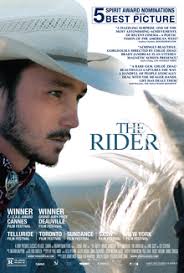
Perhaps the most important film to me towards this end is my number one film of the year, The Rider. In fact it is working through the process of this blog post that convinced me it belonged in my number one spot. It is a film that captures this narrative of perspective in its entirety and in its fullness, and it stands as the most spiritual and pastoral film of 2018 for me personally.

A story of being stuck in the cycle of struggle and despair.
A story about the power of relationship to both break and to heal.
A story about the prayers that define our brokenness and the healing God desperately needs to breathe into these places.
A story, as I wrote in my personal blog space, that helps us to see that “our true identity in the midst of this brokenness comes not from our individual freedom or accomplishments, but from our willingness to receive and extend grace in relationship to God and one another. This, in the Rider, is the answer to that question of why we choose to live.”

As the epic Bilal reminded me just yesterday, God is for the world and it is in this truth that we find life. This is the same message that we see Paul staking his life on in Paul, The Apostle. In The Rider we come to see one man’s journey towards seeing beyond the struggle and towards this sort of liberation from his pain. Not simply masking it or escaping it or drowning it away with vices, but embracing it and letting it raise his eyes towards a broader perspective of God, of others and of life.

If Paddington 2 and Mary Poppins provided me with those necessary bookends, The Rider represented a necessary center. And I am grateful for the way that God used all of these films to offer me perspective, perspective I have spoken of at numerous points as feeling largely lost and hidden amidst my cynicism in 2018. In the imagery of Mary Poppins, I find myself being beckoned to look up and to take flight as I continue to imagine my cynicism giving way to hope in 2019.

My Year in Film Part 1: My Top Films of 2018 And More…

It’s 2019. Which means it’s time to look back at the year that was and the films that were with top lists, notes and stats and more.

Here are the stats that I weighed my lists against:
Total number of films that I saw which were released in 2018: 130
Total number of films I saw that were released in 2017: 33
Total number of first time watches I saw that were released in any other year: 13

My Top 10 First Time Watches of 2017 or earlier ranked:
10. Spotlight
9. Marshall
8. Molly’s Game
7. American Made
6. Breathe
5. Your Name
4. The Breadwinner
3. Straight Outa Compton
2. Secret of Kells
1. Three Billboards Outside of Ebbing, Missouri.

My Top Films Which Were Released in 2018:
Numbers 20-11:
20. The Grinch
19. Three Identical Strangers
18. Leave No Trace
17. The Old Man and the Gun
16. Won’t You Be My Neighbor
15. The Sisters Brothers
14. Beautiful Boy
13. Mary Poppins
12. Aquaman
11. Green Book

Numbers 10-1:
10. Ready Player One
9. Can You Ever Forgive Me
8. BlacKKKlansman
7. Isle of Dogs
6. Paddington 2
5. First Man
4. Blindspotting
3. Tully
2. Avengers: Infinity War
1. The Rider

downloadHere is my link to my complete list of films ranked:
https://letterboxd.com/davetcourt/list/a-ranked-list-of-the-films-i-saw-in-2018/

Here is a link to a piece I did on the Rider which explains the impact it had on me and why it made my #1 spot. In my next blog when I deal with 2018 on a thematic level I will get a bit more into why it moved from where it was into my number one spot following a good deal of reflection.
https://findingmeatfortysite.wordpress.com/2018/08/09/chloe-zhaos-the-rider-and-a-necessary-grace/


My Most Anticipated List of 2018 (compiled last December) and How They Fared:
Here was my list based on my top 12 Most Anticipated:

1. Paddington 2
2. Annihilation
3. First Man
4. Isle of Dogs
5. The Man Who Killed Don Quixote
6. Ready Player One
7. The Sisters-Brothers
8. A Wrinkle in Time
9. Bilal: A new Kind of Hero
10. Please Stand By
11. A Quiet Place
12. The Long Dumb Road

  • Quixote never got released and Please Stand By is still not available anywhere near me or on any available platforms as far as I can see.
  • 5 are currently in my top 20 of the year (Paddington 2, First Man, Isle of Dogs, The Sisters Brothers, Ready Player One)
  • 8 are 4 plus star ratings
  • one is making a play for my favorite animated film of the year outside of Isle of Dogs (Bilal)
  • One is making a play for my favorite theatrical experience of the year (RPO)
  • One is in the contest for most underrated (Wrinkle in Time)

Not to bad overall I would say. The closest thing to a miss for me is Wrinkle In Time, and there are components of that film which I definitely very much appreciated.


SOME POINTS OF INTEREST FROM MY JOURNEY IN FILM OVER THIS PAST YEAR:
With the exception of the bottom five films on my ranked list, all the movies that got three stars or more on my list are films that I enjoyed, touched me and/or have an appreciation for. The way my personal filtering system works means I have a fairly good system for knowing when a film absolutely will not work for me and when it might. Which simply means in a given year I don’t tend to see very many of what I would label “bad” films, subjectively speaking of course, and where I do they tend to be random viewings on a streaming service here or there.

With that in mind, here are some other categories/thoughts/points of interest from my personal list of films overall:

It was the year of…
1. Ethan Hawke
Following his compelling performance in First Reformed, Hawke continued to impress me this year in one of my favorite romantic comedy dramas, Juliet, Naked and my much anticipated Blaze. It’s a wait and see for any awards consideration, but Hawke definitely left his mark on 2018 when it comes to the films I engaged with in 2018.

2. John C. Reilly 
The Sisters Brothers was a powerful and oddly revisionist (yet not revisionist) western that not only was one of Reilly’s most exceptional performances, but celebrated one of the most powerful and most compelling cinematic endings I’ve seen in a long while. Meanwhile, Reilly was also hard at work giving life to one of the most genius and creative movie scripts of 2018 through his voice work in Wreck it Ralph, while also getting into serious character acting mode and awards consideration with the much anticipated and still to be released Stan and Ollie.

3. Hailee Steinfeld
The talented actress brought new life to the Transformers franchise, helping to shift it in a slightly fresh and decidedly more emotional direction. She was one of my favorite performances to watch on screen this year, and I am still marveling at how she took her raw talent and absolutely dominated the Blockbuster format. She showed us all how it is done. Couple that with her part in the crowd pleasing Into the Spiderverse and she is no doubt at the top of 2018 conversations.

4. Movies about systemic racism and how to heal it
Blindspotting absolutey floored me. BlacKKKlansman absolutely compelled me. Black Panther left me in awe. Greenbook inspired me. The Hate U Give broke me.

What do all of these films share in common? Setting racism in perspective by setting it into the context of relationships that reach across the lines of black and white by asking us to walk a mile in another persons shoes, in the case of each of these films those shoes being the ongoing and persistent struggle of African Americans in a Country where systemic racism absolutely still exists. If these films can add something to the conversation and push us as a society forward towards even a glimpse of what that means for today and where our responsibility lies “collectively” for helping to heal the divide, it could be an absolutely amazing thing.

5. The theater, Big Blockbusters and Independent films
Sometimes the conversation around theater gets confused, but lets be upfront and sure about this- the theater is not dead. In fact, it is breaking records. People still go to the movies when there is something they feel is worth going for. And according to the Box Office there was plenty, both big (Infinity War, Black Panther, Aquaman) and small (A Quiet Place, Eight Grade, Won’t You Be My Neighbour) that made 2018 a stellar year to get out and participate.


The most recognizable theme that stood out for me was…
Perpsective
. The loss of it and how to gain it

Films in the conversation for most Underrated/Underseen:
1. Paul, The Apostle (powerful depiction of Paul from the perspective of the end of his life, the time period we probably no least about but that felt incredibly fitting for the cinematic experience).

2. Bilal (The highest rated film in this category, this was a powerful animated film that was not unlike Prince of Egypt in its raw depiction of faith and God and the story of God’s revelation across the lines of our mono-theistic religions. A truly Biblical epic with incredible visual sequences that left me broken, hopeful and inspired. I describe it as Jewish Storytelling that deals with an important figure and narrative in the Muslim Tradition in a way that sheds wonderful light on the shared Judeo-Christian imagery of light and dark, slave and free)

3. Welcome to Marwen (this years The Book of Henry for me, in that it is an original film that tries to do some original things and was desperately and sadly overlooked. One of Carrel’s best performances, and if this film did anything it made me think long after it was over.

4. Mortal Engines (It is sadly dead in the water before it even had a chance to find some legs, but I hold a real affection for this style of film making and thought they did a wonderful job at adapting one of my favorite  books. It’s big, and although the YA material doesn’t rise to the same cinematic levels as the visuals, the story beats were there and the potential I thought could have carried it forward into a bright future, if only people had gotten out to see it).

5. Wrinkle in Time (I have a deep affection for the book, and while many derided this film, I feel it got the short end of the stick. Yes, it’s a bit muddied as a film, but the parts that they needed to get right and where the film could have accentuated, particularly the darker moments, I feel like it does really well with. And the complex message of the book I felt arrived intact, which for me said a lot).

Honorable Mentions: My most intriguing match up/battle of the year- Kin and Alpha. Both underappreciated films, with Kin boasting a wonderfully quiet sci- fi story and Alpha a special experience I got to share with my son whom really loves and has a fascination with wolves. Not only were they both visually wonderful, but they stuck with me emotionally

Favorite IMAX or Big Screen Experiences:
First Man (when it breaks open at the end for that final sequence it is unlike anything I have seen before)
Ready Player One (undeniably a visual accomplishment)
Mission Impossible: Fallout (this is what the big screen is made for.

Favorite Horror Film:
The Little Stranger
In a year where Hereditary ruled the roost (and rightly so), it is this small, unassuming story that captured me the most.

Favorite Comedy:
The Death of Stalin
Honorable Mention: Game Night

Most Enjoyable Viewing Experience:
Game Night (when a comedy hits with a crowded theater, there is seriously nothing like it.
Honorable Mentions: Christopher Robin (I had the special experience of seeing this with a group of young kids who were absolutely mesmerized by the characters and the story. So much so that their verbal participation broke out into claps and cheers at the end. It brought a real smile to my face and made an important figure from my childhood a truly special experience) and The Mule (My adenture towards seeing this film on a particular afternoon is a longer story involving a few different persons and strangers, but my experience in the film is what stands out here, as I had a chance to talk with an older couple who had never been to the theater in over 15 years. Something about Eastwood inspired them to come out, and they were confused about the process and in the wrong seats (my seat), but that fact allowed me to move over and chat with them about why I love the theater. They were quite amazed that the showing was sold out as they felt no one went to the movies anymore. Afterwards I think they were inspired enough to come back the next week to see Vice. That brought a smile to my face).

Movie I’m most hopeful earns a place in awards season conversation
The Rider (Don’t count it out. There’s a real chance it could gain momentum in some of the serious categories, and deservedly so. My hope that in some fantastic world it could earn a Best Picture nom might still be far fetched but not out of the question.
Honorable Mention: BlacKKKlansman (I predicted this one would gain steam in the awards race and on my personal list, and that appears to the case. I am seriously behind this one making a good run)

MY WISHLIST OF FILMS I STILL NEED TO SEE FROM 2018 THAT COULD CRACK MY TOP LIST

1. Stan and Ollie
2. Free Solo
3. Minding the Gap
4. If Beale Street Could Talk
5. Shoplifters
6. Burning
7. The Front Runner
8. Madeline’s Madeline
9. Blaze
10. Destroyer
11. Vox Lux
12. Capharnaum
13. A Private War
14. American Animals
15. At Eternity’s Gate

My Life in Film- Preparing to Look Back at 2018

Many of you know I am a bit of a cinephile. Yep, it’s true. I love film.

What you might not know is that my first love happens to be reading. But over the years I have grown to love the visual arts more and more. Whereas literary form is an art form that works on a couple levels – literary style and prose, the diversity and range of storytelling and storytelling techniques in film is like no other art form that exists. There are so many working parts that it makes these stories not only accessible across sensibilities and interests and platforms (typically running at a couple hours of investment), but also ripe for discussion. You can appreciate the prose of a script or the expertise and precision of the cinematography. You can marvel at performances or indulge in the art of the score and song. You can appreciate the effects or be interested in the editing.

In truth, I like to refer in artistic terms to reading as my life and film as my hobby- a hobby of interest and wonder and investment and learning and collecting.

A Renewed Investment In My Hobby
A few years ago I joined a few online film communities as an effort to help compliment and foster this hobby. I also joined something called Letterboxd, a wonderful social tool that helps you log films and easily follow stats and ratings and trends in your viewing habits, while of course also allowing you to share in this with friends and fellow users. I noted earlier this year after looking through the stats of how many films I watch in a given year a very real correlation between joining these online communities and this Letterboxd site and a significant rise in the number of films I see in a given year. Which is super exciting to me, not because of the numbers (as we like to say in the online communities, it is not a competition), but because it means this investment is paying off. I am finding that I have never held a deeper love for the art of film, nor have I been as deeply connected to it, something that has been sticking with me as I engage in my annual tradition of poring over my year in film and considering end of the year lists, thoughts and most anticipated.

Just for my personal record, here is a resolutions list for my film watching in 2019 that I committed to in one of those online film groups:
1. Rewatch Del Toro’s entire filmography (my favorite Director) and do a blog piece on what his work means to me. This also coincides with reading the book he released with his touring art exhibit a few years back.

2. Get a start on my idea to own my top five films of the last 20 years in physical copy.

3. Increase the support I give to my local art house (Cinemateque) and/or other local art houses (like The Fargo Theater) which has been very rewarding this year. My goal is to see a few more films in that venue- 6 was my number, and perhaps finally become a member.

Putting Together My Personal Tops Lists
It has typically been a tradition for me to wait until the end of January, or even February to do this, as many films released in a year often don’t see wide release until after the New Year, and I have found it typically takes a month to check off the films I feel I need to see in order to complete my list.
That and typically the Oscar season brings with it an opportunity to catch up on some of those films through re-releases, which also gives me the chance to weigh in on both my top lists and the awards season at the same time.

THE FILMS OF 2018: What I watched, what I loved and what I’m looking forward to
So here is what I would like to do this year. I would like to weigh in with these three things:
1. In Part One look at my top list as it stands now for films released in 2018, first time watches in 2018 that were released in any year prior to 2018, a look back at how well my most anticipated of 2018 list actually fared in the end, and my top wish list for films I still need to see and which I fully expect to present a challenge.

2. In Part 2, my reflections on my year in film from a personal and thematic perspective.

3. In Part 3, my most anticipated films of 2019

And then later in my annual Oscar blog post I will update my 2018 list with 2018 films that I manage to catch up with along the awards season way.

And as always, if you are reading this and a fellow film lover, feel free to weigh in with your favorites, thoughts and anticipations on my facebook page, personal message or here. I always love hearing about and discussing film with others. And 2018 has been another pretty stellar year in film if you ask me.

Cheers to another year gone by and the New Year ahead. May it bring with it plenty more cinematic love and experiences and meaning and excitement.


From One Cynic to Another: Green Book, Matters of Perspective and Christmas Miracles

I confess that life has turned me into something of a cynic.

I haven’t always been this cynical. In fact, it is only recently that I even came to recognize myself as a cynic. Truth be told it is an odd label for me to accept because it is not at all what people used to see me as. Especially when it comes to the Christmas season. But I’ve come to realize I’ve learned how to hide it well. Or at the very least was once more adept at knowing how to battle back against it. Looking back at my younger years, i funneled my struggles with crippling fear and anxiety and depression into a love of story. An embrace of story. Telling stories, reading stories and watching stories. Imagination helped to remind me that there was more to this life than what I was experiencing in the here and now, and fostered a sense of hope that could see beyond my struggles.

But life has a way of unsettling all of that stuff that is lying underneath the surface. The stuff we don’t always acknowledge. The stuff we aren’t always aware of- my questions, my fears, my hurts, my struggles, my inability to change or break certain cycles. All of this has creeped to the surface in recent years, beginning with a personal crisis of faith. And the more unsettled it all becomes the more power it seems to have to turn me into a perpetual cynic of all things big and small.

The Cynical Cycle
And when it comes to that struggle, I have found that the more cynical I become the more I tend to replace imagination with what I perceive as realism. The truth, the facts of the matter, the answers, become the most important thing when it comes to navigating this life. The problem is, as a few significant players in my life once said when they walked away from their once imagined faith, knowing what I know now it is impossible to go back, and the more I feel I know the more disillusioned I seem to become.

And then I wondered, what happens when this starts to move from my perception of what’s right in front of me to the way I view the whole of life? I become cynical. And then more cynical. And the cycle repeats itself. And grows. And grows. And the life I once knew, that life of child like wonder that I used to hold so near and dear. That life where imagination was a possible and cherished part of my reality. Where story could remind me that life is not simply what my grown up mind believes it to be. It gets more and more distant, reminding me that this is a time long gone, a time I cannot to back to knowing what I know now.

But go back to what? That childlike wonder? That pure sense of abandonment I once felt at marveling in the mystery of the small things? Of my ability to imagine God and the unknown and the unseen? None of this fits in a cynical worldview where it is built on a think first and feel second outlook. But I am learning something important about myself as I think through this stuff in 2018. Looking back over some of my previous Christmas traditions and experiences, I am realizing that this is precisely why Christmas has been so important for me over the years. I have always been prone to cynicism. I faced darkness at a young age and that darkness became familiar to me. Christmas was always the one time of year that I seemed to be able to let some of that stuff go and embrace the idea that life was more than I could see on the surface. And the older I got the more important it became to enter into this in an almost liturgical fashion. It reminded me that maybe it wasnt all gone. That some of that imaginative and hopeful process still remained.

Unfortunately the older I got the more life also seemed to steal from Christmas at the same time. So rediscovering this year after year became harder and harder to do.
downloadThe Green Book Controversy
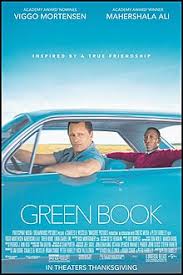
I have said in many circles that the new film Green Book has quickly become one of my new favorite holiday films. I had been thinking about writing a piece on it for a while as it was one of those films this past year that helped me to return to that childlike joy I once cherished and that seemed so significantly lost to me.

But as time went on the more life started to push back on my experience of this film, as it does with so many things. Controversy emerged. Writers and think pieces began to question the films “truthfulness” and wonder whether its message of hope was disguising the fact that we still have a very real problem with racism. One writer went so far as to label it a “magic act”. A good one, but nevertheless a feel good delusion that becomes less meaningful once you recognize how the trick is done, let alone dangerous for the degree of manipulation it fosters.

You can see the core of the controversy with a simple google search online. But to summarize the main points of the controversy here:

1. Some have deemed it a picture of a “white savior”, depicting Dr. Shirley as estranged from his family (a fallacy his family says is absolutely not true) and Tony (the white man) as the one who gives him a place to belong and to rediscover who he is as a black man.

2. The story is being told by Tony Vallelonga’s son (Nick) and thus largely from the white man’s perspective. The family has since spoken out calling it a “symphony of lies” that gets very little about Dr. Shirley right.

3. The film tells the story of two sides coming together in hopeful reconciliation, seeing the solution in relationship with one another while, according to some, largely ignoring the fact that racism is a problem that still exists.

4. In making the movie the filmmakers failed to track down and speak to members of Dr. Shirley’s family (Mahershala has since apologized for his failure to do so, which was largely because he was unaware they existed or were free to approach).

For what its worth, this is a good article on Dr. Shirley that highlights an upcoming documentary that will share his story in a more faithful light:
https://shadowandact.com/the-real-donald-shirley-green-book-hollywood-swallowed-whole
And on the side of Tony Lip, here are some of the letters on which the movie was based:
https://www.thewrap.com/green-book-special-read-tony-lips-real-letters-to-his-wife-from-the-road/

Navigating The Complicated Landscape
The big question here for me is, what does one do with a film like this when it is mired in such a complicated landscape? How do I reconcile my experience of the film with knowing what I know about the film today?

This is largely the same question that fuels my cynicism in life. Knowing what I know now, how do I reconcile this complicated landscape with my ability to hold a childlike wonder. And can I even trust life enough to allow myself the freedom to enter into the experience of it?

Spoiler alert: I haven’t figured this out yet.

The Problem of Perspective
If Green Book taught me anything it is that so much of life comes down to a problem of perspective. And while gaining perspective is the thing that stole my ability to experience this film as I initially did, perspective is also the thing that can allow me to reengage it.

This is especially true as I do my best to willingly bring my own perspective to the table.

Perspective. It’s a dangerous idea.

MV5BZDY3Y2FlZjUtOTE0Yi00NmM4LTg2ZDMtMGE5YWI4NjY1ZWNlXkEyXkFqcGdeQW1yb3NzZXI@._V1_CR107,0,1701,957_AL_UY268_CR29,0,477,268_AL_Told from the perspective of Tony Lip, Green Book largely tells the story of his experience of their time together. For as much as many think-pieces and critics desired to display a measured response, more often than not I found them making definitive statements that were not open to challenge on why Green Book was a dangerous and flawed film in a world where racism definitely still exists, and how this film is saying something false about that reality. What they tend to gloss over though is that the reality of reading through much of the controversy actually shows that there is a good deal of uncertainty and confusion that still remains when it comes to this film. There are compelling gaps in the story on both sides, both in the story that was told and the story Dr. Shirley’s family believes they failed to tell.

And as a matter of perspective, as all film is, what Green Book set out to do was fill in those from one particular perspective- Tony Lips. But here is what is important. Just because it is telling his side of the story shouldn’t relegate this to black or white terms. What matters most is what this perspective was trying to do- which is to say something about their relationship.

The problem as I understand it is that far too often perspective tends to get equated with knowledge and absolutes, or even worse “truth”. If they failed to tell the perspective of Dr. Shirley, many critics and think pieces would have you think that the perspective they did share was then unequivocally false. Which is not truth. What gives this film value and what was clearly valuable to those who participated in telling it (from Tony’s letters and his witness) was the relationship that changed their singular perspective. This is what drives the film. This is what lies at the heart of the story the film is looking to tell. Not a white perspective or a black perspective, but a human one.

Here’s what really matters in Green Book. From his perspective Tony was racist, and this relationship with Dr. Shirley challenged his racist thoughts. It broadened his perspective. It opened his eyes to how big and broad and diverse our Country really is. And it helped him rediscover love above all. This is what Tony’s family observed. That is what this film depicts. Nothing more. Nothing less.

And this is a line that you can draw through may of the particular depictions in this film, even if the film (as every film does) takes a bit of narrative freedom in building the stories structure (the timeline is different for example). Take Tony’s perspective on Dr. Shirley’s estrangement from his family for example. It is not that this was necessarily true, and it is important to gain perspective on this from Dr. Shirley’s family. But what is clear is that this was the perspective Tony had from his relationship with Dr. Shirley. This is also something we have evidence of, and this is also important.

And this is always important when it comes to a matter of perspective.

Further Thoughts From My Perspective
The way this film lifted me up, gave me hope and caused me to cheer is important. The way it imagined a world in which the problem of racism could be approached in relationship with one another is important. The way it challenged me to reach inside and examine my own racial tendencies, whatever those may be, is important. But it is important as a matter of perspective, and if anything can break the cycle of cynicism that exists within me it is the idea of gaining perspective.

Christmas as a Matter of Perspective 
This raises an interesting question in terms of my love for the season of Christmas. If Christmas is a season that lifts me up, gives me hope, causes me to cheer. If Christmas imagines a world in which the problem of poverty and struggle and distance and apathy and depression can be approached and dealt with in the context of relationship, what does this do with those of us who’s experience is largely not this? Those who live in poverty, who continue to struggle, who remain distant and apathetic and continue to wrestle with depression… those who are stuck in cycles of perpetuated cynicism.

And from a specifically religious perspective, what does it mean to imagine a world in which the great community of the children of God is being called to live in a hopeful expectation that there is freedom from these things. Do we approach this like Green Book and simply shut the book altogether when it our knowledge and our experience don’t match up? Do we remain skeptical about the experiences that Christmas can bring as a season of hope and reimagining because it does not measure up with the truth of our reality? Of our world?

This is what has fed my cynicism for many years. Again, that old adage that says knowing what I know now I can’t go back. It’s one I have heard too many times over. And it is one that consistently challenges my ability to embrace the Christmas season as I once did. In fact, this is true about my ability to embrace life as a whole.

Full confession here. I have written about my struggle with suicide elsewhere in this space. Far more than that struggle (I have come to discover on my own journey that for many of us who have struggled with suicidal thoughts, the real issue is not finding a reason to live… we know there are reasons, but it is fighting against that feeling that we don’t have the courage to die and the guilt we feel for feeling that. That’s what makes many of us feel most stuck) is the ongoing struggle with apathy. This is what life breeds when we have no idea what to do with life itself.

The Model of Apathy and Life’s Deconstruction
I would say that one of my biggest challenges is that this world models this apathy for me on a daily basis. It is insistent on telling me every day that the most important thing is to know that there is a problem, and that any experiences that speak into this problem must be primarily questioned and scrutinized and broken apart before we do anything with it. In my own narrow perspective of this world’s model, it has consistently deconstructed nearly every corner of my life, including religiously, politically, socially, experientially. In a world that appears at once addicted to truth and rational thought and the need for answers, there is very little that the darker corners of our reality does not touch and does not counter.

The problem is that the world, generally speaking, is not very good when it comes to giving us something in its place, in the absence of this childlike wonder. It is not very good at dealing with the idea of hope, of knowing how to live with different perspectives that don’t always reflect our own. It is not very good at being willing to shelf one notion of truth for the idea of actually living “in” relationship where perspective has a chance to grow and challenge our understanding. If I take Christmas as an example, there exists this perpetual rift between those who hate it and those who love it, and what often doesn’t get addressed is the gap inbetween. The places where those perspectives live and breathe and develop. And when that gap dosen’t get addressed it tends to get demonized and/or written off and ignored.

But what about those of us who live in that gap? What does that do with us?

Minding The Gap
What is my gap? My gap is that who I used to be doesn’t seem to belong anymore with who I am today. My childlike wonder is often a fleeting memory, something I have to wrestle to hold onto. My cynicism is often all I can see in the here and now. And yet, again from the confines of my narrow perspective, what I know is that cynicism never brings with it the answers it promised me when I allowed it to deconstruct my world. It didn’t free me. In fact it has slowly revealed itself as a sickness, a fight against my ability to actually embrace other perspectives and see this world more clearly.

The truth is, if I may use that word, is that I need hope. The same hope that Green Book dares to imagine. And Christmas is a place and time where I always used to find it. Hope that wonder still exists in the struggle. Hope that those gaps don’t need to simply represent a life of loneliness and struggle and apathy and depression. Hope that I can still experience something good in the midst of the messiness of life, and that these good experiences can grow my perspective and raise my sights to the promise that all of this is being reconstructed into something new and reborn. If Christmas is ultimately about opening my eyes to the concept of waiting and anticipating this growth, this revelatory break in my singular reality and struggle, these moments where it does break through to me are the miracles worth waiting for. This is what hopefulness looks like, the freedom to experience life and moments and perspectives for what they are- stories worth sharing and stories worth telling and stories worth hearing.

And so this Christmas season I carry my experience of Green Book forward as I look forward to Dr. Shirley’s upcoming documentary. A chance to see one perspective and gain another. My prayer is for a Christmas miracle. Not simply for myself, but for anyone who feels stuck in that gap. And as I do, my eyes remain open to the idea that miracles still happen. That God is somehow in someway still with us. Still with me. That a light is shining in the midst of these growing perspectives.

Paul, Transformation and Anticipating The Hope of the Advent Season

INTRODUCTION
Back in July, Jen and I had been given the opportunity to drive a group of students down to Knoxville for the Covenant denomination wide (North America) youth conference. Thousands of students from across North America all coming together for a single purpose.

And when you ask me to drive a group of students down to Knoxville you will end up stopping at every possible cheesy road side attraction I can find.

thumbnail_37622697_10156284678445664_4225918962208079872_n

I have a picture of this with me and the students. You can note me looking like I am in Heaven (come on, it’s a real life Willy Wonka inside), while the kids have a look that says, why did I get in the car with this guy? By the time we made it to Col. Sanders birthplace and the original KFC restaurant, the students were, how can you say… miserable.

On the flip side, this is what happens when Jen is asked to drive a group of students down to Knoxville. 37656587_10156284512525664_4608008834932277248_n

Actually, this is what happens after we drop the students off and we made a detour to the Smokey Mountains and Nashville while we waited to pick them up.


  • The Jack Daniels Process
    This was actually a really interesting tour. In fact, when we walked out of the tour the first thing Jen said to me was, that would make a great sermon illustration. And so here we are.By far the most interesting thing about the tour was seeing the process of how they make Jack Daniel. To make Jack Daniel (Jack Daniels is the Distillery, Jack “Daniel” is the drink… they were very clear about this distinction) they drip the Bourbon through, very slowly, ten feet of packed, sugar maple charcoal (this is called the mellowing process) and then put it into charred oak barrels for what they describe as the maturing process. This maturing process is defined by elevation. Barrels on the lower level get a certain label for a certain taste. Barrels on the higher level get another label for another particular taste.But what is most important to note, and what they emphasize on this tour is, what makes it Jack Daniel is this slow drip process. This is what sets it apart from the Kentucky Bourbon on one side and the Mountain Moonshine on the other.
  • The Definition of Transformation and the Slow Drip Process of the Spirit’s work
    Earlier on in this series I decided to look up the definition to transformation just to help me make sense of some of these stories of transformation we have been working through at our Church, namely how to make sense of those stories when my own life couldn’t appear to be further from that truth. Looking up the definition I found that it can be an instantaneous act or a process, a subtle or dramatic change, present or past tense. If it was a choose your own adventure, I would choose the instantaneous, the dramatic, the past tense. Or at least want to peek a few pages ahead to see if the decision and choice I am making now is leading to a dead end or my impending death.Far more often though transformation appears as the slow drip process of the spirits work in our everyday life. A process that is bringing us to maturity, but one that takes a life time, and if I am fully honest, that can be frustrating even on my best days. Because I want to see the difference in the here and now.
  • The Apostle Paul and the Slow Drip Process
    And then we come to the story of the Apostle Paul’s transformation, which is the story I will be looking at here. Perhaps the most recognizable, most dramatic, most instantaneous example of transformation that we find in scripture. Or at least that’s what I carried into his story. Rather, what I found as I dug into his story is that he was a man who shared a little bit more of my struggle than I realized. He wrestled with the idea of this slow drip process over the course of his life. He questioned what God was doing in his story and in the story of his people. He refers to an ambiguous thorn in his side, which however you choose to interpret it is something that he carried with him everywhere he went. He found himself wondering whether everything he was doing was worth the effort. Most significantly he wondered whether God could overlook his past and actually make something of his weakness, weaknesses that haunted him with the confessional question “why do I do the things I do not want to do.” And yet, this idea of being transformed as a “slow drip process” became the centerpiece of his ministry, a full expression of his reigning hope as we witness him struggling to work through all of this tension in his writings.

    And it really is a privilege and a wonder that we can watch Paul being transformed and changed and matured through his writings over time. On this note, reengaging Paul’s story was timely for me. When I was asked to preach on Paul I had actually just started N.T. Wright’s (a spiritual hero of mine) new book, Paul: A Biography. So this welcome intersection seemed like a real opportunity to remain intentionally aware of what God needed to teach me or show me through Paul’s story. And my hope and prayer is that these learnings, as best as I can speak to them, will resonate with you as well.

  • Paul’s Story as Context- 3 Things He Taught Me About Transformation
    Wright suggests that to understand Paul we must take him in context: what we know of him before and after the event in question in order to see what transformation is doing in his present. And just as a disclosure, there is much scholarly debate to be had on which writings are actually Paul’s and which are not, and which can shed light on his personal story. I hold to the idea that some scholars do that Paul wrote all of his letters and wrote none of them at the same time. That is, regardless of how close or distant Paul is to the actual penning of these letters, behind all of it is the voice and influence and distinct ministry of Paul’s message, journey and story. So it is no more problematic to me to see his story in something as uncontested as Romans than it is to see him in something a bit more contested as Ephesians.

    SOME REFERENCES:
    And before I get to that, a brief mention of some books I found helpful for exploring his context over the course of my journey, both in previous study and in my reengagement:The Apostle, A Life of Paul by John PollockBackgrounds of Early Christianity by Everett FergusonPaul and Palestinian Judaism by E.P SandersPaul in Fresh Perspective by N.T. WrightClimax of the Covenant by N.T. WrightPaul: A Biography by N.T. WrightPaul the Convert: The Apostolate and Apostasy of Saul the Pharisee by Alan F. Segal

    Ephesians: An Exegetical Commentary by Harold W. Hochner
    The Writings of the New Testament by Luke Timothy Johnson
    Paul Through Mediterranean Eyes by Kenneth E. Bailey
    Cross Cultural Paul: Journeys to Others, Journeys to Ourselves by Charle H Cosgrove
    Romans by Thomas Schreiner
    Our Mother Saint Paul by Beverly Roberts Gaventa
    When in Romans by Beverly Roberts Gaventa

    Road from Damascus: The Impact of Paul’s Conversion on His Life, Thought, and Ministry by Richard Longenecker

  • 3 things that this context taught me about what transformation is and how it works in our lives that I want to look at this morning:
    1. It begins with grace. It is grace that meets us where we are in that slow drip process. Galatians 1:15 But when he who had set me apart before I was born, and who called m by his grace…”And grace can come in any number of ways. Grace in the way of healing. Grace in the way of something in our lives that needs to change. Grace that we need to extend to others. Grace we need to extend to ourselves.

    2. Grace helps us to see things differently- in the context of God’s story Gal 1:15-16 … was pleased to reveal his Son to me…

    3. And in seeing things differently, in context, it then gives us the courage and strength we need to step out (or back out) into the world as transformed people, trusting that God is using our circumstance for something good. Gal 1:24… in order that I might preach him among the gentiles.


1. GRACE MEETS US WHERE WE ARE
Back to that trip to Knoxville/Nashville. The closer we got to the trip the more I began to recognize that something was going on in me. Perhaps an indication that the spirit was trying to do its transforming work. And I knew that I needed to engage it, figure it out.
So I prayed, I reflected, and I journaled before, during… there’s a lot of road between here and Knoxville/Nashville… and after. You can see those reflections in this blog space under my from Winnipeg to Nashville entries.

And what kept coming to mind was a conversation from my past. It was a conversation that defined my transition out of music, once my life long dream, and into youth ministry. At the time of this conversation I was right on the precipice of seeing my dream to play music full time become a reality, and right before the band I had sunk all my time and investment in ended up moving to Nashville and becoming a success I started to reevaluate why I was doing what I was doing. And what the spirit revealed to me at that time was the life of 5 youth whom I had the privilege of sharing life with as a stand in youth leader at our newly planted Church from 12 years old to now nearing graduation. And music was taking me away from some important milestones in their life. So I used this conversation as a way of expressing and enacting this transition towards stepping out of the band, I stayed behind while they made it to the city of my dreams, eventually went to school to get my Youth Leadership Degree and did Youth Pastoring for a number of years.

Until the last position I held went very wrong and very badly, leaving us (Jen and I) feeling stranded and defeated and destroyed.

What I had felt had been an obedience to living into the promise of God and his call on my life ended up feeling like complete abandonment with my confidence in that promise and call seriously shaken. I was in need of a dramatic, instantaneous transformation encounter.

At that time we entered Faith Covenant, which has been an important part our healing journey over the last five years. But what this trip was bringing out in me was two things: Rather than something dramatic or instantaneous, God had been at work in a slow drip process way as I began to look back on where I had come from and where I am now. And secondly, in the spirit of that process it seemed there was still more healing that needed to happen. Here I was driving a group of students (yes, I know I was just a chaperone) to the place and symbol of my once lifelong and now failed dream (Nashville). This was telling me there were more steps I needed to take towards being freed from that destruction and despair and, as I came to realize, heavy cynicism. And as I like to believe as I was working through the story of Paul, this is where grace found me. On the road to Nashville. The same grace that found Paul on the road to Damascus “still breathing threats and murder against the disciples of the Lord”. A grace that seemed to be calling me to reengage that slow drip process for what it needed to do in my life, my context, here today. And it is Paul’s story, Paul’s context that has been helping me make some sense of what that grace might look like for the next step in my healing process.


The Conversion of Saul (Acts 9:1-19)

Meanwhile Saul, still breathing threats and murder against the disciples of the Lord, went to the high priest and asked him for letters to the synagogues at Damascus, so that if he found any who belonged to the Way, men or women, he might bring them bound to Jerusalem. Now as he was going along and approaching Damascus, suddenly a light from heaven flashed around him. He fell to the ground and heard a voice saying to him, “Saul, Saul, why do you persecute me?” He asked, “Who are you, Lord?” The reply came, “I am Jesus, whom you are persecuting. But get up and enter the city, and you will be told what you are to do.” The men who were traveling with him stood speechless because they heard the voice but saw no one. Saul got up from the ground, and though his eyes were open, he could see nothing; so they led him by the hand and brought him into Damascus. For three days he was without sight, and neither ate nor drank.

10 Now there was a disciple in Damascus named Ananias. The Lord said to him in a vision, “Ananias.” He answered, “Here I am, Lord.” 11 The Lord said to him, “Get up and go to the street called Straight, and at the house of Judas look for a man of Tarsus named Saul. At this moment he is praying, 12 and he has seen in a vision[a] a man named Ananias come in and lay his hands on him so that he might regain his sight.” 13 But Ananias answered, “Lord, I have heard from many about this man, how much evil he has done to your saints in Jerusalem; 14 and here he has authority from the chief priests to bind all who invoke your name.” 15 But the Lord said to him, “Go, for he is an instrument whom I have chosen to bring my name before Gentiles and kings and before the people of Israel; 16 I myself will show him how much he must suffer for the sake of my name.” 17 So Ananias went and entered the house. He laid his hands on Saul[b] and said, “Brother Saul, the Lord Jesus, who appeared to you on your way here, has sent me so that you may regain your sight and be filled with the Holy Spirit.” 18 And immediately something like scales fell from his eyes, and his sight was restored. Then he got up and was baptized, 19 and after taking some food, he regained his strength.

This is what Grace does in Paul’s context- It reminds him (and us) that even when we can’t see where God is in our story (Lord, who are you?), He knows our story (Saul, Saul.. he calls him by name). It tells him that grace, and the transformed life that grace pushes us towards, is a gift. In Gal 1:11-16, Paul says, “For I would have you know that the Gospel that was preached by me is not man’s gospel, for I did not receive it from any man nor was I taught it, but I received it through a revelation of Jesus Christ.”

  • Sharing from Paul on Remembrance Day
    This is the written form of a sermon I gave this past Remembrance day. Knowing that I was preaching on this day of remembering the stories and persons who gave their lives for our own freedom story here in Canada, I found myself thinking back to an old neighbor of ours. We often called him our very own Wilson from Home Improvement, as we would often find ourselves in our backyard gaining from his wisdom as we chatted through our chain link fence. As a retired war veteran (from injury), I remember him often reveling in the opportunity to share his stories from being overseas, not because he needed to be remembered as a hero, but because he cherished (and perhaps grieved) the opportunity to impart one of his most important learnings from his participation in that freedom story, which is that there are no winners in war. There is simply an awareness that things are not as they should be and a hope that some day things will be made whole again.This is what grace imparts to us. The present is messy. Frustrating. Incomplete. Rife with our (and the world’s) failures and fears and brokenness and struggle. And yet in grace we are offered hope that there is more to this present picture. That despite all our incomplete efforts to battle back or respond to the mess, in war and out of war, to find peace in the conflict, healing in the sickness, growth in the setbacks, a way out of the cycles that continue to bind us as a now modern society that looks much the same as it did in Paul’s day (issues of slavery, race, sex discrimination, fear of the other, hatefulness and violence), grace arrives as a gift, something that we can submit all of those things towards in our feelings of desperation.  As theologian Johann Peter Lange puts it, there is “no fall so deep that grace cannot descend to it and no height so lofty that grace cannot life the sinner to it.”

2. HELPS US TO SEE THINGS DIFFERENTLY
And if transformation is a gift, it is primarily a gift of sight. For Paul, seeing begins with the mind, or this marriage of the mind and the heart that forms the Biblical (very Jewish) notion of belief. Not an intellectual exercise, but an exercise of spiritual knowing, the increased and imparted knowledge of who God is and who we are and the world. As Paul writes, “Do not be conformed to this world, but be transformed by the renewing of your minds…”

And if it begins with the mind it ends in this passage with discernment, seeing things differently, rightly- “… so that you may discern what is the will of God- what is good and acceptable and perfect.” Coming to see our story, our context, in fuller picture and clarity as a part of Gods story, of a part of what God is doing in our world still today.

  • Blindness and Sight
    The blindness that we read of in Paul’s story forms the emphasis of the three accounts of Paul’s Damascus Road experience in Acts. This blindness highlights the idea that the others with Paul “did not see” what Paul could not see himself. Eventually we get this dramatic instance of the scales falling off of his eyes and Paul’s sight returning, a powerful symbol of that slow drip process of the spirit’s work in transforming our lives. And here’s the truth that Paul came to embrace- the scales fall off in order for Paul to see Jesus, and the Way of Jesus, not as a conversion from his Jewishness to Christianity (an important distinction to note here), but as a way of seeing how God’s story intersects with his own context. An expression of the sacred Temple-Torah story that has shaped Paul’s covenant promise and Resurrection hope of God with us. A reminder that Paul is a child of God loved and marked by God’s grace in a messy, difficult world.

    And here is what I think Paul can teach us about the process of allowing those scales to be peeled off of our own eyes. The blindness leading to sight. Our desperation, the inward struggle that our outward actions are often a symptom of, can either push us towards Jesus or away from Jesus as occupying that place in the center of the tension we have been talking about. The job of transformation is to reorient us back in His direction, to learn and relearn to embrace that existing tension and to allow Jesus to carry that tension for us in order to help us see the Way He desires us to move us in its midst towards the particular grace that we need. And in the context of the traditions of the fathers and the prophets that came before Paul, that anchor his tradition, to allow Paul (and us) to see what God is doing through Jesus in order to speak that sacred story that binds his zeal into a broken world. To breathe hope into the hopelessness.

    So here is a question for us. Where can grace offer us a change in perspective? Where do we need a reorientation in our lives?

Jesus allows Paul to see that transformation is not about everything suddenly going right or becoming perfect. It is about submitting our context- the messiness, the tension, the not rightness about it all- to Him and allowing Him to do something with it. To carry it for us. To this end, Wright offers an interesting note that the one thing Annanias does not give Paul when he is imparting God’s prophecy for Paul’s life, is the prophecy that he “must suffer for my sake”. That was something Paul needed to figure out on his own in the way only the slow drip process could teach him. It is something we are asked to learn in our lives as well as we embrace the slow drip process of the spirit’s work in the light of the Cross, the full expression of that slow drip process way of life.

  • Seeing Differently
    And here is the great truth about seeing differently. We not only come to see differently (this is a mark of transformation), but Jesus frees us to participate in the process. No matter our baggage. No matter our past. No matter our frustrations and failures and weaknesses. And what is this process? Pastor and Theologian Greg Boyd puts it this way. Transformation is a process of “becoming who you already are.” And “the process of becoming who you already are in Christ is identical to the process of being healed from who you were.”

    This is the true freedom story. We are becoming who God already sees us to be. Forgiven, loved, sons and daughters of God. Which then frees us from having to fight and claw our way to become something other in order for God to see or respond to our story differently than we perceive it to be. This is the true beauty of the grace that meets us where we are. In our imperfect ways of seeing we are called to take one step forward into a fuller truth of who we are in Christ, and we do this while forever allowing the transformation process to push us towards trusting God with the rest. One step into grace, and one small step back into the world. And this is what met Paul exactly where he was on the road to Damascus in order to help him see and participate in this fuller truth by calling him to take one small step back out into the world as a transformed person. The sad truth is Paul never got to see what his ministry would become, the vast influence of his life on the wider story of God’s grace and story being made known to the world at large. But what he did come to see in his lifetime was Jesus and the difference Jesus made on how he learned to trust and live into God’s story. And that alone became enough to carry him through all of the tension.So here is another question for us this morning? What small steps can we take? Either towards grace or in response to that grace by stepping back into the world as grace filled people? And what is the rest that we need to learn to trust God with as we take that step? If Paul taught me anything, meditating on that is a way to stripping off the weight of those extremes and actually living towards freedom in a meaningful way.

3. The Courage and the Strength To Step Back Out Into the World

So if it begins with grace, and grace helps us to see things differently, more fully, the final truth of transformation that I found in Paul’s story is this. The movement of Paul’s transformation account is undeniably one that takes him back out into the world as a transformed person.
– The first is a 3rd person narrative that speaks to Paul’s circumstance. (Acts 9)
– The second is one that emphasize the Jewish foundation. (Acts 22)
– The third, ultimately shapes where Paul is headed as a transformed person- out to a world that needs God’s grace (Acts 26)

The placement of this transformation narrative also marks in Acts this natural movement from Athens to Rome and out to the world. And as this movement progressed, the multi-ethnic, globalized, diversified characteristic of Paul’s world became the context for his ongoing embrace of the process of transformation, both as a Jewish man (Saul) and a Roman citizen (Paul). And what shapes the movement of Paul’s ministry is a single truth to which all of Paul’s ministry efforts point to- love of God and love of others. This grace that meets Paul ultimately becomes an extension of God’s love for all, a promise of a creation restored.

And here’s the thing about this movement out into the world. The more steps we take out into the world as grace filled people learning to embrace the stuff that transformation desires to make more clear to us, the stronger our hope can become. Because this small step is what offers us that glimpse of forgiveness and love and healing that we need, not only in our lives but in the lives of others. And the wonderful truth of the Way of Jesus is that we get to participate not only in our own transformation, but in the transformation of others. And this participation builds a foundation. It plants markers for our journey. A place to start and restart from. A means of moving forward when the tension appears to be too much, spinning out of control. It is the promise that we are being transformed into the same image from “one degree of glory to another (2 Corinthians 3:15-18).”

CONCLUSION

  • Coming Back to My Story
    In that place of desperation, of feeling stranded and defeated and destroyed, over the years God did give me glimpses of where God was using that story to show me His. This came in the form of letters from youth letting me the difference I had made simply by being where I was. In a big way it was this experience that paved the way for us to finally as a couple take that step towards adopting our now son of 17 years old.But one of the most distinct memories of that time was the glimpse God gave me of his grace after being asked to preach one last time in the final moments of everything falling apart. I don’t know why they asked me to preach when there was so much hurt and brokenness, but they did. And not knowing what to preach on I felt called to preach on Acts 4. In particular I focused on the prayer by Peter for confidence and boldness in the process of growing into transformed people of God living in the “tension” of that hurt and brokenness. The same prayer that paves the way for Gamaliel’s story and Annanias’ story and Paul’s story to start to emerge in chapters 5 and following. And at the end of that sermon I asked the Church to stand with me and for all of us to pray that together, in the hope that it would center us on the one who can heal that tension and protect us from falling into those extremes of despair or misplaced zeal. It was after I had preached that a member of the prayer team, whom had been on that team long before I arrived, shared with me that when she came on that team she had a vision of someone someday leading the Church in that specific prayer out of Acts 4, and that she had been praying for years towards that end. Apparently that was to be me.And that’s the thing about the foundation these small steps create. That example, and all of those examples above, are now meaningful places to restart from in seeing where the healing needs to come from. They are reminders that somehow and in someway God is still here, doing something with my life because He was doing something with my past. And that a small step, whatever that might be for me, can actually do far more than my expectations of this present reality. That is what the freedom story is. It is a hope that is not my own. A hope that stands much taller than just my own story, my own limited perspective.And if hope is a virtue, something that has to be practiced, if I may add this. We are entering into a season (Advent) that is the perfect illustration of this slow drip process. Advent is literally and spiritually and theologically about the function of waiting and anticipation. Of living with the tension and allowing Jesus to occupy the center. So as this season begins, this is a perfect opportunity to engage in the sort of discipline that Paul modeled himself, that I believe kept him open to seeing and hearing the grace of the spirit breathing into his own story.

Back to Acts 4 one final time. Here’s the thing about Peter’s prayer. At that time I considered it a prayer we needed to pray together as a community. Because transformation doesn’t happen in isolation. It happens together. That’s why it calls us to move out into the world. So in that spirit I would like to use this prayer now as a means of encouragement to embrace that slow drip process of transformation together, wherever grace finds you, and in whatever it is revealing to you. And to see it as a prayer of encouragement and courage and strength and confidence to take that small step back out into the world.

“And now Lord, look upon their threats and grant to your servants to continue to speak your word with all boldness, while you stretch out your hand to heal, and signs and wonders are performed through the name of your holy servant Jesus.”

And when they prayed it says they were transformed.