And look! In through the window of the train carriage, next to his rattling first-class teacup, can be spied a notebook, which is aspiringly, if provisionally, titled: The Complete Guide to Britain’s Only Named Wind.
Marverlous! It’s about time someone wrote a book for Helm
… I intend to capture its very spirit and I shall record it in detail for the Quarterly.
Capture it’s spirit! Did you hear that, Fitz? Bodge is intending to have a windy seance….
Charles, never underestimate the value of the amateur’s diary. Never dismiss oral evidence. Where would we be without it?
Sarah Hall’s newest novel, Helm, was another one of the books that accompanied me on my pilgrimage to rediscover my childhood stories as one who is now approaching his 50th year of living. Set in Northern England, on the entry point to the Yorkshire Moors, it’s premise recounts the story of Britain’s only named wind- Helm. The book opens with a quote from Edward Thomas (The Mountain Chapel),
When gods were young. This wind was old
Mass begins this, then, by delving into a cosmic origins story,
“In the beginning there was no Helm. Boring for the world, obviously. There were aeons before Helm arrived. The necessary arrangements had to be made, on the planet and in the sky. It would take Ages for Helm to be recognized, let alone named… But in the beginning nothing else had a name either.”
Before going on to tell of Helm’s wide angle view of history’s emergence and inevitable movement through time itself, here the story of Helm is drawing us into what we might call the eternal mystery, while similtaneously reminding us of the ways in which this mystery places us in direct relationship to this world that we know.
One of the more powerful moments of my trip comes from my tour through the Yorkshire Moors. Moving through the Howardian Hills, a landscape that emerges dotted with a mix of lavender fields, unsuspecting (and relatively new) vineyards, castles and Abbey ruins, we eventually make our way around to the market town of Helmsley, nestled in a valley at the entry point to the North York Moors National Park.
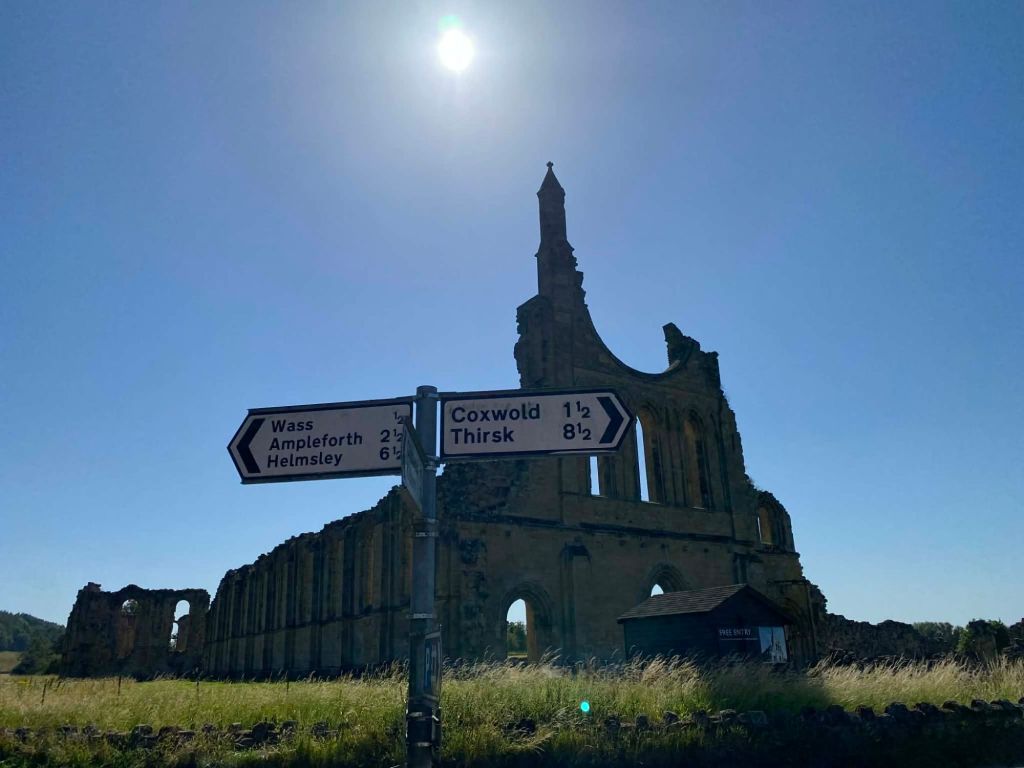
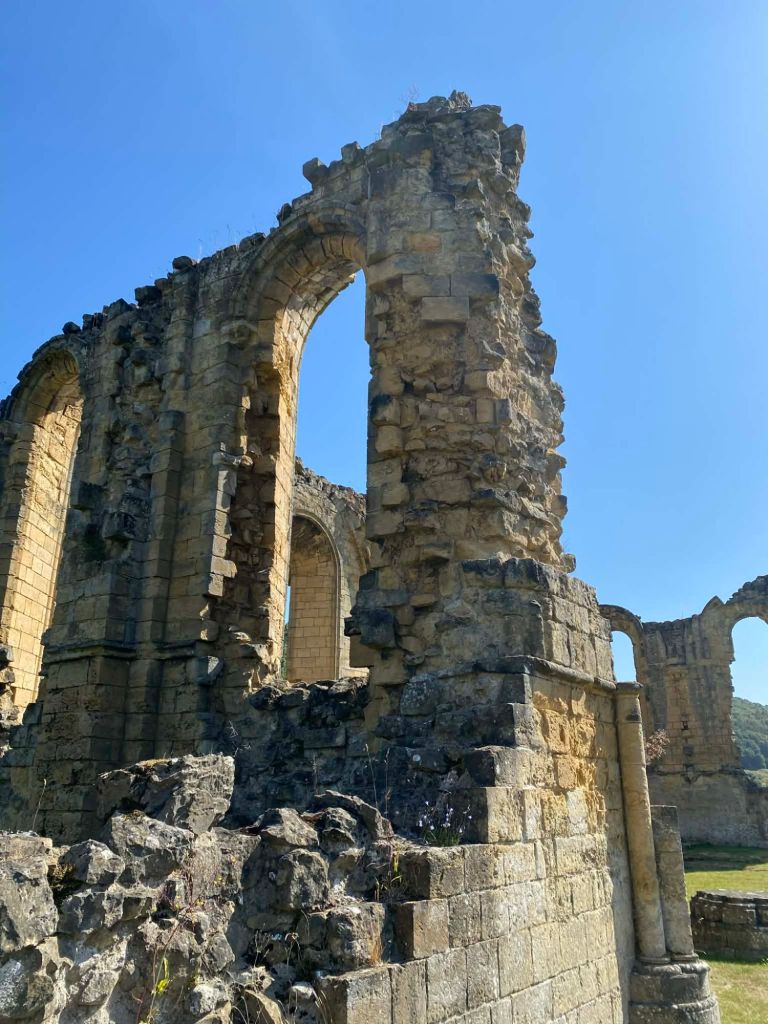
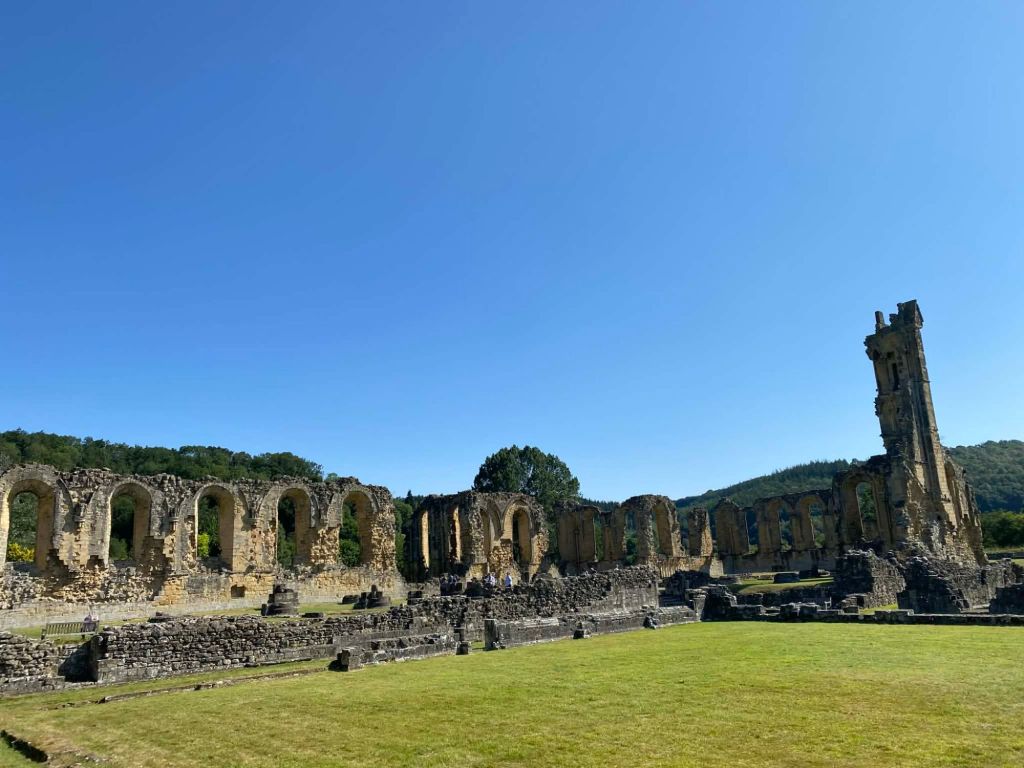
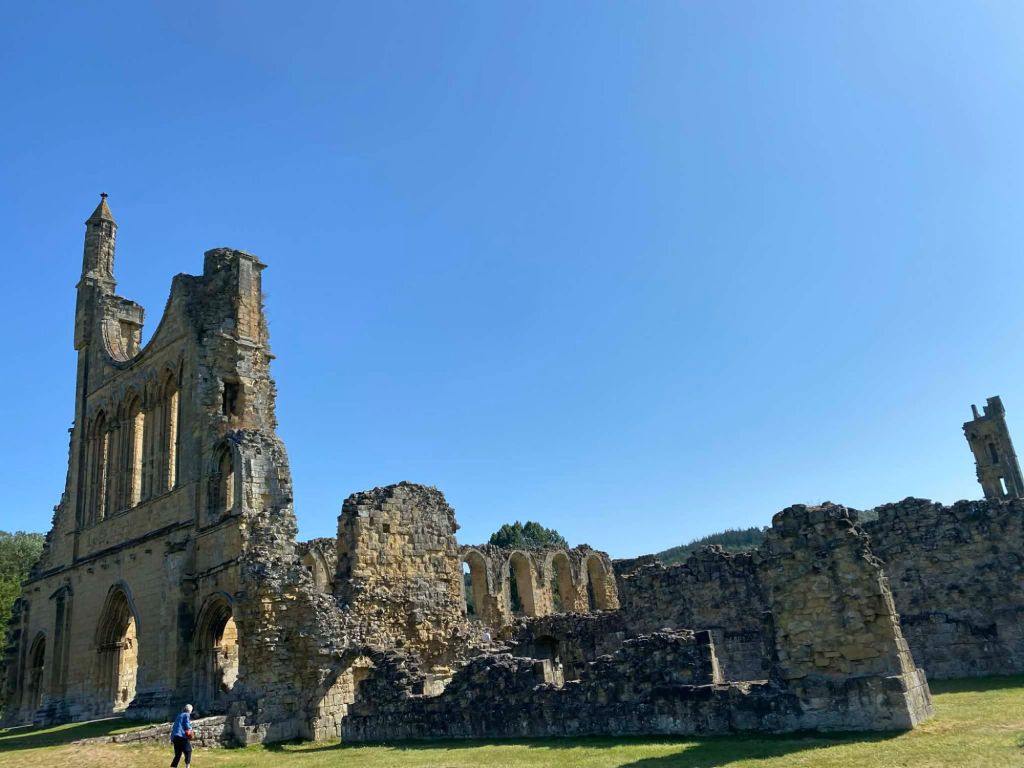
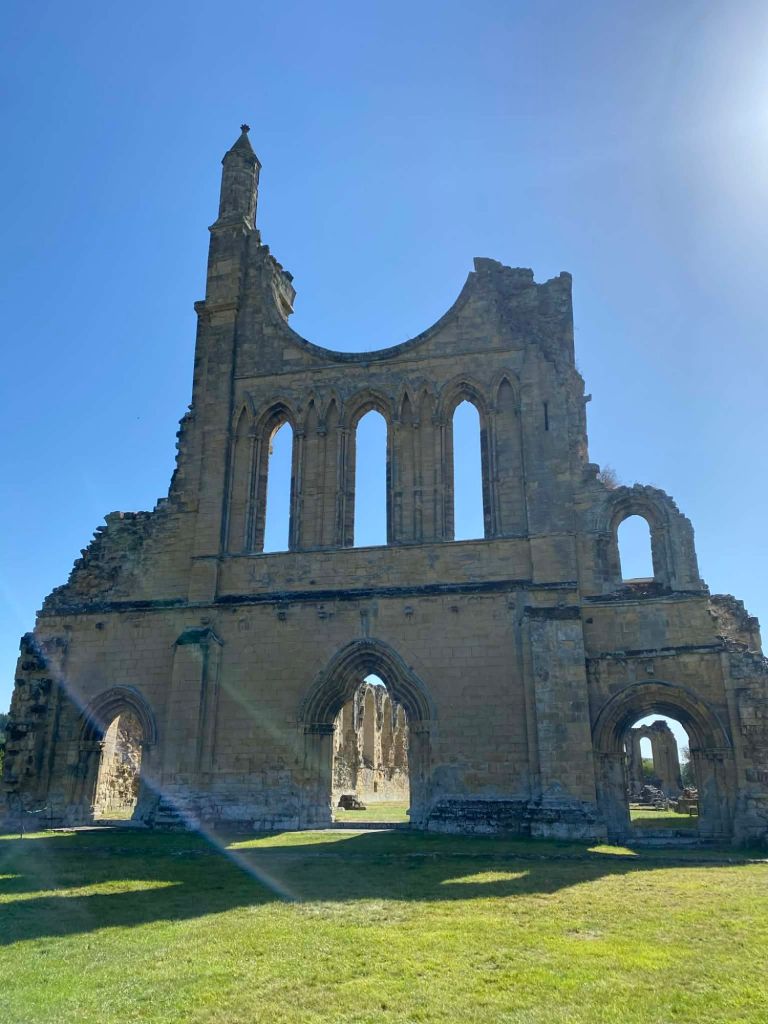
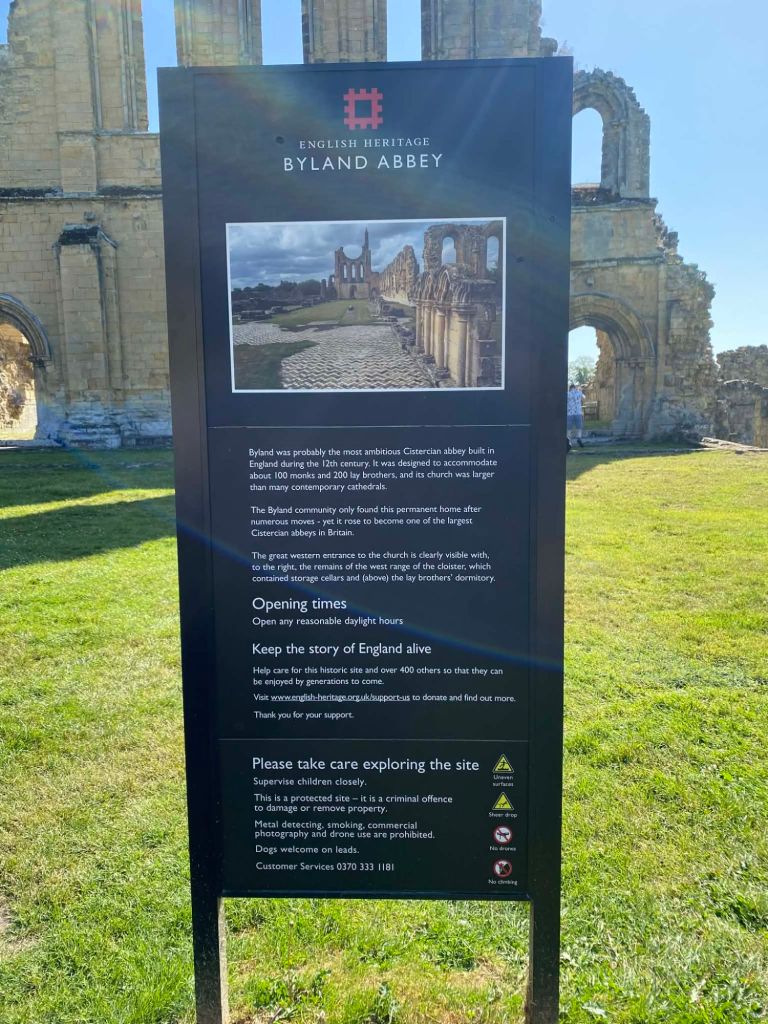
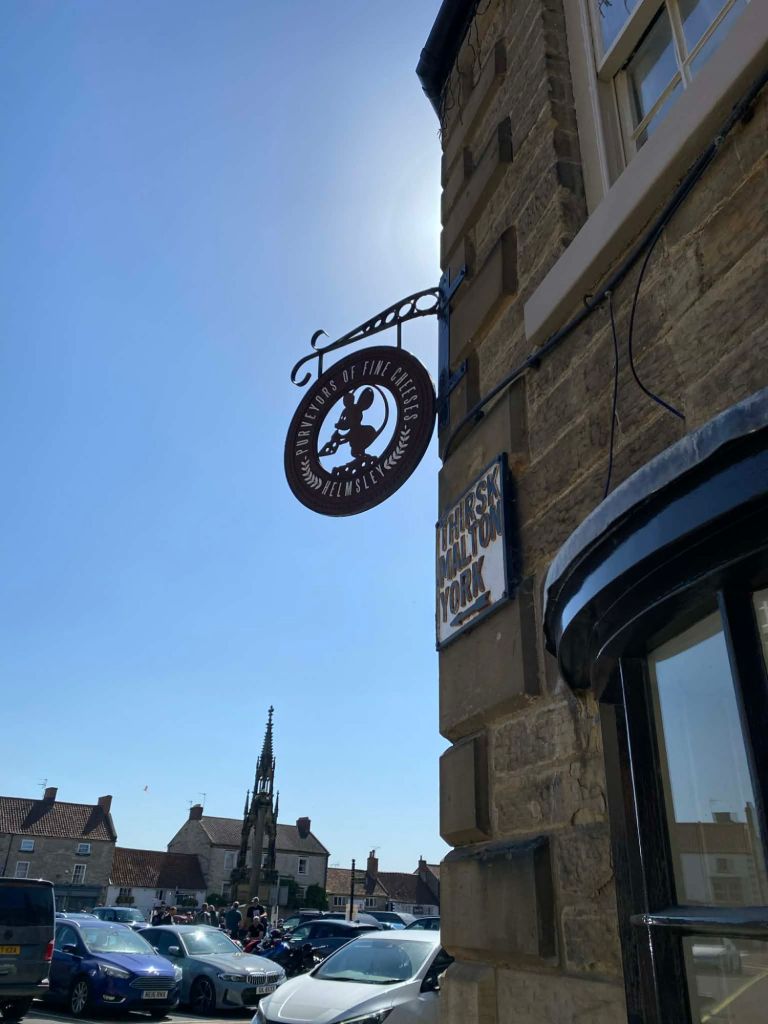
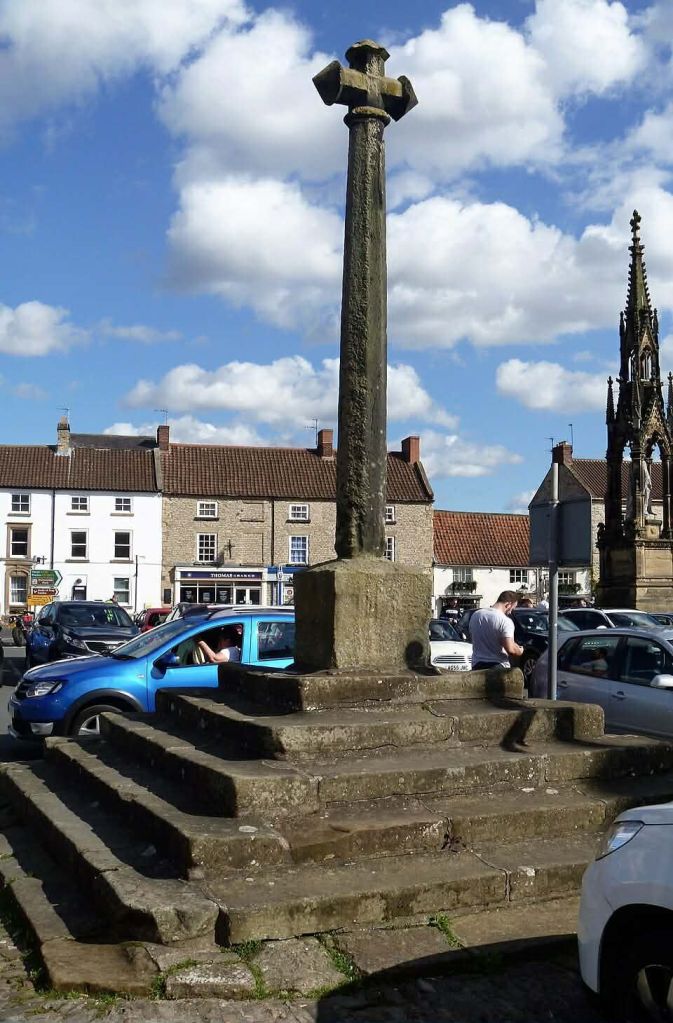
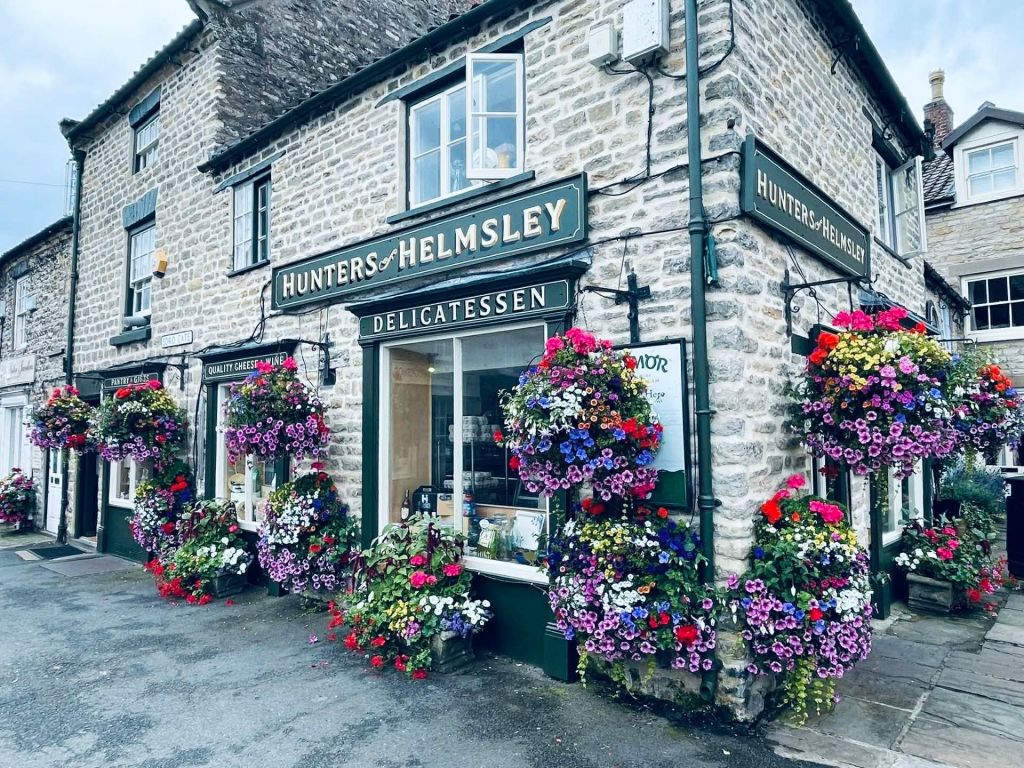
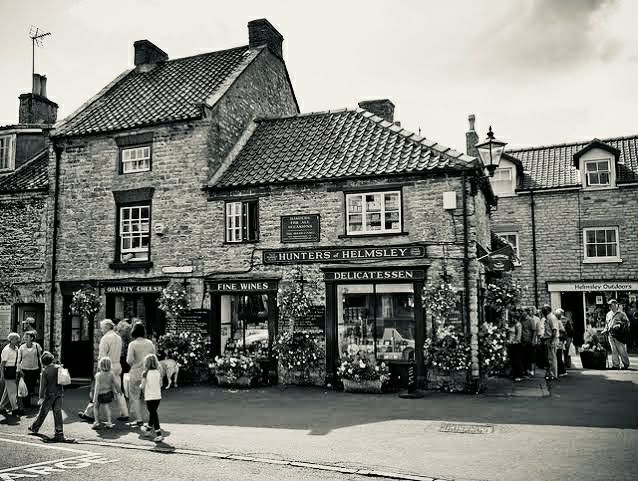
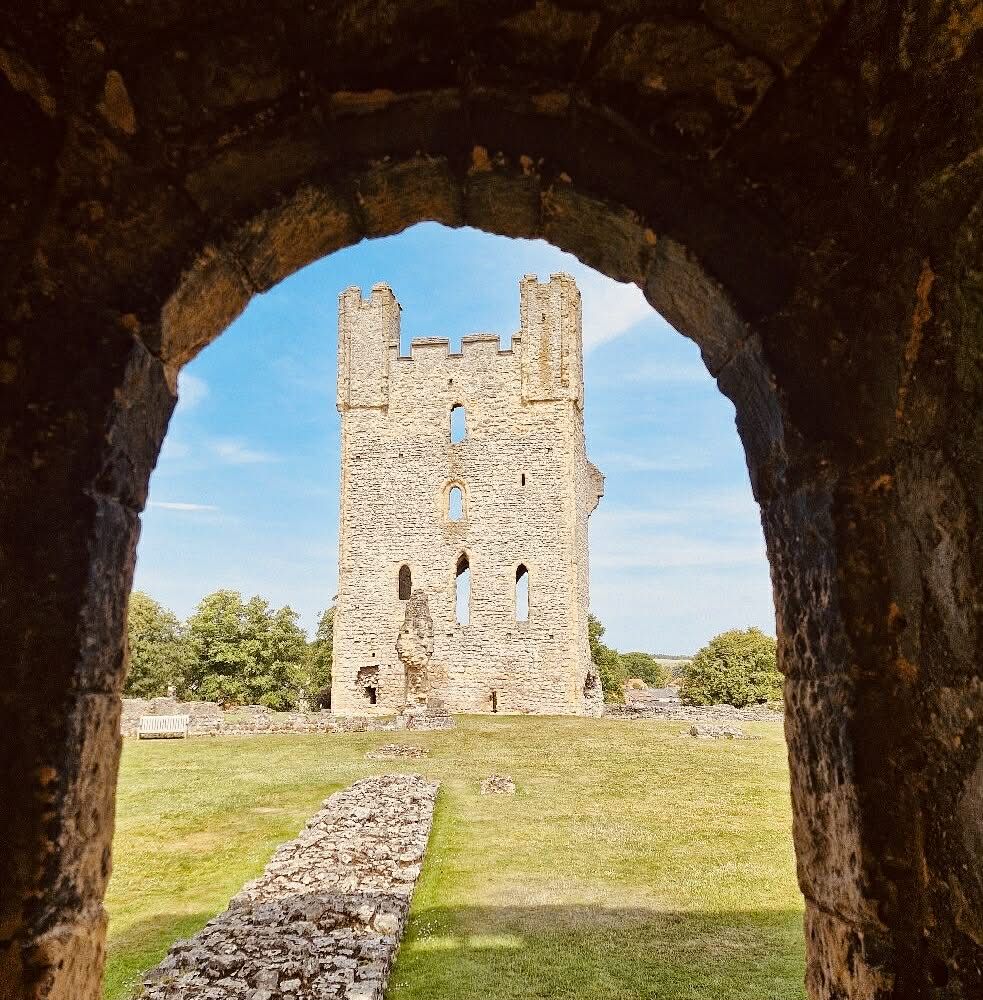
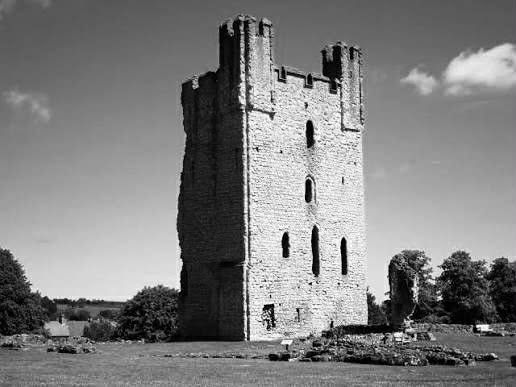
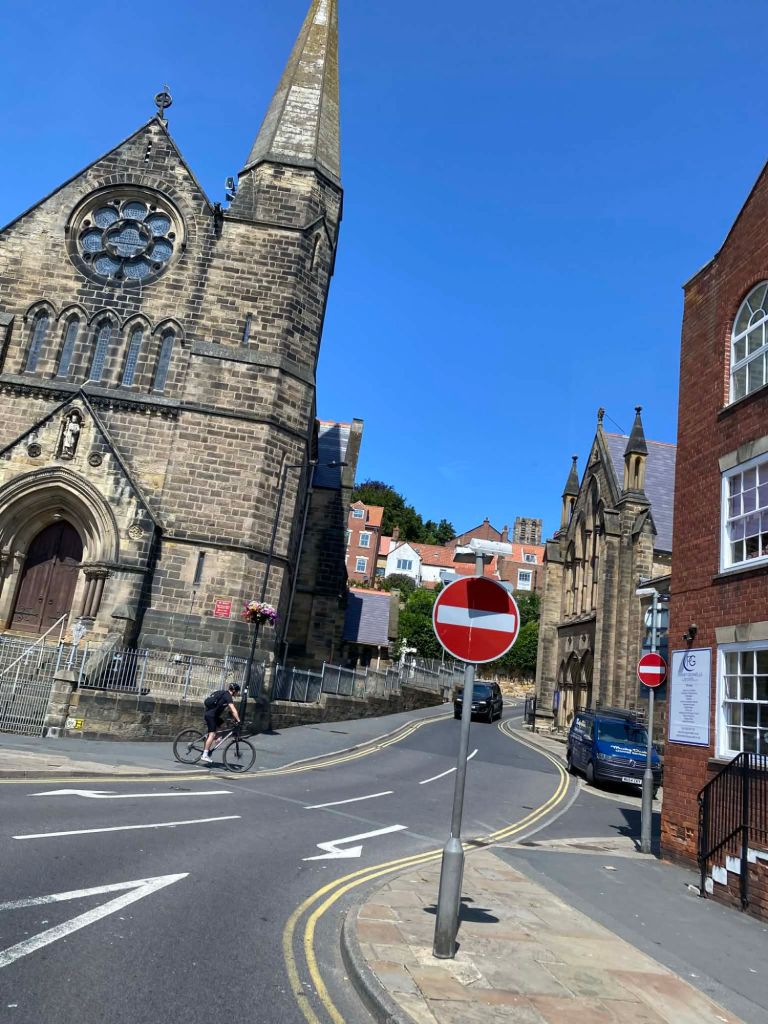
Part of this tour was supposed to include travelling on the North Yorkshire Moors Railway (hello Harry Potter), which is located here, and of which we did a drive by, but this was the one day of the week when it doesn’t run.
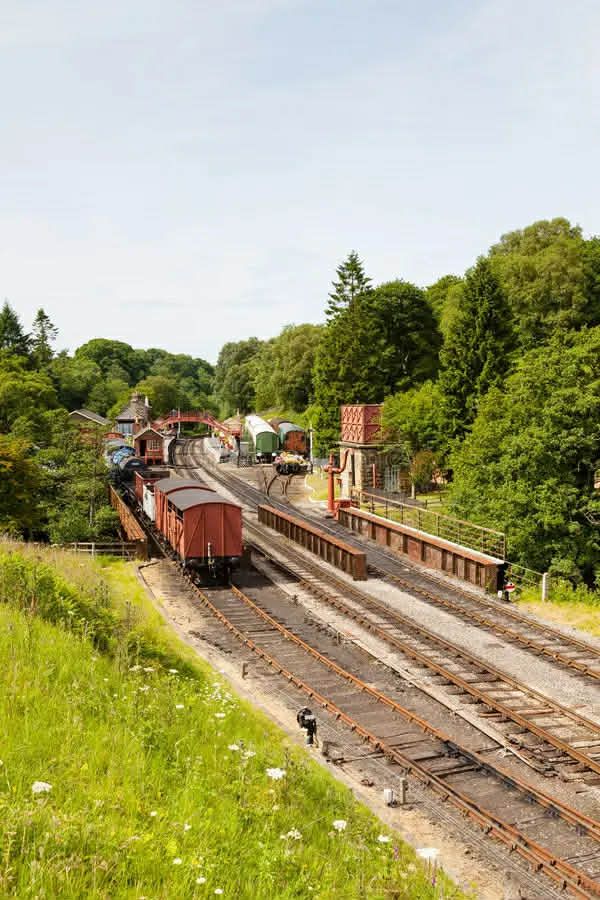
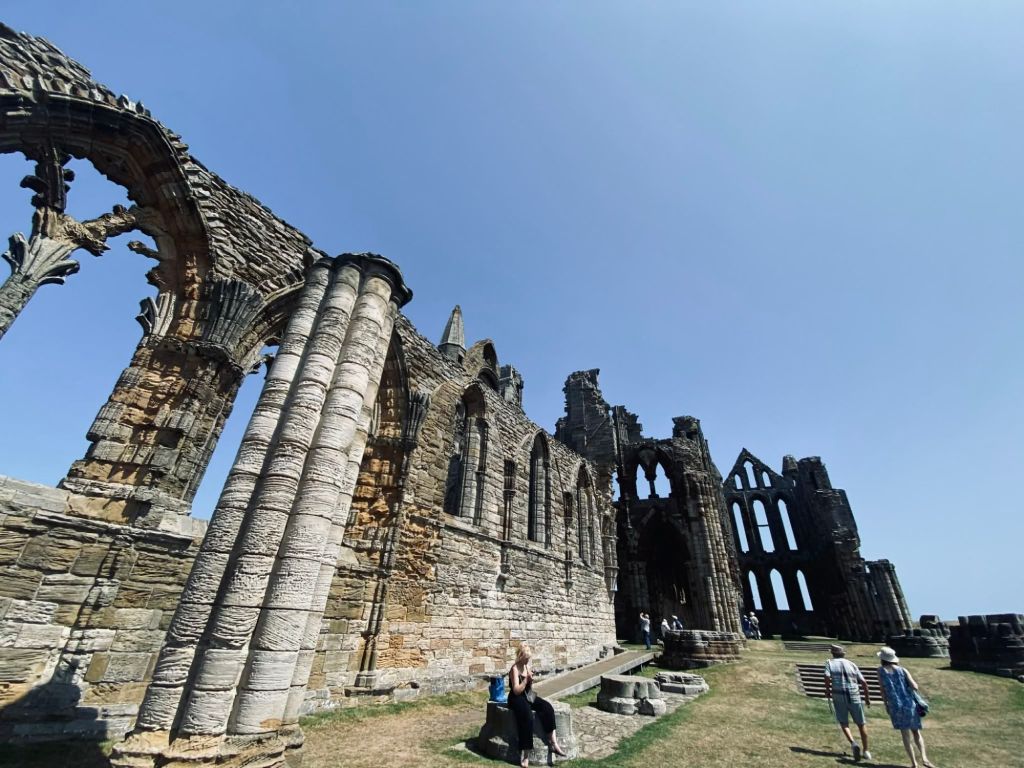
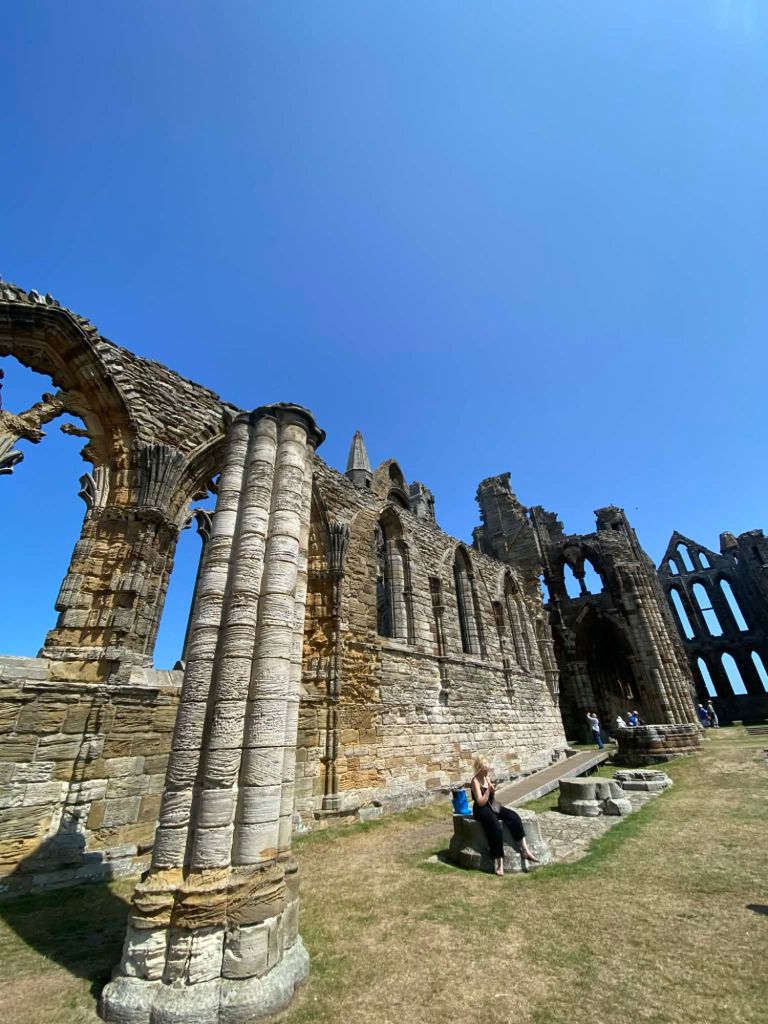
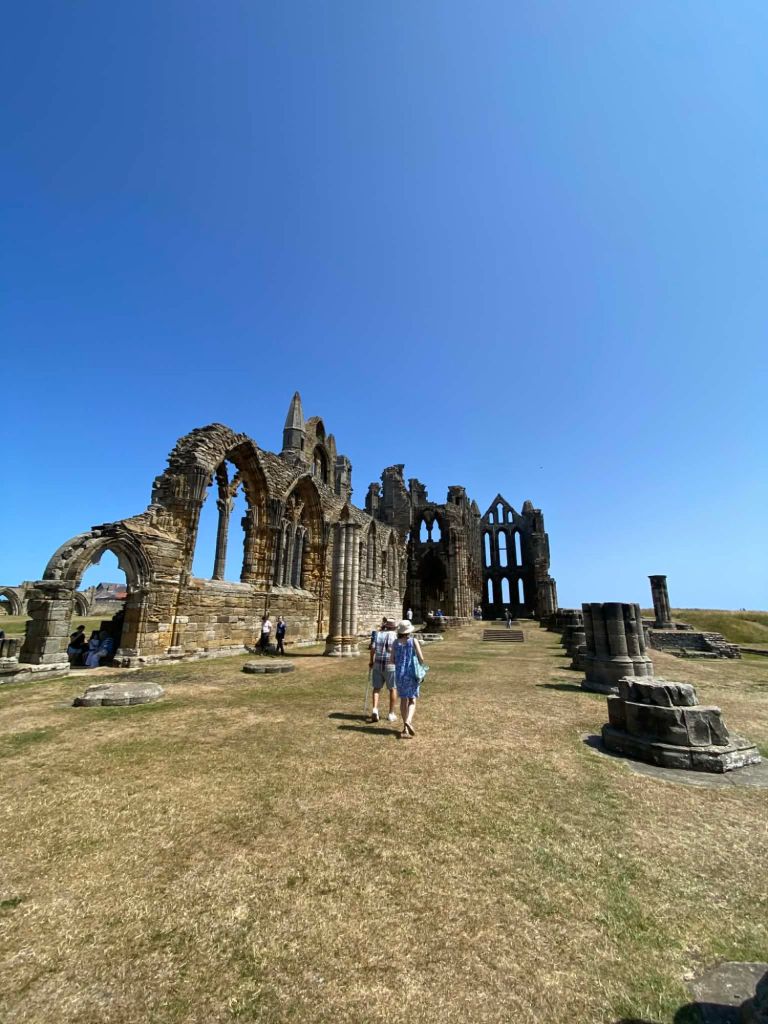
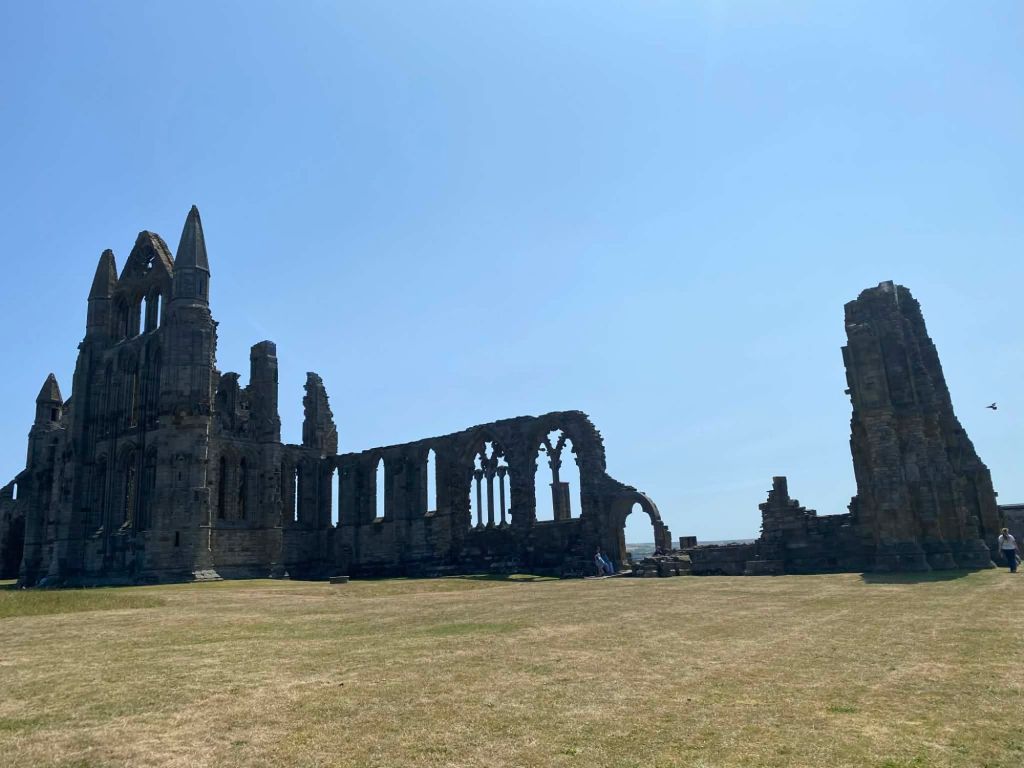
As stated in our email, in exchange we are given both transportation and admission to the famous Abbey in Whitby. A fair exchange in my mind, as that was my main destination on a tour that otherwise would have dropped me off at the town center adjacent to the bottom of those 199 steps up.
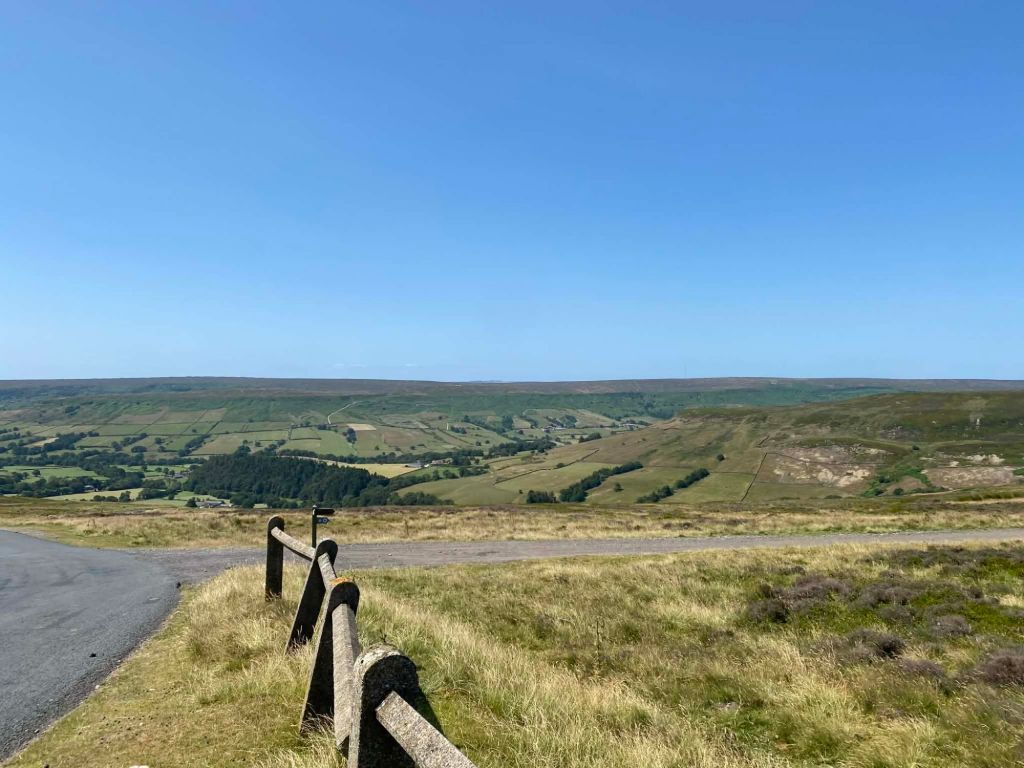
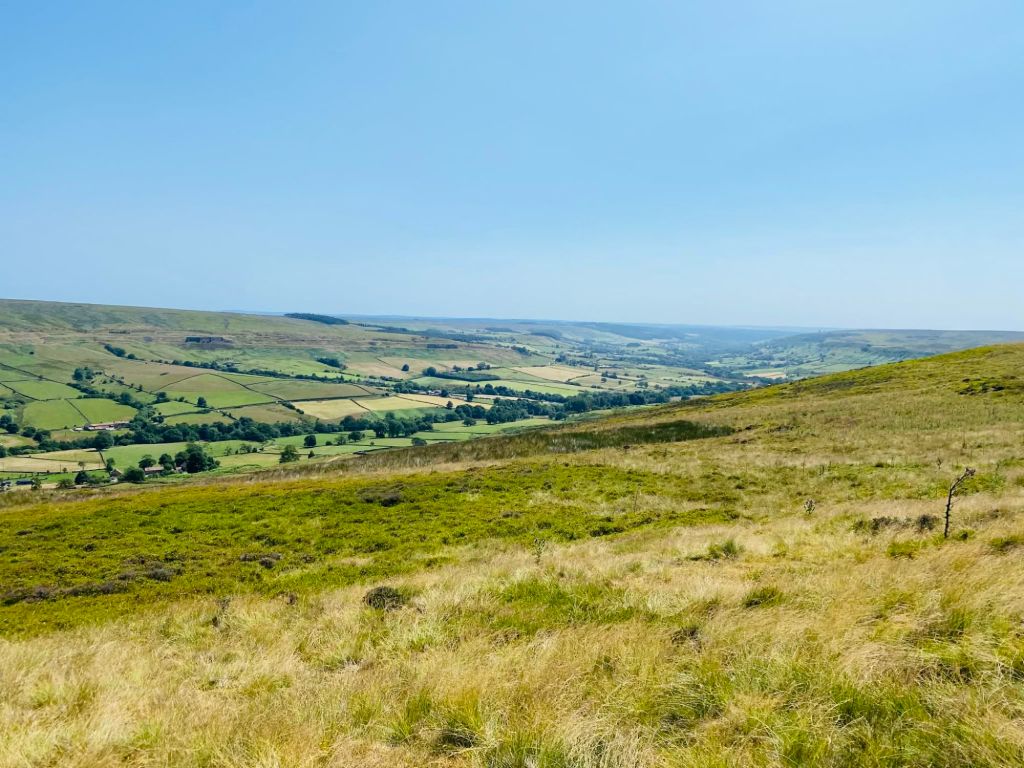
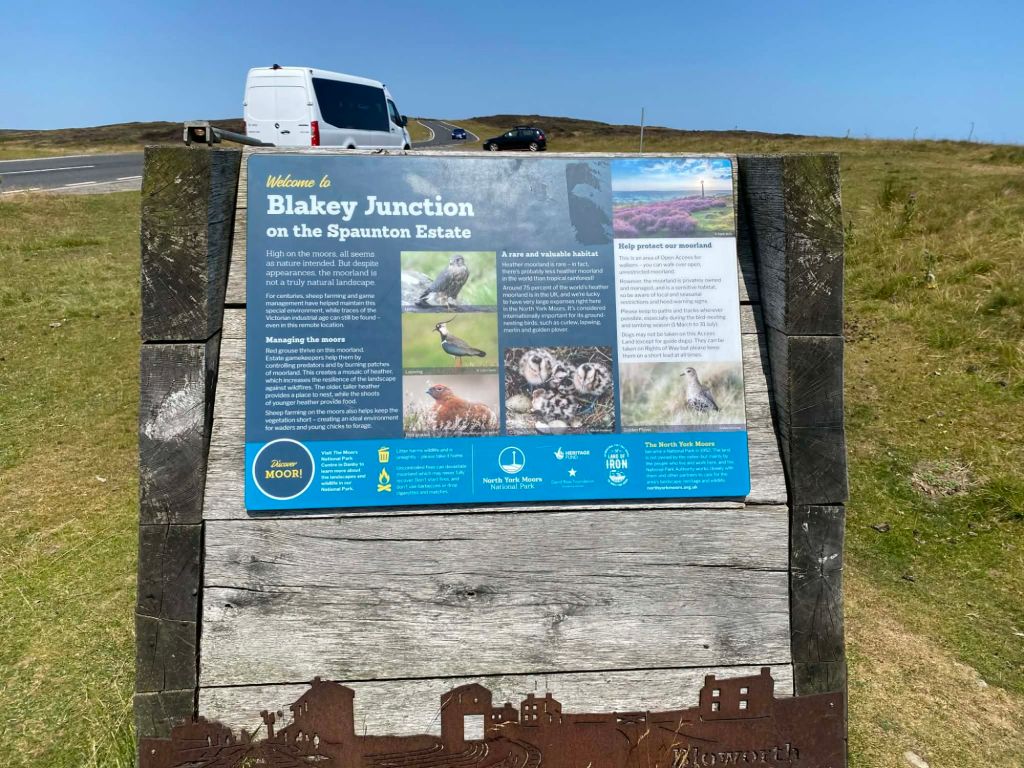
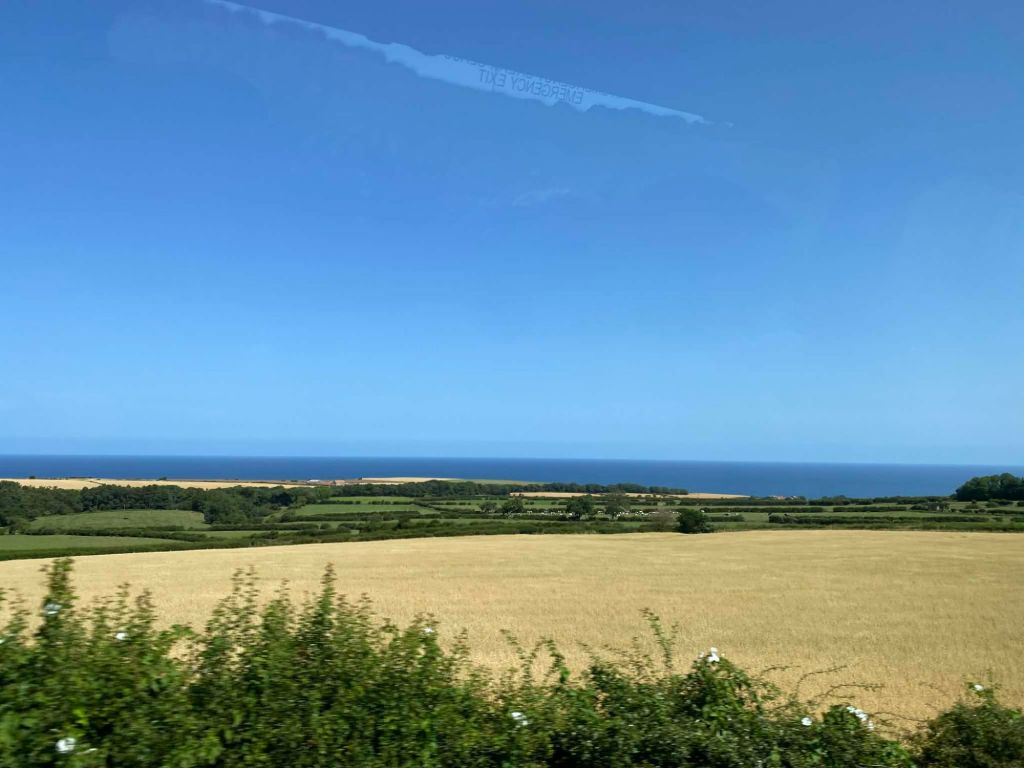
What the email didn’t say was that this exchange also meant we could stop at High Blakey Ridge, an incline sitting at the center of the Moors before winding its way down through Danby and a series of smaller towns leading to the North Sea. This is where I encountered Helm.
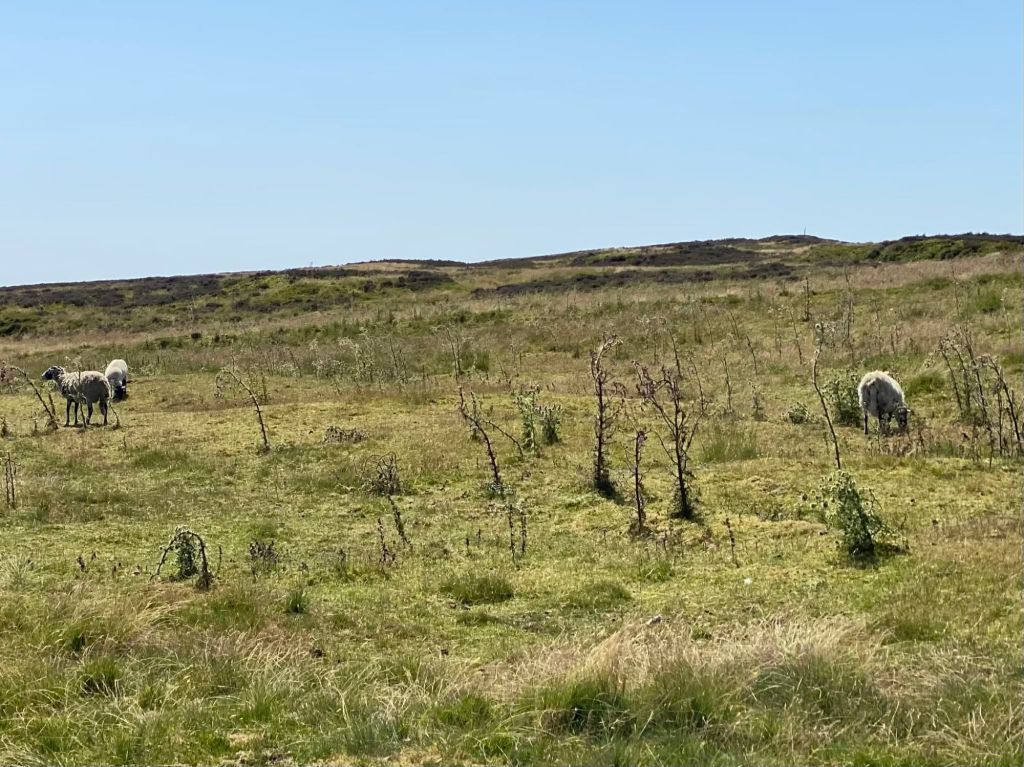
It’s something our tour guide prepares us for, walking through the lore that gives it it’s agency. He reminds us again about the force we are about to encounter before we open our doors, one that is as sure as the ground we would be standing on. “Let it hit you,” he says. “Experience it.” And here we open the doors to what can only be described as an otherwordly experience, encountering a wind unlike anything I have experienced before. Hall’s narrative suddenly breaks open, coming alive in a whole new way as I wander the hillside looking out over the valley, sheep gently grazing the one side, the expansive views opening up on the other. There’s something here that witnesses to the unbroken relationship between the intangibles of the sacred and the groundedness of the earth. Something that calls out and needs to be named.
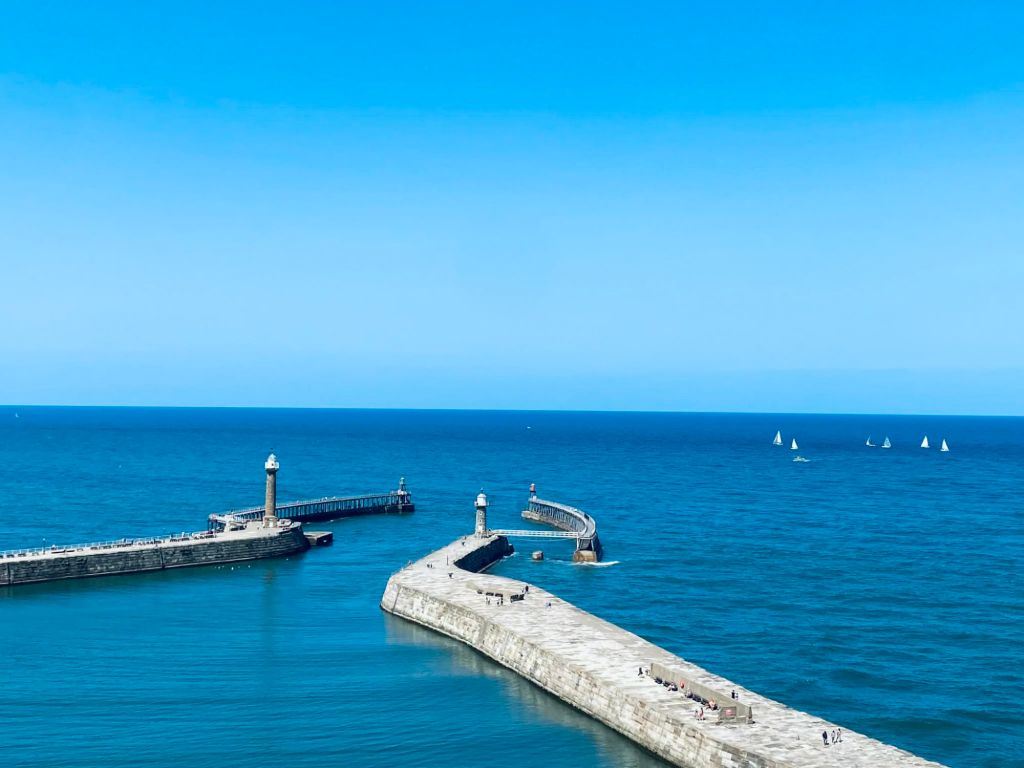
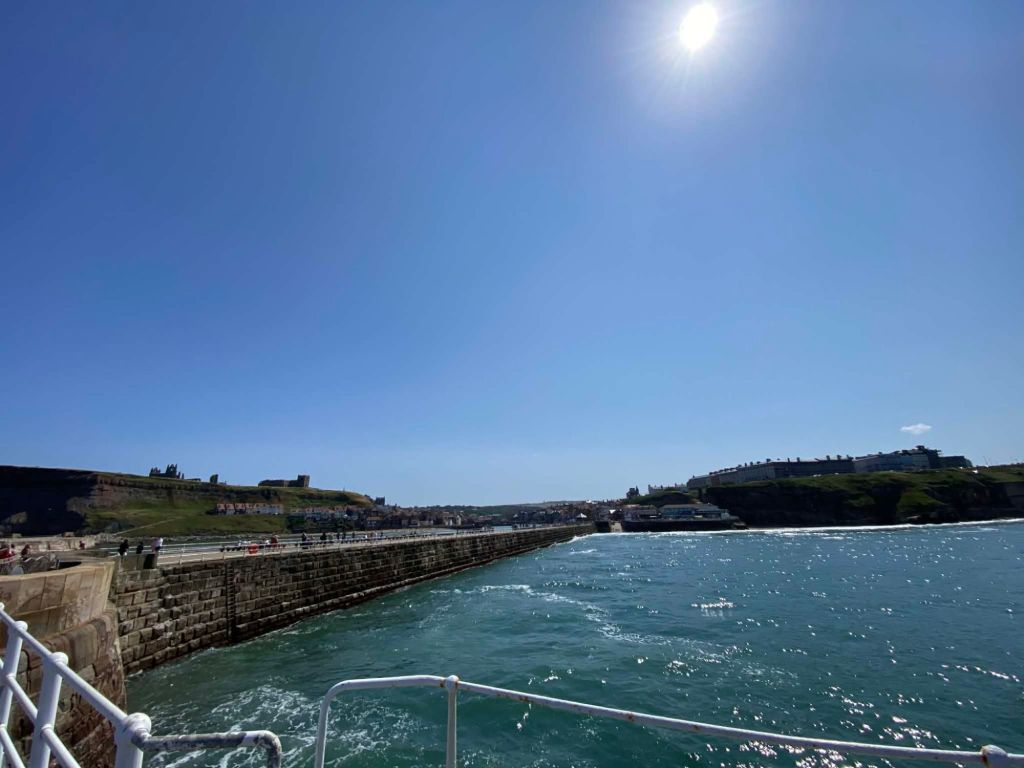
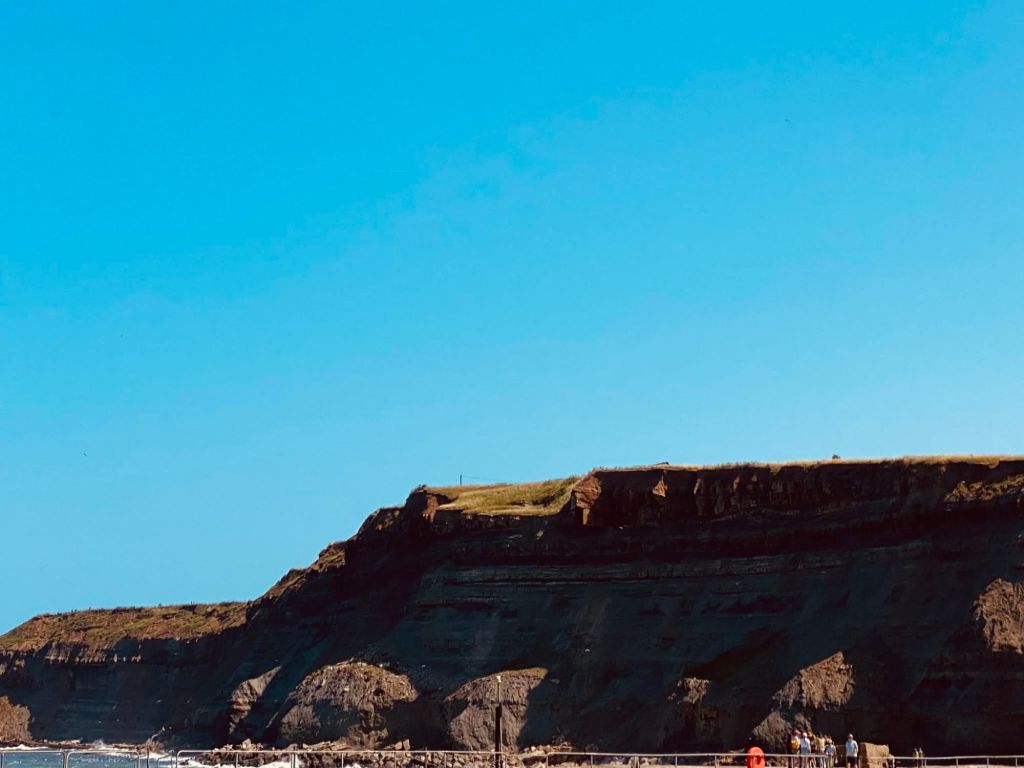
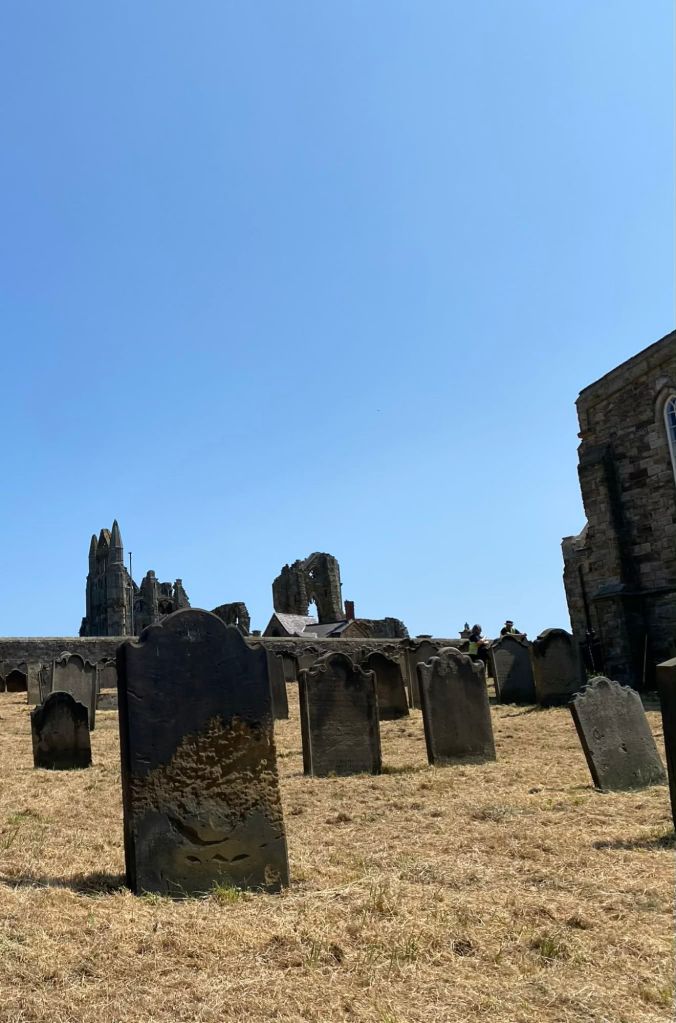
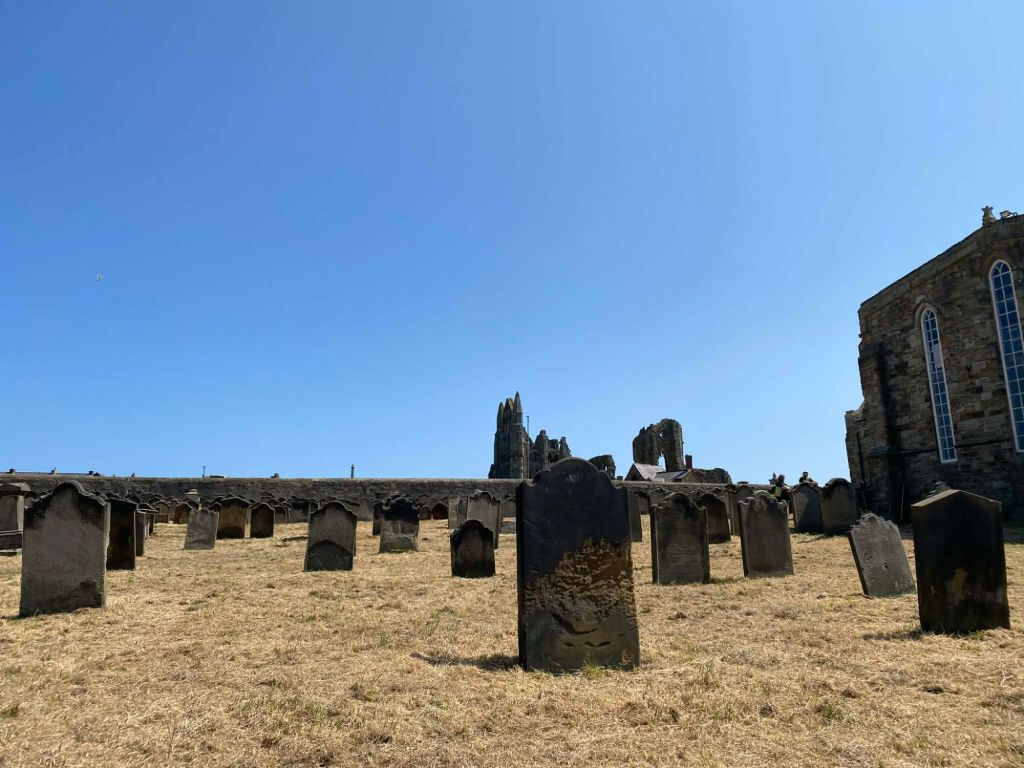
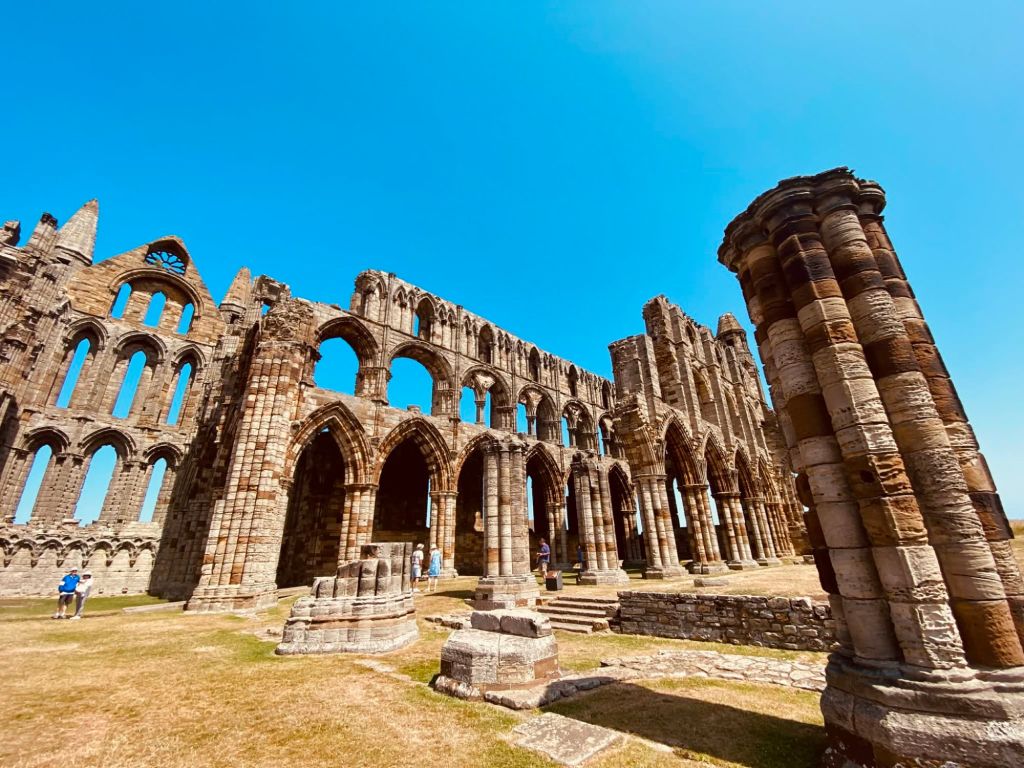
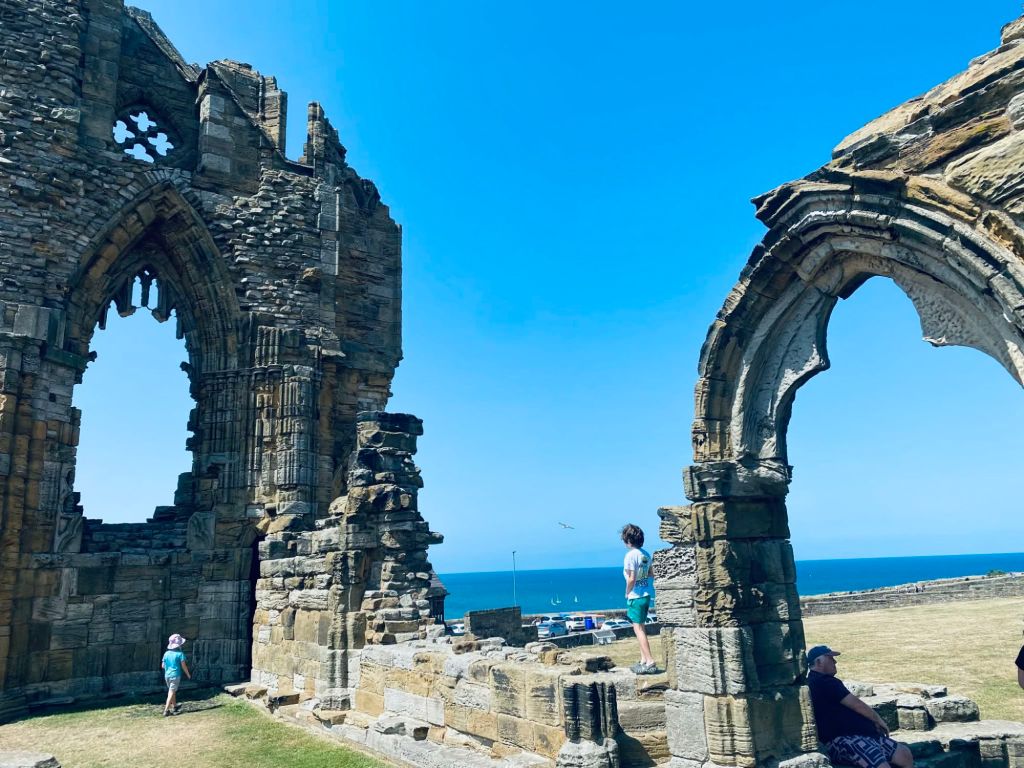
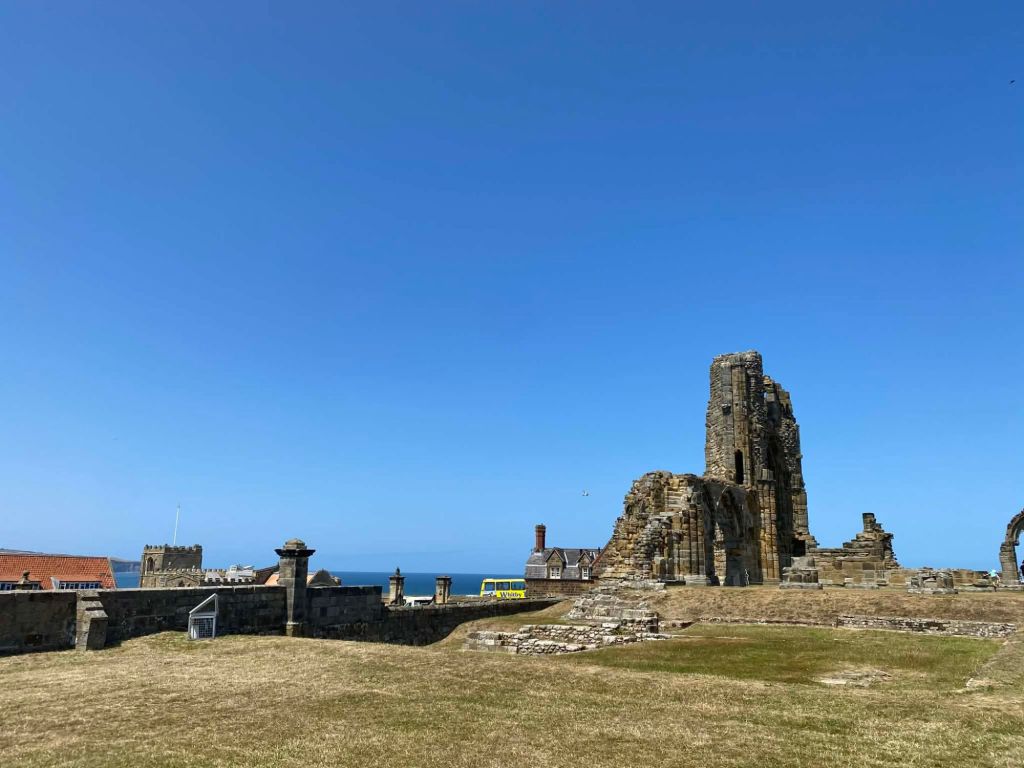
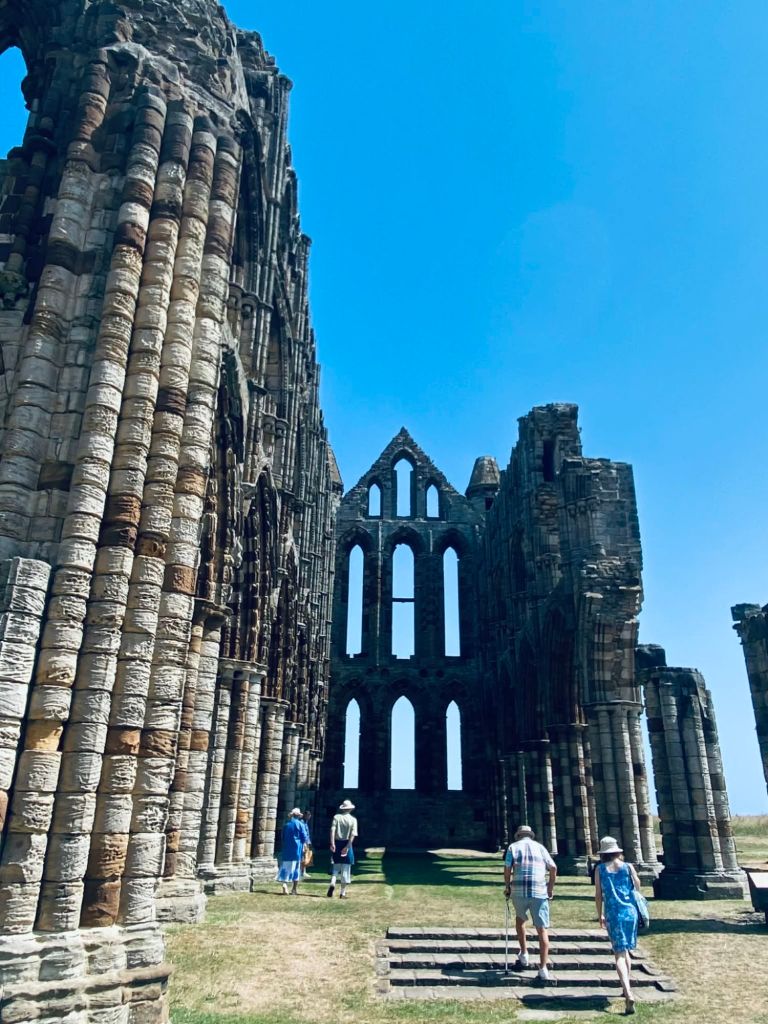
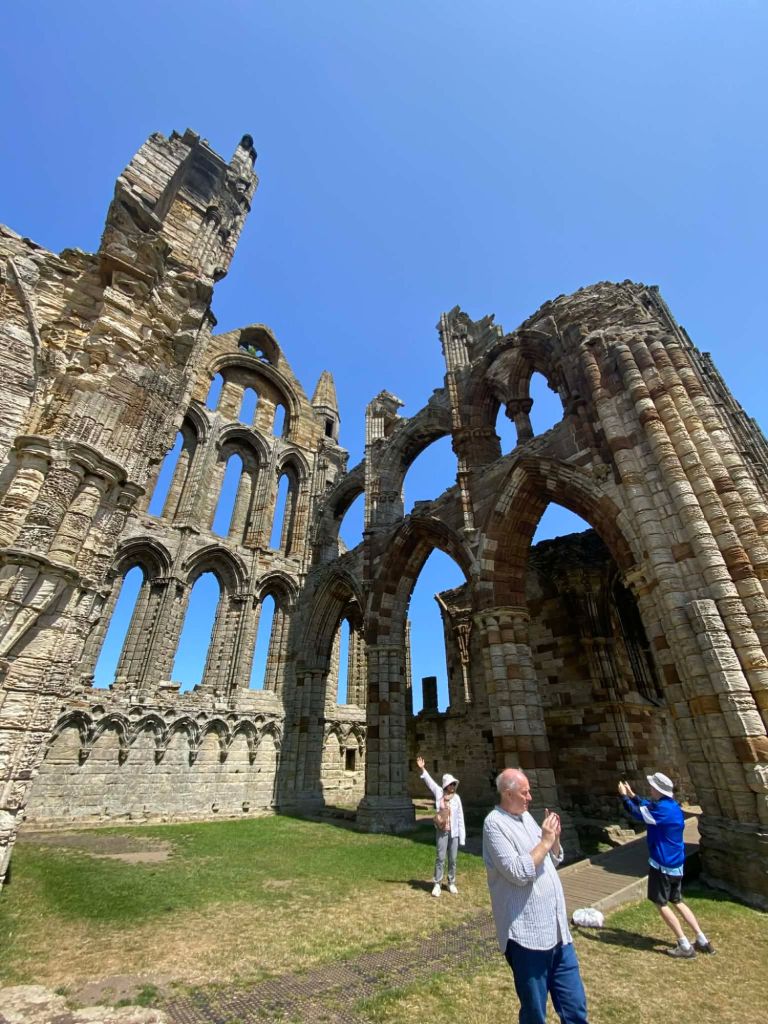
This experience, rooted now in memory, is what I carry with me to the North Shore, a town soaked in it’s own lore, the grand ruins of Whitby Abbey standing as its own witness atop those looming cliffs, looking out into the seas expanse as it keeps watch over the town. As writer Shayle Follows writes in a 20206 article for the Whitby Guide,
One of my favourite things about Whitby Abbey is that you do not even have to be standing beside it to feel it’s presence. It is always there, sitting high above the town, sneaking into the background of your photos and making every view feel a little more dramatic. Whether you are walking along the harbour, looking back from the beach, or exploring the cobbled streets below, the Abbey has a way of stealing the scene.
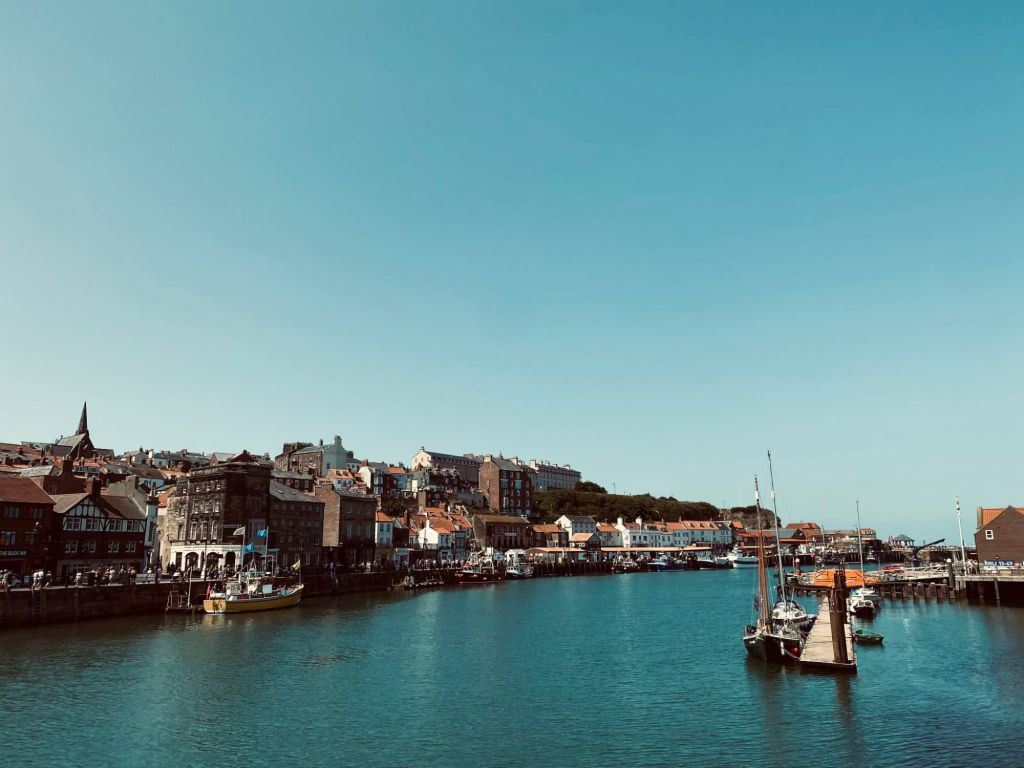
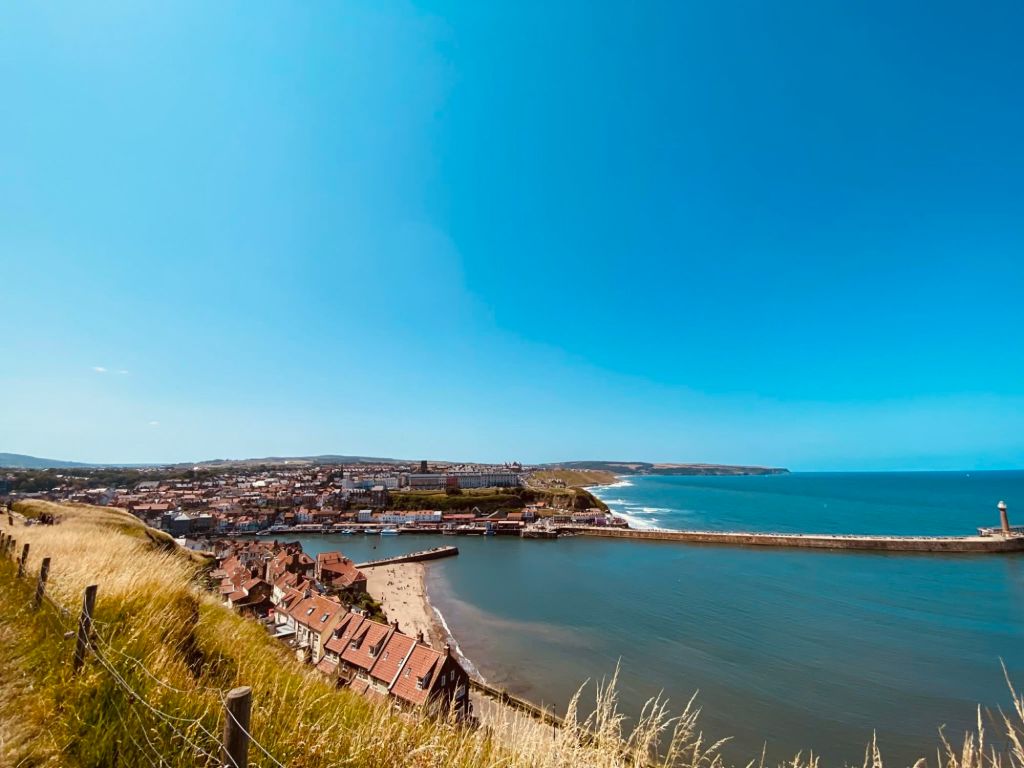
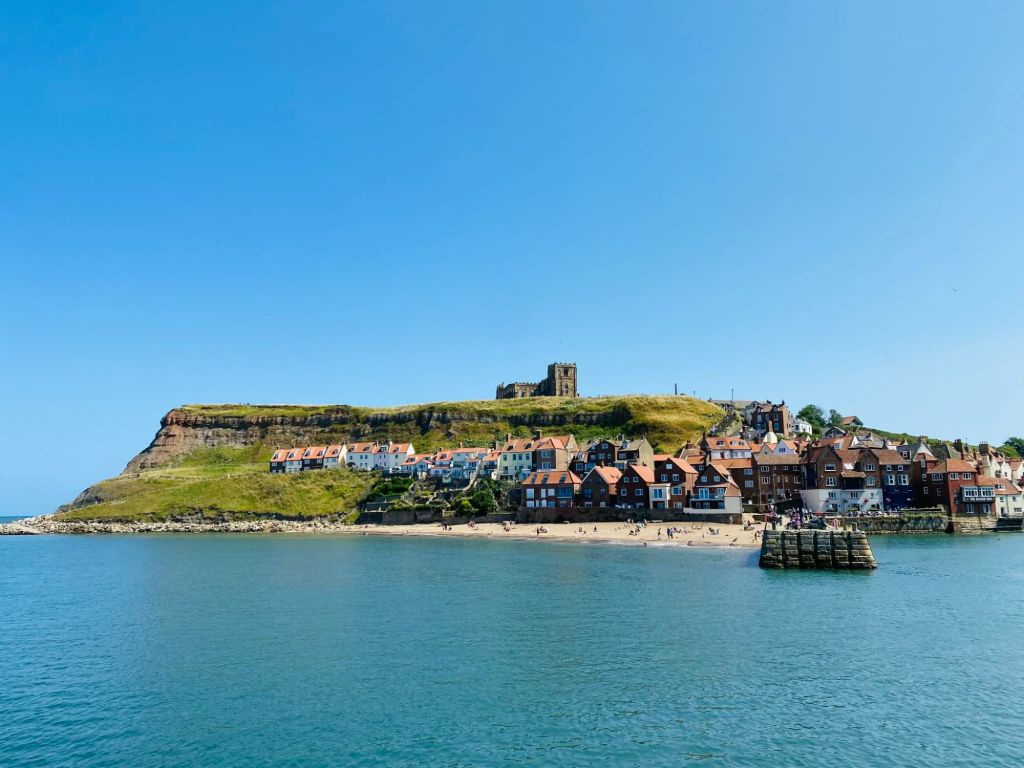
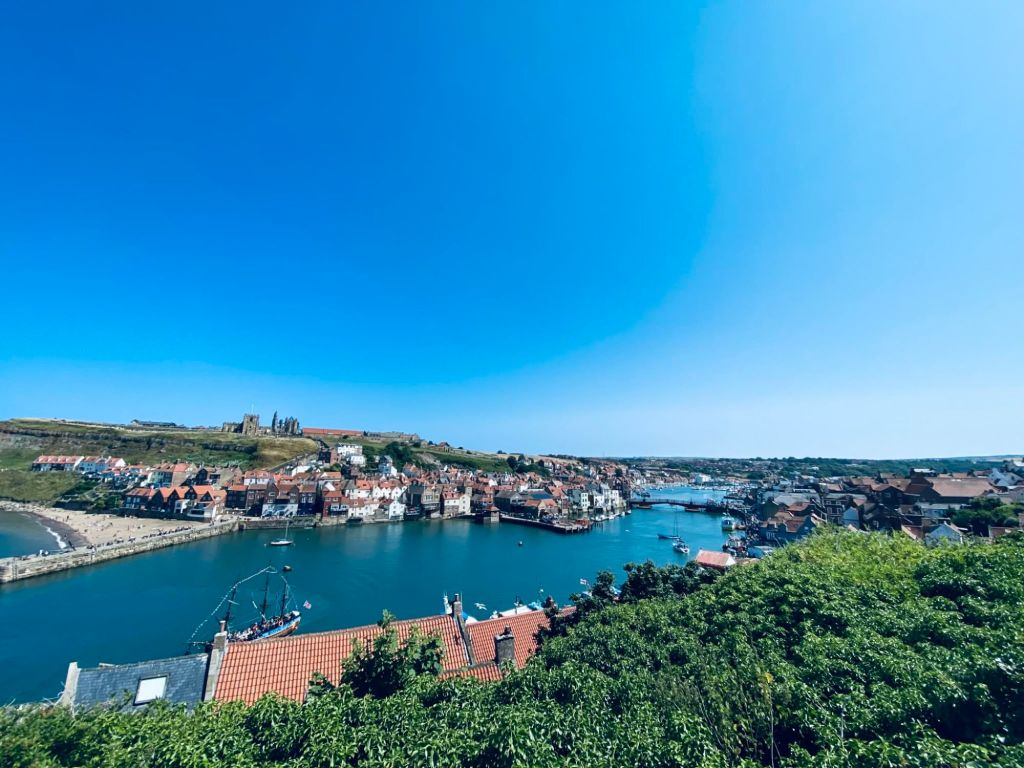
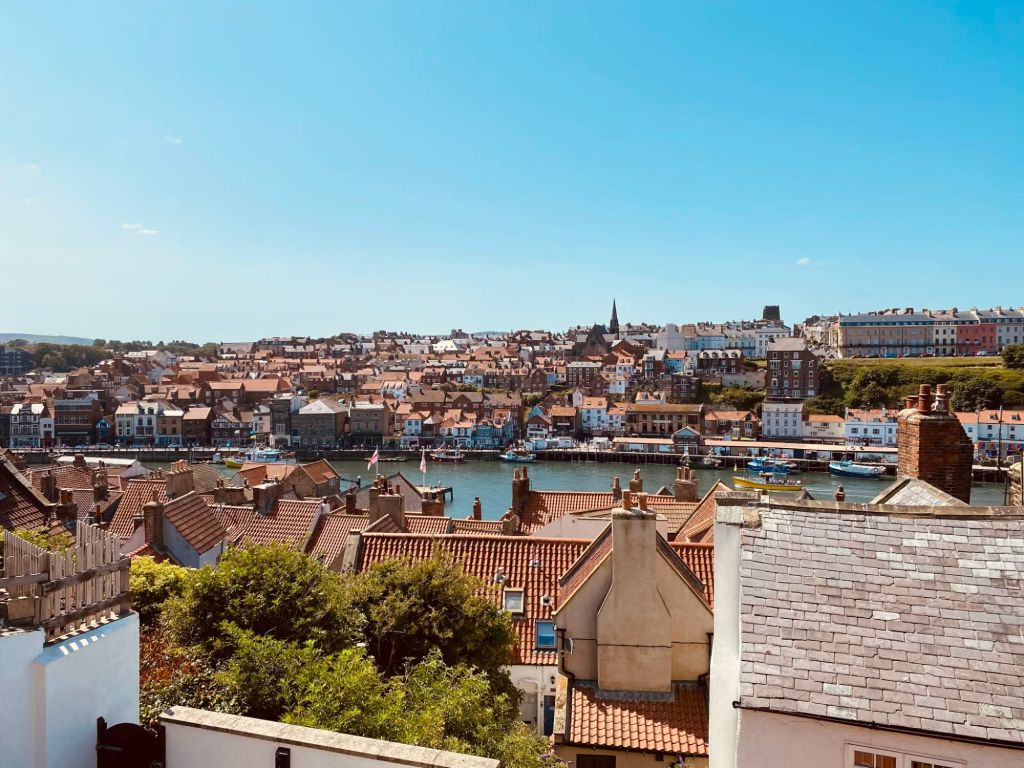
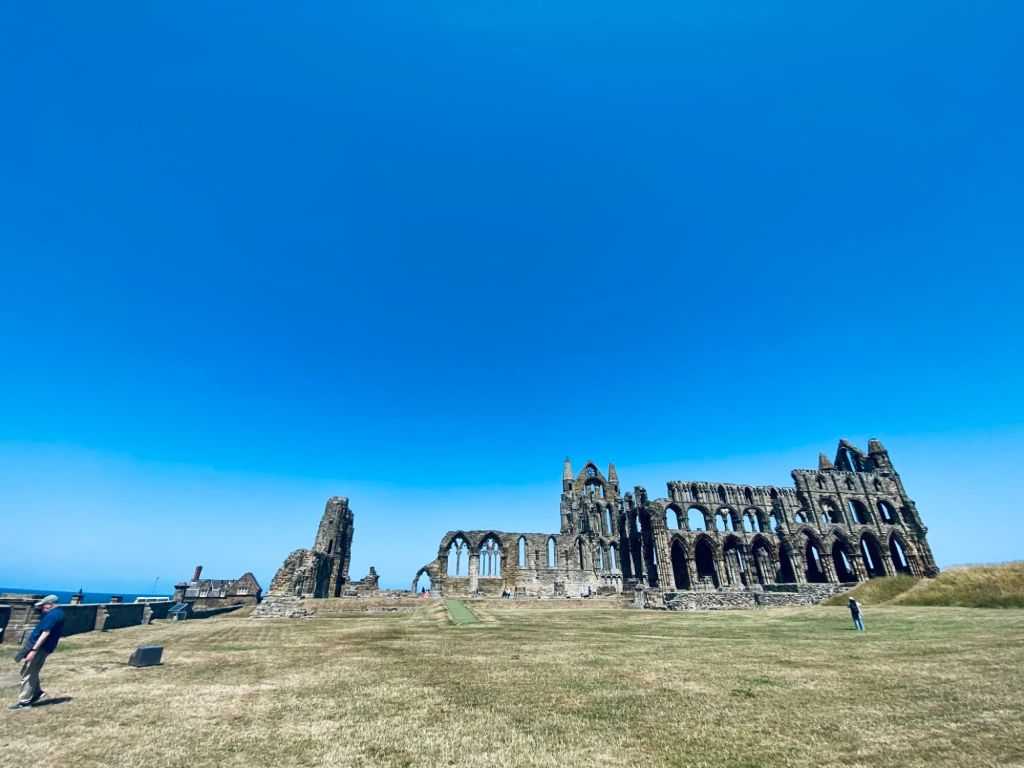
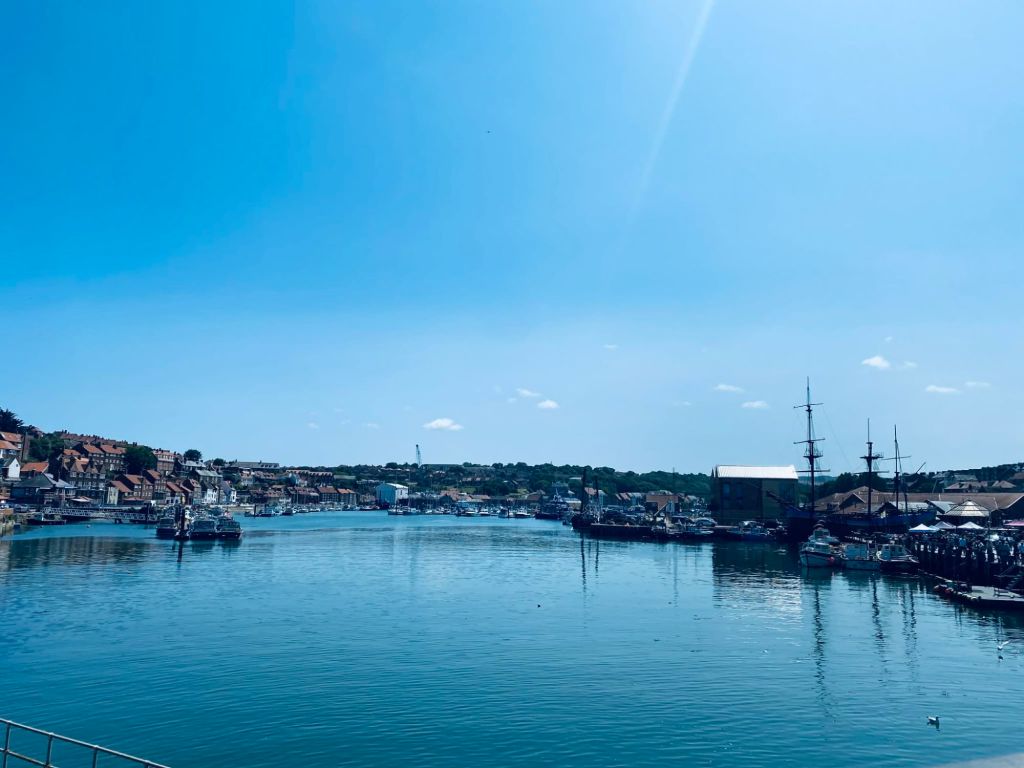
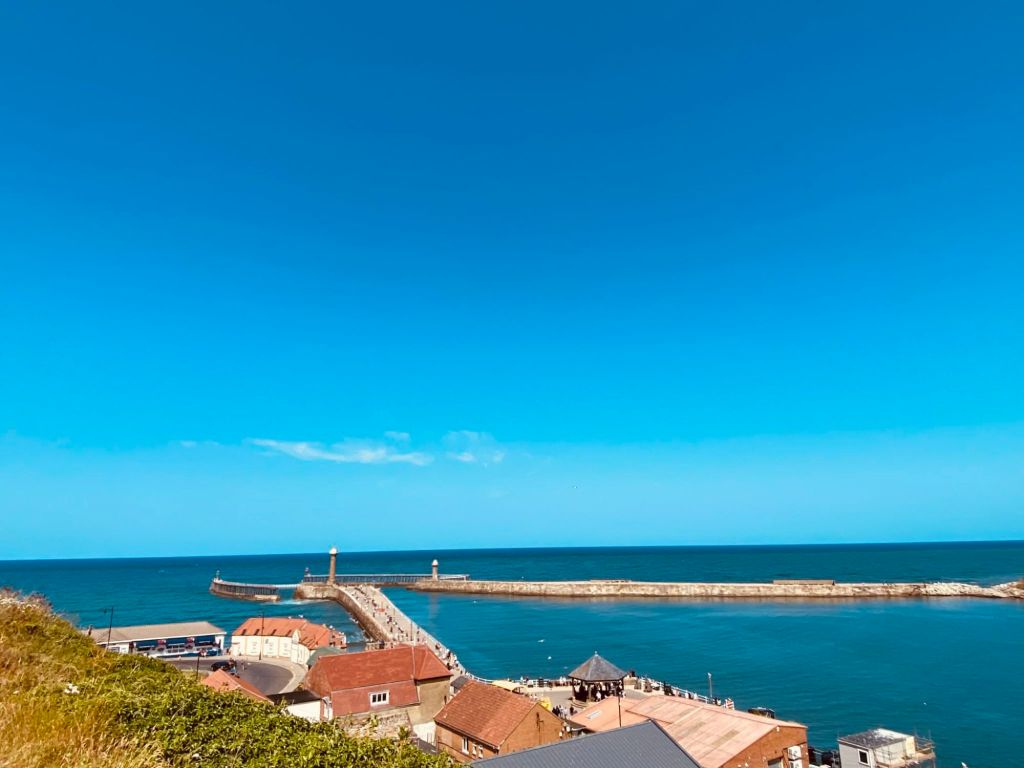
As Follows goes on to say, it’s easy to see why Bram Stoker was taken with this place. It’s why we endeavor to walk those steps at all, the very setting for what becomes his iconic novel. Here, standing at the top, with Robin Hood’s Bay looming in the distance on one side, Newcastle Upon Tyme on the other, is my introduction to the town sitting below, every turn of those 199 steps giving you a new and fresh vantage point to it’s rows of coloured houses and market shops lining the River Esk as it spills out into the North Sea waters.
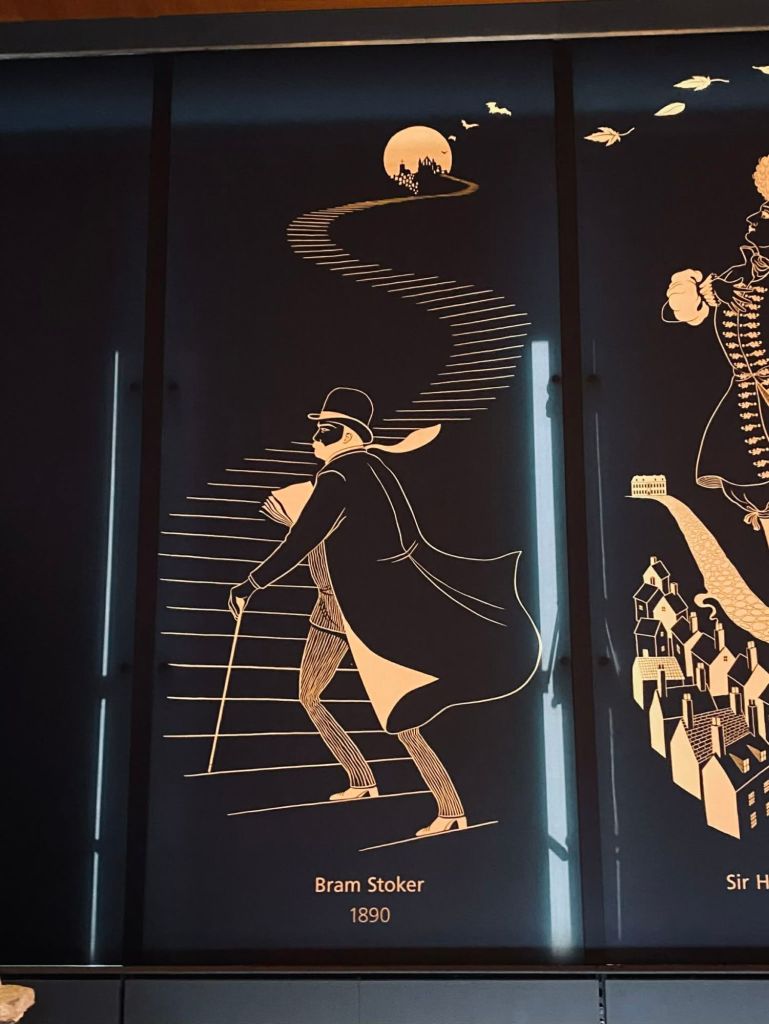
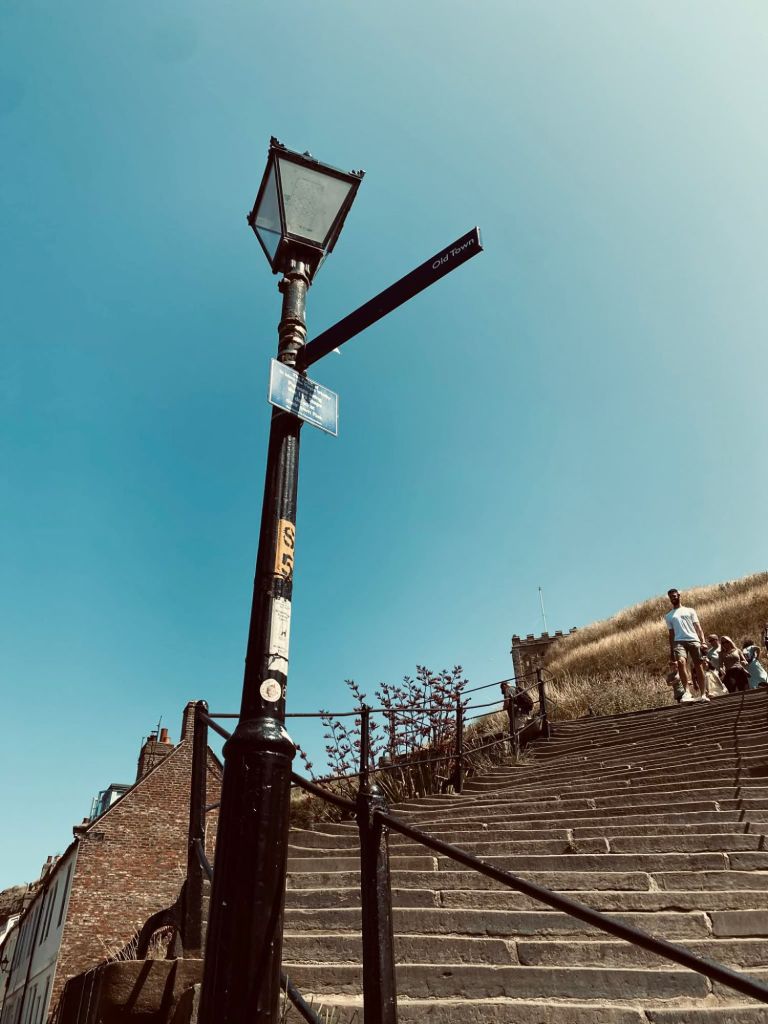
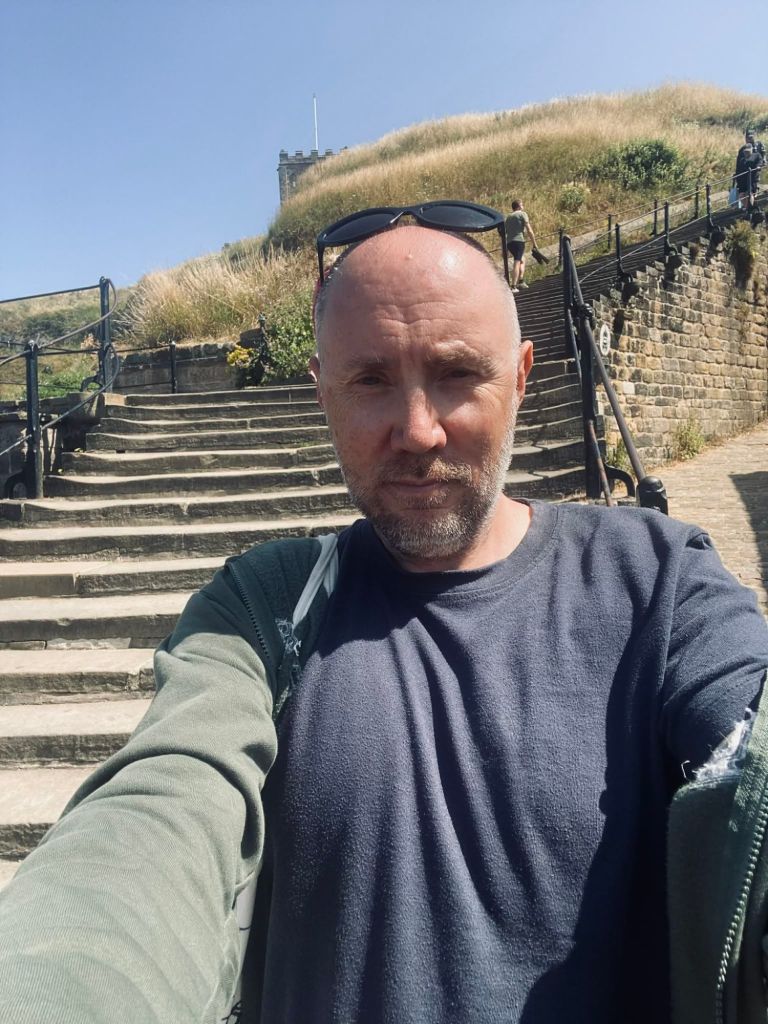
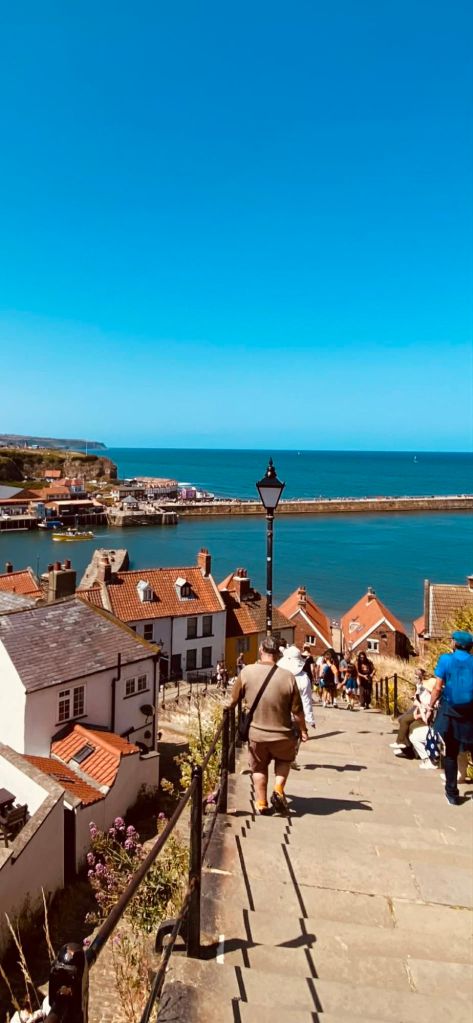
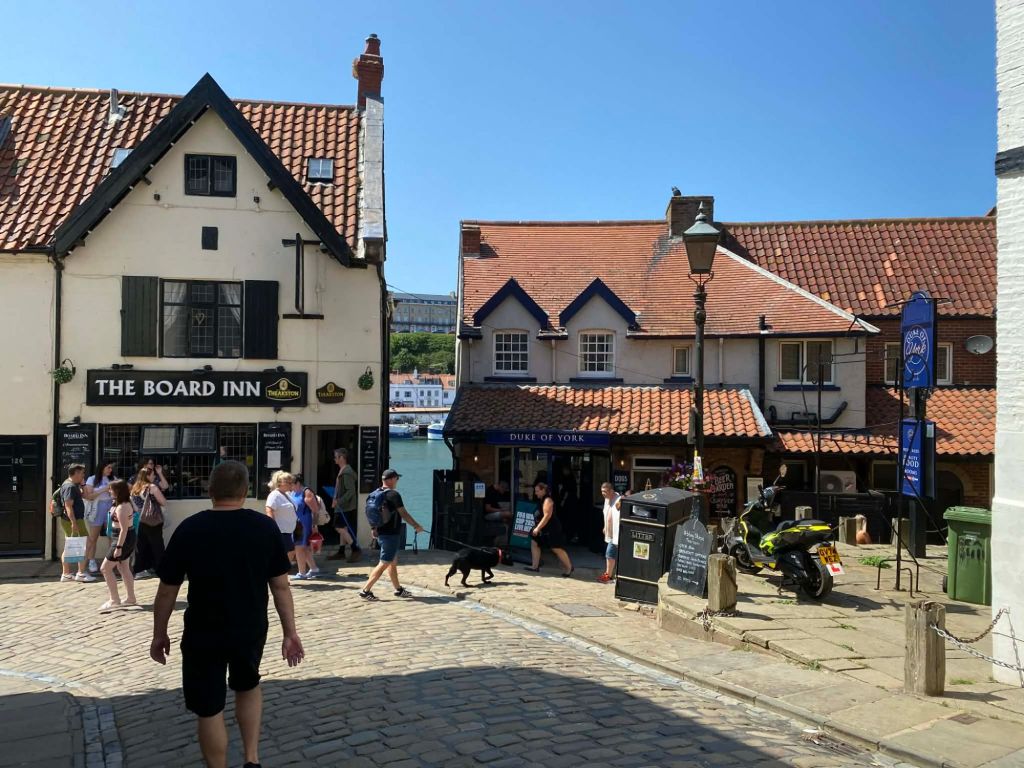
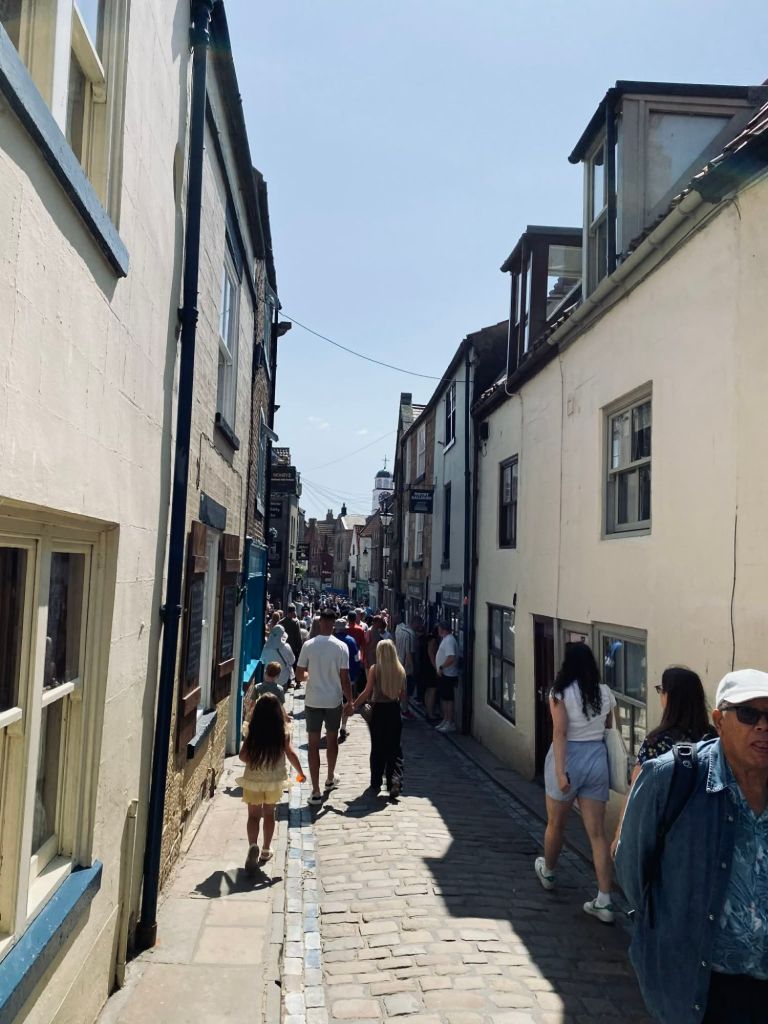
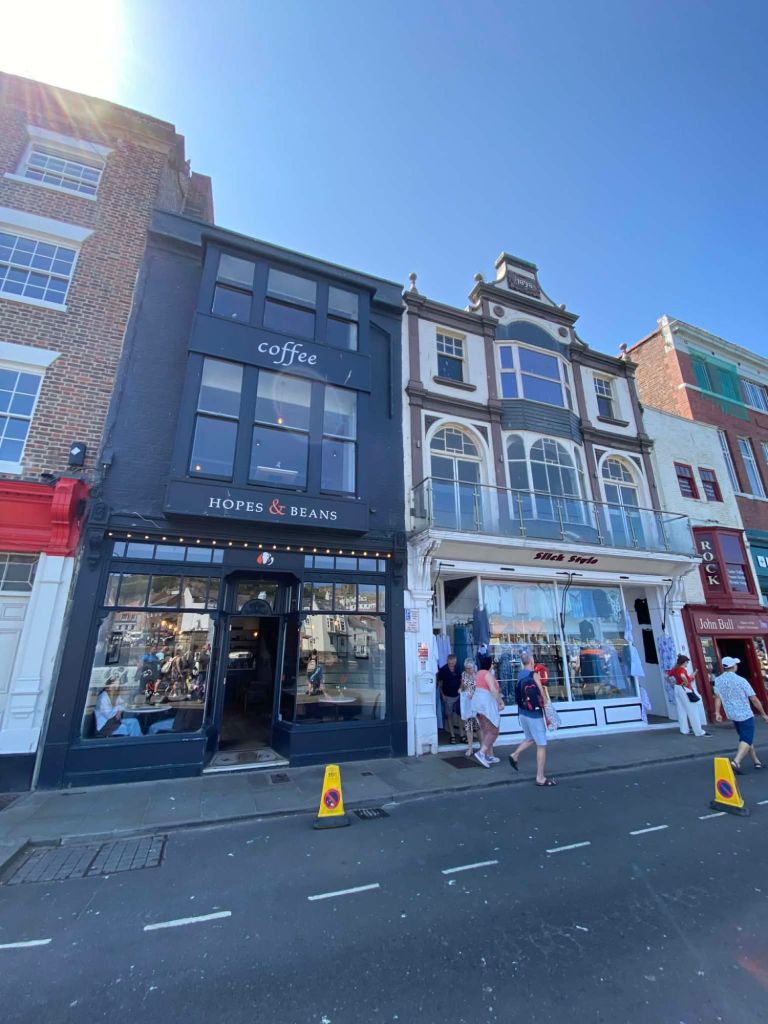
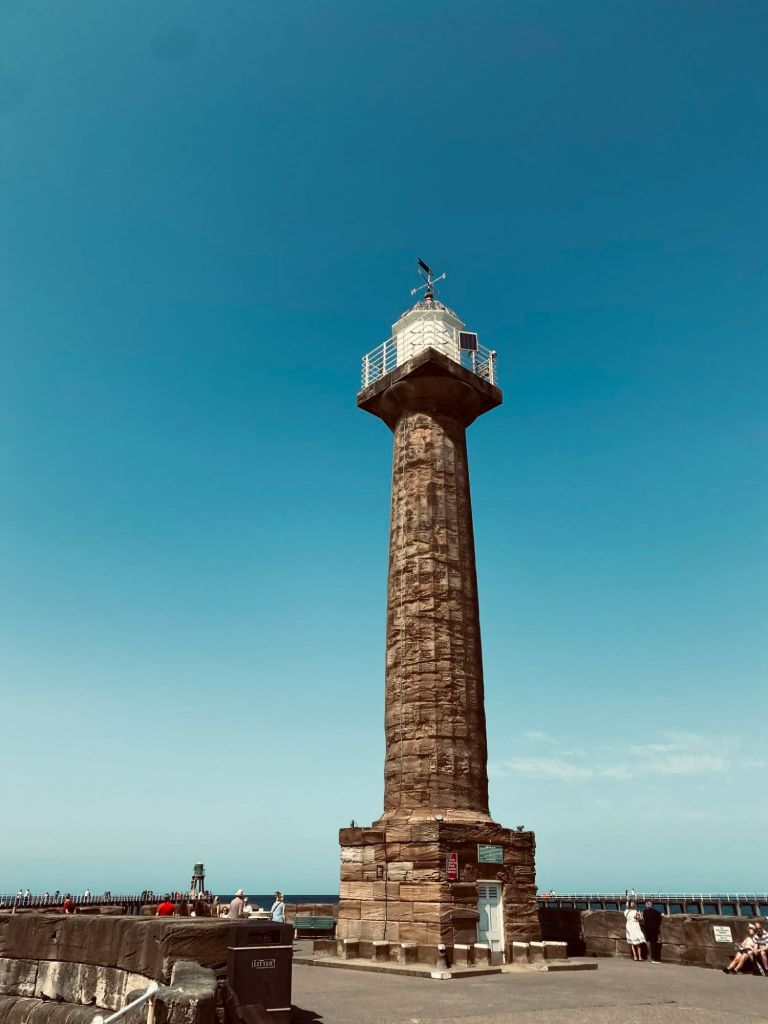
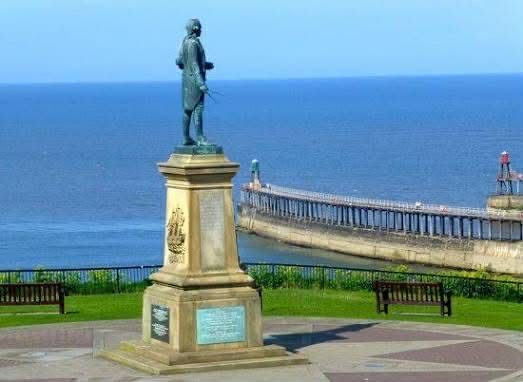
Once you decend those steps and venture out into the streets, making your way to the Whitby Bridge, the central connection between the two sides of the river, you are greeted not just by that expansive view of the world, but a living, breathing culture. Crossing that river is where you enter into the story of Whitby, from it’s Viking heritage (as I learned, this is written into the town’s named streets: nothing like names such as Haggersgate to immerse you in its character), to it’s role in the story of Captain Cook, which you will find embedded in nearly every corner of it’s architectural design. It was here that Cook learned the ways of the sea and where the boats were built, eventually launching him into the pages of the history books.
A fun suprise here. Whitby is also home to Caedmon, cited as the English language’s oldest known poet. You can learn about him at the Abbey, but his presence stands witness to a fascinating and enduring story that reveals his own witness to this relationship between the natural world (anchored in his love for it’s creatures) and the enduring, sacred presence of the Divine, his poetry wrestling with the tensions inherent within that relationship from the vantage point of God’s love and God’s judgment. A cross memorial stands up by the Abbey documenting his importance, itself looking out over a town that remains a calling card to spiritual seekers. a town visibly marked by the gothic obsessions it happily claims as its birthright. Here Stoker’s words ring out into this intersection of these two working tensions, the expansive mystery being held in the chaos of the waters and the quiet dance of the humans seeking to name it where land and water meet.
The words of Stoker come to mind here:
There are mysteries that Man can only guess at which age by age may only solve in part
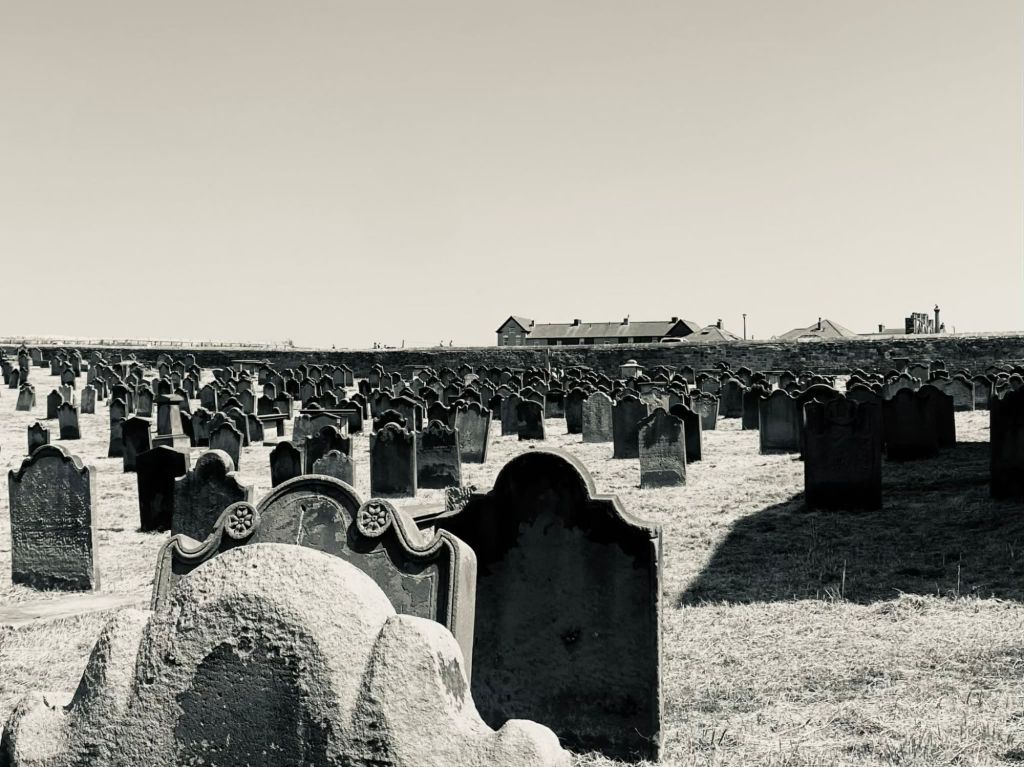
Recounted in an article for Time magazine by Dacre Stoker and JD Barker, Bram Stoker, in the summer of 1890, stopped at the library in Whitby and requested a specific title (The Accounts of Principalities of Wallachia and Moldavia by William Wilkinson), to which he opened “to a specific section” and jotted in his journal. What follows is a map, outlining a journey that begins in London and ends on the shores of Romania, and the accounting of a shipwreck called the Dmitri, out of which the mysteries surrounding the history of this shipwreck, originating as it did from Eastern Europe, blends into the pre-existing Yorkshire myths regarding Barghest, a large black dog, which in this account was stated to be observed by the crew to have escaped the ship and run up the 199 steps and into the graveyard of St. Mary’s Church. The article describes the famed Irishman now finding a smile forming across his face as he sees what the article calls “a blurry place between fact and fiction.” A liminal space where the world just might be able to break open and unsettle our senses, and, dare one say, begin to make some sense. In a startling phrasing, the article states,
“Bram Stoker did not intend for Dracula to serve as fiction, but as a warning of a very real evil, a childhood nightare all too real.”
But the first 100 pages of the novel, which set the stage for Stoker’s alleged intent, were purged from it’s original form, out of fears coming from publishers back in London over the great evil of a murderer still on the loose, and what such a story might do to those seeking to control it. What remains still buried in history, perserved only through the bits and pieces of journal entries and writings from which we gain glimpses of it, witnesses to Stoker’s own uncomfortable relationship with what was being purged, namely his convictions about the true nature of this world we occupy and the nature of this thing we call evil.
Here I found myself thinking back through my pilgrimage, a pilgrimage that pushes through similar stories held in the pages of England’s vast literary voices. Voices standing in the midst of modernism’s persistant grip on the world of the ever emerging West, and wrestling with visions of a world now being buried underneath. Here sacred truths are being purged and redefined, traded for the rhetoric of what is being branded the age of reason, a rhetoric these voices found to be deeply ironic.
Stoker believed, as did the authors that share this same breadth of conviction, that truth, and its bedfellow reason, is found in the enduring power of story. This is what preserves truth and persists against our tendency to reject rationality in favour of that which we can control. To the modern world, any story that confronted the deep rooted fears of such an enterprise becomes reclaimed and reappropriated as lore, a fun remnant of an old world now purged of it’s original meaning and relegated to the field of the classics. A field now controlled by the newly claimed powers of it’s constructed academia. And yet, to dig into the history of these stories, to let this history speak, is to recover a very different story, one that witnesses to a very different understanding about what is true about this world that we both observe and experience, the very world the metaphors of these old stories seek to reveal.
Read through any of the plethora of articles wading through the complicated waters of our attempts to retreive Dracula’s origins story, and you’ll find this basic line being drawn in the sand: those who downplay Stoker’s convictions about the world he was trying to capture and reveal, and those who seek to bring that world to the forefront. The former, almost without exception, will inevitably lean into the vampire motif, believing that to dispel this in terms of the modern myth is to keep a story’s witness to the sacred and spiritual dimensions of this world at bay. And often, likely motivated in response, the latter doubles down on the legitimacy of a world of vampires, using the same modernist questions and approaches to prove such a world exists.
Both I think would miss the real point and fall into the same trap. The real question is, what is the shape of the world that this story is seeking to reveal. To what do the metaphors and symbols and images and creatures point. What gives these metaphors their power. What does this clash of myths reveal about the nature of all the world’s stories.
This is about whether or not this world has a spiritual dimension to which we ascend, or whether this world is defined according to the wanted materialism that hands the modernist narrative its power over the world, to which we can then reduce the world to that which we can control.
It is known that Stoker drew inspiration from Emily Gerard’s article The Land Beyond the Forest, I find this a fascinating window into the mind of an author who was drawn to write about a world which we must ascend towards, a world which story could in fact reveal to its hearers, especially in the face of evil. It is the view of the materialist that dissects this story in terms of a modernist imposition, finding a split between nature and spirit and believing that the ultimate deconstruction of the spirit comes from proving that vampires are not real. But this is not how story works. This is not how the world Bram Stoker was accupying would have thought about these images, these metaphors. This story emerges precisely because of his conviction in a truth that transcends, a conviction that hands us a world which we cannot control. This, in my opinion, is the real source of that fear that sought to purge the book of the very history (the observation and experiences of the world Stoker was attempting to put into words and symbol) that tells us what he believed to be true. To be confronted by a world we cannot control is to have our wanted need to remake the world in our image undermined. It is to raise questions about the very modern enterprise that hands us this control. It hands us a world where our moral constructs do not have the power to define it, judge it, or control it, let alone make sense of it.
As I find in Sarah Hall’s story, theirs is a world where an encounter with the wind compels us to name it. This, I wonder, is what all of these stories are doing. This, I wonder, is what this pilgrimage is revealing. If the modern world that left these writers restless sought to remake the world in our own image, they found the power of story in the act of naming the world. This was their counter to what they perceived to be modernisms failure to make sense of the world, precisely because in naming it we are then handed a world that stands apart from us. That stands above us. Like the Abbey overlooking the town of Whitby, a story that then calls us to ascend those steps in order to encounter this reality as it is, something that then has the power to transform us, precisely because we cannot control it. A much more arduous and risky endeavor than reducing it to the whims of our wanted fancies and demands.
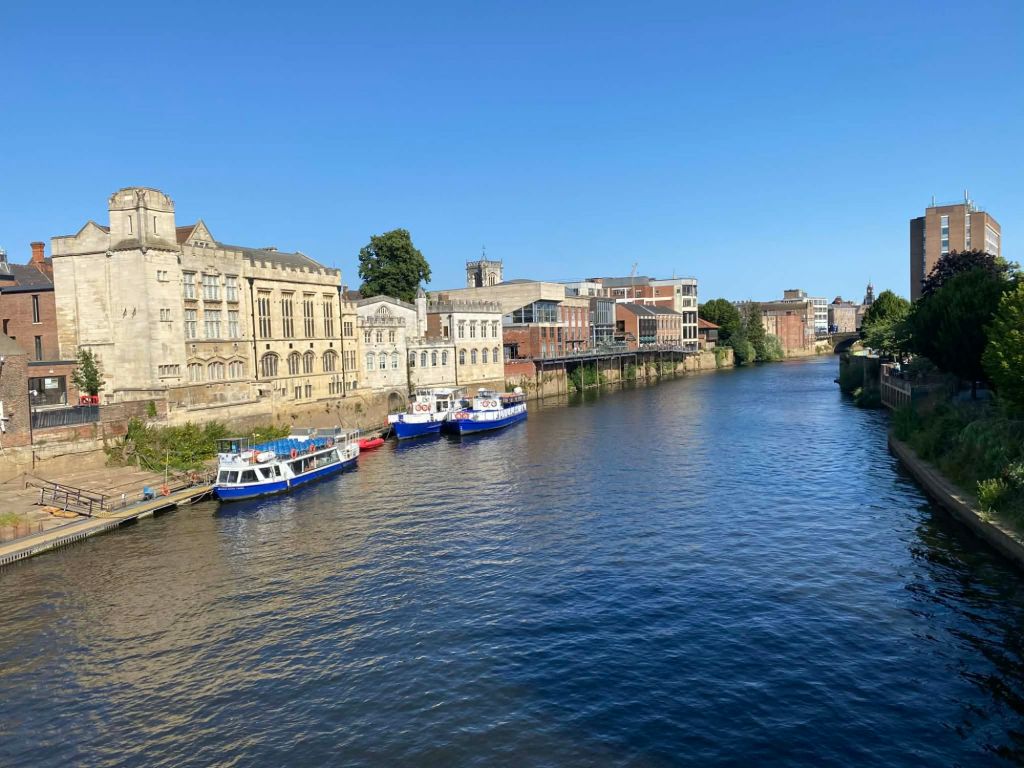
I would find this sentiment repeated as I return to those ancient walls and cathedrals of York, the clash between that modernist sensibility and the power of story highlighting the city’s own obsession with the latent spirituality inherent in Harry Potter.
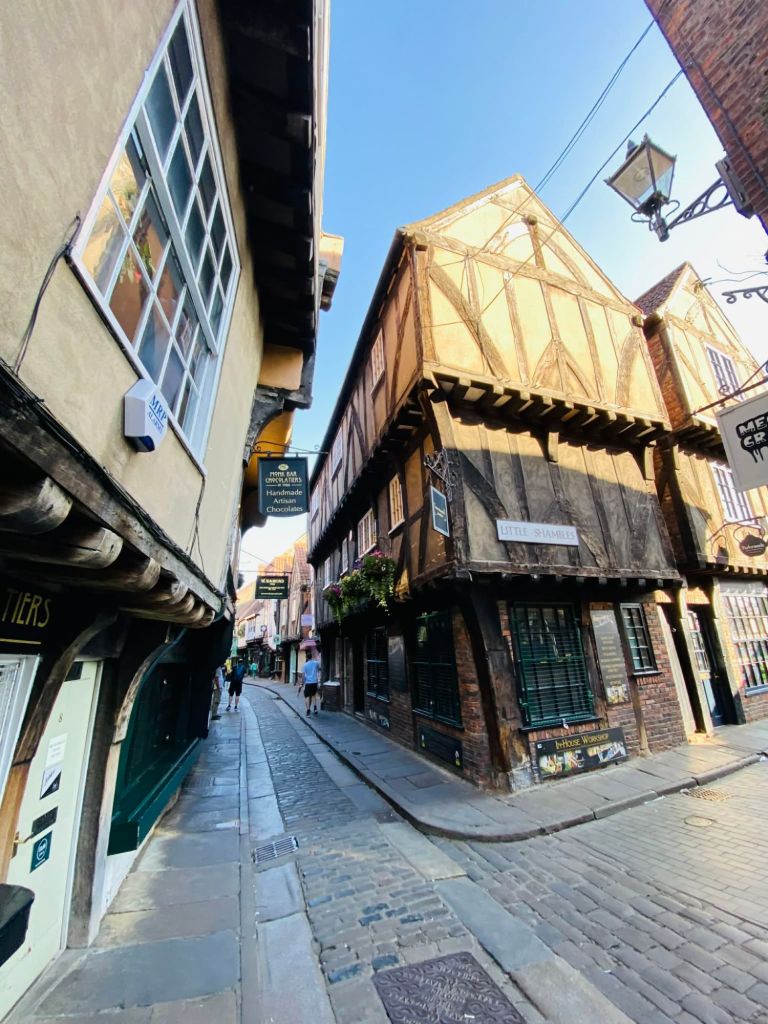
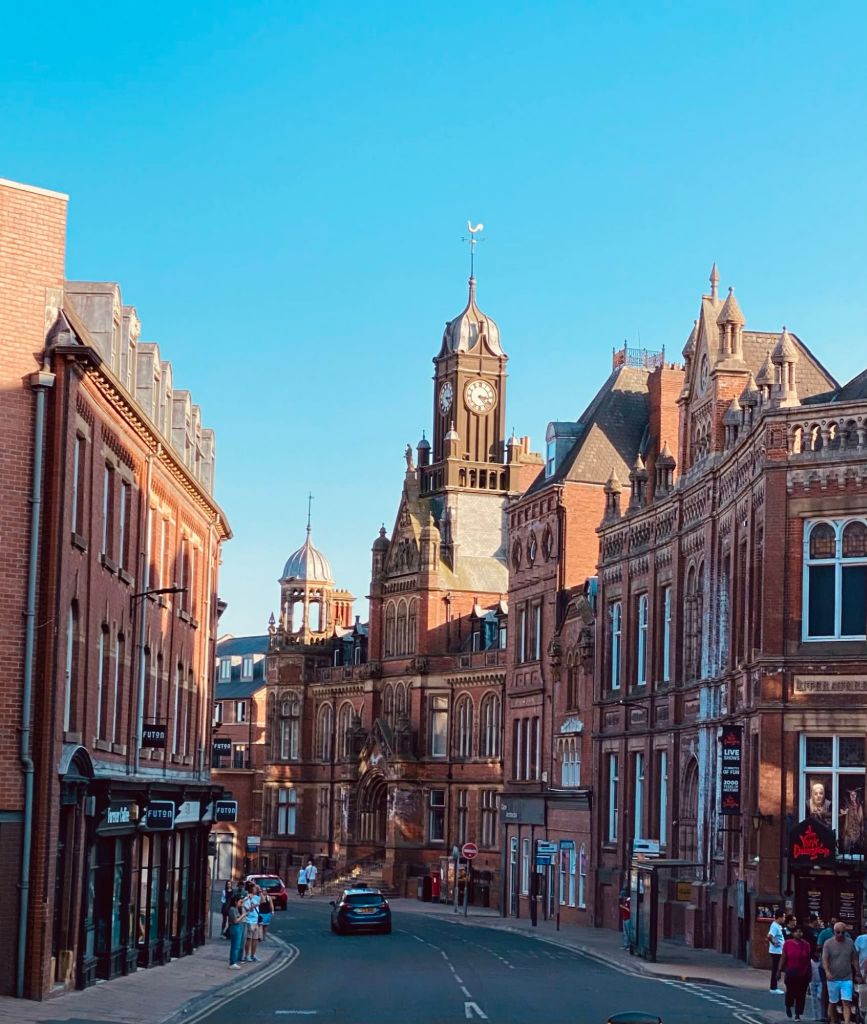
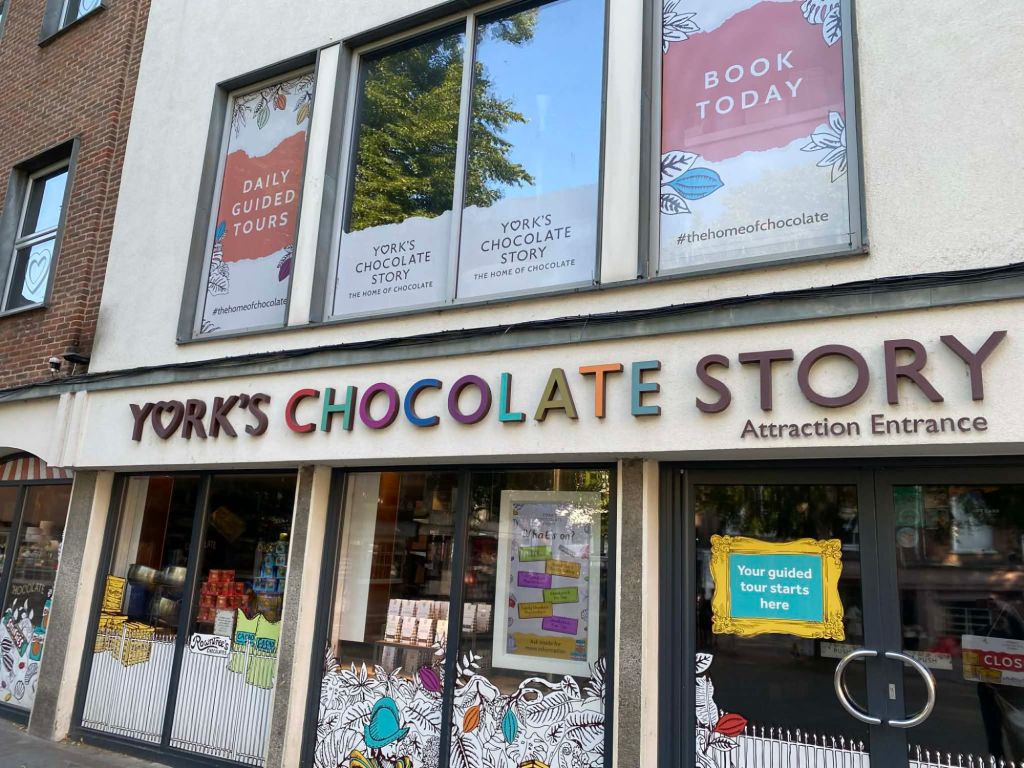
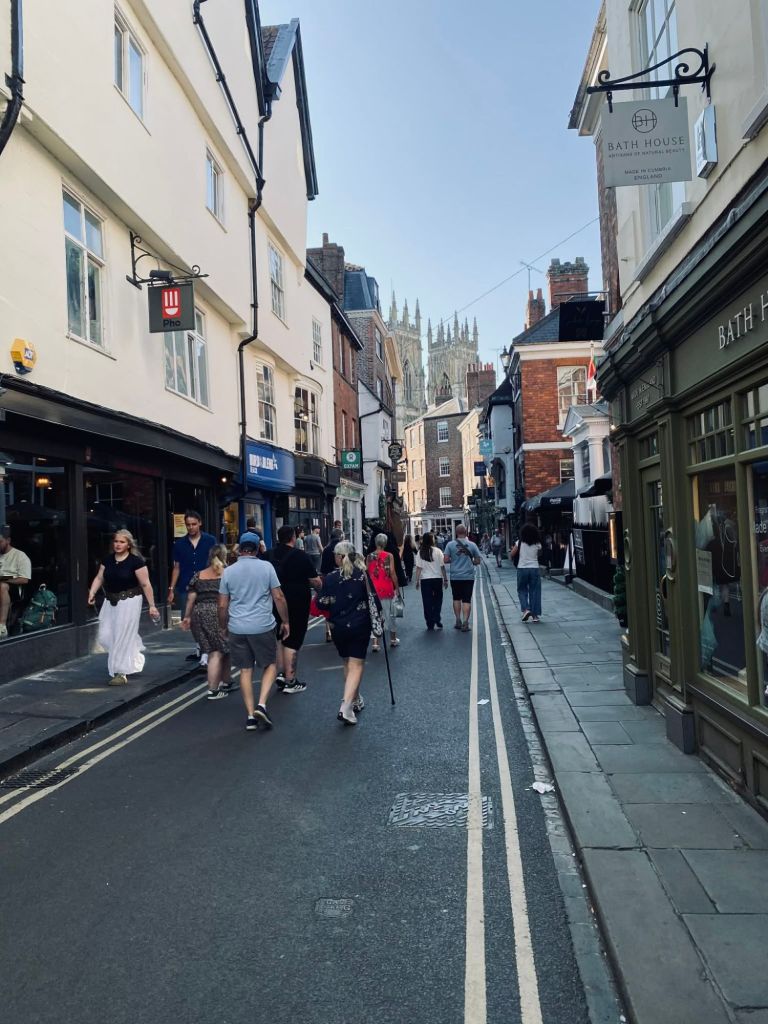
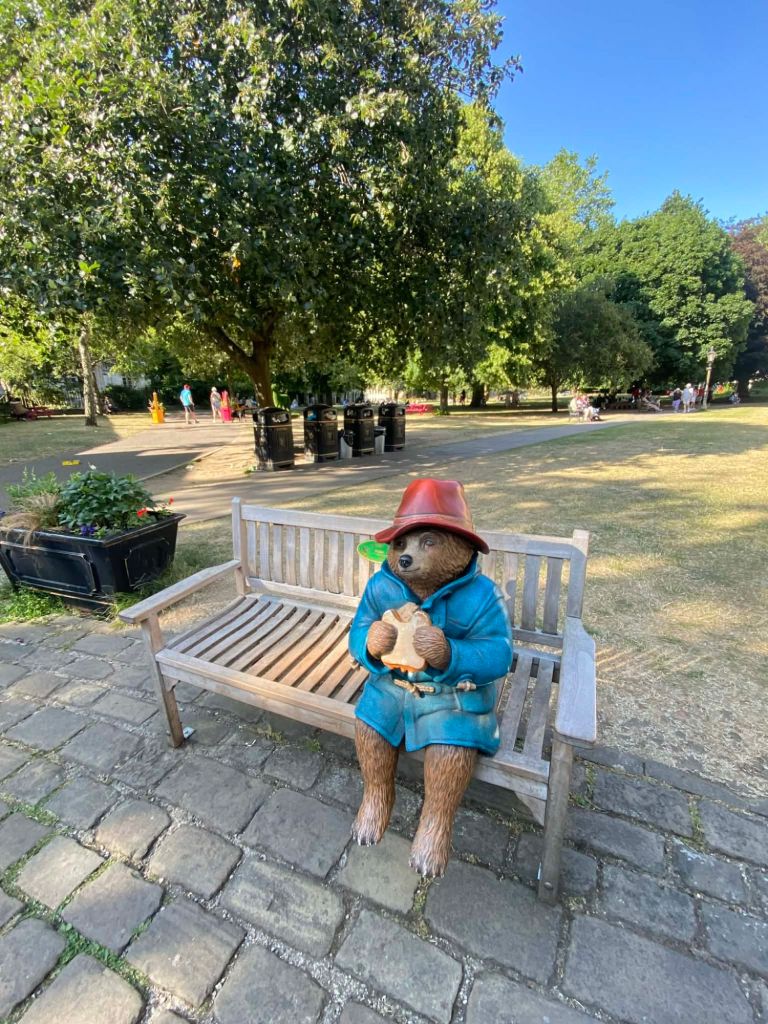
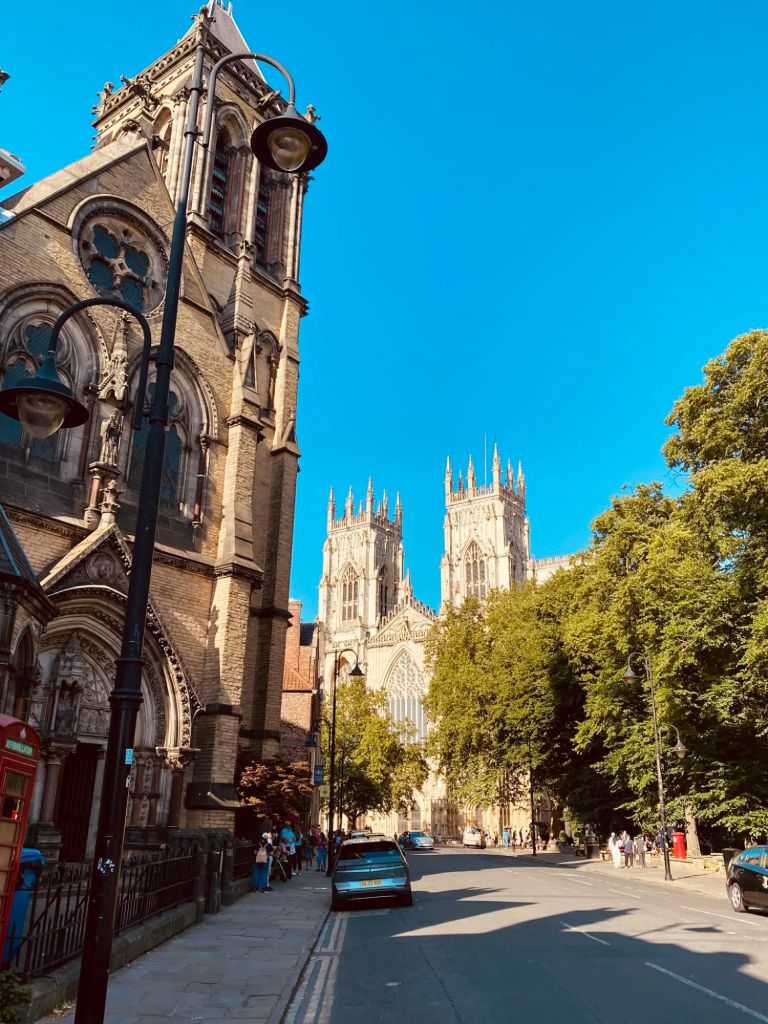
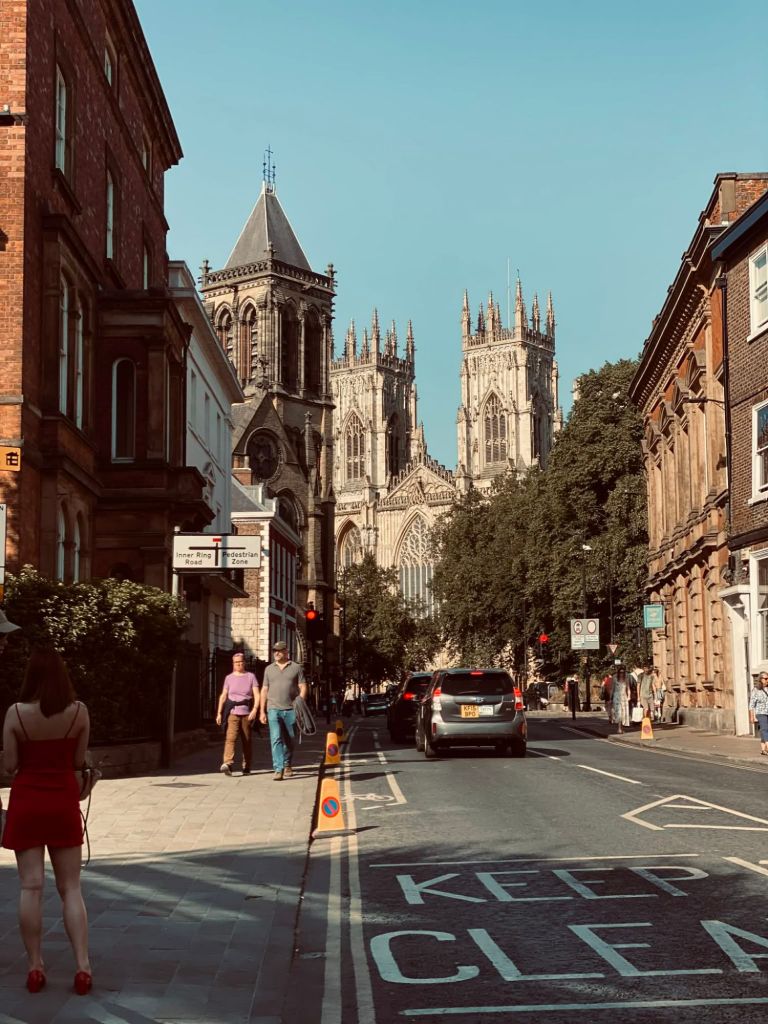
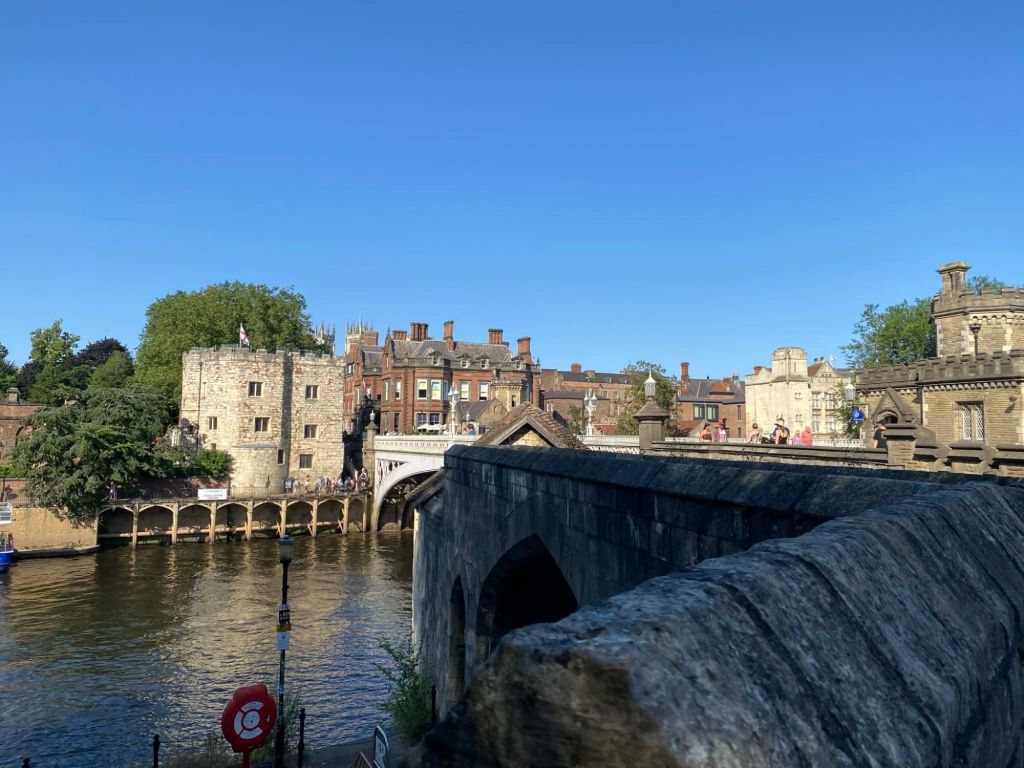
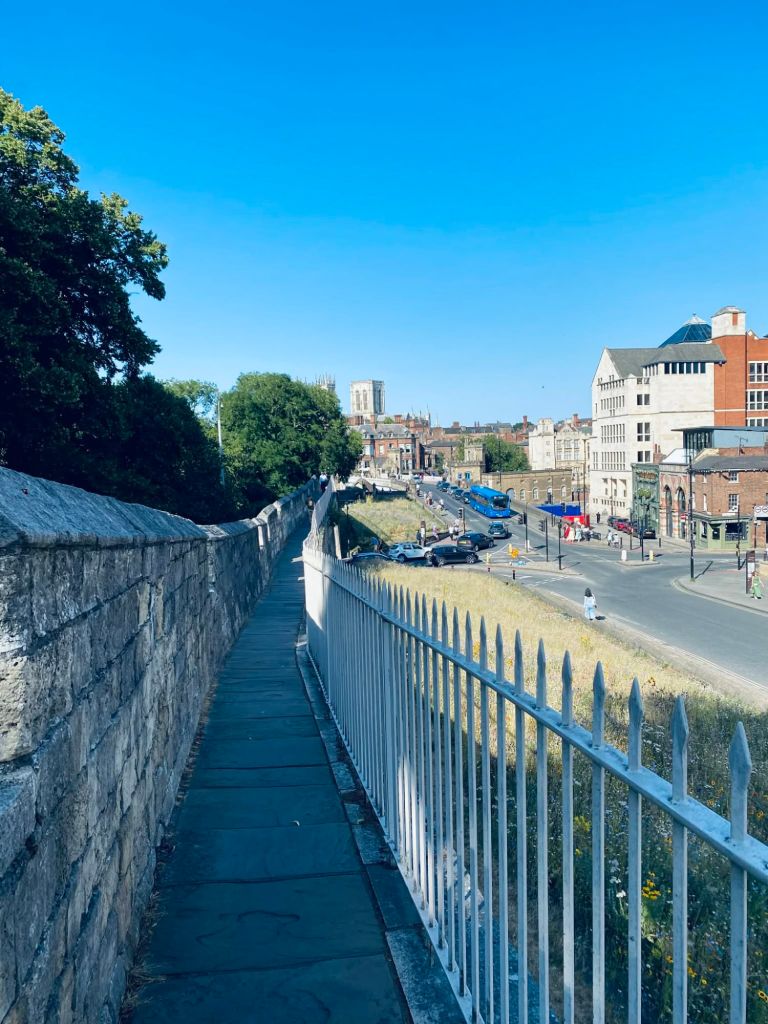
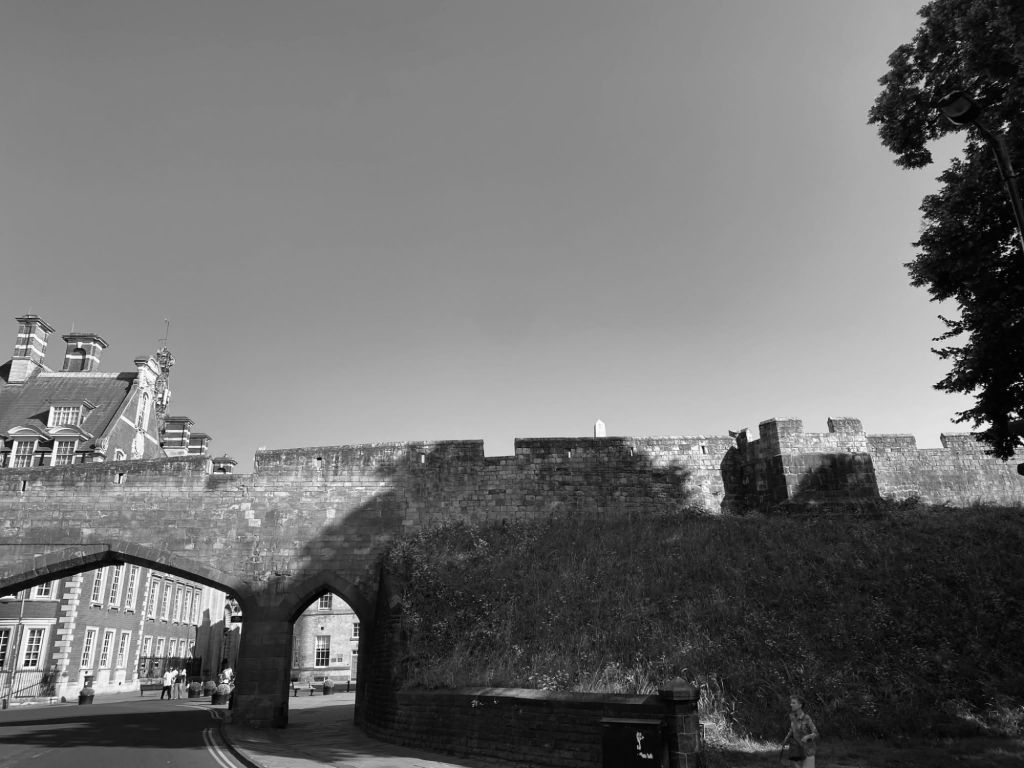
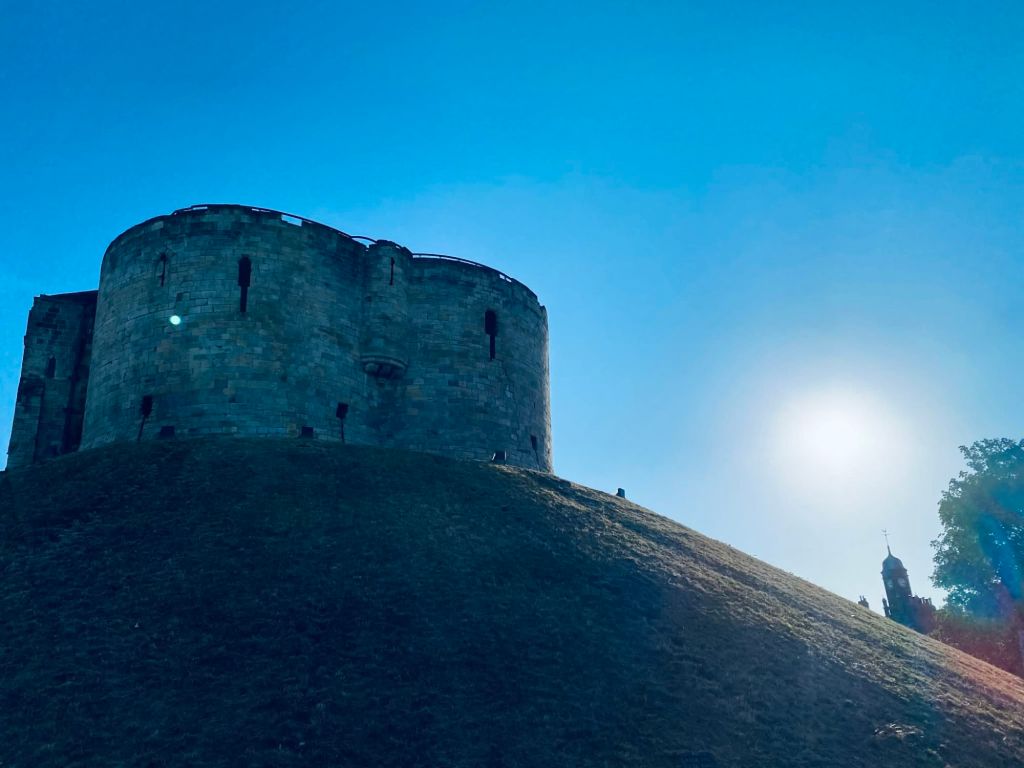
Here, one of modernisms great apologists has penned a story that sparked a wanted need in it’s hearers: a need to re-enchant the world at long last. Perhaps against her own wanted intentions, the story has taken on a power all its own.
I think too about my later encounter in Oxford with a space shared by both Lewis and Pullman, two authors appealing to story for very different reasons, one seeking to reclaim a world buried by modernism through the telling of the old stories, the other seeking to bury the old world by reappropriating those old stories in service of the modern narrative. If ever there were a veritable expression of the present conflict, this would be it. What remains certain in my eyes though, is that the stories from which Pullman is drawing, the stories that permeated the world of England’s great literary voices, emerged precisely because of their shared conviction that the modernist narrative had failed to make sense of all the worlds stories, the very world they/we observe and experience. To encounter them on their terms is to allow them to speak, The question simply becomes, how does this speak to us.
For me, re-encounterimg the writers and stories of my childhood in this place, not only continues to validate the restlessness I held as a young kid, it reminds me of why that matters to the questions I am asking. It asks me to wonder in a reality that is both beyond me and that invites me to ascend those steps in my continued seeking of the truth it wants to reveal. And, dare I say, it continues to ask me to risk giving up my need to reduce it to terms that I can control. What it promises in exchange is actual transformation, but even more so an invitation to participate in that transformed view of the world and its inhabitants.