The evening sun is setting as I drag my now weathered luggage up the cobblestone streets of York back to York Station. I am heading, briefly, back to London, this time taking a different route on a train that is both running and on time. Here the landscape, still visible in the slow descent of the night shadows, winds its way backwards, from the open fields of the Yorkshire hills to the populated centers of the London suburbs. My destination: the sleeper train to Penzance, where I will be exploring the grounds of Arthurian lore and walking in the footsteps of Agatha Christie.
It’s worth pausing here for a second to fill in an important piece of the puzzle when it comes to weaving together the story of my travels up to this point. Before things went awry with my train to York (see my previous post), and in fact precisely on route from Moreton on Marsh to Birmingham where I was catching my connecting train to York, I made a decision to pivot from my previously laid plans. I had a rented (or sorry, hired) a car for my time in Cornwall, a decision that had been met with a heavy word of caution by many of the different voices in my online UK/England travel groups. The words “don’t do it” were probably the single most common word of advice I got in the months leading up to this trip. The combination of likely getting saddled with a stick shift despite asking for an automatic, having to learn the rules of the roads and its endless roundabouts, of those forecasted hour long drives turning into a 3 hour white knuckle “drive 30 below the speed limit” reality, of the scenery getting hidden by the endless hedgerows; all of this added up to a singular conclusions: hiring a car made it the wrong way to go.
Despite the fact that I drive a school bus for a living and was proficient at driving manual, those opinions had left me with these persistant nagging feelings of uncertainty ever since I booked the vehicle. Now, in this moment, with my feet on the ground, and having seen the roads up close and personal, it wasn’t so much that I feared the drive (that part I felt was slightly overblown), rather it was the fact that I now spent most of my trip getting comfortable with and learning the rules of the train system, I started to think I could easily navigate the coming days by cancelling my car and switching to train travel instead, although it did require a few intentional sacrifices:
The cons:
- getting from Penzance to Tintagel, the location of that Arthurian history, meant planning around the extra time needed to accomodate an hour train ride and the additional hour and 15 long bus ride to get there,
- the freedom to traverse the trails of Coleridge and a planned visit to where site where Watership Down was written (a stop along the way from Stonehenge to Oxford) had to be taken off the list
The pros:
- saves money
- removes the anxiety
The biggest hit felt to be missing out on Watership Down, one of those locations that felt particularly important to my journey when it came to the literary side of England, but I did welcome the notion of simplifying the trip and easing some of those nagging anxieties.
But of course, as things go, just as soon as I make this decision I find myself facing my first real challenge when it comes to the realibility of train travel (once again, see my previous post on Yorkshire). I now find myself replacing one nagging anxiety with another.
For now, one of my biggest worries- making it to my costly sleeper train- could be set aside. The familiar sites of London were coming back into view, and I was an easy tube ride away from Kings Cross to Paddington station, where I would find my accomodations for the night. I had taken a sleeper train three times before, twice in Italy, once in Ukraine, where we crossed the border into Poland. This would be the first time I experienced a sleeper train without interruptions. In Italy we opted for the cheaper seats rather than the bunks, which was basically one endless revolving door, and in Poland, while we had beds, the border crossing ensured that actual sleep would be hard to come by.
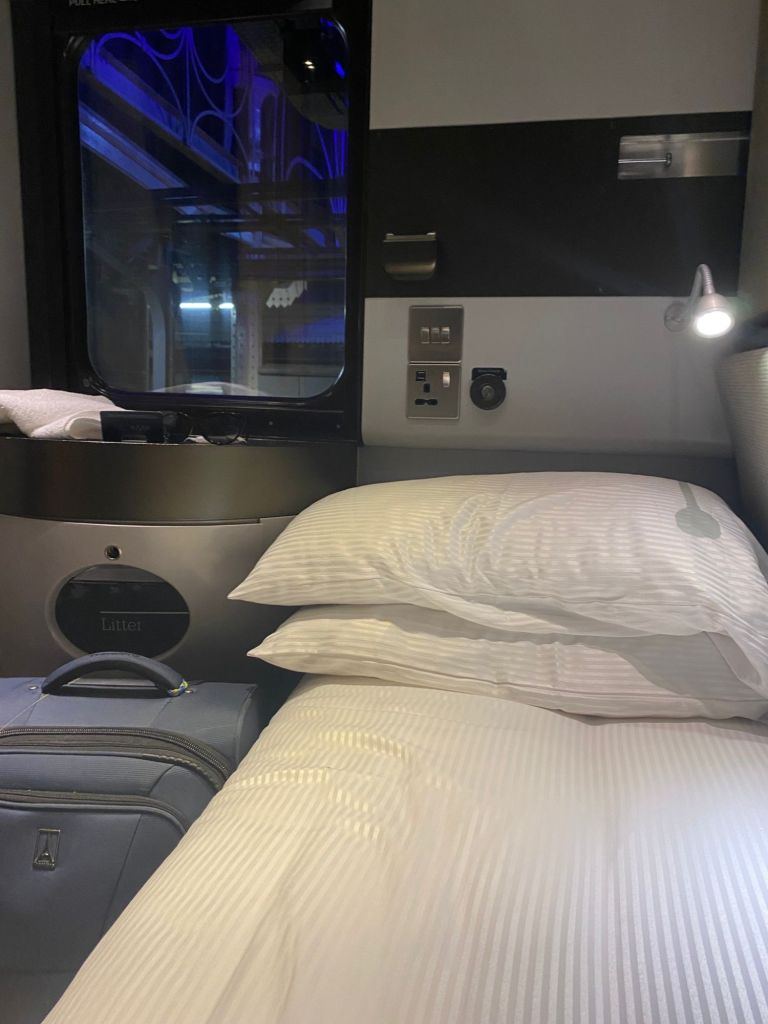
This was probably one of the best sleeps I had during my trip. There’s something about the gentle movement of the train and the absence of interruptions that equalled a kind of serenity, crackin the curtain open from time to time to let the passing countryside lull me back into my dreams. And the simple joy of falling asleep in one place, and waking up in another. That can’t be beat.
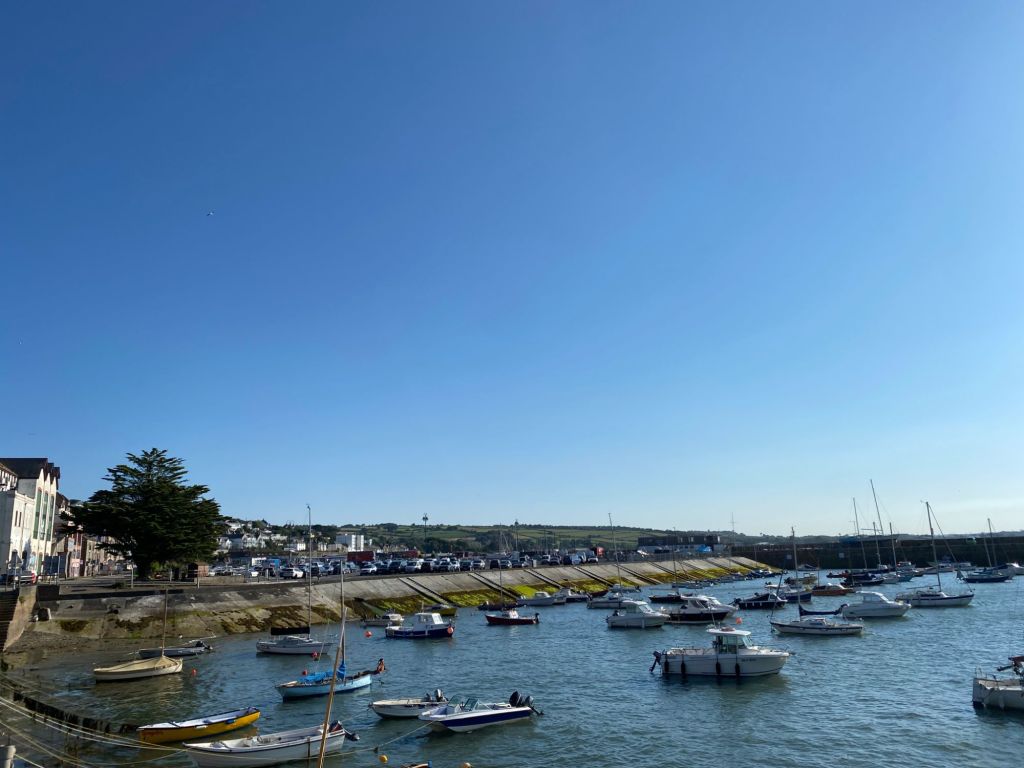
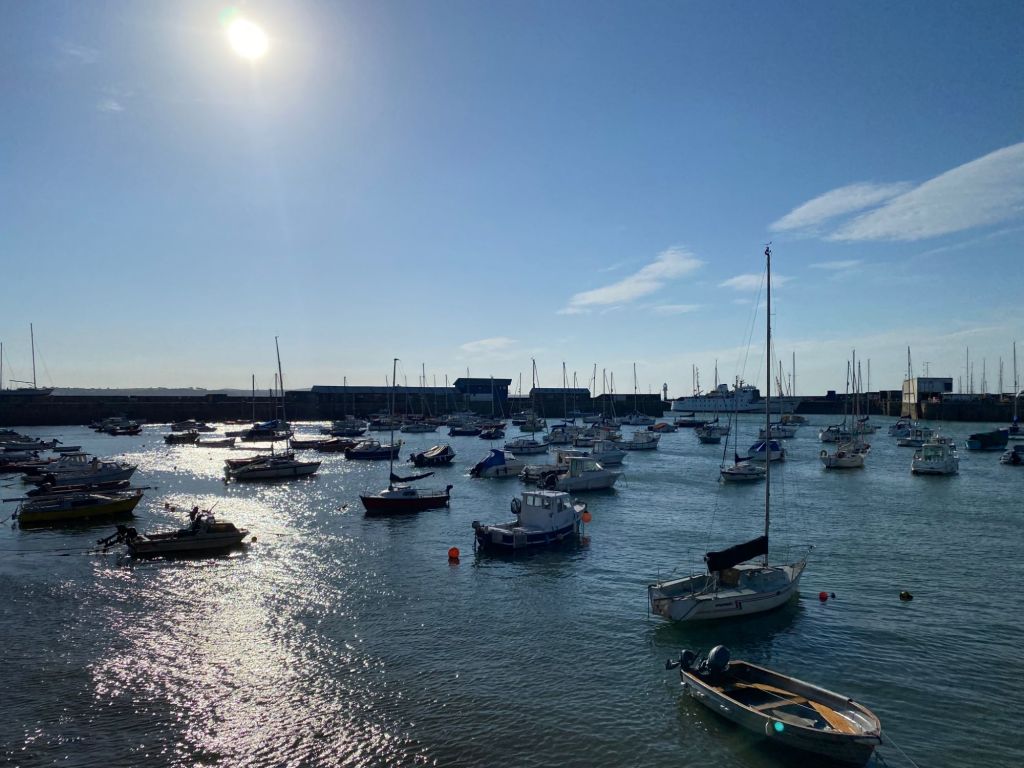
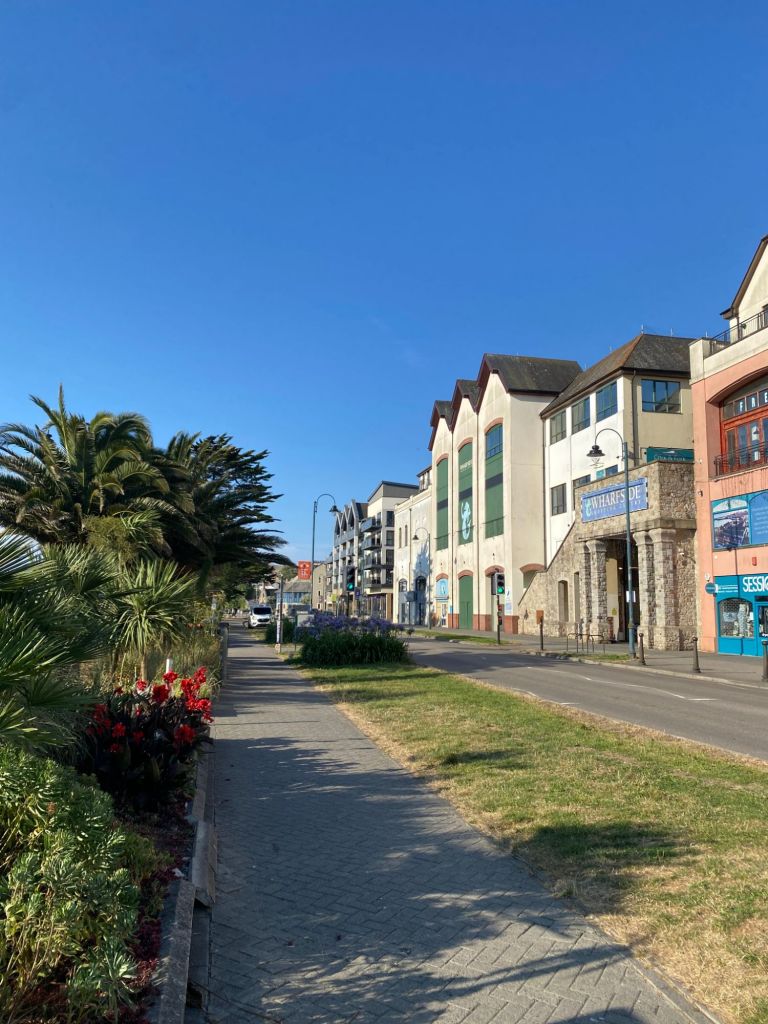
I arrived in Penzance at 7:00 a.m. The sun is shining, I can hear the gentle sounds of the Atlantic pushing in against the seawall across the concrete parking lot currently obscuring it from my view. Having uprooted my initial plans to make my way to the rental place, I had left this morning open to last minute decisions. The first order of business was getting a picture of St. Micheals Mount at low tide, which I had timed out perfectly. This is when the water clears, revealing the golden granite pathway to the island hidden underneath. It’s a magical sight, and if i had the time to actually visit the island I absolutely would have, with its historic castle and church, visible from the shore, beckoning with its promise of a perfect detour.
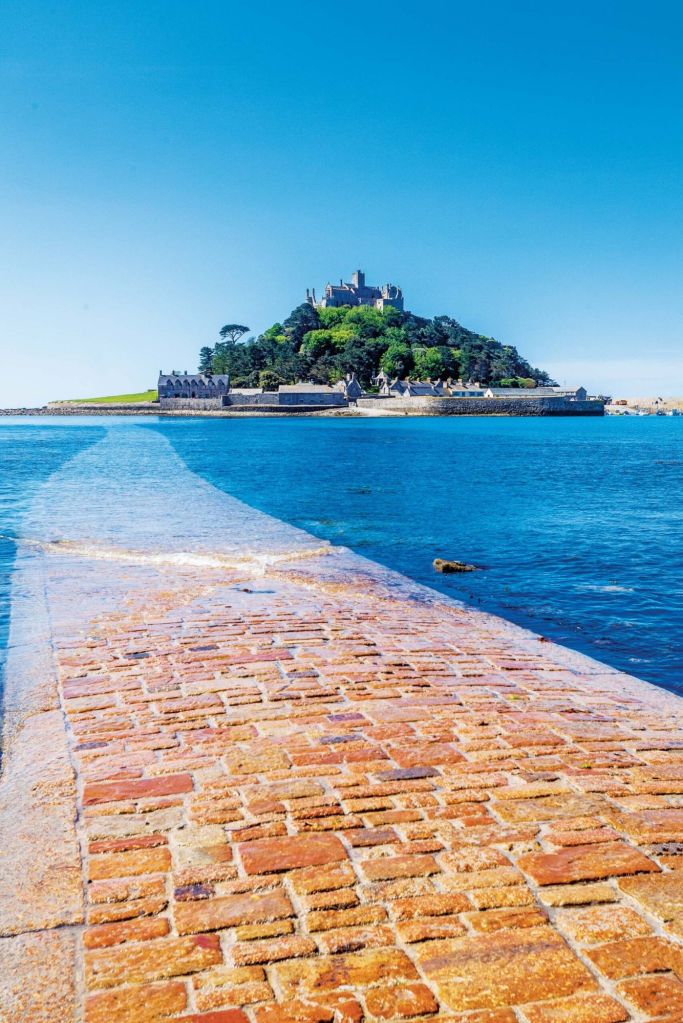
The second order of business was deciding whether to stay in Penazance or head over to St. Ives, where I could find some breakfast, before ultimately making the long trek over to Tintagel castle. This, however, is where things started to go wrong.
Beginning with a delayed train going to Bodman Parkway, which is where you transfer to the bus heading to Tintagel.
This mattered to my plans, because this single bus operates on 2 hour intervals (or a bit over, in fact). Meaning, when you miss one you have to wait over 2 hours for the next one. Suddenly the lack of a car was having a direct impact, as the fact of missing that early bus connection meant a choice between a very quick turn around at Tintagal or a very late arrival at Torquay, which is where I was spending the night.
I had three choices in this moment.
Option 1: Cancel my plans to Tintagel, and reroute myself either to some extended time in St. Ives and/or the old medieval center of Exeter, which was on route to Torquay.
Option 2: Go with the quick turn around at Tintagel
Option 3: Head straight to Bodmin Parkway and hire a cab from there
I did check my cancelled hired car to see if a rental was still available: it wasn’t.
The only thing I knew was that Penzance was clearly a port city, and while I am sure it’s a worthwhile place to explore with the right amount of time, here it felt more like a point of transit. Whatever my decision, I needed to get back to the train station and be on my way.
I decided to look into hiring a cab. I tried one of the local companies. They informed me they had no availability. I then happened upon a third party site that suggested it had found me a cab at a cost. That cost being 70 pounds one way. In a rash decision I decide to make the booking for a return trip as well, eating the cost purely so that I could gain what I deemed to be likely a once in a lifetime investment exploring Tintagel castle. After all, that was my primary reason for making this trek to Cornwall.
I make the booking online, which involved paying with my credit card, only to find out that they take the payment first and then work on finding you a hired car. So now I was stuck with this pending transaction and no guaranteed cab.
If you’ve ever been in this kind of situation in a place that’s still relatively foreign to you, it’s not a great feeling. Months of planning suddenly all crashing down in a single moment. What i thought would be simple was anything but, and it felt like the clock was ticking on both a wasted day and burning a potentially hefty price tag.
In any case, knowing that I needed to do something, I got back on the next train heading to Bodmin Parkway, knowing that I would either be stuck there in a middle of nowhere station wasting 2 hours, or I would hear back from this booking along the way. What really becomes aware in this moment is that I am travelling back in the same direction I had just come from. I might be wrong, but I don’t think the sleeper train has a choice of getting off at additional stops. It doesn’t have the same sliding doors as the other cabs, and it requires the attendant unlocking and opening the doors for you to get off. Nevertheless, I started to think about how getting off at St. Ives or Bodman Parkway on the way down would have been a much better plan. given my pivot away from a car rental.
As it was, there was nothing I could do about it in the moment, and it was at the precise moment I passed through St. Erth, where St. Ives comes into view, that I took a breath.
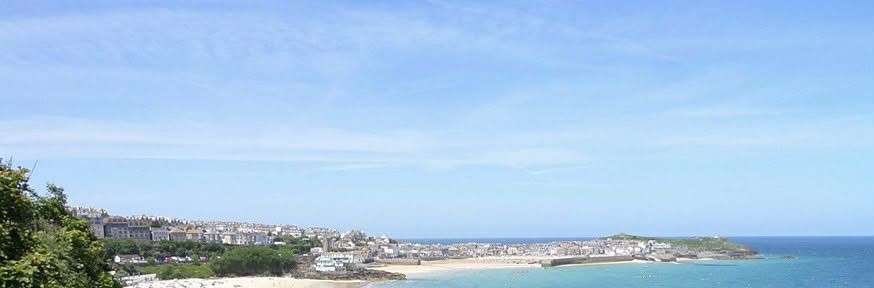
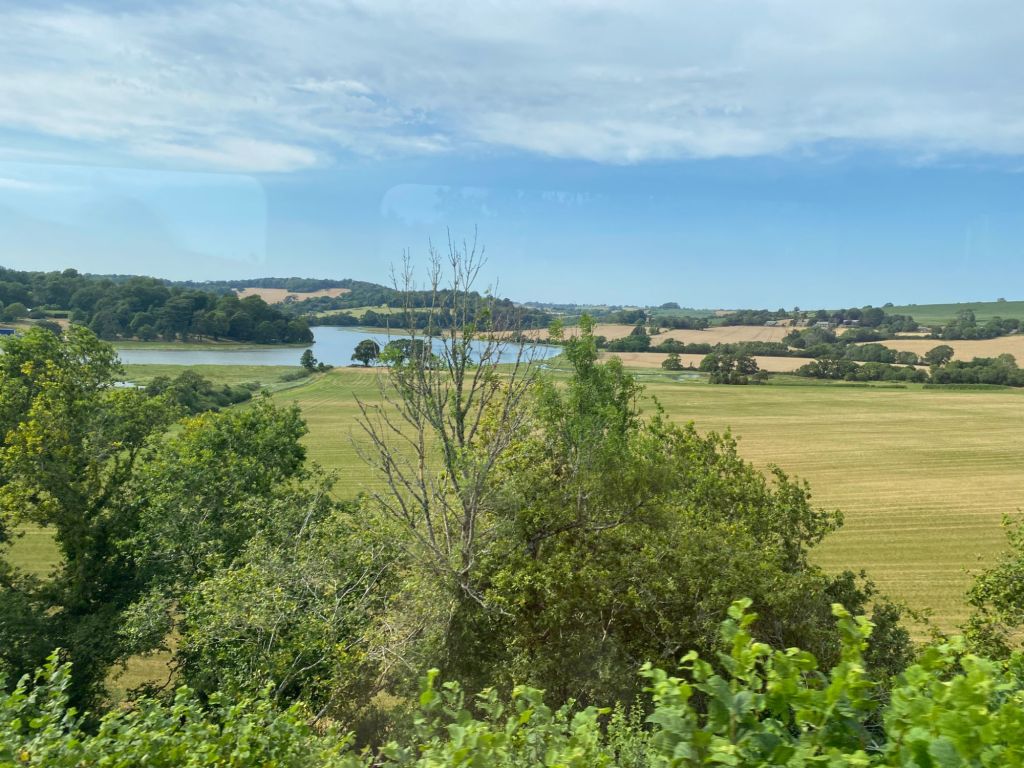
While it would have been a nice place to grab breakfast, I would get my seaside town experience in Torquay, and simply seeing it from the train satisfied my wanted curioustiy about this colourful, touristy, beach retreat (which is not really my thing anyways). If engaging a planned pilgrimage was going to teach me anything, it would be learning how to take the experiences that are right in front of me for what they are and what they have to say. That breath felt like a good time to begin some breathe prayers. We sould see how the rest of the day shakes up, but for this moment: exhale.
I am reminded now that I am treading the grounds of Arthurian lore, an awe inspiring thought for someone who has long been captivated by these old stories. And if my accompanying audiobook, Malcolm Guite’s Galahad and the Grail, and my great courses choice of King Arthur: History and Legend by scholar Dorsey Armstrong, were any indication, all such quests are bound to face adversity. Equally so, all such quests are bound to encounter their maidens, which, according to Armstrong, was not about the romance but rather about marking the start of a necessary adventure, one which can authenticate ones kinghthood. The maidens in this sense can occupy any number of different roles. In fact, this is why these stories feature knights making seemingly endlessly dumb decisions that leave them embarking on puzzling ventures and often completely unnecessary journeies with little more reason than “just because” (as Armstrong puts it). It would seem I’ve got this covered with my decision to leave such plans to the last moment and falling prey to a $270 Canadian credit card charge (that’s what went my statement officially said) in my efforts to make it to the grounds of King Arthur’s castle. Just knight me now.
Deep breathes. As I continue to watch the landscape transform in front of me, I simitaneously begin to appreciate having that extra hour of sleep that brought me to Penzance, regardless of now retracing my steps, and the opportunity to experience this full journey in the daylight.
I arrive at Bodmin Parkway. Still no word back from my hired car. Just the looming charge still staring me in the face from a third party site that may or may not be legit. As I walk off the train with nowhere to go but sit and wait, I see a cab waiting at the station. It’s not tracking me down, but as I approach I recognize the name on the side. It’s the initial local cab company I contacted, whom had informed me there was no availability. Recognizing the name, I decide to stop and ask, just to ensure they weren’t there for me. No, he says, but upon briefing him on my present situation he says he remembers me. He was the one I had been dialguing with earlier. He asks if he could see my third party site. He shakes his head. “I’ve been driving for many years,” he tells me. “I’ve never in my life heard of this site.”
My heart begins to sink again with the recognition that this is looking to be one of those inevitable regrets I would be taking with me to my grave.
More deep breathes. These breathing exercises are beginning to wear thin by now.
The driver of the hired car can see my sense of defeat. That’s when he tells me to hold on for a second as he picks up his phone. A minute later he tells me he’s tracked down a local driver of a small business in town. A reputable and trustworthy small business who is able to be here in five minutes. It might be the case that I end up eating the costs of this failed third party venture, but he would get me to Tintagel for a flat price of 50 pounds.
Here was my figurative maiden helping the plot progress to the next chapter. The driver indeed shows up 4 minutes later, and I’m standing at the foot of Tintagel Castle in 30, now with a good four hours to explore the grounds and the town before catching the (3 pounds) bus back to Bodmin.
About halfway to Tintagel I also (finally) get a message, after my repeated attempts to contact them using the only modes provided- the online message service and email, that my now expired booking was being refunded because “they couldn’t fill the request.”
Deep breathes again, as I consider the very same roads I would have been travelling in my rental car.
Yep, lots of hedgerows.
Later, on the bus route back to Bodmin, which extends a half hour ride to a full hour and 20 via a meandering route through the areas different towns, the landscape would be much more visible and tranquil. What started in chaos ultimately resulted in a quick transfer from the train to a hired car, and later on a perfectly timed bus and train ride to Torquay where I will end my evening. For now though, a meeting with Merlin awaits.
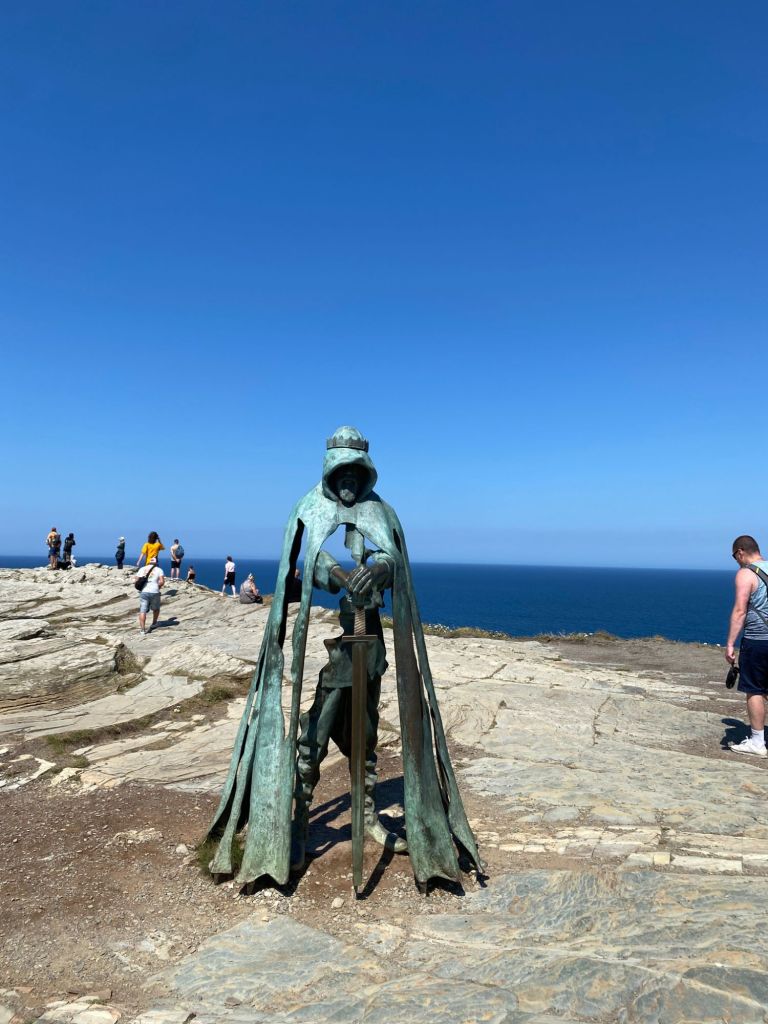
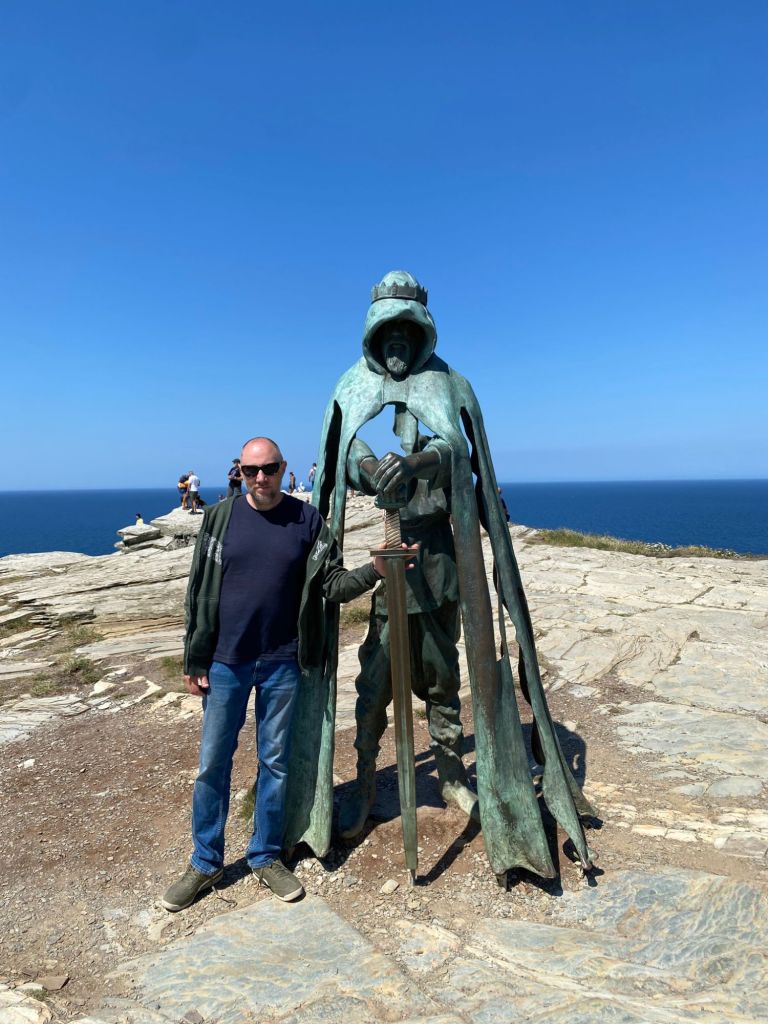
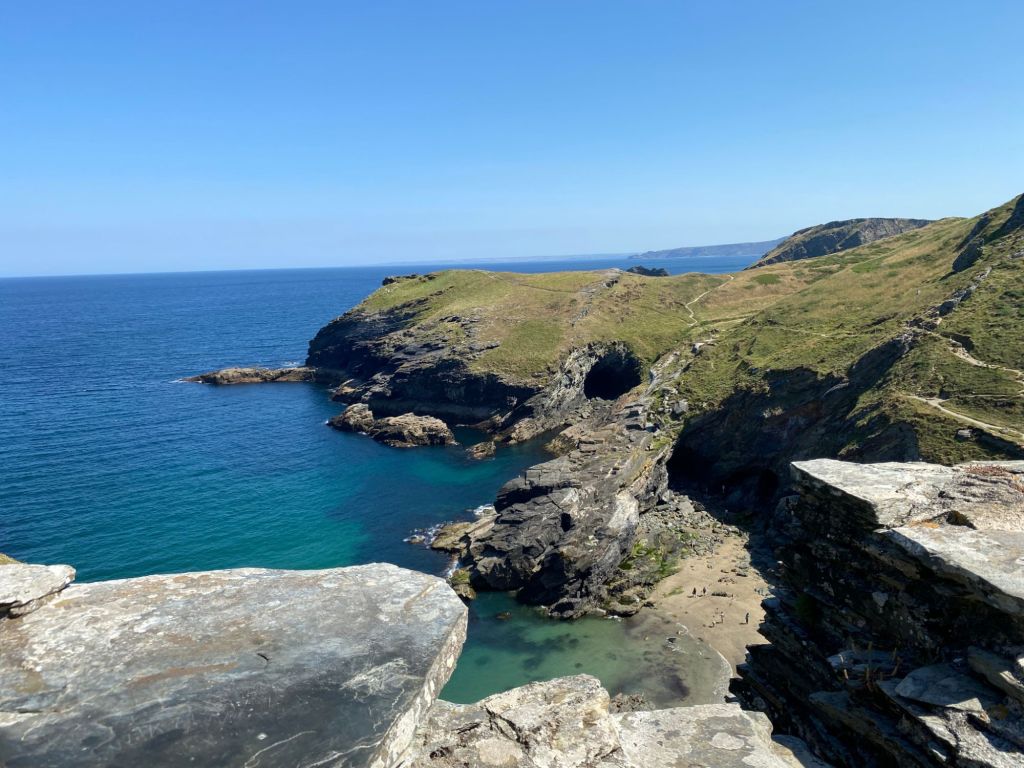
A highlight of my trip by far: reaching the top of those towering cliffs overlooking the Atlantic, the shores of Ireland sitting hidden off in the distance, the statue of Merlin standing with it’s back turned, looking out towards the castle ruins and the coastal town, sword in hand. It is an arresting and truly majestic scene, one that, with the aid of the Great Courses book in hand, resonates with its deep rooted history. Here I am invited to imagine the once imposing castle walls, now visible in remnants, standing atop these cliffs, built here as they once were because of it’s connection to the Arthurian legends. As a growing body of evidence seems to be supporting amidst a still hotly debated mash-up of working theories, it’s here in these grounds that the historical figures gave rise to the legend that we know today, working its way Eastward and, eventually, back westward, being woven into the fabric of the lands ancient formation and the cultures that drive it as it goes.
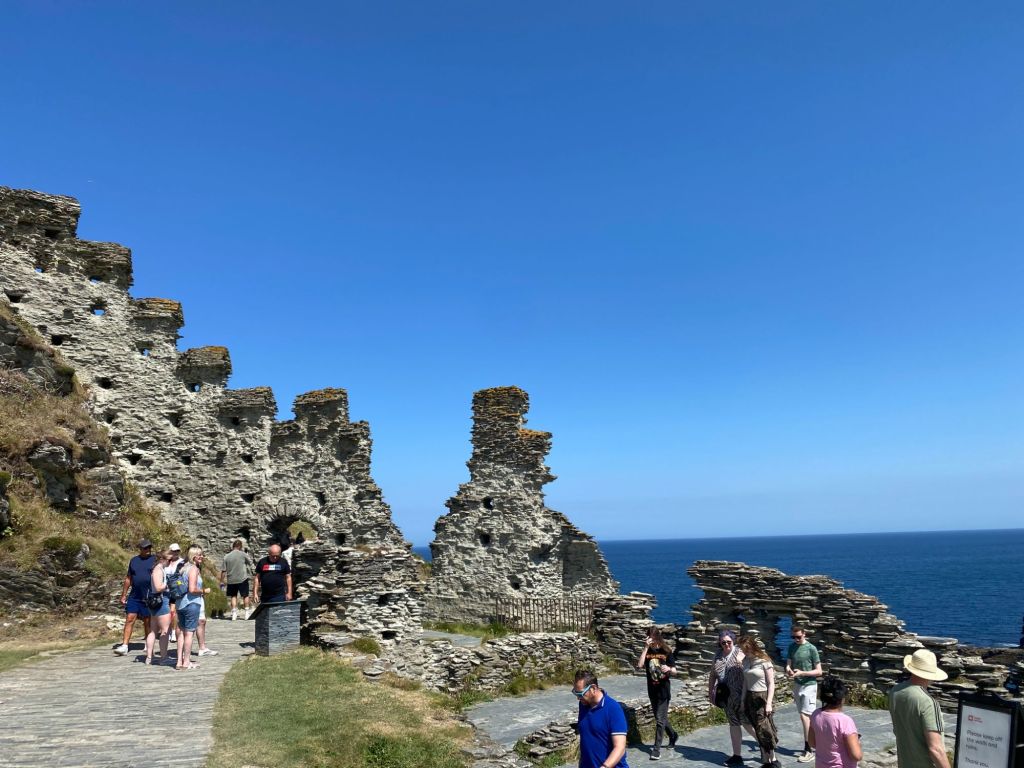
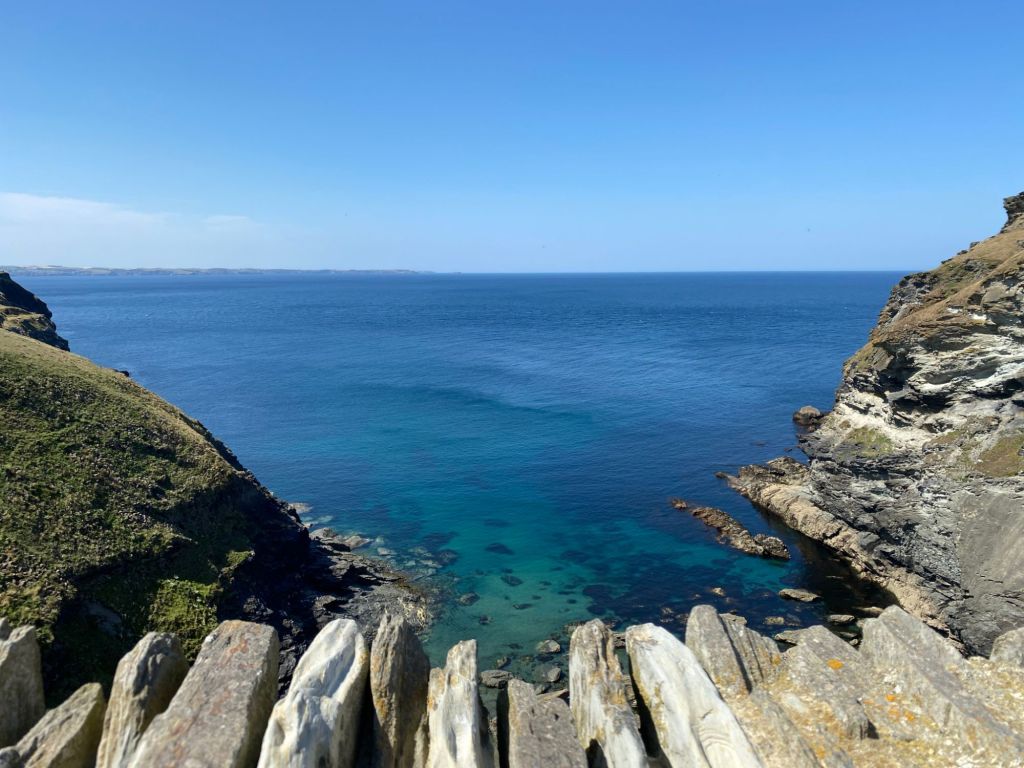
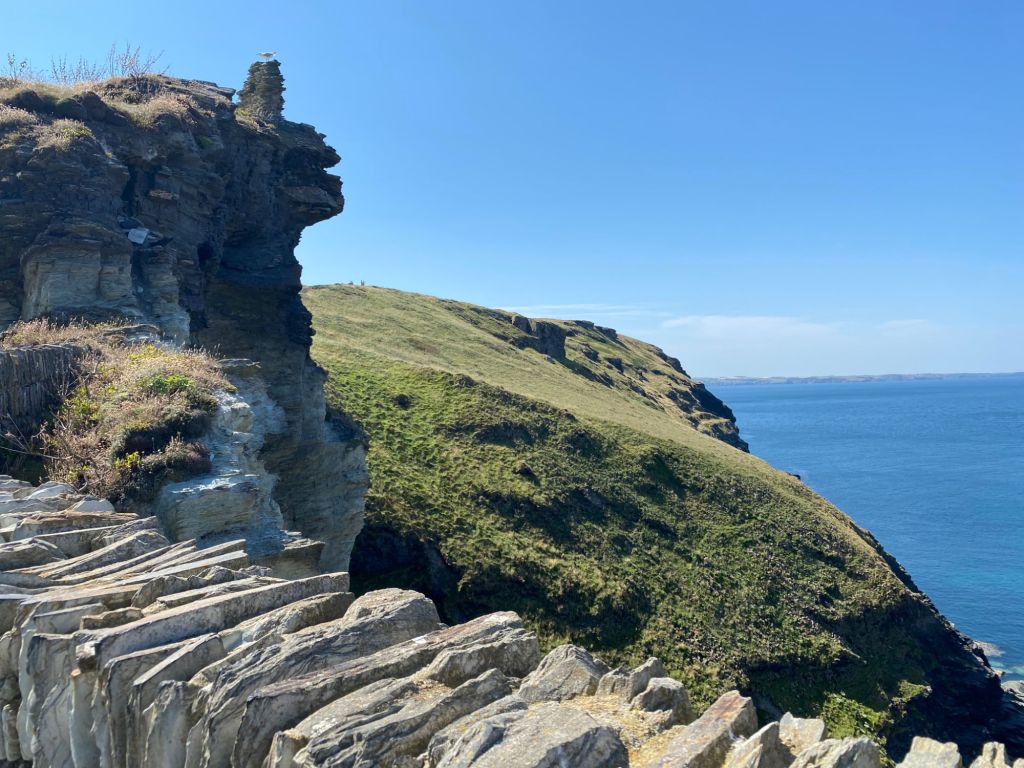
What we know for a fact is, somewhere in the 4th and 5th centuries, which Armstrong defines as the true (and only) dark ages in the history of Britain, a moment in time where history seems to legitimately stop and disappear from sight, some unexpected force led seemingly by a singular dramatic figure did the impossible, both leading an unimaginable resistance against the much more powerful forces invading from the North and now sweeping it’s way across Britain. And leading them not to be destroyed but rather to retreat and flee. It would be soon after this that the name Arthur begins to make its way through royal lineages for unknown reasons, giving good credence to the preservation of what becomes an oral heritage of a true historical account. An oral heritage that gets preserved in these centuries now through the layers that are built over top, hence handing us the significance of Tintagel, a place marked by the convictions of those whom existed in prxominity to these centuries that this space and this figure were hugely important to their existence and their perseverance.
The legends of Arthur that we know today are a product of centuries of constant movement, from Britain (or as some might argue, from Scotland) to Wales, from the Netherlands to Germany, and on to Scandinavia and Italy before ultimately swinging back again into England primed and ready to be re-appropriated as a freshly anointed origins story and myth for the emerging Empire. Thus it becomes, as these things so often do, a fusion of the many cultures and stories it encounters on its journey through these different lands, each giving it a unique spin and addition as it converses with, a phrase I’ve often repeated along this journey, all the world’s stories. One can’t help but find in the story of this development a sense of this shared experience across these lands, a story powerful enough to connect these different cultures to a larger, sacred Truth enfolding the whole, and indeed the story, at its beating heart, has always served this very purpose.
As such stories do, the reigning image here, as one stands at the edge of these looming cliffs, is one of towers and ruins. In this contrast we find the shape of this movement through history, where the transient reality of Empire clashes with the enduring reality of these sacred spaces, in this case reaching back into the lands ancient celtic roots. As I learned in Bath, it’s always the eradication of the sacred spaces that the Empire’s constructed temples save for last. Standing here in this space, letting Guite’s masterful work of poetry wash over me in its eclectic prose, I am drawn to seek that sacred source, the Truth that stands above this movement, beckoning us to look for those liminal spaces that remain. I feel like this is one of those spaces.
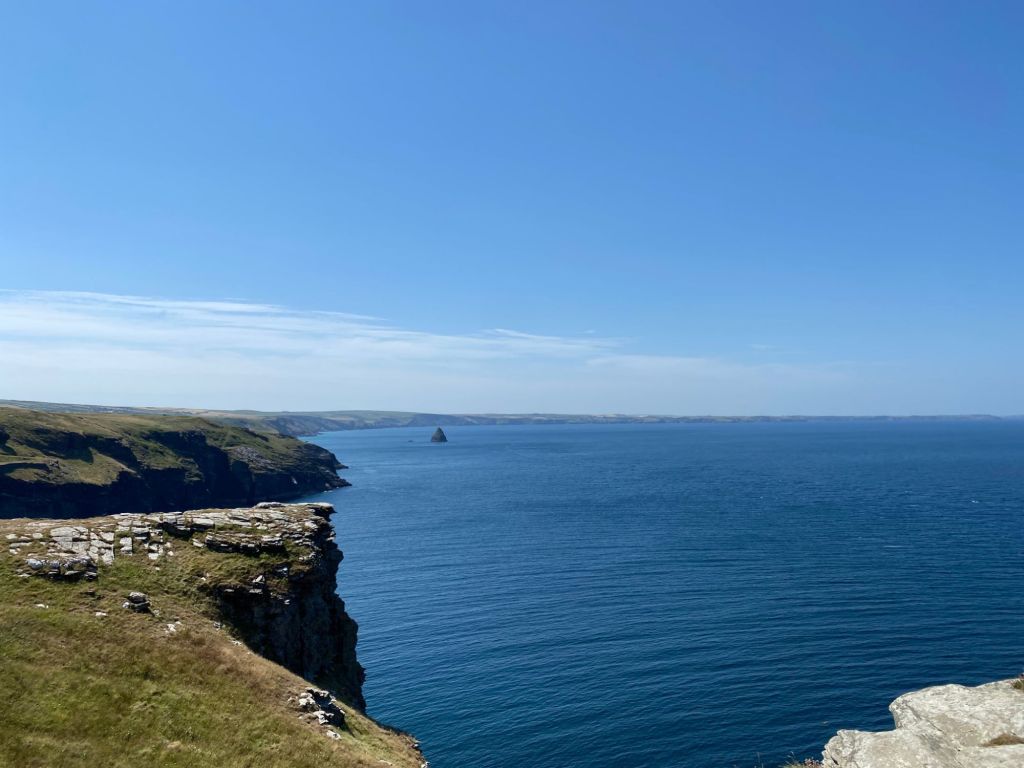
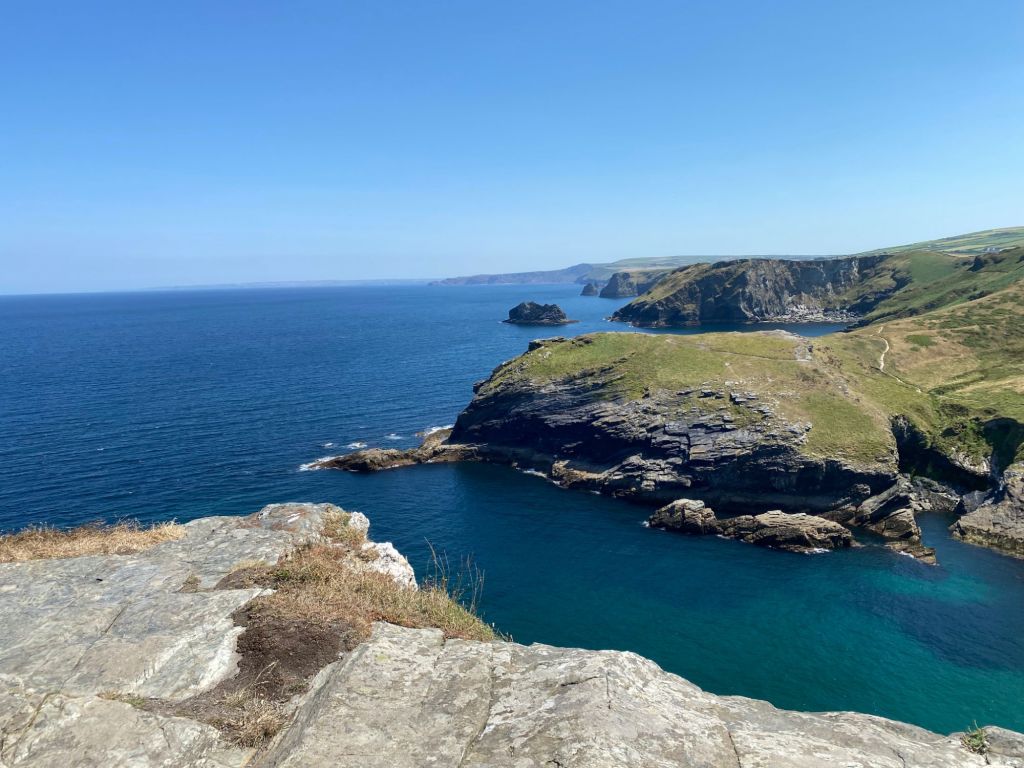
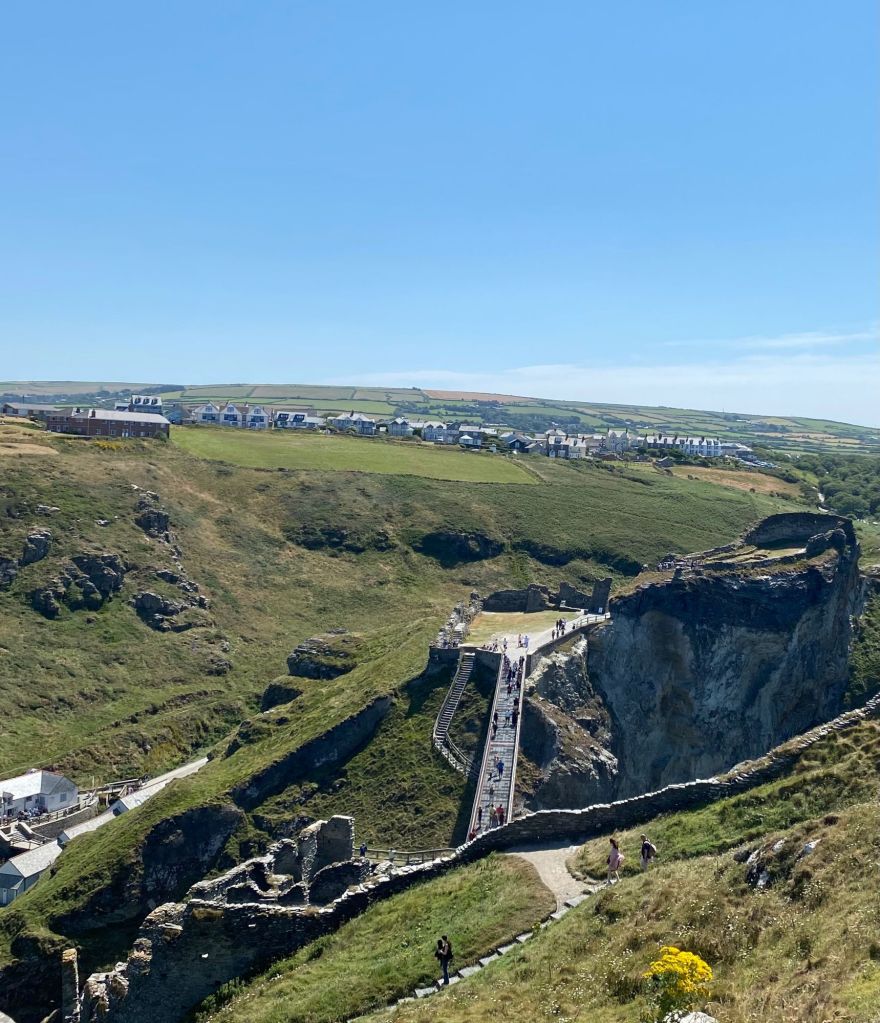
This is the power of Story. It roots us in this sense of Truth. It finds a way to make sense of all the world’s stories. It leads us to look over that great expanse of ocean, and then to turn with the sheer force of that great Wizard towards the story of the lands now spilling out before us. An invitation to then participate in the Story to which this belongs, to wield the magic of that great mystery that is the chaos of the deep waters into a force that can then transform these now divided lands.
Towers and ruins.
It’s in the ruins of these lands that we are invited to dig deeper and reach further to recover the power of those old stories to remind us of the adventure we have been invited to embark on, adventures we might call a life, a life that then binds us to the stories that echo the mystery flowing outwards from that dramatic shoreline. Where all such stories seek to find that Story which can reveal the necessary sacred truths that lie at the heart of the magic that once enchanted these lands.
This, it would seem, has always been an inherent part of the human experience. The need for Story. The need to tell our stories as we embark on such foolish and seemingly futile adventures as imagining a transformed world. It’s here where we authenticate our true identity as children of our maker rather than being relegated to slaves of the Empire. It’s here where our quest seeks the grail, that mysterious sacred presence that evades, in the lore, all but one. A mystical force that, as Armstrong helps explore, seems to have its roots in every culture, with every effort to locate its origins beyond its emergence in the Arthurian legend in the eleventh century, leading us to dig deeper and reach further.
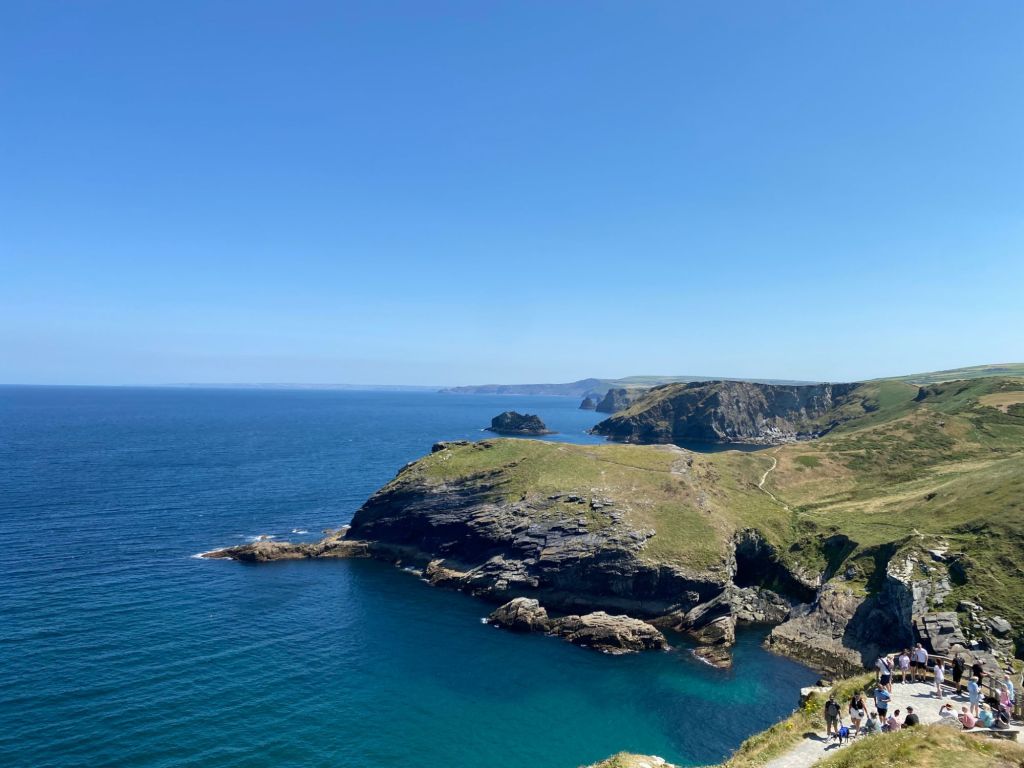
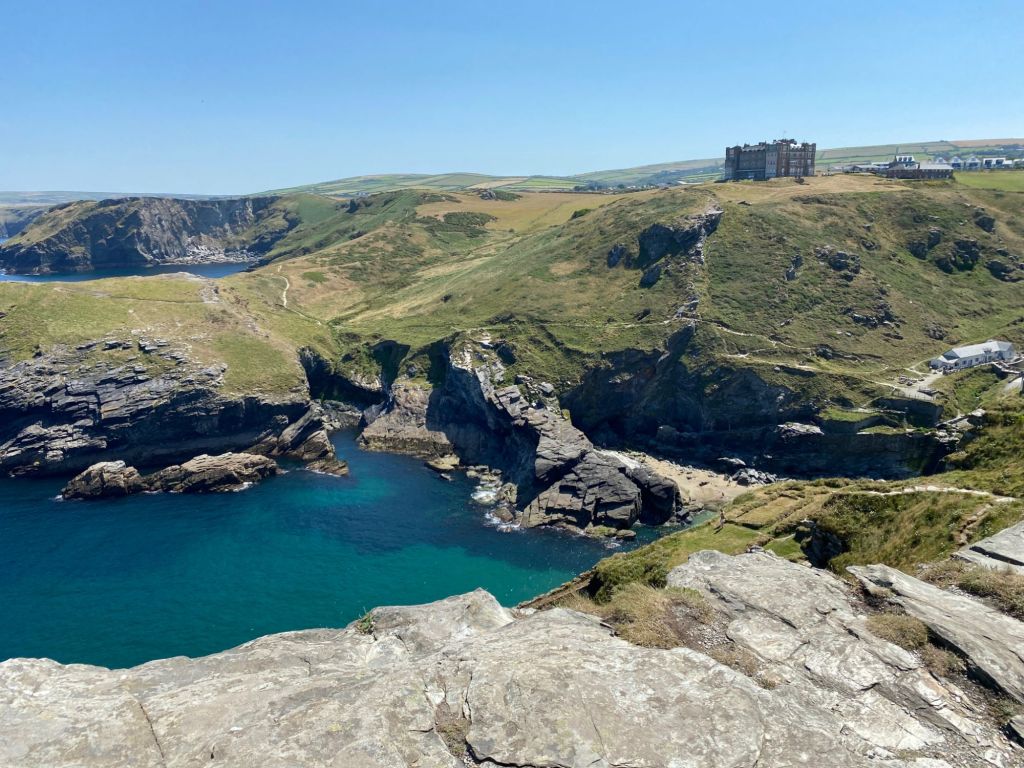
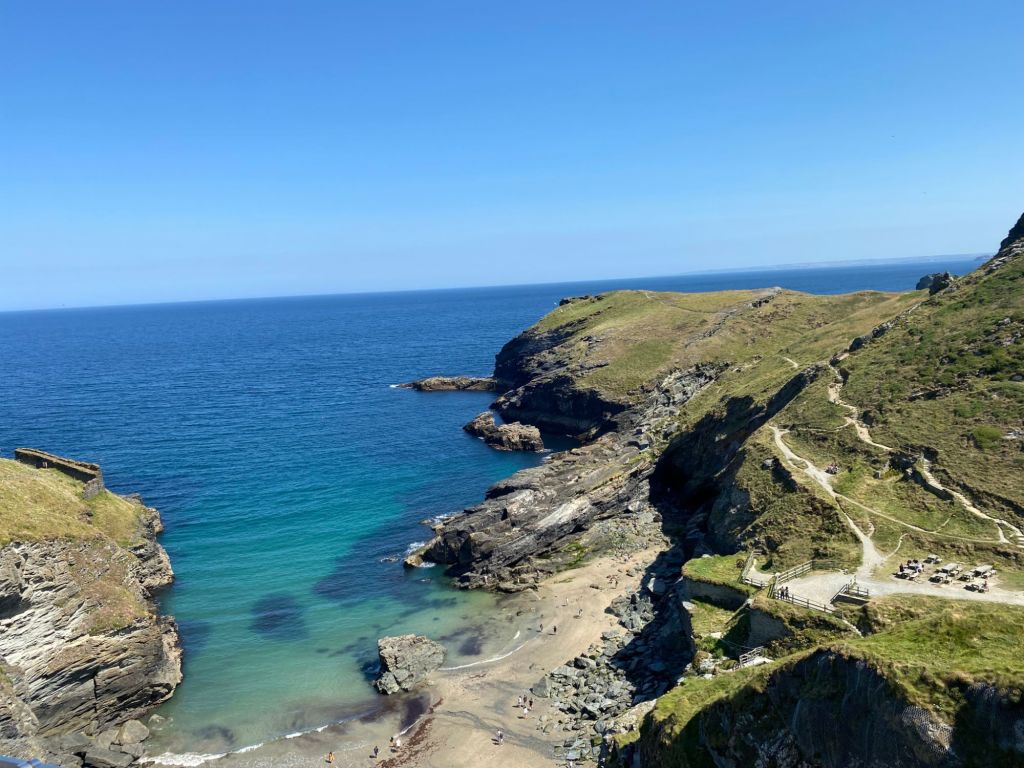
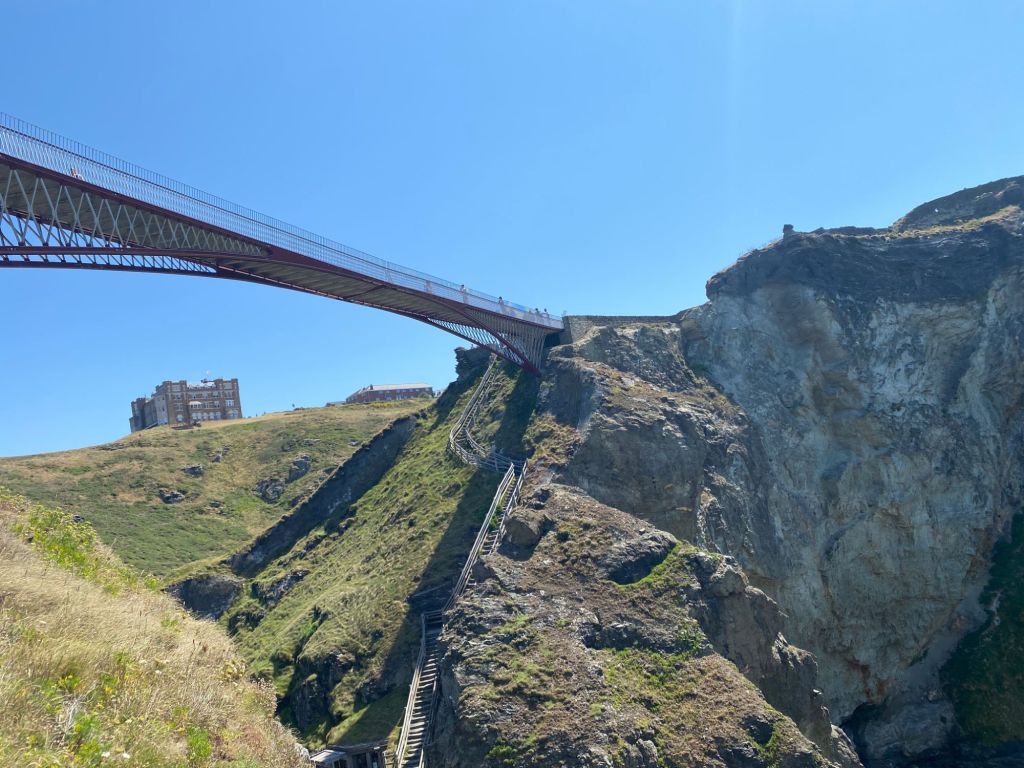
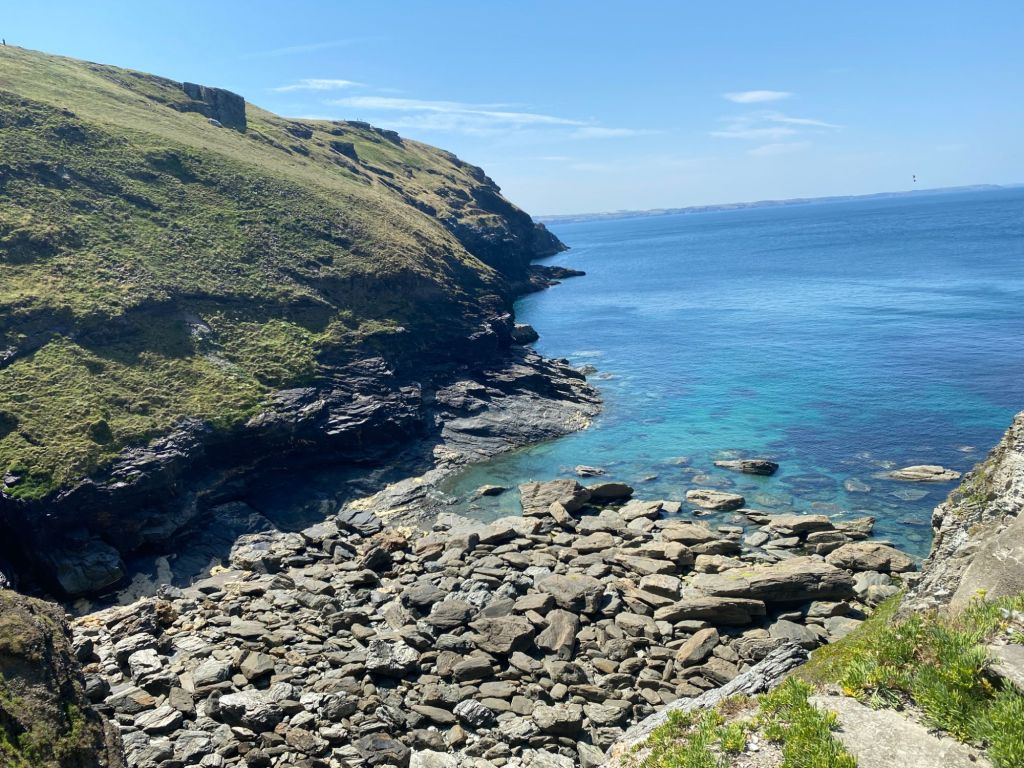
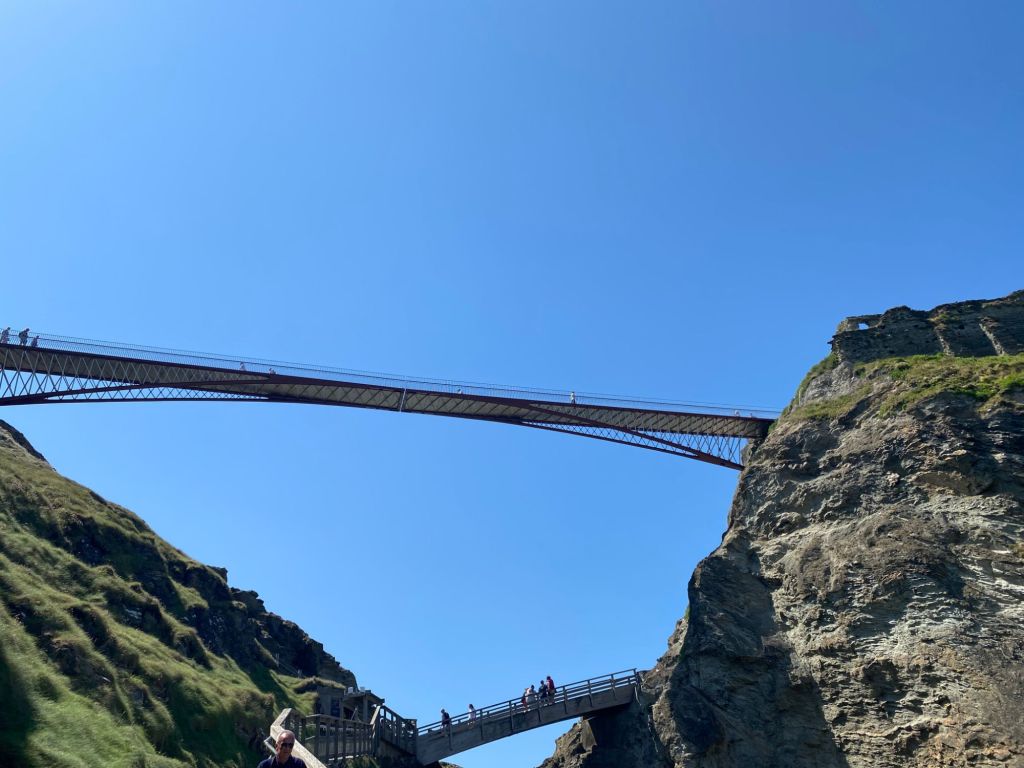
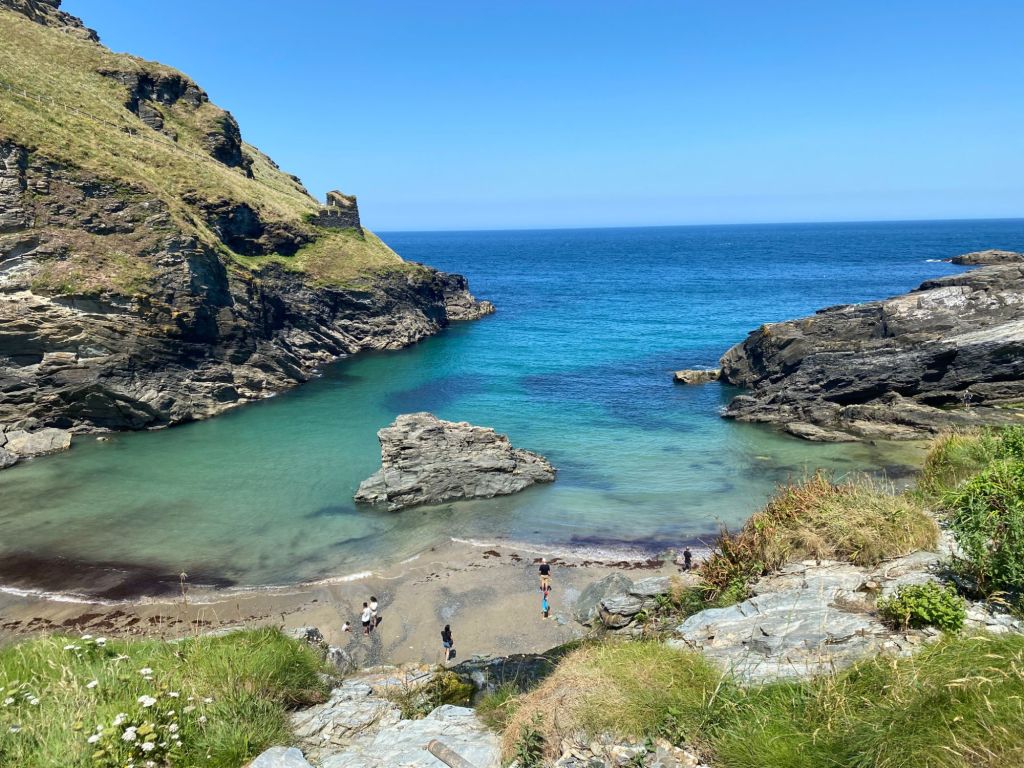
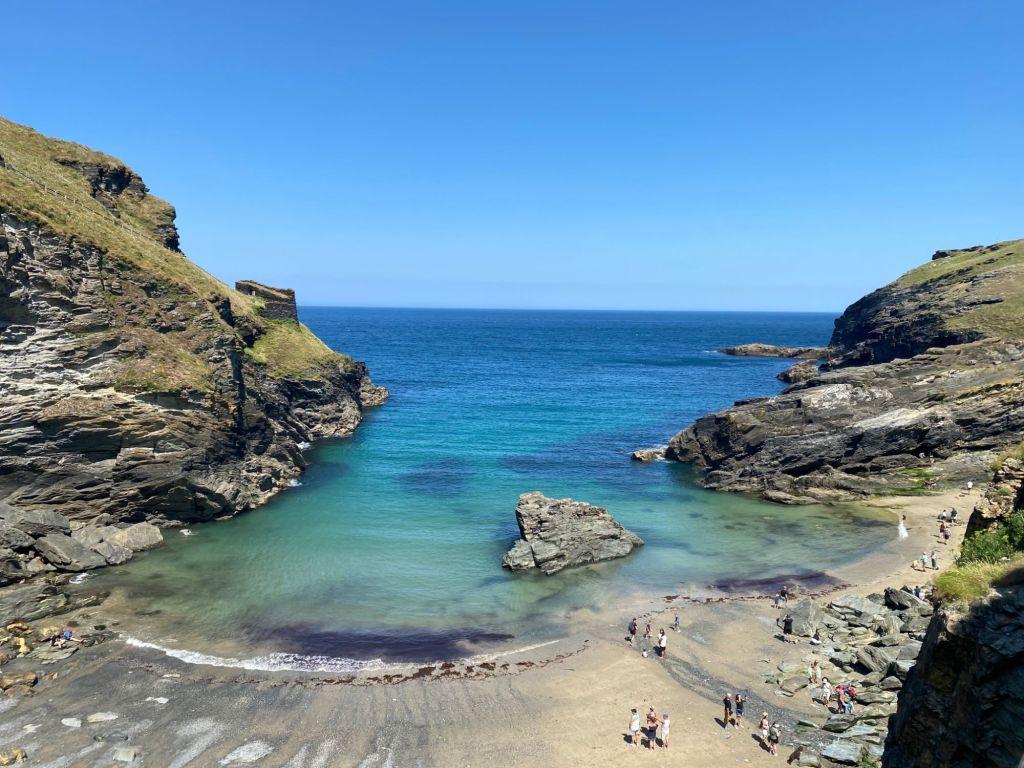
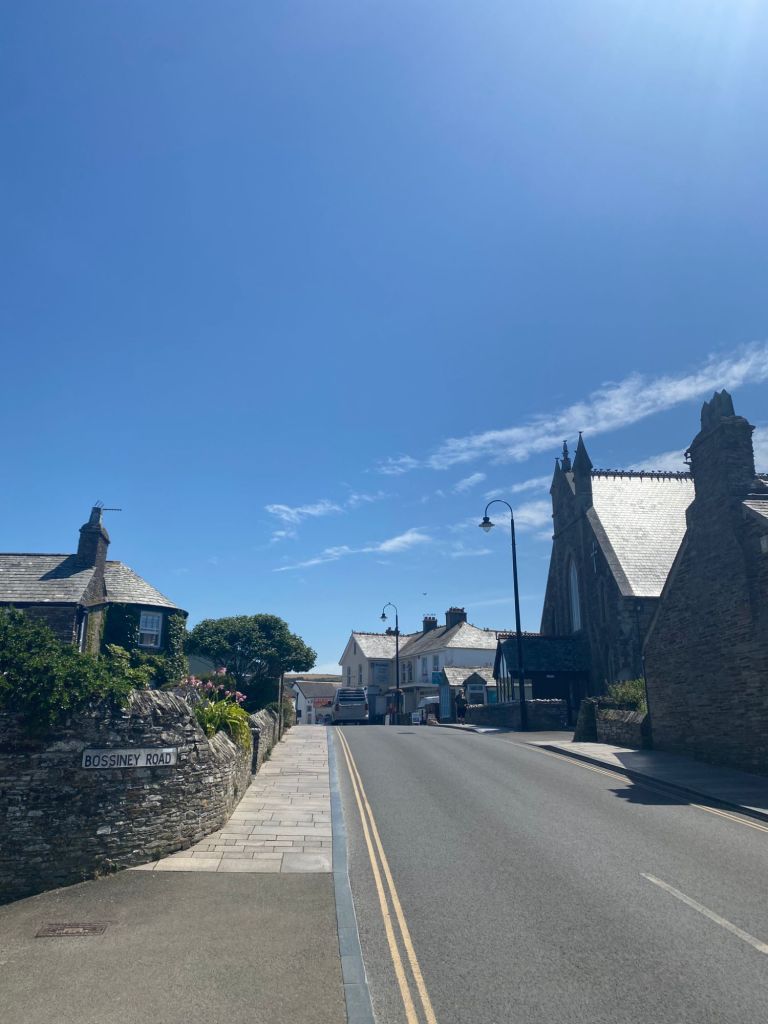
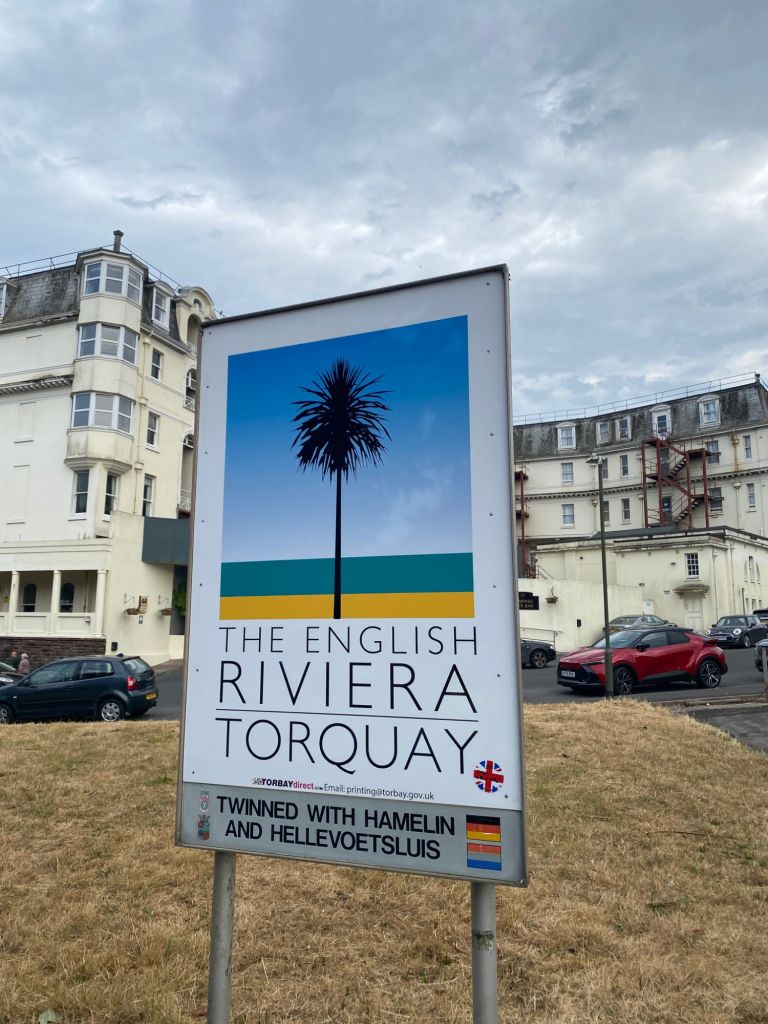
To work ones way back down from the summit, to follow in the direction of Merlin’s unbroken gaze, is to chose to step into the journey, to embark on the quest. This is the way one must travel, across the awaiting rivers and hills and fields, however foolish the journey might appear. For me, this journey will be bringing me to the English Riveria, to walk the footsteps of one of the great mystery writers in England’s history, and perhaps all of history.