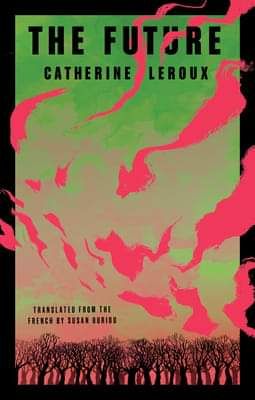
Reading Journal 2024: The Future Author: Catherine Leroux
I got a bit of whiplash from this one. Starts off simple enough, focused on a singular character, small in scope, and seemingly full of potential. And then it takes an odd shift into a Lord of the Flies kind of premise, with the scope and fhs cast beginning to spiral a bit of control.
And then we get yet another shift in the back half that has even more scope and more characters. It was all just too much.
The potential themes are there from the start. It has an interest in exploring a marginalized people and community with clear emphasis on survival, the nature and defintion of community, and larger discussions about colonization. The french aspect is interesting, especially where it is the reflection of a Canadian author reconstructing a borderland between Canada and the USA. The execution simply isn’t there, leaving me feeling lost and disjointed even before the halfway point.
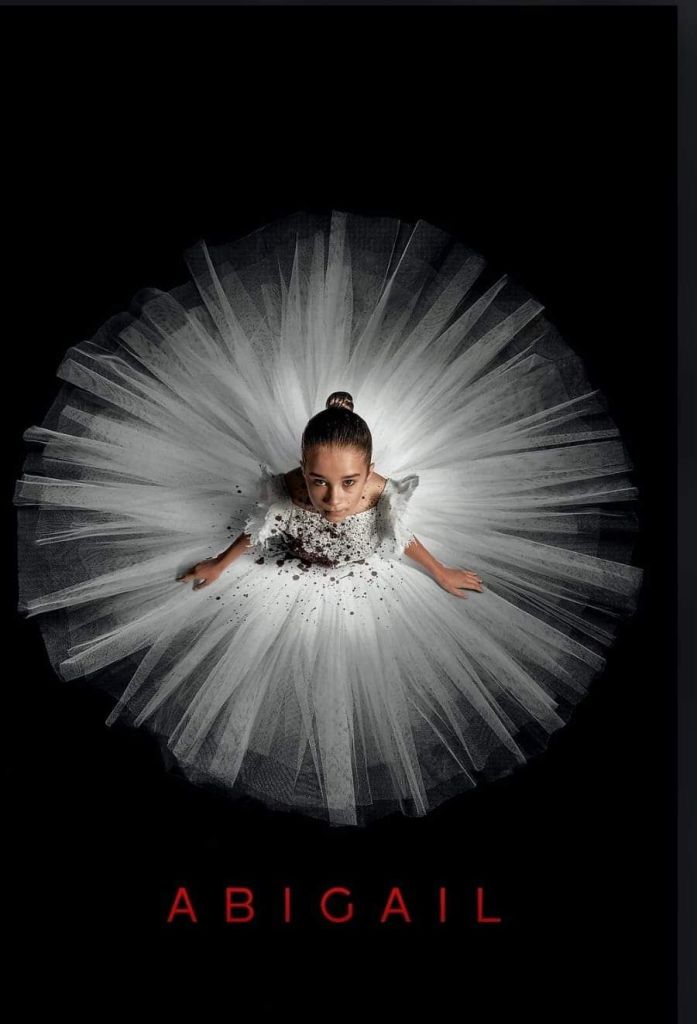
Film Journal 2024: Abigail Directed by Tyler Gillett and Matt Bettinelli-Olpin
Seemed fitting that I saw this with a crowd of mostly middle grade teens. This is, I believe, the films primary target audience. It’s a YA horror-thriller that effectively pushes some boundaries on that front with its commitment to gore and mature themes (and parents, be aware that this does push some boundaries for that demographic). For me, there is a version of this film where the dialogue and plot are more intricately drawn towards an older demographic (I suppose I got this with Ready or Not), but given what this film is and who it’s made for, it’s a decent amount of fun. The further the film pushes into the chaos of its premise the more fun it gets, which makes for a decent payoff.
I should say, I managed to go into this one knowing nothing about it, not having seen a trailer. That definitely aided my viewing experience, because the first half leans into the most basic of reveals. Given that was a surprise for me I got more mileage from the build up than I think I otherwise would have. Even if you do know what this is about though, the commitment to the second half is more than worth the ride. It makes good use of its mostly single setting, practical set pieces and production design.
Reading Journal 2024: Northwind Author: Gary Paulsen
Northwind gains much of its worth from being Paulsen’s last book he wrote before he died. Without that context it’s hard to know how this book would land. It’s something of an odd duck With it, the unusual story becomes a personal commentary on life and death itself.
There is a poetic undertone to the prose, bringing together his real life experiences with the pacific northwest coast and Nordic mythologies. It doesn’t always makes sense being blended together, but there is a beauty to the madness. Paulsen’s affection for the natural world and its creatures is an expected and important facet of the story, which is part survival, part adventure, part internal process as our main protagonist makes his way across a rugged landscape. From this flows his philopshical ruminations, weavimg in and out of subtle theological touchpoints.
At its heart, the book seems to be about the movement from life to death to life, with the uncertain nature of this journey with its all its questions and doubts and unknowns being caught in the crosses that nature itself exhibits. The struggle begins, and perhaps ends, with the basic observation that beauty clashes with the honest brutality of the nature we observe. It becomes difficult to imagine, then, what is illusion and what is not, especially when it comes to speaking about good and evil. Even more difficult to imagine life and death having meaning that isn’t constructed over and against this confusion of realities. The presence of Nordic myth gives this an added dimension as well, transporting these same qualities to our ruminations about the gods. If we cannot say the gods are good or evil, then god becomes a distant entity that is both the author and result of this confusion. Equally so with life operating distanced from the gods. Which leaves death as the great leveler. In such a world the brutality is the only true measurable reality. Driven by instinct and evolution and survival. It becomes the only true certainty.
And yet, as Paulsen confronted his own experience of brutality, he became equally compelled by something else- an untamed beauty, as irrational as it was. He found this in the most unlikely of places; in nature where one would expect the brutal reality of this existence to loom largest. This contrasted the humanity where he found beauty to be most hidden. One of the most striking things about his life, something I gleaned from his autobiography, is how it is his encounter in nature and survival that helped clear his confusion about humanity. It gave him a fresh lens to see existence through. And in some real sense that’s the undercurrent running through his final book. If the one true measurable reality is in fact death, then reality must become immeasurable for life to make sense. For me, this is an idea that endeared me as a child and continues to captivate me as a now aging man.
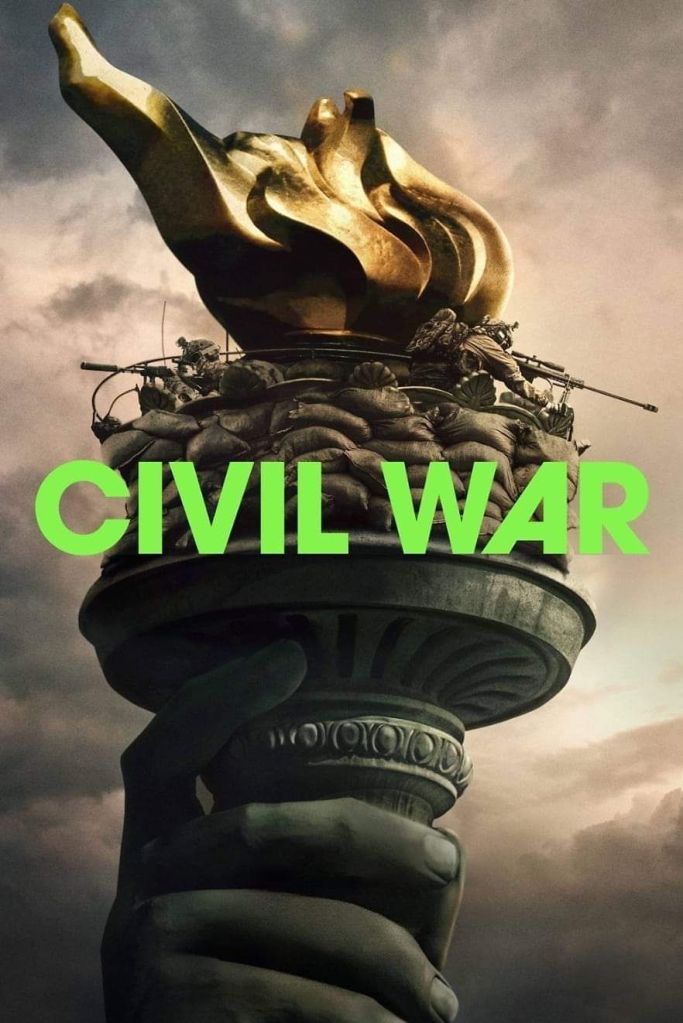
Film Journal 2024: Civil War Directed by Alex Garland
How should I watch this film as a Canadian? That was the first thought/question that came to mind when asked for my thoughts post-viewing.
In truth, I’m not sure. If the film takes some strides to create something with universal application, there is no question the film is about America, and America in this present time. More so, it applies in ways I won’t be able to fully understand living norrh of the border, even if there are a few overlapping concerns and realities.
In that sense I felt a bit like a fly on a wall. I know the film made me feel something, and I would even dare say feel something deeply. A mix of feelings. And this would be true even if I found myself observing more than relating to what was unfolding on screen. This is all a credit to the film’s artistic presence. On this level I can speak with far more confidence, as I am genuinely in love with this film on a technical front. I love the visuals and the aesthetics. The way it uses photographs as means of telling its story. The way it uses music to shift the film tonally between the different emotions. The way it films the action from the perspective of the reporters.
I also loved the way it uses a simple construct- a road trip movie- to do something entirely different and unique. Many of these visual and narrative flourishes are familiar to Garland, and they are used to achieve a visceral and emotive viewing experience. The story is simple, thematically speaking staying centered on this small crew trekking across a fractured America to capture the money shot, but it is never lost on the film, or left uncertain, that what surrounds them is bigger than their individual stories. And this is largely due to how Garland uses these cinematic tools to shape the real heart and focus of this films message- civil war is ugly.
Which is to say, thematically speaking the film is a bit more complicated to unpack. If there are indicators that help define the fractures, the ideologies are largely left out of view. These are symbols, and the symbols essentially lead us to a singular conceit- where such division exists, civil war is possible. If the film stands on one side of the other, this is largely left to ones interpretation. It’s less that the film is championing necessary nuance in certain areas of political discussion, rather it is focused on saying something about the nature of civil war. What we get is something more akin to independent reporters rather than the viewpoint of given political allegiances.
Thus it remains a somewhat neutral viewpoint in this regard, even if the parallels in the film to the right and the left, enmeshed as it is in an ambiguously defined fractured state across the different borders that make up the united part of the Americas ethos, do have a kind of power to say something on their own. I am personally not able to comment on whether this is helpful, problematic, challenging, harmful, given the present state of American politics in 2024. One of the problems of course is that the film is speaking both to something that feels like a reality, and something that has the ability to turn in this direction (the 2024 elections). What I can say, however is that, for me as a Canadian, it left with me with a singular response- civil war is a frightening reality and potential.
It also all left with me with a sense that, while it is certainly clear that this film defines A24’s recent shift in philosophy, making a foray into bigger budget and more accessible fare, a studio like this can do so while maintaining a real and robust artistic credibility. On that level it’s one of my favorite films of the year thus far. This might be too soon, but it also might be one of my favorite Garland films. I think he does something with the Blockbuster that helps push and challenge the genre in new and fresh directions.
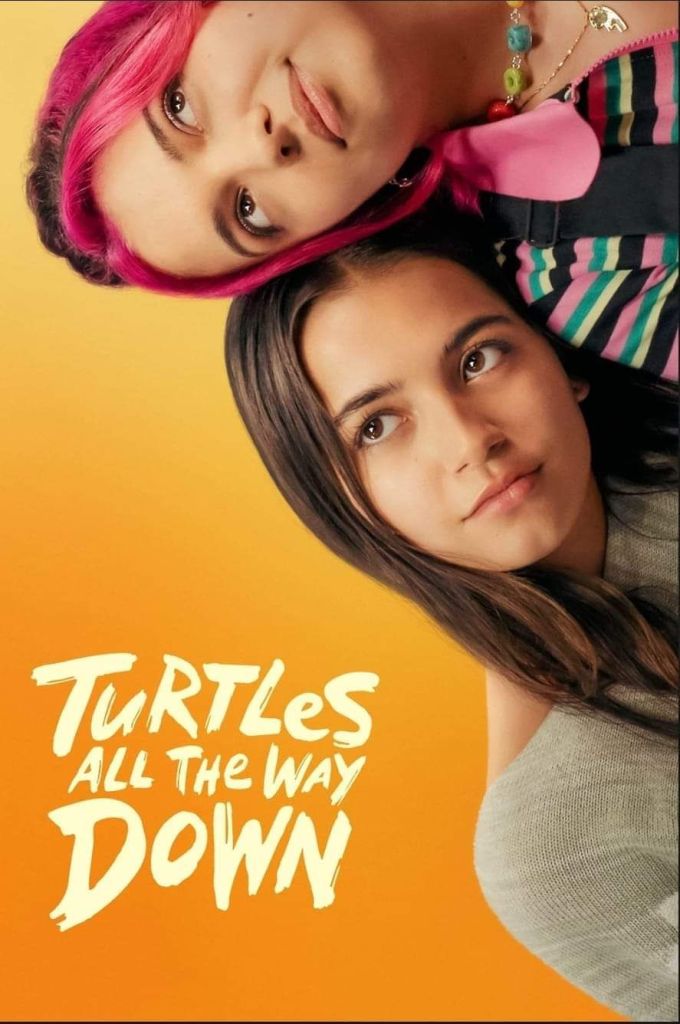
Film Journal 2024: Turtles All The Way Down Directed by Hannah Marks
I feel seen.
Although I differ somewhat in my own experiences and struggles, I found so much overlap in the central character’s journey. She struggles with a mental disorder driven by severe anxiety and OCD. This disorder results in her getting lost inside her own head and thoughts. This also leads to a heightened interest in philosophy, driven particularly by struggles with seeing the workings of this world, and indeed herself, as true and real. Things like meaning and worth feel constructed and irrational and false and unreliable when measured against reality. One could describe this as a persistent wrestling with existential crisis.
All of these things feel very much true to my own experience of life. Where she has a particular obsession with bacteria, I have Orthorexia Nervosa, a disorder that revolves around an uncontrollable obsession with healthy eating. One of the outcomes of this is researching illnesses. At my worst point I had hundreds of articles taped to my wall, hidden in books and tucked into different places in my room on every possible illness and every possible cause. I spent my days stuck inside my own head without a way out.
I really liked the way the film doesn’t offer easy answers. For someone like me the common approach of forcing yourself to confront your own fears by exposing yourself to it doesn’t work. It only makes it worse, because doing so leads me to a point of collapse, to where I can no longer function. Part of this is because my obsessions are rooted in some level of reality. This point of crisis tends to keep it locked in, because my mind understands percieved solutions or answers to come from convictions that are, at their heart, irrational. My obsessions, on the other hand, are rooted in reality, fueled by philosophy and science and reason.
I also very much relate to one of the very real outcomes of my personal struggle- being unable to truly express or show concern for the things around you, even though this concern is very much a part of what drives you. You turn every conversation into a discussion of philosophy and reason and the ensuing existential crisis because this is only way you know to engage the things that surround you. You can’t just be in a moment, because every moment becomes a question or a crisis. And you know this isolates you from everyone else, all those who are able to be in a moment without thinking dwelling on these questions and these points of crisis.
All of these things are things I feel and think and know deeply, because they are my experiences. And this film tapped into these experiences in an extremely visceral and emotive fashion. So much so that I might even call this traumatic as well as cathartic. I feel seen, but I also feel exposed.
On another note, I also really enjoyed how they wove in the whole Nancy Drew type subplot. Added some fun to an otherwise heavy film.
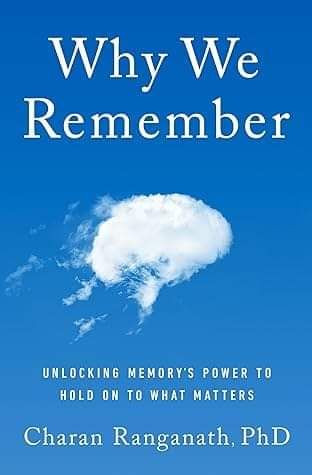
Reading Journal 2024: Why We Remember: Unlocking Memory’s Power to Hold on to what Matters Author: Charan Ranganath
I’ve been interested in the subject of memory for a while now, having recently begun a deep dive into the subject. Part of this is a desire to understand my own story, and to even learn how tell my own story. Part of it is a desire to better understand reality, or our realities.
Ranganath wants to delve into the specific question, why we remember. Part of the issue with the book is that he seems to be torn between tackling the functional side of this question (the mechanics and the evolutionary reasons for why we remember) and the philosophical side of this question. The more he talks about the functional aspects, the more apparent it becomes that these things have real and important philosophical implications. And where he does delve into the philopshical, the more apparent it becomes that the functional side of this question is left without much to ground or direct it as a question of what matters. It is a weakness of a book that isn’t, ironically, that clear on why it matters beyond the purely functional reality.
For example, right off the hop the acknowledgment is made that we are a product of our memories. Without this we would not have a sense of the self or the other, and without this we would not have a measure for our experiences of both suffering and pleasure. We would not exist as selves.
At the same time we are forced to confront the truth that our memories are not reliable and are based on demonstrably false ideas regarding our experiences. Which creates a point of crisis when it comes to defining a person, or even pointing towards the true value of our experiences.
To tackle this problem the author works to challenge some common perceptions of memory by redirecting our common understanding of concrete or true and false memories towards its plasticity and necessary adaptability. We should not be so concerned with how our memories capture a past event or experiences accurately, we should be more concerned with how our memories interact with the experiences of our present. Memory is not designed to stay static, it is designed to adapt through a process of necessary forgetting and re-contextualizing reformulizing.
In this sense, it is far less important for us as biological persons to have Polaroid memories that cannot lie, and far more important for memories to operate episodically. It is about the story our memories are telling in relationship to our present, precisely because this captures the most important component of our sense of self- our experiences, which are by their nature realities rooted in the present.
From here the author then moves into the different ways we can manipulate memory for our assumed benefit and flourishing. The author touches on the relationship between curiosity and the building of memory, on the ways different practices and medications can help us forget painful or tragic experiences while reframing such memories differently, or the practice of learning through failure rather than success (which also plays into how backwards our education system is when it comes to how it measures education).
It delves into some interesting observations as well relating to how the brain works in an interconnected fashion rather than, as common understandings often see it, through separate locations doing different functions (the wrong assumption about short and long term memories being stored in different places, for example). It also spends time looking at how our brains structure the information it turns into memories by blocking information together into manageable portions (think a phone number which we remember not as single digits but as a 3/4 blocking pattern). Or there is the way memory is formed and dictated by context and community. We are products of our environment.
All of it insightful, and at times practical. But I found myself at so many different points wondering how this information applies specifically to the problem of personhood and the self, especially in a world that has elevated a certain kind of truth to a postion of highest value. What we are discovering about memory flies in the face of much of modernity. This seems clear. And yet not even the author seems willing to acknowledge this head on. What we end up with is something that feels largely irrational, and even at times confusing on a philopshical level. Not only that, but it leaves one with a very real potential existential crisis. The sort that arises when we are forced to confront the functional reality of who we are while also being expected to give it meaning.
Why do we remember? The question also becomes why do we forget. Because memories shape our experiences in ways that bring joy or bring pain. With the recent and constantly emerging research on the function of memory comes an equal interest in its manipulation. Use a drug or a therapeutic process to reshape or forget painful memories. Use processes or drugs to change the episodic tale and trick it into telling a different story. And this is given meaning not only because it allows us to avoid the assumed downside of existence (pain and suffering, because if we don’t remember it we don’t experience it), but because it then becomes our experience, and thus becomes a certain kind of truth that is given ultimate value. To safeguard this against what we might call social harms, we apply social or cultural memory, which is that the select ones with power shape the collective memories.
It all left me with a good deal to wrestle with of course, and some good information. But this wrestling has to be done philosophically without the aid of the author’s own voice. For anyone interested in the subject of memory it is a decent work that brings the different discussions to the table, which is good. And it can help, beyond the practical elements, bring to light the philopshical problems. I simply would have liked it to be more focused in either of these areas so that it could perhaps be a bit more honest about why it matters.
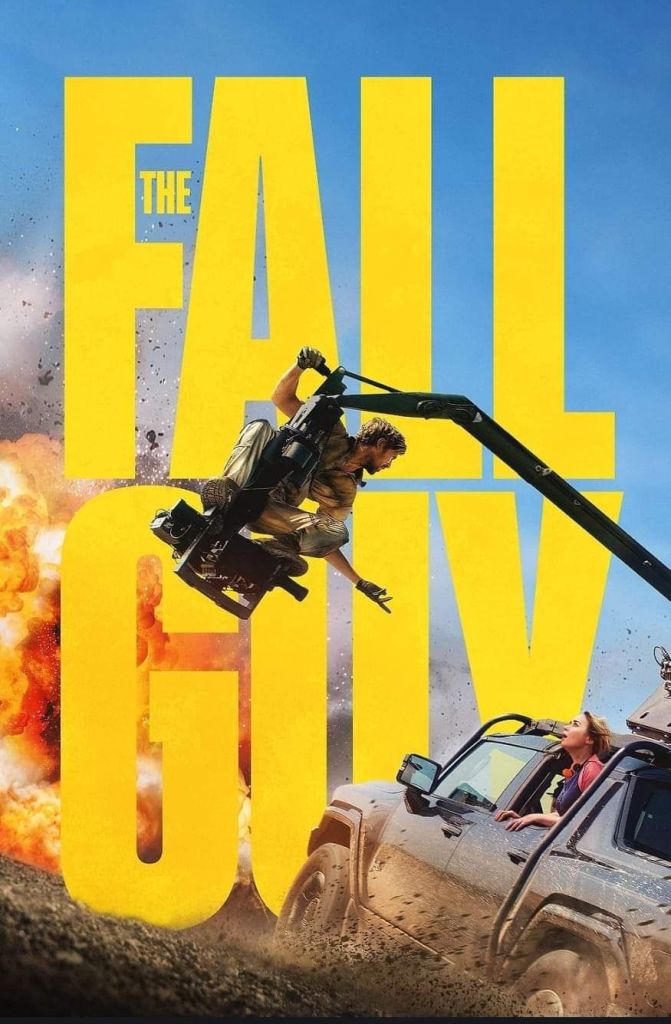
Film Journal 2024: The Fall Guy Directed by David Leitch
As a rom-com it’s very good As a comedy-action it’s good. As a love letter to the art of stunt work and filmmaking its exceptional.
There is a lot of film here. Most of this is due to the fact that it spends time building up the romance. So much so that its easy at points to forget at times that this is an action blockbuster film. And don’t get me wrong, there is plenty of excitement and entertainment and big creative set pieces with cinematic flourishes, but they are interspersed into a mix of drama and ideas relating to the the Director-stunt person relationship. Which just means it’s a more patient film than you might expect.
It also feels like a throwback to a bygone era, a celebration of a time when practical set pieces were more the norm than a CGI heavy industry (and the plot plays into this as well). I’m not sure if this will isolate some viewers, or play too much into nostalgia, but I do imagine it will play well for those who grew up in the 80’s/90s. And if not, you’ve got Gosling and Blunt doing their thing, which is worth the viewing in its own right.
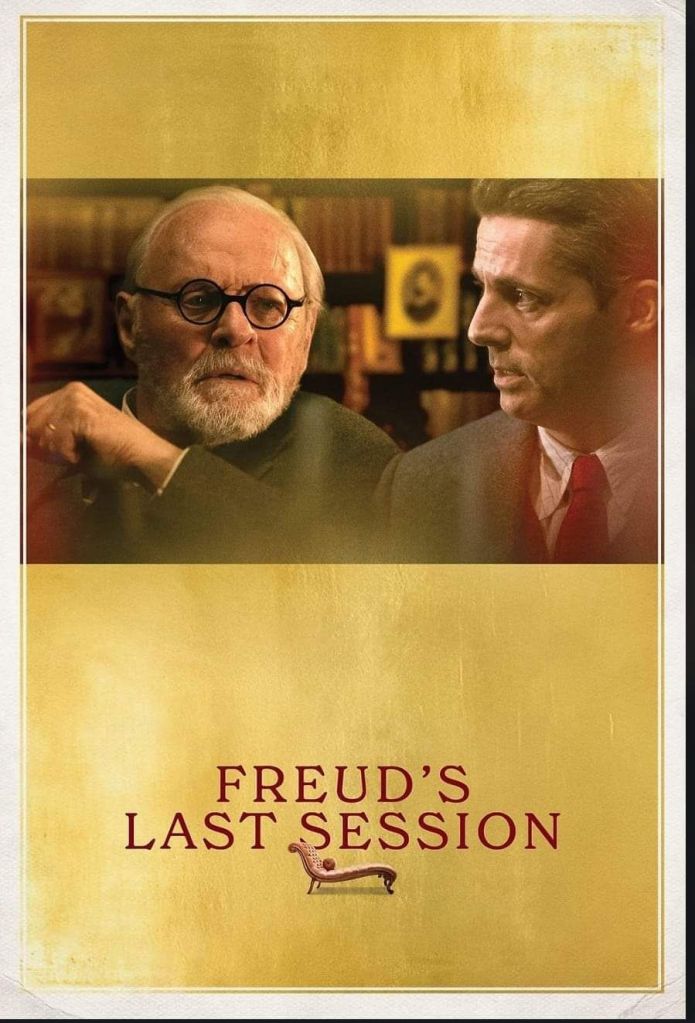
Film Journal 2024: Freud’s Last Session Directed by Matt Brown
“So much pain in this world, and this is God’s plan?”
“We are all cowards in the face of death.”
“My idea of God keeps shattering over and over again. And yet I find God everywhere. Impenetrating everything.”
“From error to error, none discovers the entire truth.”
A fascinating film that uses its imagination to explore the possibility of this clash in belief, in philosophy, in worldview that flows from a rumored meeting between Freud and Lewis right before his death. When, at one point, Freud notes that observation above about our shared cowardness in the face of death, he posits his analysis that such cowardness expresses because deep down we know that God does not exist. The flipside of this analysis is that perhaps it surfaces because deep down we know that God exist. The reasoning here suggests that if we can say that God is goodness, it is only the existence of goodness that can convince us that death and suffering is evil.
This of course positions us at the crossroads of the world we observe, and what is clear is that both men are observing the same world and the same facts about this world, but arriving at different conclusions regarding what this says about truth. This forms a blueprint for how we think and how we discover. This is ultimately a film about the intellectual process itself.
For Freud, all pleasure is sexual in nature. We can boil down the passions to a singular drive, function and experience that is designed to counter pain. Designed to create the illusion of pleasure so that we can exist in a world defined by pain. And the more he hands us his observations of the world, and specifically its human function, the more convincing it becomes. For Lewis, it is the reality of pain and suffering that becomes a window into true pleasure, which he defines as experibcing the nature of God or the eternal. And the more he notes the degree to which humans stake their lives on certain convictions that are at their heart irrational and illusionary, the more this begins to make sense as well. For Lewis, Freud’s commitment to sex as the governing force only uncovers the fallacy and finiteness of its drive. For Freud, its basic nature uncovers the fallacy of the.idea of god.
The film, with two captivating performances at its center, allows these competing forces to coexist, leaving us to wrestle with the uncertainty pulling us in both directions at once. It becomes part of the experiential force of the films story, revolving around a singular conversation between two scholars. And even though these are two larger than life figures, i can’t help but feel like the relevance of their dialogue ultimately fleshes itself out in the day to day experiences of the world they are observing. Here th film uses subtle cinematic and visual flourishes to elevate ideas to the visceral and the experiential. The result is a film designed to, at the very least, challenge us to think.
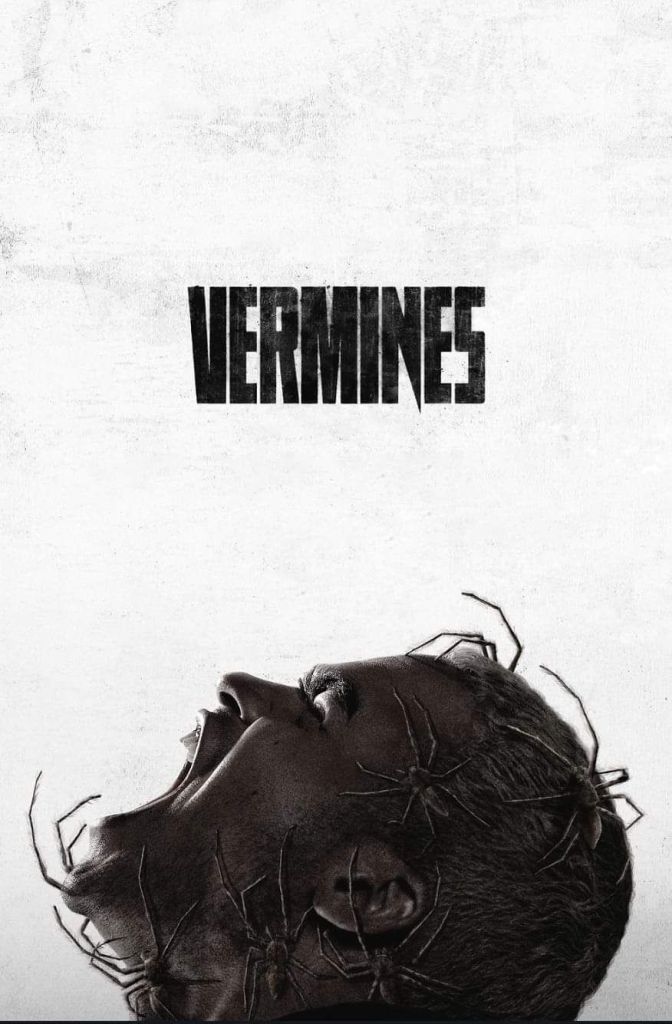
Film Journal 2024: Infested Directed by Sébastien Vaniček
Back to back horror films about an infestation of dangerous spiders (this and Sting). On a purely objective level, this is probably the stronger of the two, but both have their strengths and are great entries into the creature feature genre. In the case of Infested, the contained environment of the apartment block lends it the necessary tension and intrigue.
Where Sting takes a more straight forward and tightly scripted approach, to its credit since it works well for what it wants to be (a classic creature feature), Infested is more ambitious, blending in a larger metaphor and socio-economic commentary. I’m not sure it works completely (there’s too much back and forth instead of a clear progression), but full points for its creative imagination. Most importantly it manages to create the experience and feeling of dread.
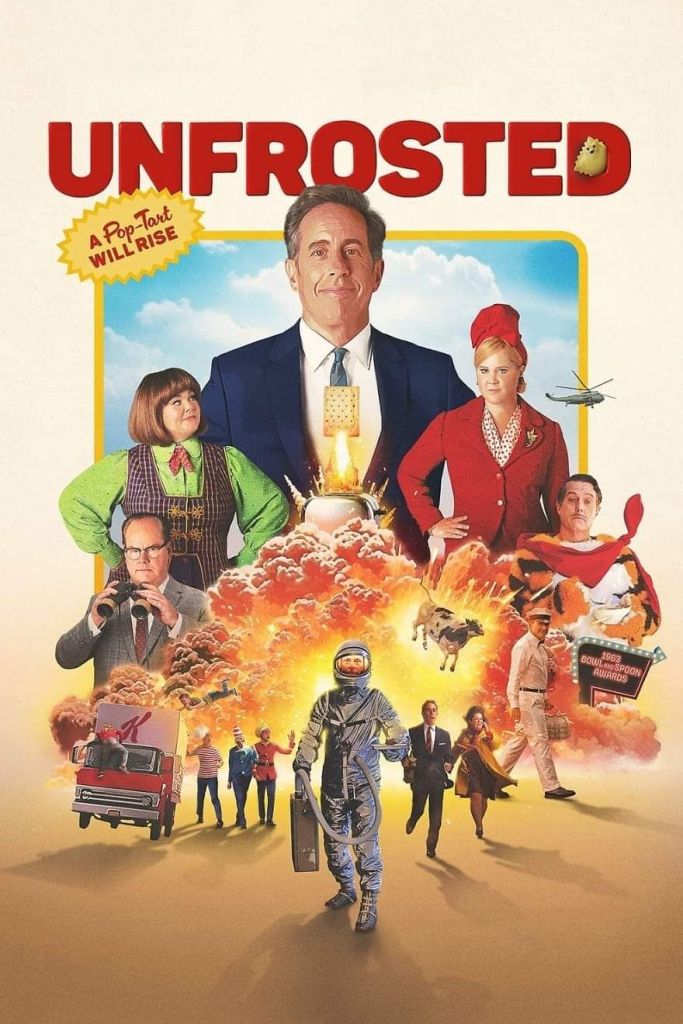
Film Journal 2024: Unfrosted Directed by Jerry Seinfeld
I mean, it would be a difficult movie to hate But there’s no question it’s bad. Like shockingly bad. I’m tempted to say it’s all sugar and no substance, which would be true. But it’s worse than that. It’s high fructose corn syrup trying to pass itself off as something edible.
Somehow it makes it appear like it’s demographic is around 7-8 years old, but then subtley makes itself too racy for a 10 year old at the same time. Which i guess is a moot point, because the only ones who are going to watch this will be all the 40 somethings who grew up with Seinfeld essentially defining their era.

 The Stories of my Life