
Film Journal 2023: Black White and the Greys
Directed by Marchelle Thurman and Casey Nelson
One of the essential questions that emerged from the pandemic is, when is too soon to start telling pandemic related stories. We could ask this question in relationship to the tragedy of the virus, or in relationship to the cultural divide that emerged from the worlds global response to the crisis. The uncertainty of this question hasn’t prevented filmmakers from tackling the subject, to be sure, but it has been a bit of an experiment with successes and failures littering the landscape since 2020.
What makes the question a bit more complicated is that pandemic related films could also be defined by films that don’t necessarily tackle the subject but which adapted to the constraints of the time, finding new ways to shoot and develop different projects. In some cases this dictated the kind of stories that could be told, leaning into the singular location shoot and intimate character dramas. Others tried to employ different strategies to tell stories with a larger scope using creative approaches that ensured proper and safe protocols were followed.
I’m actually not sure if this small, indie effort was made during the pandemic, but it certainly does capture the times, keeping the story contained to a household and the unfolding drama of its relationship struggles. This contained setting allows the story to really delve into the nuances of the relational conflict that sits at its core.
Here the two soon question is answered by presenting a time framed story that unfolds over the months of 2020, which captures the full gamut of tensions that emerged from the pandemic, political divides, and racial tensions of black life matters, in a way that transcends time and speaks to the human experience. What’s true about the pandemic, regardless of which side of the cultural divide we find ourselves on, is that it exasperated stuff lying underneath the surface of our relationships and brought it to the surface. Here the film uses the black and white polarization of the times to tease out the grey that is necessary to any reconciliation, understanding and empathy. It also does this within the particular experiences of an interracial couple.
The film opens with a key sequence that surfaces later in the film, a scene that establishes the films central relational conflict- a relationship in crisis both within and because of the times- that the film is going to explore. The film then rewinds to a point where, with the seeds of the perculating issues already planted, we are able to watch things gradually unravel. We know its heading to the point of crisis, but what we are asked to look for is the nuances of the struggle that can help us gain some understanding of it. And as we find this in the different moments of the film, we find expressions of joy and pain. We find the reasons they are together and the reasons they are in crisis, and everything that is at stake within that. It is a deeply felt tension that is held firmly in the grips of the essential process of simply doing life together. Or in the case of the pandemic, being forced to do life together in a lock down.
There is no question this is one of the best and most important pandemic related films that I think have seen in a while. But it would be a mistake to limit it to simply that context. It’s a film that feels astute enough to consider that there are important lessons to learn about ourselves and about our relationships in a post pandemic world, ones that cut across the divide and speak to matters universal. It feels true to how divided households experienced the pandemic, and it captures this without creating heros and villains. It feels even truer to the way we do relationships in life. All of this results in a beautiful concluding scene that cuts through all the noise, unearthing the buried truths of who we are and who we are together that our conflicts tend to cause us to miss.
Wanted to link to the person and review that I found the film through. A worthwhile read from film critic Don Shanahan at every movie has a lesson.
https://everymoviehasalesson.com/blog/2023/10/movie-review-black-white-and-the-greys?fbclid=IwAR2Zu_FQToJ2uFWDn0kBjN_BkqytfaNADukM8tbGqskeis345FGxNh8ofHI
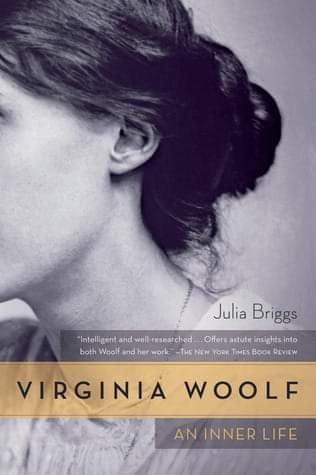
Reading Journal 2023: Virginia Woolf: An Inner Life
Reading Journal 2023: Virginia Woolf: An Inner Life
Author: Julia Briggs
Briggs approaches this biography of Virginia Woolfe by telling the story of the writer through the story of her writing. This isn’t necessarily a novel approach, and it has been one bofore. Yet, it is uncommon enough to capture the uniqueness of the approach, befitting as it is for an author who essentially gave birth to modernism in literature, defying the conventions of the artform.
It also feels apt given the Woolf’s intimate connection to the artform. She is a writer. Writing also defined her. It became an integral part of her identity, set explicity in her lived years inbetween the wars.
She begins to flesh out this identity when she publishes her first novel in 1915 at thirty three years of age. But this identity was formulated, as the story of her writing will tease out, much earlier, framed as it is by her parents interest in storytelling. Part of what occupies her journey from her first book to her last (the posthumously published Between the Acts) were three essential facets of her experiences- mental illness, feminism, and war. The first occupies space behind the scenes, the second becomes a prominant and interconnecting theme, and the latter functioning as the inspiration that desires to reconcile the first two as a cohesive narrative. As the journey unfolds, we know the least about her first book, and the most about her last book. In a poetic sense, given the way the last book ends, her life is thus marked by the absence of a beginning and the open endedness of the end.
If her first book was any indication, she couldn’t have been anything other and couldn’t have written about anything other, jumping into the deep waters of the world’s uncertainties without reservation. As she says about her approach to the form, “What I wanted to do was to give the feeling of a vast tumult of life, as various and disorderdly as possible… the whole was to have a sort of pattern and be somehow controlled.” The difficulty? “Keeping any sort of coherence”. This was a vision for her writing life. This became her life, pushing and pulling her between the fiction/fantasy and the reality.
What she encounters, and thus confronts as a woman who is also a writer, is the world of the patriarchy that surrounded her. As Briggs suggests, Woolf first set out to change the literary field by being a woman writer in a field dominated by men. But then she also wanted her writing to change the many parts of the world that were governed by the same reality. Thus her stories begin to take on a life of their own.
“Insanity is not a fit subject for fiction.” These words were uttered by Aunt Eleanor in Night and Day become near prophetic given Woolf’s eventual fascination with the idea of suicide. Perhaps a result of sinking herself into the darkness with such feverish intensity. This seems most evident in The Waves, where she confesses that “the life of the mind was the only real life”. So much so that her books begin to be the thing that gives life to her subsequent writings, with characters from one story making their own way into the next, and worlds colliding through their interweaving presence. The Waves, for example, becomes a novel about silence that emerges from the desires of Terence in The Yoyage Out. A novel that takes the external processes of the latter and “reorders” these details into an exmination of the inner processes. Most poignant is the fact that these experiences that bind the journey of these stories and characters come from the story of her own life.
At one point Woolf suggests that “she wants to keep the individual and the sense of things coming over an over again and yet changing.” A portrait of the cycles giving way to new perspective, a key characteristic of eastern philosophy. Which of course becomes an odd mix with her appeal to modernity. A way, perhaps, of not losing herself amidst the inevitable demands of her feminist concerns, her focus on matters of identity and sexuality, and her desire to bring about a new world, one where she could equally, perhaps, find herself outside of the pages. A similar tension exists in a book such as The Years, where she wrestles with individuality in the face of community. Certainly this is where the realities of the war loom large, balancing this notion that the world was changing for the better, and yet “everywhere she looked there was death.” Looking back at her need for order and disorder, she wonders at one point, “if there were a pattern… what woul it be… how would it be…?
Briggs suggests that one of the demons Woolf carried was her need to see herself, and thus find herself in the stories she wrote, as an outsider, something that sat in tension with her privileged life and certain inconsistencies when it came to her own behavior of turning others into outsiders. This was perhaps the same tensions that found her caught between imagining a past and future self that look different, of a married woman and a rejection of marriage as a cultural construct. “Love and hate- how they tore her assunder.” Or, as Briggs notes, “She had an almost painful sense of the poignancy of things when they are emptied of us.” These inconsistencies, these tensions, they become the thing that write her story as a disordered and often incoherent mess being made, reluctanctly, into some kind of order. An order that sometimes directs her back towards the conventions as harboring some measure of truth in a senseless world, but always with a firm handed grip on her revolutionary interests. She never seemed to be able to escape, even when writing suicide notes, the idea that this story, this life, needs her to live it.
One last comment on the structure and nature of this book- I think this book would work best accompanying reads through her individual writings. Its not necessary to do it in chronological order, but certainly, even if you read through this first as I did, it feels like it would gain its full worth accompanying the actual words it is talking about. Briggs does a really good job at putting you inside the text and outlining each story with a fair amount of detail, but for someone like me it did feel like it missing that first hand experience.
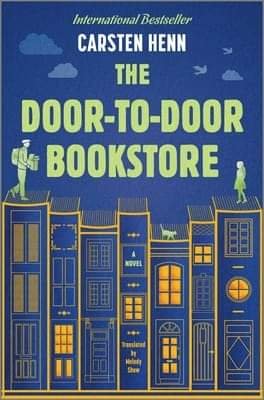
Reading Journal 2023: The Door-To-Door Bookstore
Reading Journal 2023: The Door-To-Door Bookstore
Author: Carsten Henn
The Door to Door Bookstore became available from my list of library holds, so I embraced it as a nice buffer between my seasonal horror reads. Figured it would be a nice break and a good fit for fall.
This might be the most good hearted book I’ve read in a long while. Effortlessly likeable and breezy, its the sort of read that is meant to reward the quietness of a brisk afternoon and a warm drink. It has found family, followiing this growing bond between a young girl and an elderly man. This generational gap plays into the story, with the elderly man’s tradition of bringing books from the bookstore to those who are unable to venture out themselves being thrown into question by a changing world. Its a hold over, for him, from a simpler time, and satisfies his passion for reading, for his town, and for people. A modern interest in progressing with the times and chasing economic interests threatens to make his position at the bookstore obsolete, thus making this elderly man obselete. It is this relationships between the young girl and the elderly man that strives to reminagine that narrative, proving that she needs him as much as he needs her, and both of them occupy the same story in this small, German town. Even where the world changes, what really matters remains the same.
I have one regret. This book is so chalk full of wonderful quotes, I wish I had a pen and paper with me while I was reading it. Sadly it had to be returned to the library. Quotes like,
“Within each book lies a heart that begins to beat when someone reads it.”
Or
“It has been said that books find their own readers—but sometimes they need someone to show them the way.”
Or
“If you’re a character in a book, you live forever. For as long as someone reads you, you’re alive.”
“In that case, I want to be in a book too.”
“You’ll have to write your own then.”
A reason to revisit this one down the road.
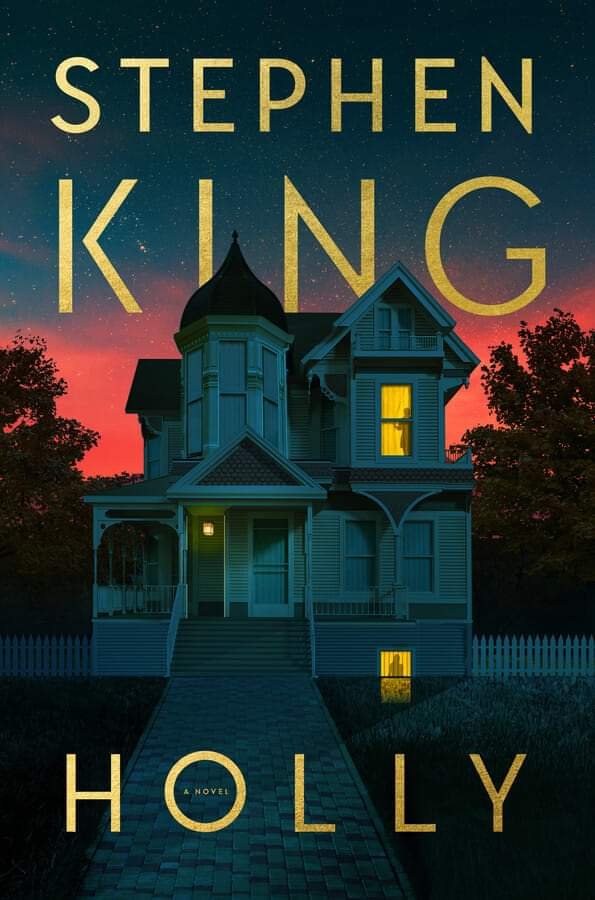
Reading Journal 2023: Holly
Reading Journal 2023: Holly
Author: Stephen King
Few authors are more automatic for me than King, which can be a bit exhausting given the sheer rate in which he writes and releases new material. Automatic buys though inevitably come with expectations. Expectations born from a history that proves even his weakest efforts are stronger than many of the authors writing today.
That doesn’t necessarily satisfy the disappointment though when one of books does fall short of those lofty expectations. Let me be clear- the writing here is good and perfectly in line with King’s sensibilities and style. As is common for me though, my affection for a given story tends to rise and fall with the characters, and unfortunately they fell flat for me here.
Holly is, of course, a familiar character, now given her full due within a story that dovetails off If it Bleeds and plays off the Bill Hodges storylines. She’s recognizable, with King playing off some of her key characteristics, in particular her OCD, in order to recast the setting of If it Bleeds withiin the reality of Covid. Just fyi, coming into this one I had noticed a segment of agitated an angry readers expressing their negative feelings about King’s latest effort. I was curious what was setting this off. Turns out its because, at least within the subtext, King uses Holly to set up one of the big bads in view- anti-vaxxers and Trump supporters. I would actually encourage readers angry about that element to read the authors note at the end. It might still make you angry, but at least you’ll have some context for why he made that choice. In truth, its not so much a thematic point of the book as it is a way of fleshing out Holly’s character. If he had truly wanted the book to be preaching his politics he coul have easily woven that into the fabric of the story in a more definitive way. Personally, and speaking as someone who is in neither of those camps, I think King’s earned the right to write whatever story he wants at this point.
What disappointed me is the way most of Holly’s character gets narrowed in on one singificant emotional concern- Hodge’s death. The poblem being that this ultimately proves to be little more than a plot point in the story King is really interested in- an elderly couple who are also killers. Without spoiling what kind of killers they are, suffice to say that these characters simply did not draw me into the story. I found them to be deeply uninteresting, even though King, as he also says in his authors note, spent a goo deal of time researching them for the story. It doesn’t help either that we essentially know the mystery from the start, and are left watching Holly play catch up. Part of the intrigue is clearly supposed to be the chase an the solving of the murders, which the lack of mystery does tend to hamper. i think what I needed was richer bonds between Holly and the supporting characters, or more development of the supporting characters.
I would never decry a choice to read King- any King, and Holly is an easy enough read that it shouldn’t demand too much. For those who have really enjoyed Holly in his other books its probably worth picking up just for that alone. But, even set alongside some of his most recent efforts, I would say this is one of his weaker ones.
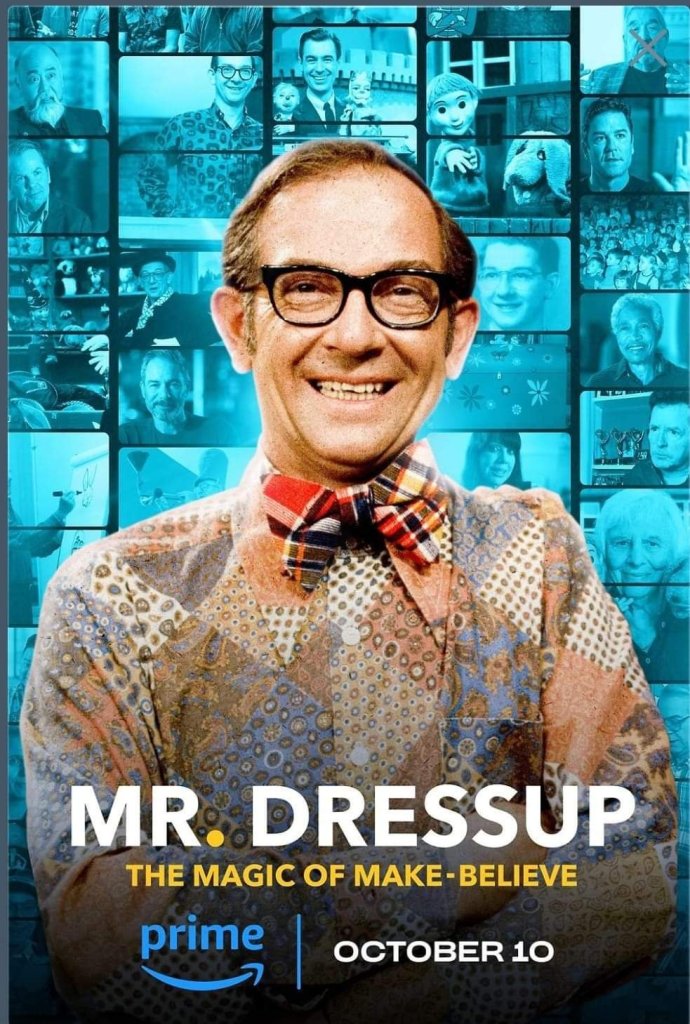
Film Journal 2023: Mr. Dress-Up: The Magic of Make Believe
Film Journal 2023: Mr. Dress-Up: The Magic of Make Believe
Directed by Robert McCallum
There’s not a whole lot to speak of I terms of creativity and structure. This is about as straightforward as they come when it comes to documentaries. That doesn’t really matter though when your subject is one if the truly good humans of our pop culture past. Consider this more a tribute then a revelatory work. On that front this was exactly what I would hope for from a celebrated portrait of the famed Canadian children’s entertainer. Simple, intimate, and deeply respectful.
As would be expected, extra points too for capturing a few moments of Coombs and Rogers. You’d almost think the world isn’t big enough to contain both personalities. But you also know the world is that much better with both of them in it.
Film Journal 2023: The Fall of the House of Usher
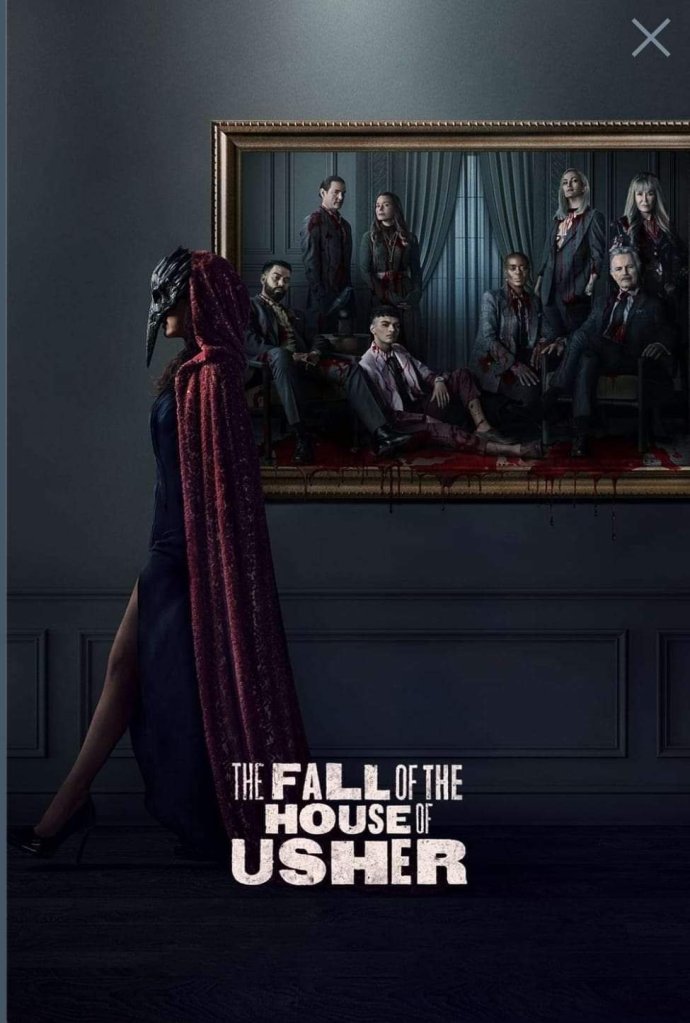
Film Journal 2023: The Fall of the House of Usher
Directed by Mike Flanagan
Flanqan’s stark and rapid fall from favor in my eyes might be the far more interesting story than this take on an Edgar Allen Poe adaptation. My love for Dr. Sleep met with my general disinterest in the rather tepid and benign haunting of hillhouse and my outright disdain for Midnight Mass, a show I found to be in bad faith and more than a bit deceptive.
The Fall of the House of Usher leans more towards the generally benign in terms of motivation, but also reaches for bland and uninspired. At the very least hill house had some visual intrigue. In Usher, not only is the storyline broadcast from the beginning, a massive cast keeps it steadily bound to its pefucantory and drawn out dialogue. For a cast this big, there are very few to no interesting characters to actually fill out the space and carry the load of that static story. Just to reiterate, this is about the house of Usher and its inevitable fall. And once we know who the house of Usher is, something that is made clear from episode one, every possible allegory and metaphor, which for Flanigan unsurprisingly comes from the relgious imagery, becomes obvious and clear.
It also doesn’t help that this is 8 episodes. Maybe this would have worked as a three parter? Even then, the blandness of the story would likely hamper this. But the experience of being dragged through 5 episodes of drawn out filler might have felt like less of an affront.
I hate to say it, but I’m almost out on this guy. Which saddens me, because I thought Doctor Sleep was flat out inspired.
Reading Journal 2023: Scary Stories For Young Foxes
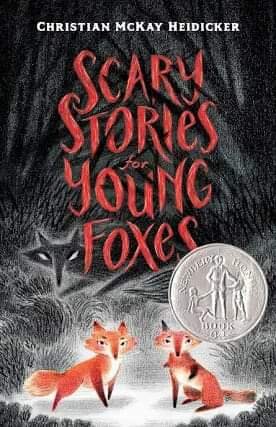
Reading Journal 2023: Scary Stories For Young Foxes
Author: Christian McKay Heidicker
I loved the premise- a group of young foxes (kits) want to hear a scary story. They are cautioned by their mother about someone called the “storyteller”. The storyteller tells the scariest stories of all. Which of course makes the young kits all the more curious. So they visit the storyteller, who proceeds to tell them a story.
I also really like the set up- the kits want to be scared. The storyteller offers them this-
“All scary stories have two sides,” the storyteller said. “Like the bright and dark of the moon. If you’re brave enough to stay to the end, the stories can shine a light ion the good in the world. They can guide your muzzles. They can help you survive.”
Which becomes an invitation to hear what the story is about. One of the best parts about the scary stories is the way the book roots the fear in the world these foxes know. Facing the fears that haunt the night are also a way for them to understand themselves. The book is wonderfully grounded in this way, exploring the tension that exists between the dueling sides of the natural world.
If I had one small critique it would be that the ending does try to sum things up into a singular moral lesson that I found to be slightly unsatisfying. The story brings together all the working threads in a nice, poetic fashion, but it sort of gets reduced to a platitude which I don’t think works as a way to address our fears. That’s a very small critique though of a book that is otherwise really strong with memorable characters, an engaging adventure, and a good dose of heart.
Film Journal 2023: Taylor Swift: The Eras Tour
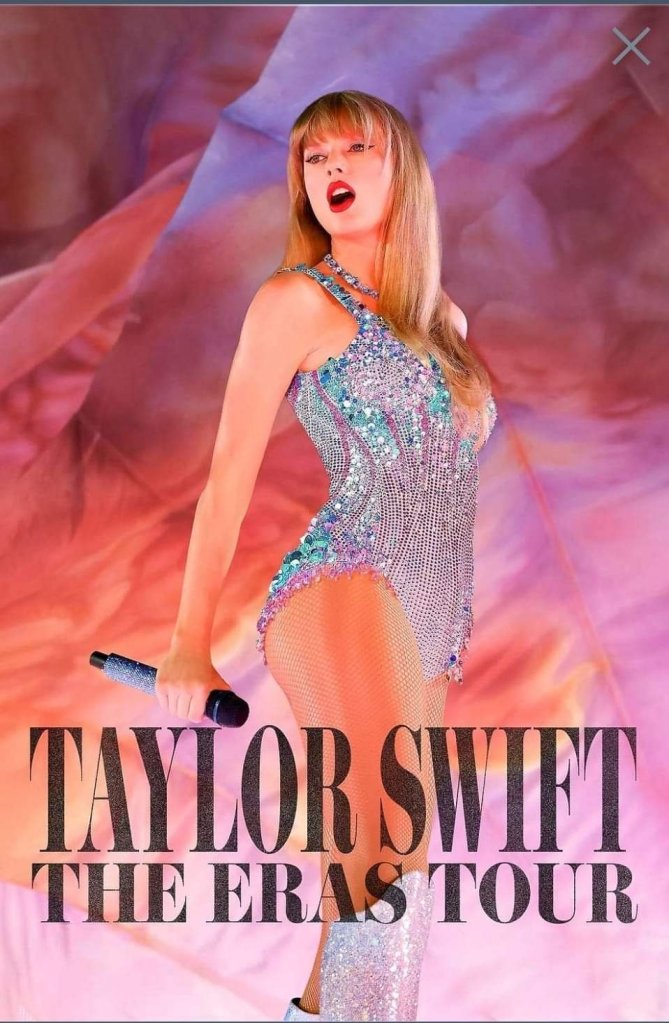
Film Journal 2023: Taylor Swift: The Eras Tour
Directed by Sam Wrench
If you are not a fan of Taylor and swifties drive you nuts, probably not something you want to invest in. For fans without the means and opportunity to see this tour live, this is a great way to experience it.
I’d say from the comfort of your seats, but a decent portion of my sold out screening filled the floor between the seats and the screen. The energy and excitement was undeniable.
I’m not sure if this is a sttength or a weakness of this on screen format. It’s a long haul, to be sure, and it runs the full sweep of Taylor Swifts albums. More importantly, the eras span different iterations of Swifts music. Given the diversity of my crowd when it came to age,.lengthy stretches of folklore and evermore don’t exactly inspire the same fervor for tween enthusiasts as Red and 1989. For some of us older ones, they were the highlights. The show is not structured chronologically, so that allowed her to arrange the eras in a way that interpersersed the crowd pleasers, but even then the younger ones in my showing were certainly stretched to their limits. That last hour stretch was an exercise in stamina for me.
As I often say though, it would seem strange to say that too much concert is ever a bad thing. Too much of a bad concert is a bad thing, and the Eras tour is nothing less than a spectacle. The stage production was truly awe inspiring. The number of costume changes maybe even more so. I think it’s also great that my theater showing did a preamble that helped set the stage for how to experience the show. Without that I feel like there could have been some uncertainty and frustration, and the theater gave full permission to sing along, to occupy the floor space and have our phones out. Or as they summarized it- have some fun. And this was definitely a big part of what makes this on screen experience work.
Reading Journal 2023: Fear Not: A Christian Appreciation of Horror Movies
Reading Journal 2023: Fear Not: A Christian Appreciation of Horror Movies
Author: Josh Larsen
I hold a deep appreciation for Larsen’s work as a Chicago film critic. He’s known as one of the hosts and critics at filmspotting, and also for his work at Think Christian. And I appreciate him on two levels.
First, his approach to film criticism blends his wealth of knowledge of the craft and his keen eye for the form with equal attention given to his personal experience. His reviews are never mere data points about the craft, they always anchor his opinions in an in depth analysis of why the film did or did not work for him personally on an experiential level. To this end he never shuts out other opinions, but rather invites them in to the conversation as equally valid viewpoints. And if that conversation is able to lead to a discussion about the objective nature of the craft and form, all the better.
Second, I really like how he approaches film as a Christian, building the mantra of Think Christian around the idea that there “is no such thing as secular”. His book Movies Are Prayers, released a number of years ago, was an intimate look at what informs his love of movies and film criticism, walking through how he bridges this intersection of faith and culture as a formative practice. He never demands a film to be anything, rather he engages all art from within his particular worldview.
His latest release, a book he wrote to tackle what might be one of the more precarious genres to engage within christendom, at least traditionally, takes a different approach than Prayers. Prayers seemed to be targeted at fellow film lovers, and more specifically fellow film lovers who are also people of faith, simply as a way to use his own approach to enrich our appreciation of film as a formative experience. Its very much designed to function as a liturgy. In Fear Not he appears to be reaching more for a kind of apologetic, simply one being targeted at Christians who might see the horror genre as being off limits for a christian film goer. And as he states in one of his earlier chapters, he is not so much encouraging christians to embrace horror as offering a window into why some Christians appreciate horror as a genre, encouraging each person to employ discernment in their own life while also calling them to consider not lobbying their own sensitivities on to others. He wants to make clear why the horror genre holds value for him, and how it plays a significant role in his appreciation of the form as a Christian.
Which brings me a slight critique of the books structure. While this appears to be his aim, the vast majority of the book, which is structured around different kinds of horror films (zombies, creature features, ghost stories, religious horror, psychological horror for example), is given to analyzing different films from a theological perspective, just to show how it is one can approach them as being something of value for both our faith and our understanding of personhood and the world. I feel like the missed opportunity here would be a chance to spend the earlier portions of the book building his case at the beginning, as it seems to me like his target audience will be unlikely to embrace his argument for horror given that they already hold a disposition that prevents them from watching the films he is discussing. Further, those with an aversion to horror on christian principle who do push through are likely to miss much of that application without the benefit of seeing those films. Had it layed out the case in the earlier chapters, and then used a series of analysis in the back half as an invitation to watch and see the films while putting some of the tools of film criticism and experience to practice, I think that could have been more effective.
That said, the work is there interspersed with the different kinds of horror films he is talking about. He touches on important considerations, such as an understanding of the horror genre helping to make us better readers of the horror genre present in scripture. Or helping understand the relationship between faith and fear, with the call to fear not being the foundation for the book. Or the ways horror can broaden our understanding of reality, or connect us more deeply to the reality of our physical bodies and minds. As he writes on body horror,
“Christ did not assume our flesh once, only to abandon it after his death. Rather, through his bodily resurrection he both affirms the goodness of the original creation, including our bodies, and points to a future in which we enjoy the goodness of embodied life as God intended it.”20 Conversely, a biblical view holds that the breakdown of the body—via illness, desecration, death—goes against God’s design. Decay and death are both the first enemy, in Genesis 3, and the last, as described in 1 Corinthians 15:26. And so our fear of mortality—of “this mortal coil,” as Hamlet would describe it—is both a physical and a spiritual one.”
Or his reapplication of Philippians 8 is particularly insightful
“(Paul’s) citation of the qualities in Philippians 4:8—“whatever is true, whatever is noble, whatever is right, whatever is pure, whatever is lovely, whatever is admirable”—is not meant to chastise his audience because they had been pursuing other, “unholy” things, but to encourage them to overcome the fear they held by seeking such qualities. Horror films encompass both the fear and the admiration. Not only do these movies honestly acknowledge that which terrifies us, but the most redemptive of them—the ones explored in this book—do so with an artistry that is true, noble, and admirable. Some of them even take us to the other side of our fears, to a lovely place of grace.”
As he suggests,
“One of the reasons the Bible remains a vital document, thousands of years on, is because it encompasses the entirety of our human experience, both the lovely moments and the ghastly ones. The world, after all, is a frightening place, in ways big and small, existential and intimate.”
And if this is the case, then, as he reflects, “If method is as much a part of the art form as meaning, then few genres are as fertile a playground for playing with film form as horror.” This should open up the horror genre as a place in which to find God, find ourselves, and indeed find one another. Which is a wonderful sentiment to hold on to for anyone perhaps wondering about its worth.
I will also add this. There are definite points of departure between Larsen and myself when it cones to him speaking from a Reformed perspecrive. Perhaps the most noted point of delarpture is where he begins with the concept of total depravity as his fundamental starting point (Monster Movies: Fear of Our Own Capacity For Sin). This frames the rest of the books theological joruney as one bent on individual redemption anchored in a larger promise for bringing us in to the new creation. For me, i find theological reonsnance in looking at a world enslaved to Sin and Death first, and allowing that to define the central problem that we face and fear.
That said, i don’t think theological differences should be a thing that prevents us from coexisting in fellowship, here as reader and author, and to be sure, I feel like Larsen brings an even headed and open minded approach to the table as a Reformed Christian. And certainly, as a fellow Christian I very much respect and have learned from his love and analysis of film, and I think he can bring some valuable observations to the table regarding the intersection of faith and fear. As a horror lover, I might not be the target audience for this book, but as a horror lover i gained a lot from the film analysis, and even came away with some touchpoints i can use with others who might find a love of horror to be irreconcilable with being a person of faith.
Japan, Culture, and Film Travels
This is an interesting article on Japanese philosophy
A few years back I did a new years resolution thing and travelled my way around the world through book and film. For each country I would watch a bunch of their films and read a mix of fiction and non-fiction (history, philosophy, culture, religion). There were some common througlines, especially relating to colonization, and I tried to emphasize in my studies and experiences the development of their local film industries. Common to each country was of course their relationship to the american film industry, given how it became a primary tool of modern colonization.
I found Japan to be a bit unique and hard to narrow down in that regard. This article touches on some of those quirks and particularities regarding Japanese philosophy, especially as it relates to cultural influence. In some sense, on the surface it appears that Japan just became western by way of political powers and influences. This of course becomes most obvious in the way that japanese culture and philosophy becomes westernized. And yet in some very real ways its identity remained shaped by its relationship to the East. You can see this in the development of its film industry. There are many aspects of its culture and philosophy that simply do not cater to the west and actually act as guards against western infiltration.
Much of this article gives voice to how that gives shape to a discussion about japanese philosophy and culture, wondering about whether its resistance to the trappings of western philosophy is not the absence of a japanese philosophy but the very basis for describing and defining its philosophy.
As I remember it said in one book, japanese filmmakers seemed perfectly okay with Americans retaining superficial and westernized readings of their philosophy, as they had learned how to use the infiltration of american film and culture to set themselves apart from the larger East.
In any case, brings back memories of those travels.
 The Stories of my Life