And all of us, with unveiled faces, seeing the glory of the Lord as though reflected in a mirror, are being transformed into the same image from one degree of glory to another; for this comes from the Lord, the Spirit. —2 Corinthians 3:18
“Imagine ordinary people arguing about sexuality and money and leadership and how to be faithful. Paul cuts underneath all those disputes to remind these day-to-day Christians that they are not ordinary people, but they have at the core of their existence an implosion of God’s holiness that reshapes and redefines everything. What counts finally is that the incursion of God’s holiness touches our lives and our life together, or it does not matter at all…
Paul wants, first of all, to keep Christians at Corinth connected to Jesus as the decisive point of their lives: “Such is the confidence that we have through Christ toward God. . . . all of us, with unveiled faces, seeing the glory of the Lord” (2 Cor. 3:4, 18). Paul makes a simple but crucial affirmation that it is exactly in Jesus, only in the Lord, that the full holiness of God has touched down in human life.
The church at Corinth is not called to pious, romantic, goosey religion but simply to practice the memory of Jesus and to let that memory be fully present tense. When that story of Jesus is present tense, we are able to sort out and identify all the empty claims where God’s holiness and God’s power for life do not reside, where God’s power for life is not embodied or enacted.”
Who was Asaph? A Levite and dependent of Gershon, the Son of Levi An appointed member in the house of God A seer or prophet who led a group of skilled poets and singers The superscription attributed to Psalms 73-83.
I got interested specifically 8n Psalm 73 when I came across scholar Walter Brueggemann making the case for it as the inspiration for Jesus’ parable of the Prodigal (Lost) Son.
A couple interesting notes: 1Surely God is good to Israel, to those who are pure in heart.
2 But as for me, my feet had almost slipped; I had nearly lost my foothold. 3 For I envied the arrogant when I saw the prosperity of the wicked.
At the front of this Psalm we see the disconnect between his experience of suffering and the prosperity that he sees in “the wicked”. As is common to passages like these, the he is meant to evoke the story of Israel, aligning “his” experience with the whole.
Now consider that the prodigal son symbolizes a scattered Israel seeking this prosperity in the far off lands, as it says. “4 They have no struggles; their bodies are healthy and strong 5 They are free from common human burdens; they are not plagued by human ills.”
‘This is what the wicked are like— always free of care, they go on amassing wealth.”
This section of the Psalm links the prosperity with their pride, which leads them to say “They say, “How would God know? Does the Most High know anything?” As the Psalmist submits, “Their mouths lay claim to heaven, and their tongues take possession of the earth.”
Now consider the disconnect between the inheritance in the prodigal son and a life pursuing the allures of such prosperity in the world. As the Psalmist says, their mouths lay claim to heaven, and their tongues take possession of the earth… “10 Therefore their people turn to them and drink up waters in abundance.”
This leads the Psalmist to lament. 13 Surely in vain I have kept my heart pure and have washed my hands in innocence. 14 All day long I have been afflicted, and every morning brings new punishments.
And yet, the Psalmist insists, “15 If I had spoken out like that, I would have betrayed your children. 16 When I tried to understand all this, it troubled me deeply 17 till I entered the sanctuary of God then I understood their final destiny.”
So what is the destiny? 18 Surely you place them on slippery ground; you cast them down to ruin. 19 How suddenly are they destroyed, completely swept away by terrors! 20 They are like a dream when one awakes; when you arise, Lord, you will despise them as fantasies.
Who is “they” in this passage. It’s important to remember the appeal in the beginning of the passage- surely God is good to “Israel”- and the ensuing point of tension- Israel is not prospering according to the promise afforded by God while the nations they were called out of and set apart from are. Similarly we find the concern- the personal allure the “he” in this passage is resisting and speaking out again as the voice of Israel- surely God’s promises are true and that faithfulness to God in the face of suffering is not in vain. The sense here and elsewhere in the story of Asaph is two fold- the prosperity of the surrounding nations and the temptation for Israel to give in to its allure.
In this light, this lament is not simply an insistence that God will destroy Israel’s enemies. More so its about showing that one’s trust in the promises of God proves true. It’s about helping to make sense of continued faithfulness when they do not. Here the Psalmist is drawing out the contrast not between good and wicked people but two different realities and different views of property- one that fades with its fleshly passions and one that gets swept up in the promised redemptive work of God. To attach oneself, or for Israel to attach itself to that which fades is to find itself handed a promise that inevitably is defined by terror, ruin, destruction based on lies (fantasies).
Now, cast this in to the light of the Prodigal (Lost) Son. We find a contrast between the son spending his inheritance in the allure of those far off places and its promise of prosperity, only to find that it all fades. Now hear the following words of the Psalmist and imagine them in the mouth of the older son in the parable:
23 Yet I am always with you; you hold me by my right hand. 24 You guide me with your counsel, and afterward you will take me into glory. 25 Whom have I in heaven but you? And earth has nothing I desire besides you. 26 My flesh and my heart may fail, but God is the strength of my heart and my portion forever.
Such a claim, especially when attached to the voice of Israel, evokes a vision of promise and hope in that which does not fade- heaven is a synonym for kingdom of God. And this is followed by the following proclamation:
27 Those who are far from you will perish; you destroy all who are unfaithful to you. 28 But as for me, it is good to be near God. I have made the Sovereign Lord my refuge; I will tell of all your deeds.
If we are imagining these words on the lips of the older son in the parable, who is representative of the Jewish religious leaders, the very ones calling for necessary Reform and a renewed call to faithfulness in the face of Rome and cohabitation with the allure of such prosperity, we can perhaps begin to see how Jesus’ story cuts through the tension of Psalm 73 by recasting the Psalmists hopeful lament and proclamation in the light of God’s redemptive work in Him as the fulfillment of God’s promised restoration. In the face of a scattered Israel and the Pharisees attempt to create clear lines between the enemy and the faithful here we find a story of Gods faithful “finding” of a lost Israel dispersed throughout a kingdom ruled by Rome and a corrupted Temple aligned with its promise of prosperity. The promise is not simply an inheritance handed to the faithful ones (the religious leaders), it is an inheritance rooted in the whole of Israel’s story. Thus the prodigals the religious leaders are complaining about (how can Jesus eat with such tax collectors and sinners) are demonstrative of the promised arrival of God’s kingdom on earth as it is in heaven. Careful relders then will note how criticisms of the older son (religious leaders or pharisees) throughout the Gospels are directly connected to their resistance of how God’s promise gets fulfilled, with the reclamation of the story of Israel in the person and work of Jesus setting the stage for the movement of the kingdom into all the earth. As Jesus says consistently in the Gospels, the very promise which motivates these religious leaders to faithfulness is the thing they are resisting, just as the older son does. Psalm 73 can help demonstrate why this resistance surfaces, giving us context and motivation for it, and perhaps growing empathy where we are likely prone to the very same things in our own place and time.
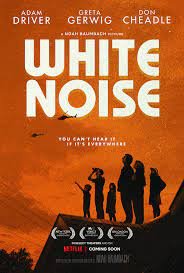
One of the final films to release wide and cap off the 2022 calendar year was Noah Baumbach’s ambitious and divisive adaptation of the sprawling and seemingly unadaptable novel, White Noise. Much digital ink has been spilled debating its merits and its failures outside of this space, and there’s no need to rehash that conversation here. What I did want to comment on though is this: the films depiction of people all facing immanent death with varied responses and approaches proved a fitting bookend to a cinematic year that was seemingly obsessed with such ruminations on our mortality. The critical darling topping many best of lists (my number 2 of the year), Charlotte Wells’ Afterson, remains a poignant reflection on the relationship between grief and memory. My number one of the year, Kogonada’s After Yang, weaves a similar reflection on memory and grief into an exploration of what it means to be human in light of our mortality. Even one of the most uplifting films of 2022, Marcel The Shell With Shoes On, masquerades as a subtle reflection on matters of living and dying, fitting well alongside the other stop motion feature nominated for best animated feature, Del Toro’s Pinocchio, which inadvertently takes his penchant for writing about the idea of resurrection and plays it into a sharp humanist reflection on mortality and nihilism. Not to be outdone, the crowd pleasing Puss in Boots: The Last Wish, a late game and largely successful addition to the animated feature category, tells a clear minded story about living a life amidst the reality that this is the only life we have to live before it all just fades away. From ashes to ashes, dust to dust.
Which all begs the necessary question- what was up with all the obsession with death, 2022.
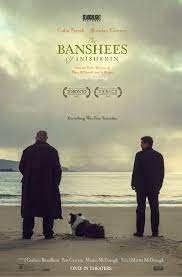
One could surmise that we are, now being three years removed from the start of a global pandemic, seeing the fruits of that collective experience. Such events can certainly inspire such reflections and themes. Given the fact that many of these projects tend to be in the works for a much longer period of time than 2 plus years suggests that this might have been more prophetic or coincidental than causation. In any case, the most interesting thing to me has been pondering, along with White Noise, the different kinds of responses evident in what were very different kinds of films. Look no further than the recent Oscar nominations for a prime example. If the large cast of characters in White Noise all respond differently to the same impending reality, Oscar pundits seem to be grappling with two very different films in what was largely considered to be a two horse race quickly turning into one, Martin McDonaghs quiet, studied and insightful The Banshees of Inisherin and the Daniel’s populist, bombastic and creativity drawn take on the superhero genre, Everything Everywhere All At Once. The latter now being assumed the run away winner.
Banshee’s draws its story from a simple friendship between two aged men who’s lives have been shaped by closely wrought connections forged from the soil of an isolated Irish village. One of the the two men finds himself attempting to reconcile the waning years of the second half of life with the reality that he will eventually be forgotten. He becomes obsessed with this notion of leaving a legacy that can outlast the mundanuty of his existence. He finds this legacy in the idea of music, and thus he wakes up one day deciding to trade his life long friendships for a chance to devote his time to something more important- writing a song.
The other man finds himself unable to comprehend how someone can throw away that which matters most in the present- friendship- in order to chase this notion of a legacy. To him what is eternal is kindness, those basic elements of being a good person. Embedded within this ideological claim are true, human emotions- fear, uncertainty, anger, expectation. Two people realizing the inevitability of their mortality responding in two very different ways. The film never reconciles this tension, rather it allows it to bring the honesty of the questions to the surface. If the reality of things is made apparent then, so are the lingering notes of hope that seem to fester in the shadows of such uncertainty. Standing on the shores of this isolated Irish village is where the cast of characters turns their gaze to the seeming possibility of something more, something larger than themselves, no matter how much this repeated refrain remains undefined. The purest definition comes, perhaps, in the honest expressions of their struggles, their grappling with fear and loneliness and restlessness. Struggles that only make sense in relationship or the lack there of. Struggles that come to bear through very real matters of life and death over the course of the film.
In contrast, Everything Everywhere All At Once sees the reality of our existence and its inevitable struggles through a very different lens. The struggles it highlights, namely an astute and deeply felt wrestling with loneliness and depression and the sheer force of accompanying nihilistic thoughts, infuses its idea of existence with a real sense of needing to find meaning and purpose in order to properly live. The focus is on the parallel stories of mother and daughter growing up in a world where their gender limits their worth and confines their identity to these culturally constructed limitations. From this the Directors tumble us into a variable montage of sequences and arcs that feel torn straight from the pages of Ecclesiastes- all is meaningless. So where do we go from here.
This feeling that all is meaningless plays into the idea that they see themselves as worthless, and in a very real sense the story strives to find a way to reconcile this struggle by presenting the working tension of kindness and love as momentary measures of real and tangible joy in an otherwise dark and pointless life. The film plays this out in clever ways using the multi-verse as a story and plot device, allowing this to uncover the feeling of a life plagued by what-ifs and wrong choices. Of all the versions of the mother that exist, the one we are following is established as the one who has failed, seemingly, to live up to her potential in every concievable way. She is deemed a categorical failure of a life, a feeling she has buried by projecting her struggles on to her daughter in told and unspoken expectations. In the daughters case, she is driven by a longing for reconciliation, of reconciling her own feelings of isolation and rejection both in concert and in tension with her mother. The mothers past trauma, being as she was rejected and abandoned by her father, forms the tension apparent in this relationship between mother and daughter, while the concert comes through their mutual and shared need for relationship. At the heart is this message that speaks to the idea of knowing that we are not alone as having power to counteract the tensions of our existence, something we all need in our own way. Which is where the larger subtext of its superhero premise leads to a greater moral- learning to fight with kindness and love can help to reveal for all of us the true enemy- nihilism marked by the inevitable reality of death and suffering,
This is then, I think, a story shaped by unspoken conflict- conflict between father and mother, wife and husband, mother and daughter, success and failures, business and tax collector, meaningfulness and meaninglessness, family and indvidual. This conflict gets a broader metaphorical treatment in the multi-verse by way of this growing and universal existential threat plaguing humanity at large, giving the real world conflicts a nearly spiritual and cosmic presence. I think this part is really well thought out and established and a beautiful expression of the films cultural presence. But its within these conflicts that I found myself left trying to make sense of seemingly opposing thematic ideas. For example, there is a temptation to read into this story a nihilistic take on the “everything is meaningless” phrase. There is a reading of this film that goes “everything is meaningless, therefore anything is possible”, meaning that there is no reason to get bogged down by failures and the could have-would have-should haves of lifes seemingly endless possibilities. Possibility means that we can find the good in anything and that we can let go not of one another but of our expectations of what must define worth and meaning. We create worth and meaning, and just as easily erase it depending on how we love. And when afforded a nihilistic assumption (that being this notion that the starting point of life is that all is meaningless) the film ends up betraying the honesty of its questions by simply sweeping the problem of death and suffering under the rug. Out of sight, out of mind, therefore just be kind and loving and it will all be good in an otherwise meaningless existence. I think the film fails to address the concerns it tables of both mother and daughter when it comes to the grander conflict of this worlds persistent struggle between what is and what we hope and long for things to be, and takes the easy road out by romanticizing the nihilistic foundation using easy and highly irrational appeals to manipulative emotions that, when examined prove incapable of actually addressing the problem of death and suffering.
As I ponder these two approaches, I find my mind returning to After Yang, and to one scene in particular. Thematically, the film draws out with a sure hand this delicate balance between the particular (the question of what it means to be Asian) and the universal (what it means to be human). This is captured in a memorable sequence where one of the characters is dialoging with the artificial life (Yang), who sits at the heart of the story, about whether there is more to this world than what we see on the surface, namely evoking this notion of God and the hope of there being something after death (bringing to the surface the emphasis of the films title). Here we can see the film’s intimate humanist concern, but it also transcends this as a way of pushing us into the questions that being human in relationship to a reality bigger than ourselves necessarily evokes. For artificial life to wonder whether it is programmed to believe in something more (God) leads to wondering whether humans are programmed to believe in something more. And if we are programmed in one way or another, what then is the purpose of this longing? Is it meant to reveal truth we otherwise couldn’t see (in terms of being programmed to believe). Is it meant to protect us against untruth (in terms of being programmed towards unbelief)? Is it to allow us to cope? To function? To survive an otherwise meaningless material existence? And what of emotion? Is it better to be okay with nothing being “after” or is not being okay with such a notion that makes us human?
However it is that we wrestle with this question, what seems pertinent to me is that to make sense of a reality where death and suffering exist means to find ways to afford such realities a redemptive quality, even where it seems unreasonable to do so. Perhaps this is the reason death played so prominently in 2022- affording the past few years a redemptive quality. In any case, it does seem fitting that this year’s Oscar’s will land squarely in Lent, bringing with it the prominence of its focus on suffering and death and our ability to afford it a redemptive quality. If Lent has anything to say it’s that sweeping the plain realities of this existence under the rug will not do. To this end I think Banshees proves to be far more honest and aware in its exploration of such matters. The cross was the reality. If Easter Sunday has anything to say, it’s that the foundation for this reality is not ashes to ashes, dust to dust, all is meaningless, but rather the creation-new creation story. In Jesus the kingdom has broken in, reframing and reorienting reality in the light of its redemptive force. We do not create meaning and worth in this sense, rather we locate it in the person and work of Jesus. Without such hope we are left with the dire honesty of Banshees or the illusionary notes of Everything Everywhere, both of which ultimately leave us somewhat stuck in this moment with no real way to reconcile the reality of death and suffering with a life lived in its shadows. The best we can do is allow it to turn us into cynics or simply ignore its truth in favor of irrational appeals to the power of individual circumstance and ability.
Lest we find ourselves simply stuck in this moment, let us imagine something more hopeful by seeding the power of true redemptive trajectory deep into the soil of these present moments of 2023.
I recently engaged in a discussion from one of the online groups I’m a part of that had to do with the following quote by Immanuel Kant:
Everyone is entitled to seek his own happiness in the way that seems to him best as long as it does not infringe the liberty of others in striving after a similar end for themselves.” – Immanuel Kant
I agreed and disagreed with the quote, suggesting that the idea might be saying something about the relationship between these two fundamental ideas- happiness and liberty- but it feels to me to be insufficient when it comes to saying something about what happiness and liberty in fact are in the truest sense of the words. In my opinion, the phrasing above gives us a way to locate what a lack of liberty is (oppression of the other, or infringement of another’s liberty). And it does offer us a definition of liberty which reads as “the ability to seek one’s own happiness”, thus suggesting that a truly liberated world is simply one where such seeking happens without infringement. I suggested that I remain skeptical of the idea that anyone is actually ever truly free in this way, and that while do think it is fair to say a world where oppression of the other exists is not a world that is truly liberated, we cannot assume that a world where everyone seeks their own happiness without infringement is in fact a liberated or true one. It is in this sense that I think the quote gives us a way to define a lack of liberty (infringement of liberty as oppression of the other), but it does not give us a way to make the positive claim about what liberty and happiness are.
I had some pushback on this, and thus I had been seeking out helpful resources or angles that might aid me in articulating, if only in my own mind, what it is that I was attempting to say in better and more coherent terms. This Podcast episode from The On Being Project was one such source, titled The Thrilling New Science of Awe and featuring author Dacher Keltner.
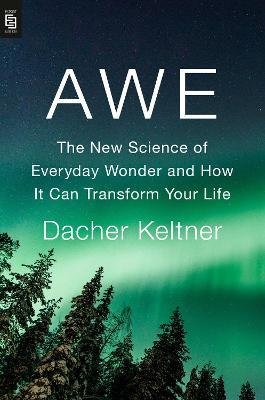
I had heard Dasher Keltner speak before regarding his work for Pixar as part of the research team for Inside Out. His recent book titled Awe: The New Science of Everyday Wonder and How It Can Transform Your Life is the result of years spent chasing after the idea of awe from a position of science and as a scientist. Awe, he argues, is the central and fundamental force of life and human experience. It is the central force of human meaning and that thing which has the power to grant us meaning. Awe sits at the center of our nervous system in the form of connective tissues, integrating a mass of ancient evolutionary functions into experiences which we (our bodiies) translate into sources of meaning, using this as a way to make sense of a world which otherwise would not make sense nor have any inherent meaning. For Keltner, Awe is the transcendent reality that we are describing when something seemingly moves us to see outside of ourselves, and it is rooted in the materiality of our bodies as a necessary means of connecting us back to the larger world. And if you pare back the essential role of Awe to its most basic and fundamental parts, even beyond any questions of what it means to thrive, it’s all rooted in a single driving force- survival.
One of the reasons he believes the science of Awe to be so crucial, even as the science remains resistant to exploring such an idea typically relegated to the fields of philosophy and religion, is that human function appears to be deeply tied to the question of meaning. In this interview he describes a crisis of meaning inherent within our present state of being as a society, specifically in the West where the language of Awe has largely been abandoned or reconstituted, and this is due to the rise of individualism in western nations relating to governing notions of liberty such as the one described by Kant. The way we relate to the world around us, to the technology we use, to societal structures and systems, to others, it all works in this libertarian fashion to narrow our sense of the world into a clearer sense of self, thus creating this assumption that happiness must mean the self operating without infringement from and by external realities. This in turn creates a crisis of meaning, as meaning, described as it is above, is something that exists external to us and which necessarily sets us in relationship to these external realities in a meaningful way. This in turn feeds what we could begin to describe as true happiness. If we simply define infringement as the inability to seek happiness however we want we are actually undermining the very liberty we think we value. This is something we can quantify and measure using science. Keltner, then, argues that the science of awe can help us regain a truer sense of meaning and thus a greater sense of happiness or joy framed by a defintion of liberty that actually has the power to say something about both its absence and its reality.
It’s worth restating here that what this highlights is that simply being free to seek our own happiness does not make us more happy. In fact, studies, or the science, can show the opposite is true. What we can draw from the science of awe is that happiness is less a choice than it is a by-product of our biological systems functioning in relationship to these experiential outcomes of our interaction with the world. That is: when we relate in proper ways to the truth about reality, This is precisely why I think the above quote is insufficient. Whether we want it to be true or not, what makes us happy is both inherent to our nature but also largely counterintuitive to competing desires of the self and subsequent addictions to the cult of the individual. In truth, truth is revelatory in nature. That’s what it means to experience it and thus gain knowledge of it. It, by its nature, imposes itself onto matters of the will which can then reform or conform it to a broadened sense of reality.
Its worth noting here that even with the helpful observations Keltner brings to the table by breaking open and introducing the science of Awe as a legitimate scientific exercise and interest, I don’t think even he pushes far enough in reestablishing the parameters for the larger discussion of meaning. There were a number of points of concession and potential inconsistencies that I noted in Keltners talk that I thought were interesting to consider in light of the crisis of meaning he is addressing:
He notes that as a scientist, the more he learns the more reductive he is forced to be when it comes to defining what reality is purely in scientific terms. If you have an experience of awe on a mountain top for example, and you learn to locate that experience within the functional and material processes of the body as evolutionary tools developed for survival, this forces one to adhere to a necessary progression of reductive reasoning. The meaning question on the other hand requires us to find a way back up the mountain, which is where the experience of Awe directs us. This creates a tension within our rational faculties that is not easily reconciled, something Keltner tips his hand towards.
He concedes that meaning is merely a narrative built from our experiences of Awe, which in turn can be manipulated (I’m thinking in terms of the whole made in the image of God versus making God in our image adage). This creates a tension for how it is that we can speak of liberty beyond the limiting and insufficient terms of the above quote by Kant, which relegates liberty to the idea of “seeking (ones) own happiness in the way that seems to him best as long as it does not infringe the liberty of others.” If happiness is rooted in our experience of Awe, and the science of Awe is able to establish proper boundaries for describing what true happiness is within that experience, then what must follow is redefining liberty in terms that allows the reality of Awe to infringe on our freedom to seek happiness in the way that seems best to us. This is where the problem arises in Keltners premise. Since he affords Awe a kind of godlike position over our existence, and since our experience of it can be manipulated, how do we then appeal to Awe as an authoritive voice in our lives and in this world in light of this present crisis of meaning without it simply tumbling back into the trappings of Kants quote which created the crisis of meaning in the first place?
He concedes that Awe must play the role of the transcendent for it to be relevant, even though it is located functionally in the body. He even goes on to say that people experience awe in different ways, relegating a relationship to the divine (church or religion) as simply one of many ways to experience and express what is in fact a singular material reality (nature, the arts being other examples). And yet he admits that, just as this can be manipulated into illusionary narratives of meaning, it requires an irrational leap in the faculties of our reason to place awe in the role of the transcendent, an agency that is able to give and afford meaning into our lives apart from the boundaries of the human will.
I have to think that when it comes to discussions about liberty or happiness, it is in their necessary reduction that they naturally lose their meaning and their power, which is why we formulate these narratives and allow ourselves to make these irrational leaps in reason to reclaim that sense of Awe. We intuitively know where Awe comes from (outside of ourselves), even if we can locate our ability to access it within the function of our bodies. In a very real sense this is why the Christian idea of incarnation still holds so much power for me. God came down the mountain at Sinai and dwelt with/in creation. God descended from above and took on flesh. God is the transcendent reality that now dwells within. Thus meaning making narratives become our means of making sense of our experiences of the Divine, using the limiting nature of human language and experience to set ourselves in relationship to the Divine as the source of our meaning. This allows us to locate ourselves properly within the very human structures and systems that afford us a way to live meaningfully lives in this present reality. When we assume that liberty is bound to the ability to define happiness in our own way we detach ourselves from the very thing that gives life meaning.- the idea that Awe actually has the power to shape and form our lives into truer forms of happiness and liberty. Sure, the caveat “as long as it does not infringe the liberty of others” might allow us to define the negative properly as oppression of the other, but the world this affords the supposed “liberties” of the individual or illusion of the liberated self, remains mired in falsehoods and untruths. In terms of the science of Awe, meaning emerges from persons and societies and communities existing in necessary relationships which do in fact infringe on our liberties, defined as it is above. This is what Awe naturally drives us towards.
Film Journal 2023: 80 For Brady Directed by Kyle Marvin Where to watch: now showing in most theaters
A perfectly charming and effortlessly likeable aged comedy based on a true story. It’s not often we get films for the above 60/70 demographic, but it’s always a pleasant surprise when we do. While this isn’t really laugh out loud material, and for a nearly 2 hour run time manages to keep things relatively simple and subdued, the chemistry keeps it afloat, and while I am not the target demographic I have to think it’s stays somehow relevant and relatable when it comes to navigating that stage of life.
I don’t think you need to like football to enjoy this film? I say that with a question mark becasue I do enjoy football. At the heart of this film are four lifelong friends who have aged together and done life together, and football just happens to be a Tradition, being the Patriots fans that they are, that they enjoy for the bonding rather than the game. It’s really about them more than anything else, with each of the four being given a nice subtext to round their characters out.
This is a safe bet, to be sure, but with the right company and life experience in tow, or even for a chance to sit with a cast of characters sporting a diffremt life experience than my own, I think this ends up playing a decent game. As they say in football, it doesn’t matter how you get it, what matters is the W. And I think this gets it.
Film Journal 2023: Knock at the Cabin Directed by M. Night Shyamalan Where to watch- now playing in most theaters
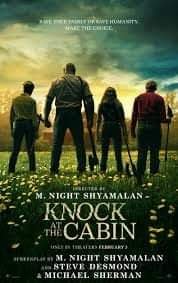
As a staunch M. Night defender, which seems par for the course for anyone who is a fan, I am pretty much here anytime he releases a new project. I have been particularly intrigued by Knock at the Cabin ever since picking up the book in preparation. I do like the book, but certain misgivings about some of its choices when it came to the story and execution left me convinced that this material would be a really good fit for M. Night as an adaptation. And beat for beat, start to finish, this left me feeling justified in my initial suspicions. Not only is this a great adaptation of the book, the changes it makes to the story perfectly address my misgivings about the source material.
Now, I want to be careful in articulating my feelings here, as one unfortunate byproduct of what are without a doubt complicated and polarizing feelings about M. Nights body of work is that, to speak positively about one of his projects tends to get interpreted as some notion of a “return to form”. I want to avoid such sentiments as I don’t think M. Night ever went out of favor for me, and I personally remain deeply appreciative of the fact that he refuses to cave to external pressures to become something that he is not. A not so popular opinion perhaps, but for as much as I enjoyed the film, Split almost went there for me. Which is why Glass remains one of my all time favorites, as it doubled down on what makes him who he is as a Director. Even with films like Old, a film that swings for the fences in ways that turned off the general audience, I still find much sustaining appreciation for the kind of stories he tells and the sort of emotinally laden and spiritually atune moments they can capture and evoke.
That is perhaps a lengthy caveat to say, Knock at the Cabin is both one of his most accessible works to date while also being true to form when it comes to his tendencies and his style. Along with being an extremely well structured film with near perfect pacing and a really sharp sense of focus, this is also a bonafide showcase for Dave Bautista. The whole cast is strong, but here M. Night proves his penchant for uncovering great performances from some unlikely places and giving performances a platform to demonstrate the full breadth of their talent.
Perhaps one of the most exciting aspects of this film is the way M. Night employs such strong religious imagery. This is steeped in biblical language, breathing this visual text into a western society that has perhaps become unfamiliar with the essential beats of the Christian story and other religious expressions. This film, given its use of the apocalyptic genre, makes one of the strongest cases for how to read revelation responsibly, to borrow a phrase from biblical scholar Micheal Gorman. Responsibly means recontextualizing a letter that speaks to its world into our present day with an eye for both the present evils and an eternal hope. The film delves into such topics as religious struggle and religious doubt, faith, conviction, hope, and the way these virtues align with a true expression of the divine. And true to M. Nights approach, he doesnt parlay these spiritual concerns into some otherworldly space, rather he imagines what it is for heaven to invade earth, for a striking christoformity to meet a cruciform imagination within a real world context. M. Night pulls from the source material a keen eye for bigger questions relating to a world where both good and evil seem to coexist in constant tension, shaping how it is that we engage it from one direction or another. He takes the particulars of this families experience, ripe with pertinant and real oppressive realities, and uses this to turn our eyes outward towards the world and upwards towards the divine with a redemptive and restorative lens. A powerful reflection on revelatory truth and genuine apocalyptic vision, and how it is that these things give us a way to make sense of the challenges of existence and the darkness that does persist. Where it does, love and beauty and light still remain. We simply need to engage it as particpants and image bearers.
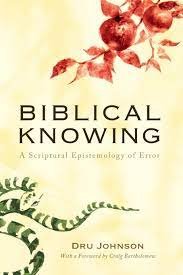
Delved into a new book called Biblical Knowing: A Scriptural Epistemology of Error by Dru Johnson. Thus far it has been a compelling look at how the world of the Biblical text understands knowledge and how that relates to different forms of knowing that we find in our world today. It starts by posing the following question:
“The Christian Scriptures could be theologically described as beginning and ending with an epistemological outlook. The first episode of humanity’s activity centers on the knowledge of good and evil. The final stage of humanity is pictured by Jeremiah as a universally prophetic and knowing society: “And no longer shall each one teach his neighbor and each his brother, saying, ‘Know the Lord,’ for they shall all know me, from the least of them to the greatest, declares the Lord” (Jer 31:34). What happens to knowledge in between?”
It then goes on to establish the following aim,
” The goal of this book is to lay the groundwork for a biblical theology of knowledge–how knowledge is broached, described, and how error is rectified within the texts of the Protestant Christian canon. Essentially, this study is meant to be a pry-bar, a tool to open the lid on the neglected idea that Christian Scripture might be developing robust descriptions of knowing that can direct us today. Proper knowing as it occurs in the Scriptures means that there are better and worse ways to know.”
What Johnson underscores early on is the idea that knowing is not merely limited to pragmatic forms of knowledge relating to functional and material processes and realities. As he writes,
“As we follow the story and language of knowing and error, knowing looks more like a process than a mechanism that yields a product called knowledge.”
He provides two early examples from the Pentateuch: “YHWH wants for Abraham to “know for sure” (ידע תדע) that his promises to him will come true (Gen 15:13). At first glance, it appears that “Abram knows that YHWH’s promises are veracious” accurately reflects something about Abram’s knowledge according to the narrative. However, we will find that defining this scene in terms of propositions alone cannot reflect Abram’s knowledge sufficiently…
Adam comes to know that the woman is his proper mate and states his discernment as a matter of fact, “This at last is bone of my bones and flesh of my flesh . . .”7 But it was the man’s ability to see that this was his mate that is constitutive of his knowledge and we are interested in how that seeing is honed. Moreover, the object of knowing is often God himself and thus what is meant to be known still lies outside the perspective of the reader (e.g., Exod 29:46). What could it possibly mean, after all, that Israel could know YHWH as her God, or that the man and the woman knew that they were naked?8 These could mean many things, none of which would be entirely plain objects called “knowledge” to us.”
Here he locates knowing within covenant terms. “Even where “knowing that” is stated in the biblical texts, it is often stated in terms that are explicitly covenantal or resemble covenantal relationship… So “knowing that” is contingent upon knowing-in-covenant-relationship.”
Now, to be sure, this is not simply citing the sort of covenantal concerns that we find in reformed circles where knowing is attached to faith and is seen as something imputed through God’s regenerating work. What Johnson is getting at more closely is participationist theology, which is what i personally adhere to. It speaks to the idea that God has and is doing a work in the world, and that knowing directly relates to particpating in the reality of this work. What is true about God’s work becomes something we then intimately know and hope in through relationship.
To bring it back to 2 Corinthians 5:7, we walk by (faithfulness), and not by sight. The phrase not by sight is often used to denote some sense of blind “belief”, a purely pragmatic form of knowing, when in fact seen and faithfulness actually conote two different ways of knowing, one that is centered on participation in the new reality God’s work brings about in the world (the earthly tent of 2 corinthians 5) rather than mere knowledge of its claim. This is made obvious by verse 8 and 9, which move to attach faithfulness directly to matters of participation in the Kingdom of God (the eternal house of chapter 5).
As Johnoson writes, “The Scriptures appear most concerned that people know what it’s like to be a knower primarily as an obeyer of YHWH and Jesus respectively. Knowing appears as a skill, figuring out to whom we should listen, where we should look, and how we should understand what is being said… It seems that we need both the descriptive and prescriptive view of knowing. The Christian Scriptures give us both: the way knowing is supposed to work and how it actually works. Further, the Scriptures describe in detail how the attempt to know goes horrifically wrong.”
If you are interested in participationist theology, Michael Gorman penned one of the seminal works on the subject in The Death of the Messiah and the Birth of the New Covenant: A (Not So) New Model of the Atonement, or Participating in Christ: Explorations in Paul’s Theology and Spirituality
Film Journal 2023: Missing Directed by Nicholas Johnson and Will Merrick
There is a simple and satisfactory summation i could employ here to say, if you enjoyed searching you will likely enjoy Missing. However, part of what makes Missing a successful follow up to Searching, the Directors previous debut, is viewing the two films in concert with one another. Beyond the shared style and approach, both films telling their stories entirely through the employment of external screens and devices, Missing provides the filmmakers with an opportunity to build on what they did with Searching by exploring different techniques and ideas. This adds a dimension of fun and play to the natural exercise of following the clues along with the on screen characters (with different scripted clues being offered to us as viewers along the way) and putting the different pieces of the puzzle together. It helps this story to stand apart and be/do it’s own thing.
One suggestion- avoid the trailers if you can. Go into this cold and enjoy the whole experience without the spoilery plot points from the trailer lingering in your mind. That will help give the first half of the film far more mileage. That aside though, this is a solid sophomore effort that proves itself with its attention to detail, some solid casting, and strong pacing. There’s nothing too demanding here, but it earns the sentimentality and the necessary tension befitting a solid, low grade thriller.
Was just thinking about a trip Jen and I took back in 2008 from Winnipeg to California and back around through Wyoming and Montana, driving straight through the Arizona desert heat in our 2005 Ford Focus (which I’m still driving) without air conditioning. Oi.
Somewhat inspired by a book I read recently called the Power of Moments, my thoughts wandered to this trip after making myself a cup of tea from celestial tea. Its funny how all these years later I still find a simple tea bag inciting a very real feeling of nostalgia paired with vivid memories, and all because of a spontaneous decision to make a detour and visit the celestial tea factory.
It wasn’t just the tea. It is marked on either side by a trip to see the hotel from the shining
walking across the royal gorge
and picnicking in the garden of the gods
revelling in scoring a $1 dollar stay the previous night in a fancy downtown Denver hotel far beyond our means and pretending like we belonged with the other guests casually enjoying 9.p.m. free cookies and milk in our complimentary robes
and arriving at our final destination of the day- a bed and breakfast in Durango where the hot tub pictured below provided us with a view of one of the most fantastic sunsets we have ever experienced.
Film Journal 2023: Women Talking Directed by Sarah Polley
One of the most striking characteristics of Sarah Polley’s much praised adaptation of a similarly successful novel by Miriam Toews, a novel I have not read (just for context), is its narrowed scope. Based on my limited knowledge of the material I expected to find a historical epic. What I found instead is a studied and largely restrained portrait of a group of oppressed and abused women residing on a colony which is mostly contained to a spacious loft in a farmyard barn. This is about as intimate as it gets when it comes to storytelling in film, and much of the run time is given to sitting with this cast of women and listening to them converse and debate the pros and cons of leaving the men of the colony, staying and forgiving, or staying and fighting back- the three central options that lie in front of them.
These conversations become a way into the stories of these individual women, who themselves stand as a representation of a much larger cast of women who remain unseen beyond the confines of this loft. In fact, what makes this study so fascinating and powerful is the fact that all of the tension that does exist remains unseen and out of sight. We barely see the men, beyond a single young man sympathetic to their cause and willingly lending his services as a scribe and a reader. We only hear about them and experience the conflict through their dialogue. We also don’t see much in terms of potential conflict within the women either. For the most part what we find is a relatively unified group made up of different generations with slightly different perspectives and vantage points. This generational gap then becomes the visual means by which the film finds its thematic core, especially when it comes to one of its key interests- forgiveness.
What is forgivness. Should one forgive. What does it look like to forgive. These are questions that form the emotional and spiritual concern of this present point of crisis and decision, and these questions provide a powerful basis for exploring the relationship between parent and child and between the one and an inherent responsibility to the whole community. Coming to realize that none of them act alone and that no one indiviual decision can be made apart from a concern for the whole makes up the fabric of what becomes not just a story about revolution and change in a world where the womens voice has been silenced, but a powerful story about the role of faith and its relationship to hope and love. There is a moment in the film where we see this group of women, having fought through the pain and horror of the decision that lies in front of them, clapsing hands and reciting a familiar hymn. It’s one of the moments where we suddenly break away from the loft and see how the spirit of their conviction holds the power to enact very real change, and as the words of the song carry across the fields and into the far corners of the colony, it inspires us as viewers to believe and hope and love with them into a better reality.
And it should be noted, while this material is heavy stuff exploring dark realities, Polley gracefully writes these characters as ones who are not simply defined as the victim. The film us infused with beautiful moments of humor and joy and life all the same, reminding us of the privilege of simply getting to sit with these characters, not simply to listen but to know who they are in the fullness of their lives, their desires and their dreams.















 The Stories of my Life