Different Ways of Knowing in the Biblical Narrative

“We walk by faith and not by sight (2 Cor 5:7).”

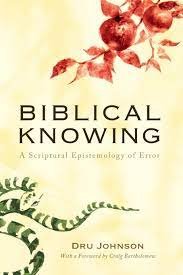
Delved into a new book called Biblical Knowing: A Scriptural Epistemology of Error by Dru Johnson. Thus far it has been a compelling look at how the world of the Biblical text understands knowledge and how that relates to different forms of knowing that we find in our world today. It starts by posing the following question:

“The Christian Scriptures could be theologically described as beginning and ending with an epistemological outlook. The first episode of humanity’s activity centers on the knowledge of good and evil. The final stage of humanity is pictured by Jeremiah as a universally prophetic and knowing society: “And no longer shall each one teach his neighbor and each his brother, saying, ‘Know the Lord,’ for they shall all know me, from the least of them to the greatest, declares the Lord” (Jer 31:34). What happens to knowledge in between?”

It then goes on to establish the following aim,

” The goal of this book is to lay the groundwork for a biblical theology of knowledge–how knowledge is broached, described, and how error is rectified within the texts of the Protestant Christian canon. Essentially, this study is meant to be a pry-bar, a tool to open the lid on the neglected idea that Christian Scripture might be developing robust descriptions of knowing that can direct us today. Proper knowing as it occurs in the Scriptures means that there are better and worse ways to know.”

What Johnson underscores early on is the idea that knowing is not merely limited to pragmatic forms of knowledge relating to functional and material processes and realities. As he writes,

“As we follow the story and language of knowing and error, knowing looks more like a process than a mechanism that yields a product called knowledge.”

He provides two early examples from the Pentateuch:
“YHWH wants for Abraham to “know for sure” (ידע תדע) that his promises to him will come true (Gen 15:13). At first glance, it appears that “Abram knows that YHWH’s promises are veracious” accurately reflects something about Abram’s knowledge according to the narrative. However, we will find that defining this scene in terms of propositions alone cannot reflect Abram’s knowledge sufficiently…

Adam comes to know that the woman is his proper mate and states his discernment as a matter of fact, “This at last is bone of my bones and flesh of my flesh . . .”7 But it was the man’s ability to see that this was his mate that is constitutive of his knowledge and we are interested in how that seeing is honed. Moreover, the object of knowing is often God himself and thus what is meant to be known still lies outside the perspective of the reader (e.g., Exod 29:46). What could it possibly mean, after all, that Israel could know YHWH as her God, or that the man and the woman knew that they were naked?8 These could mean many things, none of which would be entirely plain objects called “knowledge” to us.”

Here he locates knowing within covenant terms.
“Even where “knowing that” is stated in the biblical texts, it is often stated in terms that are explicitly covenantal or resemble covenantal relationship… So “knowing that” is contingent upon knowing-in-covenant-relationship.”

Now, to be sure, this is not simply citing the sort of covenantal concerns that we find in reformed circles where knowing is attached to faith and is seen as something imputed through God’s regenerating work. What Johnson is getting at more closely is participationist theology, which is what i personally adhere to. It speaks to the idea that God has and is doing a work in the world, and that knowing directly relates to particpating in the reality of this work. What is true about God’s work becomes something we then intimately know and hope in through relationship.

To bring it back to 2 Corinthians 5:7, we walk by (faithfulness), and not by sight. The phrase not by sight is often used to denote some sense of blind “belief”, a purely pragmatic form of knowing, when in fact seen and faithfulness actually conote two different ways of knowing, one that is centered on participation in the new reality God’s work brings about in the world (the earthly tent of 2 corinthians 5) rather than mere knowledge of its claim. This is made obvious by verse 8 and 9, which move to attach faithfulness directly to matters of participation in the Kingdom of God (the eternal house of chapter 5).

As Johnoson writes,
“The Scriptures appear most concerned that people know what it’s like to be a knower primarily as an obeyer of YHWH and Jesus respectively. Knowing appears as a skill, figuring out to whom we should listen, where we should look, and how we should understand what is being said… It seems that we need both the descriptive and prescriptive view of knowing. The Christian Scriptures give us both: the way knowing is supposed to work and how it actually works. Further, the Scriptures describe in detail how the attempt to know goes horrifically wrong.”

If you are interested in participationist theology, Michael Gorman penned one of the seminal works on the subject in The Death of the Messiah and the Birth of the New Covenant: A (Not So) New Model of the Atonement, or Participating in Christ: Explorations in Paul’s Theology and Spirituality

Film Journal 2023: Missing

Film Journal 2023: Missing
Directed by Nicholas Johnson and Will Merrick

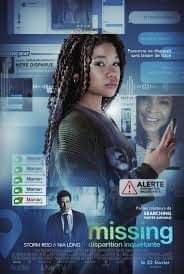
There is a simple and satisfactory summation i could employ here to say, if you enjoyed searching you will likely enjoy Missing. However, part of what makes Missing a successful follow up to Searching, the Directors previous debut, is viewing the two films in concert with one another. Beyond the shared style and approach, both films telling their stories entirely through the employment of external screens and devices, Missing provides the filmmakers with an opportunity to build on what they did with Searching by exploring different techniques and ideas. This adds a dimension of fun and play to the natural exercise of following the clues along with the on screen characters (with different scripted clues being offered to us as viewers along the way) and putting the different pieces of the puzzle together. It helps this story to stand apart and be/do it’s own thing.

One suggestion- avoid the trailers if you can. Go into this cold and enjoy the whole experience without the spoilery plot points from the trailer lingering in your mind. That will help give the first half of the film far more mileage. That aside though, this is a solid sophomore effort that proves itself with its attention to detail, some solid casting, and strong pacing. There’s nothing too demanding here, but it earns the sentimentality and the necessary tension befitting a solid, low grade thriller.

All In A Tea Bag

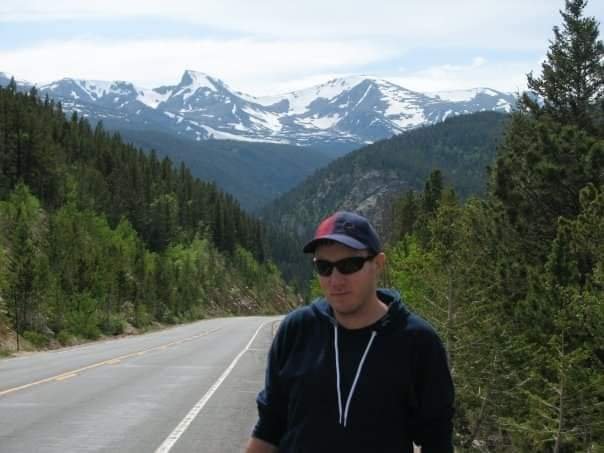
Was just thinking about a trip Jen and I took back in 2008 from Winnipeg to California and back around through Wyoming and Montana, driving straight through the Arizona desert heat in our 2005 Ford Focus (which I’m still driving) without air conditioning. Oi.

Somewhat inspired by a book I read recently called the Power of Moments, my thoughts wandered to this trip after making myself a cup of tea from celestial tea. Its funny how all these years later I still find a simple tea bag inciting a very real feeling of nostalgia paired with vivid memories, and all because of a spontaneous decision to make a detour and visit the celestial tea factory.

It wasn’t just the tea. It is marked on either side by a trip to see the hotel from the shining

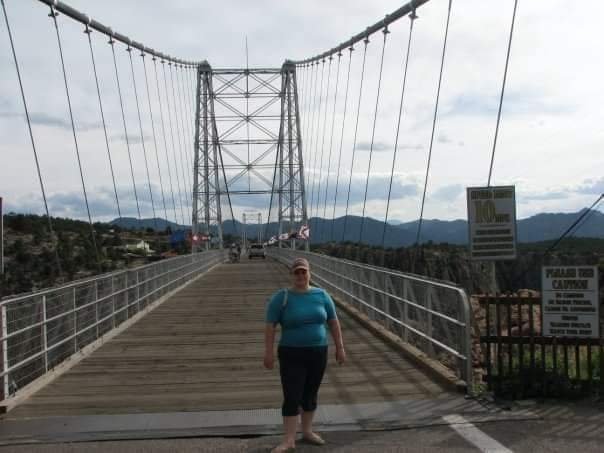
walking across the royal gorge

and picnicking in the garden of the gods

revelling in scoring a $1 dollar stay the previous night in a fancy downtown Denver hotel far beyond our means and pretending like we belonged with the other guests casually enjoying 9.p.m. free cookies and milk in our complimentary robes

and arriving at our final destination of the day- a bed and breakfast in Durango where the hot tub pictured below provided us with a view of one of the most fantastic sunsets we have ever experienced.

All in a tea bag

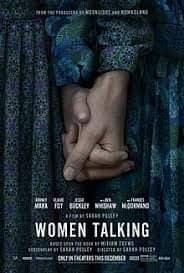
Film Journal 2023: Women Talking

Film Journal 2023: Women Talking
Directed by Sarah Polley

One of the most striking characteristics of Sarah Polley’s much praised adaptation of a similarly successful novel by Miriam Toews, a novel I have not read (just for context), is its narrowed scope. Based on my limited knowledge of the material I expected to find a historical epic. What I found instead is a studied and largely restrained portrait of a group of oppressed and abused women residing on a colony which is mostly contained to a spacious loft in a farmyard barn. This is about as intimate as it gets when it comes to storytelling in film, and much of the run time is given to sitting with this cast of women and listening to them converse and debate the pros and cons of leaving the men of the colony, staying and forgiving, or staying and fighting back- the three central options that lie in front of them.

These conversations become a way into the stories of these individual women, who themselves stand as a representation of a much larger cast of women who remain unseen beyond the confines of this loft. In fact, what makes this study so fascinating and powerful is the fact that all of the tension that does exist remains unseen and out of sight. We barely see the men, beyond a single young man sympathetic to their cause and willingly lending his services as a scribe and a reader. We only hear about them and experience the conflict through their dialogue. We also don’t see much in terms of potential conflict within the women either. For the most part what we find is a relatively unified group made up of different generations with slightly different perspectives and vantage points. This generational gap then becomes the visual means by which the film finds its thematic core, especially when it comes to one of its key interests- forgiveness.

What is forgivness. Should one forgive. What does it look like to forgive. These are questions that form the emotional and spiritual concern of this present point of crisis and decision, and these questions provide a powerful basis for exploring the relationship between parent and child and between the one and an inherent responsibility to the whole community. Coming to realize that none of them act alone and that no one indiviual decision can be made apart from a concern for the whole makes up the fabric of what becomes not just a story about revolution and change in a world where the womens voice has been silenced, but a powerful story about the role of faith and its relationship to hope and love. There is a moment in the film where we see this group of women, having fought through the pain and horror of the decision that lies in front of them, clapsing hands and reciting a familiar hymn. It’s one of the moments where we suddenly break away from the loft and see how the spirit of their conviction holds the power to enact very real change, and as the words of the song carry across the fields and into the far corners of the colony, it inspires us as viewers to believe and hope and love with them into a better reality.

And it should be noted, while this material is heavy stuff exploring dark realities, Polley gracefully writes these characters as ones who are not simply defined as the victim. The film us infused with beautiful moments of humor and joy and life all the same, reminding us of the privilege of simply getting to sit with these characters, not simply to listen but to know who they are in the fullness of their lives, their desires and their dreams.

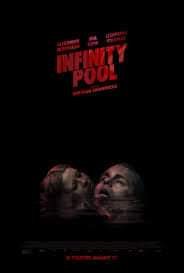
Film Journal 2023: Infinity Pool

Film Journal 2023: Infinity Pool
Directed by Brandon Cronenberg

Is this officially continuing the eat the rich trend from 2022? In part, although I’m still mulling over the fact that the main character, played by Alexander Skarsgard is actually an impoverished writer who “married” into money. The characters that surround him and the vacation resort him and his wife travel to in order to find inspiration for his book however? Money.

Early on in the film we are given a portrait of this resort as being isolated from the world that exists outside its gates. Outside the gates is where the citizens of this city live. As long as the rich travellers ignore this world they can retain their bubble. It’s when these two worlds collide that this bubble threatens to burst. It is precisely this point of contact the Director, the younger of the Cronenbergs, is looking to examine and explore.

If you have seen Possessor you know his penchant for telling his story using strange and pychadelic visual sequences. This is a way of getting inside the heads of the characters, a way of pulling out the internal battles waging within so as to say something about it. We see much of this on display here, although I found this story to be more accessible and straight forward on that front, for better or for worse. One of the key interests here is the emphasis Cronenberg gives to that internal battle within, playing around with serious questions about the nature of man. Who are we truly when the veil is pulled back, and how does that relate to the controlling systems that surround us. What is it that our innate creature ultimately desires. Mileage might vary on how well he formulates these questions and affords them a resolution, or at least a solid platform on which to ponder them from. His distinct visual style I think will also isolate some and compell others. But I do think the ideas here are ambitious and worthwhile.

I will say that something here kept me at a bit of a distance. The power of Possessor was that it demanded a lot of processing and brain power to unpack. And the more I thought about it and dissected it the more compelling the film was. Given that this is slightly less demanding I find myself with less to process and less desire to linger with it and think about it further, which unsettled my sense of just how strong the film was as a whole. I would be interested to see how a rewatch might reformulate that, but one suspsiciton that I have towards that end is that I had a hard time connecting to Skarsgard’s character. Goth is great of course, but it is Skarsgard who is meant to carry the films thematic force. Part of it is that he is written as a sort of flat, one note persona. Someone whom we meet in the absence of inspiration, and as the story unfolds we end up sort of doubling down on this aspect of his persona. There just wasn’t a whole lot of range on display, leaving me somewhat at a distance.

Still enjoyable though, and worth watching if you are fan of the younger Cronenbergs work. Be forewarned- this gets more than a bit out there with its sensibilities and subject matter, so it definitely won’t be for everyone

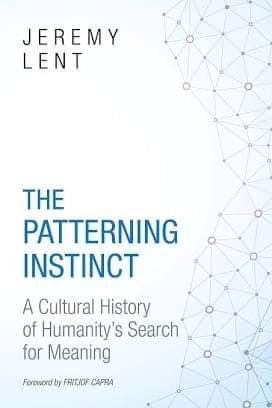
Reading Journal 2023: The Patterning Instinct: A Cultural History of Humanity’s Search For Meaning by Jeremy Lent

Reading Journal 2023: The Patterning Instinct: A Cultural History of Humanity’s Search For Meaning by Jeremy Lent

Reading this book actually took me back to last year and delving in to The Dawn of Everything: A New History of Humanity by David Graeber. Slight difference in focus, thesis and scope, but a definite shared concern for reimagining humanities history in light of the evidence and allowing that to shape how it is that we see our place in this world, or better yet, our place in relationship to it.

Lents interest, as the title suggests, is in exploring how it is that humans have arrived at the idea of a meaningful existence. This question, as he will go on to flesh out, has much importance when it comes to how it is that we exist meaningfully in this world. The ebb and flow of history certainly demonstrates the possibility of negative and positive potentials when it comes to the how. Thus Lent posits that it’s not only important to locate how humanity distinguishes itself as a functioning creature, but also how humanity remains connected to the larger world it exists within.

For Lent, the journey begins with overwriting popular histories of man in contest with nature with current theories regarding humanities complex relationship to its environment and to the human, socially bred systems that guide us. Here he borrows from Graeber in pushing back against assumptions which want to draw humanity’s history along linear lines from less civilized to civilized, or premodern to modern, or Neanderthals to intelligent species. Lent spends just as much time as Graeber in dismantling some of the prominent thinkers writing on a popular level, which includes the likes of Pinker and Dawkins. Not that these thinkers are entirely wrong or uninformed, simply that that they fundamentally misunderstand the evidence of history and science regarding how it is that humanity came to be and how early hominids held the very same markings of what we might call civilized society today.

If Graeber takes a big picture view, Lent dials things down concerning the question of what makes us human to something he describes as the patterning instinct, the key marker of our cognitive history, which is what distinguishes humanity from all other species. It is within these patterns that we find humanities penchant for both cooperation, communication, and perhaps most importantly metaphor/symbolism which help us make sense of reciprocal relationships around us. It is perhaps more true to say that we create meaning through our ability to both think and speak cooperatively it in proper relationship to our environment than it is to say that such meaning is sought.

Now, here is a point of disagreement I have with Lent, and it is a pretty strong one. There is a sense in which he appeals to metaphor to help us see how humans can be defined as human because of our need to think in necessary binaries- light and dark, good and evil. And yet as he unfolds the larger narrative of humanity’s mythic consciousness he caters to an all too common portrait of religious development and consciousness. While attempting to place religious thought as the natural outcome of our need for metaphor and symbolism in langauge and thought, he locates the problem with religion as a movement from polytheism to monotheism. His end goal is to uphold East and West as representing two different trajectories in this regard, with the West ultimately emerging as the colonizing force through its appeal to monotheism as a means of enacting binaries between us and them. Part of this movement then becomes a shift from humanity operating in relationship to nature (once upon a time seen to be either the resident of the gods or the gods themselves) to humanity operating within a split level world where nature is bad and the transcendent is good, be it by the divine images that reside in the heavens or by the later sciences that would come to define the worship of the enlightenment. There is actually a lot here that I share in terms of value, interest and concern. I do think there are problems inherent in the west and that the enlightenment has proved wanting, and I do think this has to do with no longer adhering to the simple value of living in relationship to our environment and the other. But I disagree with his analysis of religion and religious development, especially his heavy emphasis on christianity as one that upholds this split level view positing the spiritual body/kingdom in contest with the material world/self. It in fact pushes against such a view. He makes multiple references to christian texts for example that do not adhere to some of the better scholarship, and ironically falls into the very trappings he is looking to deconstruct by appealing to wrongly informed histories to locate a kind of linear movement from less enlightened to more enlightened.

The end result leaves him attempting to weave his thesis into concrete and practical assumptions concerning the truth of meaning in this world in ways that felt a bit dishonest and certainly unable to acknowledge it’s own appeal to irrationality. He wants to lay out meaning as created while also claiming the freedom to make multiple claims about meaning as given truths that should or must guide our actions. Its perhaps ultimately not the fact that he does this but rather that he doesn’t acknowledge these leaps in reason that felt most frustrating, especially when half the book is disguising itself as a wrongly placed critique of religion and religious development.

Lots still though to mull on, and overall offers a helpful push back on certain ways of thinking according to western paradigms and allegiances. I think one learning that really stuck out for me is how he unpacks the connection between our patterning instinct, honed as it is to find meaning in this world, and our being wired for metaphor and symbolism. It permeates everything, even if the langauge of the West has muddled it and polluted it, and reenchantment, or recovery of meaning, begins with a recovering the power of language and story as part of the essential human distinctive.

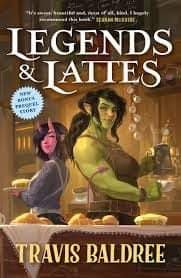
Reading Journal 2023: Legends and Lattes: A Novel of High Fantasy and Low Stakes by Travis Baldree

Reading Journal 2023: Legends and Lattes: A Novel of High Fantasy and Low Stakes by Travis Baldree

Just to set up my experience with this book. I first heard about it early last year when it started to show up in seemingly every think piece, podcast and online discourse. For a book that had seemingly muscled itself into these conversations though, it proved impossible fo find. It is what you might call an unknown “discovery’. A small book by an unknown author that explodes on to the scene via word of mouth. Unlike film, when a book experiences this phenomenon it means it sells out in a very short amount of time, and to print more generally takes a good while.

So here we are over 10 months later, the book finally getting a rerelease, this time with an added prequel attached at the end. The verdict? I get why it has been such a hit with a wide cross section of readers. It is high fantasy, but with a very grounded, down to earth and real world approach. Sure, the world might be populated with unfamiliar creatures such as elfs, dwarfs, orcs, gnomes, and weird spider like monsters called a scalvert queen. It even has a dire cat. But it also tells the simple story of one such Orc named Viv who, having tired of life as a constant adventurer lived by way of muscle and sword, desires to start afresh by relocating to a quiet, unassuming village and opening a coffee shop, a new drink she happened across while on one of her adventures.

The book is an easy, undemanding read (hence the low stakes), and for high fantasy avoids the complicated world building and details you sometimes find colouring the genre. This is the sort of book you can finish in a couple sittings, a feel good story meant to endear you to its characters and leave you with a smile befitting a well made latte. And I think it succeeds on this front. I won’t be surprised to see this made into a series or a film someday.

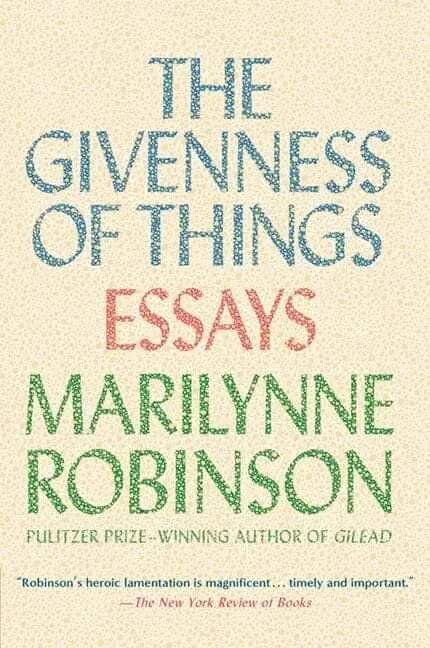
Reading Journal 2023: The Givenness of Things: Essays by Marilynne Robinson

Reading Journal 2023: The Givenness of Things: Essays by Marilynne Robinson

At one point Robinson muses about the challenges of being both an academic and a Christian. She describes how when people discover she is a Christian it tends to result in shock and confusion.

In truth, the identifying feature that is probably more shocking is the fact that she is a Calvinist. Imagine my disillusionment then when I found myself being won over by some of her arguments for entertaining a Calvinist perspective on the givenness of things, a title which is essentially captured through a series of reflections which attempt to bridge the gap between meaning and reality. Robinson demonstrates a knack for pulling out the strengths of the system while simultaneously challenging some of its most maligned and controversial positions. Just as there is such a thing called a generous orthodoxy, it appears a generous Calvinism could apply just as well. Here we find her engaging what is typically an exclusivist and heavily dogmatic religious expression by reimagining it as a celebration of the goodness of humanity and of Gods creation. She exchanges an emphasis on depravity for a willingness to locate Evil external to what is the fundamental and given value of the human and the created world. She allows her religious convictions to assume and to evoke definite polarities- light and dark, good and evil- within her discussions of reality. And she trades a view of the cross, mired as it is in Gods death wielding ways, for a view of God’s determined involvement in the restoration of this given reality in the light of a common grace and an equal love for all people and all things.

To be clear, The Givenness of Things is not shy about its religious interests, but the book is geared towards both religious and non-religious readers. She has an interest in engaging academic discussions and intellectual discourse, and we see this woven naturally, and almost in a linear fashion, through the sciences, the humanities, and philosophy. It’s no mistake that she begins the book with an essay titled “Humanism” and ends with chapter titled “Realism”. Inbetween she offers compelling and formative discussions that interpret her humanist concern through a greater sense of what reality in fact is, expanding our views and challenging our presuppositions as she goes. Thus the final chapter on realism is able to reinterpret reality in a way that appeals to something both reasoned and mysterious, certain but also allusive, something able to be known through the sciences but something that also holds the power to reveal, thus the givenness of thing both observed and experienced.

No, she didn’t quite convince me towards calvinism, but she definitely did compel me towards meditating on the profound nature of her ideas. For as disorienting as it was to read something so intelligent and aware alongside quotes of Jonathan Edwards, this is a book I would have no problem handing to my non religious friends, to my Calvinist and my non calvinist friends. There is little doubt in my mind that it could lead to some rich discussion.

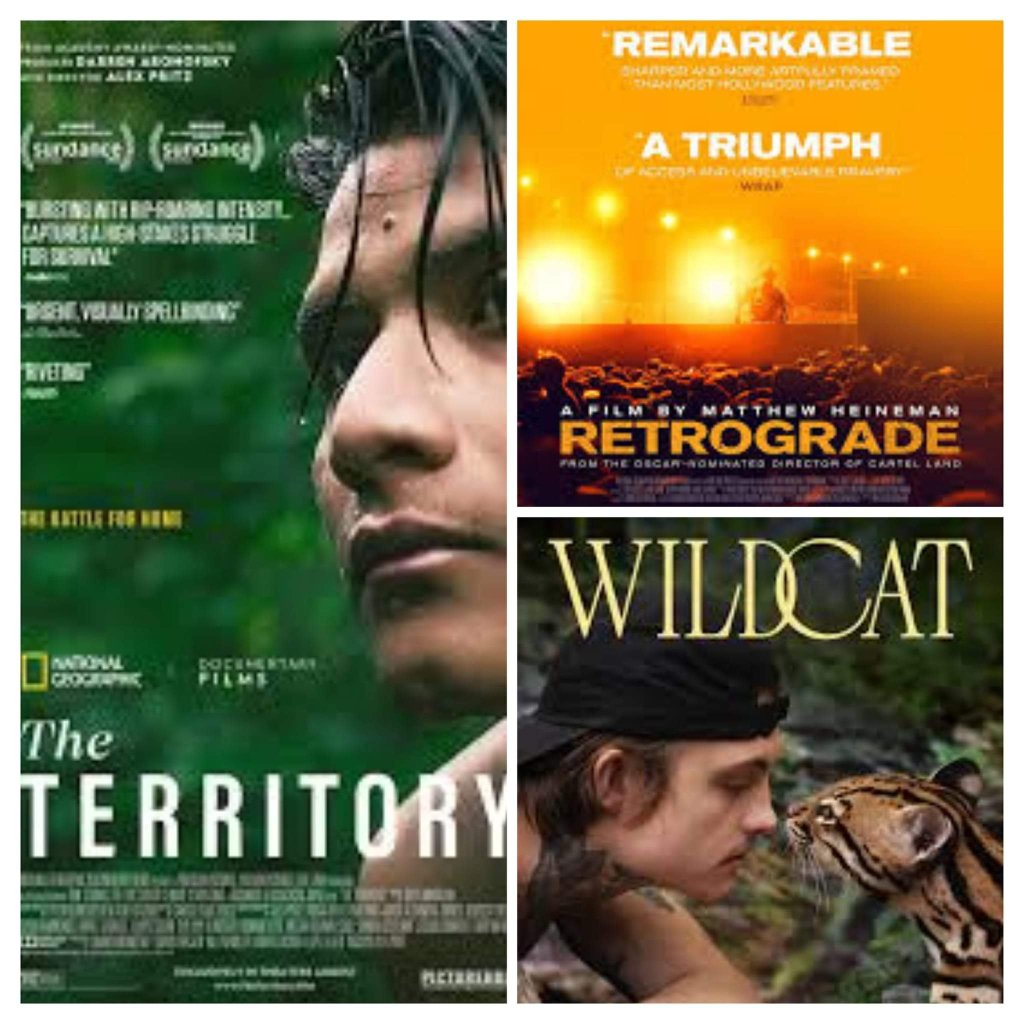
Film Journal 2023: The Territory, Retrograde, Wildcat

Film Journal 2023: The Territory, Retrograde, Wildcat

Caught up with three recently released documentaries, one cited by some pundits as vying for a nomination at this year’s Oscars (The Territory, now steaming on Disney+), one an intimate and harrowing look at the moments before and after the announcement that American troops would be leaving Afghanistan (Retrograde, now streaming on Disney+), and the last film an emotional and honest examination of the human struggle with relationship and depression by way of this rescue project involving a baby ocelot (Wildcat, now streaming on Amazon Prime).

The Territory leaves little doubt about its ambitions, establishing its desire to connect the particularities of the genocide it’s depicting with a very real global concern. We meet the individuals who make up the remaining population of this decimated tribe residing deep in the colonized and razed rainforests of Brazil, giving the issue of deforestation a human face. The films rich visuals and the dynamic sound design and score help to immerse us in a part of the world bound to be foreign to many viewers, celebrating its beauty while inspiring genuine anger over the devastating affects of power and ignorance. A vital message that helps shed light on both a people and a global reality.

Retrograde, in contrast, stumbles a bit by allowing it’s true concern (the Afghan people) to get clouded by a one dimensional and narrow emphasis on American patriotism. And yet, even where it fails to shed light on the true complexities of the situation in Afghanistan, it still manages to pull together some genuinely harrowing footage and a great looking and engaging doc at that.

Wildcat is my favorite of the three. What elevates this deeply human story about the struggle with relationship and the realities of clinical depression is the way it uses the wildcat to frame this story within larger questions about the nature of life itself. There is a certain tension that exists between this endeavor to rescue and reabilitate “carnivores” back into the wild, and the way these human agents must appeal to something more than simply the laws of the nature when attending to the value of their lives. The film never finds a way to truly solve this tension, ultimately accepting blind sentiment without need for jusrification or rationalization. For me though this film functioned as a sort of meditation on one of life’s great contradictions. How do we perceive of such realities evident in nature, which hinges on survival of the fittest being necessary to life, coexisting with what is at its heart an act of compassion attempting to circumvent the rules of the jungle.

How do we justify such compassion for a wildcat. How do we justify such compassion for the human agents. What makes one life more valuable than another. What makes life itself valuable. These are the sorts of questions the film tables simply as a by-product of its raw but sentimental look at human and beast in proximity and in relationship. They are questions that might be easy to bypass with what ultimately is a very engaging and engrossing sentimental story, but they nevertheless linger for those willing, or perhaps compelled as I was, to dig beneath the surface.

Film Journal 2023: Broker

Film Journal 2023: Broker (Directed By Hirokazu Kore-eda)
Where to watch: Mcgilvary Cineplex, Cinemateque

If you are not yet familiar with the work of Kore-eda, one of the best living filmmakers of our present day, do yourself a favor and experience the sheer emotional and inspirational brevity of some of his most celebrated works. While the awards attention garnered by 2018’s Shoplifters helped with bringing his name into the spotlight of celebrated international works, films like Like Father, Like Son, After the Storm After Life, I Wish, and even the grossly underrated The Truth, his first foray into English language features, are films made to break you in all the right ways.

Thematic throughlines and touchpoints defined by moral complexity, along with storied scores and rich casts of characters defined in some way shape or form by the idea of family, found family on the margins being a favorite, seem to be the true mark of his cinematic presence, and true to form Broker delves deep into these different aspects by utilizing a fresh concept. The opening scene of the film is framed by the towering and luminous presence of a church tower before the camera drags our sight lines downwards to a box that occupies space beside the church doors. Visually this brings together the moral and social concern of the films basic premise. It’s a baby box, designed to encourage those unable or unwanting to care for their newborn to safely pass their child into the care of social services under the safety of anonymity.

What we quickly realize is that two of the church workers tasked with monitoring this box are engaged in a practice that could only be described as human trafficking. They take particular babies and, instead of bringing them into the care of social services, they erase video evidence and search for potential parents by way of desperate couples or individuals in positions where they are unable to afford traditional adoption costs and are unable to conceive. The film follows one particular child and the accidental relationship that transpires between the birth mother and the black market dealers after she returns to retrieve her child and stumbles upon their backroom enterprise.

If this sounds like a somehat shocking and disconcerting premise, rest assured that even with me outlining the opening moments of this film, everything about the way these scenes are constructed is designed to leave us unsettled and uncertain and confused. This is precisely where Kore-eda’s deeply formed penchant for writing moral ambiguity and nuance into his characters is able to take root. We know what they are doing is wrong, and yet at the same time Kore-eda challenges our potential and desire to judge these people out of hand. And the more time we spend with them the more compassion we are able to form, deftly shifting that unsettled feeling on to the system and the reality itself.

Cleverly positioned contrasts in the plot help connect these stories, each different and each intersecting in their own way, within this question of the inherent worth and value of life itself. Never far away from the question of this mother abandoning her baby, a question that in itself is submitted to the nuance of the films moral concern, is the question of these peope each feeling abandoned by the world in their own way. It is this juxtaposition that begins to break down some of the very real walls between their stories, gradually giving birth to this messy and complicated portrait of found family.

It’s worth noting that Kore-eda affords equal time to the two government workers who are tracking their endeavors, looking to capture evidence and charge them for illegal activity. It is actually through these two characters that we as viewers are able to find the permission to second guess what a right judgment of these people might be. What they are doing is wrong, and yet there are notes of grace and beauty that permeate the sheer reality of that which what they are doing ultimately serves- finding homes for babies with parents who desperately want one. Even the two agents, whom are used to structure the story as a kind of fun detective-criminal chase story, don’t quite seem to know what the right answer is, and this proves a powerful sentiment in what is a deep and profound exploration of what it is to be human in a complicated world. To hear the words “I’m glad you were born” is not something the film simply assumes or takes for granted, and yet the fact that it imagines that somewhere in the shadows this sentence holds a necessary power is part of the films deeply felt sense of hope.

Shout out as well to the films astute use of humor and the most charming and winsome child performance I’ve seen in a long while. For as heavy as these themes are the film proves a pure joy and delight.