
Sadly, it has been a while since I’ve visited this space. With this being the end of a decade, I have been dedicating most of my time to working through a lengthy watchlist of films from the last decade, with the hope of eventually putting together a definitive top list of the decade this coming December.
Which has been an enriching and enjoyable exercise to say the least. But it has also limited my time available to read and write.
What inspired me to write again was a recent message given by Pastor and Theologian Greg Boyd. What he spoke on is something I have been wrestling with over the last couple of years, which is the question, what does it mean to actually believe in something. I mean, to really believe. Or further towards his concern, what is the difference between believing and living in a truth.
CAUGHT IN THE PROCESS OF DECONSTRUCTION AND RECONSTRUCTION
I have recounted in this space a few times my personal journey with the idea of faith as both (to borrow a couple overused terms) a deconstructive and reconconstrive process, focused at once on what it was I could no longer believe in, and what I it was I was choosing to believe on. Which is a tricky distinction to make as a Christian, especially given how much power the word “belief” holds over doctrine, practice and theology, certainly as it relates to the marriage of propositional (believing in) and internalized (living in) forms. It can be damaging and confusing to say the least.
In this particular message from Boyd, he imagines belief as a “sight”, and wonders (as a strongly anabaptist leaning thinker for what that’s worth) if there is an important distinction, particularly for those of us who have gone through a deconstruction and reconstruction process, between what it means to look at something from the outside and to see something from the inside.
FALLING IN LOVE: THE NATURE OF THE SUBJECTIVELY OBJECTIVE EXPERIENCE
He uses the example of falling in love to explain this. For modern, Western thinkers, it is easy to look at a word like love and to describe it primarily as a scientific exercise using concrete and largely de-mystifying terms. All of which can be seen as “true” by nature of looking at something objectively and from a distance.
But what lovers know by default is that these terms cannot and do not accurately describe what we experience from the inside of falling in love. As Boyd suggests, no amount of “looking at” will ever be able to get you to “look along”, a sentiment he borrows from the richness of C.S. Lewis’ own thought process when it comes to understanding the nature of belief.
SCIENCE AND FAITH: SHARED FORMS WITH DIFFERING OBJECTIVES
Along with this recent message from Boyd, I also happened upon a debate between Marcelo Gleiser and Stacy Tasoncos on the marriage of science and faith over the last couple of days. One an agnostic, the other a Catholic convert from agnosticism, but both scientists, they professed a shared commitment to the idea of the great mystery or the pursuit of the unknown. Science, by nature of doing what it does, deals with what we do not know. Knowledge in the form of absolutes, in this view, ceases to be science and veers towards dogma or “scientism” (a worldview). Religion likewise embraces knowledge as that which we do not know fully, and this sense both religion and science share a similar foundation in which truth is that which we strive for rather than expect to attain.
Where these two forms of thinking do deviate though, which both the debate and Boyd uncover, is in the shift from belief in an idea to a focus on living in a specific truth. This is where Boyd’s distinction applies most directly. Science is dedicated to the consistent process of challenging and reforming our belief in a working theory. Religion is ultimately concerned not with the truth that we see looking at something from the outside, but how this reforming translates into a living, breathing truth.
To quote Boyd, “We can believe all the truth in the world, but belief is the active reality of living something as true.”
THE POWER OF THE MENTAL NARRATIVE
And here is why Boyd considers this to be significant. Because we all live in what he refers to as “a mental narrative”, which in simple terms is the way we subconsciously interpret the world around us. And the thing that he points out about this mental narrative is that it is conditioned, not chosen. As a world view, or a means of viewing the world, it is conditioned based on how and where we live. We don’t choose it, it chooses us by nature of us living inside of it. And by nature of this living, breathing, experiential belief of the way that the world is, it conditions what it is that we put our faith (trust) in on a daily basis.
So a couple of ideas to pull from this:
1. Science, by nature of what it is and does, is not a worldview. It offers observations about the world in which we live for the purpose of pursuing and testing that which is not known. But scientists, as all people do, live according to “a” worldview, a function of faith in a given, shared and accepted reality by which truth can be governed.
2. Religion, by nature, is a function of “a particular” worldview, and the religious, as all people do, live according to a particular worldview which is a function of faith in a given, shared and accepted reality by which truth can be governed.
3. Where we find a shared function (the uncovering and pursuit of the mysteries and the unknown), the two have differing purposes. If science is interested in asking the questions, religion is fundamentally interested in how our conditioning shapes the ways in which we live with these questions in a religious worldview.
And as Boyd argues, to be conditioned by a belief (or any belief), we need to be inside it (the worldview that governs it) in order to be conditioned by it.
OBJECTIVELY UNOBJECTIVE
What complicates this in Western society is that, we have grown a tendency to believe that it is possible to live above our beliefs, that we can be an objectively objective people, or rationalizing rational creatures. The problem that Boyd points out though is, “it’s not your conscious beliefs that determine how you believe or how you live, it is your unconscious beliefs.” It is the stuff that we don’t even think about, the patterns that shape our actions in the day to day, the things we take for granted, that matter most, not necessarily what we know objectively.
Looking at the verse from Romans 12 that reads,
“Do not be conformed to this world, but be transformed by the renewal of your mind, that by testing you may discern what is the will of God, what is good and acceptable and perfect.”
Boyd argues that the word “conform and “transform” are words that essentially mean seeing “alongside of” or “on the inside of. They call towards a pattern of living. They indicate “a fundamental structure that holds things together.” And the only way to truly discern the will of God is to be living in this pattern. But what is interesting about the word “renewal” here is that it begins to uncover a relationship between what is conditioned and what is choice. All of these things- conform, transformed, discern, are things that happen to us based on what we are being conditioned by. These are not things we gain on our own. They are given to us and we are given to them. But the notion of renewal calls forth this idea of these things being made new over, and over and over again. It suggests a daily function, which indicates the presence of a choice. Once we recognize that our mental narrative is something that has been conditioned, we can recognize the role that faith plays in being reconditioned, or renewed, by placing ourselves where we can be shaped by a particular experience of the world and a particular pattern of living. This is where we find the idea of spiritual discipline and formation. And where we place ourselves is an active choice.
So what does it look like to be renewed according to the “mind”, that shared construct that exists for both religion and science? Boyd argues that this comes down to the idea of the “sanctified imagination”.
THE SANCTIFIED IMAGINATION
Let’s go back to the example of falling in love. When we fall in love, we are experiencing that from the inside. We are living it. It is an involuntary action that drives us to do (some very stupid things).
In the movie Tolkien, one of the most powerful scenes in the film is when Edith and Tolkien are eating together, and we see Edith challenge Tolkien on his love of words by suggesting that, words only gain their meaning by nature of what we attach them to. Love, by nature, gains its meaning not by recital or definition, but by experiencing it as meaningful. By living in it and seeing it from the inside as more than just an objective reality to be pragmatically demystified.
But there is a definitive connection between living in and our imagining of, and this connection is called faith. Once we begin looking at things from what we imagine something to be (faith), that is when we begin living it from the inside. That is when something becomes accepted. And as Boyd says, when it comes to the idea of the “sanctified imagination”, the idea of being renewed to know what is good and perfect, it’s not what we know that changes us. Information looks at a subject. It is what we imagine this to be in our life that changes us. And in religious thought, we rest in a worldview that imagines the result of love long before it is actualized. This is what differentiates the product of love as a chemical reaction, and the purpose of love as an imagined reality. This is what differentiates the condition and the choice. Once we imagine what love is, we can then become conditioned by it in a new way. And when it comes to this particular worldview, this god given love conditions us towards the self giving, sacrificial, justice serving, restorative, resurrection narrative that it invites us to imagine.
HOW I HOPE TO BE RENEWED AND RECONDITIONED THIS SUMMER
So why did all of this inspire me to write? It might be because of the long winter we just experienced and lived in. This and other factors took a toll on my own mental conditioning over the last few months. And in my life long battle with depression and anxiety, these phases of my life tend to exasperate the deconstruction process more than the reconstructing effort.
But its precisely at times like these that I need to pattern myself again around this idea of living in a new narrative. Summer is on the horizon.
When I walked away from my faith, I was convinced I was divorcing myself from an oppressive pattern of indoctrination, and freeing myself to think and live objectively, towards a greater truth and pursuit of knowledge. What pressed back on me, and HARD, was the fact that, in this view, I had traded one pattern of indoctrination for another. I was simply placing myself within a different worldview and accepting a particular pattern of conditioning. Only, I found that I was now detached from the imaginative process, something that ultimately led me into even more deep rooted depression and anxiety. Which is where I find myself retreating to when I revisit these times of persistent cynicism and oppressive feelings.
What helps me in times like these is writing of course. And immersing myself in particular types of narratives. Getting back into more hopeful stories that recondition or renew my faith into more hopeful outcomes. And re-familiarizing myself with the Gospel story as one that is intended to liberate me from oppression, not indoctrinate me towards it. Which is what I hope to do over the coming summer months. I am lucky enough as a school bus driver to have this sort of automatic sabbatical. And I am looking forward to some dedicated reads, travel (Toronto and Boston), meeting some new friends (from my online movie discussion group), helping out with some youth programs, and enjoying the summer days and movies.
My prayer would be for you to be able to find the same, no matter your schedule and your routine. That grace would afford you a chance to recondition and renew where ever you find yourself.

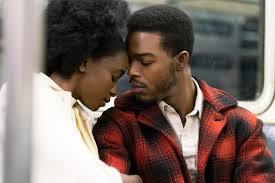 The Beauty of A Human Moment
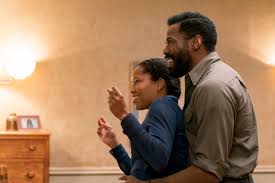 The film is not absent of the despair and struggle and everyday monotony that is so prominent in Roma. There is division and there is the pain of an isolated and oppressed culture. There is the corrupted image of a street that holds in its stone promenades the story of a divided Country. This is the one side of that glass wall. But it doesn’t want to leave us there. It allows the characters to bridge the coldness and the distance in order to give us that sense of closeness, intimacy, warmth and love that its centrals characters, and we if we are honest, so desperately long for.
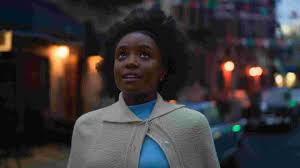 The Hopeful Work
 A Street That Paves The Way Forward
 It’s 3:00 A.M. on New Years Day. A cup of coffee finds me still awake and finishing off some of my blog posts and resolutions and thoughts of the year that has just past.


 14. Teen Spirit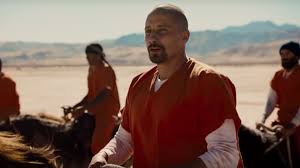
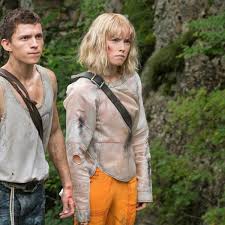

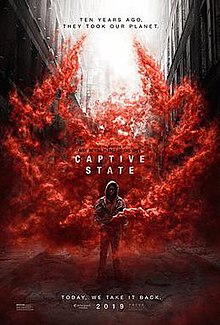 10. Captive State
 9. You Are My Friend
 8. 1917


 6. Knives Out
  5. Pokemon Detective
 3. Toy Story 4
 2. Once Upon A Time in Hollywood
 Honorable Mentions:
 Here is my link to my complete list of films ranked:
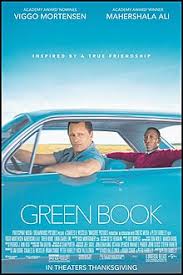 The Green Book Controversy
 Told from the perspective of Tony Lip, Green Book largely tells the story of his experience of their time together. For as much as many think-pieces and critics desired to display a measured response, more often than not I found them making definitive statements that were not open to challenge on why Green Book was a dangerous and flawed film in a world where racism definitely still exists, and how this film is saying something false about that reality. What they tend to gloss over though is that the reality of reading through much of the controversy actually shows that there is a good deal of uncertainty and confusion that still remains when it comes to this film. There are compelling gaps in the story on both sides, both in the story that was told and the story Dr. Shirley’s family believes they failed to tell.
 The Stories of my Life