
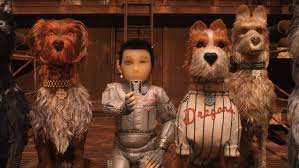
 Following the fantastic “The Fantastic Mr. Fox”, Director Wes Anderson returns to the art of stop motion animation with the recent release of “Isle of Dogs”, a beautifully crafted, lusciously detailed, heartfelt technical marvel.
It didn’t take long to find myself being swept up into this adventure about a boy going on a search for his dog spot, and there is little question the film builds on much of Anderson’s more recognizable stylistic and idiosynchretic tendencies:
- His deadpan style humour and dialogue
- His attention to symmetry and shape and precision
- Using cultural and artistic references to anchor his film in a particular time and (imagined) place and influence.
- Playing with messy family dynamics
Along with these familiar stylings, Isle of Dogs also sees Anderson continuing to experiment with new ideas and demonstrating personal growth, most notably in his use of a lower frame rate which accents the animation with some rougher edges and doing some neat things with moving us in and out of panned shots and an almost fearless willingness to do close up shots. This has a way of taking a confined area and making it feel a lot larger and more expansive than it actually is. We also see Anderson, someone who has a tendency to depict muted emotion, growing in his embrace of more obviously optimistic, joyous and sentimental tones. True to form, Isle of Dogs might be his most sentimental and most accessible film to date narratively speaking, and technically I think this film, which we find echos of in The Life Aquatic, Moonrise Kingdom and, of course, Fantastic Mr. Fox, could be considered one of his most ambitious and impressive visual accomplishments to date.
Coming back to “craft”, this is the perfect word to describe Isle of Dogs, and also the perfect way to describe a Director who I believe represents a true Auteurs. With that said, it is also worth pointing out that even a cursory and surface look at the story behind the making of Isle of Dogs showcases this film as a true collective process as well, developed through a writers room, an expansive team of talented artists and, at least when it comes to its inspiration, a shared passion for Japanese animation.
All of which brings me to the elephant in the room- the lingering and much publicized accusation of cultural appropriation.
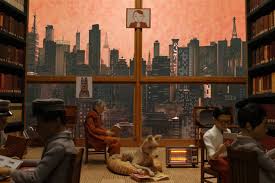 The film takes place in a futuristic, fictionalized city that represents a conceptualized version of Japan. Anderson’s choice to create a fictionalized city and landscape out of a recognizable and very real culture, people and history is connected to his desire to pay homage to the things that have inspired him from that culture, namely the work of Kurosawa and Miyazaki. But there are some (or many) who feel that Isle of Dogs crossed a line between homage and, at the very least, borderline cultural appropriation, not necessarily with intention but rather as an error of judgement. Some feel that the reason for using Japan as a setting is not entirely clear in the context of the film, which means the way Anderson is using representation in this film becomes even less clear. As a couple of writers have surmised, Anderson positions himself as a tourist rather than truly immersing himself in the culture, thus relegating Japan as an objectifying plot device rather than a homage or love letter to a culture.
Here are some examples I have encountered of possible cultural appropriation:
- Representing Japan’s history of family centred monopolies in an over sighted and slightly fashion (The Kobayashi family)
- Swapping the important cultural image of the Komainu with “cat” shrines
- The decision to set it in Japan while also making the hero of the story a white, American exchange student
- Naming the central Japanese character “Atari”
- Including the scene of making Sushi as a stereotype
- The creative decision to have most of the characters speak in an often broken and sometimes tongue and cheek version of Japanese while having the dogs speak in English
I do think this last point is probably the most poignant one. In the film the dogs speak english while the Japanese characters speak in their own language without subtitles. Instead Anderson chooses to use an on screen english interpreter and a white, American exchange student as a means of engaging across linguistic lines. This has the affect of distancing us from the Japanese characters to a degree, and although it is clear Anderson is playing around with the idea of communication and language thematically, some felt this recognizable device actually ends up working against this end goal by not allowing the Japanese characters to have a voice of their own.
Critic Nina Coomes fleshes out the role of language in the film in her review, saying:
“At one point, before allowing his opponents to make a counter-speech, Mayor Kobayashi inexplicably barks out “Risupekto!,” a Japanized pronunciation of respect that isn’t used in colloquial Japanese. While there are many English words that are commonly used in Japan, Isle of Dogs opts to invent its own. For instance, instead of having his characters say osuwari (sit), Anderson has them parody English by shouting “Sitto!,” another word Japanese speakers don’t use.”
Coomes further adds,
“Taken alongside the movie’s cultural oversights and reinterpretations, this conclusion is just another instance of Isle of Dogs using Japan as a way to normalize outlandishness, thus creating the illusion of a cohesive story.”
This last point is worth highlighting. More than one critic has pointed out that what really crosses the line is the way the film seems primed to use an unfamiliar culture (to American audiences) to elevate and accent the strangeness of his methods as a Director. At this point the lack of intention almost veers towards intentional.
Now, this might be a good place to pause and offer an obvious caveat to all of this. I am not Japanese, nor am I overtly familiar with the culture myself, and so I cannot speak to the way someone from this culture or familiar with this culture might interpret or contextualize this film differently than me. I can only speak from own limited experience with the film and from an observant understanding of the issue as best as I am able.
Worth posting is this review by Justin Chang (critic for the Los Angeles Times), who argues the film as appropriation but does so with a sympathetic voice to what he believes are the films many strengths. Whether you agree with him or not, I think he has written one of the better pieces regarding the films cultural voice.
http://www.latimes.com/entertainment/movies/la-et-mn-isle-of-dogs-review-20180321-story.html
With that caveat, here is where I land on the issue of cultural appropriation in Isle of Dogs. I think it does tow a line, perhaps mostly because Anderson has yet to speak publicly about some of these artistic choices, but I do not think it is intentional or purposed, and I do not think it should or must take away from an individuals experience of the film as emotionally resonant. And I think this central point is important, even as I have personally learned much about the cultural appropriation in this film from other voices over these last few weeks.
I should also point out that the film resonated with me emotionally on a number of levels, which I hope to explore further here, which makes this whole conversation a delicate process that must be done with understanding and grace (on my part and on the part of others who might disagree), especially when it comes to trying to make sense of someone as unique as Anderson.
So as a way of getting into my more detailed thoughts on why this film resonated with me on a strong and positive level, here are some of the more important points that stood out for me when it comes to my personal experience of Isle of Dogs and the issue at hand:
1. Anderson himself has described this film as the culmination of one big idea (the desire to create a story about a boy and a group of alpha dogs in a garbage dump) and a passion (for Japanese animation and culture). Every indication that we can glean from his public interviews tells us that cultural appropriation was far from intentional, and that Anderson actually wanted to endear us to the nuances of Japanese culture through this fictionalized setting. Now, this does not mean it isn’t fair to speak to the issue if it is present, but I do think it awakens us to the idea that maybe there is more going on here than it first appears.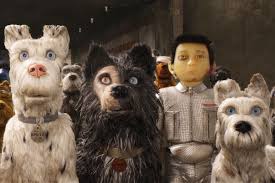
2. As was stated above, this project was the culmination of many different voices, including representation from Japanese culture. The fact that it had a writers room, a rarity in film and even a greater rarity outside of franchise films, speaks to what was hopefully an environment conducive to fleshing out the necessary intricacies and respect and grace to make this work. All of which is simply to say that while Anderson might have directed certain decision and creative choices intentionally, the creative process here actually mirrors a more recent (and less controversial) film dealing with cultural representation- Coco. Obviously Isle of Dogs hasn’t resulted in the same universal embrace of that previous film’s cultural representation, but again, I think this fact can awaken us to the possibility that what Anderson was trying to achieve might be far more sensitive to the culture than some felt it was.
3. The attention Anderson and team give to particular scenes is just one of the many impressive things about Isle of Dogs. This is true in a specific sense, but also in a larger cultural sense. The way it uses the music and captures the beauty of Japan and Japanese culture seems to me to be genuine and adoring, even if it is a bit touristy.
Just to speak to the sushi-making scene in particular, I know some saw it as an unfortunate inclusion (and depiction) of a common Japanese tradition used simply to heighten the setting as a strange and unfamiliar backdrop through which we can embrace Anderson’s own creative process. But I think the sheer detail given to this scene is telling. The way the camera narrows in on the process of this individual partaking in what is clearly more than a mundane, every day activity, along with the way it uses this scene as a break or pause in the larger narrative, showed incredible care and intention for a moment it wants us as an audience to resonate with and appreciate and revel in. This, I believe, is actually a window into the culture rather than appropriation. It is also worth pointing out that I have read a few interviews from Japanese individuals which suggested the way this scene captures the reality and precision and detail of this process was admirable and faithful. I have heard that this scene alone took 8 months to film, and these sort of facts, I think (and I felt) help to reveal Anderson’s creative purpose in this film in a more celebrated way.
4. Many critics have pointed out that there seems to be an intention to use see this story as a way of satirizing the current state of the American landscape. 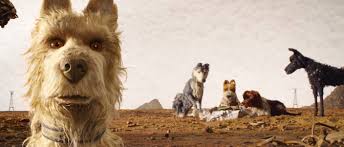 Knowing that this films creation spans Presidencies might suggest this is more timely than pointed, but there is room to consider, as movie critic Richard Brody (New York Times) writes, “For Anderson, Japan is a sort of mirror-America,” offering a reflection on “the xenophobic, racist, and demagogic strains of contemporary American politics.” Thus one of the questions this brings us back to is, does the use of Japan as a backdrop for this film become a means to gain a laugh, colour a film, and ultimately help us better understand ourselves, or does it allow us the opportunity to see ourselves through a fair representation of another culture.
For me, given the attention to language as a thematic force in this film I honestly felt Anderson was trying to speak across cultural lines. And as I wrestled with where to land on this issue I came across this link which I found somewhat compelling.
https://www.cinemaescapist.com/2018/04/isle-dogs-metaphor-japanese-politics/
Shang, writing for The Cinema Escapist, essentially argues that, although this is a film (at least partially) written for American audiences and by an American Director, the mistake people seem to be making is viewing it from the wrong perspective. As Shang writes, “The confusion over Anderson’s political message (is) rooted in the same Americentrism which assumes that all of our movies must, at their base, be about ourselves.”
 It is fascinating to consider his ensuring point that “if Isle of Dogs is viewed against the backdrop of contemporary Japanese politics rather than our own, the film suddenly transforms from an impenetrably weird Wes Anderson flight of fancy, into a powerfully encoded piece of political propaganda.”
Now, I am still wrestling with this interpretation in its entirety, and to be honest, seeing it from this lens, as a direct reflection of the future of Japanese-American relations, is made even more poignant and compelling when considering it survived the transition into the Trump era of politics. But if I was to simply take the idea that this was written “from” a Japanese perspective, it definitely does change the way I view many things in this film. And so while it could be right and appropriate to, as Brody writes, recognize that “from its basic setup, “Isle of Dogs” is a fantasy that reflects no aspect of Japanese current events but, rather, the xenophobic, racist, and demagogic strains of contemporary American politics”, that doesn’t necessarily mean this a film that elevates “us” at the expense of “them”. This is simply the way Anderson invites us, from the perspective of an American audience, to see a film set in Japan in the light of our own current socio-political reality. If Shang is even partially right, Anderson is indeed trying to speak across cultural lines without appropriating either, which becomes especially relevant as we try to resist the assumption that this is a film made primarily for American audiences, the basis on which the cultural appropriation I think is given the weight some people have given it. In this sense, even though I don’t agree that she is presented as the hero of the story in any way, the exchange student really could have been from any culture.
5. A further note on the inspiration of Kurosawa and Miyazaki is also necessary. Anderson gives Isle of Dogs a certain ascetic that anchors its futuristic setting in a recreation of these past works, using colour and visual to give the film an almost strange amalgamation of futuristic imagining mixed with an older, recognizable and almost nostalgic nuance. Also worth noting, as film critic Richard Brody does, is that this is not entirely unfamiliar to Anderson’s style:
“The movie’s future-Japan (a future that is decoratively imbued, Anderson-style, with industrial styles and technological devices of the fifties and sixties) is akin to the fictitious Central European country of Zubrowka in “Grand Budapest,” which is as much a movie creation—a reference to films by Ernst Lubitsch and other nineteen-thirties filmmakers—as is the futuristic-dystopian Japan of “Isle of Dogs.”
– Richard Brody
Further, we see him doing this with his other well publicized inspirations (Roald Dahl and the French New Wave films and directors come to mind) along with playing with other forms of cultural expression (The Darjeeling Limited, The Grand Budapest Hotel, The Royal Tenenbaums). This is just to say, this is what Anderson tends to do as a director, is to come up with a story and then find the best setting through which to tell it and then to play around with that setting creatively. This is not Japan. As critic Justin Chang puts it, this is Wes Anderson’s world.
6. I have also heard that “Isle of Dogs” is considered “the third film in a virtual trilogy, following Moonrise Kingdom and The Grand Budapest Hotel”—which uses these homages and cultural settings to write “a trilogy of revolt.” according to Brody. And this is, when it comes down to it, what I think Isle of Dogs is really all about. 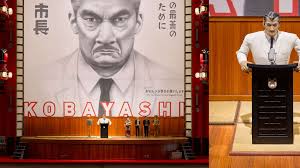 It is about the ways in which we respond to issues of legalism, tyranny and political corruption, and the ways we find ourselves as individuals in “community” wrestling with the desire for independence but also this longing to hold on to and find worth and acceptance and belonging in the affection and appreciation that comes from others.
We see this in the group of outcast dogs and the different characteristics Anderson affords each dog. This idea for a story about a boy looking for his dog opens up conversation about the tension that exists between tame and wild, individuality and community and Anderson uses this tension to explore some of the central tenants of human nature, that individual struggle between instinct (we do what we do not want to do and do not feel in control) and free will (the desire to know we are striving to do good and the need to be in control). The moment this is most realized is the point in which Chief, voiced by Bryan Cranston makes this momentary confession that he bites, but he does not want to bite and he does not know why he does. It’s a powerful moment that exposes the true force of this narrative trajectory. 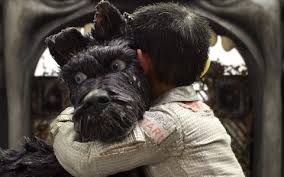 Its a theme that resurfaces when Chief, trying to woo one of the female dogs, is told that this female does not like tame dogs. This becomes a commentary on the ways we struggle through the biological make up of our world to find something innately human and humane and to fight through some of the tenants of a sort of dominant Darwinian environment. And all of these dogs stories essentially feed back into this growing relationship between Chief and the boy Atari as an examination of how this humanity is expressed in our individual stories of hurt and brokenness. Which brings me to this last point…
7. As Brody points out, “the centre of the movie is neither the Japanese characters nor the American one; it’s the canine ones.” I agree with this to a point, but where I disagree is that I think the dogs stories are what open us up to Atari’s own upbringing and family relationship. And far from humanizing the dogs while dehumanizing the Japanese, as critic Angie Han believes it does, I think the film sets these characters in relationship to one another as a means of bringing out Atari’s own inward journey as a commentary on society at large. And I don’t think Anderson is making any single political point here. He is simply presenting the struggle of our socio-political realities regardless of culture. Both democracy and dictatorship is held up as a messy construct. Both individualism and collectivism is held up as a messy and broken construct. Things are broken and flawed on all sides because this is what humanity is, a means of working through our brokenness together.
 But the brilliance of what Anderson does is the way he brings us towards these macro and micro narratives of messiness and brokenness through a rather simple construct of a boys relationship with his dog. As we gain a window into Atari’s own heartbreaking story, each of the dogs he encounters on his search for spot provides a mirror for his story to reflect back on his personal struggle and his growth. And what Anderson taps into is the way this bond between dog and human has a way of doing this in many of our lives. Its one of the most expressive and real and honest dog movies I have seen in a long time, and one that pulls this emotion out in subtle ways (akin to the slow welling up of tears we see in those animated eyes). And because I was so invested in this emotional element, the movie allowed me to consider that the reason Anderson was keying in on this was to open me up to the question of our socio-political environments. He uses this dog-human relationship to bring out the films ultimate and unifying message, this idea that even when we need to fight for our independence in the face of oppression, thankfully the (human) need for affection and acceptance and belonging looms larger and stronger. We cannot exercise ourselves out of community, even when our image of community is broken, just as it is in a world where dogs have been outcast to Trash Island. Because without community we cease to understand what it means to be human(e), which is precisely what is happening when the only relationship Atari is afforded by his politically powerful father is between him and his guard dog, a relationship he holds onto as his only true community even when they also try to steal that relationship from him as well.
When the worst of ourselves has come to surface, we need to dig deep to rediscover what it is that makes us good and what it is that expresses the good regardless of our hard socio-political lines. And this same message then flows out into our individualistic tendencies, pushing back against our narrow vision of the “revolt” theme. The scene at the slide set against the scene with the stick arrives with a certain power, providing us with a key transitionary moment in the film when it comes to understanding this relationship between community and individual and our struggle against our nature and our humanity. And it is one that I found profound in both the weight it carries and the commentary it provides for speaking across linguistic lines and experience. Even though we speak different languages and look different from one another, the things that pull us apart and bring us back together are very much the same. We fight to be heard, but we need others to hear us. We push back against the control of others, but we need relationship. And the most important thing that comes out of these two things is that true freedom only comes from one place- relationship with one another. And thus it becomes far more important to know how to listen in the midst of the films rather timely demonstrations of dominating politics and fake news (the Oracle) than it is to simply revolt, even if that sometimes becomes necessary.
The fact that over the course of the film each choice and each decision in this group of dogs is being appropriated to the majority vote speaks to this idea of being heard regardless of the language we speak, regardless of whether that democratic process actually even works, and it is this same message that speaks into this choice to have them speak Japanese without subtitles. I think it is meant as a contrast to the sort of relationships we build with our dogs. We have to truly listen in order to understand, not to language but more importantly to emotional and visual cues, to who we are underneath the brokenness. Because words only go so far. I think as an American audience we are being invited to consider what this might be like in a cross cultural context. And this, I think, is a really important message of us to hear regardless of whether we are a dog, a translator, an exchange student, a young boy, American, Canadian or Japanese.
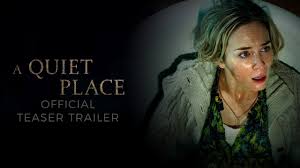 (WARNING: THIS BLOG CONTAINS SPOILERS)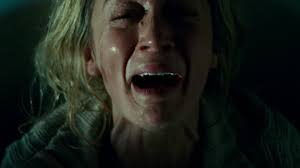
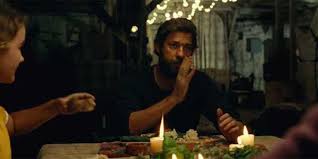 Again, conceptually the story revolves around a family forced to live in silence in order to avoid being hunted by these mysterious creatures which are extremely sensitive to sound. Silence, then, becomes the means by which Krasinski is able to use this surface horror element, one predicated on an element of horror or fear, and infuse this into a narrative that on a deeper and more complex level is ultimately about family and responsibility to one another. A narrative that begins as a simple premise based on the methodical control of ones environment and circumstance which gets thrown further and further into a sense of uncontrolled chaos for fear of these unnamed monsters, is able to allow that chaos to bring these thematic moments to the surface in a meaningful way, and it all happens through the art of sound and silence.
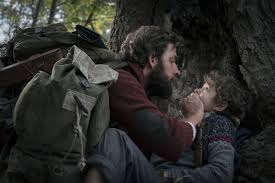 It offers us this sense that nothing has survived in this environment through a complete absence of background noise and nature. The jump scares are so effective in A Quiet Place because they breathe out of this silence. And if you pay close attention to the score you can recognize that the music and sound responds rather than predicts these tonal and emotional shifts, narrowing us in on the characters themselves rather than the scares.
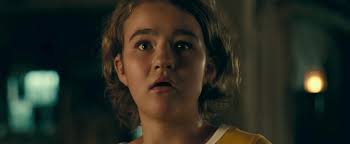 Or take the story of the daughter (played by the absolutely wonderful Millicent Simmonds). Pay attention to the way the sound and the direction moves with the shifting perspective of her deafness. When she puts on the hearing aid her father made for her and takes it off it, the act is felt through the noise and the silence that captures this moment on screen. In one particularly frightening scene we are allowed to see the threat standing behind her while her on-screen character and perspective remains completely deaf to it. It plays to chilling effect.
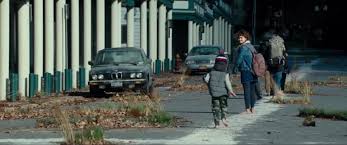 The opening scene perfectly captures the desolation of the landscape contrasted with the picture of a family, whom we are first introduced to through images of unnamed feet shuffling through the isles of an abandoned grocery story. What this opening scene does is establish the hopeless reality of their world along with a calculated and determined decision not to simply just survive in this world, but to actually live.
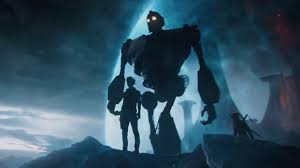 For example, when we see the Iron Giant shooting a gun in a way that sits quite contrary to who the Iron Giant actually is, we are reminded that we aren’t seeing the Iron Giant, we are seeing one persons imagining of the Iron Giant in a virtual world of their own making. This is who they see themselves to be outside of the limitations and the labels the world places on them. And the film gives us glimpses of just how large and diverse these imaginings are, reaching into sub-groups and sub-cultures that seem to be endless and ongoing in Spielberg’s vivid and expressive imagination.
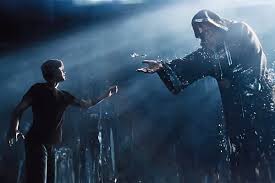 Halliday wants to be known, and once you figure out the key to solving the puzzle is retelling Holliday’s own tragic story, all of the pieces start to all into place.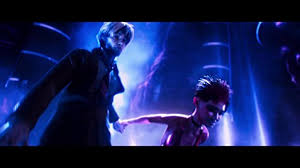
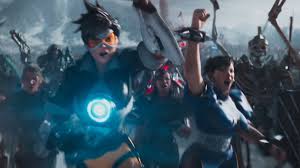 A virtual version of the public-private sector. They attend public school in the Oasis and they can generally engage in public services, but if you wanted to explore the Oasis itself, move to bigger worlds and neighbourhoods, go to better schools or climb further up the social and economic ladder (because basically everything in the Oasis basically comes down to having money), you have to be able to afford it. The Oasis mimics the worlds real life poverty.
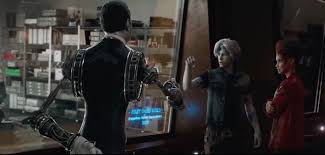 There’s a real irony to what Spielberg does here given his own legacy in film. But the truth we come to find in the end is that coming to terms with who we really are, mistakes and regrets and fears and all, is a part of what it means to build a legacy that lasts, because who we are is what feeds the relationships that give us value.



 Jim and Andy: The Great Beyond



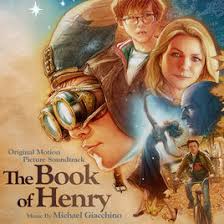 The Book of Henry
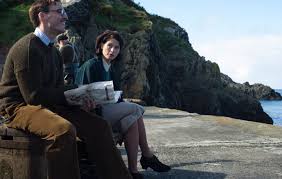
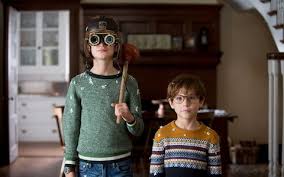 More so it deserves attention as one of those films in 2017 that took me on a truly unexpected emotional journey, moving through moments of laughter, sadness, edge of my seat thrills and finally contemplation. Yes, the film takes some incredibly sharp turns, but this is what made it so exciting to me. It might not all work, but it is trying something new, and much of this is a credit to Trevollow’s commitment to a particular idea, an idea his commitment to his original screenplay, one he had been working on for years, ultimately helped bring to life.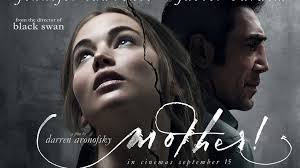
 There are big ideas in Downsizing and the screenplay deftly manages to flesh these out using an equally big and ambitious narrative arc that centres around people getting small. The best screenplays work to leave the audience with much to think about in the days after seeing a film, and Downsizing is one I continue to think about well into 2018.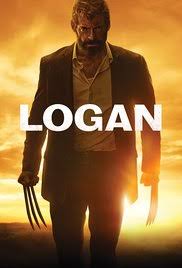

 It is apparent that the glue which holds the narrative together is the strong source material, and given how much the story is anchored in the idea of imagining visual storytelling on the page, it seems tailor made to be adapted for the screen.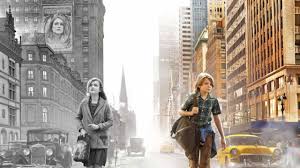

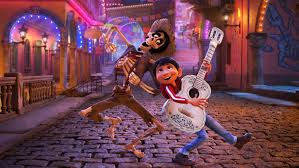 Coco certainly stole the spotlight in 2017, and probably for good reason. It might fall short of some of Pixar’s best, but the way it shines a light on an underrepresented (and misrepresented) Mexican culture, and the fact it is the culmination of a true and honest labour of love makes it worthy of all the attention it is getting.
 Cars 3
 Lego Batman

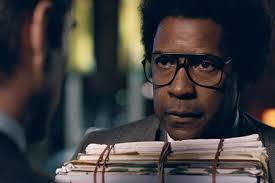 Denzel Washington in Roman J. Israel Esq.
 Jake Gyllenhaal in Stronger
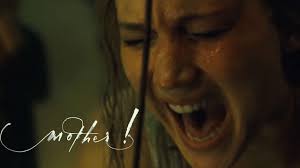
 I am big Jennifer Lawrence fan. Watching her grow over her rather illustrious career from young Katniss to what we witness in Mother reveals someone who has grown tremendously in her risk taking and her willingness to truly challenge herself. I have always had the sense this is an actress who is dedicated to her craft, and what she brings to Mother! shows the fruit of this labour.




 The Man Who Invented Christmas
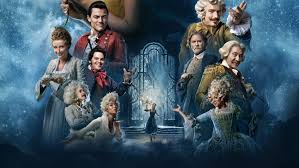 The live action retelling of the iconic Beauty and Beast took the world by storm, and for good reason. It rises to the level of pure spectacle. What is most impressive is the way it holds the integrity of the story together while nudging it just slightly towards a bit of creative reimagining. Modernizing the tale in this way really helped to bring it life in fresh way.
 Worth adding to this list is Marshall, the perfect film to mark Black History Month. The film isn’t flashy, and the director colours the period setting in an almost charming, fictitious fashion, but the true life story of the man who who happened to change the face of civil rights in America is far from fictitious of course, and hugely important in helping turn the page on an important part of our history. As timely today as it was years ago, the film does a great job at evoking this sense of urgency.

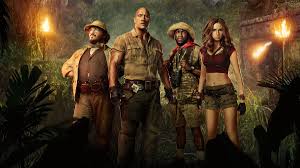 Jumanji: Welcome To the Jungle
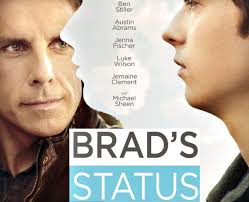 It’s about his struggle to really make sense of what is most important and the places in which we find our value in the midst of our tendency to measure this all against our perception of other’s success. And as it helped to remind me, our perception of others rarely tells the whole story.

 10. Spiderman
 9. A Ghost Story
 8. Downsizing
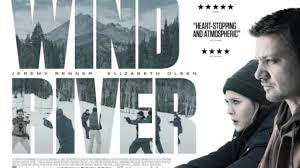 7. Wind River
 6. Mother

 4. The Big Sick
 3. Wonderstruck
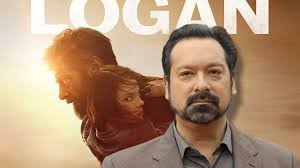
 2. Logan
 The Stories of my Life