
And above all, watch with glitering eyes the whole world around you because the greatest secrets are always hidden in the most unlikely places. Those who don’t believe in magic will never find it.” (The Minpins, Roald Dahl)
They often say, don’t meet your heros. It’s no secret that meeting our childhood stories can have the same sort of impact due to the ways it can desenchant our romanticizing of these figures. My experience with her book Bookworm: A Memoir of Childhood Reading, was mixed, a book that accompanied me on my pilgrimage to England to do precisely that- meet my childhood stories, but one of the things author Lucy Mangan does extremly well is cut through the noise of our complicated relationship with the past in order to reclaim these stories and figures as essential part of who we are. As such interrogations tend to go, how, we ask, do we approach these figures born from a world we deem not just foreign to our own, but somehow morally inferior. How do we, in other words, embody what it means to “grow into our childhood” in a way that doesn’t demean it or rewrite it.
In the case of Roald Dahl, a figure I am preparing to encounter on day 2 of my pilgrimage, we meet a (fill in the blank with children’s writer, wartime fighter ace, spy, celebrity, husband to a film star), whom would go on to be plagued by accusations of misogyny and anti-semitism.
The grounds by which Mangan prepares our adult minds to meet our childhood is the intentional undercutting of our modern pretenses. To bury the past by way of convincing ourselves that we somehow stand above it is to distance ourselves from the reality of our lives in the present. This practice, of “othering the past” has more to do with protecting our adult selves from the pains of internal critique than it does holding our childhoods to account. Where the needed process of growing up into our childhood is exchanged for growing out of it.
As Roald Dahl once said, “Grown ups are complicated creatures, full of quirks and secrets.” This holds true for Dahl. Traversing the grounds of his own inspiration must mean the same for me if I am to approach my childhood stories in a way that allows them to actually speak. After all, the minute we assume that we stand above the past is the minute we acknowledge that one day the past will stand above us. Which is another way of saying, this way of thinking leaves our judgments flowing back in our direction. One of the ways in which this journey was able to speak to me was by inviting me to seek a better narrative, a better way of understanding our relationship to our childhood stories, existing as they do in relationship to our childhood selves.
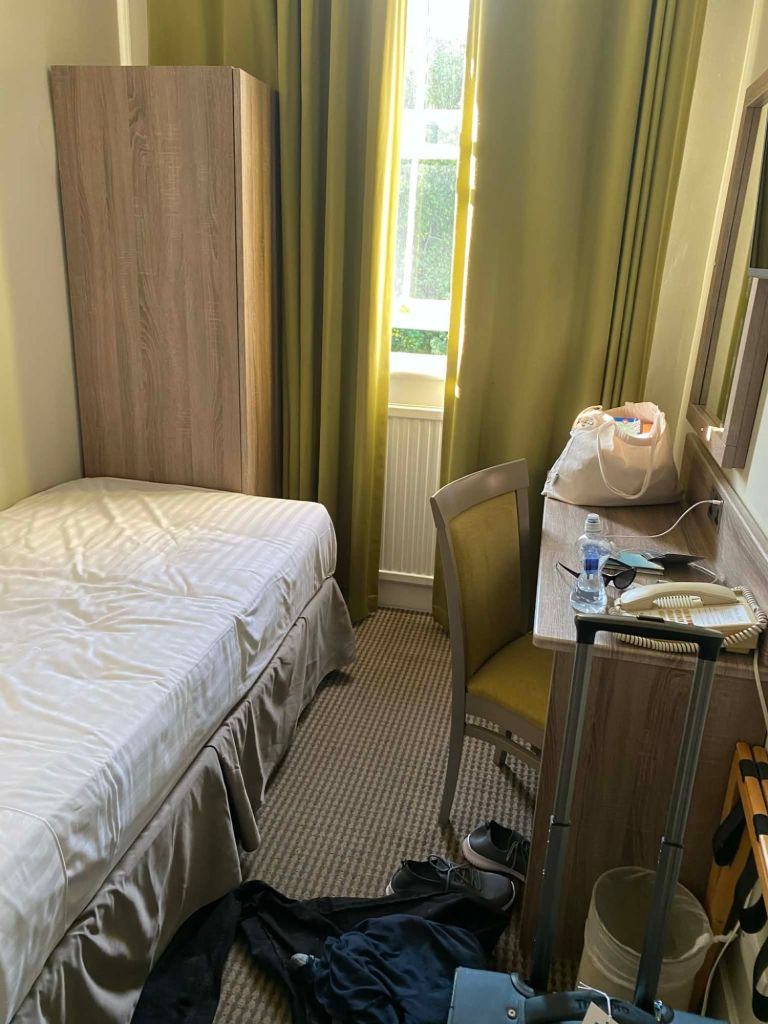
I wake up in that small, cramped room soaked in sweat and still aching from overextending myself the previous day. The cracked window hadn’t seemed to help, although I’m slightly grateful that there doesn’t seem to be any stray birds or other creatures taking advantage of that open invitation to share my accomodations. I might have slept. I’m not sure. What I do know is that my alarm is telling me to get up. The day’s agenda is calling, and the early sunrise spilling through that still open window seems to be in agreement.
My next walking map directs me four blocks down to a breakfast place called Oatis, where I find an order of freshly prepared coffee and blueberry pancakes affording me a proper greeting to a new day.
Yes, that four block walk still resulted in me walking the wrong direction not once, but twice. My mental map can only get me so far when any and all sense of north, south, east and west has been completely overturned.
Before I leave, I grab an extra order of an oat-bowl to go (or to put it in proper English terms, to “take-away”), ensuring that I don’t need to worry about lunch. Cheap and convenient. The bus schedule says I’ve got seven minutes to catch a bus that is a 3 minute walk away.
At which point I once again walk out the door and head in the wrong direction. My eventual redirection leaves me watching the bus pass straight by my stop while I’m still waiting on the opposite side of the street for the light to turn green.
Actually, true story. That bus ended up stopping at the same light that eventually turned and allowed me to walk across. There I was, now staring straight at the driver waving my hands in order to get him to open the doors and let me in. To which he promptly ignored me. My first thought- what is this, Winnipeg?
Thus, there I am on the proper side of the street watching the driver take off without me. A slight panic sets in- I have 40 minutes to get to my train heading to Great Missenden, Roald Dahl’s hometown and the inspiration for his stories, and a decision to make. Thankfully I had printed off a walking map for preicsely this scenario. With one caveat: it’s a 35 minute walk to my destintion: Marylebone Train Station. Yes, I walked it. And yes, I ultimatey made it, grateful for the one hour reprieve the train ride would offer me.
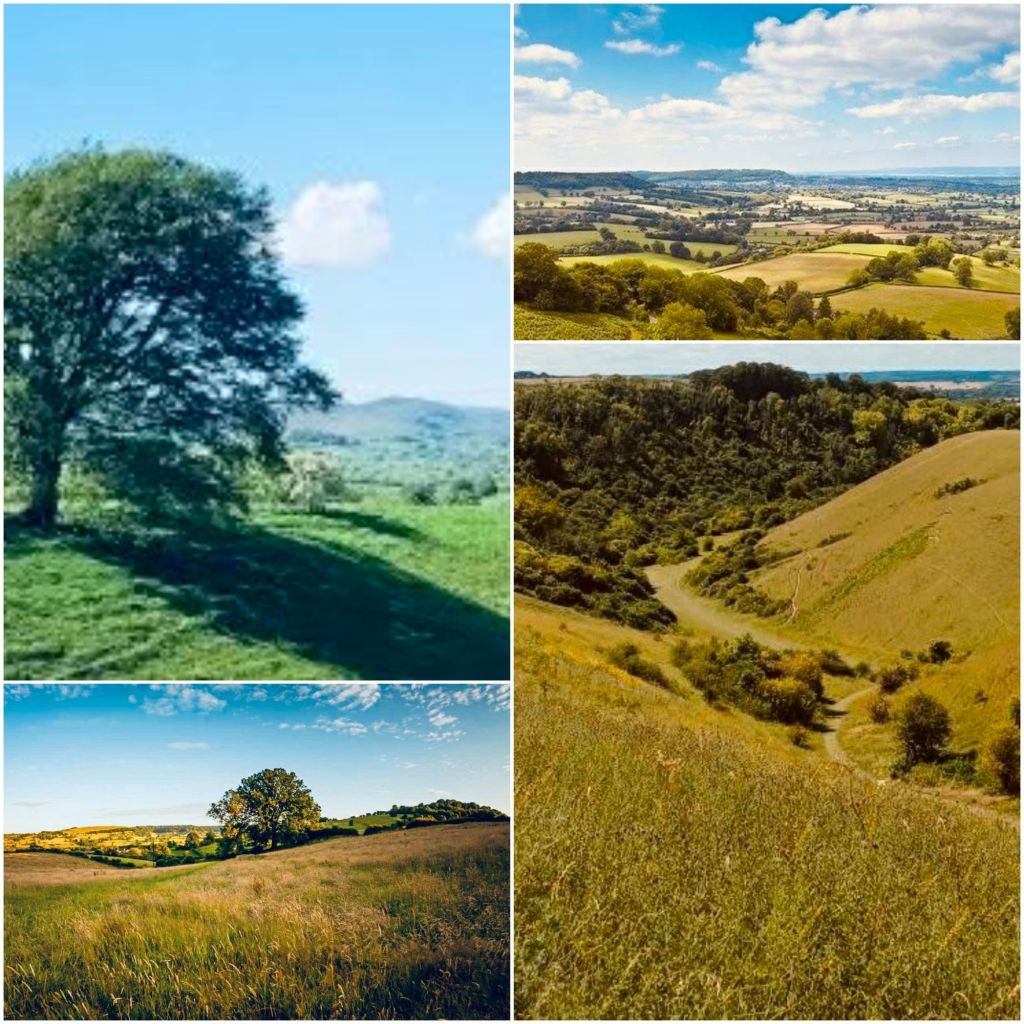
Unlike the train from the previous day, which brought me from Heathrow to Paddington, this trip introduces me to the simple joys of train travel in England. The route begins by meandering through the Southhampstead neighborhood before gradually leaving the city limits behind in favour of the lush landscape of the Croxley Hill Lakes region. From here it’s a serene mix of villages and greenery that confirms why the English countryside is considered an enchanting place. In an area essentially devoid of mountains, it is dominated by rolling hills, clear lakes, and medieval villages. The sort of landscape where you are afraid to blink for risk of missing another standing castle or stone abbey.
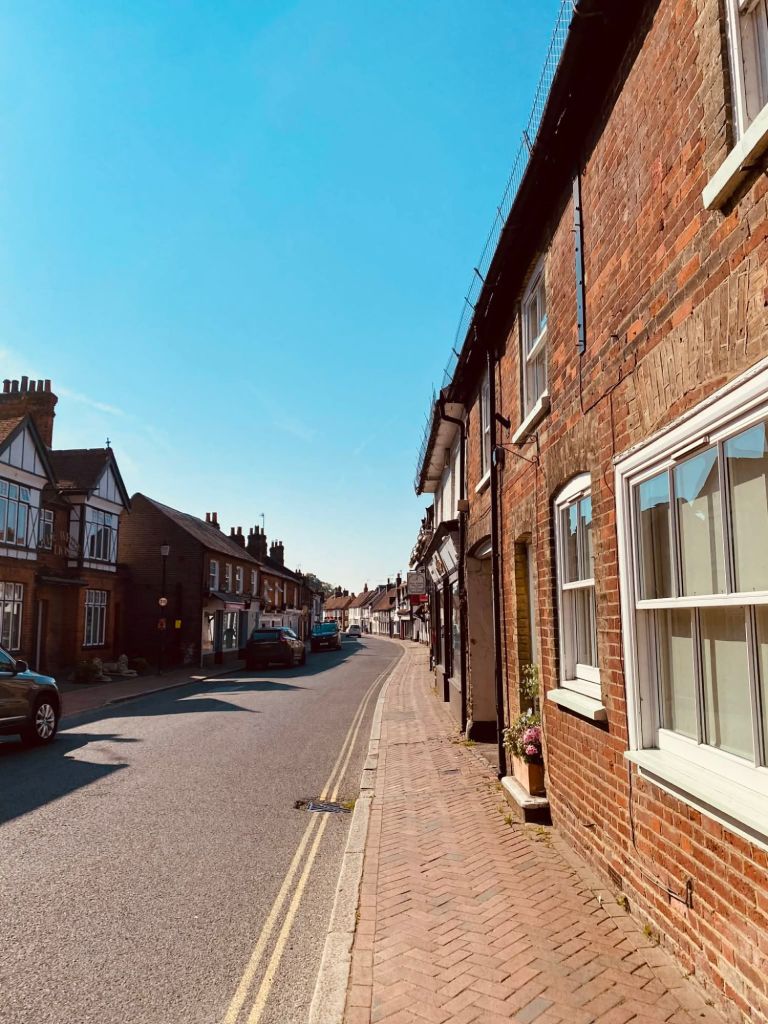
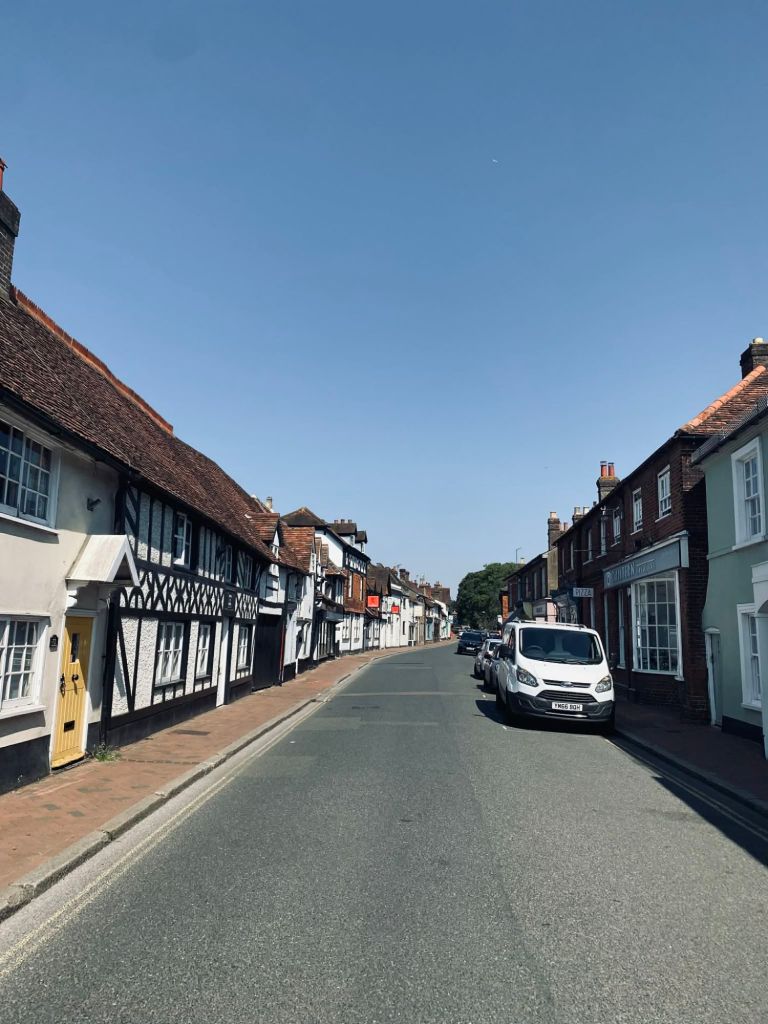
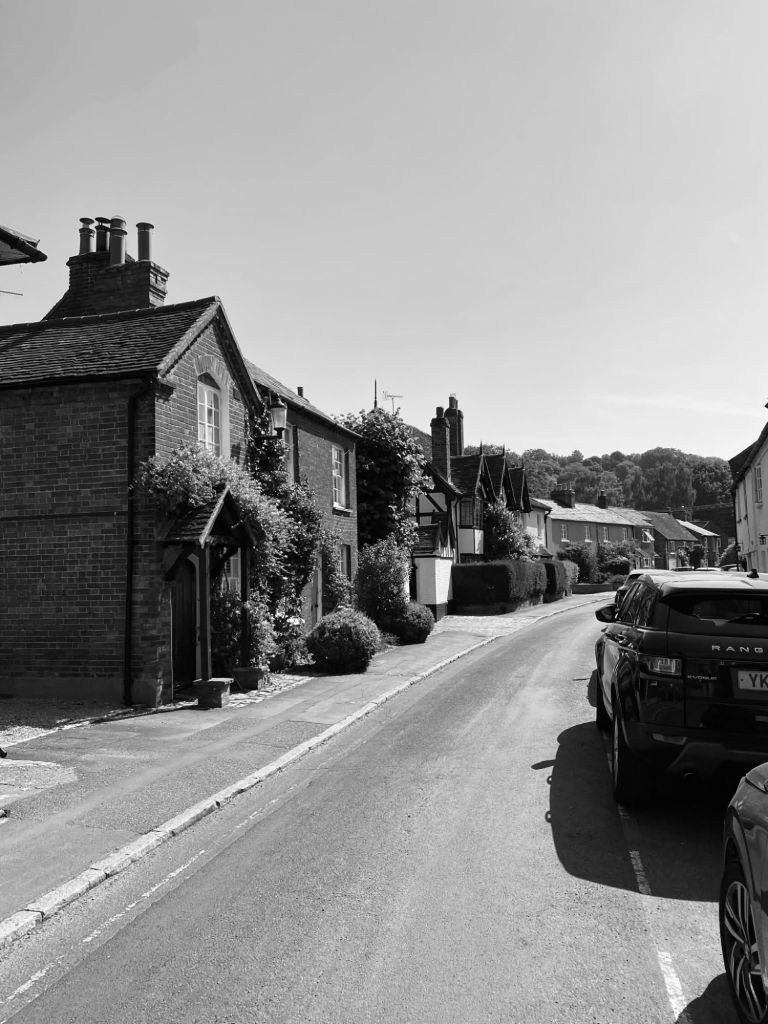
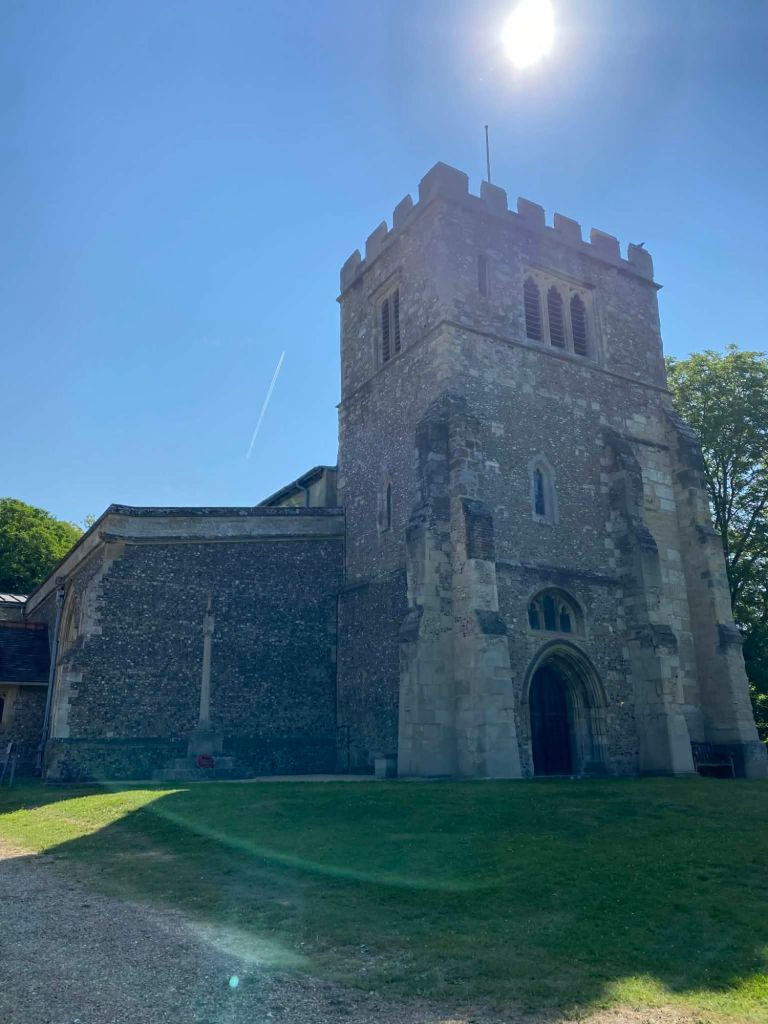
By the time the train arrives in Great Missenden, all of the noise of the city is gone. This is a different world defined by a different pace. Exiting the train bring me down a hill and straight into this village that one could swear was pulled straight out of any number of Dahl’s stories. A fairytale-esque landscape marked by a small high (main) street and a singular road leading up to the church on the hill where Dahl is buried.
I duck into the first building that greets me to grab a coffee. Here my attempts to order a simple drip coffee open up a conversation not just about coffee culture in England (if you want something other than the traditional espresso drinks you have to order an americano- because only north americans order their coffee like that), but about my travels. Apparently they found my accent “lovely,” and I got a whole backstory on the other north american whom had decided to move to their town and whom was the star of the show around these parts. Everyone loved it when Charlie (irony noted) would come in to chat, which he did on a regular basis. I never got to meet Charlie, but I did apparently make their day.
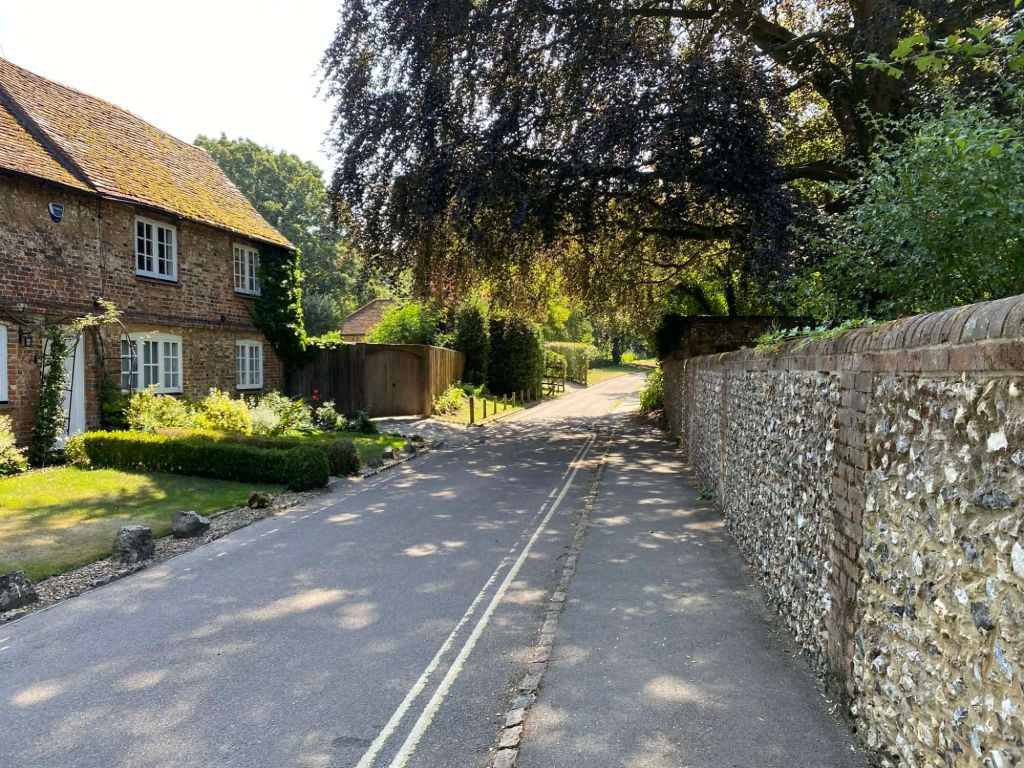
Coffee in one hand, my walking map in another, my pilgrimage takes me halfway up the high street to a hidden alley tucked between two buidings, which I don’t think I’ll ever get used to. Everytime I duck through one of these tiny passageways I start to feel like I’m heading down an endless rabbit hole that I might never come out of. I did learn something important though about these paths from my coffeeshop converstaion. One of the very real quirks about the English landscape is this concept of the right to roam. This is going to become the norm from here on in, but these pathways, or towpaths, essentially lead you through what here in North America would be deemed private land. Hence why these routes have all kinds of fun instructions, such as hopping over wooden turnstiles and fences, and cutting through large fields, and navigating through hedges sepearting one property from another. It might seem unusual to me, but this is in fact how these layers of history remain present and active in the life of the people. This is how one gets to these spaces that defined Roald Dahl’s own childhood experiences, and how locals continue to tread these same paths.
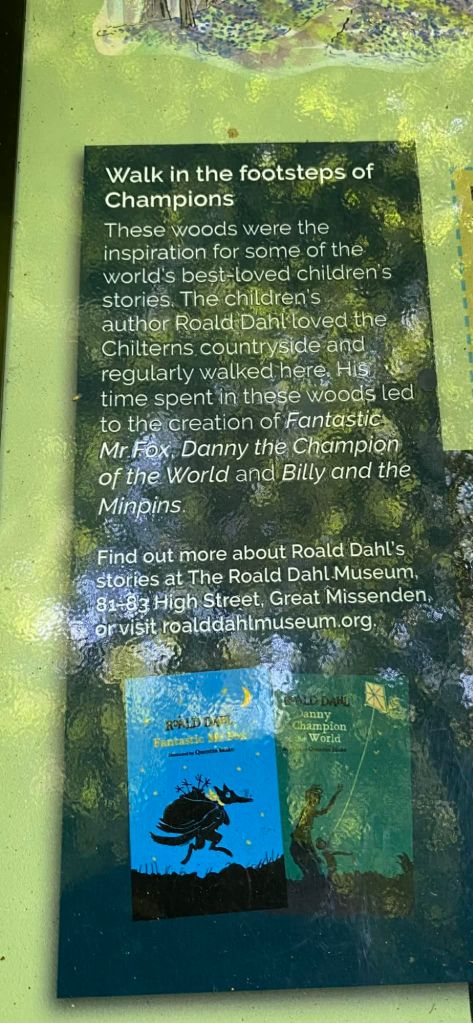
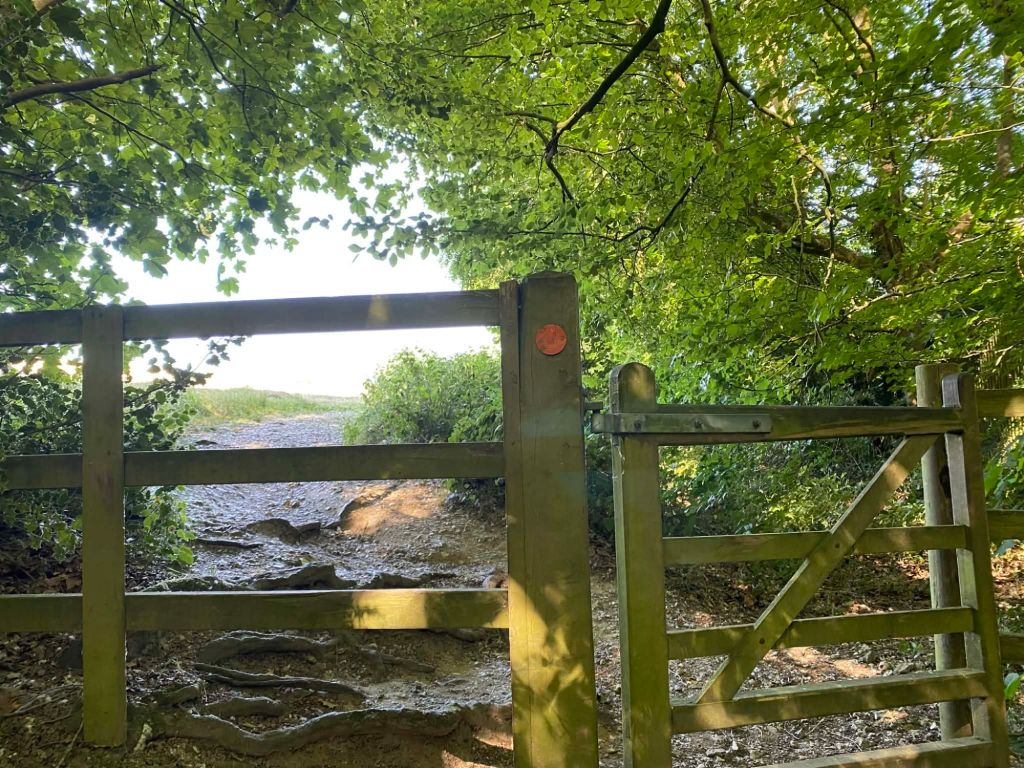
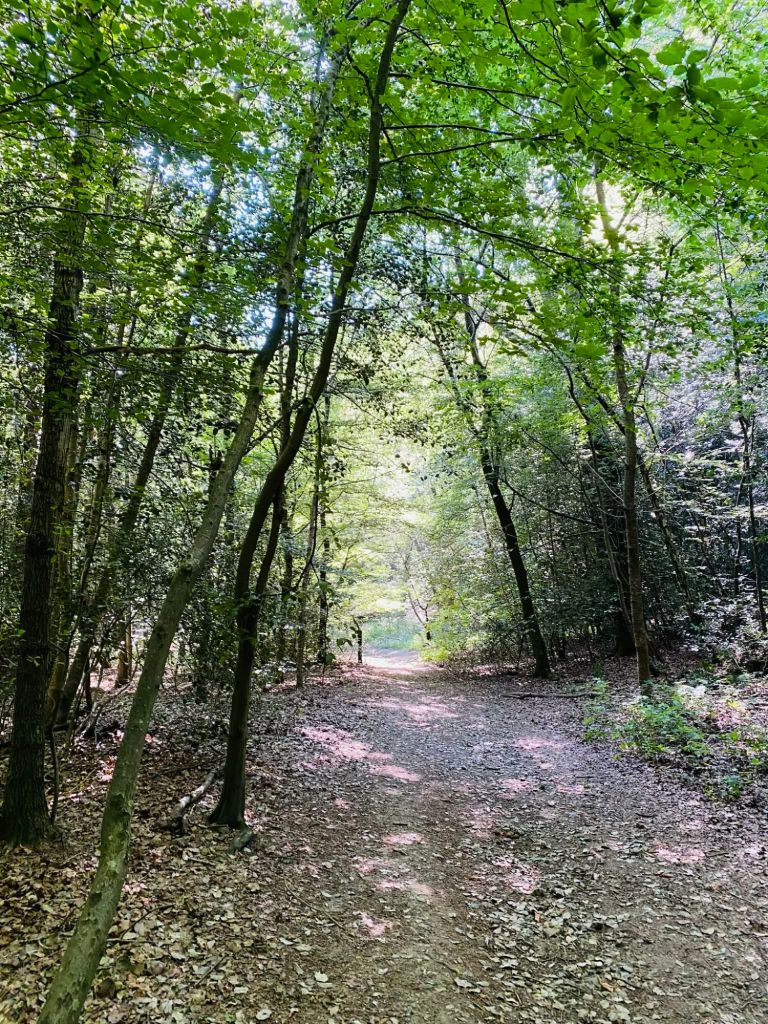
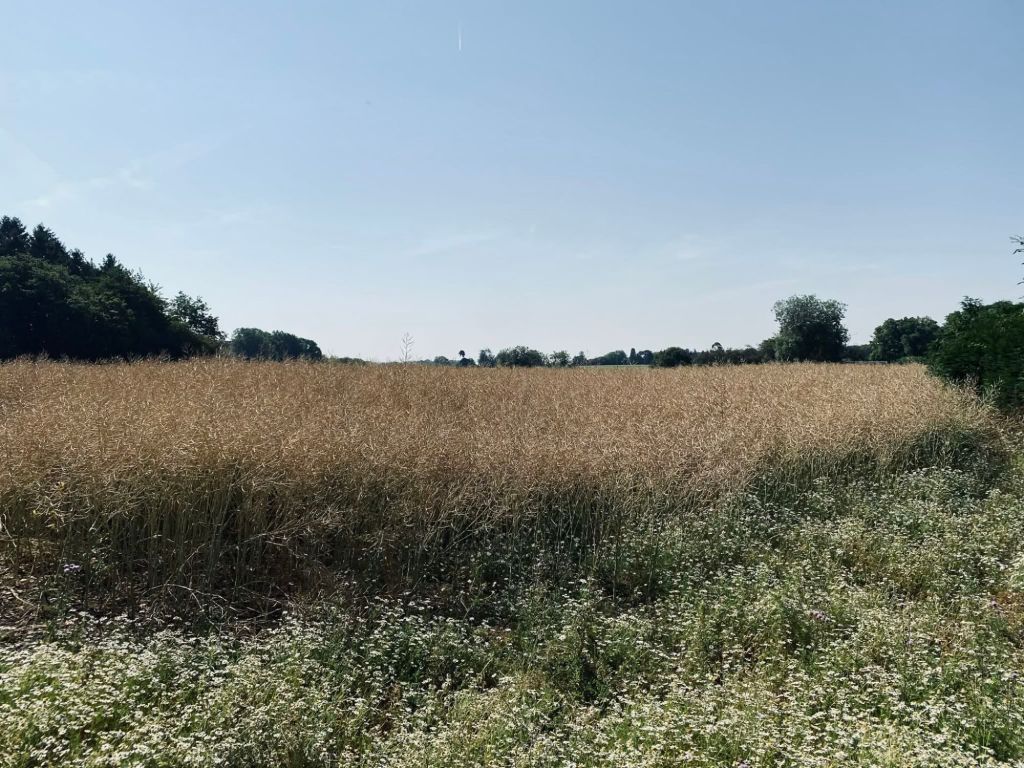
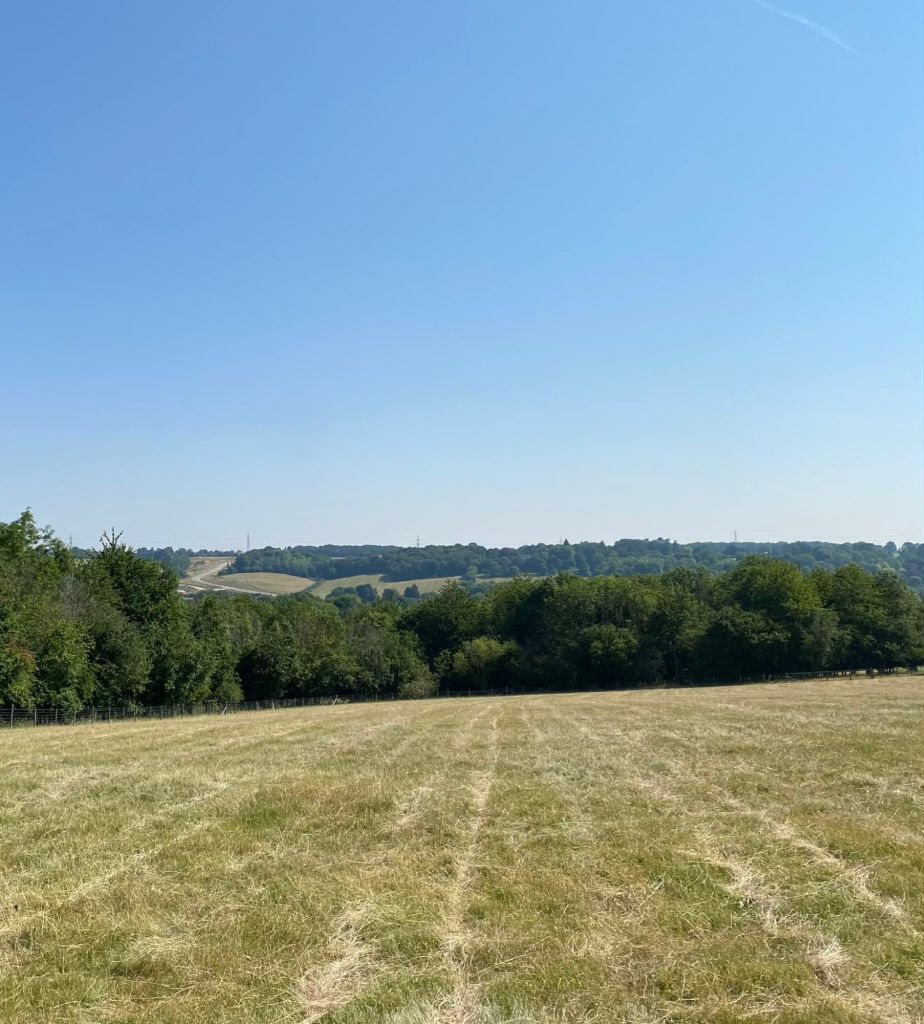
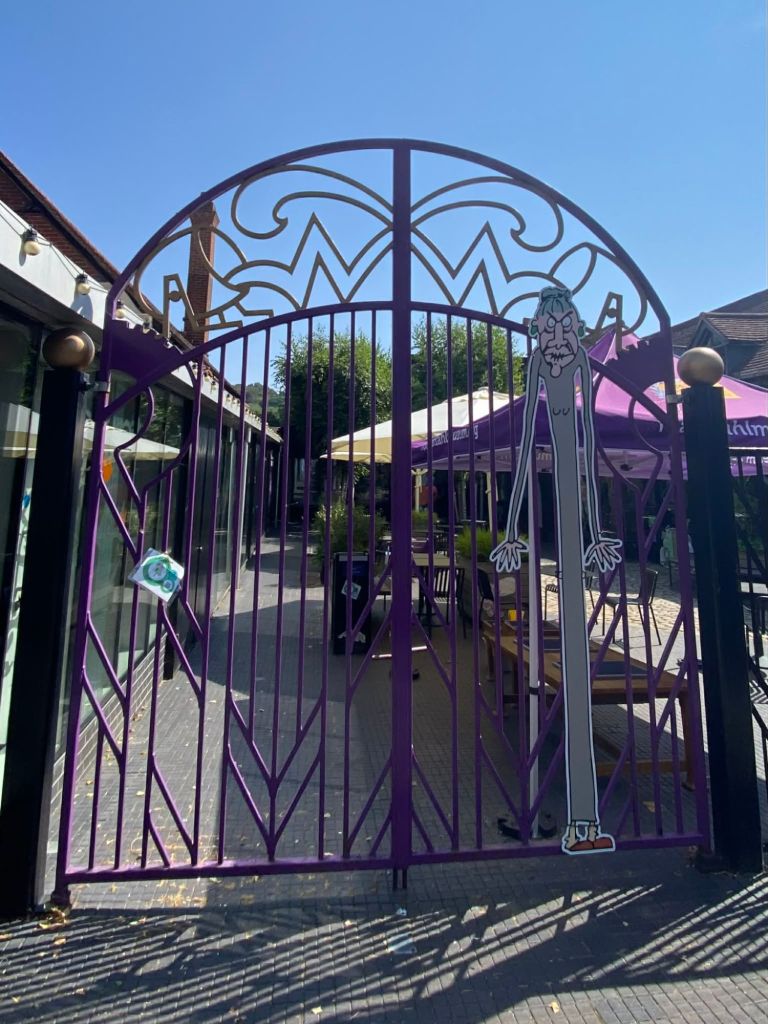
Eventually this towpath arrives at Angling Spring Wood, which was both Dahl’s personal playground and the backdrop for Fantastic Mr. Fox and Danny the Champion of the World. This path takes you in a large cricle through a meadow and up to a farmhouse lookout over the countryside, eventually landing back at the High Street where you find such landmarks as the Petrol station from Danny the Champion of the World and Maltida’s library. Right in the center of High Street is the museum, marked by a replica of the Charlie and the Chocolate Factory gate, and housing a recreation of Dahl’s writing room with real world items (the chair being the most iconic).

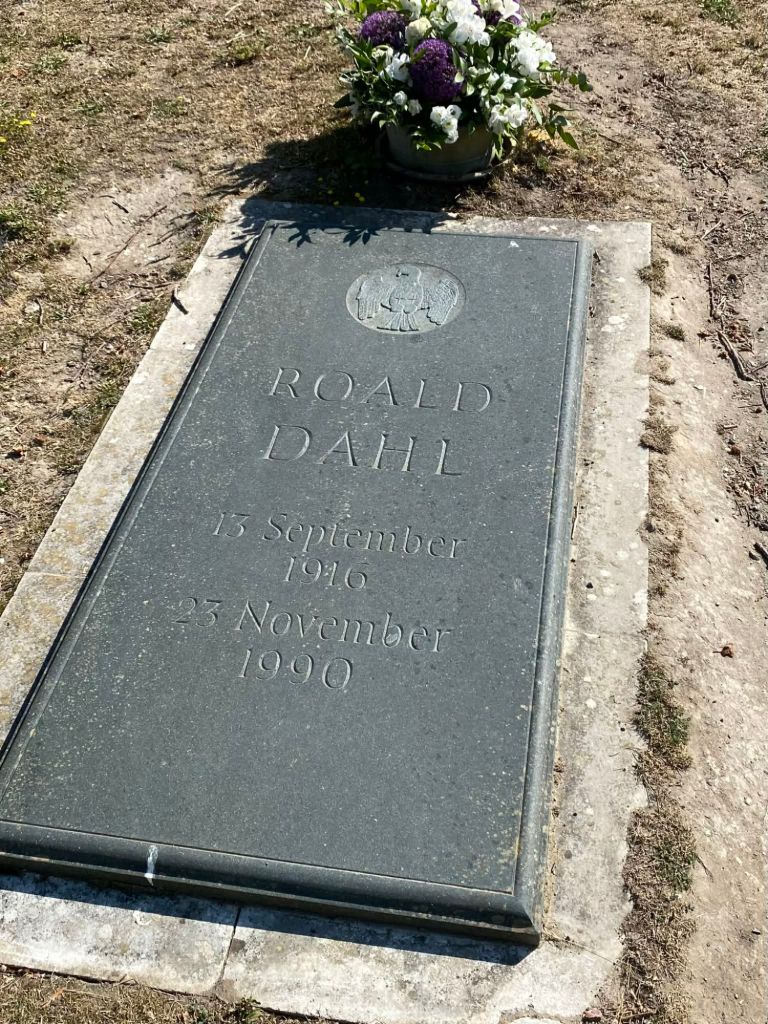
The height of this journey leads you up the hill to the old church, still looming large over the town as it keeps watch. Underneath what (I think is) a giant oak tree surrounded by benches is Dahl’s grave, with footprints from the BFG walking from the benches to the gravestone. The BFG was, and still is, my favorite story (and adaptation) of Dahl’s. It taps into these themes of learning what it is to belong in this chaotic world, and about the nature of growing up and forgetting our childhood. It is the story that most captures the spirit of my present pilgrimage, and the one that draws me most intimately into the life of this compplicated writer. Here I find this image and invitation to learn what it means to grow into our childhood, not past it or above it, and this is really what drove Dahl towards wrestling with the tension of his raw and direct observations about life and it’s brute nature on one side (you can see that in the often sharp and direct handling of his characters in terms of the child-adult relationship), and finding hope in the power of story. In the power of the book. To borrow from the BFG, “Don’t gobblefunk around with words.” Rather, learn what it is dream like a child, and to let that childhood temper your cycnism about the adult world. You can definitely feel how these woods, the quiet setting of this town, became and remain a sacred space for doing just this.

Mangan suggests that at it’s core, Dahl believed the writing process begins and ends with telling a good story. Not a lesson, not a morality tale, but a good story. All else follows from this. Apart from this the world cannot make sense. Apart from this the author can only expect to stand above the inherent power of this simple truth about the human experience rather than being informed by it. One of the beautiful things for Mangan about stepping into these stories as an adult is finding these glimpses of an author who was above all else human. A complicated creature who was aware of his quirks and shortcomings You can see this in his writings, which, as Mangan points out, far from being misogynistic are littered with a wanted humility we might miss, for example, in the strong female characters whom grace his pages. In many ways this was a man whom was a product of his own time and place and all of the complex parts that shaped it (beginning with the backdrop of war), but whom found himself restless, seeking those hidden truths reminding us that this world is, in fact, shaped by magic. I loved this thought as I contemplated my own complicated legacy and story on the train ride back into the city, eating my oat-bowl and dreaming about my next adventure. If the morning was spent connecting with the magic of a good story, the afternoon would be bringing me to the doorstep of A.A, Milnes fascination with philosophy. For now, I have an hour to read.


