
One of my earliest childhood memories reaches back to when I was around 5 years old, growing up in a north end neighborhood defined by it’s proximity to the railyards and the iconic steel bridge that spans it’s tracks, connecting downtown to this isolated hub of immigration and settlement. Here the neighborhood was our playground, made mostly of gridded residential streetes that led to a park down the block.
Somewhere in these memories, buried in what would become for us a series of moves from the North End to the Kildonan areas further East, is an image of an old tree. Despite my best efforts, I have not been able to track this old tree down. I’m not precisely sure which house or what age it belongs to on that timeline. What I do know however are the ways in which the image of this tree continues to capture and preserve the emotional presence of my childhood experience. It’s a tree we would visit together, finding in it’s branches a veritable fortress against the forces of that adult world threatening to impose it’s will on our desired acts of imagination. More vivid perhaps were the moments I would spend here by myself.
Once again, the memory is blurred, displaced, just out of reach. But there is one dominant memory that stands out above the rest. What I feel when this memory pops into my head is notes of transition. I imagine this moment sits somewhere between another move from one neighborhood to another. I can see myself on one particuarl afternoon making the trek to this tree on my own, grieving a loss of some kind. The loss of a space? The loss of a group of friends? A loss of a phase of my childhood? I can’t be sure. What I can do is follow this moment into what feels like an important part of my awareness of this veritable part of life: the act of growing up.
The famous children’s author and creator of the world’s most loveable bear, Winnie the Pooh, spent a good deal of time thinking about what it means to grow up in the midst such a strained memory. Gyles Brandreth’s revealing biography, Somewhere a Boy and a Bear: A.A. Milne and the Creaiton of Winnie-the Pooh, a book that takes us far outside the 100 acre wood and, in being less about the bear and more about the writer, into the complicated realities of Milne’s family dynamics, functions as a reminder of the ways in which our childhood stories emerge from the expansive nature of such adult lives. As author Mac Barnett notes in his recent book Make Believe: On Telling Stories to Children, there is a deep rooted connection between our adult and child selves, as our childhood stories are, by their nature, being told by the adults. This fundamental truth about our childhood stories is precisely the thing that awakens us to the process of “growing into our childhood,” not above it or beyond it.
When I was first entertaining this idea of a literary tour of England, a means of encountering my childhood stories in light of quickly approaching 50 years of living, Milne and the 100 acre wood was near the top of the list of must visit sites. Somewhere in these stories, stretching from the shores of their England origins to their popularized Winnipeg ties and it’s continued migration up Ontario’s North Shore, sits one of those early voices of my childhood whom helped me to make sense of my own struggles and questions. Someone for whom the creaiton of these stories reflects a very real wrestling with the world his adult self was throwing into question.
For Milne, so much of his storytelling revolves around this playful yet weathered banter between the modernist mantra sweeping across England at the time and the memories of a lost world drowning in it’s wake. You can hear this in his famous poem, Now We Are Six. which juxtaposes this notion of growing up into our own wanted maturity with this notion of a sort of pre-existing Wisdom that can only be “grown into,” not obtained nor created.
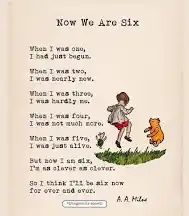
“When I was five, I was just alive. But now I am six, I’m as clever as clever. So I think I’ll be six now for ever and ever.”
What he sought was the Wisdom of ones childhood, something he found in his growing fascination with philosophy and the philosophers. Here in this poem you find the idea that growing up has less to do with obtaining knowledge of propositional statmenents of facts as it does the discovery of a way of being, a way of living. Less to do with modernist conceptions of “forever,” enslaved as they are to the finite language of modern progress, and more to do with growing into an awarness of a “kind” of reality that has the power to endure. One way of knowing seeks to bring about an awareness of truth through a strident belief that to be an adult means to do away with our childhood selves. The other seeks to more fully understand a world our childhoods once knew and inhabited before the endless progression of loss threw it all into question. For Milne, this is the space where that infinte crisis of that clash between Life and Death can be grappled with, breaking open a world that, more and more, requires the singular greatest tool of our childhood selves in order to be obtained: the sacredness of our imagination.
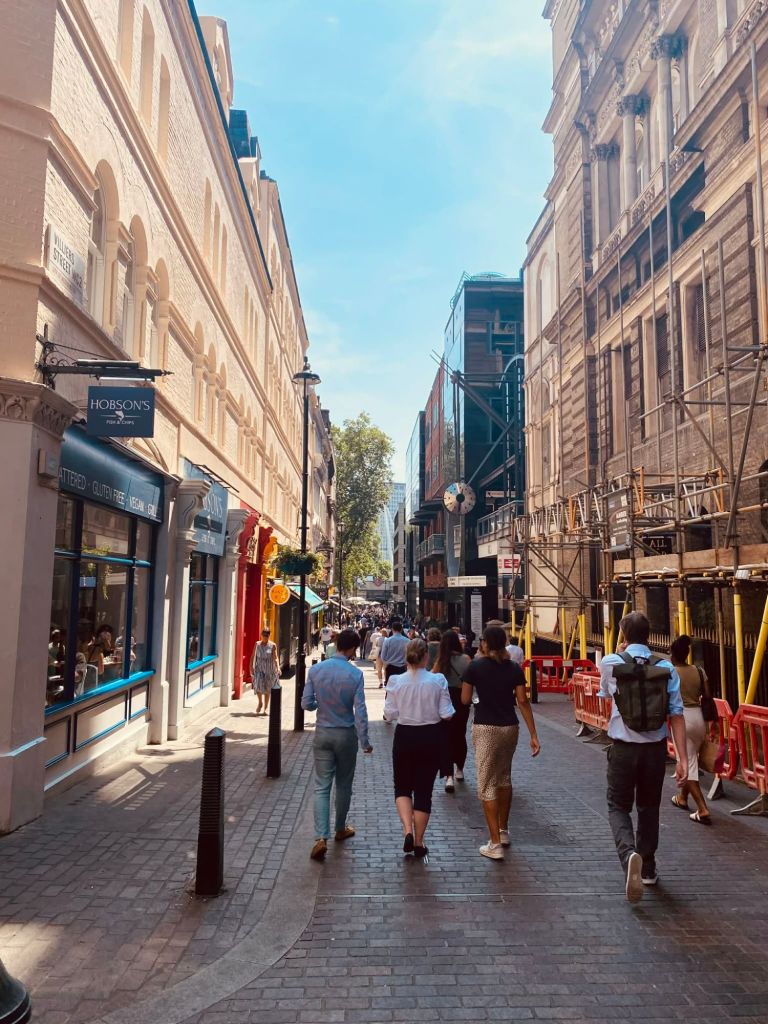
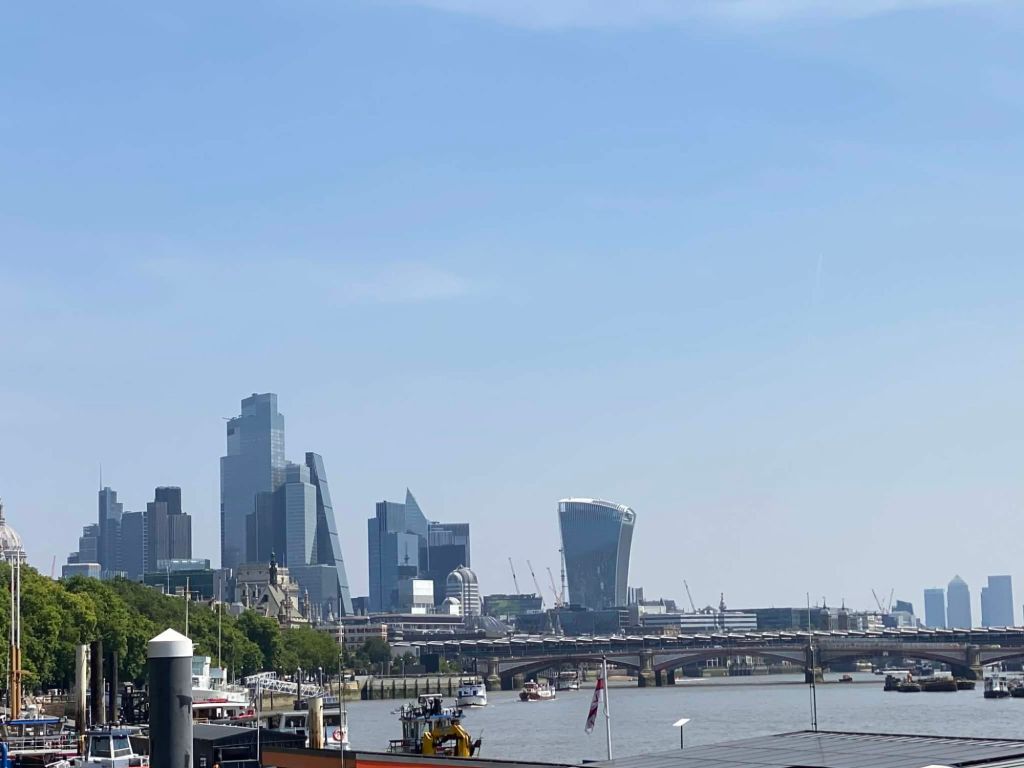
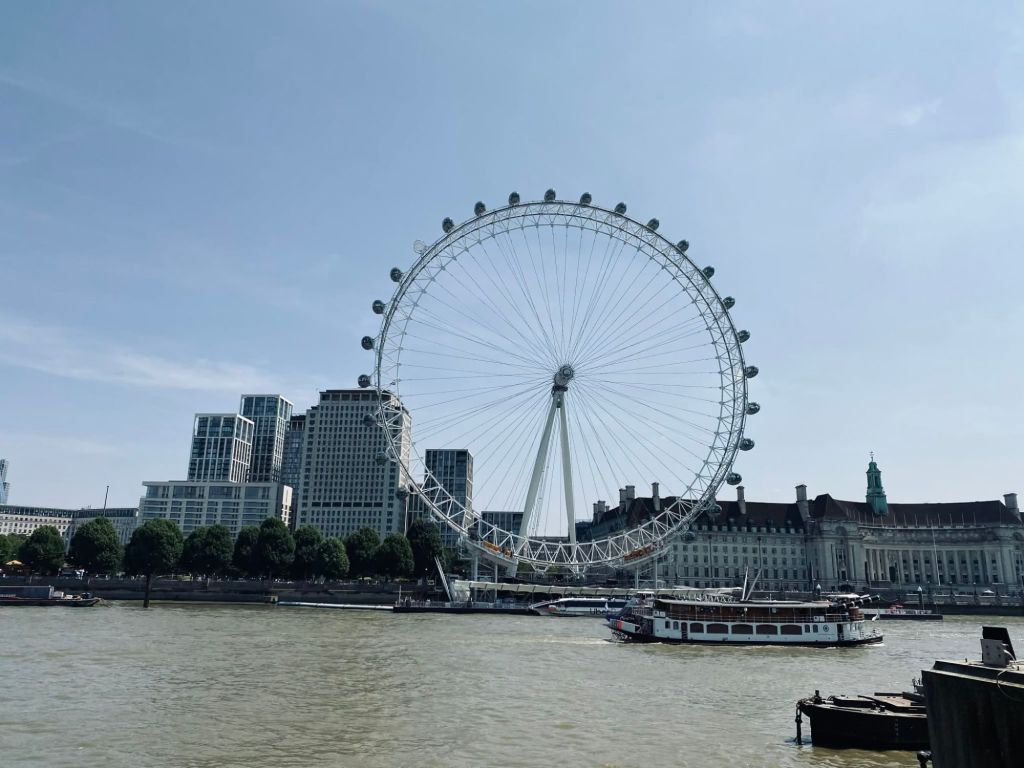
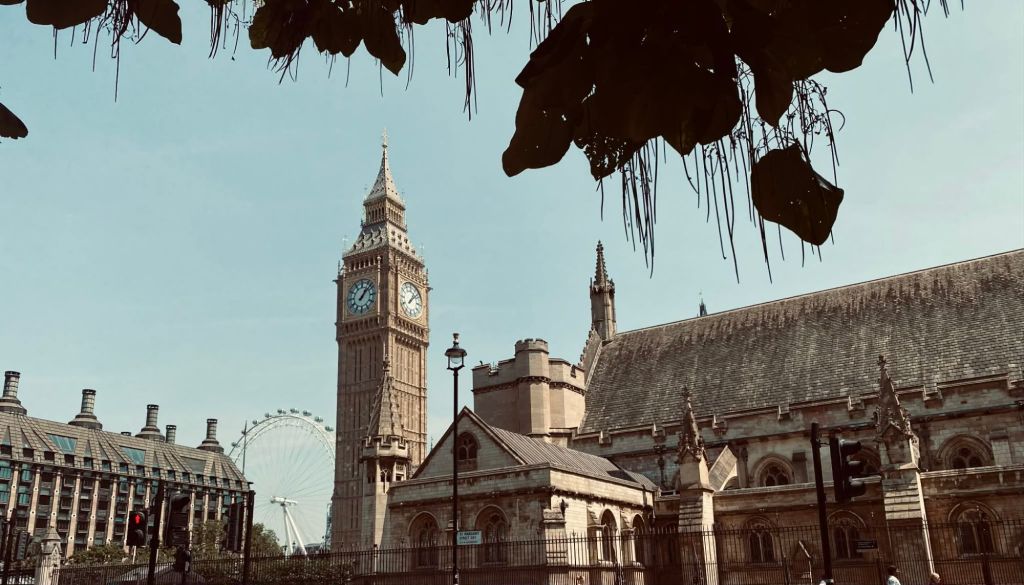
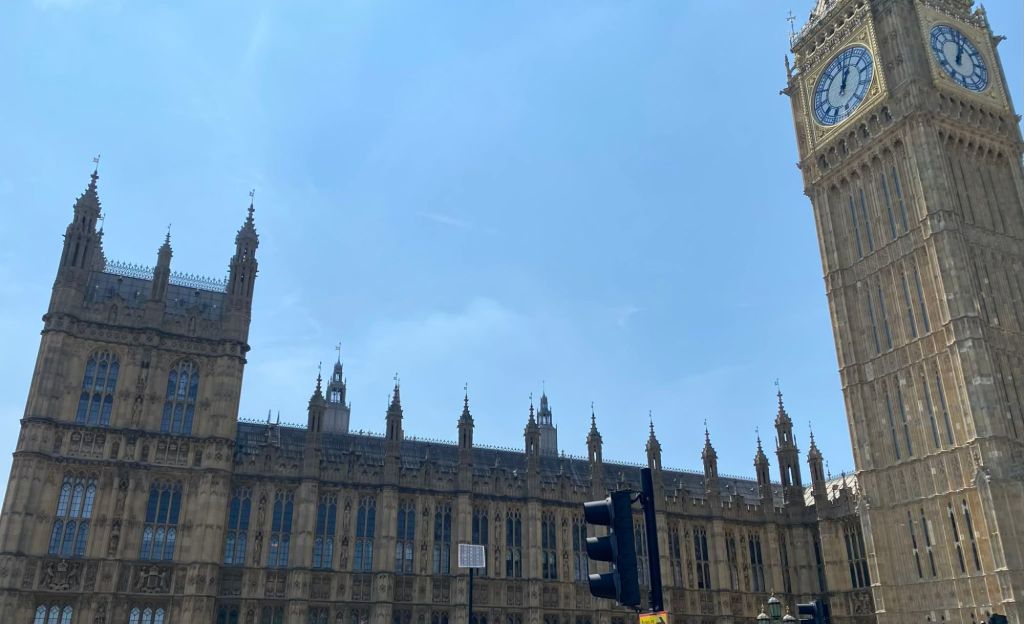
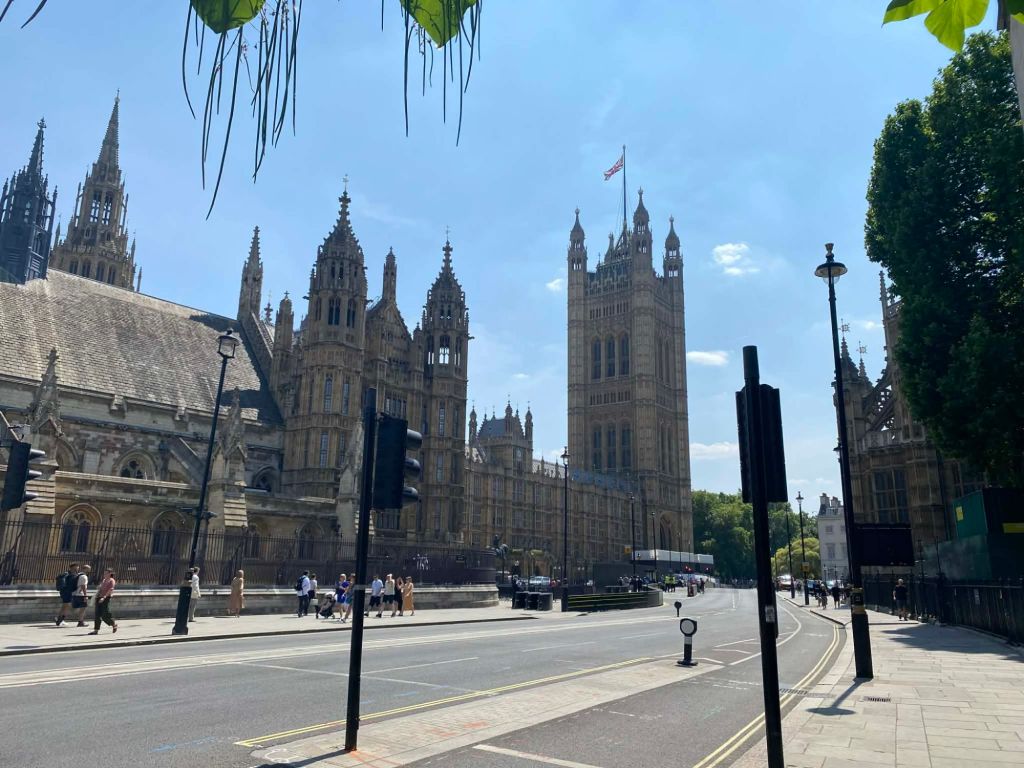
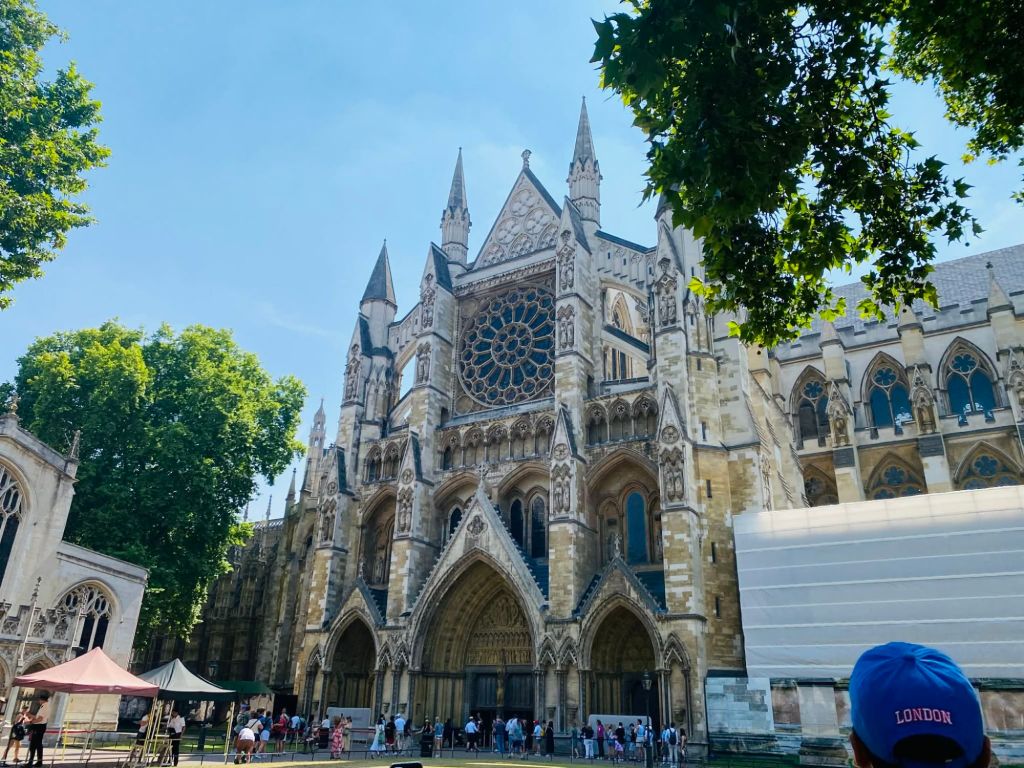
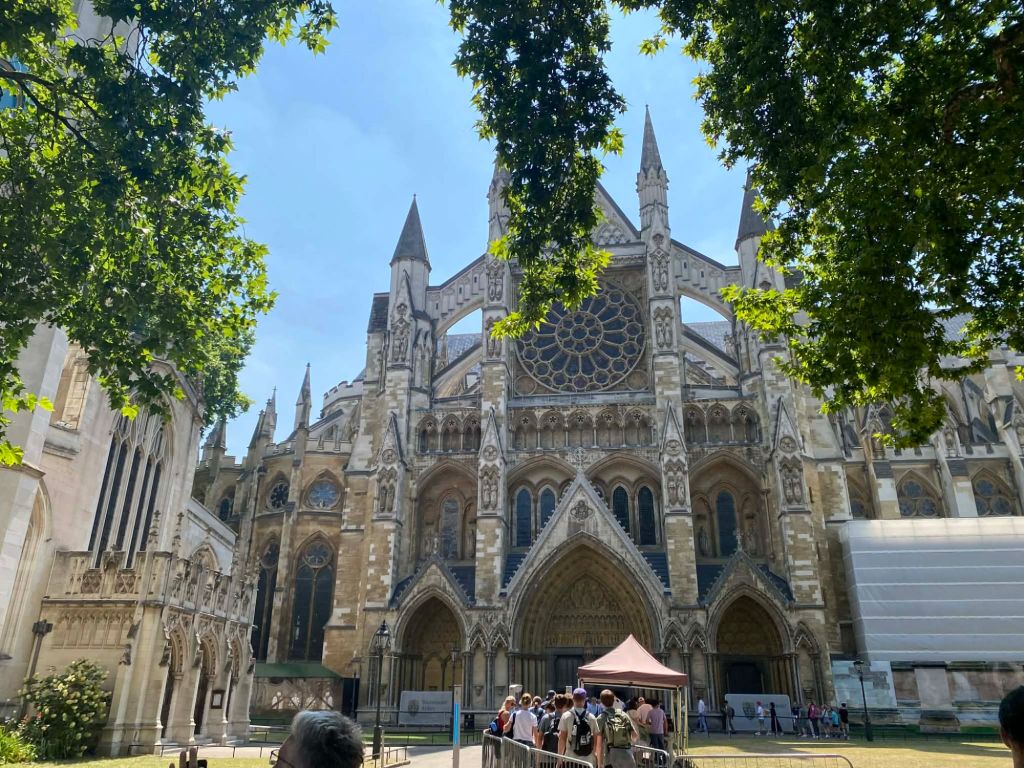

Having returned from a morning exploring the old pathways of Dahl’s own adult inspiration, I spent the ensuing hours I had waiting for my next train to East Grinstead, heading towards the Southern shores of Brighton, enjoying a stroll along the Thames, the most important river in London’s history, and the same banks upon which London’s great medieval history was built. It’s a long stretch spanning the recognizable Tower Bridge on one side, and the area of Westminster on the other. Here is where you find the city’s larger than life processions of royalty and sacred lineage colliding, where the crown jewels of The Tower of London coexist with the honored graves at Poets Corner. There is something endlessly fascinating to me, taking in the image of the massive dome of St. Paul’s Cathedral looming inbetween these two familiar (and heavily touristed) sites, about this peculaiar (to my own north american sensibilities) relationship that exists here between the sacred and the profane. The ways St. Paul’s Cathedral came to carry the monicor “the writers church.” Where, in what is arguably a far more realized “secularist” society than America, these robust conversations between ideas and mystery still seems to exist.
Here I let my mind wonder through images making up an imagined montage of this city’s emergence in time and space, where history and modernism now collide in an explosion of somewhat muddled ideologies. The more one wanders these streets the more one realizes the rich legacy of the one thing that still endures: a deep awareness of the importance of and the power of story in navigating this terrain.
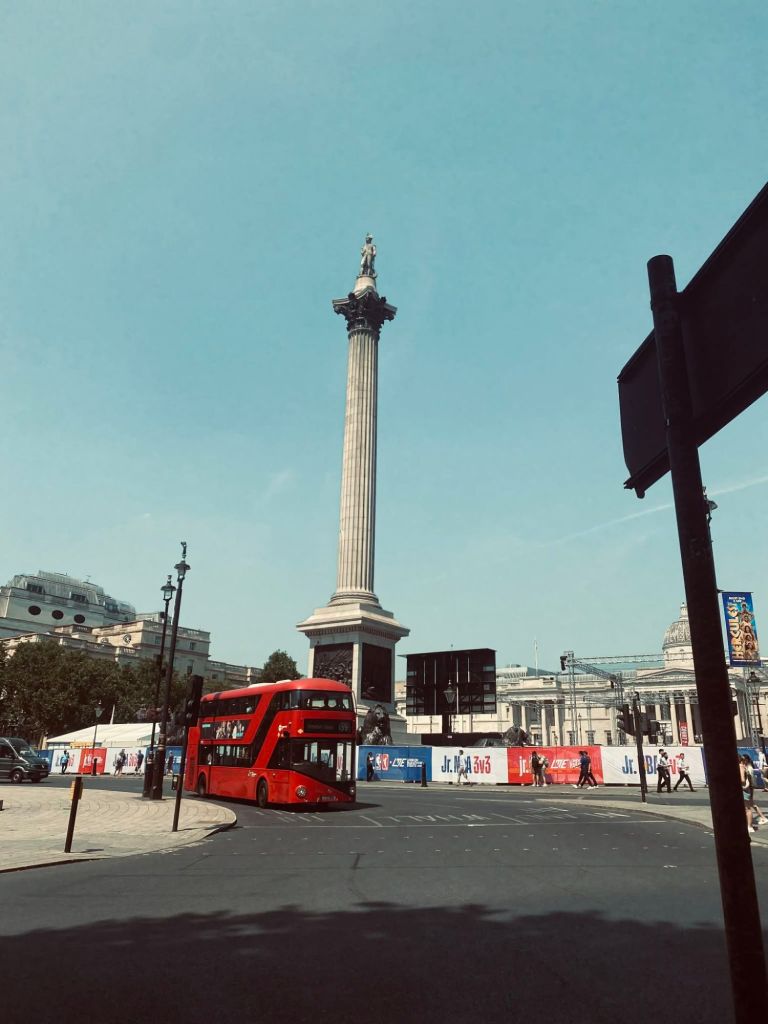
My way to the train at Victoria Station brings me through St. James Park and Trafalgar Square (which was unfortunately gated off due to construction), and up towards the southern edge of Kensington Gardens/Hyde Park. This is where you find the famous Harrods Department Store and the old stomping grounds of Virginia Woolf, or further south the Churchhill Estates. Across the river sits the massiave Battersea Park, a view you get from the train as you pass by those iconic towers.
The journey to East Grinstead, leaving from the quiet pomp of Victoria’s interior, opens up a slightly different countryside than the western route heading to Great Missenden. Once you cross the river and leave the city limits, you find yourself in a consistent string of suburbs, weaving around the Eastern side of Gatwick Airport towards the well preserved medieval high street of East Grinstead. The landscape doesn’t really begin to quiet until you leave Hurstgreen. That’s when the countryside opens up. I am aware in this moment that this will be the nearest I manage to get to Canterbury, reminding me of just how rich the English landscape is in it’s literary presence is overe this vast expanse of land.
East Grinstead is the closest train station to Hartfield, the location of Pooh Corner, where A.A. Milne lived on the edges of Ashdown Forest in his estate. Milne came up with his stories during his time at this estate, while he composed his books in London (at a house on 13 Mallord Street). When you get off the train you have to catch a bus that then takes you the rest of way to the relatively remote village of Hartfield. A fun ride for anyone not accustomed to travelling the narrow England roads.
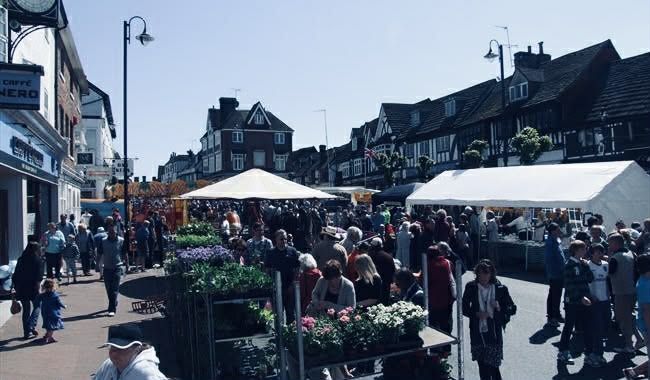
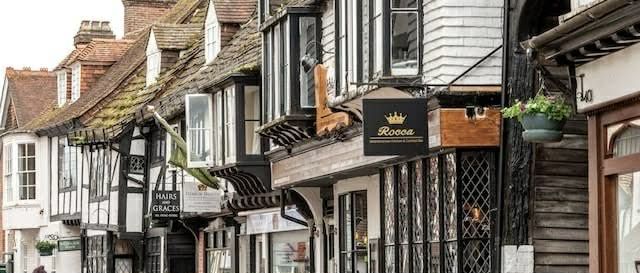
Given that I had a bit of time to kill waiting for the bus, a line that runs straight down the East Grinstead High Street, it was an easy walk to this central hub, from where I could catch the bus at any number of stops lining the way. The town is known for it’s singular and lengthy extended High Street, developed in the 14th century to accomodate trade between London and the South Coast. it’s a stretch that runs on and on unencombered by the normal hedged rows and meandering corners that define most of these medieval centers. What makes it striking to see up close is the image of it’s buildings, all designed, as they described it, using old world timber and in a like model.
I spent some time perusing the different shops that line the way, exploring it’s bookshops, enjoying a coffee, and taking in the hustle and bustle of the crowds. And eventually I was off on another hour long bus ride straight into the even more remote countryside.
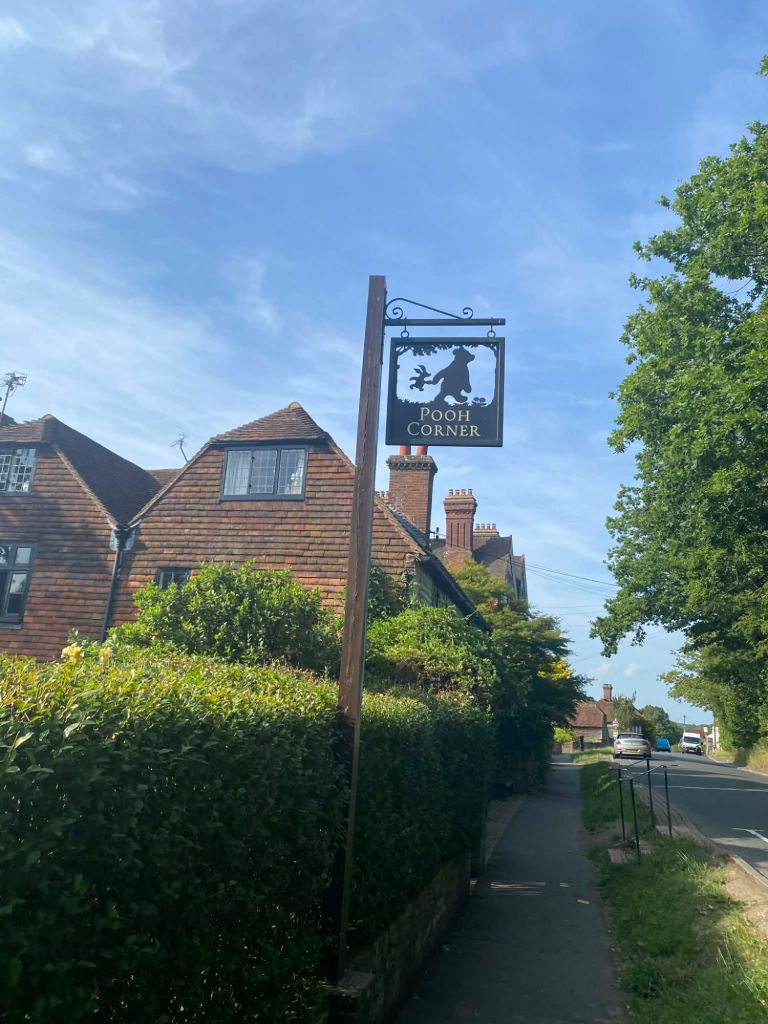
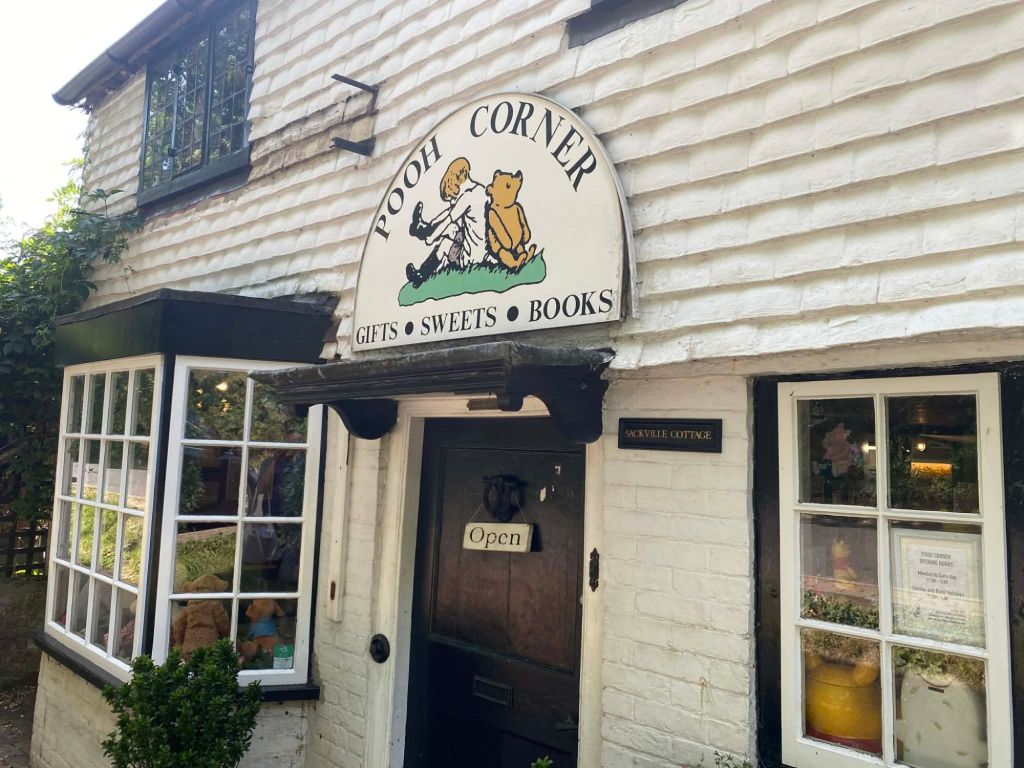
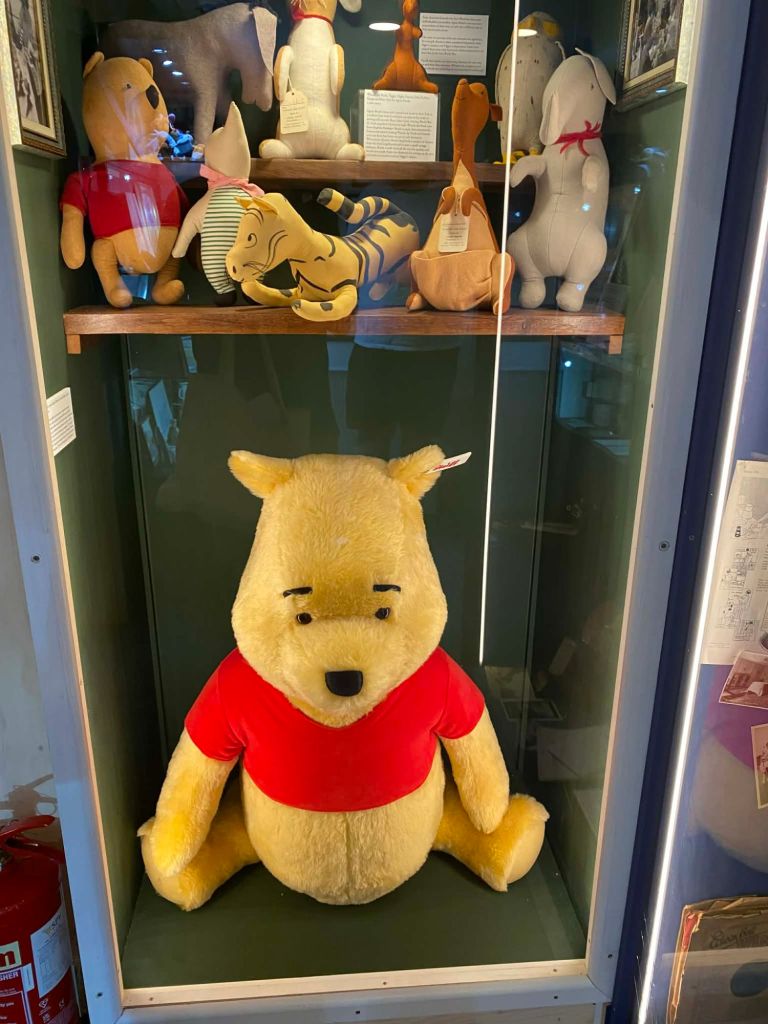
The first thing they recommend doing for anyone looking to explore the heritage of Milne and Winnie the Pooh, is stopping at Pooh Corner. It’s a small tea room with a lovely and suprisingly informative free museum and a shop. Here you can walk through the different rooms of the museum, getting a sense of who Milne was, and pick up your map which will guide you along the towpath, a path that becomes its own adventure as you cut through different estates and large fields, jumping fences as you go. The deeper you get into what eventually becomes the 100 Acres Wood (or Ashdown Forest), the more remote it somehow becomes.
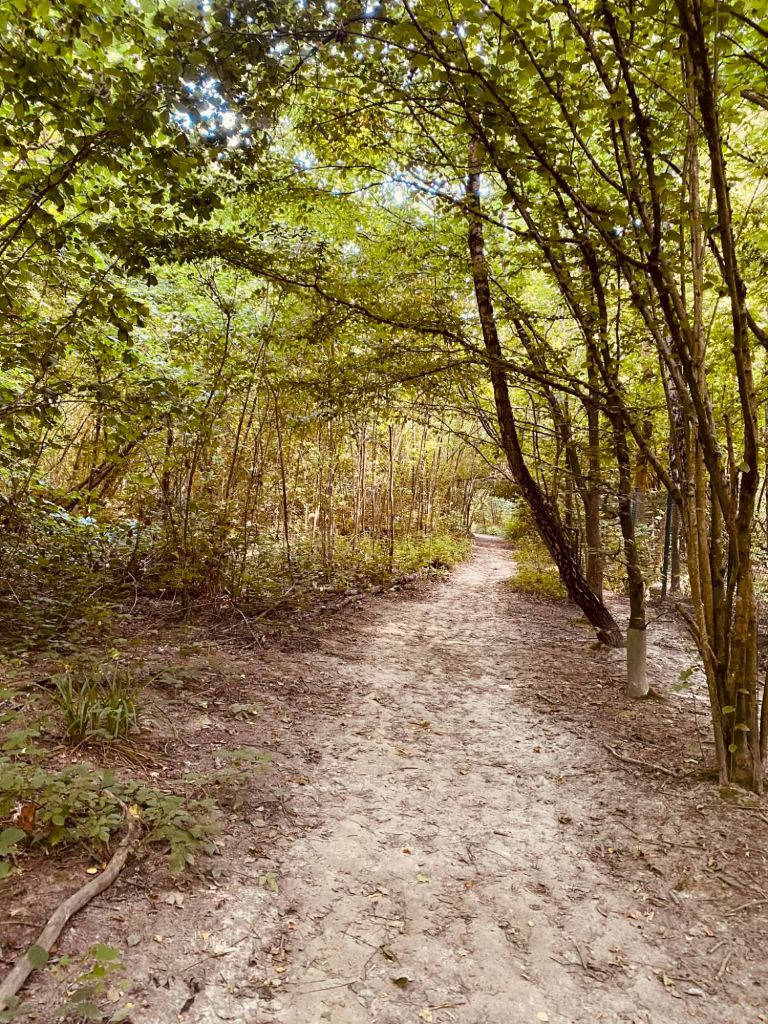
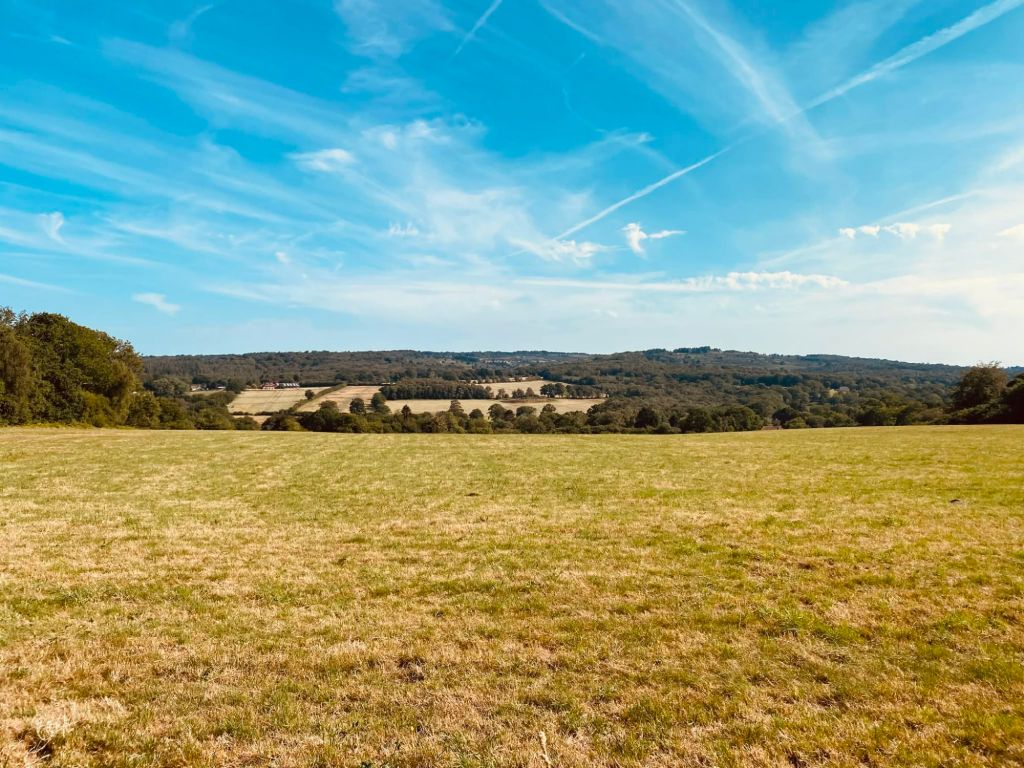
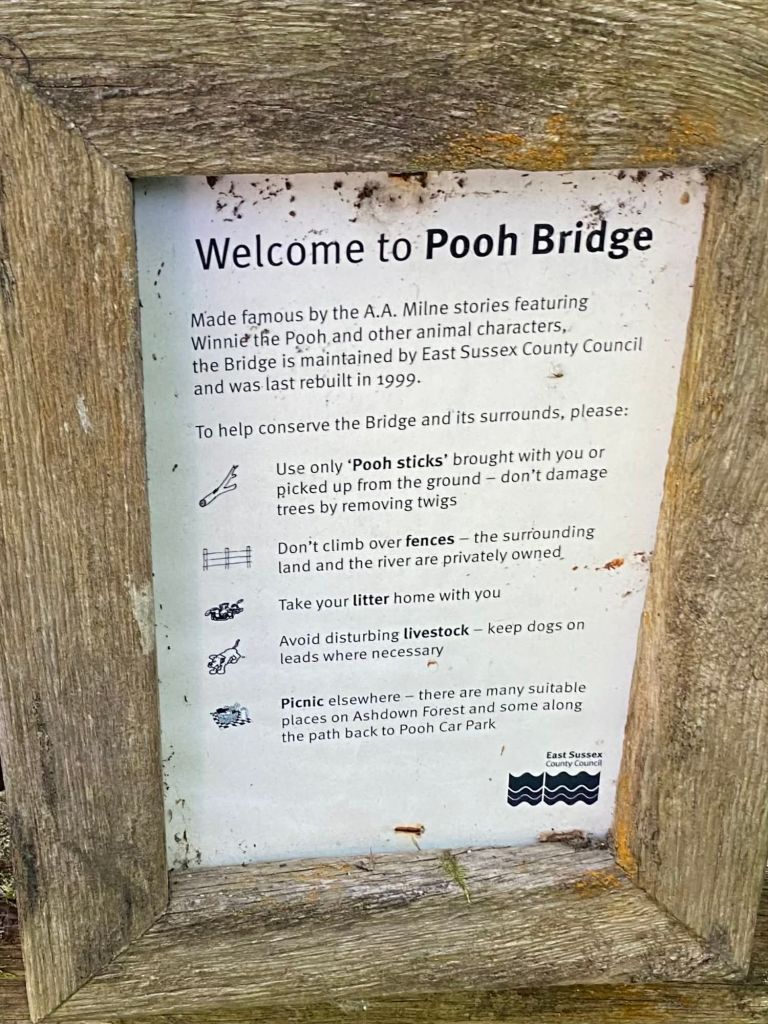
One of the more important sites, which sits at the halfway point of the route, is Pooh Sticks Bridge, a small, wooden structure spanning an understated creek which is maintained by the heritage center. This is the famous location upon which we find that famliar picture of Christopher Robin and Pooh Bear hanging over it’s rails playing a game of Pooh Sticks. A sign dotting the site invites you to set your inhibitions aside and engage your imagination, giving you the rules for play. Further up you will come across the houses of Piglet and Owl hidden in the forest (Pooh’s house is before you hit the bridge). And further up still is a memorial.
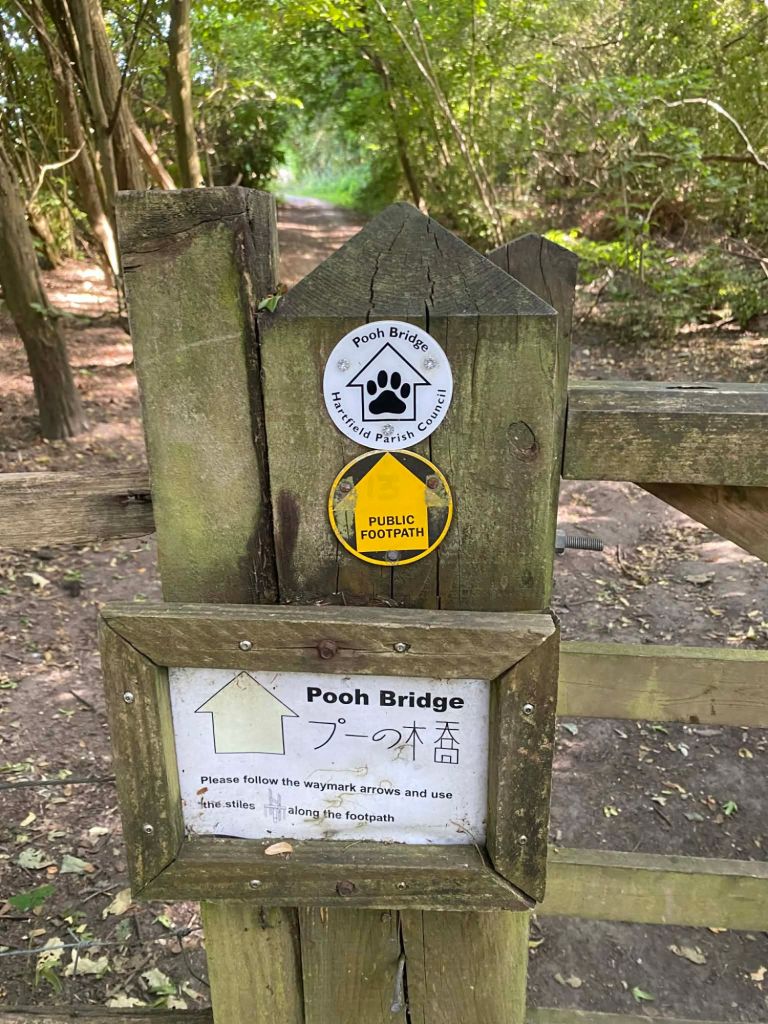
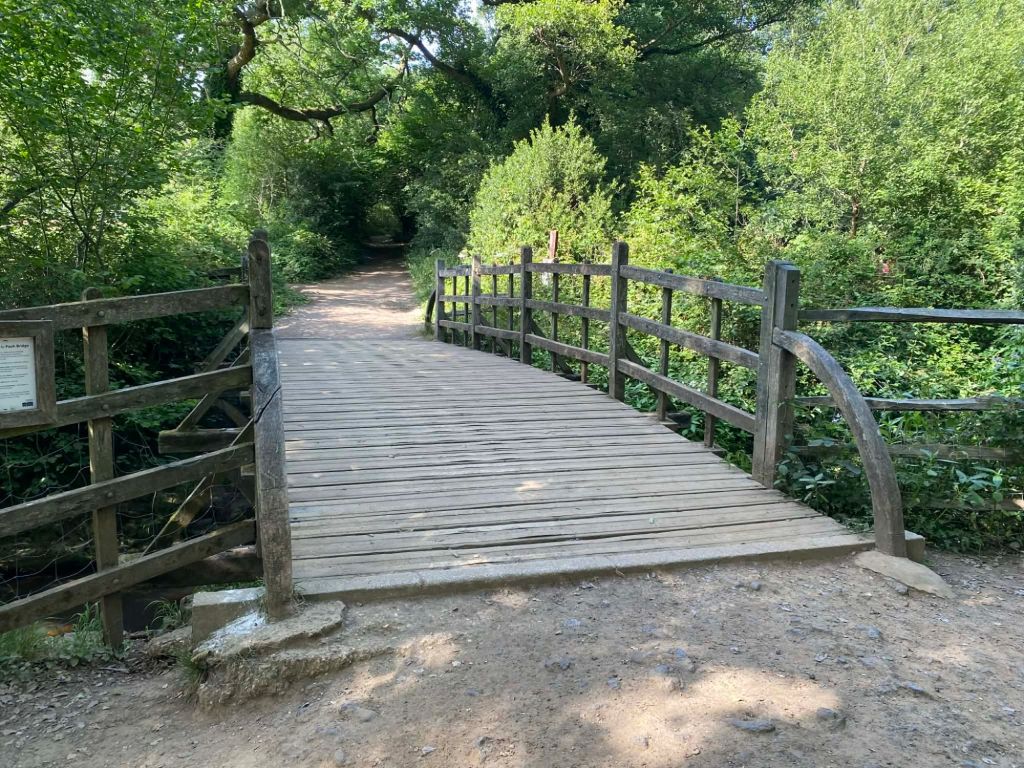
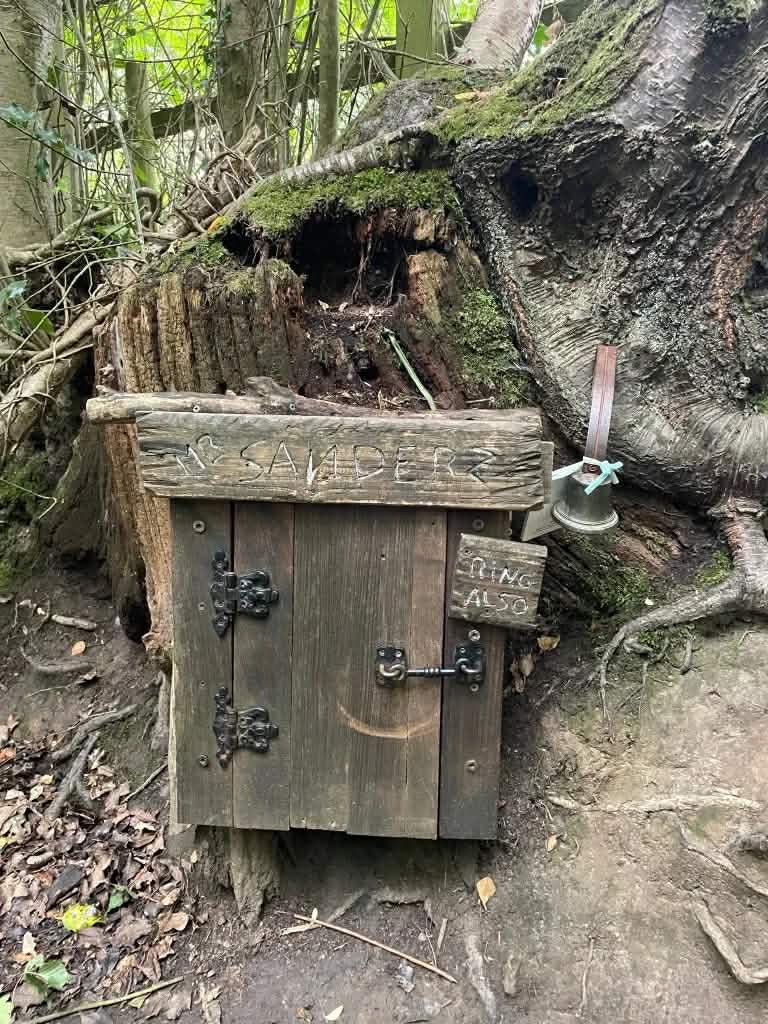
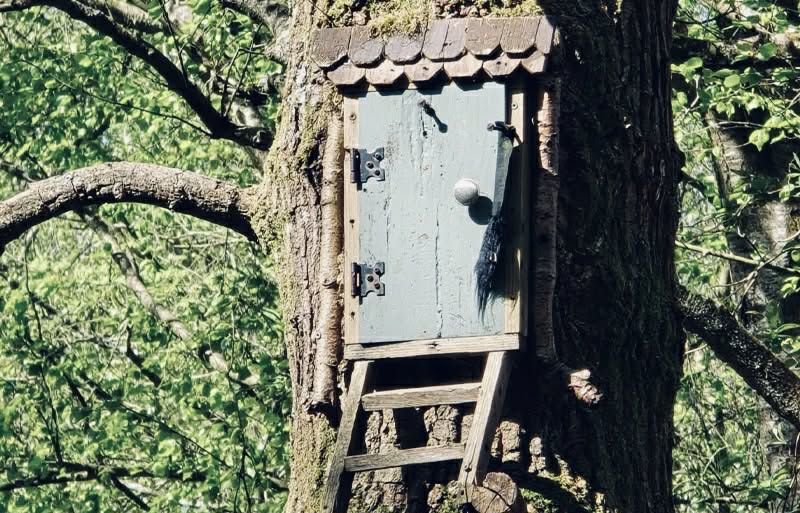
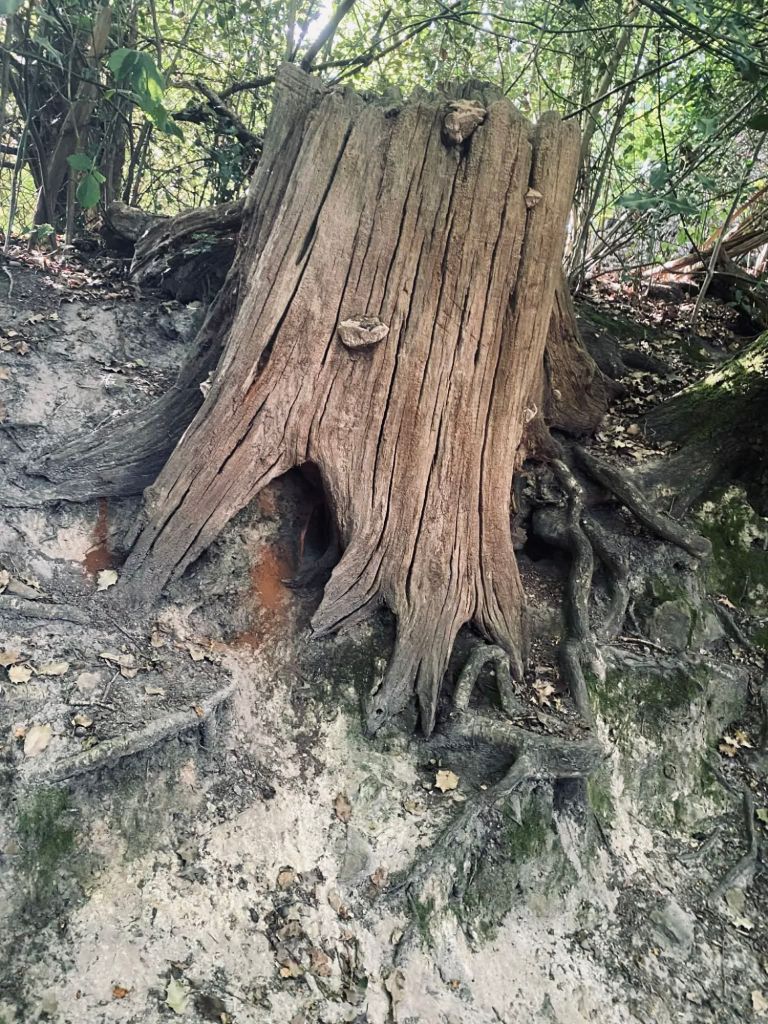
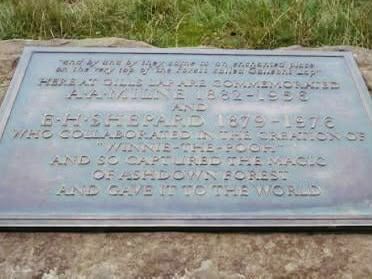
I brought a picnic supper to eat at the bridge. I dangled my legs over the edge and watched the current flow with the gentle breeze pushing through the shaded enclave nestled deep within the forest. A welcome space given the height and the strength of the sun beating down on those vast fields one has to cross to get here. The quote that hit me in this moment was Pooh’s wondering about the power of the river’s image when it comes to making sense of one’s life.
“Sometimes, if you stand on the bottom rail of a bridge and lean over to watch the river slipping slowly away beneath you, you will suddenly know everything there is to be known.”
The true force of this wisdom comes from the simple observation that our adult selves tend to think such knowledge comes from reducing the world to something we can control and explain. Here at the river Pooh rediscovers the importance of that great mystery that keeps pulling us back . Such moments then carry the force of necessary revelation, a recognition that our adult selves in all this push to get where we think we are going have forgotten what it means to truly know what this world is. That we have neglected both the water’s source and it’s essential presence.
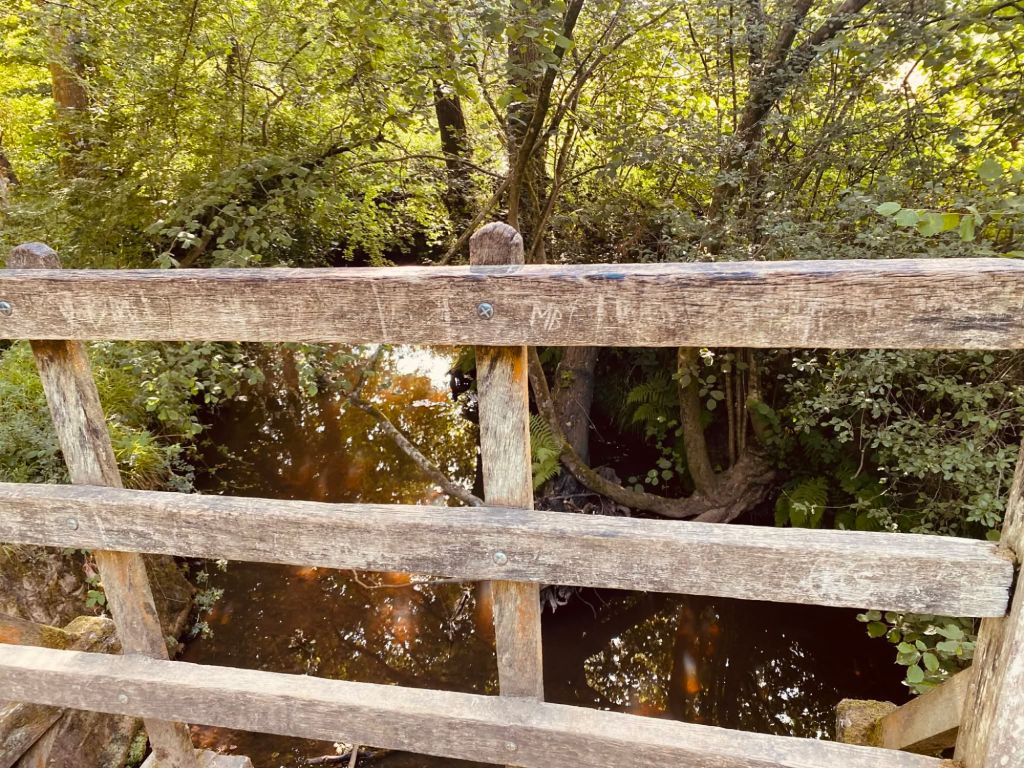
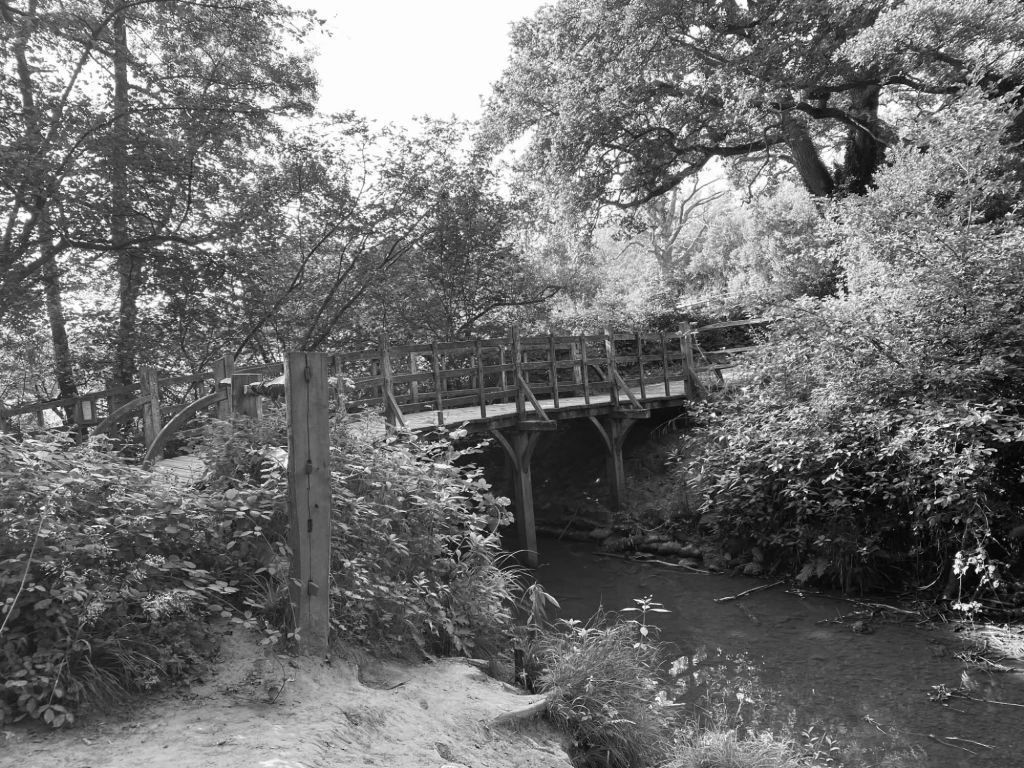
Here on this bridge Pooh comes to know what they seemed to always be forgotting with the passage of time, a simple truth about a moments permanence in the face of what becomes a persistant march towards never ending loss, if purely because such moments are what allow us to transcend the finiteness of such conceptions of time. Here, with Pooh, we discover that life is found in simple acts of play, in simple acts of friendship, in simple acts of love. This is the eternal shape of our existence.
There is something important that follows this revelation however. As Pooh goes on to say, “You can’t stay in your corner of the Forest waiting for others to come to you. You have to go to them sometimes.” What was it for me to get back on that bus, board that train, and return to where I started at Victoria Station? How do we preserve these moments. How do we retain this knowledge?
What will it be to board that plane and eventually return home, having met with my childhood stories face to face? As Pooh Bear once said, “Did you ever stop to think, and forget to start again.” However it is that I find myself here in this moment on this bridge communing with Pooh the philosophers, this seems to be the even greater challenge.
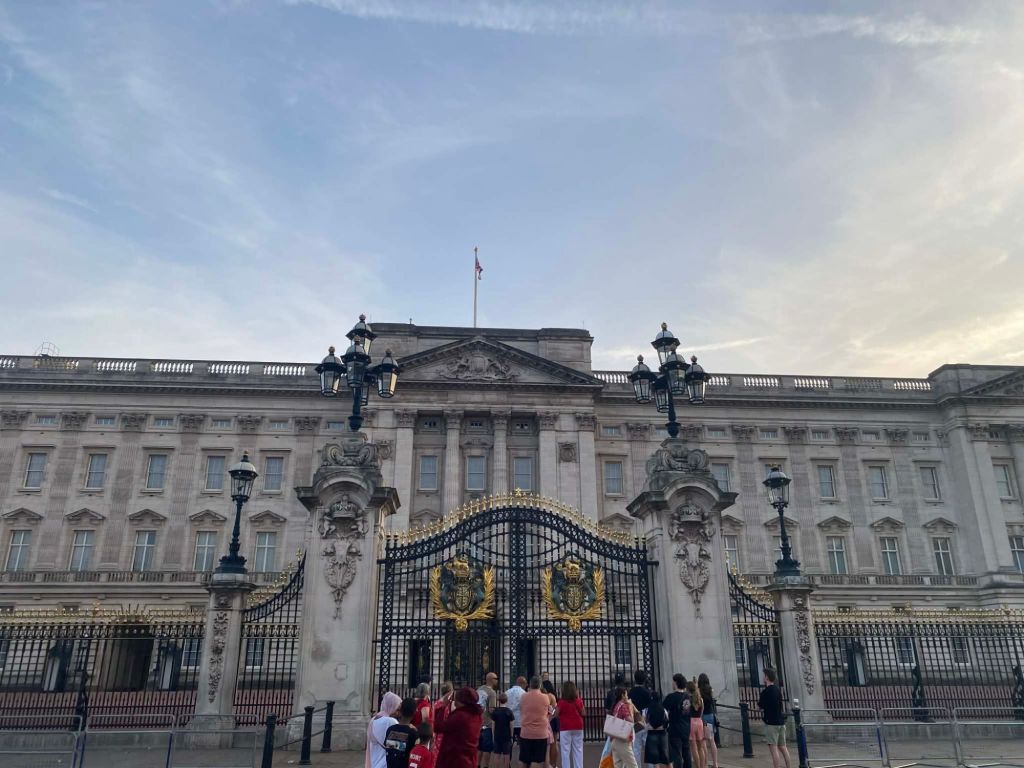
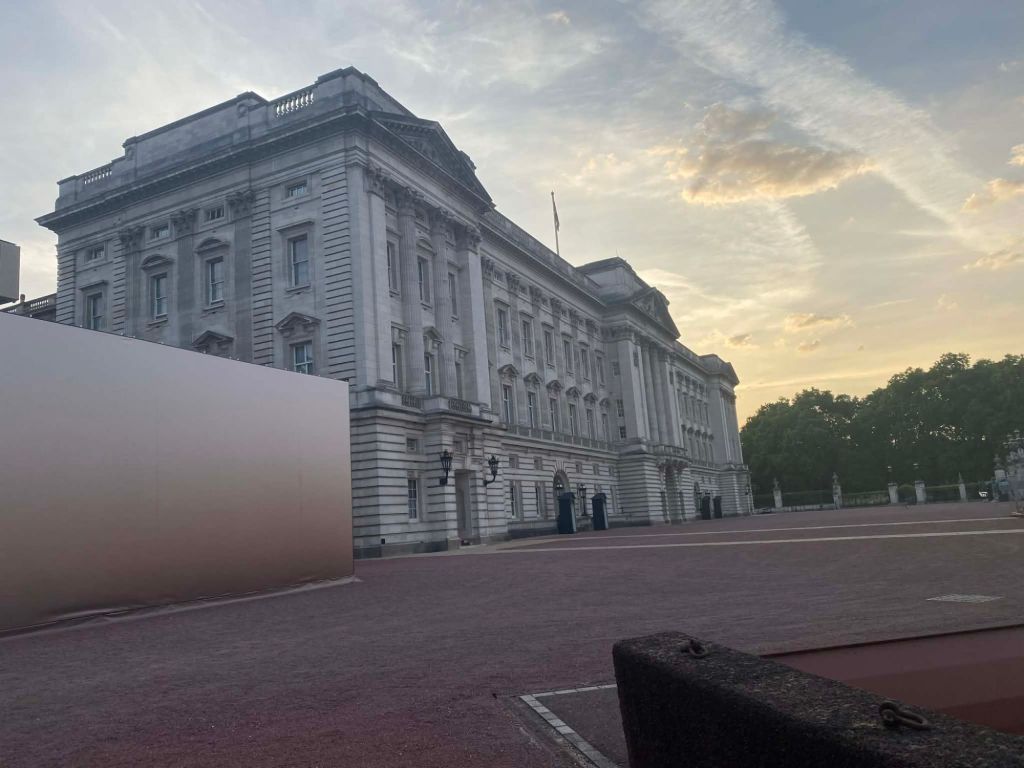
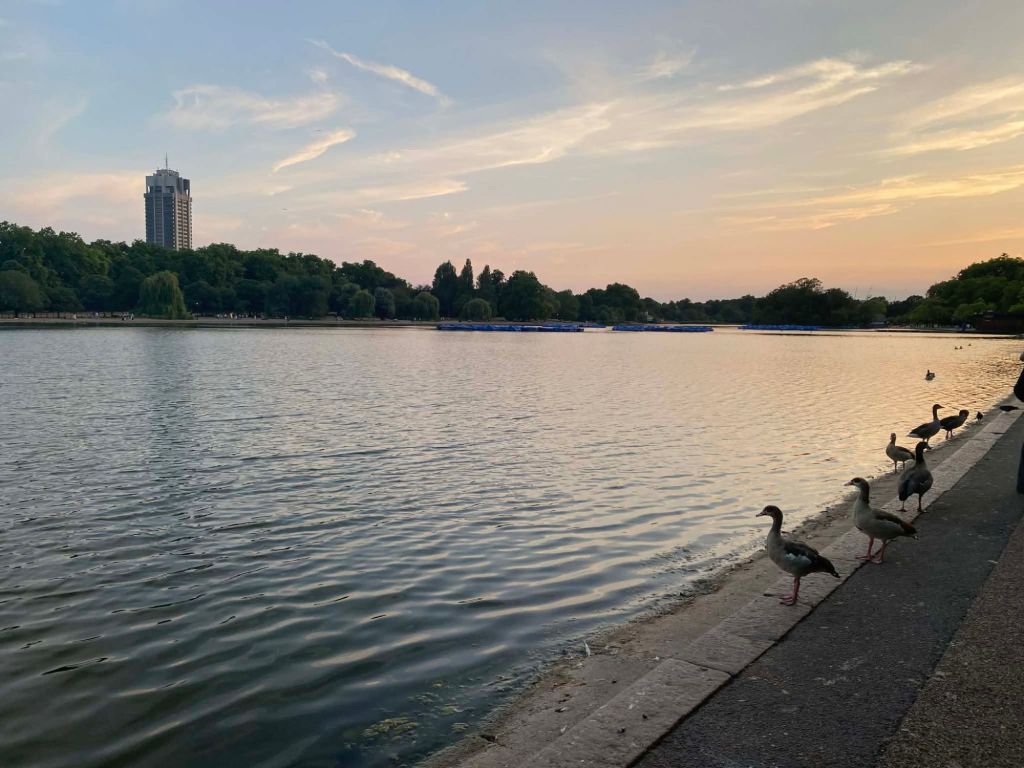
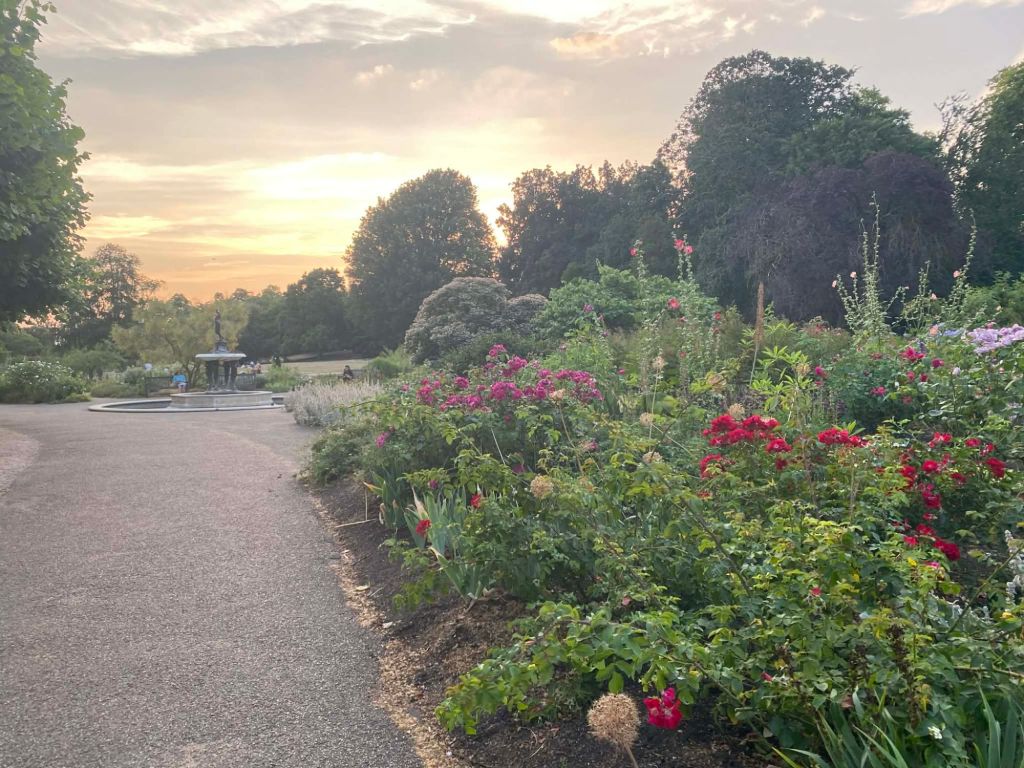
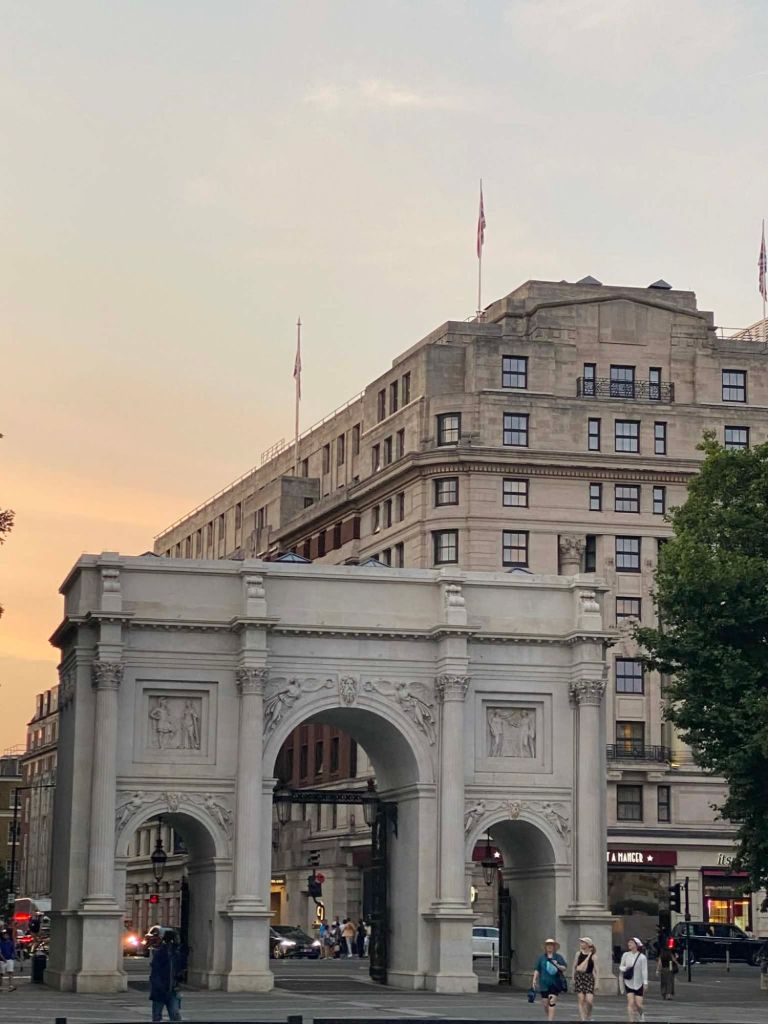
I do board that bus. I do get on that train. And upon my return to Victoria Station I take the long and winding path through Hyde Park/Kensington Gardens back to my hotel, moving with the slow setting of the sun as the path snakes along the gentle curves of the Serpentine Lake. Something strikes me at this point in my journey. For anyone who has traversed these grounds, you might notice a statue of Peter Pan on the far Western corner of the park. You might not know that it’s here where the famed story has its origins, telling of an infant seeking to escape the trappings of the adult world by flying out of his nursery window where he then comes to reside with the fairies and the birds at Kensignton castle, desperate as he becomes to never lose the knowledge that he has been gifted in his innocence. The statue stands at the place where Peter Pan lands in the book The Little White Bird, which becomes Peter Pan in Kensington Gardens.
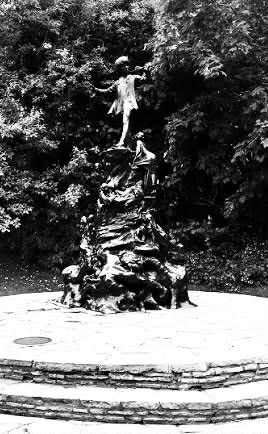
Perusing much of the commentary on the history of this legacy, it’s worth pointing out that the source of this tale stands at a great distance from what the story ultimately becomes, but here we find some of that shared, universal longing to give voice to what these authors saw as the most necesary and eternal questions regarding what it means to be human in a world that brings immense tension and struggle. That they consistently understood, this simple posturing that turns ones view back towards our childhood signfies that this is the place, if we truly desite to understand our questions, our adult selves must begin. As Milne ends his most beloved book,
“But wherever they go, and whatever happens to them on the way, in that enchanted place on the top of the Forest, a little boy and his Bear will always be playing.” (The House at Pooh Corner)
For me, I wonder about the enchantment of that now lost tree. I wonder about why it remains a signficant part of my memories, for as clouded as it might be. Here in this moment I am able to imagine a little boy and his imagination still playing in this space, wrestling with the questions and seeking to make sense of things in the face of a world that threatens to steal it away. Perhaps, I wonder, that’s the enchantment I seek. If we must, as Pooh says, leave the forest to find life, it remains equally true that we are free to return when we need it.

