Somewhere along my travels, upon hearing my itinerary, someone asks me what I thought of London. Not a difficult question to answer, but I did find my immediate, in the moment, off the cuff response to spill out suprisingly quickly. A two-word descriptive. How was London?, London I mused, was “a lot.”
This isn’t a bad thing. It does however feel true to my experience of an immersive, if entirely too brief foray into its people, its design and its culture. What I hear most often from articles or guide books is that London remains one of the, if not the most diverse cities in the world. This makes sense. What might have surprised me to this end is that it’s most dominant image for me as a foreigner, it’s particular British aesthetic and presence, while certainly woven into the whole of it’s fabric, is not really as on the surface as I might have thought. What does dominate the city’s modern presence, for example, is something like the strong middle eastern influences. Or the nature of its endless stretch of self contained neighborhoods, where you could choose to stay enitrely wihin the boundaries of a single neighborhood and still, save for the main stretch of it’s famed royal tourism, experience most of what London offers as a whole (which by the way, is a stark contrast from somewhere like New York City, where each neighborhood is its own distinct and required destination).
Or it’s coffee shops. The sheer amount of coffee shops was truly unexpected for a place I associated specifically with tea.
Beyond this though, what makes the city so unique, to me anyways, is the way it has transformed itself through layers upon layers of this coexisting framework, with past and present seeming to exist as naturally as scones and afternoon tea. Or cream and tea. It presents itself as a rich conversation of the different facets of its story, where every corner, every turn, every hidden passageway, becomes a chapter.
It’s bittersweet this morning to feel the force of these last few days slipping away as I am boarding my train back at Paddington Station heading now for the Salisbury plains, or more specifically the old Roman Britain city of Bath. Here is where the larger story of England and Britain awaits. As the train departs into the subtle rays of the early morning sunrise, my excitement is building. Here I am, heading towards what is arguably some of Britains most sacred spaces, spread out across these flattened river plains.
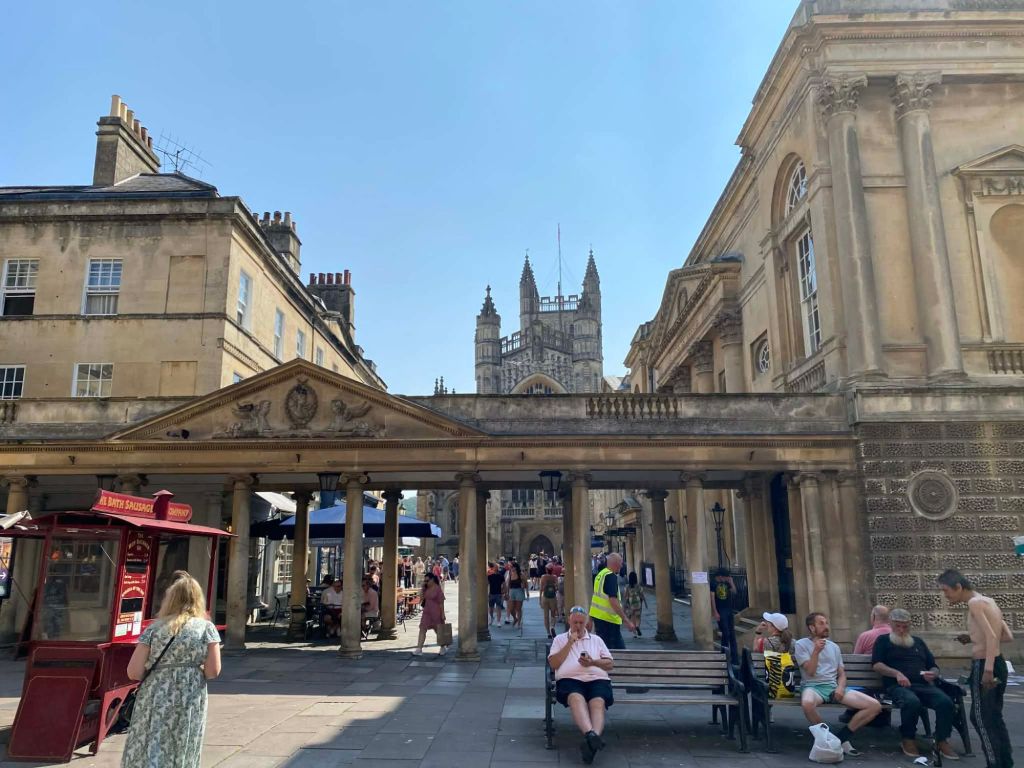
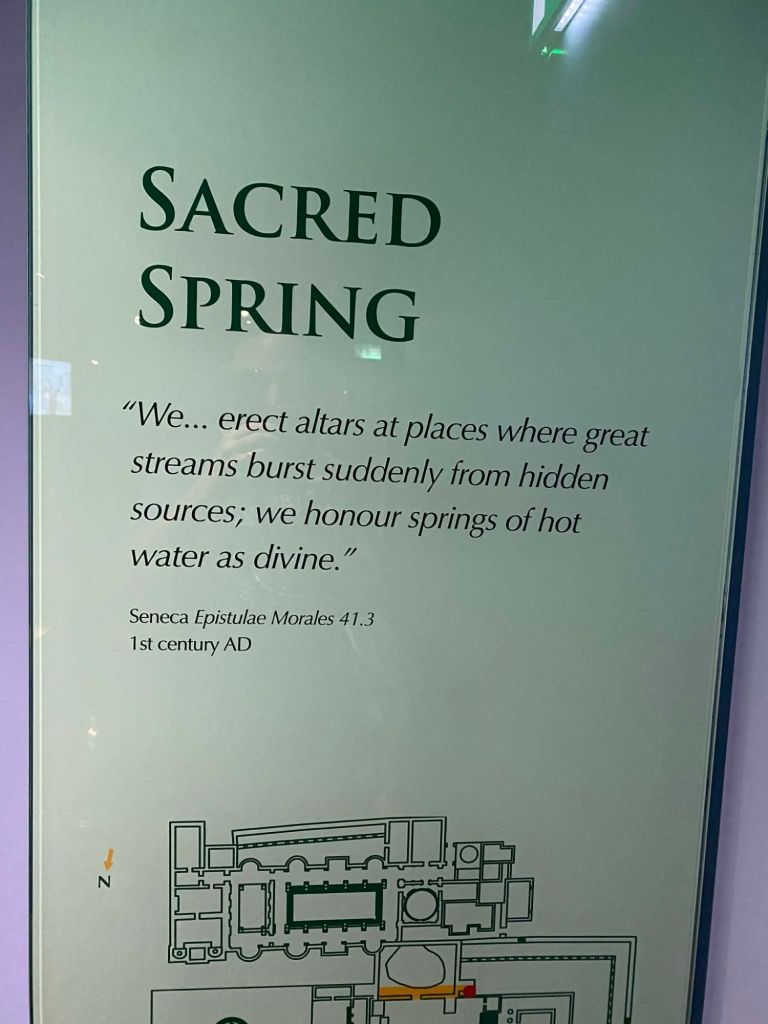
“In Britain there are hot springs furnished luxuriously for human use. Over these springs Minerva presides and in her temple the perpetual fire never whitens to ash, but as the flame fades, turns into rocky lumps.” (Solinus Collectanea, 3rd century)
The first thing earlier travellers to Bath would have seen as they arrived within the city limits is the head of Medusa staring out from the temple-pediment over the old lands of what was then Roman Britannia. Scholar Miranda Green describes this in her book Sacred Britannia, suggesting that “the visible and odour-laden billows of steam” emanating from the hot springs would have immersed this site in a real sense of mystery and uncertainty.
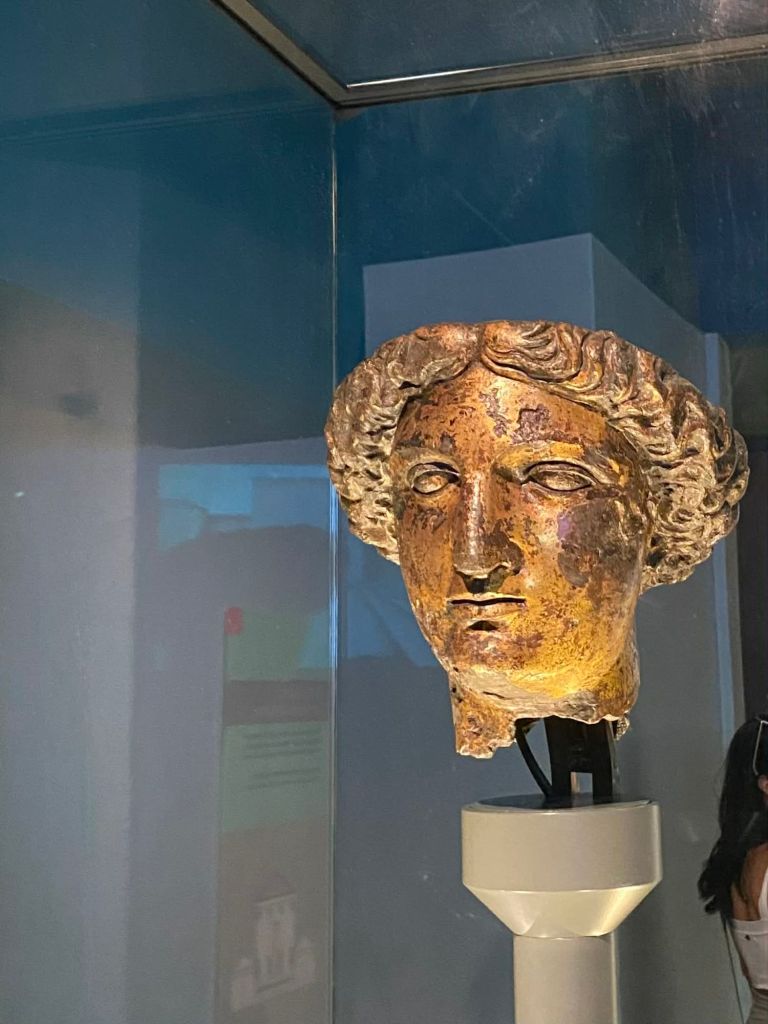
One of the crown jewels of the famous Roman Baths is it’s display of the goddess Sulis Minerva, standing in it’s glass case as a clear demonstration of this fusion of the local (Sulis) and Roman (Minerva) Deities, marking the complex nature of the history of these grounds. Gilt Bronze sculptures from Roman Britian, as the descriptive reads, were incredibly rare. The unexpected discovery of this head helped to shape the story of this Romanized city on the southern edge of Brittannia, giving the Baths both it’s context and it’s story. This once standing and still marvelously preserved Temple would have stood beside the sacred spring, looking out over the great altar and then outwards into the city’s mystical presence, with the cobblestone streets weaving their way around the river Avon. This is something walking through the exhibit brings abanduntly to life. For me, there is something profound about walking these roads and navigating this space that dates back to the first century AD. Not only is it a window into the time of Jesus, it’s a window into the localized religious ethos of both the Romans and the indigenous peoples.
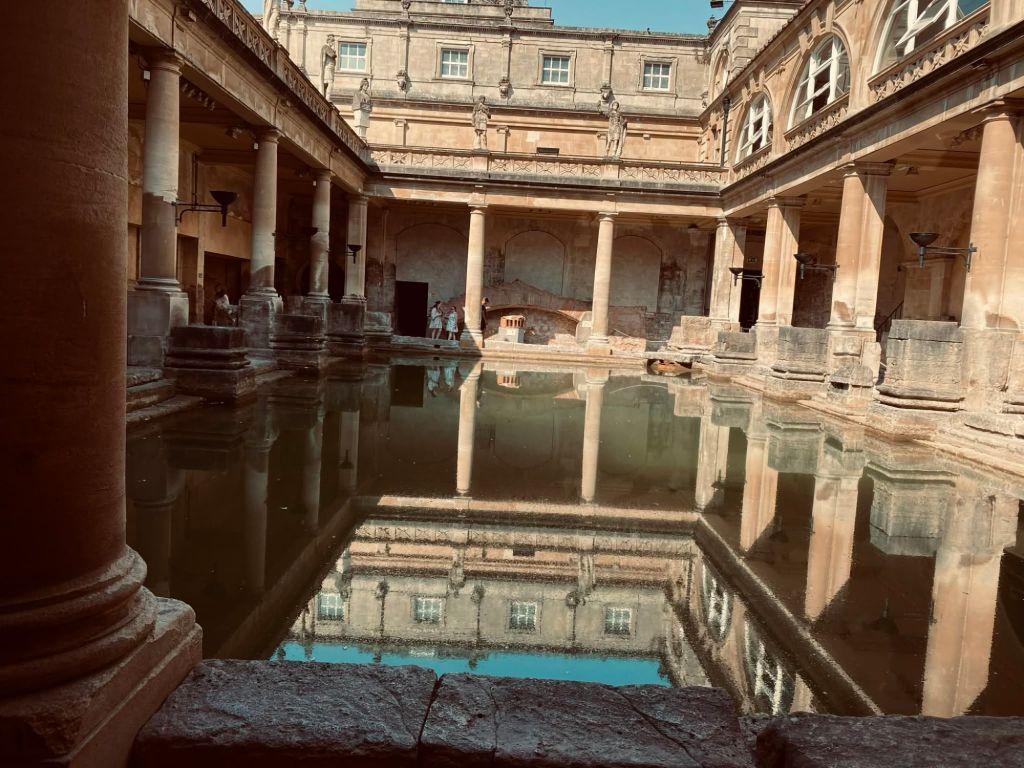
A second head adorns the complex. This is Gorgon (meaning, water god), which here is Oceanus, otherwiset known in the Celtic Tradition as The Green Man. This is recognizable as a face that is either surrounded by or dispersing foliage from it’s eyes, ears, and nose.
Something that I learned: You will find this image adorning many of England’s churches, according with the prominant Medieval era story about an aged Adam and his son Seth, whom returns to the gates of Eden seeking the oil of mercy. Here he is given seeds from the Tree of Knowledge, which he plants in Adam’s mouth upon his death. From this grew the tree that would eventually provide wood for Jesus’ cross, capturing the sacred story of rebirth, resurrection, and salvation.
In the case of Bath, travellers came here for healing, in a time when, according to Green, “spiritual healing went hand in hand with empirical medicine.” These were liminal spaces where the sacred coexisted with an accute awareness of the natural world, something you will find throughout the old celtic lands and it’s experiences with countless stories of the Fairies.
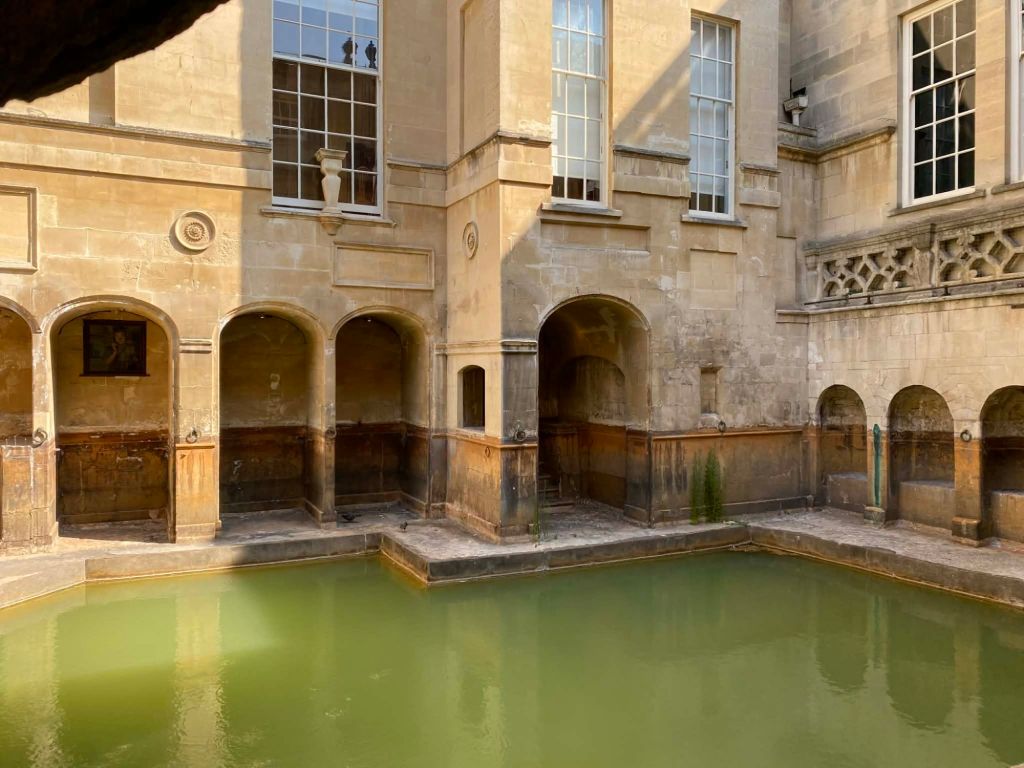
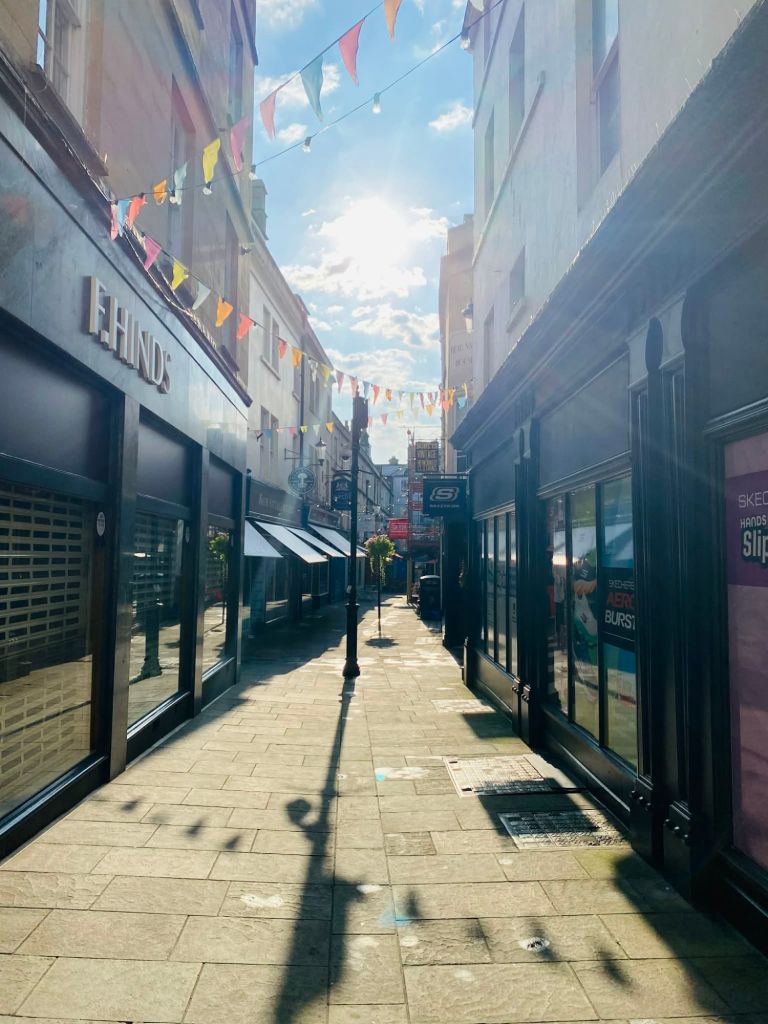
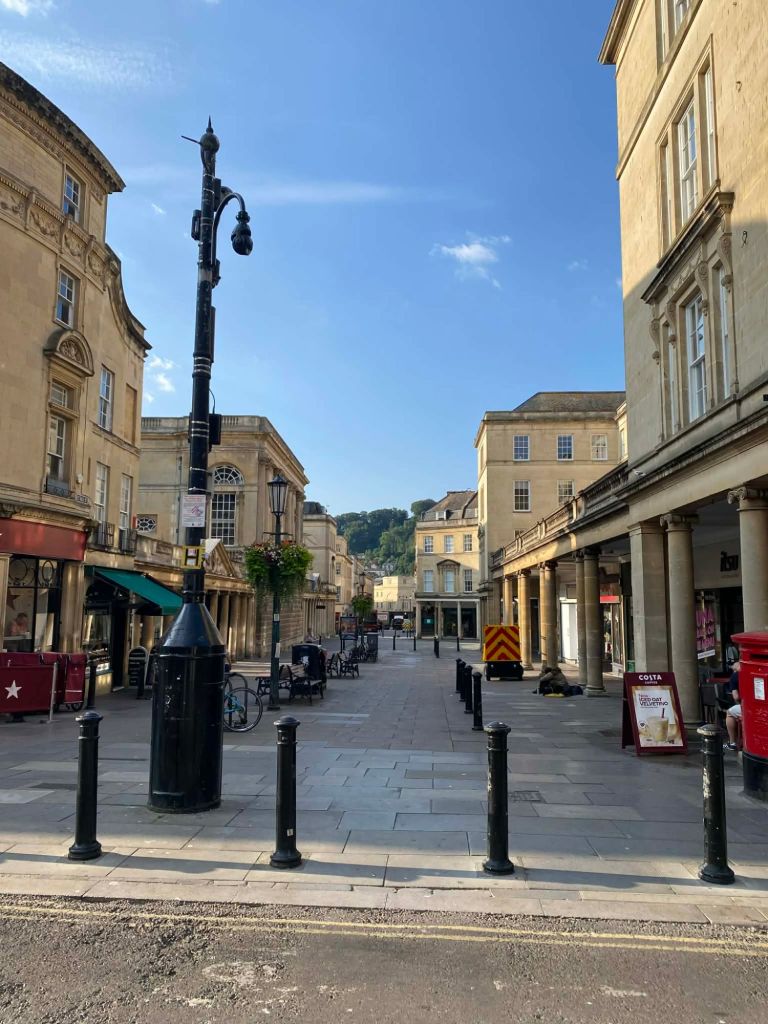
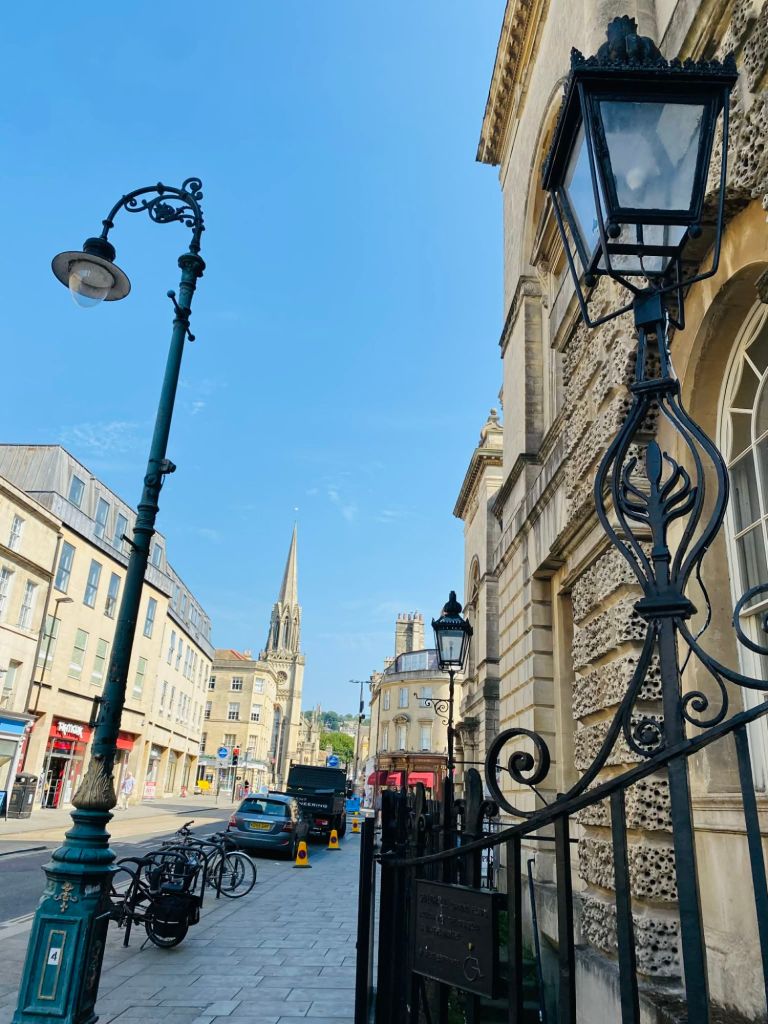
Eventually the demise of the Temple would come through rising sea tides, leaving a city that continues to this day be shrouded in certain mysteries when it comes to questions about it’s Roman origins. What we do know is that it’s demise goes “hand in hand” with the demise of the Roman occupation of Roman Brittania. In this wake, the city is perserved, and indeed revitalized, through the re-emergence of it’s own sacred story, sitting as it does in conversation with this visible Roman influence. When you step off the train, which I was privileged enough to do in the early morning hours before the city wakes up, you are hit with a sense of its quiet grandeur.
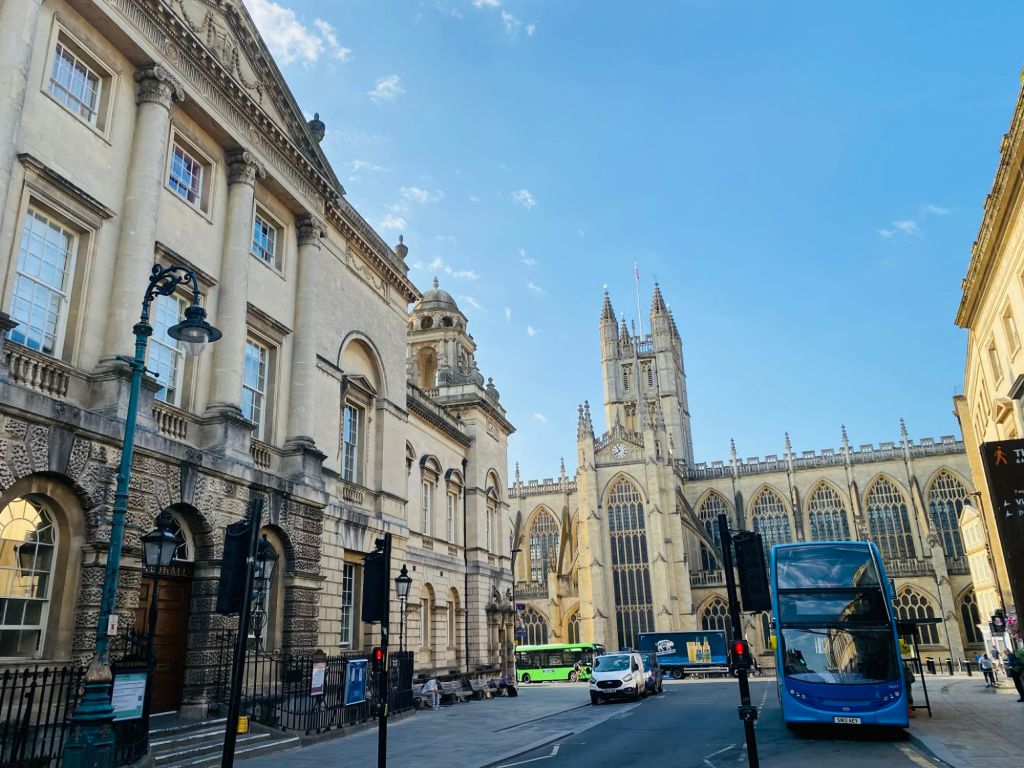
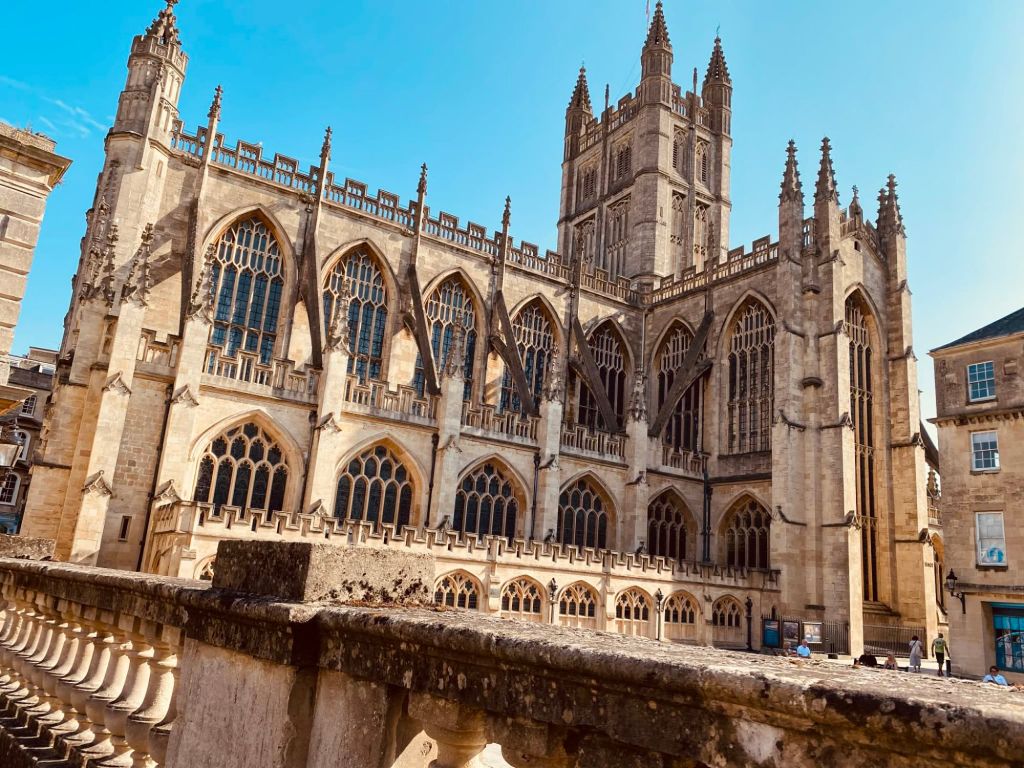
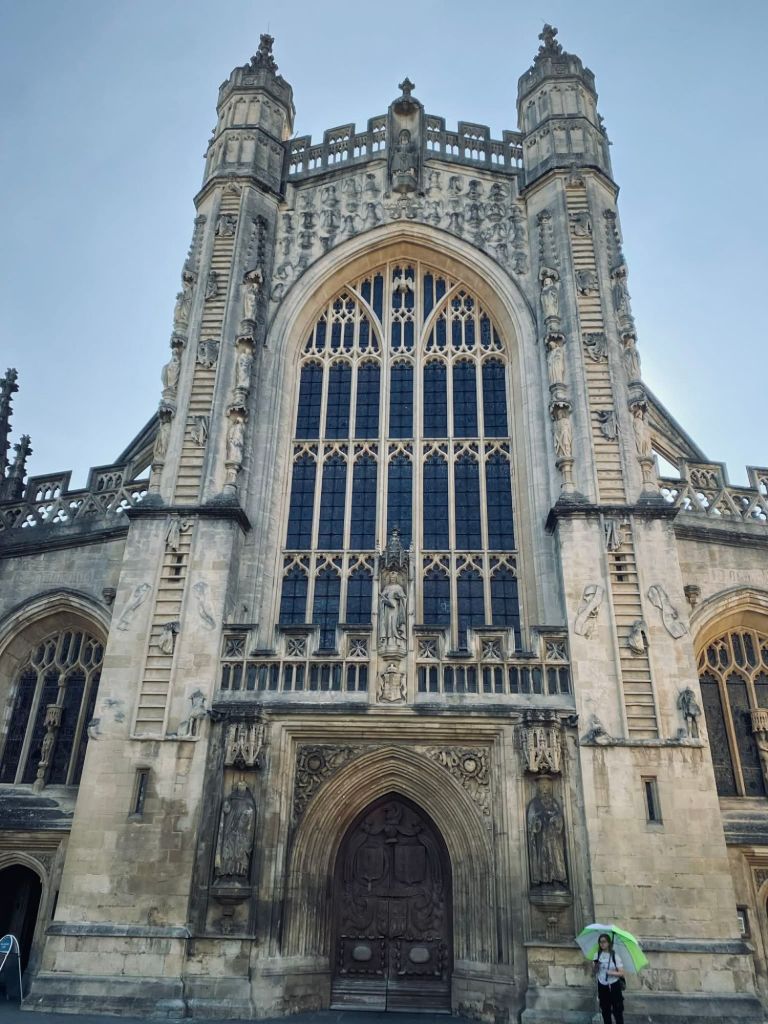
Yes, for anyone who has spent time wondering the cities and streets of Italian city centers, this feels undeniably Roman in it’s architecture and design and later Georgian influences. Yet what makes it so intriguing to explore is that it is also recognizably different. For as Roman as this space appears, you can’t escape the notes of ancient Britian giving the city a foundation.
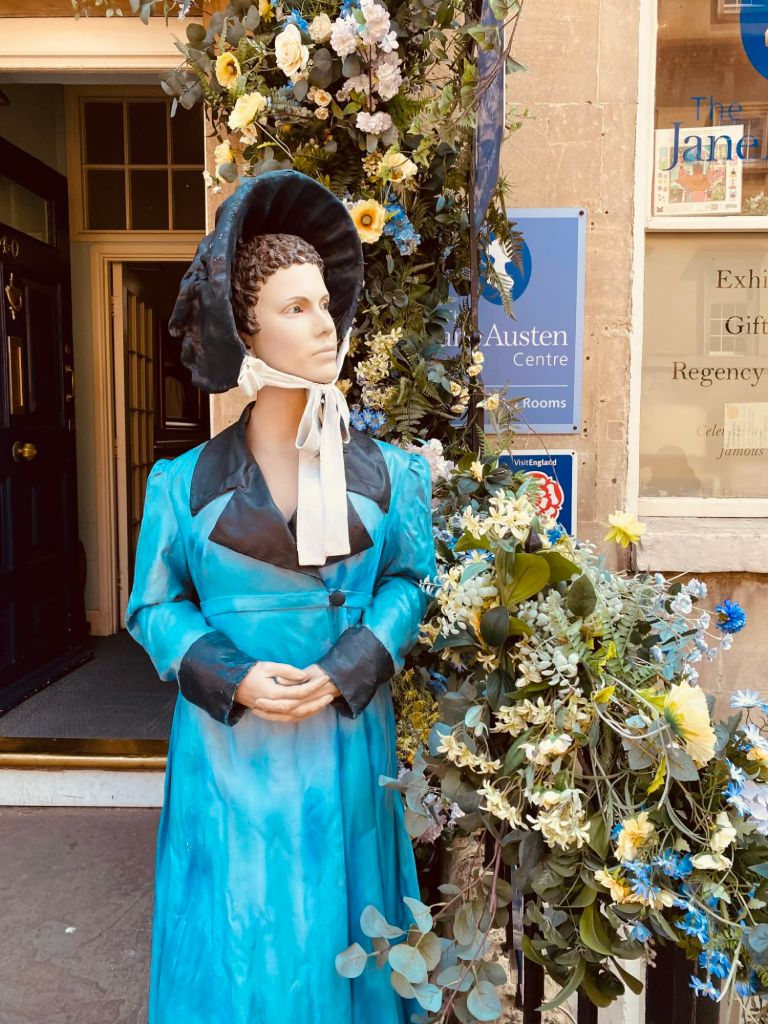
In keeping with my literary theme, Bath is best known as the home of Jane Austen, who’s complicated relationship with the city remains perhaps the best window we have into it’s later, modern embrace of class systems and social customs. What’s interesting here is that, for all that has obviously changed over the years about the city, it remains defined as a place of retreat and sought after healing, with the old temple ruins remaining at the center of it’s now Georgian influence market town flare built on spas, food and leisure.
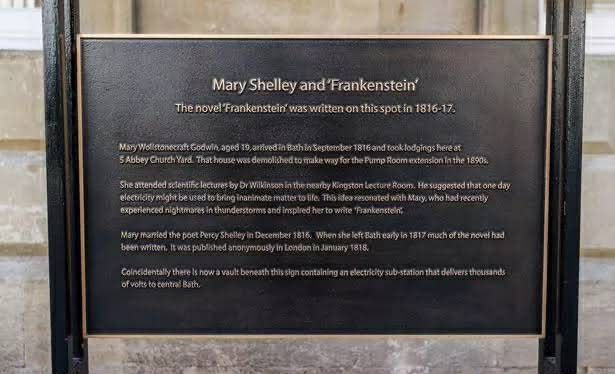
I confess, of more interest to me than Austen is the fact that I could stand in the spot where Mary Shelley wrote the novel Frankenstein. The physical history has since been demolished to make space for the touristy demands of the Pump Room, but you can still stand in that same space. Pairing this with my later visit to the famous steps of Bram Stoker’s Dracula still feels kind of surreal.
Ultimately though, what would capture my attention here on this part of my journey is that broader historical story to which Bath belongs and is now awakening in my own spirit. Later on in her book, Sacred Britannia, Miranda Aldhouse-Green speaks about the nature of religion, or spiritual beliefs, and its enduring power. One of the more profound learnings that can come from traversing the lands of Britain comes from digging into the relationship between the land’s indigenous beliefs and it’s era of Roman rule. Here we find this curious notion of standing in a space in-between, on one hand opening me up to experience something bigger than myself while simitaneously bringing that all to familiar story of Empire to stark realization.
Speaking of Bath in this sense, as a conversation between these two essential forces that seem to define our world, Green draws out an important observation about the larger historical narrative for those seeking to understand and for those seeking to find what it can reveal;.
“While old indigenous beliefs may have been forced to take a back seat during colonial oppression, they are often not dead but hibernating, biding their time on the sidelines until the tyrannous regime is ended.”
In terms of Bath, we can feel this tension in writings such as that of Emeritus in his 3rd century writings.
“This holy spot, wrecked by insolent hands and cleansed afresh, Gaius Severius Emeritus, centurion in charge of the region, has restored to the Virtue and Deity of the Emperor.” (Gaius Severius Emeritus, 3rd century inscription)
Green outlines from the ancient records such as Tacitus on the rebellion of Boudica in AD 60, how the most important part of the State Religion in Romes newly aquired province of Britannia was the Imperial Cult, and as it is with all such conquests, it was always the Temple which was the last thing to be rebuilt and the sacred symbols the last to be destroyed. This is how colonization worked. This is how you subjugate a people.
Green digs deep and biting when she comments on this familiar and popularized idea that polytheism equals tolerance in ancient Rome, a rhetoric which you will find represented in much of Western academia, As she states, this is simply not accurate, and the story of Roman Britannia outlines why, including, as I will be visiting later, the history that runs through the all imporant story of the Druids of Gaul.
“The beliefs and cults of the conquering power will always take precedence over those of subjugated peoples.” And that subjugation is fueled by the ways in which Empire dismantles the sacred. If the Romans “brought to Britian a fully formalized, hierarchical religious system, based largely on that of the Greeks, they also introduced new technologies of worship: image-making on an industrial scale, and epigraphy.”
And perhaps more to the point,
“However inclusive romanitas was in its attitude to foreign religious systems, there was little doubt that, within the Empire, the gods and goddesses of Rome took precedence, at least officially.”
Thus Green outlines the reason for writing her book in the following sentence:
“The focus of Sacred Britannia is the manner in which the juxtapostion of two-cultures, each very different from the other… played out in the arena of religion and ritual.”
This is, in other words, how the whole of history plays out in relationship to these two forces.
What was striking me, standing on these grounds in this moment, imagining the ways this history was being shaped and built in this period, was the question of how this space was sought out precisely so that it might cut off the source of its own appeal to the sacred, it’s abiding connection to the sacred realities that shape these lands the Empire is reshaping. As will be a continued theme over the course of my trip, this space, which historian Ian Morris ultimately outlines in his massive work Geography is Destiny: Britain and the World, A 10,000 Year Old History, as one that is being uncannily peserved for us today through a brute fact of geogrpahical location, the question that follows any inquiry into these still standing structures is always, why did they build it here. Why did they tear down here? The colonization of and creation of Roman Brittania, the collapse of Roman rule, the developing history of the Arthurian legends, the invasions from the North, the rise of Britains medieval story. All of this leads us tothe same question, over and over again. This is, in fact, the question that allows us to resist subsuming the whole into any particular point in a given historical development.
The temple here was built in 60/70 AD after the Roman conquest of Britian. This conquest ends in 300/400. The historical King Arthur emerges in a veritable dark ages in the 5th and 6th centuries, somehow pushing back against the conquerers from the north against impossible odds. Following the later recasting of the Arthurian legend, the larger forces of Western expansion then eventually have their say in the 12th century on, revitalizing as well the stories of Greek mythology as a wanted source and justification of it’s own abiding myths, which now become the story of modernism and western civilization built on a new British Empire.
And what sits underneath it all is this inevitable battle between the witness of these indigenous peoples in their abiding sense of the sacred, and the never ending story of the rising and falling Empires that seek to remake the world in the image of the Emperor. We often think of “Western society” as an enduring secularized symbol that somehow escapes the scrutiny of these basic truths about the way history works, with that reappropriation of the grand myths of it’s wanted origins, be it in Homer’s tales or the development of Arthur, acting in service of this imagined virtue of an inclusionary society and a unifying ideology. And yet, this is no more the case with medieval Britian or modern day America than it was with Roman Brittania.
As the great literary heritage of England suggests, this is what these minds were wrestling with in the midst of the great wars. The rise of modernism had left us with a world slowly being robbed of the single greatest tool that we have for making sense of all the world’s stories: the power of Story itself. Here the world of a now dominant Western Empire was continually seeking a narrative that was built on othering the past, cutting ties with what it deemed to be the old supersitions, and raising up it’s much grander myth of progress as the new wanted spirit of the age, and what gets sacrificed is the stories of these indigenous spaces.
Here’s what’s striking: Mary Shelley was a veritable prophet to this end, writing perhaps what remains one of the most enduring crtiques of modernism that persists to this day. She sits at the percipice of two worlds, knowing and seeing how history works. One could say something similar about Austen, with her stories about class and social systems appealing both to a hopeful yet lost romanticism while equally operating as a cycnical critique of the world she was forced to inhabit in their move to Bath.
Peer under the veil and what you actually find is the same old story of Empire, saving the eradication of the sacred witness for last and erecting it’s grand temples in ways that ensure the worship of it’s Imperial Cult remains the source of it’s enduring power. What makes modernism distinct in this regard is, in the recasting of it’s origins story using the old myths, here the West has a sweeping, catch-all dismissal of the sacred, allowing it to recast this history in the light of its ongoing redefinition of the modern myth. Like Rome, the Western Empire’s most definiing trait is the way it appeals to inclusion by quietly undercutting the witness to the sacred in these indigenous spaces, but it does this in it’s own distinct way. Religion is allowed to coexist precisely because it is defined, in modern terms, as human invention, and in so far as it serves the greater Imperial Cult of our time it can remain in the fabric of these modern socitieties, mostly as a relic that now becomes a plaything for the rise of a new academia. Once again, this is the thing these great literary minds were constantly wrestling with in their time, and it finds its own likeminded exprression here, for me, in the streets and temple of Bath.
Another common factor in my encounters with all of these authors will be the astonishing discoveries of just how connected they all were. I was raised on these stories, but perhaps ignorant about the ways in which they were fostering such important conversations amongst one another in their time. All bent in the same direciton: standing in the shadow of the enlightenments seeming failed experiment, asking to where do we look for a narrative that can make sense of all the world’s stories More shocking yet that these relationships can span the likes of Woolf’s widely documented cycnicism towards religion and a mind like T.S. Eliott finding his own vaunted cycniscm being held accountble to it. Even the likes of Lewis and Tolkien were not always on the same page. And yet, this simple, basic intuition that something had been lost and something needed to be reclaimed in this shift westward runs throuth the whole.
Standing there in front of Sulis Minerva, I wondered about what it means for this space to be called sacred. I wondered about the city that surrounded this Temple. I wondered about Britian. I wondered about the world. Indeed, as a Christian I wondered about this man named Jesus who was immersed in the very same world dominated by the very Empire that was reconstructing this space Where this conversation about gods and idols and images and Empire would come to dominate the themes and interests of the source material (the Christian scriptures) and it’s authors. I then think about the layers of history that follow the creation of this city, eventually handing us a prophetic critique like the story of Frankenstein.
I wonder about the witness to be found in these eyes now staring back at me from behind the glass. My eyes then looking fowards in my imagination, looking backwards. Seeking some Truth about this world that is able to make sense of all of the worlds stories amidst of this essential tension of the shape of a world always staring down the Empire in return. Here, in this space the longing for the sacred speaks into the visible agency of that Empire. It says, I’m not dead, one only need to look a little closer to find a world that is still filled with it’s witness. One simply needs to ask why this Temple was built here, in this space, why it was conquered.
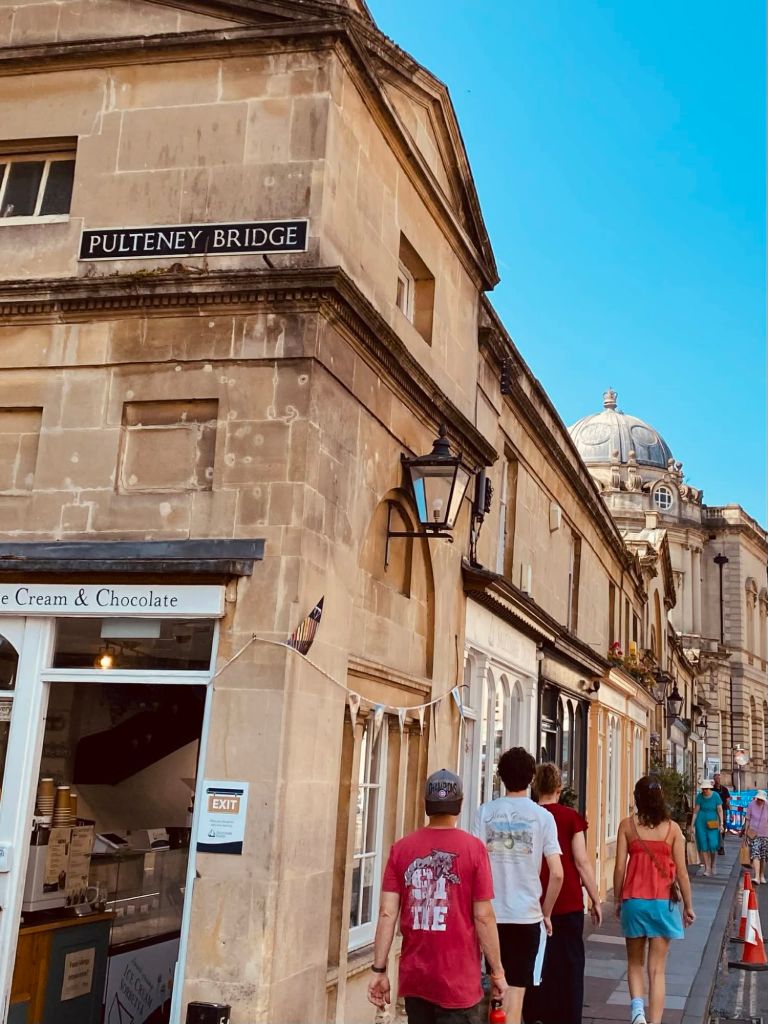
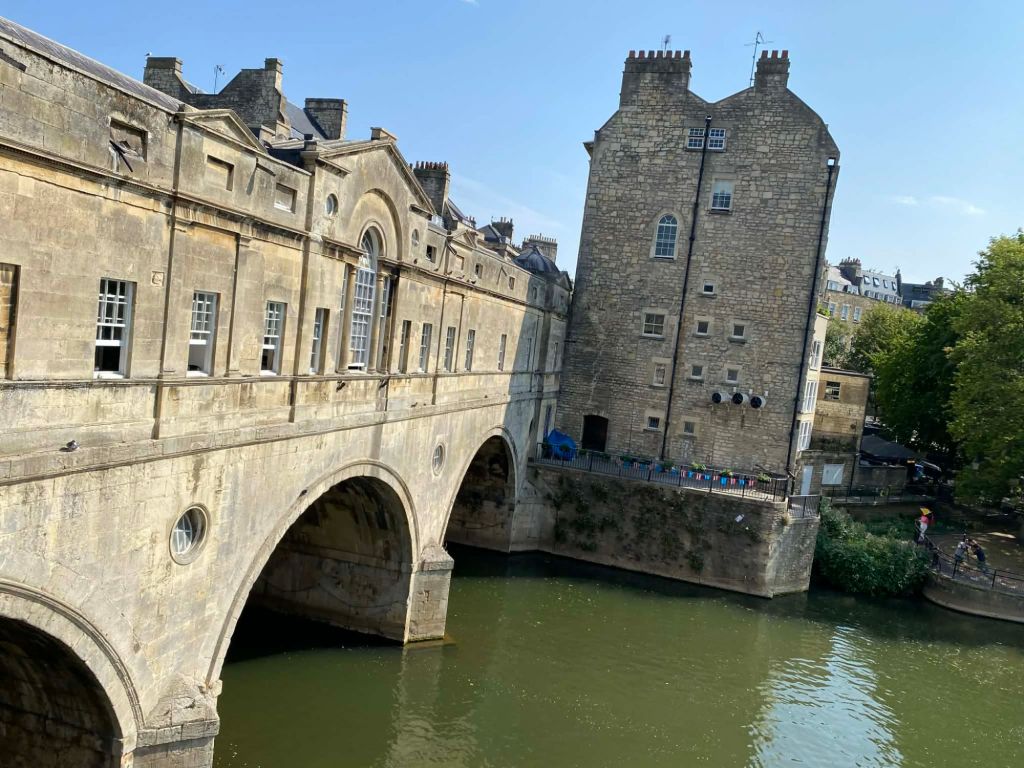
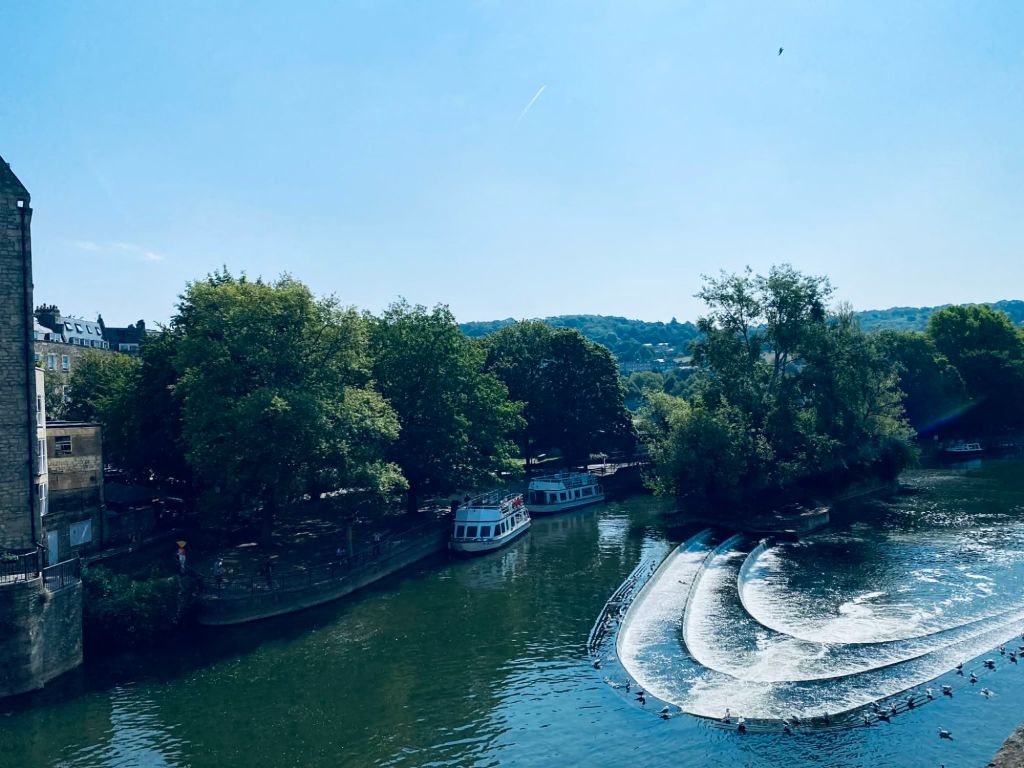
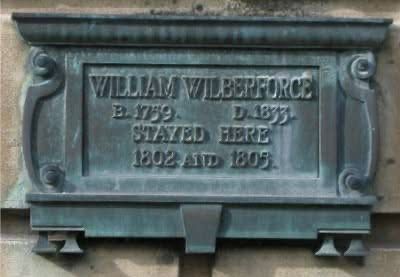
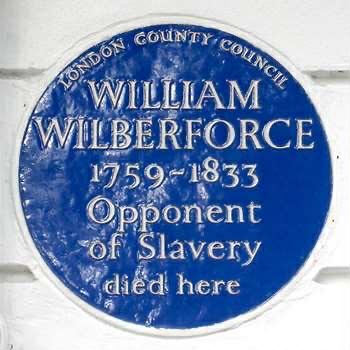
I decide to take a stroll over the Pulteney Bridge, an old style market corridor filled with shops, and head straight up the large main street towards The Holburne Museum. As I am walking I notice a William Wilberforece plaque marking the residence of one of the great forces for abolition, bringing about the passage of the Slave Trade Act of 1807. A plaque you also find near Victoria station at the spot where he died. I again wonder about the ways this witness to the sacred breaks through the noise of Empire.
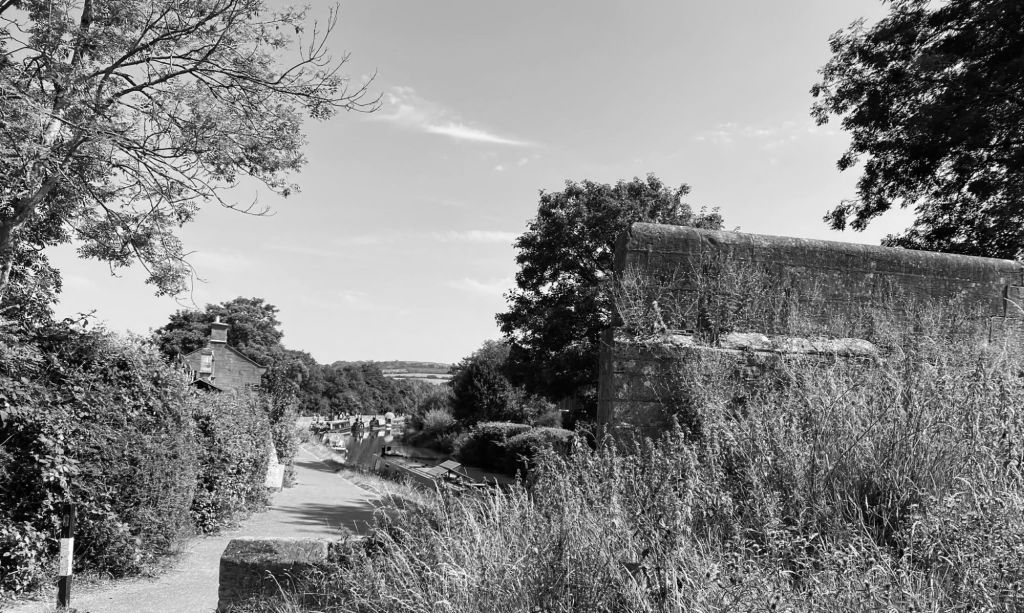
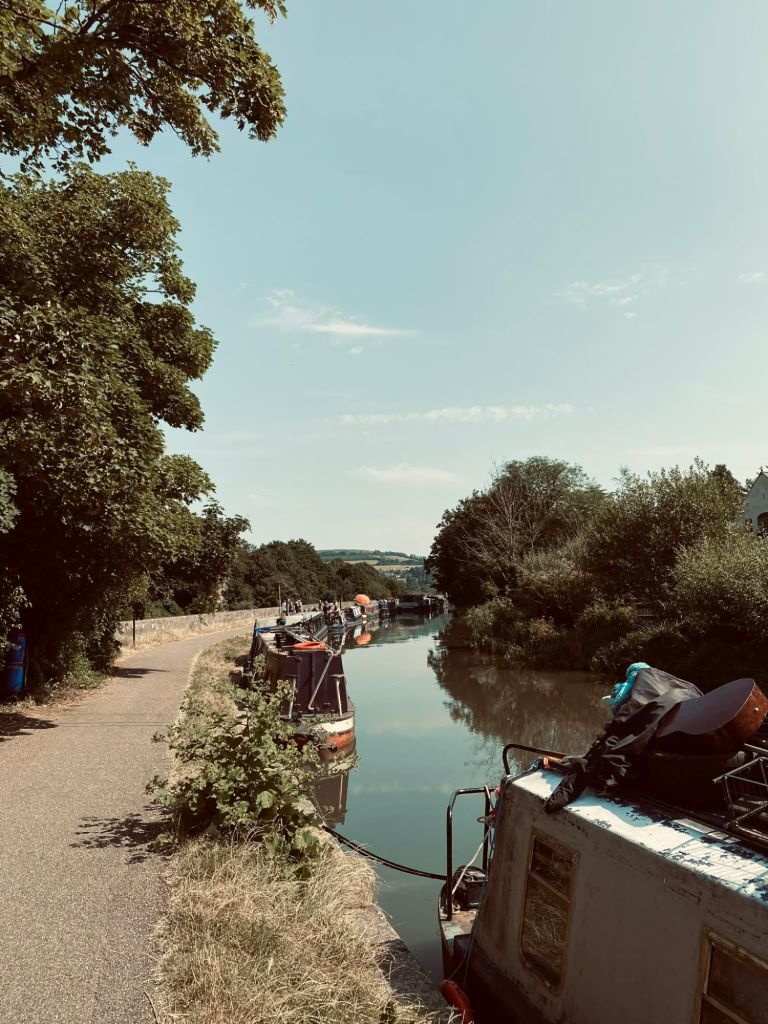
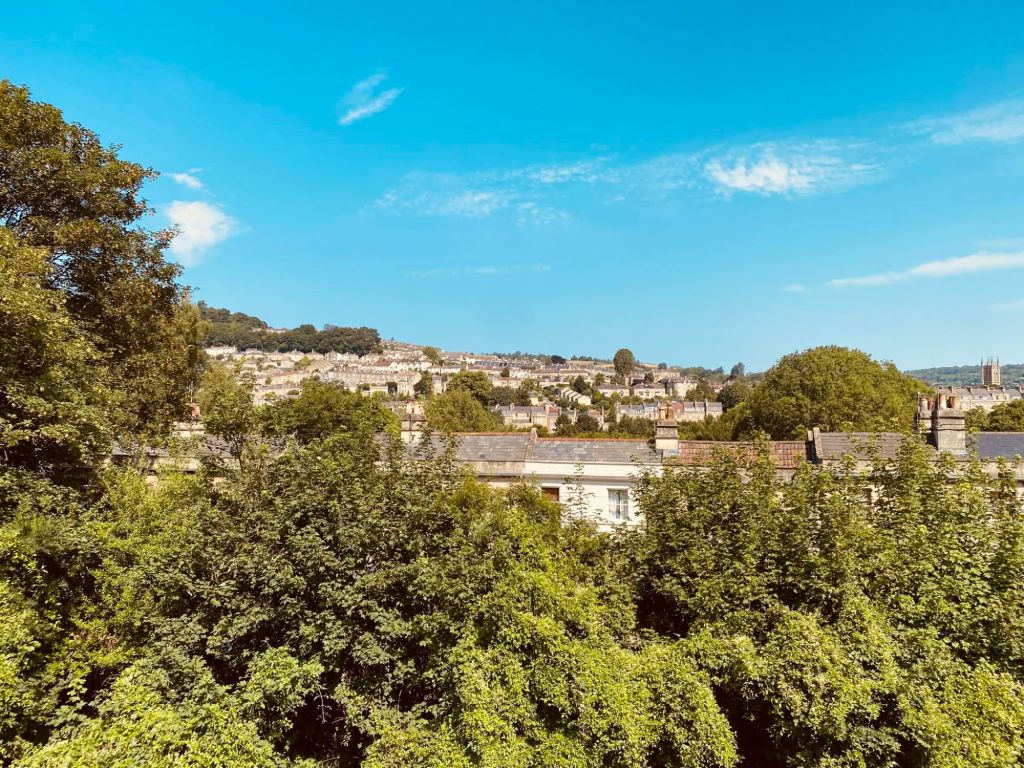
I then come to river, now leaving the city limits to follow the towpath around to Bathhampton. At one point I come across an opening, revealing a view of Bath sitting down below in the valley. I pause for a moment. Here I am given a different view of the temple and it’s city, one that feels to tell a bigger story.
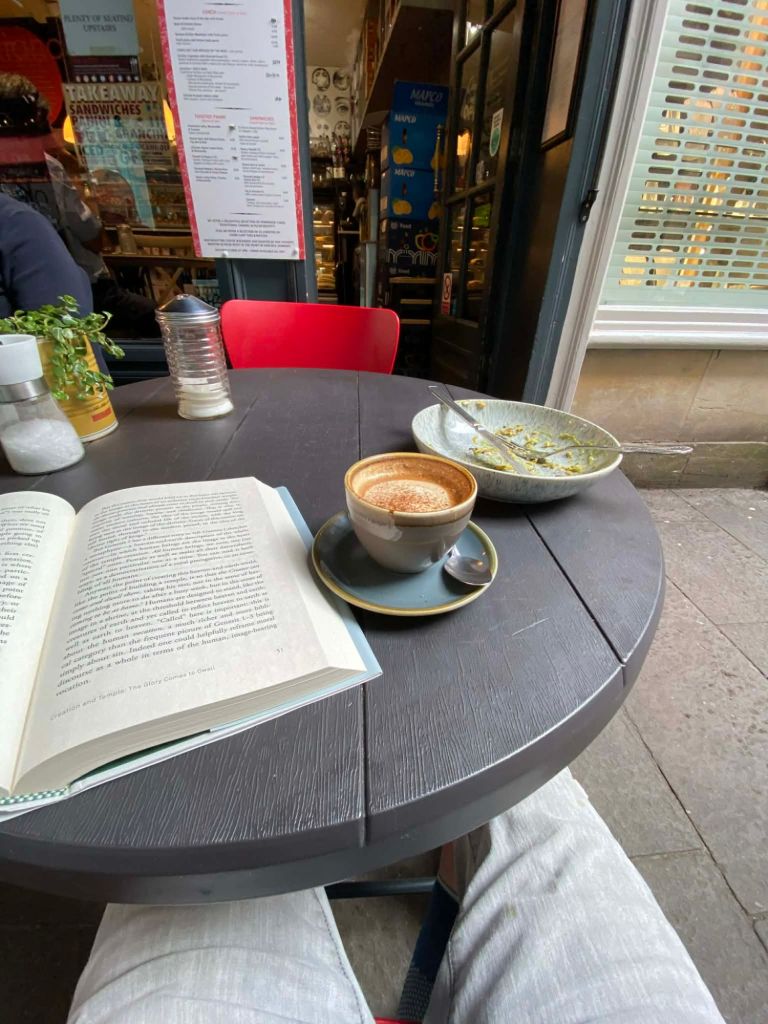
And yet, even here I am brought back to the sacredness of that early morning arrival. Empty, quiet with the sun gradually creeping around the corners of it’s narrow streets. Sitting down on the patio watching and waiting for the cafe in front of me to open, observing as the owners move about in their daily routine. Soon the streets begin to fill with life, locals showing up seeking cappuccinos and pastries, friendly faces bantering across open windows. The spirit of a place in full view. This, it seems, is indeed a sacred space.