
As the sun comes up on the final full day of my literary pilgrimage, I find myself climbing the hill to the heart of the ancient city of Exeter. Knowing this was the central hub for all trains travelling in any direction, be it west to Cornwall, South to the Salisbury Plains, East to London, or North to Wales and the Dales, I decided to utilize the split ticket option and stop for an early breakfast before continuing on my way to Stonehenge.
The city is known for containing the Exeter Book, the, to quote, “largest surviving poetry anthology from the Anglo-Saxon era (970 AD).” Maybe slightly less well known is that this is the birthplace of Penguin Books (1934), being designated today as a UNESCO City of Literature.
Just for kicks, it’s also home (Powderham Castle) to the Courtenay family, whom I’m fairly certain has no ties to my own Courtney line (we come from a different Irish root of the similar sounding namesake), but hey, let ones imagination run wild when such encounters call for it.
Fun fact: it’s also home to the first independent library and first woman librarian. And, for that matter, the early suffrage activist Mary Willcocks.
Another fun fact: this is where Sabine Baring-Gould wrote the Book of Were-Wolves and Morgery of Quether, one of the inspirations for Bram Stoker’s Dracula (this is where the character Jonathan Harker comes from). It’s also where Bram Stoker’s brother (George) is buried.
Michael Morpurgo (War Horse), Philip Reeve (The Exeter Riddles), Thomas Hardy (The Woodlands), Gene Kemp (The Turbulent Term of Tyke Tiler). This city, nestled in an area called Devon, was where the writers of Englands literary history came to study and develop their craft (including Charles Dickens). Standing in the train station (the Exeter St. Davids station) is the Penguin vending machine, a reference to Sir Allen Lane (the founder of the publishing imprint, whom came up with the idea of Penguin books while waiting at this very station following a meeting with Agatha Christie)
If all of that sounds like a wikipedia page full of information, it is in fact my jotted notes I took while I was preparing for the trip. The stuff that connects me to the very roads I’m walking and their relevance to my childhood stories. My interests here, though, also spill out from Exeter into the surrounding area. When my plans had still involved a rented car, my carved path to Tintagel/Torquay was a stop at Mevagissey, the setting for Susan Cooper’s Over Sea, Under Stone, through Dartmoor National Park, the inspiration for and featuring the different locations of the plot for Doyle’s The Hounds of Baskerville, and my carved path from Torquay, running through Exeter was the northern edges of Exmoor National Park, the place where Coleridge wrote The Mariner and the start of a 50 mile stretch celebrating his life and works.
Exeter would be the closest I would get to the convergence of these stories (with the exception of the train being 6 miles out from Mevagissey), my train ride taking me mostly around the edges of these places. One of the things that struck me here at Exeter, a thought that I had been carrying with me ever since leaving London, is just how interconnected these literary voices actually were. It’s as much the case that one would be tracking down the heritage of a single voice, as doing so places you in these meeting points of what was a larger community of voices. These stories reflect an active and ongoing conversation, each of them tied to one another. They didn’t all get along. They disagreed, they had spirited debates. But they all shared a similar passion, and, as I have been discovering through these stories, a similar interest in critiquing the present shape of the world they had been handed and thus inhabited. They have become models for me in doing just this in the world I have been handed and am called to inhabit.
In many ways Exeter would be a symblic bookend anchoring the journey ahead of me leading towards Oxford. Oxford too would become a place where this community of voices comes most alive for me in both spirit and consciousness.
Also, it’s here that I finally solved the puzzle of what an English flapjack is. Yes, I know I could have googled it. And no, it’s not a pancake like it is in America, which was my only previous association with the name. Also yes, it’s quite delicious, cheap (you’re always most conscious of your spiralling budget on the latter end of a trip, right?), and often (or always?) gluten free, Glad I tried it once before I left.
Before leaving Exeter I stop at Sainsbury’s for a budget lunch option. Pro-tip (which I am absolutely not- it’s the tip I got from the pros): the grab (or take) and go meal options, which are everywhere precisely because this grocer is everywhere, are your go to option for $5 dollar (or a fiver) breakfast/lunch options. They are fresh, good, and come with an extensive enough variety to not become tired or repetitive. Burrito in hand (or in my bag), with a side of crisps and sparkly water of course, I begin the rest of my trek to Salsibury Station, where I will be catching a shuttle over to Stonehenge.
Here I will look out my train window to the north and begin to imagine what my limited time has relegated to a potential future part 2 of this pilgrimage. I have already started putting the pieces together as I’ve gone along in fact, including some things that rerouted plans caused me to miss, and as well the unoffical completing of my literary tour of the British Isles. The tour to Canterbury and Dover Castle would be one thing I’d love to do on the other side of London, but the central starting point for me would be to complete my tour of the King Arthur landscape, simply from a different starting point: Glastonbury, the legendary isle of Avalon where we find the end of Arthur’s tale. It’s here where you find the famed countryside of Camelot. Symbolically however, this is an entry point into Wales, where the impassioned debate over Arthur’s true origins still persists. My journey, should I be able to return, would begin here, before moving up into Wales with its own rich history relating to these old stories (this is also where we find other locations of Susan Coopers novels), from Wales to Birmingham, to complete my tour of Tolkien, and from Birmingham to the Lake District to complete my pilgrimage through my childhood stories with a visit to Beatrix Potter’s hometown and inspiraiton. From there I would cross the waters to Ireland to fully connect the two lines of my family tree.
But thus is the restless mind of wanderlust. Here I am, my imagination being pulled back from that norther view and future planning, suddenly realizing I am now in Salisbury. At which point I panic, because I can’t remember which end of the car I left my luggage on. With the doors opening, I of course choose the wrong end, only to run like a madman to the other, promptly grabbing the wrong bag. More panic ensues, and a mad dash back inside the car, where I hand the now startled and frazzled owner their bag and grab the right one.
Gotta love train travel. Yelling into the void for the train to wait isn’t going to keep those doors from shutting.
Stonehenge
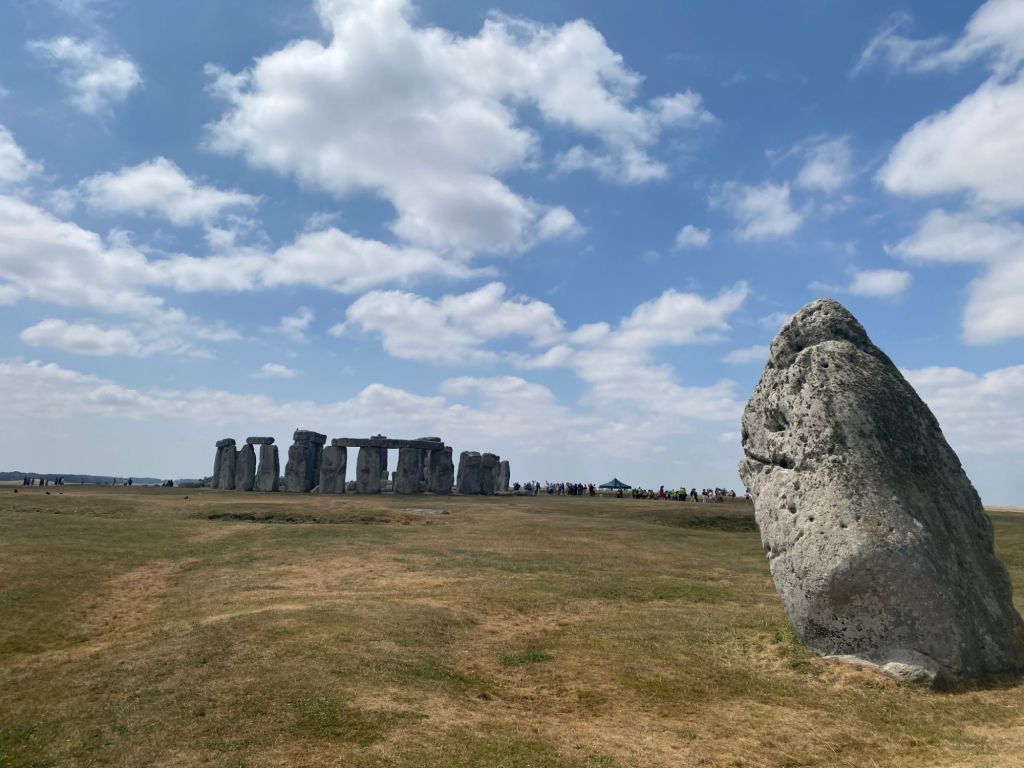
Of the handful of sites which have existed in my minds eye ever since I was a kid, this would be near the top. Nothing broke open my imagination like the story of these stones, most recently occupying the heart of one of my favorite series from my favorite authors (the Bright Empire series by Stephen Lawhead). I loved the way they symbolized that ongoing conversation about the relationship between the spiritual and material natures of this world which we occupy. The enduring mystery that historicists love to claim they’ve gotten close to solving in their desire to reduce it to material terms, and the work of others in preserving the myth that gives the place its sacred grounding. Here reality, and the clash of these particular worldviews, gets broken wide open, at least for me. I haven’t even boarded the final shuttle and I can already feel the excitment and anticipation of a good 43 years worth of fascination coming to a head.
The “it’s just a pile of rocks” people be damned (apoologies for the crassness). To view it that way is to fail to see the simple power of occupying a space: a grave, a monument, the endless plaques preserving the history of London as a living thing. In truth, everything can be reduced to “a pile of rocks” in this approach. Here, in this moment, this is about why this space, this place, matters to the larger Story.
In preparation, although I have been consuming material on the place since I was likely 7 years of age, I chose Aubrey Burl’s Stonhenge: A Complete History. It’s a wonderfully balanced book (unlike Ken Follet’s horid recent work of historical fiction), seeking to uphold the mystery while allowing history to bring the tangible earth of this site into detail. What stuck out for me is the ways in which each successive layer of a still active site for Druids today, keeps reaching backwards, as though seeking after an eternal Truth to explain its existence. This would become more clear as my shuttle drops me off at the entrance and I make my way through that first clear obstacle which is the visitor center. (by all means, take advantage of the museum and purchase that souvenir- I admit, I bought a shirt- but for me it was a stark reminder of the ways tourism can mark these sacred sites in particular ways).
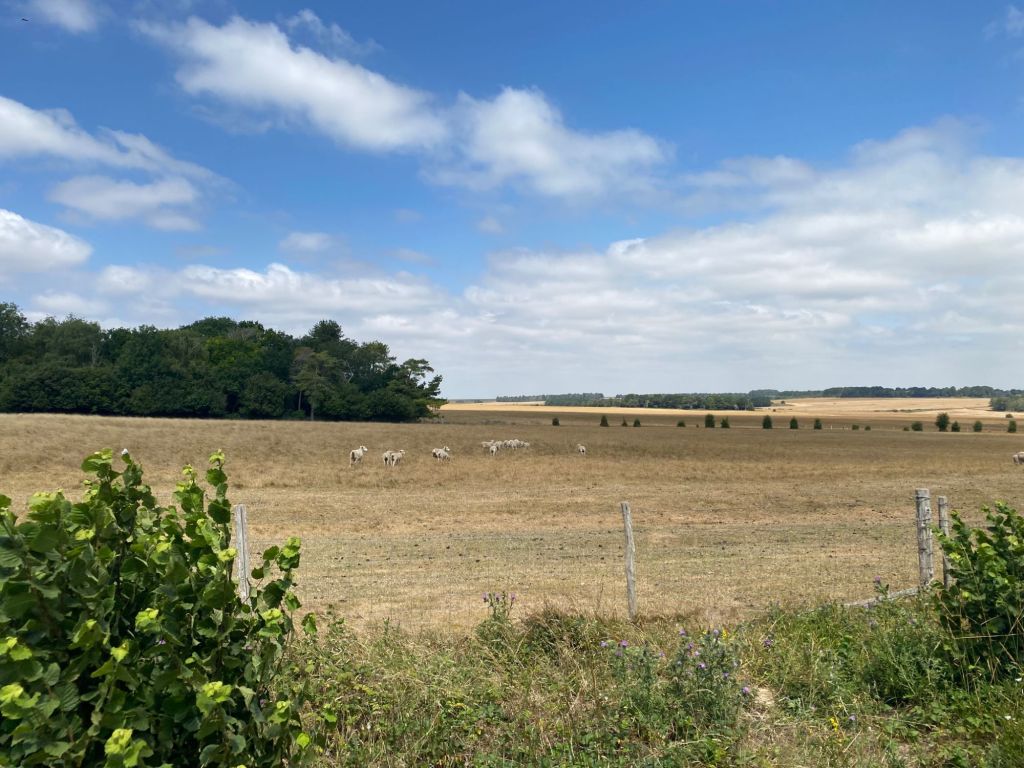
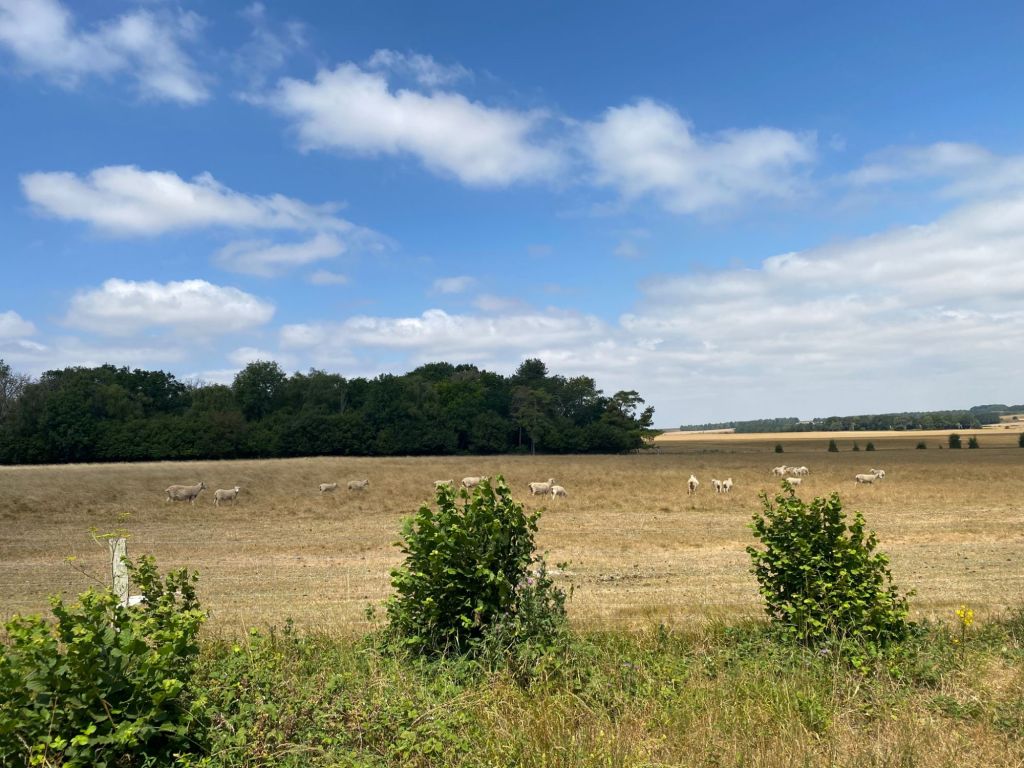
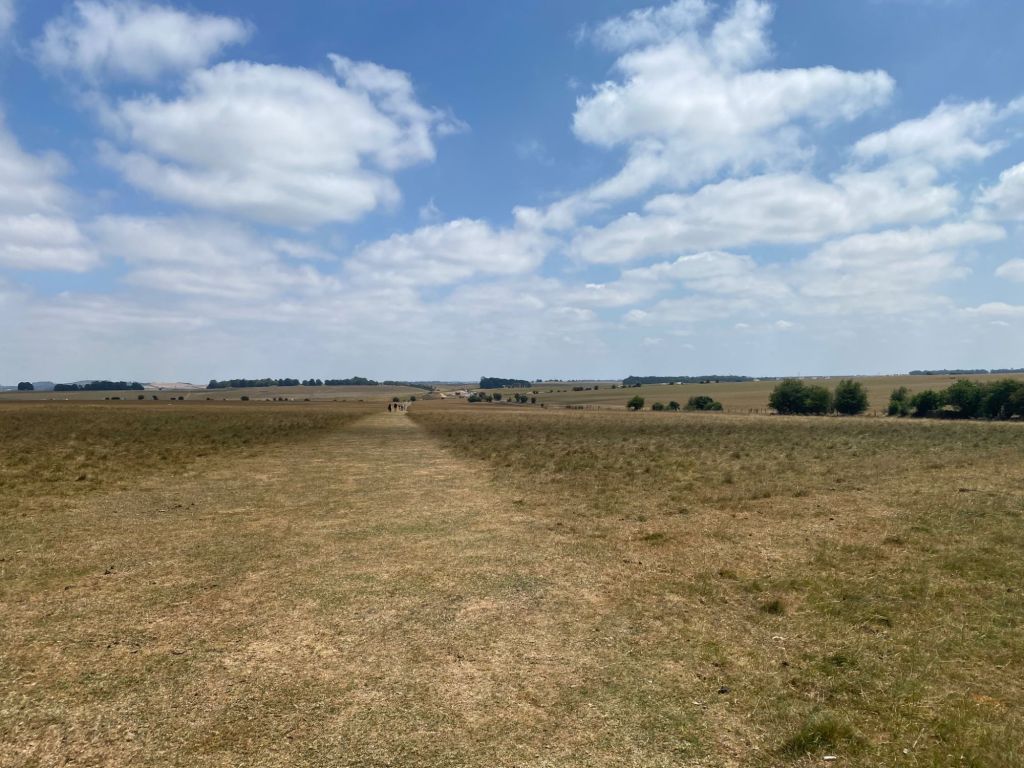
I was given the advice before I left to make sure and walk the path up to the stones rather than taking the bus. The way the stones gradually come into view, the way you can wander through the fields amongst the sheep, the way it gives you a sense of the larger landscape to which these stones belong, is all part of the integrity of that experience. It’s a way of allowing the stones, which are now fenced off, to regain their presence in what becomes an ever present and ever more aware sacred story.
Once you reach the stones, the site itself is designed as a labyrinth, with the circle gradually bringing you closer and closer to the monument as you go around (gimmicky photo-ops included if you want). Here its about seeing the meaning of each new angle, with each stone holding its own significance. The final stage of the labyrinth brings you pretty close to the stones, you just can’t touch them or wander the inner circle (although there are select tours that do take you into the inner circle prior to the visitor centers opening hours, nearby Amesbury does have similar neolithic stones which you can wander through and touch for free). Still, being this close to the Stonehenge circle was, for me, a surreal, likely once in a lifetime, experience.
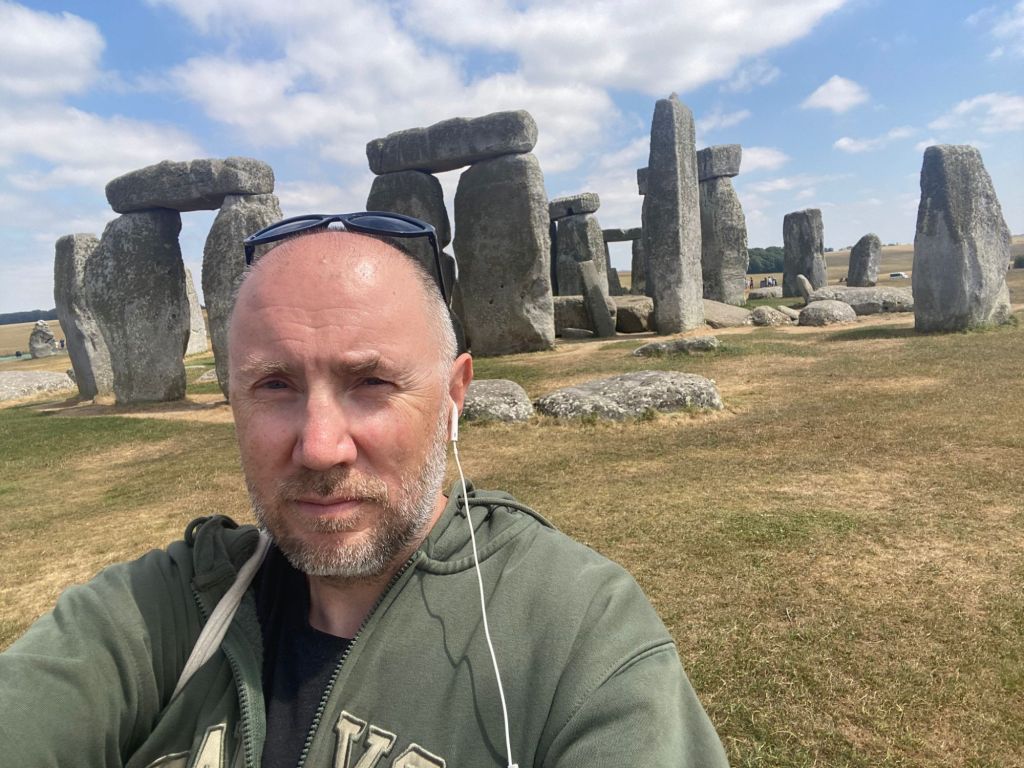
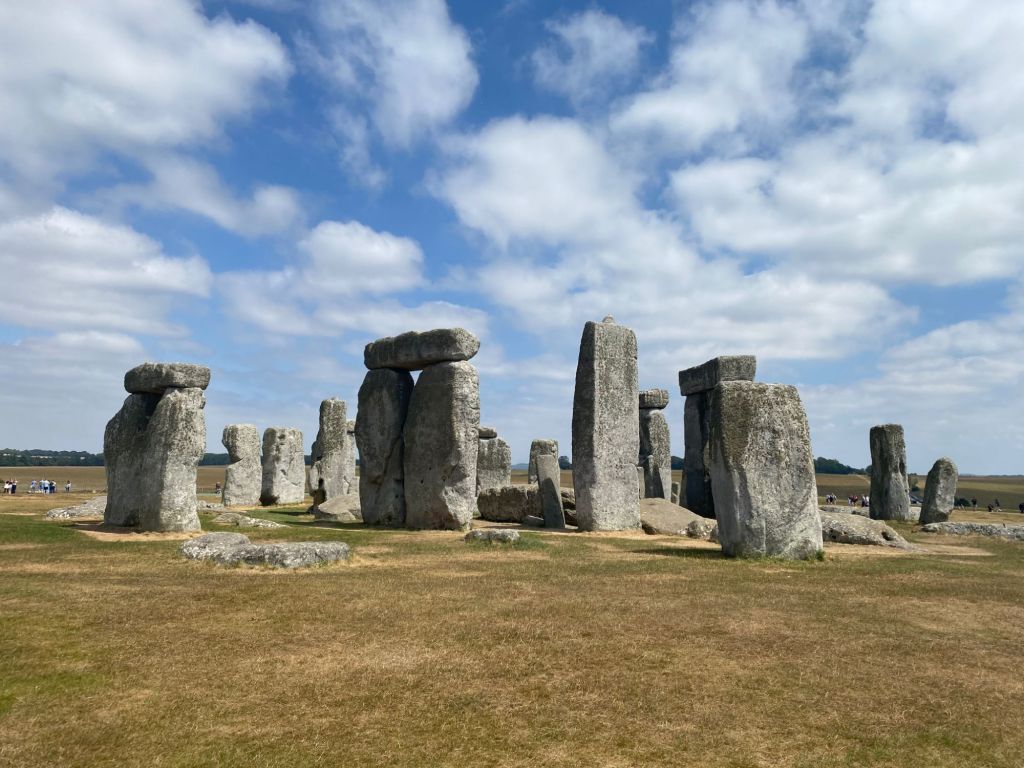
“Belief is the sense organ of faith, as your eyes are the sense organ of sight.” (Stephen Lawhead)
For Lawhead, one of central themes that runs through his stories, each inspired by the different corners of this vast, ancient andscape and its perserving of an old, eternal Story, is this conception of the human journey as one that seeks to find the necessary intersection between spiritual truth and earthly kings. He is especially attuned to the conversation that exists between Christianity and the enduring symbols of a celitic age that draw us into history’s witness to this deep undercurrent of belief. This is something that captured my young mind, as someone who has always wrestled with the nature of the metaphysical. This invitation to embark on the necessary adventure with the characters of his books, themselves being pulled from long held traditions, in a way that seeks a broadening of our world, not a narrowing of it. That seeks to understand how this tangible witness fits with the narratives we use and employ to explain it. Lawhead, occupying the same space and the same streets that Lewis and Tolkien once travelled touches on this fervent need to find a narrative that can make sense of all the world’s stories. In my later years, this would form the necessary crisis point that found me at my own intersection concerning this very quesiton. In many ways, this pilgrimage is acting as the culmination of a decades long attempt to flesh this out, following words that were handed to me in the form of a quest: the invitation to remember a world long buried by the narrowing practices of my adult self.
As it is with all of these encounters, every space seems to capture the very same tension when it comes to our need to interpret them. The very thing that inspired these literary voices across the isles to wonder about the facts of the figurative “adult world” we have been handed, motivates the need to tell the stories of these places again and again which seek to reenchant it. As Burl suggests in his book, “today, all that is left is the wreckage.” The ruins, for as difficult as that might be to imagine standing next to it. Ruins that must then be interpreted.
Ruins that beg the necessary questions that continue to hold the mystery intact: why did they build it?
There is no way through this question that doesn’t bring us to the simple observation of the site’s “sacred” presence. Whatever the answer to that is, the reason we are standing there looking at these stones today is because they bear witness to that essential story. That’s the great irony of historians whom seek to reduce this site to “mere stones,” which they can then methodically explain away. Such an explanation leaves us with a portrait of a thing that had no real reason to be preserveed. It likewise hands us a narrative in which the modern world, with all of it’s accomplishments and creations will have no reason to be sought or remembered. A world devoid of history where all such questions begin to fade, and with it any sense that what we are seeking through the witness of history is the mystery itself.
We can spend all of our time seeking to explain the how, but, as Burl demonstrates, the question that remains on the otherside of all this unearthing is why. Thats where our true quest begins. To unearth that question is to find that intersection between the transcendent spirit and the earthly kings. This is, in fact, what brought these stones back into view after endless years of neglect, was the rediscovery of the sites sacred importance.
“It has ever been thus. The way is hard and narrow, it is true. But it is a path beaten smooth by the countless others who have gone before us. And good news! We do not have to walk it alone. God Himself is with us and has blessed us with friends for the journey.” (The Fatal Tree, Bright Empire Series)
“God has always worked through the small, the insignificant, the powerless- it seems to be sewn into the very fabric of the universe.” (The Spirit Well, The Bright Empire Series)
It’s a wonder for me to consider that the ground I am standing on was travelled by those who moved these stones. By those who’s continued rites brought these stones to life, revealing a world shaped by unseen exisetences. By those who continued to preserve its power to reveal the Story against great odds. This is, in many respects, what we might call one of those liminal spaces, where God indwells creation in all of it’s sordid and often bloodied witness. And where this indwelling can be found, we find the necessary communion with one another.
I do not embark on this pilgrimage alone. I remember the words of Agatha Christie, which I talked about in my previous blog, as she embarks on that train in an effort to go it alone, following the world shattering nature of the affair and eventual divorce from her husband. I talked about how this act, in the light of her larger story (and the Story that drew her to grow in her understanding of the world), actually worked to reveal the simple truth that none of us move through this world alone, regardless of a tendency to convince ourselves that we do.
And the most powerful thing, in my mind, about the fact of this communion, the same communion all of these literary voices shared with one another, is the ways in which these sacred spaces, for as insignificant as I feel standing next to these massive stones, are precisely where we are called to see that the mystery finds its indwelling, its truest expression, in the continued partcipation of these seemingly insignficant lives in these acts of communion with one another. The cosmic Story these stones are telling ultimately call us back into the world of the everyday. This is where we find the collision between the Empire and the sacred gaining its revelance.
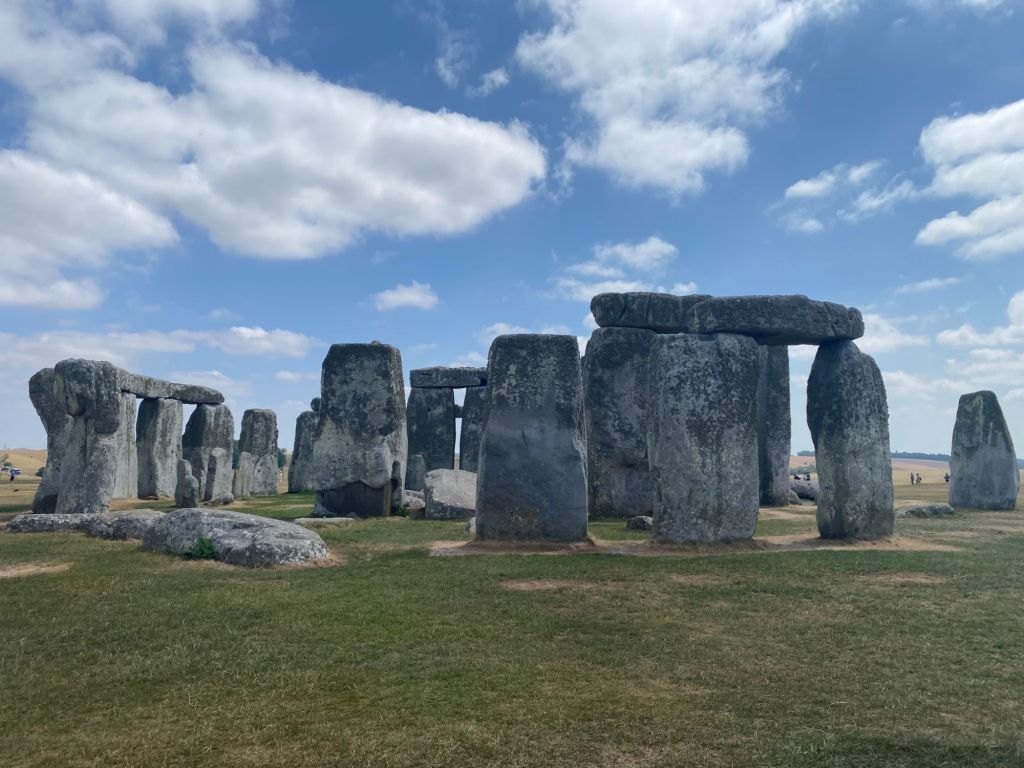

This is, in fact, the story of the ancient Druids that stood at this site all those yearas ago. Where the sheer force of the Empire deems them the enemy, the sacred work continues to happen through the small and the insignficant acts of communion. This, for me, feels like good news.

