The Least and the Last- Understanding the Transfiguration in Mark 9

Palm Sunday (April 9th) will mark the start of Holy Week. In the Christian calendar, Holy Week follows in Jesus’ footsteps towards Jerusalem, and ultimately to the accomplishment of the Cross and the Resurrection.

Having grown up in a non-liturgical environment, it was an opportunity for employment at a Lutheran Church nearly 10 years ago that opened my eyes to the richness of the Christian liturgy, something I had taken for granted up until that point (and still do, to be honest, even on my best days). I have come to understand that following the Christian calendar can help breathe life into the Christian narrative in personal, practical and theological ways. Stepping into the narrative in (intentional) ways helps to remind me that I am a part of this story, a part of the Christian story.

In the Lutheran tradition (as with the larger Christian tradition), Easter is considered the High Season of the Church, meaning that it is considered the most revered and celebrated part of the narrative. In the scope of the liturgy itself, it begins with the solemn process of Ash Wednesday (from dust to dust we come to embrace the idea that we are in need of a Gospel), continues through the forming work of the season of Lent (emptying ourselves in preparation of the Gospel work), and ends with remembering the death and Resurrection (the celebration of new life in Christ that forms the Gospel message and that fills us up anew)… well, actually it is worth mentioning that Easter Sunday actually begins a journey of learning to live in the midst of this Easter season in the months leading up to Pentecost and the coming of the Spirit (June). Easter is more than simply one weekend folks, it is a way of life, the shaping of a worldview.

 
The great part of engaging the Christian liturgy is that it reminds me of how much of the Christian story there still is for me to discover and rediscover in the changing seasons. There is much to anticipate in the Christian calendar, but what is most rewarding is the forming and learning process of the journey itself. Indeed, having just finished Mark 9, the Transfiguration stands as a great example of a passage that I still have much to learn from after all these years, a passage that seems as foreign to me today as the theological concept of Epiphany did yesterday (a word I had never heard before walking through the doors of the Lutheran Church).

What the liturgy does is help place these important events into a larger context, and in a similar fashion, recognizing Mark’s placement of the Transfiguration within the context of a series of three “foretelling” passages of Jesus’ death and Resurrection has helped shed new light on why it is an important event to consider as we engage the Gospel itself.

What I want to do with the rest of this reflection is the following:
1. Look at how the Transfiguration passage connects to the first foretelling of Jesus’ death.
2. Talk about two common themes that connect the three foretelling passages in Mark 8,9 and 10.
3. Show how these two common themes can help shape the message of the Transfiguration for us as readers.

1. How the Transfiguration connects to the first foretelling of Jesus’ death
Some scholars have recognized the presence of a connecting piece in the narrative that fits between the Transfiguration and the first foretelling of Jesus’ death that precedes it. Their motivation for seeing this connection flows out of the words of Mark 9:1, which seems to indicate that what the Transfiguration is trying to say has much to do with what has just been said in the passage before it.

“And he said to them, ‘Truly, I say to you, there are some standing here who will not taste death until they see the kingdom of God after it has come with power.”
Mark 9:1

In this passage, “they” would appear to be the crowd of 8:34, and the some (who will not taste death before seeing the Kingdom come with power) would seem to be referring to the disciples in the passage that follows. Therefore, some scholars point to the idea that the moment on the mountain that happens “after six days” is actually the moment in which they see the Kingdom of God come with power.

Whether this is an accurate position to take (or not) remains somewhat subjective, but I do believe these scholars have correctly recognized the importance of the placement of the Transfiguration story in the midst of these “foretelling” passages. Further, I believe looking at the three “fortelling” passages together (8:31-38; 9:30-32; 10:32-34) can help unmask the larger purpose for these declarations in Mark’s Gospel, and it is by understanding the common themes in these three passages that the Transfiguration itself can ultimately gain a bit more clarity.

2. 2 Common Themes That Connect The Three Foretelling Passages
There are two common factors that each of these three passages shares. First, in all three cases, we find resistance and misunderstanding to the Way of God, which in Mark is the Way of Jesus or the Way of the Gospel. Secondly, all three passages invite a similar response from Jesus in declaring the Gospel to be about the least and the last in the Kingdom of God.

  • Common Theme Number 1- Resistance to the Way of Jesus
    On the first occasion, Peter does indeed recognize Jesus to be the Christ, but he goes on to resist Jesus’ declaration that the Way of Christ is that He must be rejected, die and rise again.In the second passage, it says that the disciples still don’t understand and continue to resist the way of Jesus, and we find them arguing about who is the greatest disciple in the Kingdom that Jesus has come to build. While it says that they did not understand what Jesus was saying, it also says they were afraid to ask Him what he meant, which is intriguing to me. Why were they afraid? The fact that Jesus’ question (about what they were discussing) causes them to go silent seems to indicate that they knew they were off the mark (9:32-35), and this causes them to fear the words of Jesus’ death and rejection. And so they resist it, ignore it, seemingly shove it under the rug. 

    In the third passage, this resistance and their awareness of this resistance appears to grow even greater. It indicates that Jesus was walking ahead of them, and suddenly they were amazed and they were afraid. Again, this is an intriguing reaction, and it feels like they are gaining a more innate and intimate sense of what is about to happen (10:32). As the passage continues, I have to think that the whole request of James and John for a seat at Jesus’ right hand comes in the midst of a sense of desperation and exasperation. And yet it is out of this desperation that Jesus persists in revealing to them just how His kingdom is intended to work.

  • Common Theme Number 2- The Kingdom of the Least and the Last
    All three of these foretelling passages indicate a similar response from Jesus to the resistance and misunderstanding the disciples display in response to Jesus’ explanation that he must die and be rejected before he is raised again:

    Mark 8:31-38– In the first passage, Jesus foretells his death by telling the disciples, “those who lose their life will save it.”
    Mark 9:30-32– In the second passage Jesus foretells his death by telling the disciples, to be first in the Kingdom of God you must be last.
    Mark 10:32-34- In the third passage, Jesus foretells his death by stating that for the disciples to be great in the Kingdom of God, they must become a servant.

In all three of these passages, we find a great reversal, a Way in which we must seek to lose, in which we must seek to be last, in which we must strive to become a servant rather than a boss. This is counterintuitive stuff, especially in the context of the ancient world.

When Jesus asks the disciples in chapter 10 whether they can drink the cup that Jesus drinks and be baptized in the baptism of Jesus, he is actively reorienting their perspective towards the Way of the cross. The cup stands as an image of the Cross, and drinking the cup is participating in the work of the cross- losing our life, choosing to become the least, engaging the role of the servant. This is the road that Christ himself is on, and it is the road he is calling them (and us) to follow, and it is in the baptism of Christ that we find the promise of the Spirit, the spirit that can empower and reveal the Way of the Gospel, the way of the forgiven and forgiving life, in a very real and practical way.

When Jesus goes on to definitively declare that the right to “sit at Jesus’ right hand is not his to grant”, rather it is “for those which it has been prepared”, He is reiterating the themes that we have already found emerging in the Gospel of Mark up to this point. As I have mentioned before, seeing anything other than the forgiven and the forgiving life is to miss seeing Jesus, and in these passages we find the disciples miss what Jesus is saying and doing. Instead, they see a concern for earning, gaining and acquiring their place in the Kingdom of God rather than seeing God’s greater vision of a new Kingdom for the world, a prominent concern in the Gospel of Mark as a whole.

What the disciples resist is the way in which the forgiven and forgiving life calls us to give up our right and need to be in control. The idea of the Cross means that Jesus gave up His rights for the sake of the world, and He calls us to do the same. A part of this picture is giving up our right to decide who is and is not able to enter the Kingdom of God. For Mark, and the Transfiguration narrative, our focus and concern should be on our own hearts, our own lives. At the Cross we find forgiveness, and it is in becoming a servant, in submitting our right to be first in line in this Kingdom and this world, and finally it is by submitting (losing) our lives for the sake of a Gospel for the world, that we enter into the forgiving life. These are the important questions. This is the direction we must be looking if we are to see Jesus and participate in the kingdom He is building.

How these two common themes can help shape the message of the Transfiguration for us as readers.
In the Transfiguration story, we find ourselves being transported back through time in a sort of sweeping panorama of the Israelite history. We are transported back to Moses and Elijah on the mountaintop. We are reminded of the way in which God once revealed himself to both them and in the Israelite people in their own state of desperation. It’s an incredible scene that unfolds at the Transfiguration, one that left its witnesses on the mountaintop terrified and “not knowing what to say”.

If this indeed is the moment where the some (Peter, James, and John) were able to gain a glimpse of the Kingdom of God coming in power, it is a decisive moment where Jesus is declared to be the fulfillment of this Kingdom. As Elijah and Moses eventually fade from view, we are left only with the voice of God and the familiar words God once gave to Moses- “Listen to him”. It is in this intimate moment that God echo’s the words of John and the words of Jesus’ baptism- this is my beloved Son, the one who is to come who is greater than John the Baptist, who is greater than Elijah, who is greater than Moses.

And it leaves them questioning, “what this rising from the dead might mean” (9:10).

And isn’t this what Lent is all about, spending time reflecting on this very question? What does the cross mean for me? What does the cross mean for you? What does the cross mean for the world? In the Transfiguration, we find that it means everything. The point of the Transfiguration was to point to the Cross, and it is at the Cross that we find the means by which God enters the world- the great reversal in which God becomes (hu)man and our Lord becomes a servant. It is at the Cross that we find the means by which God promises to “restore all things” (9:12), and bring hope for a world that is in desperate need of restoration. This is the promise that Christ comes to fulfill, and this is the Way in which we are called to participate in God’s restorative work as Christ followers, by learning to give our lives for the sake of the Gospel, learning to serve rather than achieve, learning to enter into the space with the least of these as we purpose to give up our right to be first in this new Kingdom God is building.

As we move further and further into the period of Lent, we are being called to further reorient our sense of vision, away from ourselves and towards the One in whom we find our hope. Away from worldly ambitions and success, and towards the example of Jesus on the Cross. As the process of Lent continues to shape us, we are reminded that we do not need three tents (whatever those tents symbolize in our lives), we only need one. As when all else fades from view, it is only Jesus who remains.
FInally, in the words of Jesus, look at where we are headed, “see, we are going up to Jerusalem” (10:33). This is the direction we must be looking to see Jesus, towards Jerusalem, towards the cross, and ultimately towards the hope of His Resurrection. And what a beautiful sight it is.

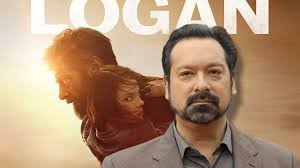
Logan, Lent, and the Promise of New Life

(This reflection contains spoilers, so be aware of that if you have not seen Logan)

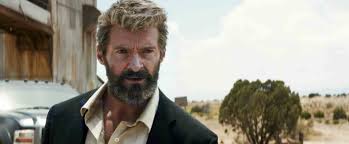
First, a quick note on the (should be) obvious- Logan is not your typical superhero film. It definitely earns the 18A rating (something to be aware of if you have personal sensitivities to violence or language). In many respects, the film is also built around a different kind of narrative than the Wolverine films that precede it. It is simple, introspective, and small in scale. It also happens to be very dark. As the character Logan goes on to say at one point in the film, “this is what happens in the real world, people die.”

But Logan also happens to be a beautiful and touching film, a fitting bookend to Jackman’s (now) iconic interpretation of Logan/Wolverine. As it meanders through a sort of Mad Max, neo-Western style landscape, it exposes a narrative that digs deep into the questions of who Logan is and how he has grown and developed over the years. We are given the image of an ailing man, seemingly burdened by the weight of life’s questions and desperate to stay afloat. He struggles to understand the looming importance of his own legacy in light of his own (physically obvious) deterioration, along with the deterioration of the politically charged environment that surrounds him.

There are so many incredible themes that underline the personal journey Logan takes in this film, but there are three that stand out for me:

  1. The question of Legacy
  2. What it means to Belong
  3. The meaning of Sacrifice

The Question of Legacy
Off-screen Legacy
This will be Jackman’s last performance as Wolverine, and he has gone on record (in a number of interviews) about his motivation for getting this last one right, of giving the character the film he believes he deserves. In this sense, Logan is a passion project, and even for fans of the previous films (and I count myself among them), I think it would be hard to deny that this film is something special.

One could fairly argue that when Jackman first put on those claws 17 years ago, he embodied a new approach to developing the idea of the big screen superhero persona, and I think in Logan he puts the final touch on making the character fully his own. The two (the real life and the fictional character) have become synonymous over the years, and I don’t think it is too far out there to consider the character “Logan” will remain a part of Jackman’s legacy as an actor for years to come. Likewise, the legacy of Wolverine (and the many other onscreen superhero characters that the character inspired) will forever owe much to Jackman’s interpretation.

On-Screen Legacy
In the film, set in a near-future setting, we discover that it has been over 20 years since they last encountered a new mutant, and the community that Logan was once a part of is now gone. In a very gripping fashion, this reality has left him silently (and not so silently) grappling with questions of who he is and what this life is about- this becomes the question of his legacy (or a lack thereof) that he will leave behind as he fades away into the darkness from which he came, a fate that he seems to welcome, and even hasten as he continues to carry around the one kind of bullet that can actually kill him in his pocket.

We first met Logan in 200o’s X-Men, a mysterious man wrestling (figuratively and literally) over the immense burden of a forgotten past, with the only certainty a persistent feeling of brokenness and emptiness that haunts him on the inside; emotions that he channels through a penchant for outward aggression, anger, and social neglect on the outside. Now we find the reality of Logan’s self-healing and anti-aging properties clashing with this rather innate sense that, somehow and in someway he is nearing the end of his time on this earth, and that his once forgotten past (in the form of poison) is finally (and slowly) getting the best of him.

On Jackman’s part, he gives everything that he has left to give to this role, and then some. He helps us experience all of these emotions, both in the nuances of his facial expressions and in the way he carries himself on-screen. I felt every moment of this astute introspective process, and his performance invites us in on the experience as it continues to unfold. But it is the characters that come alongside him in midst of this process (two of them, specifically) that help shed light on the real struggle with the question of his legacy and identity.

Professor X
When we first meet Logan, it is eventually the Professor who opens up his arms (and heart) to welcome Wolverine into their community. It was an invitation that broke through the wall of his pain and offered him a place to belong and a family of similarly broken stories to exist alongside. This community was intended to be a safe haven for people like Logan, an opportunity to explore the pain and discover where this pain is born from.

In Logan, we find the situation is now reversed. In the early scenes of the film we encounter someone seemingly content to sink into the trappings his own depression, ready to whittle away in the confines of his substance abuse and apathy by drinking his life away. We very quickly realize that some of the substances he is acquiring is actually for the sake of the ailing professor, who he has been hiding in a building across the Mexican border.

There is immense beauty to be found in this idea, the idea that the stuff that we see on the surface rarely tells the whole story. This is what led the Professor to invest in Logan in the first place, and now it is by caring for the Professor that Logan is able to find the strength to believe he is still who the Professor has always seen him to be- which is more than the mess he has made of his life.
There are so many touching and heart-wrenching moments that surround this relationship. The most memorable for me is when Logan looks to the Professor in a moment of exasperation, reminding him that there are no more mutants left in this God-forsaken world. The community is gone, and he has come to believe that they (he) was simply “God’s great mistake”, a mistake that God is now correcting. That he himself should be left to simply fade into the darkness is seen as a kind of poetic justice, but the truth is, he cannot bring himself to see the Professor in this same light. For Logan, the Professor is absolutely worth saving, which is why he continues, day after day, to risk his own life to bring the Professor the medicine he needs to stay alive.

What it means to Belong
When Logan emerged as a part of the community of X-Men all those years ago, he arrived as an orphan, someone without a family, without a place to belong. We now find these same themes re-emerging in the story of the second character to come alongside Logan in the midst of his hopelessness and despair- a little girl named Laura (played by Dafne Keen with a powerful on-screen presence).

Laura says very little (nothing at all for a good portion of the film), but what she does demonstrate is a quiet, and determined understanding of Logan’s struggle. As it turns out, she is also an orphan- actually, as it turns out, she is Logan’s daughter, someone who shares a piece of his history as the product of a laboratory experiment that the government is now trying to wipe out. Only now she needs Logan’s help to get to a rumored community that is supposedly being built for people like her, a place just like the old community under Professor X where she can find safety and opportunity for a better future.

As Laura enters his life, Logan is forced to grapple with what it means to care for someone else, to invest in a relationship from out of his own brokenness. It is heart wrenching to watch him struggle with this idea on-screen, and there is a rather revealing point where he finally breaks down and tells the girl that he “cannot care for her because bad things happen to everyone he cares about.” And in the course of the film, we watch as he tries to bury this care, avoid it, resist it in every way that he can. And yet, in the story of this little girl, the one thing he cannot escape is the picture of himself that lingers every time he sees her, a picture of someone who desperately needed somewhere to belong, for someone to accept him as he was. That Logan is able to eventually arrive at this realization in the film is a big part of coming to terms with who is- someone who did belong somewhere, someone who was accepted and who is now a father to a girl who needs to know the same.

Sacrifice
Logan tells a tragic story. People die. The Professor dies. And yes, in the end Logan dies. But it is not so much that they die in this narrative, as it is about what this death comes to symbolize.

When the Professor dies, Logan loses the most important person in his life, the single person he cares about, the one who gave him a reason to get up every, single day. And yet through the lens of this tragedy stands a girl, a girl who is now in desperate need of the same thing the Professor once afforded him. In the Professor’s own dying moments, he recognizes Logan as a part of his legacy, and his hope is that this girl can now become a part of Logan’s legacy in the same way. It is in the context of relationship that we find (or gain) our meaning, and even when Logan feels like he has nothing good to give, the Professor sees a man who is able to give everything that this little girl really needs- his presence and his acceptance.

Through all of the resistance, all of the walls, all of the pain, where this story ends is in an amazing statement of what it means to give out of our brokenness, a picture of what it means to truly give our life for the sake of another. As Logan comes to face some of his past in the film, the real battle, the real nemesis of the film begins to emerge- which is the battle he must face within himself.

Or not really within himself, but rather with a clone that the government has created to look like himself- a version of Logan intended to be even more powerful simply because it lacks the conscious that seems to hold the real Logan back.

What these scenes symbolize and personify is the battle that is happening inside of him, the war between the crippling effects of his personal pain and brokenness and his past regret, and his ability and desire to give and to love from out of these broken places. And this war, this internal (and external) battle, leads the film towards a poetic finish, a final moment where Logan finally stops running and faces his demons head on. It is a moment where he comes to understand the value of sacrifice, where he makes the choice to lose his own life for the sake of this little girl. And what is really interesting about this moment is that it is the bullet, the one he initially intended to use to end his own life, that ends up killing the clone, the symbol of his brokenness and past regrets personal demons. This is what allows the real Logan to emerge, and this becomes the person he is finally able to see and accept in his own dying moments. As Logan “dies to himself”, we are left with a clear picture of a man who is both forgiven, accepted and loved in spite of his troubled past and his present struggle. And by accepting this truth for himself, he is also able to offer this same unconditional love to Laura.

The final scene in the film narrows us in on a picture of Laura standing at the foot of Logan’s grave. In the narrative of the film, the journey they are on (in the desert) is one that is built on the promise of a new community (literally called Eden), a place where all of this group of failed laboratory experiments (the group of kids that managed to escape the governments efforts to distinguish them) can find safety and the promise of a better future. But in this scene, rather than continue to run towards this promised land, Laura stays behind to honor the sacrifice Logan made for her. In a fitting statement, a cross is placed at the head of the grave, and as the camera lingers on this symbol of sacrifice and grace, the little girl gently leans down and turns the cross on it’s edge, forming an X. It is the most powerful moment in the film. Far beyond setting the film up as a lead in for the next generation of X-Men, it stands as a statement that Logan was not God’s mistake and that she is not a mistake either. As their stories meet, they find freedom in the truth that they are loved without regard for their past, that they can belong because they found acceptance in each other, in a relationship.

The Power of Lent and the Promise of a New Hope
It is interesting how films can sometimes play into modern politics with an eerie sense of divine appointment. One has to think that this film was already put together years ago, but we cannot miss the fact that this is a film about a group of kids deemed illegals who are now seeking Asylum over what we come to know is the Canadian border (in North Dakota no less). But even with the rather timely nature of this narrative, there is actually an even stronger symbol sitting beneath the surface, one that lives and breathes the essential nature of the Christian hope.
It is interesting that what drives the little girl is not absolute certainty about where she is going, but rather an anticipation for what this promised land means for her life and the life of others. She doesn’t know that this promised new community actually exists (Logan, in-fact, insists that it doesn’t, that it is a lie based on the words of a fairy tale, man made story… otherwise known as a comic book in the film), but she places her hope in the fact that it does. And so she moves forward, forward in faith, a faith built around the idea that in a broken world, the promise of something good, of love and of healing and restoration remains a hopeful reality.

This is such an incredible picture of the faith that we find in the story of Jesus. What is significant is that Laura never believes that the world she inhabits, this broken environment, is simply one that she needs to let go of or do away with. She is angry, to be sure, but her determination is found in the picture of its future restoration, the idea that things can get better. She believes this because of the small glimmer of love and good that she finds underneath the rough exterior of Logan’s own hurt and abuse. She believes that what is broken can be healed, and this healing comes in the new life she finds through the symbol of his ultimate sacrifice (which significantly happens on a tree).

There is a special moment in the film where the three of them (the Professor, Laura and Logan) are taken in by a Christian family as they are running through the desert. This family offers them a reprieve in the desert landscape, and it gives them pause- a chance to recognize what the desert process is all about, which is the power that they find in relationship with each other.

As I write this, it happens to be the beginning of Lent, a period that symbolizes Jesus’ own journey through the desert, and in this scene I was reminded me of what the process of Lent is all about- a time when everything else is stripped away and we are able to narrow in on what is most important, our relationship with God. For me this was a powerful picture of what it means to enter into this desert experience along with Jesus. Lent is about learning to live in-between the broken places and the hopeful promise, of preparing ourselves to encounter and re-center our eyes on the sacrifice that Jesus made in order to attend to and enter into our own brokenness and suffering (and all that this means for our own sense of belonging in the family of God). It is a desert journey that is difficult but also incredibly beautiful for what it ultimately helps to build in us, which is a richer faith and a stronger character. For Logan, this part of the journey allowed him to see beyond his pain, beyond the struggle, and to see himself more clearly, but more importantly it opened his eyes to the story of a little girl who was also drowning in her own brokenness. He finds his own identity in the sacrifice that Professor X first made for him, and by sacrificing his life for this little girl, he is able to help Laura discover who she is as well.
As we prepare to approach the Cross in this period of Lent, I am reminded that we have an amazing hope in the promise of a new life in the midst of a restored creation. And it is in the truth of Jesus’ own sacrifice that I am reminded that I have been given an identity to live into in the midst of this new hope, a new identity that I continue to discover as I learn to put my faith in what Jesus has done and is doing at the foot of the Cross. It is here that I find that I am a child of God, someone who is loved, someone who has been given a place to belong in God’s family regardless of my past. And it is here that Jesus declares me able to give this same acceptance and love into the lives of others.

Learning to Live in God’s Economy- Rediscovering the Way of the Cross in Mark 8

“And (Jesus) asked them, ‘But who do you say that I am?’ Peter answered him, ‘You are the Christ.”
– Mark 8:29-30

There is an interesting dynamic that surfaces for modern readers of Mark’s Gospel, as we encounter his words from the outside looking in. We have, after all, the benefit of this outside perspective, of being made privy to the answer to this question in the opening words of the Gospel- “The Gospel of Jesus Christ the Son of God”. Thus it is easy to kind of sit back and simply watch the mystery of this statement unfold through the characters we find in the Gospel. It is riveting stuff actually, sit on the edge of your seat kind of stuff even, where we can watch others wrestle with their faith from the safety of our couches.

But every once in a while I arrive at a verse (like this one) that awakens me to the idea that I am far less removed from these words than I realize; that they are as much for me as they were for Mark’s original audience. I (we) are a part of this story. Suddenly I find myself shifting even closer to the edge of my seat.

From Confession to Rebuke (Mark 8:27-38)
The closing passage in Mark chapter 8 brings us face to face with a glaring contrast- the clear and concise nature of Peter’s confession of Jesus as Son of God, and the rebuke of Peter’s subsequent (and apparent) resistance to what this confession actually means in light of his own journey in following Jesus.

Mark has just finished providing us with a stark reminder of the Gospel Way, the Way in which we have been called to follow as Jesus continues to travel the straight path set before us. In the sending of the disciples, we encounter two complimentary parables (the feeding of the 5,000 and the feeding of the 4,000) that outline the nature of how this movement is supposed to work. It begins with God’s provision for His (Jewish) people in the 5,000 (the forgiven life), and then moves outward to God’s vision and provision for the (gentile) world in the 4,000 (the forgiving life).
*See my previous post for more on this thought.

Which brings us to this closing passage, a sort of entry point into the Way of Jesus, the Way of the Gospel, the Way to the cross. It is a Way in which Jesus must,

“suffer many things and be rejected by the elders and the chief priests and the scribes and be killed, and after three days rise again.”
– Mark 8:31

It is a Way which leads immediately to resistance (in this passage), a resistance that Jesus goes on to rebuke (Get behind me Satan!), by declaring that Peter is setting his mind on the things of man rather than the things of God (vs. 33).

Two questions arise in me as I read this passage:
1. What is it about the Way of Jesus that Peter was resisting?
There are some culturally relevant answers available to us as readers. According to the prophetic words that we find in the book of Daniel, the Jewish culture would have sensed a contradiction between Jesus’ specific reference to a single resurrection and the teaching of an expected general resurrection of God’s people. As a culture built around certain Messianic expectations, Jesus’ Messianic methods easily could have been met with a certain degree of skepticism.

However, I think these cultural expectations become that much more interesting and applicable when seen in light of Jesus’ immediate and personal response to Peter’s resistance. It is a resistance that Jesus seems to apply to “anyone” (vs. 34), and Jesus’ answer here reveals something incredibly specific, incredibly intimate about the human tendency to resist His call to follow Him. Here is Jesus’ response:

If anyone would come after me, let him deny himself and take up his cross and follow me. For whoever would save his life will lose it, but whoever loses his life for my sake, and the gospel’s, will save it.”
– Mark 8:34

So this is The Way that Peter is resisting:
We follow “after” Jesus, not before– Jesus goes first, and we are called to follow Him on the straight path. In doing so we must give up our need to control the way this path “should” travel.

We must deny ourselves: This is the idea of repentance that we find in Chapter 1, the turning in a new direction. We are called to reorient our line of sight towards the saving work of Jesus and the Gospel, and in doing so we must submit our own idea of what it means to belong in the Kingdom of God (and what it says about us and others) to Jesus and His purposes.

We must take up our cross: In a bit of foretelling (or foreshadowing), Jesus offers us the image of the cross. The cross, here, means letting go of our self-determination and exchanging it for a sense of dependence on the work of Jesus in going before us on the straight path. The cross we take up is both a symbol of what Jesus has done in our lives (the forgiven life), and a picture of what we carry with us as we enter on the Gospel Way (the truth that this forgiveness declares about us and others). As Paul understands it in Galatians 2:20, it is about the process of being “crucified with Christ”, of seeing past our own efforts and towards the Kingdom work that God is already doing.

We must follow Jesus: The call to “follow me” reminds us that faith is not stagnant but active. It is a movement, a movement that brings us out of the truth of the forgiven life and pushes us into the Way of the forgiving life. It is a faith that calls us to get out of the boat and to trust that we have something to offer to the world through the work that Jesus has already done in us.

So what does Peter resist? According to Jesus, he is resisting the Gospel’s call to shift his sights from looking inwards to looking outwards. What he resists has much to do with his ability to see past himself (deny “himself”, take up “his” cross, save “his” life, lose “his” life) and to actively participate in the work that Jesus is doing in the world at large.

Which brings me to my second question:
2. What is it about the Way of Jesus that I resist?
I am currently (for Lent) spending some time working my way through N.T. Wright’s “The Day the Revolution Began”. Wright is one of my personal hero’s of the faith, and his work on the new perspective (of Paul) and in reshaping our understanding of the Cross (away from the problems of penal substitution and towards the more scripturally faithful idea of the Kingdom of God come near) has been transformative for the way I have come to understand God in the midst of my own faith journey.

This latest book is sort of a summary of the ideas he has been formulating elsewhere, and they are ideas that I find myself continuing to wrestle with as I encounter some of Mark’s more difficult passages. Here, the ending of Mark 8 is no exception as the difficult insider/outsider language of Mark 4 resurfaces. This time we are presented with a contrasting picture of the “world” and the “soul”, or the idea that two opposing actions can lead to two differing results between life and death (of being ashamed of Jesus and Jesus being ashamed of us).

Here is the thing. I cannot help but tend to read this passage through the lens of the old penal substitution paradigm that has become so ingrained in me over the years, a perspective which, according to Wright, has been built on this idea that the forgiven life has everything to do with appeasing God’s great anger towards us (and/or our sin) and that requires the punishment of death (which Jesus accepts in our place). It is a view, whether we recognize it or not, that moves from a negative to a negative, and often does so at the expense of the greater (more positive) Gospel vision of the Kingdom. And so, I cannot help but arrive at this passage about shame (and the failure that leads to shame) that closes chapter 8 with a great sense of fear and resistance. I cannot help but resist the helplessness and hopelessness that I feel when I measure the seeming expectation of this Gospel (of Christ’s substitutionary work) with the fruit of my own example (personal failure). And so, I find myself moving back and forth between two lines of thought- if this is what the passage means, that I must be ashamed (condemned to death) because of my lack of fruit, I will either become like the disciples and resist Jesus’ words by trying to control it for my own sake (it cannot work this way, Jesus), or I will reject (resist) the call of the Gospel altogether.

And yet, as I sit down to read over this passage again, as I pray for a fresh set of eyes, I am struck with the idea that it is in the midst of my own resistance that Jesus is speaking directly to me, and it is in the midst of this Gospel message that Jesus is exposing my resistance for what it actually is- an inability to follow Jesus without inhibition.

Discovering My Motivation
I cannot escape the fact that, in this passage, faith is participatory, not stagnant. But the bigger question that I find here is, what is motivating me to enter into this new Way of living. Here is what I know. Faith, as a picture of the forgiven life that Mark has been building up to this point, is not a get out of jail free card. To view it this way is to make little out of the muchness that we find in this new Way of life. At the same time, faith cannot be about proving our worth on the Way of Jesus. This methodology works against the call to deny ourselves, and to view it this way is simply to elevate ourselves above others while also condemning ourselves to the picture of shame that closes chapter 8 at the same time (thus the complex this creates).

And so how do I reconcile these two ideas without simply getting lost in the temptation to resist it? Here I have found the following verse to be helpful:
“For what does it profit a man to gain the whole world and forfeit his soul? For what can a man give in return for his soul.”
Mark 8:36-37

There is a question that this verse pre-supposes. It is a question of worth, or more specifically, the question of what my life is worth. What is a man’s soul (life) worth? In vs. 36 Jesus declares it is worth more than the world. So what can man give in return for his life? We cannot possibly gain enough to measure up to the price that Jesus declares our life to be worth.

Understanding this economic exchange or parallel helped to reorient my perspective on what it is that I am resisting. When I read this through my old paradigm of penal substitution theology, the Way of Jesus becomes a picture of Jesus paying the price for my sin through the rejection and death that He (willingly and purposefully) suffers. He payed a debt that I owed. The truth of my resistance to this idea of Jesus and the cross is that, in order to follow him in this same Way, I am required to respond to this “debt” by living a “profitable” life in exchange. And yet, as this verse exposes, I cannot possibly earn enough to measure up to what is declared to be priceless. But, in the eyes of Jesus’ substitutionary work, this is the model I am called to follow and to imitate, and so I find myself without hope and feeling stuck in an economic system based on the haves and the have not’s, the divide between the rich and the poor (in faith).

When I read this verse through a different paradigm, however, the paradigm of Jesus’ restorative work in the promise of the Kingdom come near, what I find is a verse that actually begins to reshape my motivation for following Jesus into something far more hopeful. At this point in perspective, the word “loss” takes precedence over “profit” in God’s Kingdom economy. Jesus’ suffering and death become a positive investment in God’s restorative work (the forgiven life), an investment that is not so much about atoning for our sins, but rather about entering into the affects of sin in our world along with us. And we enter into God’s restorative work (the forgiving life) by learning to give out of the muchness that the Way of Jesus declares us to have in a less than perfect world, in the midst of our less than perfect lives.

When I consider this fresh perspective on the new economic order of God’s Kingdom, Jesus’ own path of rejection, suffering and death finds new roots. The cross is not a payment for our sins, or the appeasement of an angry God. This simply does not fit with the picture we find here of God’s new economic order. In the cross we find a positive investment in the work of God’s promised restoration (the Kingdom come near), and for Jesus this investment is us. We, His priceless sons and daughters of God, are the fruits of His Kingdom work.

And so, when we enter into the Way of Jesus, when we deny ourselves, take up our cross and follow Him, what we are doing is accepting the truth that we are seen as priceless in God’s new economic order. And when we follow (as we are called to do as equal participants in this Kingdom work), what we are doing is declaring others to be equally priceless in this Kingdom as well.

Exchanging Shame to the Forgiven and Forgiving Way of Life 
Here is what really stuck out for me when it comes to my own tendency to resist the person and work of Jesus in my own life. When I resist my old idea of the cross, when I see it as simply a debt that I must repay (but can never repay), it inevitably brings me shame. I will also inevitably put this same degree of shame on others as well. Not only will (and do) I find myself consistently looking to compare my own fruit to the fruit of others around me, but I am forever tempted to judge the fruit of others as less in order to keep my own profitability quota up. It’s a nasty circle and one that thankfully Jesus’ helps to call us out of on the way to the cross.

I recently submitted a devotional for the Lenten Reader (2017). It is a set of devotionals made up of submissions from people across the Covenant Church of Canada that is intended to lead us through Lent, a period of reflection and preparation for approaching the cross. My submission happened to fall on today (March 4th), and I couldn’t help but see some parallels to Mark chapter 8. And so in closing I would like to include this devotional here. It is based on a reflection of Psalm 22, and has much to say about reorienting our perspective on this idea of shame and of embracing the work of Jesus not as a debt, but an investment.

Psalm 22

“I will tell of your name to my brothers; in the midst of the congregation I will praise you.”
– Psalm 22:22; Hebrews 2:12

Often the most difficult part about experiencing hardship and failure in life is making sense of that space in-between God’s apparent silence and the promise of His presence.

As the Psalmist writes, God is “enthroned on the praises of Israel” because “In you our fathers trusted… they trusted and were not put to shame (vs. 3-5).” In contrast, the Psalmist’s inability to see God in the midst of his own suffering, his inability to see similar fruit, brings him shame. He finds himself no more than a “worm”, “scorned” and “despised” (vs. 6), far from God’s saving grace (vs1).
And yet, the strength that eventually allows the Psalmist declare, “Yet you (God) are he… ”, comes in the midst of the bulls, the drought, and the preying dogs (vs. 9). It is a strength that he gains not by his own worldly idea of success, but by lifting his eyes upwards and outwards towards a God who has heard his cries in the silence, who is not far from his pain. It is a demonstration of faith that leads the Psalmist to pray, not simply to be delivered from his trials, but for his trials to “tell of God’s name” and to “praise God’s name” in the midst of his family and his community, not on own strength, but on a strength that comes from God (vs25).

Recognizing that Jesus, the founder of our salvation, was “made perfect through suffering”, the author of the letter to the Hebrews reflects that the Psalmist need not be “ashamed”, because just as Jesus tasted suffering on behalf of “all” so does our suffering unite us with the one through whom all things exist (Hebrews 2:5-13). The Psalmist can find freedom in not having to compare the fruitfulness of his ministry to the fruit of his fathers, because in the cross Jesus declares us all to be equally worthy of being called His children. As Jesus shares in the cry of the Psalmist, “My God, My God, why have you forsaken me”, He demonstrates just how far God is willing to go to meet us in the space in-between, and reminds us that it is okay to sit in these difficult spaces, to wrestle with the silence. We are also reminded that God has “left nothing outside his control”, and it is because of this that we can trust in the promise that God is up to something far greater than our limited perspective can see in these difficult spaces in-between, and join the Psalmist in saying “He has not hidden his face from (the afflicted), but has heard their cries”, Praise be to God.

Finding Nourishment in the Storm (The Gospel of Mark 6-8)

Sickness managed to sideline me from doing much writing this week, but I did want to take a moment before the hours click away on this weeks end, to offer a brief reflection on my continued journey through Mark. As I made my way through chapters 6-8, there were a few things that stood out for me as I continue to get ready for the Lenten season and the first foretelling of Jesus’ death:

A Second Storm Passage
In the first storm passage (the calming of the storm in 4:35-41), Jesus is in the boat with the disciples and asleep in the stern. The point of this passage was their lack of a faith, a problem that I believe had less to do with their fear or their questioning of Jesus’ care, and more to do with their inability to fully entrust their lives to Jesus’ call, a call that Jesus will be asking them to live out only a few passages later (6:7-13). This is contrasted by the stories of the healed woman and healed man in the passage that follows, two people who demonstrate the necessary faith required to “go” out into the world in the way Jesus calls them to do.
In the second storm passage (6:45-52), we find the disciples in the boat by themselves, with Jesus staying on the land.

Two things to note here- First, sometimes when we have faith enough to go, the going can be a struggle. And sometimes when we face these storms it is easy to mistake Jesus as too far removed from our circumstance to do much at all. And as he demonstrates by walking on the water and joining them back in the boat, we can have faith that Jesus still sees and Jesus still attends to our cries in the midst of the rough waters.

Secondly, this truth (that Jesus never leaves us) finds even more significance in light of the line at the end of this second storm passage, which suggests that they were “astounded” at this truth because “they did not understand about the loaves” (6:52).

Understanding The Two Loaves Passages
Here we find another pair of nearly identical stories in the Gospel of Mark, and while all four Gospels do record the first (the feeding of the 5,000), Matthew and Mark both include the second (the feeding of the 4,000).
It might be easy to simply dismiss these as two varied versions of the same story, but there is worth in considering how and why these stories were included in their traditional context, and the way it can shed further light on the way Jesus promises to never leave us we step out of the boat and enter the world. After all, it is Jesus himself who calls our attention to the danger of misunderstanding the point and purpose of the loaves.

The Numbers Tell The Story
Numbers were important in the ancient culture, and no less important for the Biblical authors themselves, and from my own research, commentators and scholars generally seem to agree that the differences in numbers that distinguish the two stories can help shed light on their intended meaning in the larger picture of Mark’s Gospel.

In the first story, we encounter the number 5 (five loaves, and five thousand). In the ancient Jewish culture this was understood to symbolize the Pentateuch (books of the Mosaic law). And in the stories conclusion, we find 12 baskets (12 Tribes of Israel).

Contrast this with the second story and we find 7 loaves (and baskets). The number 7 usually indicates the 7 days of Creation in which God looked upon all of the created order and saw it as good. 7 can also mean the perfect or whole picture of God or God’s ways.

So what does this tell us? In the story of the Feeding of the 5,000, we find a story that is symbolic of God’s provision for His chosen (Jewish) people. Further, this miracle occurs near Bethsaida, which indicates a Jewish setting.

In the story of the Feeding of the 4,000, we find the location now shifts to the Gentile region, with the number 7 signifying Jesus’ care and provision not just for the Jews, but for all the world.

So how do the loaves connect us back to the story of the storm? For Jesus, the story of the loaves should serve to remind the disciples of two things when it comes to following Jesus. First, they are called to go into all the world. This is how far God’s provision is intended to reach. It is interesting that the story of the 5,000 finds the disciples being removed from the crowd in order to tend to their hunger, only to be pushed by Jesus to share their hunger (and their food) with the crowd. Secondly, no matter how far they go, Jesus is always with them and their care always in His sights. Even as Jesus calls them to out of their own hunger to feed the crowd, we cannot overlook the fact that the story begins with Jesus seeing their own hunger as well.

The Odd Story of John the Baptist as a Further Picture of God’s Provision
When I did a study on The Gospel of Matthew last year, the biggest surprise I found was the intentional way in which Matthew places John the Baptist into his narrative. In Matthew’s Gospel, John is presented as a model for discipleship (with the 3 transitional placements of his story coming at the beginning of Jesus’ ministry, the beginning of the disciple’s ministry, and finally in the foreshadowing of the passion narrative as the ultimate model of how discipleship is supposed to work in God’s kingdom).

Here in Mark, we find something similar, only John’s arrest arrives at the beginning of Jesus’ ministry (in Galilee) while his death arrives at the transition into the greater Gentile world (the sending of the disciples).

The abruptness of John’s death feels somehow, even more bracing as Mark prepares us for the sending of the disciples. All but abandoned, all but forgotten, a sort of footnote in the Gospel narrative. And yet it is hard to miss the placement of this story as a demonstration of faith, a faith that allowed John to give his life for the One who was greater than he. It is a faith that seems to ring loud and clear with the common message Mark has been building through the stories of the storms and the loaves- this message that the compassion of God reaches much farther than we can see on our own, and that even when we feel we are alone, Jesus still sees, still cares, is still present- that Jesus above all is interested in love and compassion.

This is a truth that will now carry us into the next transition in Mark’s Gospel, the movement into Christ’s own walk to the Cross and the foretelling of His death. It is something that John’s death equally prepares us for. It is a reminder that just when we think there are limits to His compassion, there is a grace that pushes even further.

A Faith that Stands Taller Than Fear- reflections in the fifth chapter of the Gospel of Mark.

“Why are you so afraid? Have you still no faith’… And they were filled with great fear and said to one another, ‘Who then is this, that even the wind and the sea obey him?’
– Mark 4:40-41

At the end of chapter 4 we discover that the disciples, those who are supposed to see Jesus, the ones who are supposed to get it (life in the Kingdom of God) right, fall short. They fail to recognize Jesus for who He is.

And it says, “they were filled with fear” in the midst of the storm, a fear that persists well into the silence that eventually follows.
The antidote to this fear is described as faith, and in chapter 5 we are given 3 examples of individuals who demonstrate the kind of faith that is able to conquer fear in the midst of the storm, the kind of faith that the disciples appear to be lacking:

  • 3 individuals who face a storm in their own life.
  • 3 individuals who see and find Jesus in the storm
  • 3 individuals who respond to Jesus by moving forward out of the storm

Facing the Storm
Oppression (5:1-20)
In the first story, we find a man said to be possessed by demons, a man with an “unclean spirit”. This sort of language might sound a bit jarring to our modern Western ears, but for the ancients, speaking of the spirit and spiritual forces was commonplace.

What is significant in this story, and perhaps more readily relatable, is the degree this man feels imprisoned by his oppression. Even unbound by the chains and shackles we find him crying out and cutting himself with stones. This is a picture of a man who carries deep hurt and pain, a picture of a man who remains nameless, who has lost touch with who he is. He is known only as legion, an identity that has rendered him synonymous with the mental oppression (demons) that continues to haunt him.

Illness (5:25-34)
The second story introduces us to a woman who “had suffered much”. Doctors could not help her, and her condition (which represents another example of someone being unclean according to societal law) continues to get worse (persisting for twelve years).

Death (5:35-43)
In this final story we are brought back to one of the rulers of the synagogue (Jarius), whom we first find seeking Jesus in 5:21-24 in an effort to ask Him to attend to his ailing daughter. Only now she has died.

Three stories, three impossible situations: relenting mental oppression, a persisting, debilitating chronic illness, and death.

Seeing Jesus in the Storm
The oppressed man “saw Jesus from afar” and ran to him.

The ill woman “heard” of Jesus and seeks Him out.

The ruler in the synagogue “sees” Jesus.

In the midst of their personal storms, each of these stories share a similar trajectory. As they see Jesus they run after Him, they move in his direction. This of course, should bring us back to chapter one and the call of John to repent (or turn) in the direction of Jesus, to pursue forgiveness (the forgiven and forgiving way of life).

Faith that can conquer fear begins with seeing and then asks us turn in Jesus’ direction.


Finding Jesus in the Storm

The second thing we find they all share in common is their reaction when they turn and encounter Jesus- they all “fall down before him”, with one crying out, the other feeling inclined to tell Him “the whole truth”, and the last one imploring him “earnestly”.

If faith that can conquer fear begins with seeing, it also means coming to Him in expectation.

It is important to recognize that this expectation does not mean the absence of fear and questions. Faith is something we must wrestle with. The woman comes to Jesus in fear and trembling. The oppressed man comes to Jesus crying out and even blames him for not immediately attending to his condition (do not torment me he cries). When his daughter ends up dying, the response of those in her life is, “don’t bother”, nothing can be done. “Do no fear, only believe.”

Jesus’ response- “Do no fear, only believe.”

Responding to Jesus in the Storm
At some point we are called to take a step forward, out of the fear and into the water. At some point we must choose to touch His garment and expect that He will meet us in the storm.

At some point faith must stand taller than our fear.

Here is the truth of the kind of faith these 3 characters embody. The call of faith is not to simply have our problems disappear. Rather, it begins with being willing to show up at Jesus feet and to expect the unexpected. And then it calls us to trust Jesus enough to move forward, even if storm seems to persist.

In the sequence of these three stories we find ourselves moving in the familiar pattern from the Country back to the synagogue, and subsequently from the unclean back to the religious rulers. What is interesting is that as we arrive back at the synagogue, at the final story of the healing of the daughter, it is the disciples that reenter the picture.

“And he allowed no one to follow him except Peter and James and John.”

The fact that the disciples are the only ones (along with the father and mother who are instructed to tell no one) who witness the healing of the daughter leads me to believe that the three stories were intended to teach them something about the faith they lacked in the boat at the end of chapter 4.

“Why are you so afraid. Have you still no faith?”

While in the end of chapter 4 the disciples are filled with great fear, at the end of chapter 5 they are “immediately overcome with amazement.

Now here’s the thing. I don’t think the initial failure of the disciples was found in their fear or their question (teacher, why do you not care). We find this same question being uttered by the oppressed man after all, and this same fear being expressed by the woman. Their failure, in my eyes, was their inability to move forward out of their fear and into the faith Jesus is calling them towards. They remained stuck in the boat, holding onto Jesus for dear life instead of trusting in the strength He gave them to move out into the world.

Jesus’ work begins with healing. But the command to the oppressed man following his healing was to “go” (vs. 19). Jesus’ command to the woman was likewise to “go”.
As we learn to see Jesus, as we turn to “run” in His direction, His healing work, his restorative work is intended to move us outward not further inwards. This is what faith is, trusting that God has declared us able from the places that we find ourselves, and willing to trust this truth enough to actually take a step forward out of our questions and our fears that often isolate ourselves from the work He calls us to do.

This is the forgiven and forgiving life we have been hearing about all along. It should come as no surprise then that where we are headed in chapter 6 is to the sending of the disciples. These healing stories, these demonstrations of the work of Jesus in the lives of others was to remind the disciples of the work He did in their life, and to prepare them for the call to move out into the world. It also stands as a reminder to us that if we choose to see and move towards Jesus, He promises us a Faith that can stand taller than our storms, a faith that can allow us to take a step forward, no matter where we find ourselves, if we simply choose to trust in who Jesus says He is and what he came to do- to heal, to restore and to give us strength to face all things.

Do the Oscars Still Matter? Maybe. Should They Matter? Yes.

oscars-logoThis is undoubtedly the prevailing question of the last few years when it comes to discussing the entertainment industries longest running awards show- Do the Oscars still matter?

To be honest, I’m not sure. They might, they might not.

It does seem simple at first. Lower ratings mean fewer people watching, while an increase in controversy means fewer people taking it seriously. However, in an article written for The Atlantic following last year’s gala event, David Sims argues that the question might be more difficult to answer than it first appears. As an example he points us towards the following facts:

  • A year in which Twelve Years a Slave took Best Picture (2014), the Oscars actually experienced a jump in ratings equivalent to 2004, the year Lord of the Rings happened to earn the same honor (30 percent increase).
  • In 2016, the year of the #oscarssowhite campaign, the Oscars actually saw a decline in ratings, even with the (visible) presence of films like Mad Max, The Martian and The Revenant (all successful big budget productions), and the hopeful expectation that Chris Rock might be able to address the prevailing problem of inequality.

In other words, there doesn’t appear to be a sole reason for a jump and decline in viewership on a given year, nor a single issue that can lobby people to take it seriously in a given moment.

The truth is, the Oscars remain a rather lucrative financial investment for the ABC Network, even in years where the ratings appear to be fluctuating downwards (largely a problem of shifting viewer trends). It is actually measuring the success or relevance of something like the Oscars in our modern landscape, where such ratings have become somewhat elusive, that remains a much more difficult task.

But there could be a more revealing question to ask that might help in gaining a better handle on the Oscars actual relevance for today, and that is this- Did the Oscars ever matter?

A Private Public Affair
What once existed as a private ceremony for industry insiders (according to sources, the premier of the Oscars in 1929 lasted an entire 15 minutes), the first televised broadcast (1953) pulled open the curtains to welcome in the general American public, and eventually the world.

With public participation comes public criticism (of course), and the televised era of the Oscars has always remained unceremoniously flawed to some degree. But in its lengthy history, the Academy Awards also managed to accomplish something unprecedented. At a time when Hollywood personified the American Dream, an era when many of us were still dazzled by the L.A. lights and the idea of the Hollywood film industry was still thriving, this shift from private to public managed to connect the experience of the filmgoer with the voice of the filmmaker in a way that made Hollywood a very real part of our lives, no matter where we lived.

It offered us a glimpse behind the scenes of the glitz and glamor, a chance to admire the film-making process from abroad. It gave us the opportunity to co-exist with the people that made these films no matter where we found ourselves in the economic divide.

And once upon a time, this was something special. Once upon a time, this was something meaningful.

Now don’t get me wrong, there are many who still enjoy the star gazing, the soap operas, and the expensive attire that accompanies the Red Carpet year after year; even while others continue to decry what feels to them to be a pretentious, liberalized, glorified, self-serving, over-produced display of self gratification, entitlement and materialism (to put it lightly).

But truth be told, the emergence of social media has robbed the Oscars of some of its mystery and allure over the years, and the decline of Hollywood some of its magic. However, here is what I would argue- For as easy as it is to poke fun at this display of seeming self-importance, a large percentage of the population, myself included, still watch the films that the film industry produces, and it is these films the Academy represents. For many of us, these films continue to matter. Why? Because they say something to us, something about us. They matter because they are a part of our moral and cultural fabric, a part of what makes us who we are and a part of what helps us to understand who we are.

Sure, the Oscars can be a convoluted mess of contradictions, failures, and missteps. We can complain about the persistent nomination of Meryl Streep, or about the self-effaced old boys club being an out of touch, nearly all white membership that makes up the Academy voter-ship. We can tire of long-winded political speeches by out of touch and entitled millionaires abusing their platforms for their own purposes, and we can even gripe about the nominated films whilst complaining about the ones they managed to ignore.

But in the end, whether we watch it live, youtube the trending conversations the next day, or fast forward through the boring parts on our PVR, it is the ability of the Oscars to create that bridge between the artist and the art that continues to make it meaningful. It is the relationship it fosters between the viewer and the films we wtach that will keep it meaningful.

Richard Brody puts it this way.

“It isn’t the movies that don’t matter—it’s the Oscars, and it is because of the movies that that we watch the Oscars.”

With this in mind, here is a brief look at what I believe could matter about 2017:

  1. SMALLER FILMS WITH STRONG BOX OFFICE NUMBERS
    The Oscars have always struggled to maintain a balance between the push and pull of the big budget productions and staying committed to championing the relevance of smaller films and lesser known Directors/Actors. Personally, I believe they have become quite adept at maintaining this balancing act over the years, even if at times the big performers at the box office end up getting overlooked. Sometimes they do need to resist public opinion in order to give some of these films the voice they otherwise would not have, and to me that is the greater good of all of us.

    But here is what is interesting about this year. When considering the nominees for Best Picture, nearly all of the films in the Best Picture category happen to be smaller films that have also managed to bring in solid numbers (perhaps with the exception of Moonlight, Lion and Hell or High Water).

    Consider the following Domestic totals:

  • Hidden Figures- 131 million
  • La La Land- 126 million domestic
  • Arrival- 100 Million
  • Hacksaw Ridge- $66 million
  • Fences- 53 Million
  • Manchester By the Sea- $45 million


These numbers might feel insignificant, but when considered from within their respective fields and budgets, it would be fair to consider each of these films to be more than a mere modest success.

Consider as well the variety these films represent- two sophomore projects, a Hollywood legend, another Hollywood legend turned first time director, two emerging young filmmakers, a war film, a musical, a sci-fi, a fun (and important) historical drama and a serious drama, a modern western- it becomes rather easy to see any of these films as equally deserving of their nomination for entirely different reasons.

Although I have yet to see Moonlight, what is clear to me is the Academy has played an important role this year in giving many of these films the recognition they deserve, and considering there really is not a bad film in the bunch, it makes the 2017 Oscar race that much more intriguing.

2. THE PROBLEM OF DIVERSITY ADDRESSED?
In an article about the 2016 Oscar debacle, Nicole Sperling urges us as filmmakers and viewers to, “…remember that #OscarsSoWhite is not just about race, and definitely not just about the black race. While we’ve had some forward movement, there is a lot of work that needs to be done.”

She goes on to quote Franklin Leonard, saying “I won’t buy the idea that we’ve moved past this thing until it is no longer perceived as a risk to make a movie about a person of color, or to hire a writer of color to write on a subject that has nothing to do with being that color.” 

For as low as the ratings were for last years Oscars, you would have had to have been living under a rock to miss all the attention over its lack of African-American representation.

Enter 2017.

Much has been written about the potential of this year to address the problem of diversity and equality in the film industry. Only time will tell if it grows into more than simply a momentary solution. But what is true, what shouldn’t be overlooked, is the sheer number of great films with African American representation that happened to be released over this past year. At the very least this should feel hopeful in and of itself, if not a great reason to also tune in on Sunday when the awards are finally handed out.

3. AS MUCH ABOUT THE LOSERS AS IT IS ABOUT THE WINNERS 
It says here that the great loss of Oscars 2017 will be the inexcusable absence of Scorsese’s Silence. I might never understand or find an answer as to why it was left out of consideration in all but one category, but here’s the thing. A part of what the Oscars affords is the opportunity to engage in this sort of conversation about the films we happen to be passionate about. If Silence had made the list, it is likely someone else would be lamenting the loss of whatever film it managed to supplant. And that is what makes the expression of film so wonderful, so engaging. It is in this diversity of expression and opinion that the Oscars can help foster meaningful and worthwhile discussion about an art form that should be taken seriously.

And hey, it should be pointed out that even fans of Deadpool have a seat at this table in 2017.

4. REDEMPTION
Two names: Casey Affleck and Mel Gibson;

And two very different stories of redemption.

One of the great things about the Oscars is that, save for the decision to ban Birth of A Nation (the right decision if you ask me), the Academy generally avoids any unnecessary discussion of off-screen character issues. They leave that up to the host (and the courts), and even then, hosts of the Academy Awards generally tend to err on the side of good taste and class rather than public humiliation.

For me, the preference should always be to allow the art to speak for itself, and in the case of Manchester By the Sea and Hacksaw Ridge, both of these films certainly have made their own collective statements on 2017.

In Manchester, Affleck puts his penchant for melancholy to good use with an intensely powerful performance that has helped term Manchester to be “the saddest movie you will see all year”, and for good reason. The depth of sorrow and despair his character is forced to wrestle with is gut-wrenching, to say the least, and in my opinion, Affleck is worthy of every accolade being thrown his way.

For Gibson, Hacksaw Ridge is a welcome return to form. It is a story of faith, but even more so it is an intensely honest journey through the emotions of a war-torn life (both literally, when it comes to the subject matter, and figuratively when applied to Gibson’s own journey of recent years).

I for one am happy that both of these men are being represented on Sunday night, and while Gibson himself remains a long shot (and Affleck an almost sure bet), the fact that we are granted the freedom to celebrate their art in the midst of their failures is something the Oscars deserve due credit for.

5. THE EMERGENCE OF NON-PIXAR ANIMATED COMPETITION
The big story this year is that Pixar failed to have even a single film nominated this year (save for the short film category I believe), which means they are finally facing some stiff competition.

While the popular pick is Zootopia, an early favorite and predicted Oscar darling for its exploration of racism and inclusion, it is Kubo and the Two Strings that some expect might pull off a surprise win. This would have me elated. The way this film plays with our senses of what is real and what is not, and the way it uses its imagery to challenge us to keep our eyes open to the world around us, was an absolutely beautiful experience to watch unfold on screen.

In truth, there were a number of other animated features that I could see to be equally deserving for differing reasons- the surprise success of Storks or the deeply affecting interpretation of The Little Prince for example- but it would also be very hard to ignore Moana as a strong contender in this fight as well. The somewhat surprising success of this film in breathing new life into a classic Disney formula affords it some pretty strong legs (and music) to stand on.

All said, this is one of the toughest categories to predict, and one of the more exciting to watch unfold on Sunday night.

6. WILL THE LIGHT-HEARTED (BUT STILL SERIOUS) LA LA LAND OR THE TIMELY (AND SERIOUS) MOONLIGHT WIN OUT IN THE END?
There is always room for a surprise upset (here is to Hell or High Water pulling off the impossible), but most pundits have already pegged these two films as the front runners. What remains interesting about these two films is just how opposite they are in their relative spectrums. What is even more interesting is that the one that takes the award will likely set the tone for the night in some rather important ways. La La Land is, in many ways, pure escapism (of the best kind in my opinion, fun and lighthearted with just the right touch of serious and somber), while Moonlight appears to be the kind of film that faces our current political climate head on.

I am betting that Moonlight will go on to win it, but I think La La Land will have an important role to play in balancing things out in Oscars 2017. Where people feel hopeless we all need a reason to smile, and La La Land gave us that reason.

7. AND OF COURSE, THE POLITICS
As David Sims argues, “The Academy Awards have long existed uncomfortably alongside politics.”

The big question will be, just how uncomfortable will this year get with all of the available Trump fodder at its disposal. In-fact, it hasn’t even aired and already this years Oscars seem poised to make a strong social statement follwoing the after affects of Trumps international ban and the subsuming absence of a certain filmmaker.

So what is it about the Oscars platform being used for political purposes that both turns us off and draws us in? Well, drama always makes things more interesting of course, but according to Owen Glieberman of Variety magazine, it has a lot to do with our perception of the person behind the pedestal.

“The perception — right or wrong — that people in the entertainment industry are standing on a pedestal telling the rest of us what to think has become part of the problem, not the solution.”

Owen describes this problem as the difference between a filmmaker addressing the point of their film, and an activist going on a rant about something that has absolutely nothing to do with their film. In one word- context. Context is important.

Every year arrives with its own bag of rhetoric and potential issues, with wars, racism, presidents and national policies tending to find the most sway with speeches at the Academy Awards. But this year the political commentary seems to feel especially pertinent. Perhaps it has something to do with the now public story of Asghar Farhadi, but, as Glieberman points out, if feels as if Trump’s presidency is an issue and a conversation that we can all find context for, no matter which side of the fence we find ourselves on. In fact, this just might be the year where viewers actually applaud Hollywood’s (self-proclaimed) Liberal elites for actually having a platform to speak from (and using it).

No matter how it all shakes down on Sunday, it will be interesting to see how the Academy Awards plays off of Streep’s momentum from the Globes. As Gliberman points out at the end of her article, there is a certain poetic justice to the idea that those in show business are able to speak to Trump on his own turf. Something about that just feels right.


And the winner is…
So do the Oscars still matter?

Maybe. Either way, I am inclined to think that they should matter. At the very least they have the potential to matter, and that is what I think will keep the numbers fluctuating from year to year.

More importantly, regardless of ratings, regardless of viewer trends, there is little doubt that what does matter at the Oscars are the films and the subjects and experiences that these films represent. As David Sims goes on to say, “… despite their perceived triviality and occasional misguidedness, the Academy Awards (have) the power to champion art that might otherwise be overlooked. This influence makes the show a platform that can’t be ignored this month.”

To this end there is plenty to look forward to in Oscars 2017 as I echo the words of Richard Brody. “The movies matter as much as ever, and this year many of the nominations have done the Academy honor.”

For anyone who is curious, here is a link to an article that dives underneath some of these nominations, titled 7 most inspiring stories behind the Oscars:
https://www.entrepreneur.com/article/288742

Sources:
http://www.newyorker.com/culture/richard-brody/the-2017-oscar-nominations-dont-matter-but-the-movies-do-more-than-ever

http://variety.com/2017/film/columns/academy-awards-meryl-streep-asghar-farhadi-donald-trump-politics-1201973551/

http://ew.com/awards/2017/01/24/oscars-so-white-2017/

https://www.theatlantic.com/entertainment/archive/2017/02/should-there-be-an-oscars-this-year/515370/

http://www.latimes.com/entertainment/la-et-oscar-nominations-2017-live-i-had-a-couple-of-bad-moments-how-1485271454-htmlstory.html

Scorsese, Silence, and the Parable of the Sower

“Father’, said the Lord of Chikugo, ‘you and the other missionaries do not seem to know Japan.’

 ‘And you, honourable magistrate,’ answered the Priest, ‘you do not seem to know Christianity.’
Silence, page166 (Shusaku Endo)

imgres-1Written by Shusaku Endo and adapted for the screen by Martin Scorsese, Silence tells the story of two 17th century Jesuit Priests (Father Rodrigues and Francisco) who travel to Japan to address rumours of the continued persecution of Japanese Christians and to find a missing member of their priesthood (Father Ferriera) who is thought to have apostatized in the face of growing pressure from foreign forces.

For Father Rodrigues (played with honest conviction by Andrew Garfield in one of the most compelling performances of his career) the journey is also intensely personal, a point makes clear in his insistence that Ferriera is worth saving and deserved of God’s forgiveness. Ferriera, as we discover, was his mentor during the earlier years of his priesthood, and as Rodrigues eventually encounters the persecuted reality of the Japanese Christians first hand, it is the truth of his mentor’s apostasy that ends up having the biggest impact on the struggle that ensues.

Having recently finished the book and having watched the film, I find myself humbled and hurting over the depth of Rodrigues’ personal struggle. This is likely a testimony to the powerful narrative, a work of historical-fiction that Endo crafts with a deep sense of literary creativity and care, and that Scorsese adapts with a great deal of passion and respect. The story is harrowing and heartbreaking to watch unfold and has much to say about the struggle many of us face in finding (and holding) faith in the midst of a broken world.

Finding Silence in The Gospel of Mark
Representing a sort of symbiotic relationship, it was through spending some time in the fourth chapter of The Gospel of Mark this past week that I was finally able to make some sense of the struggle that Silence brings to the surface. At the same time, recalling Silence helped me navigate one of Mark’s more difficult passages, The Parable of the Sower (Mark 4:1-20), with a bit more clarity.

The Shared Questions
In an immediate sense, it is worth noting that both the parable and the film work in patterns of 3- In Silence the narrative unfolds through a series of three (potential) martyrdoms that frames the theme of forgiveness around the metaphor of Peter’s denial and the betrayal of Judas. Likewise, The Parable of the Sower is the first of 3 successive stories (4:1-34) that use the metaphor of the sower and the seed to call the reader to consider the notion of God’s forgiveness in light of the good seed/bad seed (insiders/outsiders) narrative.

With this in mind, here are 3 distinct questions that emerged for me as I considered the way these patterns used their successive metaphors to explore the theme of God’s forgiveness; questions that helped me to wrestle with my own faith with a greater degree of freedom and grace:

  • The question of evangelism- How does a Gospel remain universally true and yet culturally specific?
  • The question of mercy- Where does mercy begin and where does it end in God’s saving work
  • The question of Forgiveness- How do we offer forgiveness to others when we cannot forgive ourselves.
  1. The question of Evangelism- How does a Gospel remain universally true and yet culturally specific?
    The story of Rodrigues and his journey to Japan begins in a rather simple place; an outward journey born of a concern for his mentor and a desire to encourage the persecuted Christians abroad. But it is the act of actually stepping out of the boat and onto foreign soil that narrows us in on the more challenging part of Rodrigues story- learning to come to terms with his own need of saving and encouragement.The moment he steps out of the boat he is forced to reconcile the harsh reality of the visible persecution with the fact that the (preconceived) enemy is now given a face, a story and a context. In the book, the line between the good guys and the bad guys quickly becomes blurred, and Scorsese does a wonderful job in rendering this emotional development visually, carefully allowing the story to unfold without demonizing the persecuters or glorifying the martyrs.The second struggle that emerges for Rodrigues is his ability to recognize the Gospel in its cross-cultural context. There exists a certain disconnect between his understanding of the Christian story (in its Western context) and the faith that he now finds expressed in the life of the Japanese converts. There is a developing question in the narrative- what happens if the Christian converts were never worshipping the true son at all, but rather a symbol of the “sun”? Does this mean they are dying for nothing? Or worse, does this mean they are dying for Rodrigues himself? Later, when Father Rodrigues finally finds his mentor, discovering that he has adopted the life of the Japanese culture, the encounter leaves him wrought with an unexpected burden of confusion, anguish and turmoil. He is left struggling to understand the once simple nature of God’s forgiveness in a circumstance that feels far from simple.

    Recognizing the Contrast
    There is a contrast between what Rodrigues expects when he departs and what he experiences in his arrival. As he steps off the boat he faces an immediate contrast between these two realities, and it causes him to question- How does a Gospel remain universally true and yet culturally specific? And if it cannot be both, how then does he know if he is seeing the truth?In the Parable of the Sower the question comes in this way- if God’s mercy is true, why do some see and others don’t? And if there is a right way of seeing, how can we know we are seeing the right way? These were troubling questions for Mark’s original audience, and for careful readers, they are questions Mark has been bringing to the surface in his first 3 chapters.

    Just like Rodrigues, the people in Mark’s Gospel seem to prefer the simple nature of where the mission begins, in our places of comfort and familiarity, in the temple sharing theology with like-minded believers. Where they face resistance and turmoil is in the call to step off the boat, to enter into the messiness of the faith journey… to eat at the table with the sick and the sinners (Mark 2:13-17). And yet this is precisely where we find Jesus heading, and it is the Way in which He is calling us to follow- straight into the mess. Jesus seems to understand that His Way is bound to raise some tension, some questions, and so he offers a parable, a 3-part story intended to help us make some sense of how God’s mercy and forgiveness works in the midst of the mess.

    The three layers of the Sower
    – The Parable of the Sower
    – The Parable of the Grower
    – The Parable of the Mustard Seed

    The First Layer- The Parable of the Sower
    The first layer- The Parable of the Sower- tells of a farmer whom we find out scattering seed in the field. In the story of the farmer we encounter three (that number keeps reoccurring) categories of seed that is being scattered- the seed on the path, the seed on the rock, and the seed in the thorns- that are intended to define the “outsider”, the one who does not know (see or hear) the “secret of the kingdom of God”. All three categories are intended to paint a picture of the kind of faith that falls away in the face of hardship and persecution, a faith, as the passage says, that is not rooted in much at all.

    Of the single category we are given to define the insider, this seed is simply described as the “good soil”. This is the seed that takes “root” and is able to stand against hardship and persecution, the seed that sees the secret.

    When faith is defined as “good” and “bad” seed, it becomes natural to presuppose the sort of insider/outsider language we find in this passage. It is a struggle that Father Rodrigues personifies when he begins to questions the faith of the Japanese Christians. Are they actually worshipping “true” Christianity if they continue to worship the “sun”? Can they be counted among the good seed, the insiders, and where does he draw this line?

    For Rodrigues, when he stepped in the boat the answers were simple. You either worshiped Jesus or you didn’t. You were either good seed or you were bad. In stepping out of the boat he encounters a Gospel that feels much harder to categorize. Similarly, in stepping off the boat to become “fishers of men”, the disciples encounter a Gospel in which those who see and those who don’t increasingly becomes less obvious as the narrative moves forward.

    When we begin from these places of comfort and familiarity, it becomes easy to judge everyone else around us, to place responsibility for being counted among the bad seed on the shoulders of the unfaithful, and to give due credit to those who are counted among the good. But it is when we step out of the boat into the unfamiliar and unexpected places that our faith calls us towards, that this sort of judgment becomes much more difficult.

    imgresAs Father Rodrigues encounters the first of three eventual martyrdoms, the death of the faithful Japanese villagers, he begins to recognize this tension. imagesHe is forced to wrestle

    with God’s silence in the face of a Gospel that appears to have become culturally bound and messy. And it is from the picture of this martyrdom that we find him being pushed towards the second question, the question of where God’s mercy begins and ends in the midst of the silence and the mess.

  2. The Question of Mercy- Where does mercy begin and where does it end in God’s saving work
    The journey continues for Father Rodrigues as we find him now separated from his partner and struggling through the fury of emotions- sadness. anger, doubt, fear, hope- that comes from feeling helpless and alone.How often does the journey of faith feel this way, spinning our wheels and feeling like we are not getting any farther ahead, wrestling with God over why such suffering and unbelief in our world continues to persist.

    The second Martydom- Father Francisco
    In the second of three potential martyrdoms, Rodrigues is forced to watch his partner from a distance as he is captured and made to face an ultimatum. If he truly believes in the idea of a merciful God he can choose to extend this mercy himself. Simply apostasize and the innocent Christians will be saved. Where God is silent, he can choose to act. After all, if God is truly present and merciful, surely He can forgive such apostasy. Refuse to apostasize and watch as three more Japanese converts drown in the sea.This was one of the most difficult scenes for me to watch on-screen. It is a truly heartbreaking moment, one in which we find Rodrigues helplessly pleading for his partner to apostasize, apostasize, apostasize, as he watches him choose to throw his body into the water and drown with the three converts.

    Back in the comfort of the temple the answer to such apostasy would have arrived with a fair degree of certainty. Apostasy? That is unforgiveable. But in the face of such great uncertainty, the line between where God’s mercy and forgiveness begins and ends gets blurred. Apostasize? Surely God would understand and forgive such a difficult decision. And yet more death, more silence follows. And the larger the silence grows, the more it pushes the personal struggle of Father Rodrigues to surface. He begins to wonder, if there is no fruit to be found in Japan, no mercy to be seen in the suffering, could it be that even he shouldn’t be counted as an insider?

    When we are left unsure of who to blame for this unbelief, for the messiness of it all (as Rodrigues wonders- is it the fault of the Japanese, the people, or God Himself), this outward tension, the need to make sense of who belongs and who doesn’t belong in the Kingdom of God, it often ends up simply pointing us back towards ourselves. This is the real journey that Rodrigues discovers, the one that forces him to come to terms with his own feelings of failure and his own persisting doubts.

    The Peter and Judas Metaphor
    Behind the story of Peter and Judas we find the question of God’s mercy. Why does God seem to forgive Peter but turn his back on Judas? Rodrigues’ finds himself at a loss to understand or explain God’s silence. For the Japanese Christians, their death and suffering persists. For his captors, the fact that the seed remains buried in the swamp (Japan) after all these years testifies that God is certainly not the merciful God Rodrigues claims Him to be.

    As I write this, the sheer weight of these scenes, the sheer power of these questions, is welling up inside of me. It is a haunting struggle to watch unfold, a picture of the struggle that faith can become when we step out of the boat.

    The Second Layer- The Parable of the Growing Seed
    In a surface reading of The Parable of the Sower, we are the seed and it is the fruit (of producing a crop) that declares us to be good or bad (on the inside our the outside of God’s mercy).

    The second layer is intended to clarify the first (in which we find Jesus persisting, saying “Don’t you understand?” Well then, let me try and say it another way!), and in the parable of the growing seed, the “bad seed” are never mentioned. We find only a single man.

    Here the kingdom of God is like a “man who scatters seed on the ground” and simply watches it grow.

    Whereas the emphasis in the previous story was on what we can see and what we can know (the fruit, or the work), here the emphasis is placed on what we cannot see, what we cannot know. In this story we are the man who scatters the seed. We are the questioner, the doubter, the seeker in the story; the one who “does not know how” it grows, only that it does.

    In one sense, the second layer of this metaphor is not entirely comforting or assuring. It arrives as a sort of non-answer, leaving us with even more questions than we had before. And yet there is great comfort to be found in being freed from the weight of responsibility that comes with having to know who is in and who is out based on our production of fruit. Here we are reminded that God’s mercy is not ours to control, we are simply called to “scatter” it freely and without discretion. Here the declaration is that God’s mercy simply exists, even when we can’t always recognize it, even if we don’t always know how it works.

  1. The question of Forgiveness- How do we offer forgiveness to others when we cannot forgive ourselves.
    Where we finally arrive in Silence is in the eye of the storm. We find Rodrigues alone in his pain and lost in God’s apparent absence. As I have said about much of the film, it is a heart-wrenching process to watch unfold. Yet it is also incredibly revealing. Faith is a struggle we are intended to wrestle with. Stepping out of the boat is never easy.In the third potential apostasy, the same question of mercy presented to his partner is finally handed over to Rodrigues. After being brought face to face with his old mentor, he now must apostasize or watch the Japanese converts die in front of him. He must take on the responsibility of God’s mercy in His absence or bear the weight of God’s silence on his own shoulders.Rodrigues apostasises, and in the process relegates God further into the shadow of the darkness and the silence. He now finds himself completely alone in a foreign land having committed the same unforgivable sin that he had been so determined to forgive Ferriera for.Here is the truth- it is much easier to extend forgiveness than to accept it for ourselves. What begins as a journey to extend God’s forgiveness and grace to his mentor, now requires him to extend this same mercy to himself.

    The third layer- “Parable of the Mustard Seed.
    “Again”, Jesus declares. It’s as if to say “You still don’t get it? Then let me try to say this one more time”.

    This time the kingdom of God is like a mustard seed, the smallest of seeds that grows into something larger than we could have imagined.

    If the second parable reminded us that growing the seed is not our responsibility, that the scope of God’s mercy is not ours to control (or even to fully understand), this parable pushes this thought even further. Here our role as the grower is relegated further to the background, now describing the seed, which symbolizes faith in God’s mercy and forgiveness, as something so small that it is almost impossible to see, let alone imagine how it could grow.

    Having arrived at this final layer, I took a moment to step back and contrast it with where I began in the parable of the sower. In doing so I uncovered an important point in the passage that I managed to miss on my first time around. It is a statement that explains why Jesus speaks in parables, and why Jesus doesn’t simply give us more concrete answers when it comes to being on the inside of His kingdom:

    “But to those on the outside everything is said in parables, so that “they may be ever seeing but never perceiving, and ever hearing but never understanding; lest they turn and be forgiven.”

    These words are borrowed from the prophet of Israel, words intended for a persistently unfaithful Israelite people; a people chosen to be insiders but who more often than not resemble outsiders. How striking it is, then, to read in the final words of chapter 4 that those who are apparently counted as “insiders” still don’t get it. In what is a fitting conclusion to this section (4:35-41), we are brought straight into the eye of the storm, set out on the sea of our doubts and our questions and our uncertainties. This is where faith is expected to live and to thrive. And the truth is, the insiders fail. They fall. They neglect to recognize Jesus for who He was in the storm and in the silence that eventually follows (vs. 40-41)

    Who are you God? Where are you God?
    If the insiders in these stories (the story of the Israelites and the story of the disciples) fail to hear, and if the good seed seems to look just like the bad, where does that leave the rest of us?

    In revisiting the parable of the sower, I also found two recurring words in the above passage that brought me back to where the Gospel started- repentance (turn) and forgiveness.

    These were the words that marked the life of John the Baptist and go on to define the ministry of Jesus.

    Lest they turn and be forgiven
    “Lest they turn and be forgiven”.

    Thankfully Jesus persists with telling this parable three times, finding another way to say it, and another way yet. It is so easy to miss this and get caught up in the imagery of the good and bad seed in a way that limits the scope of God’s mercy in order to avoid the messiness of the faith journey-the reason we resist God’s mercy, the reason we miss God’s forgiveness is because, just like Father Rodrigues, accepting God’s mercy in our lives, seeing our own need for God’s forgiveness first is always the much tougher process. We don’t see “lest we turn”. Another way to say this- we don’t see because it requires us to turn and face ourselves in the mirror.

    Re-thinking the Metaphor of the Good and the Bad Seed
    In a faith that is defined by good and bad seed, insiders and outsiders, the most important truth is that God’s grace persists in ways that are greater than we could ever imagine; even in ways that sometimes, or more often than not if we admit it, we cannot fully know or see in the silence. The real message of the parable of the sower, the real story of Silence, is that God’s mercy is even extended to us.

    “Others, like seed sown on good soil, hear the word, accept it, and produce crop.”
    -Mark 4:20


    Here, at the end of the parable of the sower, we are reminded that it is when we are willing to get out of the boat and enter the mess that God’s mercy, God’s forgiveness, God’s Gospel of Jesus Christ becomes ours to discover- to hear and to accept as true for us. Here we are reminded that it is okay to enter into the mess, to struggle with our doubts and to wrestle with our faith. It’s even okay to fail, as it is in the mess of our own struggle that God’s mercy becomes most clear. And an even greater truth yet- it is here where we also find the most mercy to extend to others; a mercy without limits, without boundaries, and without concern for our own ability to produce. A mercy left to God and God alone, and even sometimes, to the silence.

    There is a hope to be found in the not knowing- a light in the midst of the darkness, a voice to be heard in the silence. But not knowing means we must continually wrestle with what we see and what we don’t. We must continue to be reminded that we are in need of God’s same grace and forgiveness every single day, and that we must use this constant reminder to resist the need to bear the weight of responsibility for the fruit of our labor. Because when we measure the harvest based on our works, when we see ourselves as insiders or outsiders based on what we see and what we know, we will inevitably find ourselves with little grace left to offer ourselves, and even less mercy to afford to others.

Finding God’s Mercy in the Silence
We can rest in the truth that the reason something is secret or hidden, the reason God sometimes feels silent or His mercy feels absent, is so that it can be made known (vs. 21/22). God is not in the business of withholding his mercy, even if the mess makes this mercy hard to see. This wrestling with our faith, thankfully, begins with a willingness to hear, a willingness to step out of the boat, not with fruit or even acceptance. And it ends with the promised harvest, a work and a job that is God’s and God’s alone, the hope of a coming healing and restoration of this world.

We are given glimpses of this hopefulness in Silence. In the final scene of Silence we find his (given) Japanese wife (meant to serve as an eternal reminder of his apostasy) placing the cross of Christ in the now fallen hands of Father Rodrigues. Even before this, in one of the final conversations between Rodrigues and Ferriera that we see on screen, Ferriera accidently lets the words “our God” slip from his mouth. It is a moment that is meant to give us pause, to remind us to continue wrestling with our faith even in the face of such dominating silence.

images-1And in one of the most powerful moments in the film, it is a seemingly insignificant character, one whom has persisted in the sort of “cheap” or silent grace Rodrigues has now come to question, the one whom embodies the symbol of Judas with his continued betrayal of his faith and his Priest, and his persistent need of the forgiveness he believes might still be there to have. It is this insignificant character who brings with him a moment of true clarity, a moment of grace where it is needed the most. In this quiet moment, we find an exhausted Rodrigues kneeling down for the umpteenth time to offer this man forgiveness, a man who refuses to leave him alone and a forgiveness he remains entirely unsure of. And yet this is a man who still sees him as a Father inspite of his given Japanese name, inspite of his apostasy. It is just like all of the times before, only this time it forces him to come to terms with the reality of his own failure, his own personal need of this same grace, mercy, and forgiveness that this Judas character continues to demand from him.

In this moment he gains a small glimpse of Christ, a break in the silence that arrives, perhaps, at just the right time, a reprieve that affords him just enough strength, just enough understanding (vs. 33) to carry forward. And the amazing thing is, in Jesus this small bit of mercy is all that we need.

The Japanese leaders I think were right when they suggested the true battle was occurring in Rodrigues own heart all along, not with the Christian’s worship of the sun, nor with the Japanese government, nor with the failure of the Gospel to take root. The real battle was his willingness to wrestle with his own faith, to see the mercy that God could afford him in his own failure.

The mercy of Christ shows up in the unexpected places. The mercy of Christ shows up when we least expect it, even in the unbearable silence.

The Provocative Gospel of Jesus, The Son of God- reflections on the third chapter of the Gospel of Mark

In my previous reflection, I noted the transition from John (the Baptizer) to Jesus in the first chapter of Mark’s Gospel, a transition that pushes us into a fuller discussion of the nature of discipleship- the call to follow Jesus on the Way.

Recognizing the Way as a movement in (and into) life in the Kingdom of God (a Kingdom come near), Mark leaves his readers with two central questions that will continue to define the rest of his narrative looking forward- Who is Jesus, and what does it look like to follow Jesus on the way?

Bookmarked by two passages- the call to discipleship in 1:16, and the appointing of the twelve disciples in chapter 3:13; these two questions will launch us head first into the rather difficult and defining language of “The Parable of the Sower” that opens chapter 4. It is here where the discussion of life in the kingdom of God gets blown wide open in a rather challenging and unsettling fashion, setting earlier discussions of the right and the wrong Way (of the straight path) into the more surprising language of “insiders” and “outsiders”.

Before we arrive here, however, there is worth in giving pause to consider the ways in which Mark has been preparing us to approach the challenging nature of this parable with proper perspective and open ears, beginning with the rather provocative nature of his opening statement:

Jesus, The Son of God
“The Beginning of the gospel of Jesus Christ, the son of God.”
-Mark 1:1

The gospel of Jesus, the son of God!

By opening His Gospel with these words, Mark calls us to attention. The words we are about to read, the testimonies we are about to encounter all come down to one person- Jesus. Jesus is the one John calls us to turn towards. Jesus is the one we are called to follow.

Jesus, the son of God.

It is a provocative claim that indicates the Gospel we are about to hear, the “Gospel of God” that Jesus comes to proclaim in 1:14, has the power to change us in unexpected ways, both in the way we think and the way we view God’s involvement in the world and our lives. In the Kingdom of God come near, Mark recognizes the work of Jesus in reshaping our perspective on how the kingdom of God arrives at our point of view.

As the Scribes say, “who can forgive sins but God alone?” In the language of the son of God, we find this shocking declaration that the kingdom of God has been brought near in the person and work of Jesus, the one who enters the world on God’s terms, a God who has chosen to dwell alongside the created order, in the midst of the brokenness. He is the one who forgives, heals, eats with sinners and then calls us to follow Him on this Way in the forgiven and forgiving life.

The Pattern of Discipleship Continues
As we move from chapter 2 and into chapter 3, we find the same familiar pattern moving us from the still places of the synagogue (3:1) and the desolate place of the sea and the mountain (3:7; 13) into the business of the healing and the crowds… only now, as we continue to do so, we find “the Crowd increases”.


“Jesus could no longer openly enter a town, but was out in desolate places, and people were coming to him from every quarter.”
– Mark 1:45

In Mark 1:45 we find the space between the desolate places and the business of the crowd beginning to blur. And now in chapter 3, Jesus enters the synagogue and it says, “a man was there”. He withdraws to the sea and it says “the crowd follows”. Jesus goes up the mountain and He “brings those he desires”.

This apparent tension, the gradual disruption of this pattern we are being asked to imitate, is a call to keep our eyes open, to expect the unexpected. As Mark calls us to consider who Jesus is and what it looks like to follow Him on the Way, we find Him eating at the table with sinners and out in the world healing on the Sabbath. As we find Him in these places, the voices of the dissenters also increase. These are the voices intent on describing, instead, who Jesus certainly must not be.

So who is Jesus? In chapter 3 it is the “unclean spirits” and the “demons”, not the dissenters, that know the secret of the kingdom that the “Parable of the Sower” will eventually unleash in chapter 4, the secret of who Jesus actually is in this kingdom narrative. And if one thing is becoming clear at this point, it is that Jesus is most certainly not the person they suggest Him to be. His way is decidedly different than the one they expect to follow as He persists in the Way of the forgiven and forgiving life.

Forgiveness and the Kingdom Way
All sins towards the son of man will be forgiven but whoever Blasphemes against he Spirit will not be forgiven
– Mark 3:28-29

It is the resurfacing theme of the forgiven and forgiving life in this obscure passage about the “eternal sin” that finally prepares us to hear the challenging parable of the sower in proper perspective, and there are a few things of note we can pull from this passage that can help us as we head into chapter 4:

  1. Without the baptism of the Spirit (1:8) there is no forgiveness.
    We can follow John’s call to turn (repent) towards Jesus (chapter 1), but without the arrival of the Spirit (the Spirit that declares Jesus to be the “son of God”) there is no forgiven and forgiving way of life for us to follow into.
  1. This passage has more to say about who Jesus is as “the son of God” than it does our own sinful nature.
    The passage indicates that Jesus refers to “blasphemy of the Holy Spirit” because “they were saying He (Jesus) had an unclean Spirit”. In speaking of the eternal sin, Jesus is addressing His own nature, not ours. Either He can forgive sins or He cannot. For Mark, He is either the son of God or He is not. He cannot be both things at once.The Kingdom come near in Mark chapter 1 is a Kingdom undivided. It is a straight path in which we gain a perfect (undivided) picture of The Way, the Gospel of God that belongs to Jesus. As Jesus goes on to say, a Kingdom cannot stand divided against itself (3:24), and thus there remains only one way to truly see who Jesus is, and that is to recognize the Way of the forgiven and forgiving life that He calls us to participate in.
  1. The paradox of learning to live in the tension between the right and the wrong Way of the Gospel.
    Chapter 4 is about to push us head first into a discussion of “insiders” and “outsiders”, but before we arrive at this place in Mark’s Gospel of Jesus, the son of God, we must wrestle through a passage about the “eternal sin”. Here we are reminded that if we see anything other than the forgiven and forgiving life we will miss the point of Jesus as the son of God. The Way of Jesus is not about our ability to enter the Kingdom by living the perfect (moral, lawful, holy) life. Rather it is about learning to see Jesus, the son of God, and all of the implication that this provocative statement brings with it. For Mark, seeing Jesus as the son of God changes everything. It is because of this statement that we can find hope in the brokenness of our world. It is because of this that we can find freedom in our own failure.And here in lies the paradox- If the Spirit is true, and if the Spirit came to reveal Jesus to us on God’s terms rather than ours, then the very fact that this tension exists (between a broken world and a promised restoration) testifies to the existence of the Spirit in our lives and in our world. This passage is not about having to fear whether we have committed an eternal sin or not (and the judgment we might feel this carries with it), it is about the freedom that Jesus, the son of God, offers in the forgiven and forgiving Way of life.

Making Further Sense of the paradox
The tension that Mark continues to grapple with as he approaches this notion of insiders and outsiders continues to build a case for the forgiven and forgiving Ways of Jesus, the son of God. This is the Gospel that Mark is unfolding. It is out of the brokenness and the failure that we come to an awareness of Jesus. It is about sharing space with the sick and the sinners, the unclean and the demons.  In Jesus, the Kingdom of God comes near in the form of a promise to bring healing and restoration to the brokenness, and we do not enter the Way of this promised restoration by proving our worth on the grounds of our own holiness or perfection first, but rather on the grounds of embracing the (perfect) undivided picture of Jesus that the son of God represents – the son of God who, indeed, does have the power to forgive.

Mark is good at recognizing when passages like this will bring to light a certain angst. If we know there is an eternal sin, our first tendency might be to fear we have committed it or to wonder how can know if we, in-fact, did commit it. When we allow ourselves to get lost in these kinds of questions, it can cause us to feel a need to try and control the Way of God. It can lead us to respond like the dissenters, binding the Way of God to the letter of the (moral, holy) law and working to achieve a place in His Kingdom based on our own merit.

The provocative declaration of Jesus as the son of God challenges this sort of thinking, exposing the dangerous places it can lead us towards- when we work to erect boundaries, and when we become primarily concerned with proving our right to be counted as an insider in God’s kingdom based on our own sense of worth, it will inevitably lead us not only to a sense of failure in living up to our own expectations (living the letter of the law is an impossible notion for anyone), but it forces us to relegate others to the outside based on these same failed expectations.

This is how we arrive at the final section of Mark chapter 3, a passage that reminds us that when we see anything other than the forgiven and forgiving life we miss Jesus. Here Jesus rather shockingly (and unexpectedly) blows the parameters of the kingdom wide open by redefining for us who belongs in the family of God. By declaring “all those who sat around him” as his true brother and sisters, He reorients our picture of the family of God, one not defined by the walls we build but rather by the ways in which Jesus breaks down these barriers. This is made all the more shocking by the fact that that, His own flesh and blood relations are standing in His midst while He says this.

In God’s Kingdom, “all” are called to belong as a member of the family of God. It is a statement that places Jesus right back where we found him, at the table with the sick and sinners and out in the world calling all who have ears to hear this powerful message of grace, a message that even the demons hear. The real question for us as we read through The Gospel of Mark- is it a message that we are willing to hear for ourselves.

The Counterintuitive Ways of Jesus- Reflections in the Second Chapter of Mark

I reflected in my previous posts that the first chapter of Mark is primarily concerned with helping us to “see” the person and works of Christ- Jesus is where John points us and Jesus is the one that we are called to follow on the Way. In the second chapter of Mark we begin to see that the Way of Jesus often seems unreasonable and counterintuitive to some of societies greatest concerns- the protection of our individual rights (human rights), fairness and equality, progress (progressiveness) and growth. Here we find Mark beginning to pull this tension, between the way of the world and the way of Jesus, further to the surface as he calls us towards a new way of seeing.

I know I am not alone in finding the way of Jesus unreasonable and counterintuitive to my own nature. Mark’s audience found it equally so. That Mark calls us to give up our rights, our ideas of fairness, our ideas of what is progressive, in order to see Jesus more fully can be an affront on the senses. But the true wonder of this new way of seeing is that, as we allow it to reshape our approach to some of our most fundamental (and intuitive) values, it actually can give these values a new sense of worth and meaning.

Bringing Clarity to the pattern of Discipleship
For Mark, this new way of seeing that he calls us towards allows us to move far more intentionally into God’s vision for our lives and this world, one which shares in the knowledge of who Jesus is and what He came to do. This is the Gospel message that Mark begins in chapter 1. It is this promise for a greater vision of God, this world and ourselves that pushes us out into the movement of the Gospel, a movement that Mark expresses in the idea of discipleship, which follows Jesus out into the world.

In my last post I described “discipleship” (Mark 1:16-20) in the following pattern:
“Discipleship begins with the formation of the Synagogue (the still places), where we can be shaped by the Word, and moves outwards towards the ministry of Jesus to others.”

The second chapter of Mark looks to bring further clarity, along with a further practicality, to this pattern as it functions in a life committed to seeing the way of Jesus above our own.

  1. We see and then we move- the way of Jesus
    In the story of the healing of the paralytic (2:1-12), Jesus moves in the same recognizable pattern of discipleship, from the desolate places (1:45) to Capernaum (2:1), where it is the action of “seeing” the faith of the four men that moves him towards the action of forgiving the Paralytic’s sin. 2:13-17 follows with the story of Levi, a story that finds Jesus moving from the desolate place (by the sea) towards the crowd in which He “sees” Levi and is moved to action.It is by contrast, then, that we are introduced to the Scribes, a group of temple elites who fail to see Jesus for who He is and what He came to do precisely because they were focused on the activity of Jesus (action) rather than seeing Jesus the person.
  2. The question of the Scribes and Jesus’ response
    Recognizing the contrast, Jesus responds to the Scribe’s lack of vision with the following question:“Why do you question these things in your heart?” (2:8)The “thing” that they question is the Way of Jesus, this new way of seeing that calls us to give up our right to live the way we want in order to see Jesus with greater clarity. This is where the concern for Jesus claiming to be God (in 2:7) gives way to a concern for His subversion of the social order in eating with the sinners in 2:16.And here is where this passage leads us- The Way of Jesus is not fair. The Way of Jesus challenges their right to the promises of God as loyal Jewish believers by extending these same rights and privileges to the gentiles and the sinners. In the eyes of the Scribes, The Way of Jesus does not appear to uphold the Holiness and strength of faith that the law was intended to protect, but rather celebrates sinfulness and weakness of character in the eyes of God.

The New Way of Seeing
This brings us back to a key part of John’s ministry that we uncovered in chapter 1- the idea of forgiveness, the forgiven and forgiving life that marks the Way of God.

What is most problematic for the Scribes is that Jesus offers the paralytic forgiveness (2:7). And yet, this is the first action that Jesus does.

Here is why I think Jesus forgave rather than healed. If Jesus had healed the paralytic physically, the healed man still would not have belonged in the company of the Scribes or in the Synagogue. So Jesus goes straight to the heart of the matter. By forgiving his sins He raises the paralytic up and brings the Scribes down to where they all could all exist on the same level.

The Forgiven and Forgiving Way of Jesus
In my first reflective piece on the first chapter of Mark I talked about the tension that exists between the truth that we are broken and the truth that we are beloved. Jesus is moved by compassion by what he sees in the paralytic, a beloved child of God, and yet raises him up according to his brokenness. This is the Way of the forgiven and the forgiving life. This is the unreasonable Gospel that the Scribes feel moved to question.

When Jesus goes on to ask, “which is easier, forgiveness of sins or physical healing”, He presents something of a paradox. In commenting on his own action Jesus is shining a light on the Scribes. It is easy to consider that physical healing would be harder than forgiving, but it is the forgiveness of sins that weighs the Scribes down more than the healing. By forgiving the sins of the paralytic, Jesus effectively reminds the Scribes of what God did for them in their own brokenness. In doing this he calls the Scribes to see the paralytic for who he is, a man now physically healed, but more importantly fully forgiven and fully beloved, just like them. It is from here that Jesus calls them to action by modelling what it means to extend this same forgiveness of God outwards. This is where we find him reclined at the table with the sick and the sinners.

Pessimism and Hopefulness
When we fail to see Jesus, we will fail to understand what he is doing on the path that He is walking before us and why His Way often feels unreasonable and unfair. As Jesus said, He came not to call the righteous, but the sinners, not those who are well, but those who are sick. (2:17). And yet the connecting piece of this puzzle that seems to cause the most angst is the real message behind this statement- we are all in need of Jesus. All of us our sick.

I have heard some say that this is a rather pessimistic view to take of humanity. And yet, after years of living as a Christian, I don’t find it pessimistic at all. I find it necessary. I find it freeing. By keeping our eyes on who Jesus is and what He came to do, it opens our eyes with greater clarity to the needs of this world. This is always where we are heading on the Way, on this journey of faith. But it also opens our eyes to a greater vision of who we are. It keeps us from turning reason, our societies highest virtue, into a god. It humbles us from seeing our rights and our freedoms as the greatest value we can uphold, and in doing so it reminds us that it is only by giving up our rights, our freedoms, our demands for fairness, that we can truly enter into the company of others on equal ground.

In Jesus we are offered something much greater than the values of our rights and freedoms and fairness- all things that point us back to ourselves. In Jesus we find the opportunity to truly see beyond ourselves, to see one who embodies the values of servant-hood and sacrifice on our behalf.

Finding A Common Grace At The Table 
The real glory, the real surprise, the real amazement of these two stories was always about the much harder thing… repentance and forgiveness. When it comes to our own lives it would be much easier to have God show up in physical form and visibly fix the problems of this world. It is much harder to see God in the mess. And yet this is where this forgiven and forgiving life calls us towards- into the brokenness of our lives and the messiness of the world, finding a place at the table with the sick and the sinners.

When we repent, when we turn our eyes away from ourselves and towards the person and work of Jesus, we begin to see what Jesus sees- the person in the crowd, the hearts of the questioners, the call of the needy. We begin to see that we have not been given a greater claim to the Gospel than the sinner that sits next to us. We recognize that, in Christ, we all stand on equal ground.

The sermon at my Church this past Sunday pointed out the way in which the meal shared with Levi points us to our communion with Christ at the table of this sacred practice. When we come to the communion table, we enter into the company of the one who walked this path before us. We share space with the work that Jesus is doing in us, and we are nourished for the journey that shares this forgiveness with others. This is where we find Jesus, reclined at the table with Levi. This is where we find freedom, in the grace that Jesus extends to us to recline with Him at this table as well.

Embracing A Messy Way of Life 
So why is this idea of forgiveness so hard to believe? Perhaps because it asks us to give up our ability to control how we feel the Gospel should work. Perhaps because it feels like an affront to our ideals of personal rights and fairness on the worlds terms. This Way of forgiveness is not easy. It is never easy. And it is rarely rational or reasonable. And yet it is in this idea that when we are broken we are also beloved that we can learn to see Christ more fully, both for who He is and what came to do. And it is by seeing Christ more fully that we can learn to see and serve the needs of others in the Way of Christ as well.

The Pattern of Discipleship: Further Reflections on the First Chapter of The Gospel of Mark

In my previous reflection on the first chapter of Mark, I focused on my response to “the Kingdom of God coming near”, suggesting it necessarily be shaped by the following two ideas:
1. Repentance (a turning towards Jesus)
2. Belief in the Gospel of God (living into the “way” which John comes to prepare and that Jesus comes to embody)

We can recognize “The Way” (or the straight path in Mark 1:1) by keeping our sights on the one(s) who have gone before us. In the first 15 verses of Mark’s Gospel, we are introduced to John The Baptist, who comes to model this way of “seeing” by preparing the way for the one who is to follow, the one he calls Jesus.

The transition point between these two figures comes in verses 14 and 15, where John is arrested and fades from the picture in rather stark fashion, and Jesus continues on the straight path in his stead. It is this transition that prepares us for a pivotal point in Mark’s Gospel, the call to discipleship.

Just as John prepared the way for Jesus, Jesus now prepares the way for us. This is the way of discipleship, a way that is shaped by the example of Jesus which Mark helps give shape to in the remainder of chapter 1:16-45. As we will soon see, this is a way that is marked as both a movement towards and a call outwards to living the forgiven and the forgiving life that I unpacked in my first reflection.

The Model of Discipleship (Mark 1:16-45)
1. Learning to See
In Mark 1:16 and 17, we find Jesus “turning” his sights towards Galilee in which the first action we encounter is that He “sees” Simon and Andrew”.

Discipleship is about learning to “see” more clearly, both who Jesus is and who Jesus is calling me to be as His disciple. This is what it means to grow into our call as “fishers of men”, is to see and participate in the work of Jesus as we move out into the world as witnesses to the work that Jesus is doing in us.

2. Learning to Follow
Two times in Mark 1:16-20 we encounter the word “follow”.

Discipleship is a movement. Just as Jesus marks his transition on the straight path by moving into Galilee, our discipleship is marked by “following” in the way of Jesus.

Which begs a question. Where are we following Jesus towards? Here Mark uses 1:21-45 to help give shape to the path that Jesus treads before us, a movement that we are called to follow in as disciples of Jesus, or disciples of The Way.

The Pattern of Discipleship: Moving From Word To Witness
As one of the pastors at our Church pointed out this past Sunday, Jesus spends a lot of time in the synagogue and in prayer in Mark’s Gospel. And so the path that Jesus treads begins in a rather counter-intuitive place- in the stillness of the Word. We must be formed by the Word before the Word sends us outwards.

This is where we find the Stillness-Witness movement emerging as a pattern in Mark for helping us understand the nature of discipleship.

– Jesus moves from the isolation of the wilderness (vs. 12-13) to calling the disciples in Galilee (vs. 16-17)

– Jesus moves from the teachings of the synagogue (vs. 21) to the healing narrative in the house of Simon and Andrew (29-31)

– Jesus moves from the desolate place in which he prays (vs. 35) to the towns and all of Galilee (vs. 38-39).

It is in verse 39 that Mark summarizes this movement from Word to Witness,
“And he went throughout all Galilee, preaching in their synagogues and casting out demons.”

This is, I believe, the point of the pattern that Mark seems to lay out for us in his first chapter: Discipleship begins with the formation of the Synagogue (the still places), where we can be shaped by the Word, and moves outwards to the ministry of Jesus to others.

As Mark established in the first 15 verses of his Gospel, this is how we learn to see Jesus on The Way, is by first being forgiven and then learning to forgive. This is the Gospel Way. This is the Way we keep our eyes wholly centered on the one who has gone before us, the Jesus who came to carry the Gospel forward into all the world. This is the way we ensure that we don’t get lost living life out in the world on our own terms and on our own effort.

The Great Reversal
This remains purely subjective, but I can’t help but see some intention in Mark’s closing section of chapter 1, the “Cleansing of the Leper” (vs. 40-45). Where the pattern of discipleship has been set in the previous verses, here we find it reversed. This healing story begins with the busy-ness of the towns, the crowds and the ministry, and then pushes us back out into the desolate place(s) to which Jesus retreats. This is a reversal that reminds us that, no matter how hectic life gets, we must always make time for the what matters most- centering our life on The Way of Jesus. Making time for prayer and the forming Word of God helps us to keep our sights on Jesus and helps us to follow in His footsteps as we move out into a busy and demanding world on the Spirits terms rather than our own.

It is a reversal that reminds us that for as much as The Way calls us towards an outward movement, the work of the Gospel begins as an inward transformation. For as much as discipleships calls us to “follow” in The Way of Jesus, we can only follow Jesus if we encounter him first.

Our Church sent out another reflection question this week to think over as we continue to process the idea of The Way in Mark’s Gospel. The question was simply this:
Jesus appeared to say no to many things in order to say yes to the main thing he was called to be and do. Are you saying yes to so many things that you have lost sight of the big Yes of your life? Is there a next step in saying no to something in order to say yes to the main thing?

Contemplating My Life in the Stillness
As I consider the pattern in Mark 1:16-45, I can’t help but feel how intentional Jesus’ movement becomes. He seeks out the synagogue. He seeks out the disciples and the crowds. He seeks out the desolate places. He seeks out sick. It’s a humbling picture as I also consider just how unintentionally I live my own life on most days.

Another translation for “The Kingdom come near” in verse 15 is “The Kingdom is at hand”. In other words, the time has come to live in the kingdom now, not later. That I waste so much time living unintentionally is not simply humbling, it is convicting.

Which brings me to a second consideration, something that has stuck with me since last Sunday’s sermon. The challenge of discipleship is two-fold: living a fruitful life requires us to make time for stillness and contemplation, but we must also question contemplation and stillness that doesn’t bear fruit out in the world. I’ll be honest, I feel pretty far off the mark in both respects.

But the Gospel is a movement in which the most important thing is continuing to move, and in encouraging myself to move I find it worth considering which part of the pattern I need to move towards in this moment in time. Is it stillness and contemplation (being forgiven) or is it extending mercy and healing to those who need it (the forgiving life). Even as I write this I can feel God’s spirit re-fueling my sense of focus, and so maybe this is the place to start for the moment. This is the place to fix my eyes, once more, on Jesus. But I do so knowing this is not where the pattern ends. This is where it begins.The grateful truth of the Gospel message is that Jesus has gone before me both in the stillness of this moment and out into the places He desires me to move in the remainder of this warm, sunshine filled day. It is simply my job to antcipate and to follow.

So may God continue to direct my footsteps and show me where to head, and may he do the same for each of you, wherever you find yourself in the pattern of discipleship.